

Reviewed · TICKETS
Tokyo: Maxell Aqua Park Shinagawa Direct Entry Ticket
Two minutes from Shinagawa, but it feels different.
Maxell Aqua Park Shinagawa is a fully indoor aquarium built for Tokyo-style entertainment, using digital art tied to Japan’s four seasons. With direct entry, you’re not stuck at the counter before you even reach the tanks and performances.
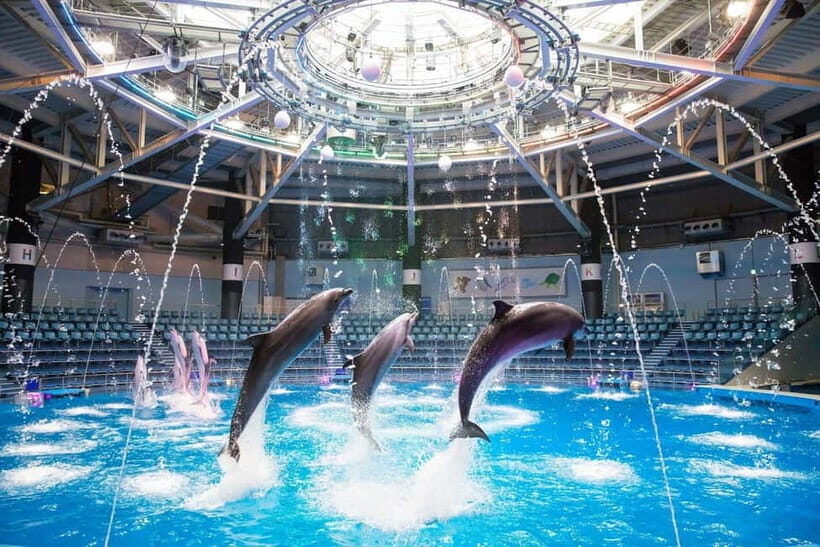
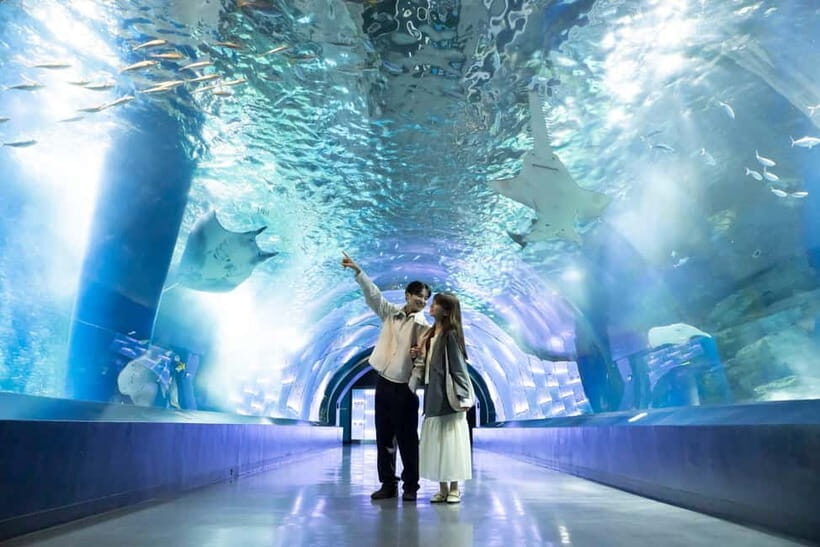
I really like two parts. I love the rare animal lineup—there’s an Alfredi manta ray noted as the only one exhibited in eastern Japan, and a dwarf sawfish described as the only one on public display in the world. I also like that the ticket includes a dolphin performance, which makes the whole visit feel more like a show-and-aquarium day than just wandering.
One thing to plan around: this ticket doesn’t include every attraction inside the park, and aquarium hours vary by season. If you arrive late, you’ll miss time for the dolphin show and the best exhibit flow.
In This Review
- Key highlights you’ll care about
- Maxell Aqua Park Shinagawa: a Tokyo-style aquarium day
- Getting in fast: direct entry near Shinagawa Station
- Your one-day flow: how the aquarium experience usually works
- Rare rays and sawfish: the headline animals to hunt for
- The dolphin performance included: why it matters beyond kids
- Japan’s four seasons, in digital art form
- Price and value: is the $18 ticket a good deal?
- When it fits best (and when you might want a different plan)
- Should you book this Maxell Aqua Park Shinagawa ticket?
- FAQ
- Do I need to wait in line at the counter?
- How much does the ticket cost, and how long is it valid?
- Is the dolphin performance included?
- Are all attractions included with this ticket?
- What are the age rules for kids?
- What time do I need to arrive?
Key highlights you’ll care about
- Direct entry means you bypass the counter line and start at the aquarium faster
- Indoor, weather-proof setup right by Shinagawa Station
- One-of-a-kind animals: Alfredi manta ray (eastern Japan claim) and dwarf sawfish (world claim)
- About 20,000 creatures across 350 species, so there’s a lot to see in one day
- Dolphin performance included, a family-friendly anchor for your schedule
- Seasonal digital art and changing performances, so the park can feel different across visits
Worth weighing up alongside this Tokyo pick:
- Tokyo: teamLab Planets TOKYO Digital Art Museum Entry Ticket★ 4.6 · 9,779 reviews
- Tokyo: Japanese Dance Cabaret Theater Asakusa-Kaguwa Ticket★ 4.8 · 2,270 reviews
- Tokyo Skytree Admission Ticket with Tembo Deck and Galleria★ 4.0 · 589 reviews
Maxell Aqua Park Shinagawa: a Tokyo-style aquarium day
If you’ve done big aquarium loops in other cities, this one still has enough Tokyo flavor to keep you interested. The park is designed around modern entertainment—digital art and performances paired with living creatures—so it’s not just tanks on a wall. The idea is simple: the shows and exhibit mood change with Japan’s four seasons, which means the same visit can feel different depending on timing.
I like this approach because it helps you pace yourself. Instead of trying to see everything in a hurry, you can pick what you’re most curious about, then let the seasonal visuals and timed moments guide the rest.
Also, it’s packed into an indoor space. That matters in Tokyo, because weather and temperature can turn a long day into a slog. Here, you can keep the day moving without constantly checking the sky.
Getting in fast: direct entry near Shinagawa Station
This ticket’s big practical win is the direct access to the aquarium. You don’t wait in line at the counter. You go in using the ticket you booked, so your time is spent inside, not outside.
The park is located in the Shinagawa Prince Hotel area, at 4 Chome−10−30, Takanawa, Minato City, Tokyo. It’s also described as a short walk—about a 2-minute walk from Shinagawa Station—which is a serious advantage if you’re juggling multiple stops in one day.
Here’s how I’d use this benefit:
- If you’re visiting on a tight schedule, direct entry helps you start earlier without losing momentum.
- If your group includes kids, fewer “waiting around” minutes usually means fewer meltdowns.
- If you’re in Tokyo for seasonal events, being close to Shinagawa makes it easier to adjust your plan without hauling across town.
Your one-day flow: how the aquarium experience usually works
The ticket is valid for 1 day, and it’s essentially an admission pass to explore the aquarium plus the included dolphin performance. Since the attractions inside aren’t all covered by this specific ticket, your day is best planned around what’s included: the aquarium exhibits and the dolphin show.
A smart way to structure your time is to treat the visit like two acts.
Act 1: the main aquarium wander (before the show).
You’ll move through the indoor exhibit spaces designed around the seasons. With 350 species and roughly 20,000 creatures, you won’t cover everything in a rush. Instead, I’d aim for a relaxed loop that includes the headline animals (more on those below), plus a few tanks that match your interests—big swimmers, calmer displays, or anything that looks like it has the season-themed visuals.
Act 2: the dolphin performance moment.
The dolphin show gives your visit a clear peak. When you’re standing among tanks for an hour, it’s easy to lose track of time. A performance gives you a natural checkpoint. Since the schedule details aren’t provided here, check on-site timing when you arrive and plan your exhibit pace so you don’t end up sprinting.
Then wrap up with a second look.
After the show, return to anything you skipped. This works especially well because the park’s digital art and seasonal feel are a big part of what you’re experiencing. Even if you’ve already seen a tank, the lighting and overall atmosphere can feel different once you’ve had that performance break.
Rare rays and sawfish: the headline animals to hunt for
Two animals are the reason I’d prioritize this visit even if you’re picky about aquariums.
First is the Alfredi manta ray, described as the only one exhibited in eastern Japan. Manta rays tend to look best when you can watch them glide with time to focus. If the ray is positioned in a tank where you can step back and take in the movement, that’s when it feels most special—less like you’re checking a box and more like you’re seeing an animal do what it actually does.
Second is the dwarf sawfish, described as the only one on public display in the world. Sawfish in general are unusual-looking animals, and this one is specifically noted for its rarity on display. If you’re the type who enjoys “I can’t believe we can see this here” moments, this is the anchor.
A practical tip: don’t try to do the entire park first and then hunt for these animals at the end. If you find them early, you can then enjoy the rest without the stress of tracking them down later. Also, watching rare exhibits earlier in the day often feels calmer—so you can slow down and actually look.





The dolphin performance included: why it matters beyond kids
The ticket includes admission plus a dolphin performance. That’s a meaningful value detail, because many aquarium tickets either exclude shows or charge extra.
Even if you’re not traveling with kids, a show can be a useful reset button. It changes your pace, gives your feet a break, and turns the day into a timed experience rather than open-ended walking. The only caution is scheduling: make sure you don’t end up so absorbed in the exhibits that you miss the performance window. (The park’s last admission is 1 hour before closing, so late planning can squeeze you.)
One more small planning point: flash photography isn’t allowed, and smoking is also not allowed. So your memories will be better if you focus on video-free observing and steady viewing rather than relying on photos for everything.
Japan’s four seasons, in digital art form
What makes this aquarium more than a generic collection of tanks is how it uses digital art tied to the seasons. The park is built around the concept of Tokyo’s cutting-edge entertainment, showcasing the charm of living creatures through dynamic performances.
For you, that translates into two practical benefits.
1) A more guided sense of what to look for.
Seasonal themes can help you notice design details—lighting, visuals, and exhibit atmosphere—that you might otherwise overlook in a traditional aquarium.
2) A repeat-visit feel, at least in spirit.
The park is described as offering ever-changing exhibits and seasonal performances. Even if you only plan one trip, it means your visit connects to the time of year, not just a fixed showroom.
If you’re the type who likes “set-piece” moments, arrive with a rough plan: see the headline animals, catch the dolphin show, then spend your last time enjoying the seasonal vibe rather than checking off every tank.
Price and value: is the $18 ticket a good deal?
At about $18 per person for a 1-day experience, this ticket can be good value if you’ll actually take in both:
- the aquarium admission, and
- the included dolphin performance.
The direct-entry part is also part of the value. Waiting in lines can eat up your Tokyo time, and here the benefit is stated clearly: you skip the counter line. If you’re visiting on a busier day, that time saved is real.
How I’d judge whether it’s worth it for your group:
- If dolphins are a must-do, this ticket is likely a strong match because the performance is included.
- If you want every single attraction inside the park, note that this ticket says attractions are not available with this ticket. In that case, you may want a different ticket type to avoid disappointment.
- If you mainly want to see the standout animals and enjoy the seasonal digital-art setting, this looks like a straightforward way to do it in one day.
When it fits best (and when you might want a different plan)
I’d recommend this ticket most for:
- Families who want a clear main event (the dolphin performance) plus plenty of aquarium time.
- People who like indoor activities that work in any weather.
- Anyone who cares about seeing rare marine animals, especially the manta ray and dwarf sawfish noted as exceptionally rare on public display.
It might be less ideal if:
- You’re counting on additional attractions beyond the aquarium and dolphin performance. Since the data says the attractions aren’t included with this ticket, you could find extra options cost more or require a different entry type.
- You have very late timing. Last admission is 1 hour before closing, and opening hours vary by season. A late arrival can cut your exhibit time and make the day feel rushed.
Should you book this Maxell Aqua Park Shinagawa ticket?
Yes, I’d book it if your goal is a well-paced, indoor aquarium day anchored by the dolphin show—and especially if you’re excited about the Alfredi manta ray and dwarf sawfish. The direct entry saves time, and the indoor location near Shinagawa makes it easy to fit into a travel schedule.
If you’re the kind of visitor who wants every single attraction inside the park, double-check what’s covered for your exact ticket type so you’re not paying for admission when you really wanted the extra attractions too. Also, match your arrival with seasonal hours and aim to be there with enough buffer for the dolphin performance before the park’s last admission window.
FAQ
Do I need to wait in line at the counter?
No. This ticket allows direct entry to the aquarium, so you don’t need to wait in line at the counter.
How much does the ticket cost, and how long is it valid?
The price is $18 per person, and it’s valid for 1 day (you can check starting times based on availability).
Is the dolphin performance included?
Yes. The ticket includes admission plus a dolphin performance.
Are all attractions included with this ticket?
No. The information says the attractions are not available with this ticket.
What are the age rules for kids?
Children under 4 years old can enter for free.
What time do I need to arrive?
Opening hours vary by season, and last admission is 1 hour before closing. You should also make your reservation by 18:30 on the day of your visit (with specific exceptions noted for August 23 and 24).
More Tickets in Tokyo






More Tour Reviews in Tokyo


Fresh reviews from around Tokyo






Tickets, compared.
 ★ 4.6teamLab Planets TOKYO Digital Art Museum Entry TicketFrom $259,779 reviews
 ★ 4.8Japanese Dance Cabaret Theater Asakusa-Kaguwa TicketFrom $492,270 reviews
 ★ 4.5Kamakura & Enoshima Day Trip including Temple TicketsFrom $581,375 reviews
 ★ 4.0Tokyo Skytree Admission Ticket with Tembo Deck and GalleriaFrom $15589 reviews
 ★ 4.1‘Red Tokyo Tower’ Digital Amusement Park TicketFrom $37398 reviews
 ★ 5.0Tokyo Sword Experience – includes Museum Ticket/Ninja ExperienceFrom $84314 reviews
 ★ 4.3Nikko: Edo Wonderland Edomura Cultural Theme Park TicketFrom $35205 reviews
 ★ 4.8KABUKI Show at Kabukiza Theatre Admission TicketFrom $106152 reviews