

Reviewed · ORIGAMI WORKSHOPS
Tokyo: Learn Traditional Origami with a Local
Paper turns into calm focus fast. This Tokyo workshop is a hands-on way to learn classical origami with Manami, an East Tokyo instructor who’s been folding since she was three. What makes it more than craft time is the meaning behind each shape, from the well-known crane to the kinds of figures you can actually choose for yourself.
I especially love two parts: the step-by-step guidance that keeps you from getting stuck, and the chance to pick from different kinds of traditional and modern origami paper for each design. That mix helps you leave with pieces that feel personal, not like a cookie-cutter souvenir.
One possible drawback: the class is built mainly for beginners, so if you already fold complex models confidently, you might find some options a bit too easy. You can still pick different designs, but customization of the exact patterns isn’t offered on site.
In This Review
- Key highlights you’ll feel right away
- Why Shinjuku works so well for a focused origami class
- Manami’s class style: English instruction, gentle pacing, real meaning
- Your 90-minute origami plan: how the time actually gets used
- Choosing your models: cranes, frogs, samurai, and the fun factor
- Traditional vs modern paper: why your final look depends on choices
- Folding with confidence: what the step-by-step coaching really solves
- Stories behind the shapes: culture in your hands
- What you take home: finished models plus a travel-friendly plan
- Price and value for a 90-minute Tokyo craft session
- Who should book this, and who might want to think twice
- Practical tips before you go to FEEP Shinjuku Higashi-guchi
- Should you book this Tokyo origami lesson?
- FAQ
- Where is the meeting point?
- What’s the nearest station?
- Is pickup included from the train station?
- How long is the experience?
- What language is the instruction?
- How many origami pieces will I make?
- What’s included in the price?
- Are kids allowed?
- Are alcohol or drugs allowed?
- Is the class beginner-friendly?
Key highlights you’ll feel right away
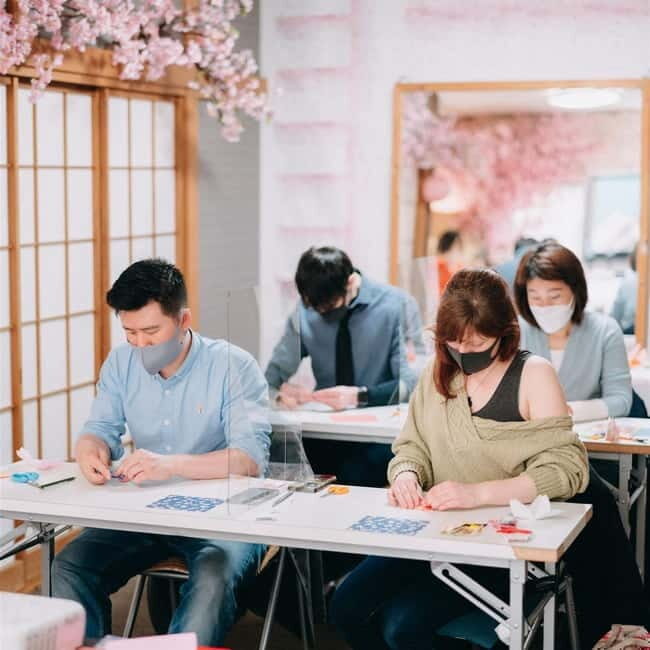
- Manami’s patient, beginner-friendly pace keeps your folds clean without rushing you
- Pick 3 to 5 origami designs during the 90 minutes, based on what interests you
- Choose your own paper from traditional and modern styles for each creation
- Culture stories with each model, including symbolism like the crane
- Take-home setup includes small bags so your finished works travel better
Before you commit, see how this one stacks up against a few Tokyo favourites:
- Mt Fuji and Hakone 1-Day Bus Tour Return by Bullet Train★ 5.0 · 26,383 reviews
- 1-Day Tokyo Bus Tour★ 5.0 · 14,250 reviews
- Tokyo: teamLab Planets TOKYO Digital Art Museum Entry Ticket★ 4.6 · 9,779 reviews
Why Shinjuku works so well for a focused origami class
Tokyo is full of distractions. This workshop is the opposite of that. You’re not trying to see five neighborhoods in one afternoon. You’re learning a small, precise skill and letting it take the lead.
The meeting point is in Shinjuku, which is convenient if you’re already moving around central Tokyo. You’ll meet at FEEP Shinjuku Higashi-guchi, on the 5th floor of the Shinseido Building. The closest station is the metro Shinjuku-sanchome, and it’s also accessible from the east gate of JR Shinjuku Station. That matters because getting to the start of a 90-minute activity can make or break your experience.
Also, the venue is a shared workspace floor with many booths. The entrance is locked, so you’ll want to message the host once you reach the 5th floor. Do this even if you feel early. It’s the kind of detail that saves stress.
Manami’s class style: English instruction, gentle pacing, real meaning
The instructor is Manami Watanabe, and she teaches in English. The big advantage of having an instructor from East Tokyo is the way she ties technique to everyday cultural context. Origami isn’t just paper folding in Japan; it’s tied to meanings, family habits, and small rituals. Manami’s been in this world since childhood, which shows in how she explains the steps.
This isn’t a lecture-only class. You’ll be making your own models while she demonstrates. The format is designed so you’re not guessing or translating diagrams in your head. You can ask questions anytime, and the teaching is built to prevent that classic origami problem: realizing you folded something “almost right,” then spending 20 minutes undoing it.
If you’re the type who likes structure, you’ll appreciate the way this class progresses: first she shows options, then you select designs, then she guides each fold step by step. That keeps your brain from bouncing between learning and panic.
Your 90-minute origami plan: how the time actually gets used
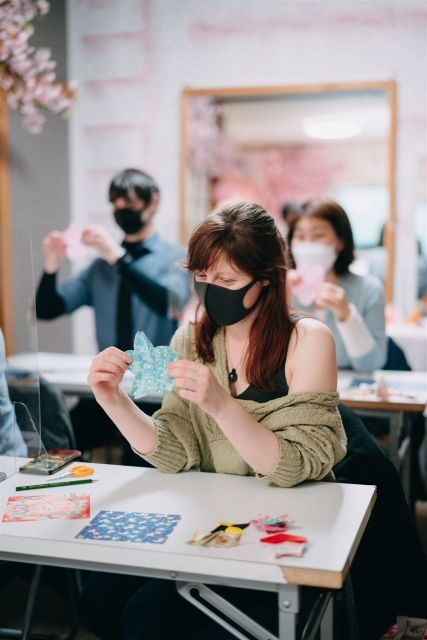
You get 90 minutes, which is enough time to make progress without turning into a marathon. The workshop is set up around a realistic goal: create 3 to 5 origami pieces during your session.
Here’s the rhythm you should expect:
1) Design showcase and choice
Manami starts by showing several origami designs, including different skill levels. This is where you decide what you want to make, instead of being handed one fixed model.
2) Paper selection
You’ll have a variety of origami papers, including traditional and modern options with different designs. For each piece, you pick the sheet you want to fold. That one choice affects the final look a lot, so it’s worth slowing down and picking intentionally.
3) Step-by-step folding
You fold one model at a time with close guidance. The teaching is patient, and you’re encouraged to ask for help. If you’re nervous about ruining the paper, that’s exactly the moment to speak up early.
4) Cultural stories as you finish
As you complete each origami piece, Manami shares the stories and meanings behind the shape. The class includes examples like the origami crane, which is famous in Japan for what it symbolizes.
The payoff is that you leave with multiple finished figures in one afternoon, not just one sad half-folded attempt.
Choosing your models: cranes, frogs, samurai, and the fun factor
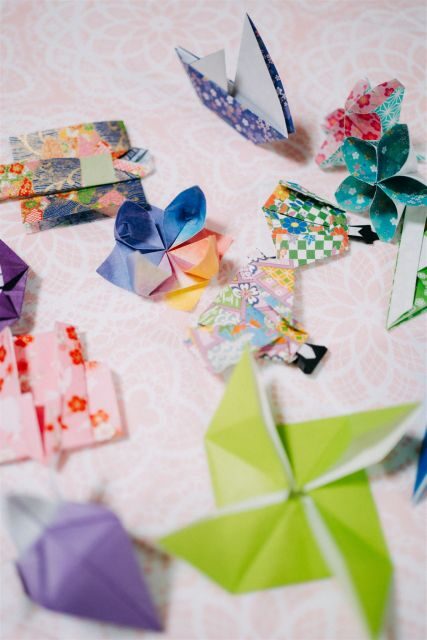
One reason this workshop feels good is that you don’t have to choose only what’s traditionally “cute.” You choose what you like.
The class is designed to support a range of interest levels. Commonly selected models include:
- Origami crane
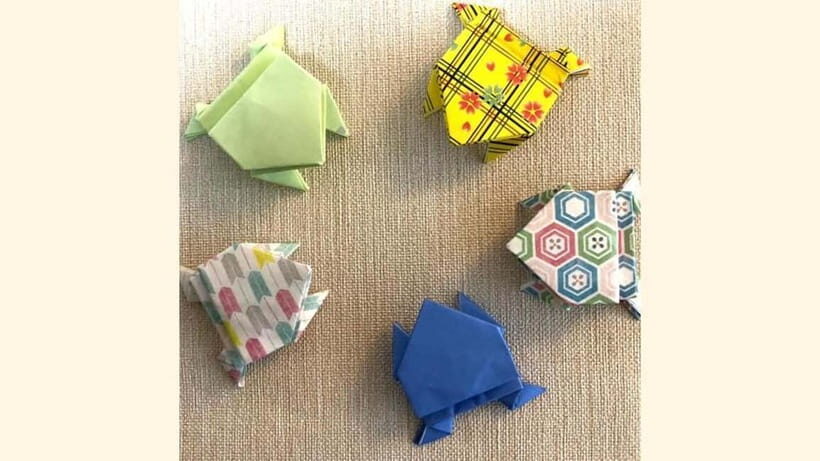
- Jumping frog
- Samurai helmet
- Open box
- Lotus flower
- Other designs that can range from very approachable to more involved
Why this matters: if you pick something that matches your mood, you’re more likely to stick with the steps and finish cleanly. Origami rewards attention. When the subject feels interesting, your hands cooperate.
If you already know a few folds, you might still find value by comparing patterns and learning how different figures relate to common base shapes. That kind of “aha” is one of the most useful things you can take back home, because it helps you fold beyond the one model you make in class.





Traditional vs modern paper: why your final look depends on choices
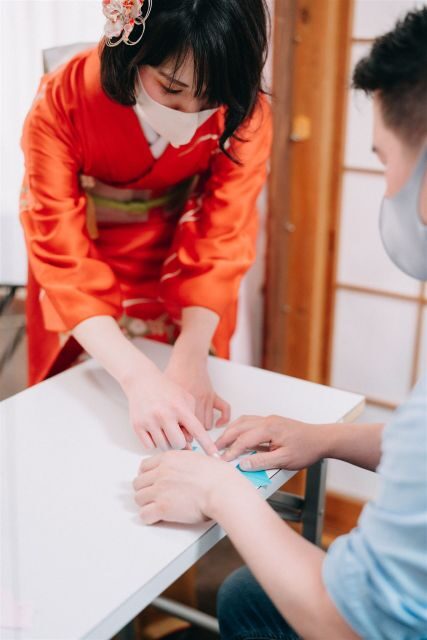
Paper is half the experience. The workshop provides a mix of traditional and modern origami paper, and you select a sheet for each model.
This changes two things:
1) How crisp your folds look
Different papers behave differently. Some hold creases sharply, which helps your finished model look “intentional” instead of wrinkled.
2) How the story lands visually
A crane in a simple traditional tone feels different from a crane in a more modern or patterned sheet. The paper becomes part of the meaning you take home.
The included setup is also practical: you get origami paper, plus scissors and pens. You’re not arriving and digging through a shop for supplies. You’re folding with what you need, and the workshop gives you room to make each piece look finished.
Folding with confidence: what the step-by-step coaching really solves
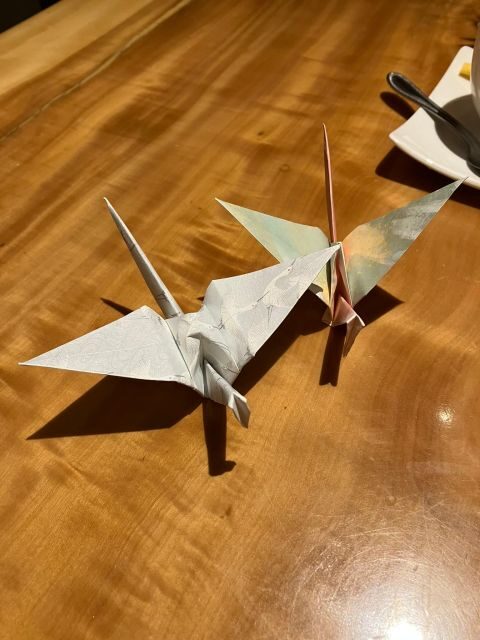
Origami has a reputation for being frustrating. The frustration usually comes from unclear steps, not from your ability.
This class avoids that problem by doing two things at once:
- guiding you through each fold
- letting you ask questions before you get lost
That’s the difference between leaving with a brag-worthy model and leaving with a pile of paper scraps.
Also, Manami’s teaching style is described in a lot of positive ways: patient, encouraging, and respectful when adjusting fold lines. That kind of support matters especially if you’re traveling solo or you’re worried you’ll be the slow one. In a good origami class, “slow” isn’t a flaw. It’s often the route to cleaner creases.
One more detail I like for first-timers: you can choose from easier-to-learn patterns during the showcase. That means you get an early win instead of starting with something that takes half the session.
Stories behind the shapes: culture in your hands
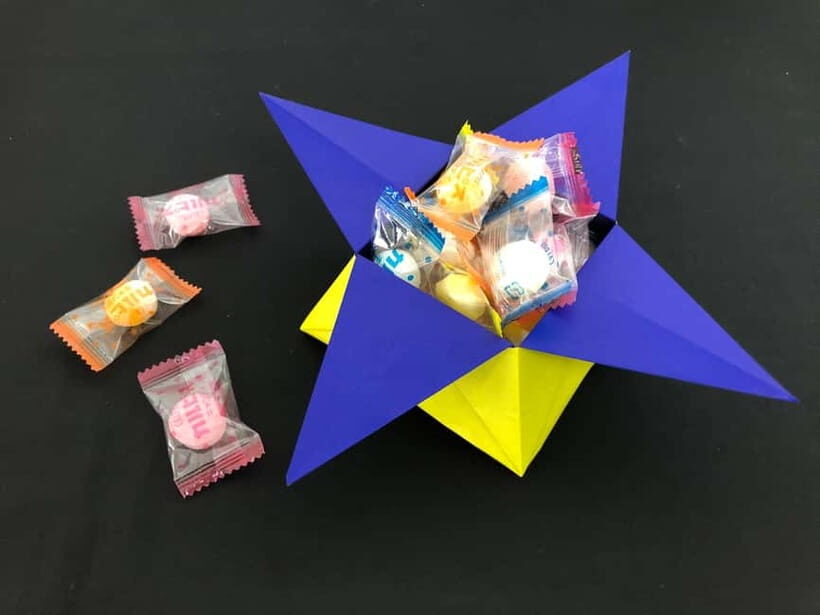
The technique is the obvious part. The quieter value is the meaning Manami brings into the room.
She explains the history and cultural significance behind each origami figure you complete. The class includes examples such as the origami crane and the idea that different shapes can carry different symbolism. You’ll also hear stories connected to her family and childhood, which makes the talk feel personal instead of like a script.
For you, that matters because origami then becomes more than a craft you did on a trip. It becomes a small cultural lens. When you fold a crane later at home, you’ll remember why cranes are special in Japan, not just how to make one.
If you like travel experiences that feel calm and thoughtful, this is a good match. Origami gives you a task with clear steps, and the stories give it context.
What you take home: finished models plus a travel-friendly plan
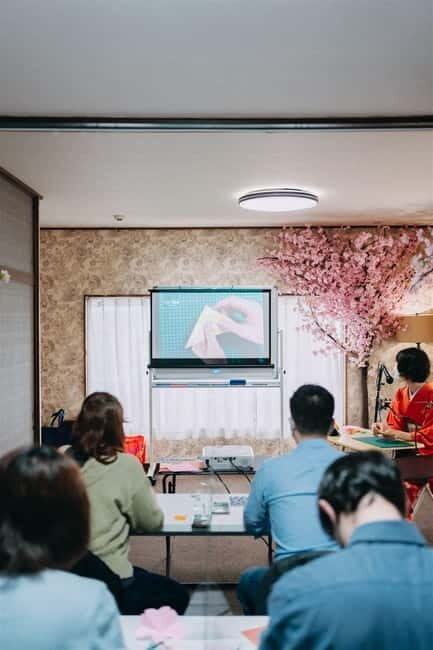
You’ll make 3 to 5 pieces. Then the workshop provides small bags so you can bring your work back.
That’s a small detail, but it’s not trivial. Origami figures are easy to crumple if you shove them into a bag without protection. Having the bags included turns your finished pieces into something you can actually keep intact for the rest of your trip.
Also, the class encourages selfies with your finished creations. That’s the fun part: you’ll want a quick photo before your paper art goes into the bag and disappears into your luggage like it’s trying to sneak home.
Price and value for a 90-minute Tokyo craft session
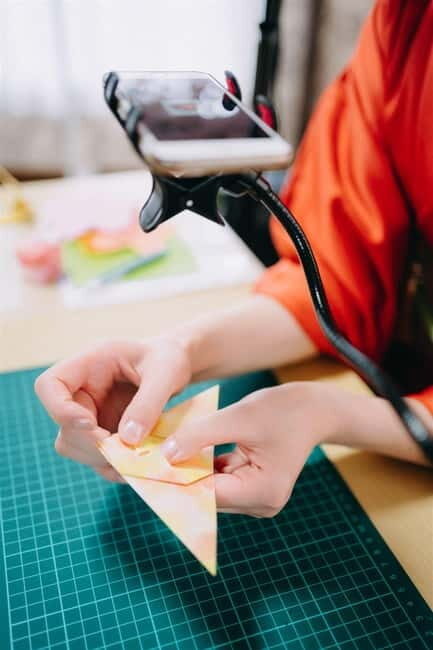
The price is $58 per person for 90 minutes.
Is it worth it? For Tokyo, the value comes from what you get packed into the session:
- an English-speaking instructor (Manami)
- step-by-step coaching tailored for beginners
- a choice of multiple origami designs
- traditional and modern paper included
- scissors and pens included
- water and some snacks included
- small bags to take your work home
You’re basically paying for guided learning plus materials. If you’ve ever tried to learn origami from a book in a noisy environment with limited patience, you already know the hidden cost of that approach: time, frustration, and wasted paper.
This workshop is also shorter than a half-day “activity,” which helps if you’re juggling busy Tokyo days. Ninety minutes fits neatly into a schedule.
Still, do note the earlier drawback: because the class targets beginners, advanced folders may not get as much new technique as they’d hope. If you’re already very experienced, check the range of designs available and pick accordingly.
Who should book this, and who might want to think twice
Book it if you:
- want a calm, hands-on cultural activity in Tokyo
- are new to origami and want a teacher who explains clearly
- like the idea of choosing your own designs and paper
- travel with friends, family, or kids who can handle focused instruction
It also works well for mixed groups. The setup is designed for solo travelers, couples, families, and big tour groups, so you won’t feel like you’re in the wrong “type” of class.
You might skip or adjust expectations if you:
- already fold complex models and need advanced challenges
- want on-the-spot customization of exact designs (the class doesn’t offer that on site)
- need special care for elderly guests or want to bring kids under 7 (kids under 7 aren’t allowed)
Practical tips before you go to FEEP Shinjuku Higashi-guchi
A few things will make your arrival smoother:
- Message once you reach the 5th floor. The entrance is locked, and the workspace layout can be confusing.
- Use the metro Shinjuku-sanchome station if you want the most straightforward routing.
- Don’t plan on pickup at the train station. Pick your route, then go.
Also, the class has a simple rule: no alcohol and no drugs. If you’re coming straight from a meal, just plan to keep things low-key.
Finally, wear something comfortable. Origami folding is small-movement work. You’ll get better results when you’re not wrestling with stiff sleeves.
Should you book this Tokyo origami lesson?
If you want a meaningful Tokyo experience that doesn’t require museum stamina, I’d book it. The best reasons are practical: you get patient step-by-step instruction, you make 3 to 5 finished pieces in 90 minutes, and you leave with models that connect to Japanese symbolism, not just pretty paper.
I’d especially recommend it if you’re new to origami or traveling with someone who is curious but worried about getting lost. Manami’s teaching approach is built to keep you moving forward, and the option to choose from multiple designs makes it feel personal.
If you’re an advanced folder hunting for hard new techniques, you may find some models too easy. In that case, make sure you’re selecting the more challenging options from the design showcase.
FAQ
Where is the meeting point?
You meet at FEEP Shinjuku Higashi-guchi, Shinseido Bldg. 5F, Shinjuku 3-29-11, Shinjuku-ku, Tokyo.
What’s the nearest station?
The nearest station is metro Shinjuku-sanchome (M09, F13, S02). It’s also accessible from the east gate of JR Shinjuku Station.
Is pickup included from the train station?
No, pick up at the train station is not included.
How long is the experience?
The class lasts 90 minutes.
What language is the instruction?
The instructor provides instruction in English.
How many origami pieces will I make?
During the session you’ll create 3 to 5 origami shapes.
What’s included in the price?
Included materials and support are origami paper (traditional and modern), scissors, pens, small bags to bring your works home, plus water and some snacks.
Are kids allowed?
Kids under 7 are not allowed.
Are alcohol or drugs allowed?
No, alcohol and drugs are not allowed.
Is the class beginner-friendly?
It’s designed mainly for beginners, and the origami options might be too easy for guests who are quite experienced. Customizing the options on site isn’t available.
More Tour Reviews in Tokyo



Fresh reviews from around Tokyo






Origami Workshops, compared.
 ★ 4.7Origami Fun for Families & Beginners in AsakusaFrom $2726 reviews
 ★ 5.0Mini Origami Lamp and Mizuhiki knot Belt Workshop in UenoFrom $1076 reviews
 ★ 5.0Tokyo Family Culture Workshop: Calligraphy, Origami &Yukata PhotoFrom $324 reviews
★ 5.0Mini Origami Lamp and Mizuhiki knot Belt Workshop in UenoFrom $1064 reviews
★ 5.0Tokyo Family Culture Workshop: Calligraphy, Origami &Yukata PhotoFrom $324 reviews
★ 5.0Mini Origami Lamp and Mizuhiki knot Belt Workshop in UenoFrom $1064 reviews
Browse the lists this tour appears in