
Reviewed · DINING EXPERIENCES
Sushi Making in Tokyo at a Michelin-Listed Restaurant
Sushi lessons start fast.
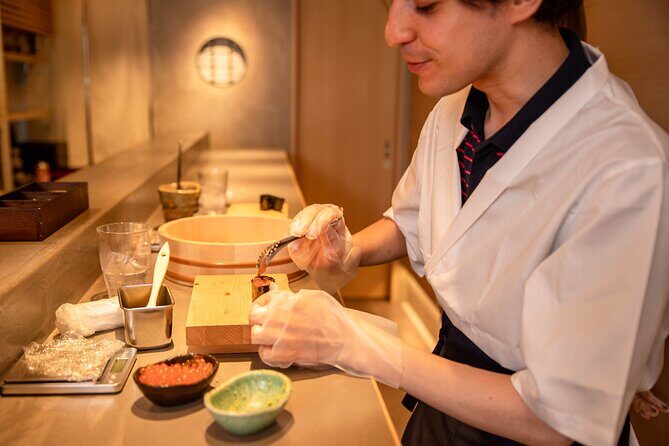
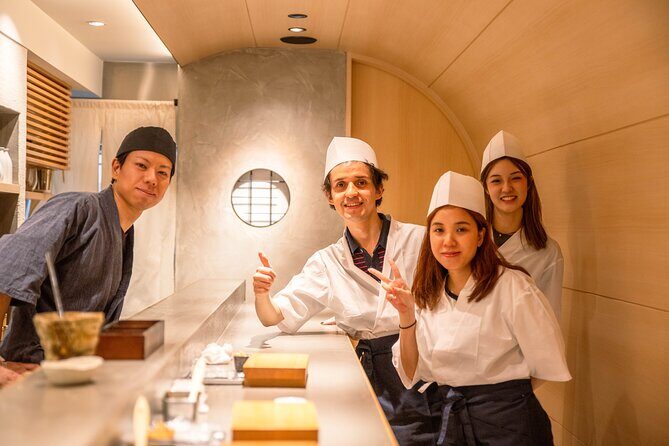
This Michelin-listed Shibuya class at Tachiguisushi Sushikawa is a standing-counter experience where you learn the real rhythm of sushi—then you do it yourself, in an Edo-style setting. You’ll suit up in a sushi chef costume, make 10 pieces of nigiri, and taste 10 pieces prepared by the chef with upgraded ingredients.
I like that the teaching is hands-on and step-by-step, not just a demo. You’ll also get a proper “why” for the craft as you shape rice and fish into something you’d actually serve at home, plus a Japanese tea or sake set to keep the mood calm while you practice.
One consideration: this is a real in-person restaurant setup, so if something goes wrong with the venue (it has happened due to an internal oversight), your best move is to confirm your reservation details the day before and keep an eye on any last-minute messages.
In This Review
- Key things to know before you go
- Sushi-Making at Tachiguisushi Sushikawa: what you’re really buying
- Shibuya standing counter time: the setup and how it feels
- The “make 10 nigiri” format: why it’s a smart way to learn
- Chef costume and provided tools: silly? Yes. Useful? Also yes.
- Tea or sake pairing: a small detail that makes it feel like a real meal
- What to expect at the counter (and how to get the most out of it)
- How I’d judge the value of $99.08 for sushi-making
- Best fit: who should book this class
- A quick reality check on venue reliability
- Practical tips for your Tokyo sushi-making session
- Should you book this sushi-making class in Shibuya?
- FAQ
- How long is the sushi-making experience?
- How much does it cost per person?
- Do I make sushi during the class?
- Do I taste sushi too?
- Is there a small group size?
- What’s included in the class?
- Where does the experience meet, and where does it end?
- Is private transportation included?
- Can they accommodate food restrictions or vegetarian preferences?
- What if I need to cancel?
Key things to know before you go
- 10-piece practice, 10-piece chef tasting: you learn by doing, then you compare your work to the chef’s.
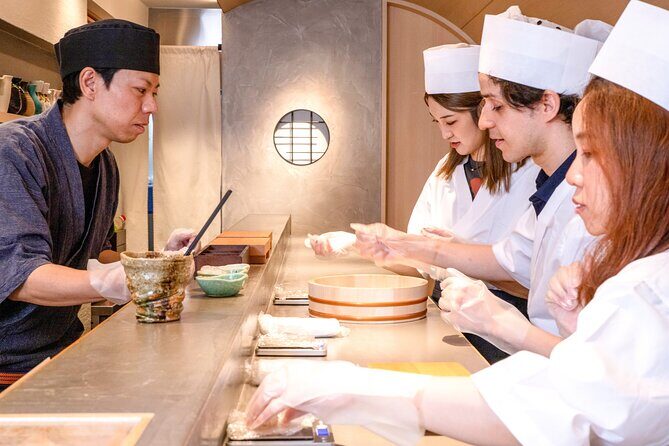
- Small group max 10: you’re close to the action at the counter and not lost in a crowd.
- Chef costume + tools provided: you can focus on technique instead of planning a wardrobe or hunting equipment.
- Standing sushi format: expect to work and eat while standing at a counter.
- Tea or sake included: a simple, traditional pairing that makes the session feel like part of the meal culture.
- Take-home commemorative chopsticks: a useful souvenir you’ll actually use.
Worth weighing up alongside this Tokyo pick:
- Tokyo Bar Hopping Tour in Shinjuku (All-You-Can-Drink + Dinner)★ 5.0 · 3,587 reviews
- Tokyo: Sumo Show and Dining Experience★ 4.8 · 2,742 reviews
- Sumida River: Japanese Traditional Yakatabune Dinner Cruise★ 4.6 · 779 reviews
Sushi-Making at Tachiguisushi Sushikawa: what you’re really buying
For $99.08, you’re not just paying for sushi you could eat elsewhere. You’re buying a lesson that has three parts: instruction, repetition, and comparison.
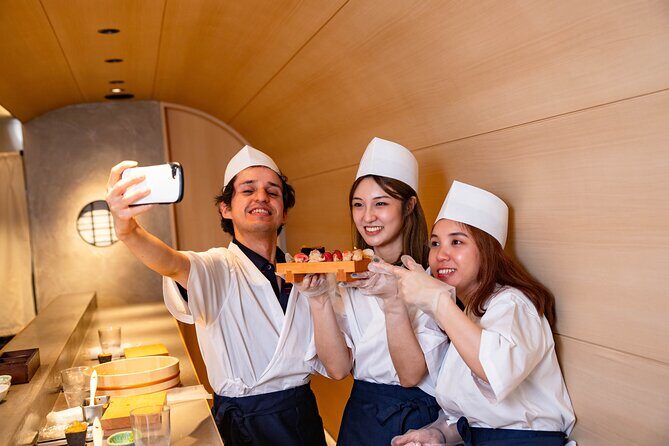
First, you get taught how to make nigiri—on purpose, with your hands. Second, you make 10 pieces yourself, so it’s not a one-and-done photo moment. Third, you eat 10 pieces from the chef, and that chef set uses upgraded ingredients. That combo matters. Sushi is mostly technique, and technique gets clearer when you can taste the difference between your effort and a trained hand.
You also get a few “experience extras” that help it feel like Japan, not a cooking class in disguise: the standing sushi counter, the sushi chef costume, and a simple Japanese tea or sake set. And you leave with a pair of commemorative chopsticks, which is small but smart—something you’ll bring home and use, not a fridge magnet that ends up in a drawer.
The session runs about 1 hour 30 minutes, so it fits neatly into a Tokyo day without turning into a full half-day commitment.
Shibuya standing counter time: the setup and how it feels
This class happens at Tachiguisushi Sushikawa, a Michelin-listed standing sushi restaurant in Shibuya. The “standing” part isn’t just a detail—it changes the whole flow.
At a standing counter, you’re closer to the chef and the work surface. You watch, then you do. There’s less separation between learning and eating, which is great for a technique class. It also means you should expect to be on your feet during the hands-on part and while you enjoy the meal.
If you know you have trouble standing for stretches of time, I’d treat this as a key question before booking. Otherwise, it’s part of why the experience feels like the real thing: sushi culture at the counter is about speed, attention, and small movements that add up.
The “make 10 nigiri” format: why it’s a smart way to learn
The headline is simple: you make 10 pieces of nigiri yourself. What you’re really practicing is not only shaping and topping, but timing and control—how rice feels when it’s right, how fish sits when it’s cut properly, and how both come together without turning into a messy stack.
Nigiri is deceptively straightforward. On the surface, it looks easy: rice plus a slice of fish. In practice, it’s all in the handling. Your chef-instructor teaches you how to do the steps, then you repeat them. After you’ve made your set, you taste the chef’s 10 pieces, and you can actually judge the quality and technique you’re aspiring to.
I like this structure because it avoids two common cooking-class problems:
- You don’t just watch.
- You don’t just eat.
You do both, with a clear comparison.
Chef costume and provided tools: silly? Yes. Useful? Also yes.
You’ll dress up in a sushi chef costume, and the tools are included. That might sound like pure theme, but it’s genuinely helpful.
Costume and provided equipment remove two friction points:
1) You don’t waste time deciding what to wear or bringing kitchen gear.
2) You get into the right mindset for careful, small movements.
And because this is a standing counter with a tight workspace, having everything set up for you matters. You don’t want to be fumbling with supplies while the rice and fish are being handled. The whole session is designed so your attention stays where it should be: technique.





Tea or sake pairing: a small detail that makes it feel like a real meal
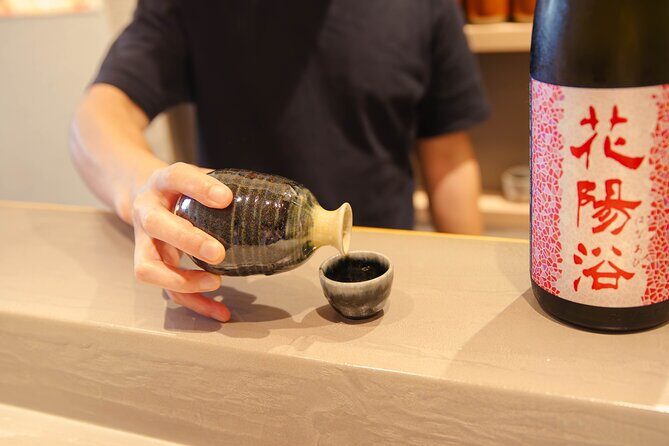
You’ll get a Japanese tea or sake set included. You’re tasting your own nigiri and then the chef’s. That’s a lot of flavor and texture changes in a short time.
The tea or sake helps reset your palate and slows your pace just enough to appreciate what changes when technique is better. It also makes the session feel like dinner, not a class with food tacked on at the end.
If you’re new to sake, treat it as part of the ritual. If you’re not comfortable with alcohol, choose tea and keep it simple.
What to expect at the counter (and how to get the most out of it)
You start at the meeting point in Shibuya, Sasazuka: 1-chōme-626 Prime Bliss Sasazuka. This matters because the experience ends back at the meeting point, so you can plan your day around it with less stress.
Once you’re there, you’ll be guided through:
- Suiting up in the sushi chef costume
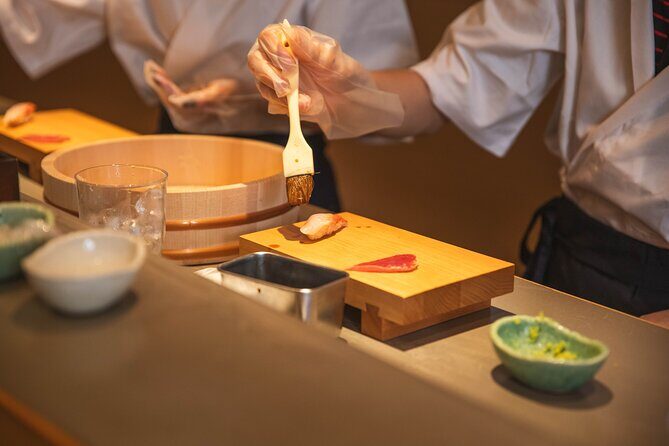
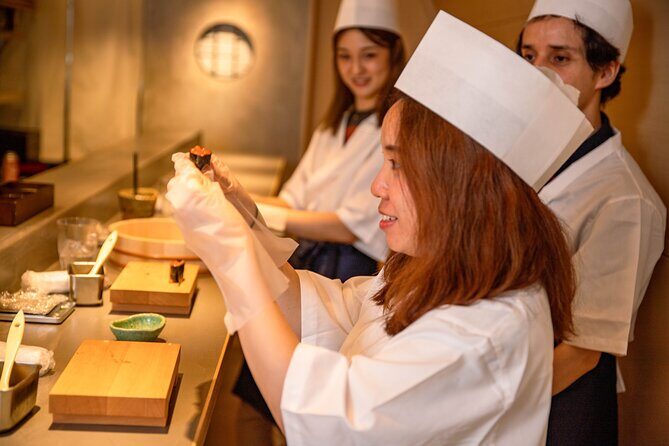
- Making 10 nigiri pieces under expert guidance
- Eating the chef’s prepared 10 pieces with upgraded ingredients
- Enjoying the included Japanese tea or sake
My practical tip: come with room to pay attention. Sit/stand ready, keep your hands steady, and ask questions during the steps. Sushi instruction works best when you’re actively trying to fix one thing at a time (rice handling, topping placement, or overall balance).
Also, don’t rush the tasting. The chef’s pieces are your reference point. If you take a careful bite, you’ll learn more than if you just chase speed.
How I’d judge the value of $99.08 for sushi-making
Value in Tokyo is all about what’s included and what you’re getting for your time. This one does a lot right.
For $99.08 per person, you get:
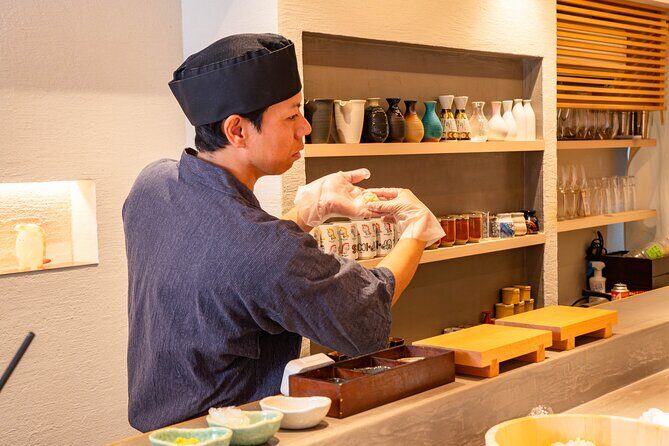
- A hands-on sushi lesson
- Tools and sushi chef costume provided
- Two full parts of food: what you make (10 pieces) plus what the chef makes (10 pieces) using upgraded ingredients
- A Japanese tea or sake set
- An English guide
- A souvenir: commemorative chopsticks
Compared to paying only for sushi, you’re paying for instruction and practice time. Compared to a private class, you’re paying less because it’s a small group (max 10). It’s the in-between sweet spot for many visitors: structured, personal enough, and not priced like a bespoke lesson.
The only real “cost” is that it’s time on your feet and focused attention during a short window. But if you want a skill you can repeat, that’s not a downside—it’s part of the deal.
Best fit: who should book this class
This is a great match if you:
- Love sushi and want to understand technique, not just eat it
- Want a hands-on Tokyo experience that feels grounded in real restaurant practice
- Enjoy learning by doing and comparing your work to a chef’s
It’s also a nice choice for couples or friends who want something memorable, but still manageable in length (about 1 hour 30 minutes).
It may not be the right fit if:
- You’re not comfortable with the standing-counter format (you’ll be standing during the session)
- You have food restrictions and want guaranteed substitutions without any advance communication (you’ll need to inform the operator in advance so they can consult for suitable options)
A quick reality check on venue reliability
The plan is straightforward, but restaurants are living businesses. One serious issue has been reported: the restaurant could be closed due to an internal oversight, even when reservations were made well in advance.
To reduce your risk, I’d do two simple things:
- Confirm details the day before you go (especially the exact meeting point you’ll use).
- Don’t arrive with zero flexibility. Tokyo has alternatives, but you don’t want your day ruined.
Most likely, everything runs as expected. Still, it’s smart to treat this as you would any booked experience in a foreign city: verify, then enjoy.
Practical tips for your Tokyo sushi-making session
A few small moves will make the experience smoother:
- Arrive on time at the meeting point so you can start without rushing.
- Wear something comfortable for standing and for moving your hands.
- Pay attention to the steps, then focus on one adjustment at a time while you make your nigiri.
- After you eat the chef’s pieces, compare texture and balance. That’s where the lesson sticks.
- If you have food restrictions or vegetarian preferences, tell them in advance so they can consult for suitable options.
This is also a class where the souvenir chopsticks actually make sense. You’ll understand what you’re holding by the time you leave.
Should you book this sushi-making class in Shibuya?
If you want a sushi experience that teaches real technique, I think this is a strong yes.
Book it if: you like learning by doing, you want a small-group experience (max 10), and you value getting both practice and tasting—10 pieces you make plus 10 pieces from the chef. The added touches (chef costume, Japanese tea or sake, and take-home chopsticks) help it feel special without inflating the price.
Skip or ask extra questions if: standing counter format might be uncomfortable for you, or if you have restrictions and want to be sure options are available. In that case, confirm early and clearly.
Overall, for $99.08 and about 1.5 hours, this is one of the better ways to take home a skill you can use, not just a meal you finished.
FAQ
How long is the sushi-making experience?
The experience lasts about 1 hour 30 minutes.
How much does it cost per person?
The price is $99.08 per person.
Do I make sushi during the class?
Yes. You will make 10 pieces of nigiri yourself.
Do I taste sushi too?
Yes. You’ll taste 10 pieces made by the chef, and a Japanese tea or sake set is included.
Is there a small group size?
Yes. This activity has a maximum of 10 travelers.
What’s included in the class?
It includes all tools required for sushi making, the sushi chef costume, the meal (your sushi and the chef’s sushi), a Japanese tea or sake set, a souvenir (commemorative chopsticks), and an English guide.
Where does the experience meet, and where does it end?
It starts at the meeting point in Shibuya, Sasazuka (Prime Bliss Sasazuka, 1-chōme-626) and ends back at the same meeting point.
Is private transportation included?
No. Private transportation is not included.
Can they accommodate food restrictions or vegetarian preferences?
Yes, you should inform them in advance, and they will consult to ensure suitable options are available.
What if I need to cancel?
You can cancel for a full refund up to 24 hours before the experience’s start time.
More Dining Experiences in Tokyo


More Tour Reviews in Tokyo



Fresh reviews from around Tokyo






Dining Experiences, compared.
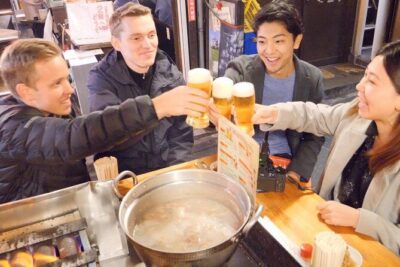 ★ 5.0Tokyo Bar Hopping Tour in Shinjuku (All-You-Can-Drink + Dinner)From $1063,587 reviews
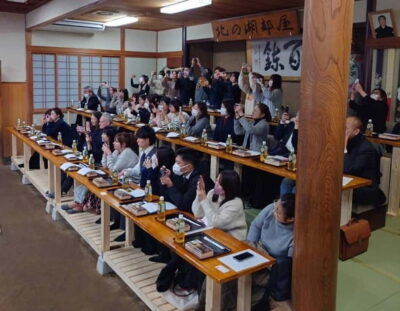 ★ 4.8Sumo Show and Dining ExperienceFrom $792,742 reviews
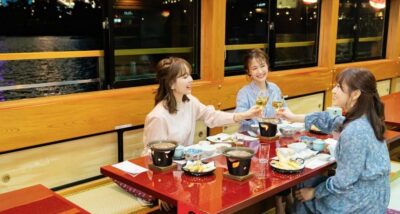 ★ 4.6Sumida River: Japanese Traditional Yakatabune Dinner CruiseFrom $103779 reviews
 ★ 4.5Tokyo Bay Yakatabune Dinner/Day Cruise with Japan Show and DrinksFrom $65473 reviews
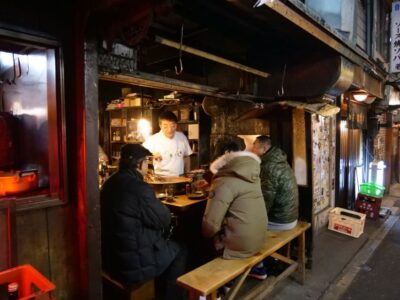 ★ 4.9Shinjuku Bar Hopping with All-You-Can-Drink & DinnerFrom $108440 reviews
Tokyo Dinner Cruise & Tradition Show & Drinks & Tokyo TowerFrom $95315 reviews
★ 4.9Shinjuku Bar Hopping with All-You-Can-Drink & DinnerFrom $108440 reviews
Tokyo Dinner Cruise & Tradition Show & Drinks & Tokyo TowerFrom $95315 reviews
 ★ 4.7Tokyo Bay: Traditional Japanese Yakatabune Dinner CruiseFrom $108243 reviews
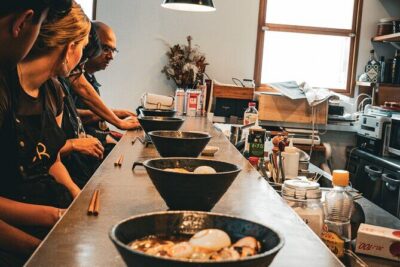 ★ 5.0Professional Ramen & Gyoza with Ramen Chef in a restaurant!From $159223 reviews
Browse the lists this tour appears in