
Reviewed · SHIBUYA TOURS
Official Japan Go-Kart Through Shibuya / Shinjuku (IDP Required)
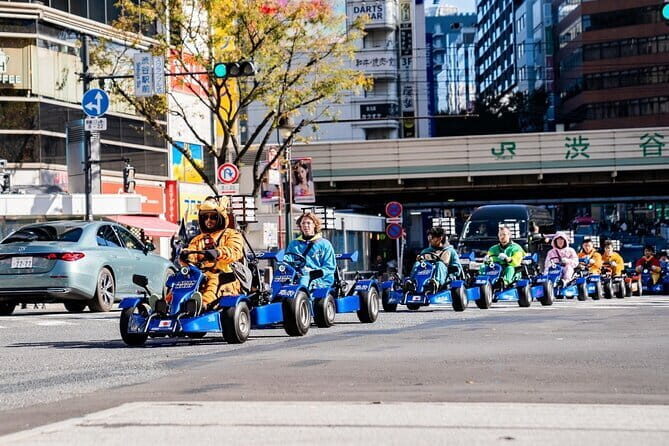
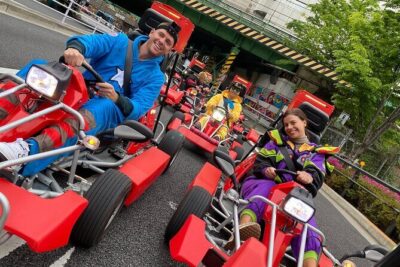
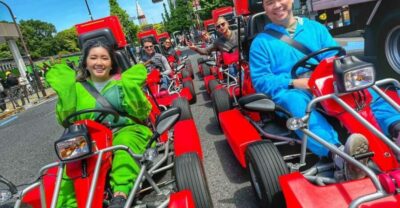
Tokyo looks different from behind a helmet. This is a small-group go-kart ride that focuses on motion and famous streets, with an on-the-road guide handling navigation while you focus on driving. I like that it mixes big landmarks (Shibuya Scramble, Shinjuku’s nightlife areas) with the quick-hit flavor of places like Omotesando and Harajuku, so you get variety without wrestling train transfers. I also like the human side: staff described the safety setup and instructions as clear, and guides by name like Noah and Luis, plus Marge, Leo, Kenny, and Alice show up in recent experiences as professional and patient. The big consideration: this is not a casual activity. You must have the right paperwork for driving in Japan, or you may be denied participation without a refund.
The driving experience is built for first-timers. Expect a guided rollout where you learn how to handle the kart in Tokyo traffic conditions, then you spend the next stretch seeing areas you’d normally only spot from sidewalks and station platforms. I love that the operation is structured around control: you’re not freewheeling solo, and the team uses a lead and rear vehicle system (plus a motorcycle mentioned in reviews) to keep the group together. One drawback to plan for: traffic can feel intense at first, and a few minutes of nerves are normal until you get the rhythm.
If you’re visiting Tokyo for the first time and want a memorable, photo-friendly way to move through the city, this tour can deliver a lot in about 2 hours. The price is not low, but you’re paying for the guide, the small group limit of 10, and the logistics of making sure you actually get through those high-visibility neighborhoods. Just come prepared: alcohol is prohibited before the tour, you need the correct IDP format, and you should avoid clothing that won’t work with the riding requirements.
In This Review
- Key things to know before you go
- Go-Kart Tokyo: Why Shibuya to Shinjuku feels like the right choice
- Price and what you’re really paying for
- Your paperwork is the make-or-break detail
- Meeting at JAPANKART Shinjuku and getting ready fast
- The drive setup: how the team manages 10 karts in real traffic
- The route map in words: from Shinjuku edge to Shibuya icon
- Shinjuku Gyoen: park views and spring memories
- Omotesando: high-end shopping street vibes
- Harajuku: fashion chaos on fast-forward
- Shibuya Scramble: the traffic-light moment you came for
- Yoyogi Park: lawns and the shrine neighbor
- Tokyo Metropolitan Government Building: the free-deck view icon
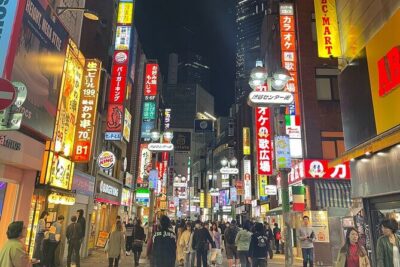
- Kabukichō: neon nightlife district energy
- Safety and driver confidence: why first-timers usually relax
- Photos and videos: how to get good keepsakes
- Timing: if you can, consider riding after dark
- Who this tour fits best
- Should you book JAPANKART Through Shibuya / Shinjuku?
- FAQ
- Do I need an International Driving Permit (IDP) to drive the kart?
- What IDP format is accepted in Japan for this tour?
- Are there any exceptions to the IDP rule?
- What form must the IDP be in?
- Where does the tour start and where does it end?
- How early should I arrive?
- Is alcohol allowed before the tour?
- What should I wear for the go-kart?
- How big is the group?
- What happens if the tour is canceled due to bad weather?
Key things to know before you go
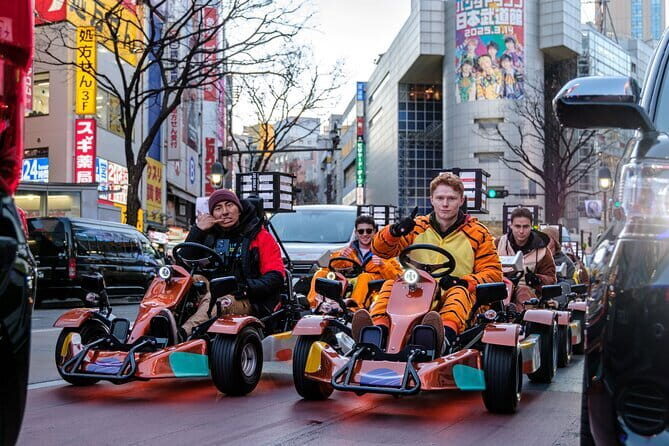
- IDP requirements are strict: you need an International Driving Permit in the 1949 Geneva format (booklet form).
- Max group size is 10: this keeps the drive manageable and easier for the guide to control.
- You ride past headline stops: Shibuya Scramble, Yoyogi Park, Omotesando, Harajuku, and Shinjuku areas.
- Guides handle navigation: you focus on driving while the team manages the route.
- Safety controls the pace: reviews mention lead and tail vehicles plus a motorcycle to prevent getting lost.
- Photos and videos are part of the deal: staff capture and share media after the ride.
More to do within sight of the Crossing
- Official Street Go-Kart in Shibuya★ 5.0 · 3,435 reviews
- Tokyo: Street Kart Experience in Shibuya★ 4.9 · 1,484 reviews
- Shibuya Meltdown Nightlife Tour: All-You-Can-Drink Bar Hopping★ 5.0 · 1,058 reviews
Go-Kart Tokyo: Why Shibuya to Shinjuku feels like the right choice
Tokyo is huge, and most first-time days get swallowed by transit. This route is interesting because it doesn’t try to be “everything.” It’s built around a single, driven corridor: start in Shinjuku, work your way toward Shibuya, and keep your eyes on the street-level landmarks that normally take you longer to reach.
What makes it fun is the speed of the experience. Instead of spending half your day traveling and half waiting for sights to open, you’re moving constantly. You also get a different angle on familiar places. Watching Shibuya Scramble from a sidewalk is one thing. Watching it while you’re sitting low in a kart (and rolling past during the crossing moments) is a totally different kind of memory.
The other big reason this route works: it strings together Tokyo’s “mood” neighborhoods. Shinjuku adds neon and energy. Omotesando and Harajuku bring the sleek-but-weird contrast of fashion streets. Then Shibuya gives you the headline moment. You end up with a ride that feels like a highlight reel, but with real driving time behind the wheel.
Price and what you’re really paying for
At $125.53 per person for about 2 hours, this isn’t a budget activity. But it isn’t just paying for a kart rental either.
Here’s what your money covers based on the tour details and how the operation is described:
- A guide to take care of navigation through busy areas
- A controlled small-group format (maximum 10 travelers)
- Safety systems to keep the group together (reviews mention lead and tail vehicles and a motorcycle)
- Time savings versus public transport, since you’re driving between neighborhoods
- Photos and videos taken during the ride, with one recent mention of sharing via Google Drive within about 12 hours
If you value your vacation time and want a structured, low-stress way to reach the big sights, the price can start to make sense. If you’re already planning to spend lots of time biking around Tokyo streets or you’re comfortable figuring out everything alone, you might feel like you could do something similar on your own for less. But for most visitors, the guide + group control is the difference between fun and frustration.
Your paperwork is the make-or-break detail
This is the most important part to get right. You must bring:
- Your driver’s license from your home country
- An International Driving Permit (IDP) issued in booklet form
- Your passport
The IDP requirement is specific: it must be issued in the format of the 1949 Geneva Convention. IDPs issued under the Vienna Convention 1968 are not accepted in Japan.
There are exceptions for drivers whose licenses are issued in Switzerland, Germany, France, Taiwan, Belgium, or Monaco. Those riders need a Japanese translation of their license from JAF (Japan Automobile Federation).
Also pay attention to issuer rules. The tour notes that IDPs must be issued by your country’s approved issuer, and gives examples like:
- USA: AAA or AATA
- Australia: AAA
- UK: AA or RAC
- Canada: CAA
One more key detail: if you don’t have the correct valid documents, participation can be denied without a refund. The safest move is to double-check your IDP format and booklet form before you leave your home country, not after you land.
Meeting at JAPANKART Shinjuku and getting ready fast
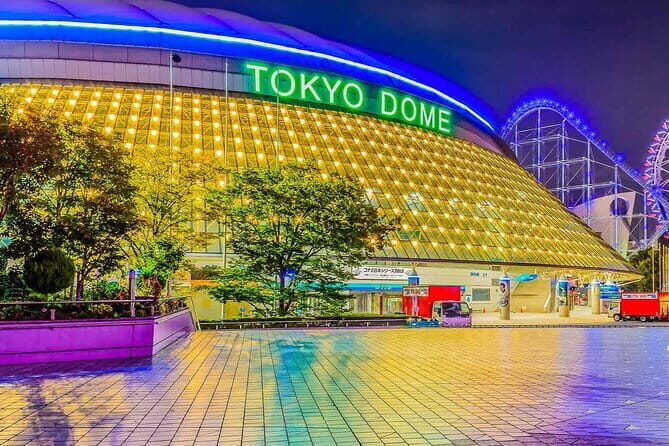
The tour starts at JAPANKART Shinjuku Branch, at 160-0022 Tokyo, Shinjuku City, Shinjuku, 5-chōme 11-23, 3rd floor (that’s what’s listed), and it ends back at the same meeting point.
Plan to arrive early. The tour asks you to be there 15 minutes before your booking time. One practical tip from reviews: showing up about 10 minutes early helps, especially if you’re still settling paperwork or getting briefed.
Your setup is part of the experience. Staff provide safety instruction, and the first stretch can feel a little intense, even if you’ve driven before. The good news is that the operation is described as patient: after about the first few minutes, many people report it clicks and feels easier.
What to wear matters. The rules say:
- No long skirts
- No high heel shoes
- No sandals
And there’s also a hard no on alcohol consumption before the tour.
If you’re unsure about what counts as acceptable footwear, choose closed-toe shoes you can move in quickly.
Different nights, same neon: more Shinjuku crawls

The drive setup: how the team manages 10 karts in real traffic
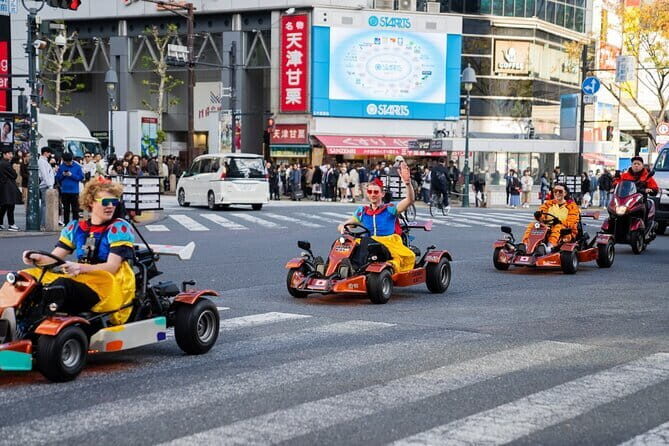
This is one of the most praised parts of the experience. The tour is small (up to 10), but Tokyo traffic is still Tokyo traffic. The key is that you aren’t driving alone.
Across recent experiences, reviewers described:
- A lead car in front to guide the group
- A back vehicle behind to help manage the line and keep people from falling out
- A motorcycle mentioned as an additional way to ensure the group stays together
- Clear instructions before you hit the road
A pilot-car style setup is what keeps the experience from turning into “everyone does their own thing.” It also helps you focus on driving rather than constantly checking maps. Since the tour emphasizes that the guide handles navigation, you should feel less like you’re planning and more like you’re participating.
One more practical note: Tokyo smells strong near exhaust and traffic. One review specifically suggested wearing a mask because you inhale fumes while riding low in the kart. That’s a small thing, but it can make the experience feel more comfortable.
The route map in words: from Shinjuku edge to Shibuya icon
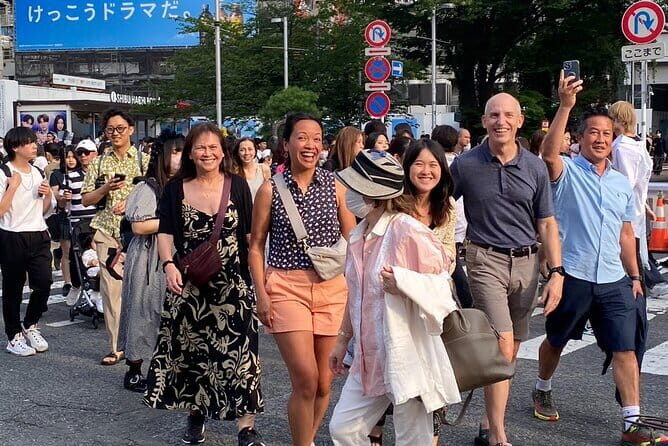
This is how the stops fit together, in the order you’ll encounter them. In most cases, you’ll be riding past and getting views from the kart rather than doing a long sightseeing walk at each place.
Shinjuku Gyoen: park views and spring memories
You’ll pass Shinjuku Gyoen National Park, a famous park especially known for sakura viewing in spring. Even if you’re not here during peak bloom, it’s a nice change of scenery from streets and storefronts.
What you’ll like: it’s greener and calmer visually, which gives your brain a break from neon for a moment. It also provides an easy photo contrast with the rest of the neighborhoods.
Possible drawback: because this is a driven pass-through, you likely won’t get the full park experience. If you want to walk paths, you’d need extra time on your own.
Omotesando: high-end shopping street vibes
Next is Omotesando, known as a high-class shopping area. Expect a stylish stretch where cars and upscale storefront energy show up even from street level.
What you’ll like: the contrast. Omotesando feels more polished than Harajuku, and seeing it from the road adds a “Tokyo’s style” layer to your ride.
Possible drawback: if you’re not into shopping districts, you may treat this as a visual interlude rather than a highlight.
Harajuku: fashion chaos on fast-forward
Then you’ll roll by Harajuku, where the theme is trend-forward and playful. The tour description calls out the wacky fashion as you zoom by.
What you’ll like: it’s the neighborhood that makes Tokyo feel like Tokyo in one glance. From a kart, you catch motion, colors, and street style without needing to stop and search.
Possible drawback: again, it’s mainly a pass-by. You’ll get the vibe, but not the slow browsing time.
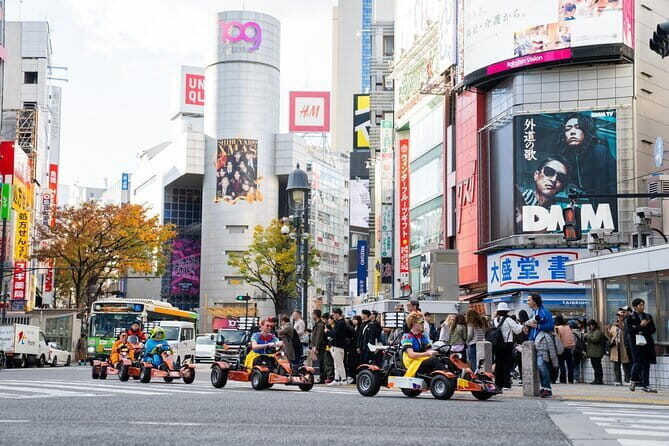
Shibuya Scramble: the traffic-light moment you came for
You’ll pause at the famous crossing moments, watching crowds spill in during the Shibuya Scramble scramble. The itinerary notes you’ll chill at the traffic lights and watch thousands of people cross.
What you’ll like: this is a real “wow” setting. You’re not just seeing it through a photo. You’re in the scene while it’s happening.
Possible drawback: crowds here are intense. Even with a controlled setup, you’re still in a high-energy zone.
Yoyogi Park: lawns and the shrine neighbor
You’ll also pass by Yoyogi Park, a large city park with lawns, ponds, and forested areas, and it’s neighboring Meiji Jingu shrine.
What you’ll like: a different kind of Tokyo scenery. After fashion and crowds, the park side feels like air.
Possible drawback: like other stops, expect visuals over walk time.
Tokyo Metropolitan Government Building: the free-deck view icon
Your route includes the Tokyo Metropolitan Government Building in Shinjuku, a spot tourists often visit for its free observation decks and panoramic views.
What you’ll like: even if you’re only seeing it from the kart route, this is a landmark that helps your bearings. It’s the kind of building you’ll recognize later when you go looking for skyline views.
Possible drawback: your ride likely won’t replace an observation deck visit. If you want the full view experience, you can plan to come back later.
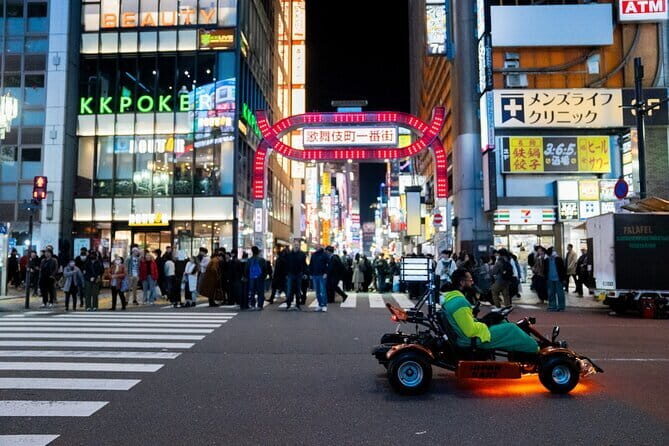
Kabukichō: neon nightlife district energy
Finally, the route includes Kabukichō in Shinjuku. The tour description frames it as an entertainment district with a concentration of host and hostess clubs, love hotels, shops, restaurants, and nightclubs.
What you’ll like: this is where Shinjuku goes full neon. From the kart, you get a kinetic sense of the area’s night energy.
Possible drawback: it can feel intense if you’re sensitive to nightlife zones or prefer quieter neighborhoods. It’s not a cultural museum stop; it’s more like a “Tokyo after-dark district pass-by.”
Safety and driver confidence: why first-timers usually relax
In reviews, the most repeated emotional arc is: a bit scary at first, then fun once you learn how the system works. The tour description stresses having a guide for navigation and safety, and the operational feedback backs it up.
A few specific confidence boosters pulled from recent experiences:
- Staff provide safety instructions and make people feel at ease
- There’s a sense of control thanks to lead and tail vehicles, plus a motorcycle mentioned
- Many riders say after the first few minutes, driving in Tokyo feels doable
If you’re worried about the stress of driving in a dense city, your strategy should be simple: listen carefully in the pre-drive moment, then focus on what the guide’s setup is doing rather than trying to picture your own ideal line through traffic.
Also remember the clothing rules. If you show up in sandals or high heels, you might not just feel uncomfortable. You might get turned away.
Photos and videos: how to get good keepsakes
One of the best values here is that the experience is inherently camera-friendly, and the team captures content for you.
Recent reviews mention:
- Photos and videos taken during the ride at multiple points
- Sharing the media via Google Drive within about 12 hours
- Staff helping create a smooth flow so you’re not stopping constantly to take photos
Some riders also mention options like a mobile harness to film. You can also plan to bring a phone you’re comfortable securing, since the ride environment is more action-focused than typical walking tourism.
If you want the best outcome, do this before you start: make sure your phone is charged, and have a clear plan for how you want to receive the photos afterward (one link or shared folder).
Timing: if you can, consider riding after dark
The experience is described as especially fun when booked at night, with Tokyo lights adding energy. One review specifically calls out a night ride as even better than expected, and mentions extra photos turned out amazing.
I can’t guarantee your exact departure time, since that’s up to the booking schedule. But as a planning principle: if you have flexible dates and want the cinematic Tokyo look, check if evening slots are available for your travel week.
Who this tour fits best
You’ll probably love this if:
- You want a high-impact, short-duration activity in Tokyo
- You enjoy adrenaline-style fun but want the route managed for you
- You’re visiting the big districts (Shinjuku and Shibuya) and want a different angle than walking and trains
- You care about safety structure and clear instructions
You might want to skip it if:
- You don’t have the right IDP format (or you’re still figuring out paperwork)
- You’re sensitive to nightlife energy like Kabukichō
- You want long, slow sightseeing on foot at each stop
- You’re not comfortable driving in traffic conditions, even with a guide and pilot vehicles
Also, if you’re coming with a friend group, the max of 10 is a good sign. It’s big enough to feel lively, small enough that the ride doesn’t become chaos.
Should you book JAPANKART Through Shibuya / Shinjuku?
If you can meet the requirements and you want the most fun per hour in Tokyo, I’d say this is a strong yes.
Book it if:
- You already have a 1949 Geneva-format IDP in booklet form
- You can arrive 15 minutes early
- You’re okay riding past sights and letting the experience stay action-based
- You want photos and a guided setup instead of guessing your own route
Hold off if:
- Your paperwork situation isn’t solid yet
- You’re planning to dress in footwear that doesn’t meet the rules
- You prefer quiet, indoor sightseeing over streets, crowds, and nightlife districts
In other words: treat this like a planned driving day, not a casual walk-through. If you show up ready, you’ll get a memorable, street-level Tokyo ride that’s built around safety, guidance, and iconic moments.
FAQ
Do I need an International Driving Permit (IDP) to drive the kart?
Yes. You must present both a driver’s license from your country and an International Driving Permit.
What IDP format is accepted in Japan for this tour?
The IDP must be issued in the format of the 1949 Geneva Convention. IDPs issued under the Vienna Convention 1968 are not accepted.
Are there any exceptions to the IDP rule?
Yes. If your license is issued in Switzerland, Germany, France, Taiwan, Belgium, or Monaco, you need a Japanese translation of your license from JAF, along with your driving license.
What form must the IDP be in?
IDPs must be in booklet form, not in paper or A4 form.
Where does the tour start and where does it end?
The tour starts at the JAPANKART Shinjuku Branch address in Shinjuku and ends back at the meeting point.
How early should I arrive?
Please arrive 15 MINUTES before your booking time.
Is alcohol allowed before the tour?
No. Alcohol consumption before the tour is prohibited.
What should I wear for the go-kart?
Please do not wear long skirts, high heel shoes, or sandals.
How big is the group?
This tour/activity has a maximum of 10 travelers.
What happens if the tour is canceled due to bad weather?
If canceled due to poor weather, you will be eligible for a full refund or the option to reschedule depending on availability.
More Street Karting in Tokyo


Shinjuku After Hours: The Other Crawls
Still in Shibuya? Keep Going


Fresh reviews from around Tokyo






Shibuya Tours, compared.
 ★ 5.0Official Street Go-Kart in ShibuyaFrom $763,435 reviews
 ★ 4.9Street Kart Experience in ShibuyaFrom $741,484 reviews
 ★ 5.0Shibuya Meltdown Nightlife Tour: All-You-Can-Drink Bar HoppingFrom $1061,058 reviews
 ★ 5.0Shibuya Official Street Go-Kart in Shibuya AnnexFrom $69972 reviews
 ★ 5.0Shibuya Food Tour (13 dishes and 4 Eateries)From $77770 reviews
 ★ 5.0Best of Shibuya Food TourFrom $217612 reviews
 ★ 4.8Shibuya Highlights Walking TourFrom $19601 reviews
 ★ 4.7Premium Go-Kart Tour with Tower & Shibuya CrossingFrom $116528 reviews
Browse the lists this tour appears in