
Reviewed · GO-KARTS
Iconic Tokyo Uptown Landmarks Go Kart Tour (120 Minutes)
Tokyo from the driver’s seat changes everything. I love the two-way radio guide keeping me confident and on track, and I love the comfort-focused, street-legal karts that make first-timers feel steady. The main catch is the driving-license rule: you must bring the right license or permit and show it at check-in, or you won’t be able to ride.
This is a real-city route, not a theme-park loop. You’ll hit major spots like Tokyo Skytree, Tokyo Station, Ginza, and Kabuki-za, with a guide calling out what you’re seeing while also watching the road with you. If you can, consider an evening slot: one group had rain for about half the tour, and rain jackets were available.
In This Review
- Quick highlights worth caring about
- Why this go-kart tour feels more Tokyo than a photo stop
- Getting to Kartzilla near Yotsugi Station (and why arriving early matters)
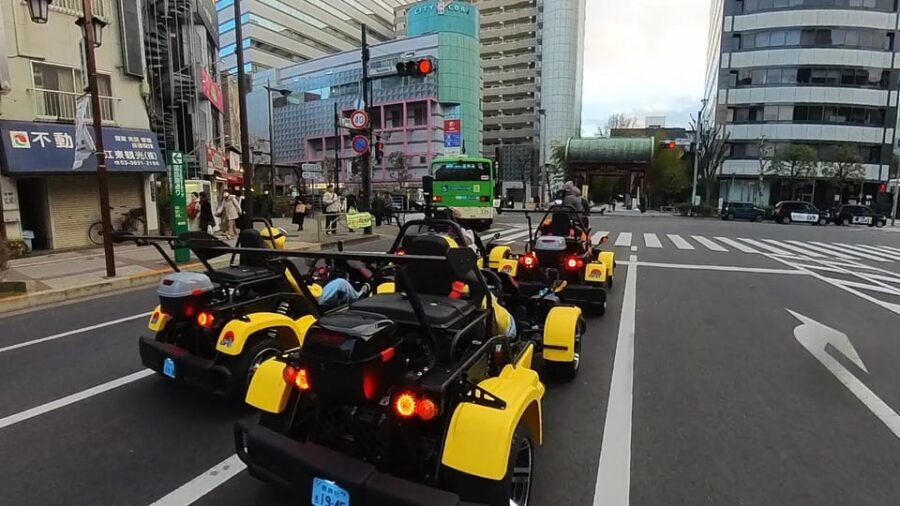
- Street-legal karts built for control, comfort, and first-timers
- Live safety guidance via two-way radio (the underrated feature)
- The Uptown route: what you’ll see and how to watch it
- Starting point: Kartzilla Go Kart Tokyo
- Tokyo Skytree area
- Ryogoku Kokugikan (Sumo Stadium area)
- Tokyo Station
- Imperial Palace surroundings
- Tokyo Tower
- Ginza
- Kabuki-za (Kabukiza Theatre area)
- Back to Kartzilla Go Kart Tokyo
- Cameras, costumes, and the stuff that makes the photos actually work
- Who this tour suits best (and who should skip it)
- Price and value: what $116 really buys you
- Should you book this Tokyo Uptown Landmarks go-kart tour?
- FAQ
- How long is the Iconic Tokyo Uptown Landmarks Go Kart Tour?
- Where is the meeting point for the tour?
- What documents do I need to drive on this tour?
- Is there a guide during the ride, and what languages are offered?
- Can I use a camera during the go-kart tour?
- Which landmarks will you pass on the Uptown route?
- What is included in the price, and what is not?
- Who is this tour not suitable for?
- Can I cancel for a refund or reserve without paying immediately?
Quick highlights worth caring about
- Live two-way radio safety + storytelling so you can focus on the street and the sights
- Comfort-built, street-legal karts with features that help with control and fit for big and tall riders
- Uptown route at street level passing Tokyo Skytree, Ryogoku Kokugikan, Tokyo Station, the Imperial Palace area, Tokyo Tower, Ginza, and Kabuki-za
- Insta360 option + free photos to capture the ride without holding your phone
- Anime costume rental for fun photos, plus end-of-ride cleanup items like towels and hair dryers
- Small group size (up to 10) for smoother instructions and a calmer pace
Other ways to drive the city in costume
- Flagship 2-Hours Official Street Go-Kart Tour – Tokyo Bay Shop★ 5.0 · 4,974 reviews
- Official Street Go-Kart in Shibuya★ 5.0 · 3,435 reviews
- Official Street Go-Kart Tour – Akihabara★ 5.0 · 1,578 reviews
Why this go-kart tour feels more Tokyo than a photo stop
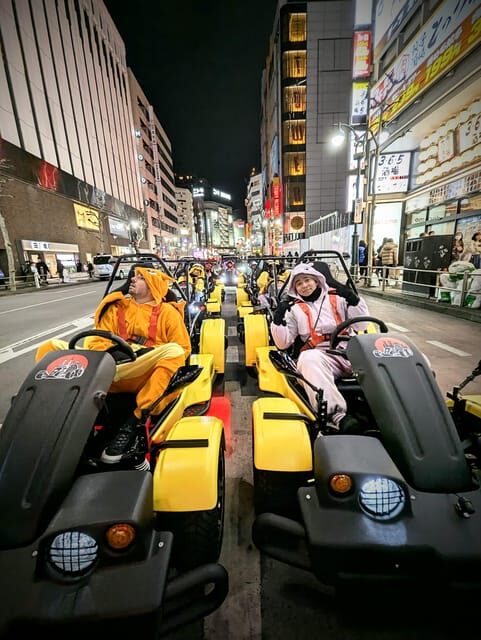
Tokyo is best understood at walking pace, with real streets, real crossings, and real neighborhoods. This tour gives you that same street-level feel, but from a go-kart seat. You’re not just stopping at landmarks; you’re moving through the city as traffic and signs do their daily job.
Two things make the experience especially practical. First, the guide uses two-way radio to give real-time safety directions while also talking through what you’re seeing. Second, the karts are built for comfort and control, so the ride stays relaxed instead of turning into a chaotic sprint.
There’s also a bit of psychological magic here: once you’re driving, Tokyo’s geography clicks faster. You start to connect areas like Skytree, Ryogoku, and Ginza into one mental map, instead of keeping them as separate bookmarks.
Getting to Kartzilla near Yotsugi Station (and why arriving early matters)
You meet at the Kartzilla Go Kart facility, about an 8–10 minute walk from Yotsugi Station on the Keisei Line. The building has signage, and Google Maps is described as easy to use. If you have trouble finding it, you’ll need to call.
Plan to arrive at least 40 minutes before your scheduled start time. That time is for check-in and a mandatory safety briefing, plus getting you ready to drive (including confirming your documents).
Two small realities to keep in mind. There’s no hotel pickup/drop-off, so you’ll be using Tokyo public transit on your own to reach Yotsugi. And the tour requires a valid driving license, so late arrivals are risky—if you’re missing paperwork or struggling to find the place, you’ll be running out of margin.
Street-legal karts built for control, comfort, and first-timers
These aren’t flimsy rental karts. Kartzilla’s vehicles are described as purpose-built for city driving, with comfort and stability aimed at giving you confidence.
What that means in the real world:
- Advanced suspension helps smooth out the ride over uneven pavement
- Hydraulic brakes give more precise stopping and better control
- Reinforced frames are designed to accommodate big and tall riders more comfortably
- Handling is described as stable, with a relaxed, beginner-friendly pace and no racing
If you’ve never driven in traffic, this matters a lot. Beginners often worry about feeling out of control, but a stable kart plus clear instructions reduces the panic factor fast. It also makes the whole tour feel more like guided driving and sightseeing, instead of a constant battle with the vehicle.
Live safety guidance via two-way radio (the underrated feature)
Most sightseeing tours give you instructions once, then hope for the best. This one keeps communication active the whole time. Your guide stays connected through two-way radio, so they can guide your driving and manage traffic flow while sharing stories about the landmarks.
That changes how you experience Tokyo streets. You’re not constantly asking where to go, and you’re not guessing when you should slow down. The guide’s job is basically to keep you moving smoothly while your attention stays on the road and the sights.
You’ll also get a clear road-safety briefing and simple driving instructions before you start. Think of it as a short confidence builder, not a test. Guides you may meet include names like Sata and Travis, based on past groups’ reports, and the tone is consistently described as friendly and easy to follow.





The Uptown route: what you’ll see and how to watch it
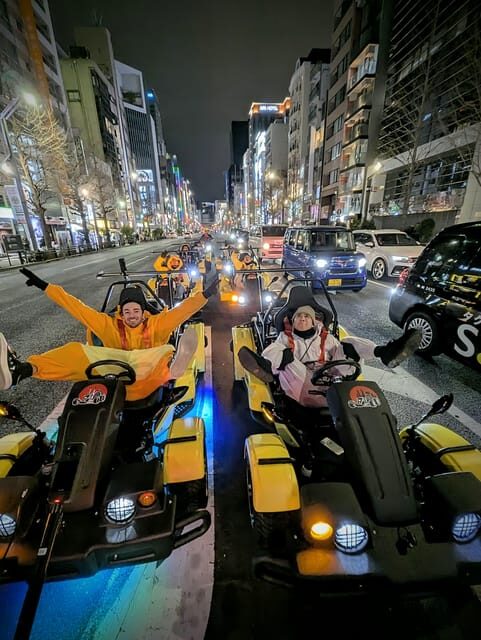
The ride is designed as a 120-minute route through Tokyo’s urban core, including famous landmarks and historic districts you’d otherwise pass only from sidewalks. Expect a steady flow of stops and viewpoints—enough time to understand what you’re looking at without turning the day into a checklist.
Here’s the route in the order you’ll experience it, with practical tips for what to notice.
Starting point: Kartzilla Go Kart Tokyo
Before you’re out in traffic, you’ll go through check-in and the safety briefing. This is where your guide sets expectations for the driving style and how you’ll communicate during the ride.
Tip: if you’re trying the optional camera setup, this is the time to get comfortable with how it works.
Tokyo Skytree area
You’ll start by rolling from the facility toward Tokyo Skytree. Skytree is the kind of landmark that looks different depending on the angle, so pay attention as you approach and pass it. From the driver’s seat, you also get a clearer sense of street layout around the tower area—roads, intersections, and how people move through this part of town.
You’ll get guided context while the kart keeps you moving.
Ryogoku Kokugikan (Sumo Stadium area)
Next comes Ryogoku Kokugikan, the well-known sumo stadium area. Even if you don’t know much about sumo, you’ll pick up enough context to connect the neighborhood with the sport’s place in Japanese culture.
Practical note: this is where city details start to feel less like postcard Tokyo and more like real Tokyo life—small streets, local buildings, and everyday movement.
Tokyo Station
Then you’ll pass through the Tokyo Station area, one of the most important transport hubs in Japan. Watching it from the street changes the scale. Instead of seeing it as a single façade, you notice the roads feeding into it and the constant flow of people and vehicles around major transit.
This is a good stretch to look ahead when you approach intersections, since traffic rhythm is part of the experience here.
Imperial Palace surroundings
From Tokyo Station, the route turns toward the Imperial Palace surroundings. The key value here is perspective: you see how Tokyo balances monumental landmarks with orderly street patterns and nearby city districts.
Look for contrasts—wide, formal-feeling spaces compared with the denser, more everyday streets around them.
Tokyo Tower
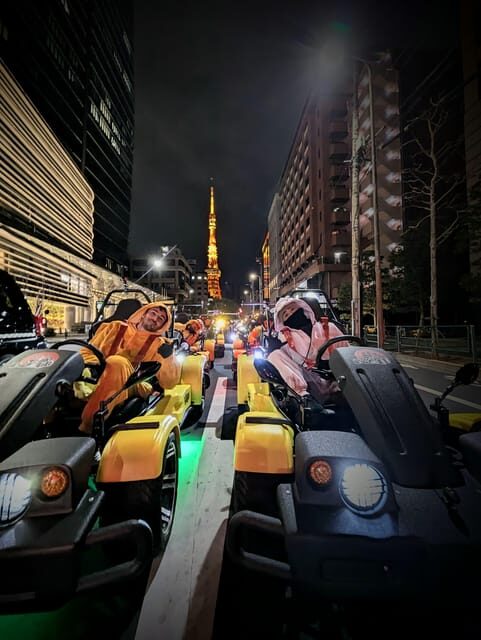
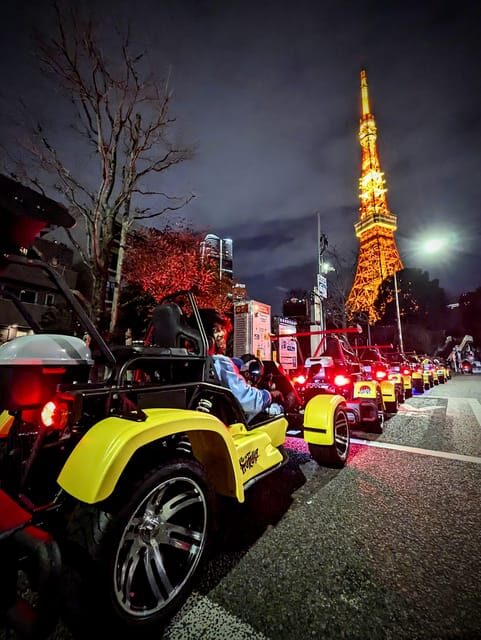
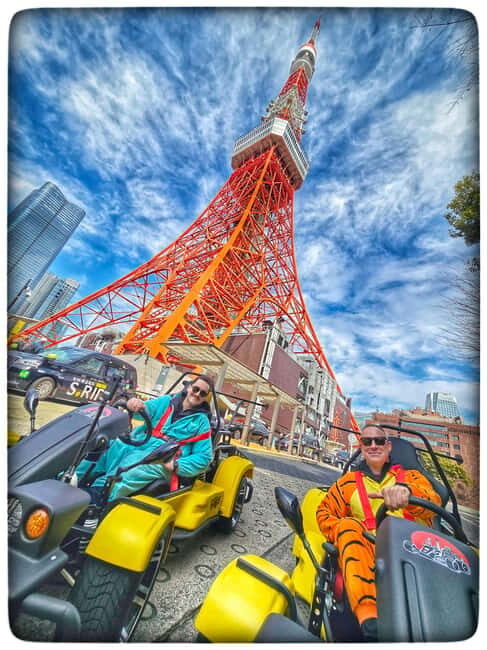
Next is Tokyo Tower. It’s a landmark you’ll recognize instantly, but you’ll likely see it from angles you’d miss on foot unless you deliberately choose your viewpoints.
From a driving position, you also get a more continuous view as the tower moves from side to side in your frame, which helps you understand sightlines and street bends.
Ginza
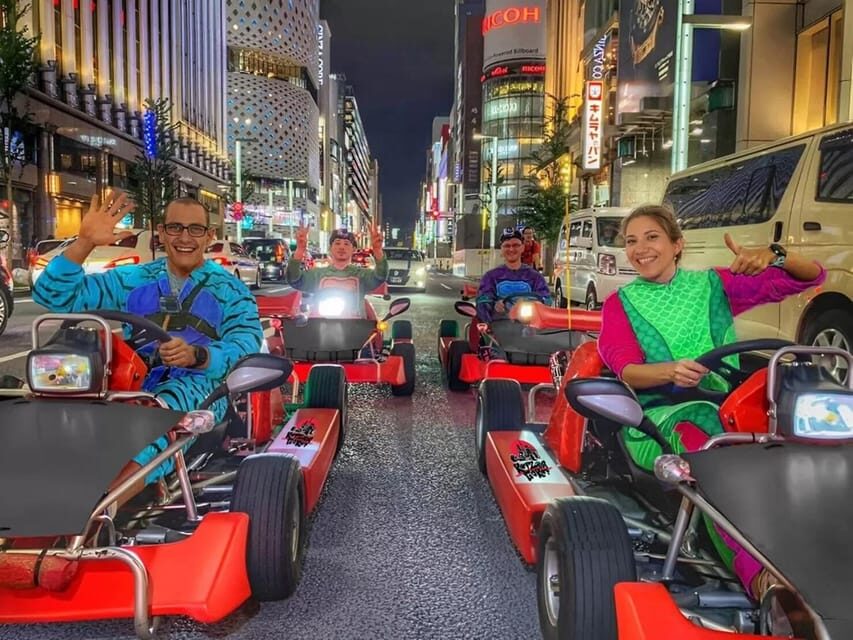
Then you’ll cruise into Ginza, Tokyo’s famous shopping district. This is where the experience shifts into modern city energy. You’ll get landmark storytelling, but the bigger win is seeing how Ginza’s streets feel at street level—pedestrian flow, shopfront rhythm, and the way the area blends into adjacent neighborhoods.
If you’re doing this in the evening, Ginza can look especially impressive after dark.
Kabuki-za (Kabukiza Theatre area)
Finally, you’ll reach Kabuki-za. The theatre is a perfect end point because it connects the driving route to a cultural anchor you can understand immediately. You’ll be passing an iconic arts venue with enough context from your guide that it feels more than just a photo.
At this point you’ll usually be in the groove: you understand how the cart responds, and your attention is free to focus on the landmarks again.
Back to Kartzilla Go Kart Tokyo
After the last viewpoint, you return to the facility. Past groups have mentioned end-of-ride cleanup items like towels and hair dryers, which is a nice practical touch if you get sweaty or if it rains.
Cameras, costumes, and the stuff that makes the photos actually work
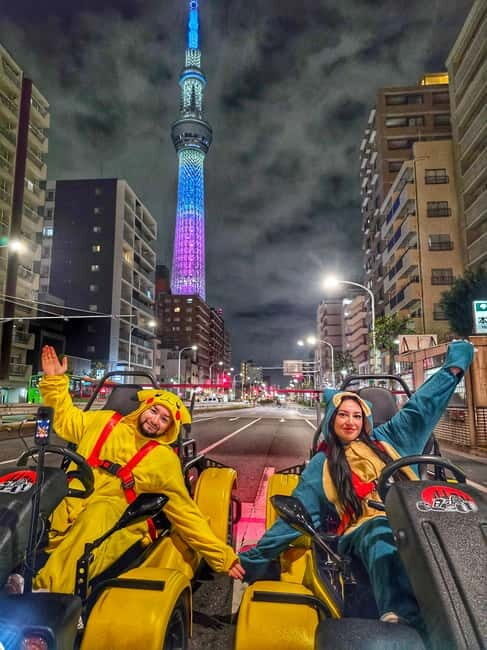
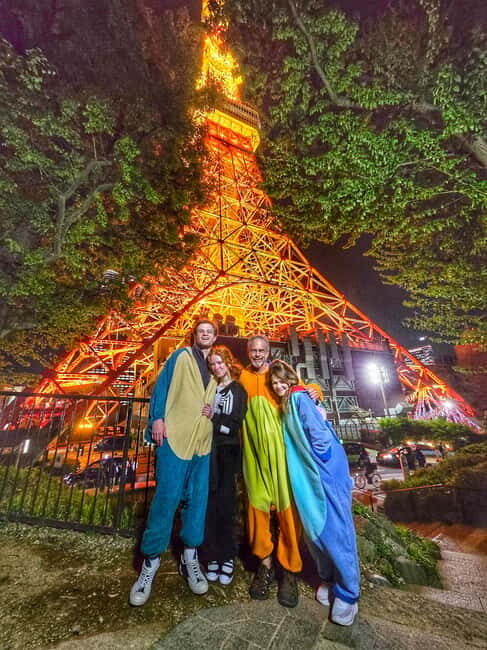
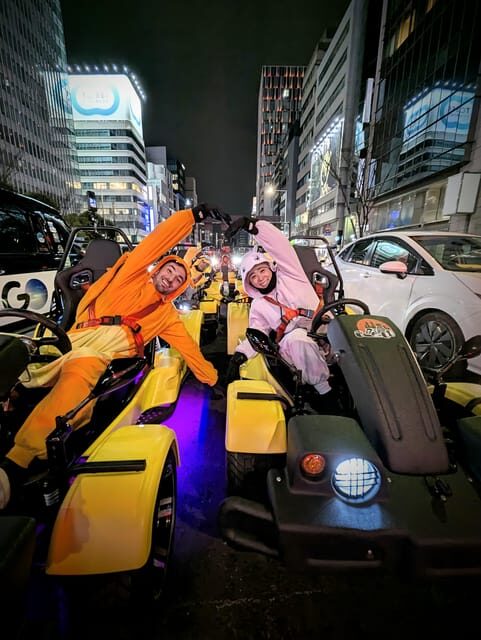
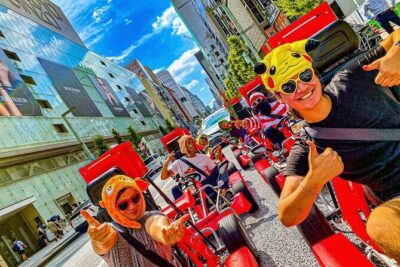
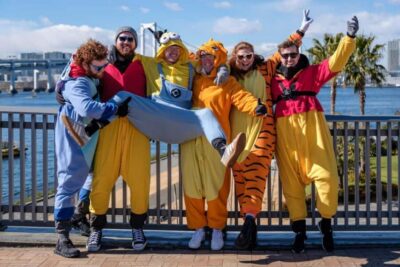
This tour is built for memory-making, not just motion. You get an anime costume rental, which is fun even if you keep it simple and use it mainly for quick photos around the facility.
For video, there’s an optional on-board Insta360 camera. It’s hands-free, mounted so you can record your whole drive from the kart. One important detail: you need a micro SD card to use it, and that card is not included. It’s described as available for purchase on-site.
You may also get free photos of your experience, which helps if you don’t want to rely only on your own shots. And if the weather turns, rain jackets have been available in past rides, including cases where rain lasted about half the tour.
If you care about getting usable footage, this setup is a strong value. You can enjoy driving and still end up with a clip that shows the route and landmarks from your perspective.
Who this tour suits best (and who should skip it)
This is a driving-focused activity, so it naturally fits certain travelers more than others.
It’s a great fit if you:
- Want to see Tokyo from the street, not from a bus window
- Are comfortable driving a cart at a calm, guided pace
- Like hands-on experiences and want a different way to understand the city
- Enjoy getting footage without holding a phone the whole time
It’s not suitable if you:
- Are under 18 (or if you are over 95)
- Don’t have a driver’s license
- Are visually impaired (not suitable, per the tour info)
- Plan to drive while intoxicated or under the influence (alcohol and drugs are not allowed)
Good to know: the tour is described as wheelchair accessible. That’s helpful if you use a chair, but because it’s also driving-based, you’ll still need to confirm what participation looks like for your situation on the day.
Price and value: what $116 really buys you
At $116 per person for a 2-hour experience, you’re paying for more than a go-kart rental. The value is in the package: you get a street-legal kart, fuel, a professional local guide, and the safety system that keeps the group moving smoothly.
Your ticket includes:
- Street-legal go-kart rental
- Fuel for the entire tour
- Professional local tour guide
- Anime costume rental
- On-board Insta360 camera use (micro SD required)
- Accident insurance
- Drinks (water, tea, coffee)
Not included is mainly what you’d expect for a hands-on activity: meals, and the micro SD card for the Insta360 if you don’t bring one.
What I like about the pricing structure is that it covers the parts that usually cost extra on your own. You don’t need to organize guide time, fuel, a sanctioned kart setup, or insurance. The experience also stays short enough to fit into a busy first Tokyo schedule.
Should you book this Tokyo Uptown Landmarks go-kart tour?
Book it if you want a fun, structured way to see big Tokyo landmarks while still feeling like you’re moving through real neighborhoods. The live guide with two-way radio is the deciding factor for many people because it keeps the ride calm, safe, and focused on the sights.
I’d think twice if you’re missing the right driving-license paperwork, or if you’re looking for a low-effort, no-driving tour. This is an activity where you’re behind the wheel, so preparation matters.
FAQ
How long is the Iconic Tokyo Uptown Landmarks Go Kart Tour?
It lasts 2 hours.
Where is the meeting point for the tour?
The meeting point is at the Kartzilla Go Kart facility, which is about an 8–10 minute walk from Yotsugi Station and accessible by the Keisei Line.
What documents do I need to drive on this tour?
You need a valid driving license plus your passport. You’ll also need an International Driving Permit issued under the 1949 Geneva Convention for non-residents, or other accepted license setups that include a Japanese translation issued by JAF for certain countries.
Is there a guide during the ride, and what languages are offered?
Yes. You get a live local tour guide, and the tour languages are English, German, and Spanish. The guide also provides real-time safety guidance via two-way radio.
Can I use a camera during the go-kart tour?
You can use an optional on-board Insta360 camera, but you need a micro SD card. Micro SD cards are available for purchase on-site.
Which landmarks will you pass on the Uptown route?
You’ll pass Tokyo Skytree, Ryogoku Kokugikan, Tokyo Station, the Imperial Palace surroundings, Tokyo Tower, Ginza, and Kabuki-za.
What is included in the price, and what is not?
Included are street-legal go-kart rental, fuel, a professional local guide, anime costume rental, on-board Insta360 camera use, accident insurance, and drinks. Not included are meals and the micro SD card for the camera.
Who is this tour not suitable for?
It’s not suitable for children under 18, people without a driver’s license, visually impaired people, and people over 95.
Can I cancel for a refund or reserve without paying immediately?
Yes. You can cancel up to 24 hours in advance for a full refund, and you can reserve now and pay later (pay nothing today).
More Tours in Tokyo

More Tour Reviews in Tokyo



More Street Karting in Tokyo


Fresh reviews from around Tokyo






Go-Karts, compared.
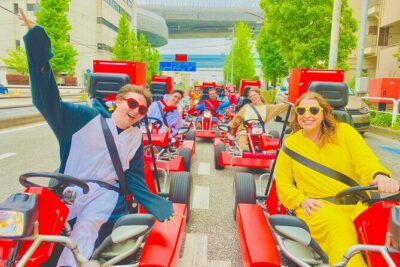 ★ 5.0Flagship 2-Hours Official Street Go-Kart Tour – Tokyo Bay ShopFrom $644,974 reviews
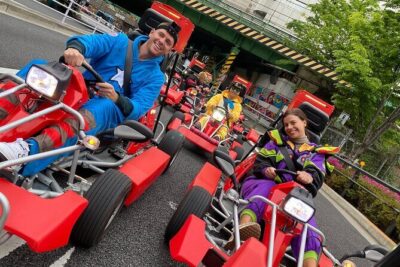 ★ 5.0Official Street Go-Kart in ShibuyaFrom $763,435 reviews
 ★ 5.0Official Street Go-Kart Tour – AkihabaraFrom $611,578 reviews
 ★ 5.0Shibuya Official Street Go-Kart in Shibuya AnnexFrom $69972 reviews
 ★ 4.7Premium Go-Kart Tour with Tower & Shibuya CrossingFrom $116528 reviews
Shibuya Kart: Premium Go-Karting Tour through Shibuya, TokyoFrom $63463 reviews
★ 4.7Premium Go-Kart Tour with Tower & Shibuya CrossingFrom $116528 reviews
Shibuya Kart: Premium Go-Karting Tour through Shibuya, TokyoFrom $63463 reviews
 ★ 4.7East Tokyo Go-Kart TourFrom $64370 reviews
 ★ 5.0Guided Tokyo Go-Kart Tour: Tokyo Tower to Shibuya CrossingFrom $155237 reviews
Browse the lists this tour appears in