
A half day can still feel like Tokyo.
This deluxe coach loop is built for quick, logical coverage: you start with a photo stop at the Robert Indiana LOVE sculpture, then hit Meiji Jingu Shrine, ride past major neighborhoods like Akihabara, Ueno, and Harajuku, and finish in Asakusa near Senso-ji. It’s interesting because you get both calm temple/shrine time and big-city context, without constantly switching trains.
Two things I really like: first, the format is geared for understanding, with a professional English-speaking tour guide and multilingual audio guidance available on the bus. Second, you get an actual taste of Japan in a timed block—an included matcha drink or matcha gelato described as a not-bitter style using Ichibancha from Uji, Kyoto, plus Wi‑Fi on the coach.
One thing to weigh: it’s short and efficient, and the tour ends in Asakusa (no hotel drop-off), so you’ll be doing your own plan for getting back—plus the Imperial Palace stop can be limited if conditions change.
In This Review
- Key takeaways before you go
- A fast Tokyo map you can actually follow in 3–4 hours
- Price and what you’re really paying for
- Pickup timing and the coach logistics you should plan around
- The Robert Indiana LOVE sculpture: why the tour starts there
- Meiji Jingu Shrine: 50 minutes in Tokyo’s breathing space
- Imperial Palace area: gardens, gates, and the reality of closures
- The drive past Akihabara, Ueno, and Harajuku: the city’s story from the window
- Asakusa matcha experience: Ichibancha from Uji, Kyoto
- Senso-ji Temple finish: Nakamise Avenue energy, with short time
- What guides tend to do well on this route
- Should you do the half-day, or go longer?
- Book it if you want efficiency. Pass if you want unlimited wandering.
- FAQ
- Where does the tour start and where does it end?
- How long is the half day Tokyo sightseeing tour?
- What’s included in the ticket price?
- Is admission free for the stops?
- What languages are available for audio guidance?
- What matcha do you get during the tour?
- What if a place is closed or the route changes due to weather?
- Do I get dropped off back at my hotel?
- Can I get a full refund if I cancel?
Key takeaways before you go
- Deluxe air-conditioned coach + Wi‑Fi for long transit without stress
- Meiji Jingu Shrine gets a full 50 minutes in a quiet, green setting
- Imperial Palace area is a quick garden visit that can shrink if closed
- Matcha is included (drink or gelato) and tied to Ichibancha from Uji
- Asakusa ending point near Senso-ji means you can keep walking afterward on your own
- Group size capped at 43 helps the whole thing stay organized
Before you commit, see how this one stacks up against a few Tokyo favourites:
- Mt Fuji and Hakone 1-Day Bus Tour Return by Bullet Train★ 5.0 · 26,383 reviews
- 1-Day Tokyo Bus Tour★ 5.0 · 14,250 reviews
- Tokyo: teamLab Planets TOKYO Digital Art Museum Entry Ticket★ 4.6 · 9,779 reviews
A fast Tokyo map you can actually follow in 3–4 hours
If you’re landing in Tokyo and want the big landmarks without building a subway plan from scratch, this tour’s structure makes sense. You’re not just traveling between dots on a map—you’re getting a guided route that places Tokyo’s major “mood shifts” next to each other: sacred forest calm (Meiji Jingu), government/heritage grounds (Imperial Palace area), and old-meets-new shopping streets (Asakusa and Senso-ji).
The coach ride also helps you “read” the city. From inside the bus you pass through corridors many visitors only see from one subway stop. Even if you don’t get out at every neighborhood, you come away with a clearer sense of where things are: Akihabara’s pop-tech energy, Ueno’s park-and-museums area, and Harajuku’s youth culture zone.
And because the tour is described as a morning sightseeing circuit with a delux coach, it’s paced for efficiency. Expect frequent regrouping, then short, focused windows at each highlight.
Price and what you’re really paying for
At $94.84 per person, you’re paying for three things that add real value in Tokyo:
- Transportation built into the price
You’re using an air-conditioned vehicle for multiple areas, which saves time and reduces “how do I get there” anxiety.
- Human guidance plus audio backup
A professional English-speaking guide is included, and multilingual audio runs during the ride. That matters when Tokyo’s sites have layers—Shinto vs. Edo-era context, why a shrine is arranged a certain way, what you’re looking at when the palace grounds appear different from what you expected.
- Included food experience: matcha
Your matcha drink or matcha gelato is part of the package. And the description isn’t just marketing—Ichibancha from Uji, Kyoto is specifically mentioned, along with a not-bitter style.
You could do parts of this on your own. But in a half-day, the cost is often justified by time saved and the guided storytelling. Where the price starts to feel less worth it is if you want a long palace stroll or deep history at every stop—this is built to move.
Pickup timing and the coach logistics you should plan around
This is a morning tour with two main pickup options:
- Matsuya Ginza pickup at 7:20am
- LOVE Shinjuku pickup at 7:50am
If you’re aiming to use the tour as your only major “structured activity,” treat it like a timed program, not a flexible hop-on/hop-off situation. The tour runs about 3 to 4 hours.
Also note: the start and end location in the product details is Asakusa (Taito City), but the operational notes clearly say you’ll be picked up from Ginza or Shinjuku and that the tour ends at Asakusa with no extra hotel drop-off.
One more practical detail: the route order can shift based on traffic, weather, and operation. The schedule is designed to hit the headline places, but you should expect some variation in pacing.
The Robert Indiana LOVE sculpture: why the tour starts there
Your first stop is the Robert Indiana sculpture titled LOVE. It’s listed as a free stop and lasts about 5 minutes.
This sounds minor, but it’s a useful warm-up. It’s a recognizable photo moment, it sets you up near a known meeting area, and it signals that the tour is organized—once you’re placed, you don’t have to hunt for the next part.
If you’re the kind of traveler who likes catching a quick iconic shot early, this start works. If you’re already tired from early morning jet lag, you’ll still appreciate the “short and simple” nature of this opening.





Meiji Jingu Shrine: 50 minutes in Tokyo’s breathing space
The highlight stop is Meiji Jingu Shrine, with 50 minutes and free admission. This is a Shinto shrine built in 1920 for Emperor Meiji, surrounded by lush greenery.
In a city that can feel loud and fast, the shrine is a reset button. The time matters here. Thirty minutes can be enough for photos, but 50 minutes is enough to walk the grounds at a calmer pace—slow down, notice the rhythm of the space, and actually feel the difference between outside streets and inside shrine atmosphere.
The guide’s role is especially valuable at Meiji Jingu because the meaning behind the layout is the kind of thing that’s hard to pick up from signage alone. With both a live English guide and multilingual audio, you get a better chance of connecting what you see with what it means.
Imperial Palace area: gardens, gates, and the reality of closures
Next comes the Imperial Palace stop with about 50 minutes and free admission. You’re told the tour includes traditional Japanese gardens with seasonal flowers and historical structures, and that you’ll visit gardens such as the East Garden depending on operation.
Here’s what to expect in practical terms:
- You may get more of the gardens when conditions allow.
- If the palace grounds are restricted or closed, the most you might see is the outer view, gates, and surrounding areas.
That’s not a deal-breaker—just don’t treat it like an always-guaranteed “walk inside the palace gardens for an hour” moment. Since the tour states it can substitute or adjust if a place is closed, your best mindset is flexible.
If your main goal is palace photography, you might feel rushed. If your goal is a guided look at how the palace grounds sit in relation to Tokyo, the included time is a workable compromise for a half-day.
The drive past Akihabara, Ueno, and Harajuku: the city’s story from the window
Between the major stops, the coach ride is part of the experience. The tour explicitly says you’ll drive past Akihabara, Ueno, Harajuku, and other major attractions on the way between points.
This is where you get a practical Tokyo geography lesson. You start to understand:
- which areas feel techy and neon-adjacent,
- where big parks and museum zones sit,
- and how Harajuku’s youth-culture vibe differs from quieter residential sections.
Even if you don’t step out, you can use this as your planning tool for later days. If you spot something you like from the bus, you’ll know where to return with more time.
Asakusa matcha experience: Ichibancha from Uji, Kyoto
Asakusa is where the tour turns from “sightseeing” into a hands-on flavor moment.
You get a 30-minute Asakusa matcha experience described as authentic, with matcha that’s not bitter and uses Ichibancha (first flush) from Uji, Kyoto. You also get matcha drink or matcha gelato included in the tour.
This is a smart inclusion because matcha in Japan isn’t just a beverage—it’s a small window into how tea culture works. The not-bitter style is especially relevant if you’ve only had mass-market matcha before. If you’re picky about taste, this detail gives you a heads-up that the tour is trying to serve something smoother.
There’s also a specific note: if the matcha store is closed (May 9), the tour plans to offer matcha souvenirs as a replacement for the matcha experience. That tells you they’re expecting normal operations, but they’re set up to adjust.
Senso-ji Temple finish: Nakamise Avenue energy, with short time
The schedule lists Senso-ji Temple as Stop 5, with about 10 minutes, free admission, and an emphasis on:
- photos at Kaminari-mon Gate
- shopping on Nakamise Avenue
- the tour ending at Senso-ji, with free time you can use at the surrounding area
Ten minutes is short. Treat it as a doorway moment, not a full temple day. You’ll likely get the classic gate photo and a quick taste of the shopping street vibe. If you want more time inside the temple grounds, you can usually extend your day on your own after the tour ends in Asakusa.
This stop also matters because Asakusa is one of Tokyo’s most photogenic neighborhoods. It’s old-school streets mixed with visitor-friendly energy—so even a short visit can still feel satisfying.
What guides tend to do well on this route
The tour is staffed with professional English-speaking guides, and the overall experience depends a lot on how well they manage a bigger group. Several guide names show up repeatedly in the operator’s feedback—like Lisa, Ayaka, Marin, Mao, Angela, Yuki, Yasushi, Hiro, Tsubasa, Elven—and common praise is for organization, clear explanations, and humor.
That’s not just “nice to have.” On a coach tour, the guide is the difference between:
- an automated slideshow passing by, and
- you understanding what you’re actually seeing.
If you sit near the front, you’re also more likely to hear the guide’s narration clearly. Some people have mentioned that hearing audio from the back can be harder, which is a good reminder: if you care about live commentary, choose your seat early.
Should you do the half-day, or go longer?
For most first-time Tokyo visitors, this half-day tour is a great “starter pack.” It’s best when:
- you want Meiji Jingu + Imperial Palace area + Asakusa in one morning,
- you have limited time,
- you’d rather pay for transport and guidance than plan routes and timing between neighborhoods,
- you want an included matcha tasting.
I’d consider a longer option instead if your priorities are:
- longer time at the Imperial Palace gardens,
- lots of free time at Senso-ji to shop and wander slowly,
- deeper culture lessons at every stop.
And if you’re not a fan of group pacing, keep expectations realistic. This is a schedule-based sightseeing loop. You’ll move as a group, get your time blocks, and then go your separate way at the end.
Book it if you want efficiency. Pass if you want unlimited wandering.
Here’s the decision rule I’d use:
Book this tour if you want to get your bearings fast and see the “must-hit” areas with minimal planning, while also getting an included matcha experience and an English guide.
Think twice if you need a long, quiet palace garden stroll or a slow, unhurried Senso-ji day. In a half-day, time is the currency, and the tour spends it on coverage.
FAQ
Where does the tour start and where does it end?
Pickups are listed from Matsuya Ginza (7:20am) or LOVE Shinjuku (7:50am), and the tour ends in Asakusa. Hotel drop-off is not supplied.
How long is the half day Tokyo sightseeing tour?
The duration is listed as 3 to 4 hours (approx.).
What’s included in the ticket price?
Included items are a professional English-speaking tour guide, an air-conditioned vehicle, matcha drink or matcha gelato, Wi‑Fi service available on the bus, pickup from Matsuya Ginza or LOVE Shinjuku, and multilingual audio guidance.
Is admission free for the stops?
The listed admissions for the main stops (including Meiji Jingu Shrine, Imperial Palace, Asakusa matcha experience, and Senso-ji Temple) are shown as free in the tour details.
What languages are available for audio guidance?
Audio guidance is available in English, Spanish, French, Italian, Germany (German), Portuguese, and Ukrainan (Ukrainian).
What matcha do you get during the tour?
You’re included in a matcha drink or matcha gelato experience. The matcha is described as not-bitter and made with Ichibancha (first flush) from Uji, Kyoto.
What if a place is closed or the route changes due to weather?
The tour notes that if a visiting place is closed, they will try to attend an alternative place. It also states that traffic or suspension of operation may affect whether all activities are achieved, and refunds are not given for changes.
Do I get dropped off back at my hotel?
No. The tour ends in Asakusa, and the notes say there is no extra drop-off service.
Can I get a full refund if I cancel?
The policy says you can cancel for a full refund if you cancel at least 24 hours in advance of the experience start time. If you cancel less than 24 hours before, the amount paid will not be refunded.
More Tours in Tokyo

More Tour Reviews in Tokyo



Fresh reviews from around Tokyo






Tours, compared.
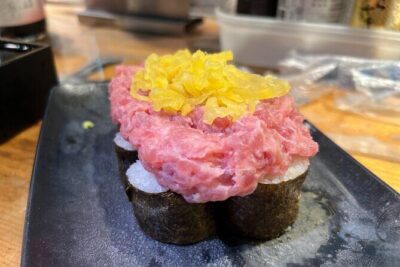 ★ 5.0Shinjuku Food Tour (13 Dishes at 4 Local Eateries)From $866,603 reviews
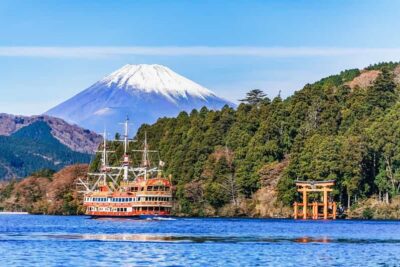 ★ 4.4Tokyo Mt Fuji 5th St & Hakone Cruise Bus Tour w/Bullet TrainFrom $1545,024 reviews
 ★ 5.0Flagship 2-Hours Official Street Go-Kart Tour – Tokyo Bay ShopFrom $644,974 reviews
 ★ 4.7Mt. Fuji Tour, Hakone Ropeway, Owakudani, Lake AshiFrom $544,002 reviews
 ★ 5.0Tokyo 6hr Private Tour with Government-Licensed GuideFrom $1553,902 reviews
 ★ 5.0Tokyo Bar Hopping Tour in Shinjuku (All-You-Can-Drink + Dinner)From $1063,587 reviews
 ★ 5.0Tokyo Tsukiji Fish Market Food and Culture Walking TourFrom $993,184 reviews
 ★ 4.9Shinjuku Food Tour (15 Dishes and 4 Eateries)From $852,033 reviews