
Reviewed · SHIBUYA TOURS
Graffiti in Tokyo Walking Tour: Shibuya and Harajuku
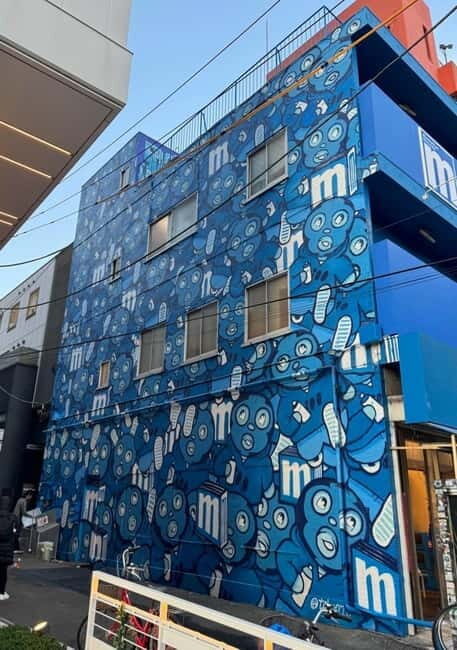
Street art rules Shibuya corners.
I love that this tour treats Tokyo graffiti like something you can actually read: tags, throw-ups, and larger pieces come with stories about why they show up in the first place. You’ll meet at Manhattan Records Shop (Shibuya), then walk to offbeat spots where most people walk right past. I also love the fact that your guide, Elena Calderon (Totemo), is a graffiti researcher for more than 10 years and an art curator, so the talk isn’t random.
One thing to consider: this is a walking tour through back streets. If the weather is wet or you’re not comfortable with lots of street-level looking and photographing, plan ahead with layers and steady shoes.
In This Review
- Key highlights to know before you go
- Why Shibuya and Harajuku work so well for graffiti
- Meeting at Manhattan Records and the walk start around Kifune Bldg
- Shibuya City: tags, throw-ups, and why context changes everything
- Harajuku in 10 minutes: quick contrast, strong photo payoff
- The underground side: legal walls, secret spots, and how to read the city
- Art gallery discounts: turning a 2-hour walk into an art afternoon
- Practical value: price, time, and what you really get
- What to bring and how to stay comfortable while you hunt walls
- Who this tour suits best (and who should skip it)
- A quick decision guide: should you book it?
- FAQ
- Where is the meeting point for the tour?
- How long is the graffiti walking tour?
- What neighborhoods does the tour cover?
- What languages is the live guide available in?
- What should I bring?
- Is transportation or gallery entry included?
Key highlights to know before you go
- Expert guide with real street-art research: Elena blends field experience with curator-level context.
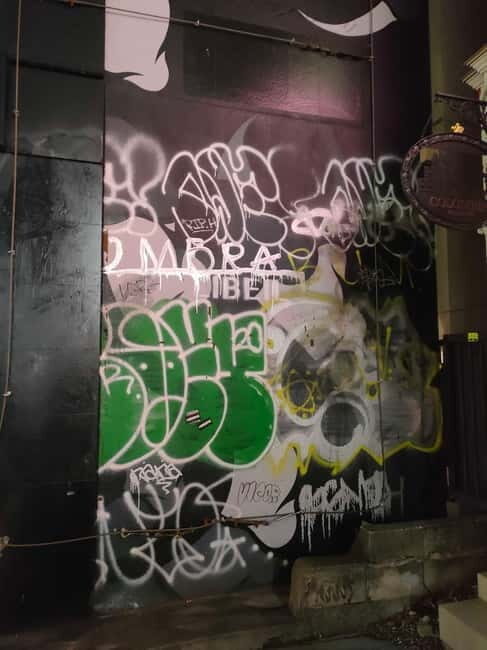
- Hidden graffiti spots, not the usual “main street” targets: you’ll get pointed to places that aren’t obvious.
- Shibuya first, Harajuku as a quick hit: most of your time is spent in Shibuya, with a short Harajuku stop.
- From tiny tags to bigger mural energy: you’ll see graffiti in different sizes and styles.
- Art galleries and local discounts after the walk: the tour includes guidance (and discount offers) tied to nearby art culture.
- Built for photography: you’re encouraged to bring a camera and hunt details, not just buildings.
More to do within sight of the Crossing
- Official Street Go-Kart in Shibuya★ 5.0 · 3,435 reviews
- Tokyo: Street Kart Experience in Shibuya★ 4.9 · 1,484 reviews
- Shibuya Meltdown Nightlife Tour: All-You-Can-Drink Bar Hopping★ 5.0 · 1,058 reviews
Why Shibuya and Harajuku work so well for graffiti
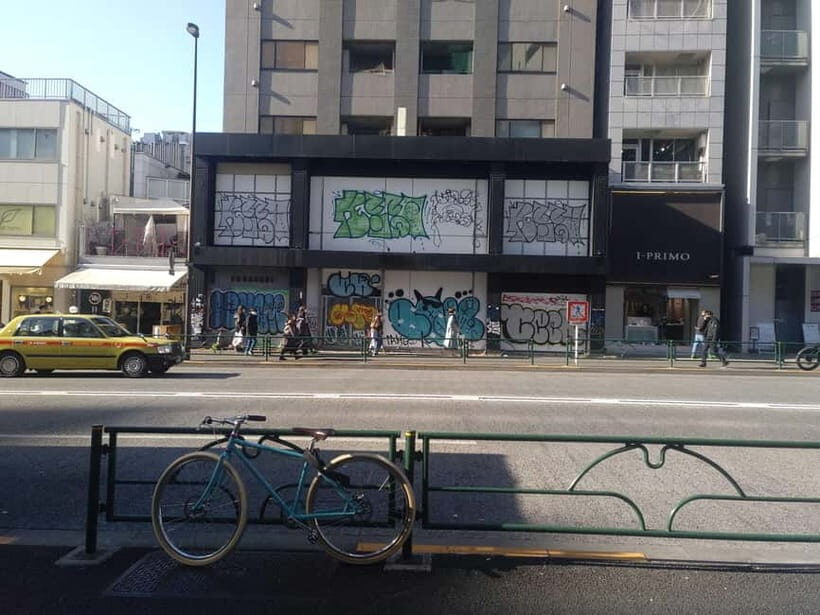
Tokyo’s graffiti scene feels different from what you might know elsewhere. In these neighborhoods, street art isn’t only about shock value. It’s also about identity, visibility, and what people want to say in a city built for motion.
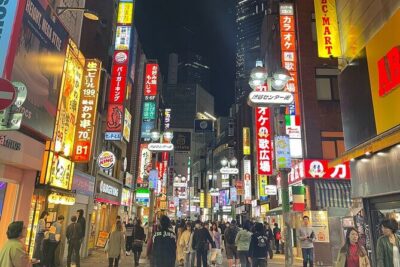
Shibuya brings the density. You’re surrounded by signals—neon, signage, commuters, side streets. That mix matters because graffiti often thrives where there’s constant foot traffic and constant visual noise. Tags can look like chaos until you start noticing patterns: recurring characters, consistent styles, or even how writers place work where someone will actually see it.
Harajuku is the contrast. It’s more about fashion, subculture, and the push-pull between public image and private language. You’ll only have about 10 minutes there, but it’s a useful shift in tone. Think of it as a short “palette change” before you go back to street-level Shibuya details.
Meeting at Manhattan Records and the walk start around Kifune Bldg
You meet at Manhattan Records Shop in Shibuya. That’s handy because it’s a clear landmark and also puts you right near the flow of the neighborhood—easy to orient yourself when you’re arriving.
The route is organized around Kifune Bldg. as the starting/ending anchor. Practically, that means you’re not walking in a confusing zigzag with no sense of where you’ll return. You start, you fan out through the back-street world, and you end back at the same base point.
This matters because graffiti spotting rewards patience. If your group is constantly “resetting” with uncertain directions, you’ll miss the small stuff—sticker layers, narrow wall edges, or pieces hidden in plain sight. With a clear starting point and return point, you can focus on seeing.
Shibuya City: tags, throw-ups, and why context changes everything
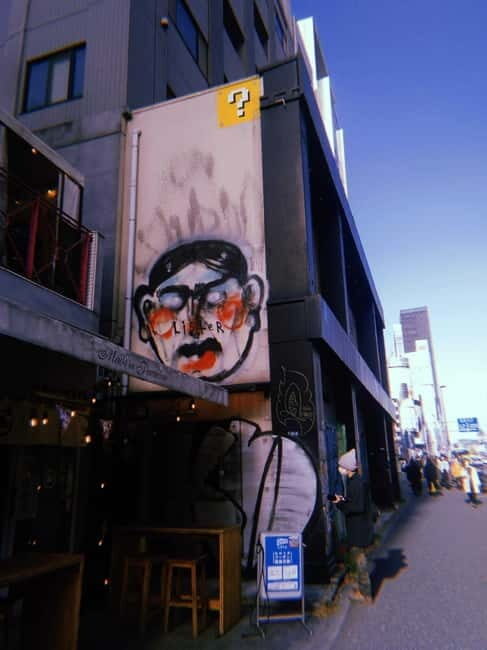
Most of your tour time is in Shibuya, and that’s exactly where you want to spend it. The walk is designed to take you from smaller markings to bigger works—tags, throw-ups, and larger murals—so you can understand how writers communicate at different scales.
Here’s what I think makes this portion worth your time: you’re not just being shown where graffiti exists. You’re getting the reasons behind it. Elena’s background as a graffiti researcher for more than 10 years shows in how she explains style choices and repetition. She helps you connect what you see on a wall to the larger culture around it—how Japanese street art language fits into Tokyo’s broader visual habits.
You’ll also get help spotting pieces that feel “invisible” unless someone trains your eye. Shibuya has a lot of surfaces, but graffiti doesn’t announce itself politely. Some works are angled for a specific line of sight. Others are placed where you only notice them if you slow down and look at the edges—not just the main walls.
A bonus from the experience: the tour also points you toward street art locations you can photograph again later. One of the most practical things you can do after a street tour is return to a wall that caught your attention. This tour sets you up for that, not just for one quick look.
Harajuku in 10 minutes: quick contrast, strong photo payoff
Harajuku is short on time—about 10 minutes—but it’s intentionally there. This stop gives you a different street-art mood without dragging the schedule.
In that small window, you’ll likely focus on what fits Harajuku best: the relationship between street identity and street writing. Harajuku is known for subculture aesthetics, so graffiti here can feel like part of a bigger visual conversation—less about documenting the city and more about expressing a persona inside it.
For you, the practical takeaway is simple: use Harajuku to capture the most “you” images. Don’t try to find everything. Pick a few details—letter shapes, sticker clusters, or any mural work that seems to relate to the neighborhood’s style energy. Then get back to Shibuya while your eye is still tuned.
Because you only have a short stop, go in ready to shoot fast. Bring your camera, stand where the guide tells you to stand, and take a few angles. Street art often changes depending on how light hits it and which direction you’re facing.
More colour: other Harajuku wanders



The underground side: legal walls, secret spots, and how to read the city
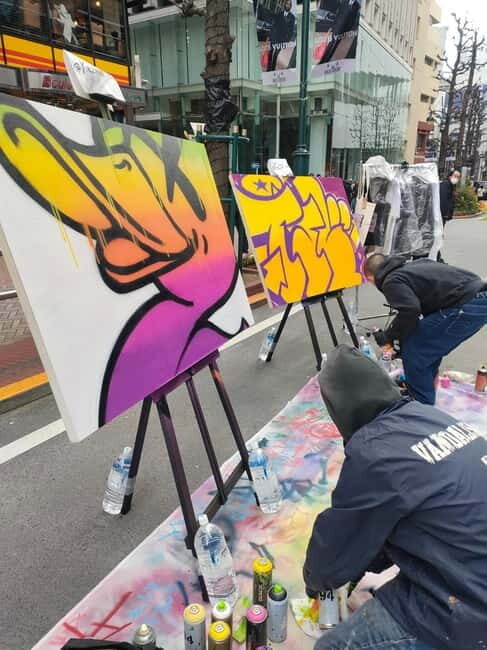
One of the most interesting promises of this tour is the mix of public and not-so-public graffiti scenes. You’ll move between legal expression and more discreet street spots—places that aren’t meant for casual discovery.
This is where Elena’s curator brain helps. She doesn’t treat graffiti as a single category. Instead, she frames it as a set of practices: writing styles, placement decisions, and the social meaning behind who shows up where. That context makes the tour feel less like hunting and more like learning how Tokyo’s walls act like communication boards.
Also, the “hidden spots only locals know” part matters for how you experience the city. If you try to self-tour graffiti, you tend to look only at the obvious—big murals and the stuff that tourists have already photographed. This tour trains you to spot the quiet work. It can be stickers on a corner, small marks tucked under structure lines, or a tag that looks like it’s part of the building itself.
And yes, some of what you’ll see is often illegal. The point isn’t to encourage rule-breaking. The point is understanding why street art shows up the way it does in a city where public space is intensely managed. You’ll get that nuance through the stories your guide shares, not through shock.
Art gallery discounts: turning a 2-hour walk into an art afternoon
This tour isn’t only about street-level walls. It also includes insider knowledge on top art galleries, plus discount offers in art galleries and restaurants tied to the tour experience.
Why that matters: graffiti sits in a broader art conversation. If you leave Tokyo with only photos of walls, you miss the connection to how street art gets referenced, collected, and discussed elsewhere. With the gallery guidance included, you can continue the theme without doing extra research from scratch.
Here’s how I’d use it. After the walk, pick one or two follow-up destinations that match what you liked most—more street-writing details, larger murals, or the curatorial side. Ask your guide to point you toward places where you’ll see related art energy. Then use the included discounts to stretch your budget a bit.
This is smart value for $38, because you’re not just buying an explanation. You’re buying access to a guide who can connect street art to nearby cultural stops—and help you get more out of the time you already spent in the neighborhood.
Practical value: price, time, and what you really get
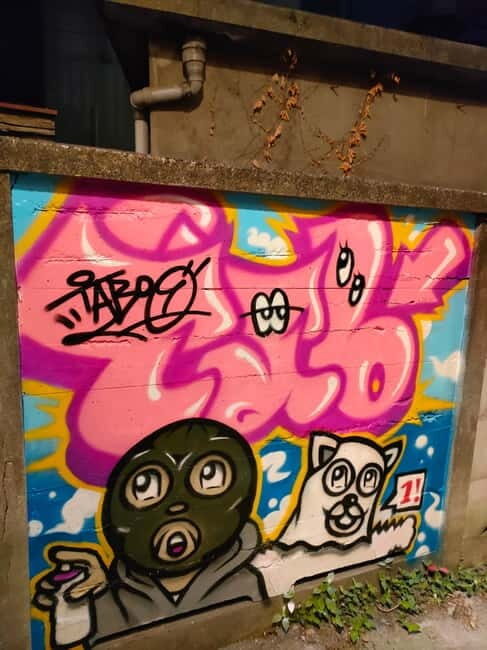
$38 for a 2-hour walking tour is a fair price in Tokyo terms—especially because the experience is built around an expert with 10+ years in graffiti research and curatorial experience. For you, the real “value” isn’t only the walking. It’s the pattern-recognition and context that you can’t easily get from maps.
A self-guided walk can be fun, sure. But you’ll spend time second-guessing. You’ll miss smaller work. You’ll also struggle to interpret what you’re seeing—why that tag matters, why that wall was chosen, and how Japanese street art language fits together.
With this tour, you get:
- a focused route that prioritizes where to look
- insider knowledge that goes beyond basic descriptions
- exclusive access to hidden graffiti spots
- follow-up leads via gallery and restaurant discounts
If you’re the type who likes to learn as you wander—rather than just “collect photos”—this fits well.
What to bring and how to stay comfortable while you hunt walls
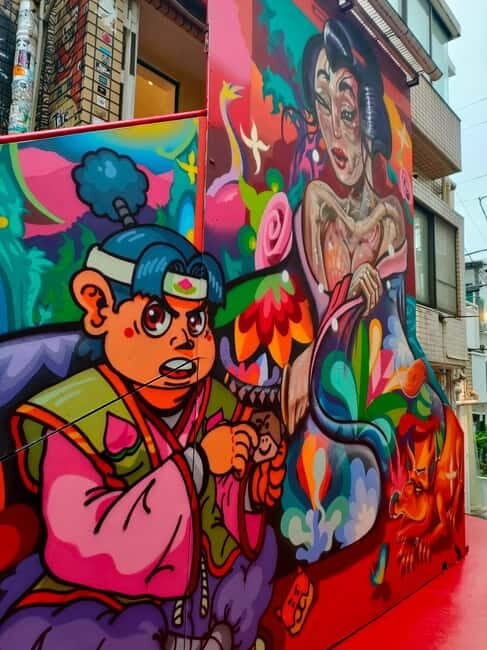
The tour asks for a few practical basics. Bring comfortable shoes, a camera, water, and cash. Street art tours are still street tours. You’ll want your feet ready for uneven sidewalks and lots of stopping.
Also, expect varying weather. Tokyo can go from fine to annoying fast, and your time is short. Layers help. If it’s raining, consider how you’ll protect your phone or camera while you take photos.
As for behavior rules, keep it clean and local:
- no smoking
- no alcohol or drugs
- don’t litter
That’s not just politeness. It keeps the mood safe and respectful, especially when you’re in areas where street activity is already complicated.
Who this tour suits best (and who should skip it)
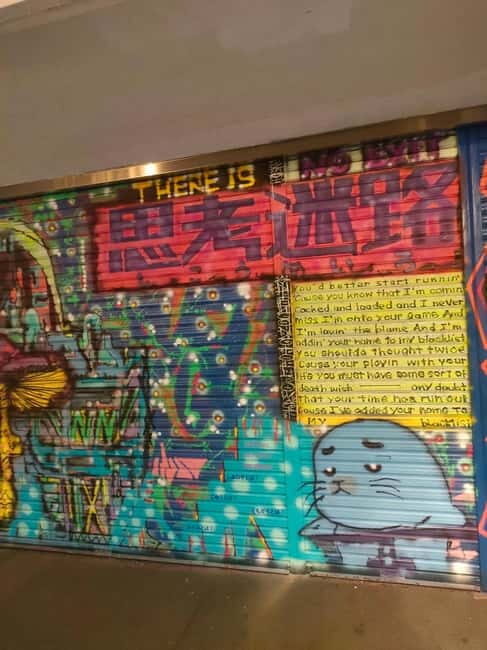
This tour is a strong fit if you’re interested in street art culture, you like detail photography, and you want the story behind tags—not just the visuals. You’ll likely enjoy it most if you’re the kind of traveler who slows down and looks at textures: walls, edges, signs, and the little layers people leave behind.
It’s not suitable for people with mobility impairments. It’s also not suitable for babies under 1 year, and it’s not suitable for people over 95 years. If any of those apply, it’s worth choosing a different style of experience with less walking and fewer street stops.
Languages are English and Spanish, so communication should be straightforward if you speak either.
A quick decision guide: should you book it?
If you want a graffiti experience that focuses on seeing and understanding—not just walking through famous streets—book this. The two biggest reasons are the guide’s research-and-curator angle and the access to hidden spots you’d be unlikely to find on your own.
Skip it if you hate walking, you don’t want weather variability, or you’d rather spend your time in indoor museums. This tour is built for street eyes and camera-ready moments.
If your goal is to understand Tokyo street art as a living language, this 2-hour Shibuya-and-Harajuku route is a smart use of time. It’s short enough to fit any day, and focused enough that you’ll leave with better photos and better questions.
FAQ
Where is the meeting point for the tour?
The tour meets at MANHATTAN RECORDS SHOP (Shibuya).
How long is the graffiti walking tour?
The duration is 2 hours.
What neighborhoods does the tour cover?
You’ll walk through Shibuya and make a short visit to Harajuku.
What languages is the live guide available in?
The live tour guide is available in English and Spanish.
What should I bring?
Bring comfortable shoes, a camera, water, and cash.
Is transportation or gallery entry included?
Transportation to the meeting point isn’t included. Entrance to art galleries/museums is not included, but the info provided says most of them are free of charge.
More Tour Reviews in Tokyo






More Harajuku to Wander
Still in Shibuya? Keep Going






Fresh reviews from around Tokyo






Shibuya Tours, compared.
 ★ 5.0Official Street Go-Kart in ShibuyaFrom $763,435 reviews
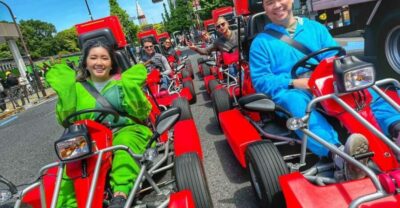 ★ 4.9Street Kart Experience in ShibuyaFrom $741,484 reviews
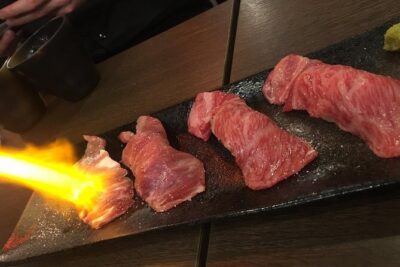 ★ 5.0Shibuya Meltdown Nightlife Tour: All-You-Can-Drink Bar HoppingFrom $1061,058 reviews
 ★ 5.0Shibuya Official Street Go-Kart in Shibuya AnnexFrom $69972 reviews
 ★ 5.0Shibuya Food Tour (13 dishes and 4 Eateries)From $77770 reviews
 ★ 5.0Best of Shibuya Food TourFrom $217612 reviews
 ★ 4.8Shibuya Highlights Walking TourFrom $19601 reviews
 ★ 4.7Premium Go-Kart Tour with Tower & Shibuya CrossingFrom $116528 reviews
Browse the lists this tour appears in