
Reviewed · TICKETS
Catch a Baseball Game in Tokyo with a Local – Tickets Included
Tokyo baseball is a whole different show.
This small-group tour turns game day into something you can actually follow, even if your Japanese is limited. You get tickets handled for you and a guide who helps you join the rhythm of the crowd with player cheers—plus a walk to the stadium and fun snacks along the way.
I especially love how the experience focuses on what matters in the stands: learning cheers, understanding the home-team energy, and not feeling lost. I also like that you can borrow a home jersey (for some games) so you blend in fast, not just sit there watching the score.
One consideration: your exact seat experience can vary by game and ticket location. If you’re hoping for the thickest chant zone, it’s smart to book early so you have a better shot at the home-section atmosphere.
In This Review
- Key Things I’d Not Miss
- Why Japanese Baseball Feels Like a Whole Show
- Meet at the Train Station, Then Walk In Together
- Tokyo Dome, Meiji Jingu, or Yokohama Stadium: Weather and Atmosphere
- The Real Magic: Learning Cheers and Joining the Crowd
- What You’ll Do During Game Time (Without Needing a Playbook)
- Tickets, Seats, and the Value of Having Everything Taken Care Of
- Price and Logistics: Why This Feels Like a Smart Buy
- Who This Tour Fits Best (and Who Might Not)
- Should You Book This Baseball-Game Tour?
- FAQ
- What’s included with the $110 price?
- Where can the baseball game take place?
- Do I need to know baseball rules or Japanese?
- How long does the tour last?
- Can I take photos and bring my own food or drinks?
- How many people are in the group, and is pickup offered?
- What’s the refund or reschedule situation?
Key Things I’d Not Miss
- Max 6 people means you’re not swallowed by a big tour crowd
- Tickets included (Tokyo Dome, Meiji Jingu Stadium, or Yokohama Stadium) so you’re not wrestling with language at the gate
- Chant coaching so you can participate instead of just clap at random
- Loaner home-team gear for some games to help you fit in immediately
- Snack stop built in so you don’t spend the whole game hunting food
- No language barrier because the guide helps with cheers and what’s happening
Worth weighing up alongside this Tokyo pick:
- Tokyo: teamLab Planets TOKYO Digital Art Museum Entry Ticket★ 4.6 · 9,779 reviews
- Tokyo: Japanese Dance Cabaret Theater Asakusa-Kaguwa Ticket★ 4.8 · 2,270 reviews
- Tokyo Skytree Admission Ticket with Tembo Deck and Galleria★ 4.0 · 589 reviews
Why Japanese Baseball Feels Like a Whole Show
Japanese baseball isn’t just a sport—it’s crowd participation with rules of its own. Even if you don’t know baseball stats, you can still enjoy the game because the focus here is the moment-to-moment energy in the stands.
That’s where this tour wins. The guide doesn’t just point you toward your seats and disappear. They help you learn team and player cheers, so you can react when the crowd reacts. In the US, most fans mostly watch and react quietly. In Japan, fans often stand and sing together, and that changes the entire feel of the game.
You also get to see how big-league stadium culture plays out in real time: the rhythm of innings, the call-and-response vibe, and the way concessions and entertainment show up around the action. Reviews specifically mention how guides bring chant sheets and help people join in, and that’s exactly what you want if you’re not fluent or not deeply familiar with Japanese baseball traditions.
The result: you come away feeling like you attended an actual local event, not a one-off ticket purchase.
Meet at the Train Station, Then Walk In Together
The tour starts at a train station meeting point, then you walk to the stadium as a group. This matters more than it sounds. Stadium areas can be maze-like, especially around game time, and a short walk with a guide helps you get your bearings quickly.
You’ll also get practical guidance that reduces stress. Past groups have praised the way guides communicate where to meet and how to get there by train, which is huge in Tokyo. If you’ve ever arrived at a station and stood there doing mental gymnastics with station exits, you’ll understand why this part is worth paying for.
The tour runs about 3 to 4 hours, so the pace stays simple. You’re not doing a long sightseeing trek—this is about getting you seated, ready, and in the right mindset for the game.
Also check the small details: cameras are fine, and backpacks/bags are okay. Outside food and drinks are allowed too, just no glass bottles or cans—handy if you want to manage your own snacks or avoid lines.
Tokyo Dome, Meiji Jingu, or Yokohama Stadium: Weather and Atmosphere
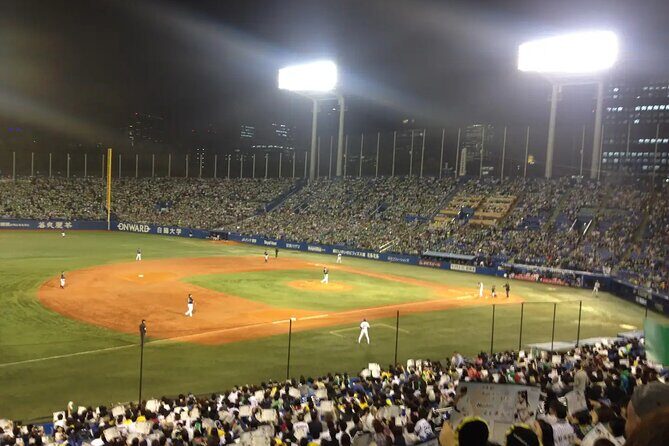
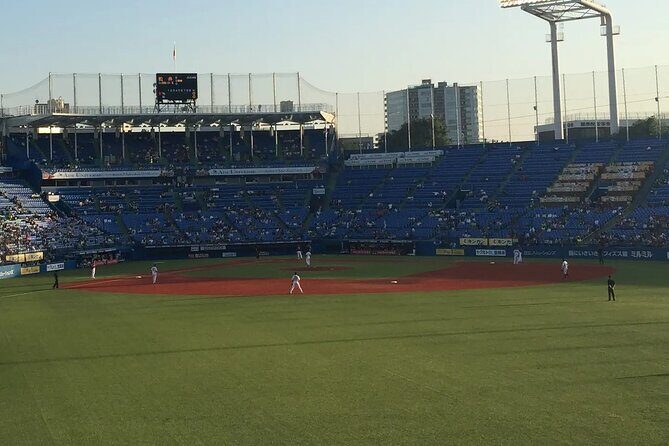
Your game could happen at Tokyo Dome, Meiji Jingu Stadium, or Yokohama Stadium. That choice (or assignment) affects two big things: comfort and vibe.
Tokyo Dome is the easiest sell for weather. Reviews highlight that it’s indoors and air-conditioned, which is a major advantage on hot days. If you’re traveling in summer or visiting during a warmer stretch, this can be the difference between enjoying the whole game and just surviving it.
Meiji Jingu and Yokohama are different stories because you’re working with outdoor conditions. The tour also notes it requires good weather, and if the experience is canceled due to poor weather you’ll be offered another date or a full refund. So if you’re booking around rain season or a forecast you don’t trust, keep a close eye on updates.
Atmosphere-wise, the venue changes the sound and crowd feel. Regardless of where you sit, this tour is still set up for participation. The guide helps with cheers in real time, so you’re not stuck staring at an unfamiliar scoreboard while the rest of the stadium sings.
The Real Magic: Learning Cheers and Joining the Crowd
Here’s the core of the experience: the guide helps you learn the chants and the player cheers. That’s what makes your evening feel like it’s happening with the fans, not to them.
In past outings, guides such as Jason and Kristi have been praised for fluent communication and for preparing chant materials like sheets that include what to say and when. Some groups also mention transliteration support, which helps a lot if you’re trying to follow along without reading every character.
What you get is more than trivia. You’ll learn how cheers map to players and moments in the game, and you’ll start predicting when the crowd will surge into a new chant. Once you get that rhythm, the game becomes easier to enjoy—even if you can’t follow every play.
A small-group format (up to 6 travelers) helps here too. If you’re learning chants, you don’t want a giant group where the guide can’t correct timing or answer questions. The tour is set up for interaction, not passive watching.





What You’ll Do During Game Time (Without Needing a Playbook)
At the stadium, you’ll watch the game together and get help with learning cheers. This is the part you’ll feel most: you’re joining the home-section energy, and the guide can cue you on when to chant.
You’ll also likely notice the extra layers that make a Japanese baseball game feel like an event. Reviews mention things like lively music and crowd singing, and the sight of beer vendors and concessions moving through the stands. Even if those details aren’t your focus, they shape the atmosphere around you.
The tour also includes snacks. That’s not just a perk—it’s smart. A baseball game can eat your time and your appetite. Having snacks provided keeps you from spending innings wandering or paying extra for convenience.
And for some games, you can borrow a home team jersey and cheering goods. Reviews describe that as a fast way to fit in. You don’t need to dress like a superfan to enjoy it; it just helps you look and feel like part of the crowd.
If you want to do a little pre-game shopping, some groups mention being taken to buy team gear. That’s a bonus when it happens, but the bigger win is that your guide handles the “what now?” moments.
Tickets, Seats, and the Value of Having Everything Taken Care Of
You’re paying $110 per person, and the big value is that tickets are already included. This isn’t just a walking tour. You’re getting the actual admission plus snack support plus guide-led cheering help.
In Tokyo, getting event tickets without language stress can be a headache. This tour removes that friction. You get a mobile ticket, and the guide is there to help you arrive correctly and enjoy your seats instead of troubleshooting entry procedures.
Seat type is the one area where your experience can shift. Reviews mention that some groups found themselves in higher seats compared to those in a more focused cheering section. The view is still good, but if your dream is to be in the loudest chant zone, early booking is your best friend.
One practical note: bench seating can feel cramped for larger Americans. That’s not a tour flaw, it’s a stadium reality. If you’re tall or broad-shouldered, plan for a snug fit and wear clothes you can tolerate for 3 to 4 hours.
Cameras are allowed, so you can capture the crowd energy and the stadium without worrying you’re breaking a rule.
Price and Logistics: Why This Feels Like a Smart Buy
On paper, $110 might look like a lot for a 3 to 4 hour evening. But compare what you actually receive:
- Game ticket included
- Snacks included
- Chant guidance that turns the experience into participation
- Loaner cheering gear for some games
- Small group size (max 6)
- Pickup offered (when available) and support from a guide who can communicate effectively
If you had to buy tickets yourself and then figure out cheers, it would cost you time and energy. If you’ve tried to navigate Japanese ticket systems or stadium instructions before, you already know the difference between easy and stressful.
This tour is priced like a service designed to protect your time. You pay for less confusion and more enjoyment, not just for a seat.
One final logistics detail: confirmation is received within 48 hours of booking, subject to availability. That means you can plan, but you’re still dealing with live game schedules and ticket supply.
Who This Tour Fits Best (and Who Might Not)
This is a strong match if you want:
- A sports experience in Tokyo that feels local, not touristy
- Help joining Japanese baseball traditions like player chants
- A low-stress way to handle stadium tickets and entry
- A fun night out where you don’t need to be a hardcore fan
Even reviews from people who weren’t lifelong baseball fans still call it a must-do because the chants and crowd participation carry the experience.
It’s also a good choice for families, since the focus is cultural context and participation rather than complicated baseball rules. One review mentions taking a family and enjoying the comfort of Tokyo Dome during July heat—exactly the kind of practical advantage you get with this setup.
If you want a silent, comfort-first experience where you watch without joining in at all, you might find the constant cheering a bit much. But if you’re okay with noise, singing, and standing, you’ll probably love it.
Should You Book This Baseball-Game Tour?
I think this is a smart booking for most people who want a Tokyo “you had to be there” evening. The combination of tickets included, chant coaching, and small group energy is what makes it feel like more than a ticket.
Book it if you:
- Want a local guide experience without language headaches
- Care about understanding the crowd culture, not just the game score
- Prefer a guided plan over last-minute ticket research
Consider booking early if you’re picky about seating—some locations can be higher or less centered in the cheering zone. Also, if you’re traveling during uncertain weather, remember the tour requires good weather, and you’ll be offered another date or a full refund if the game is canceled due to poor weather.
If you’re ready to sing along a little and enjoy baseball like Japan does, this is the kind of outing you’ll remember long after the final out.
FAQ
What’s included with the $110 price?
The price includes your baseball game admission, snacks, and home jersey and cheering goods for some games. Dinner is not included.
Where can the baseball game take place?
Games are held at Tokyo Dome, Meiji Jingu Stadium, or Yokohama Stadium.
Do I need to know baseball rules or Japanese?
No. You don’t need to know the rules, and the guide will help you learn the cheers so you can participate.
How long does the tour last?
It runs about 3 to 4 hours.
Can I take photos and bring my own food or drinks?
Yes, cameras are ok. You can bring outside food and drinks, but no glass bottles or cans.
How many people are in the group, and is pickup offered?
The group size is capped at 6 travelers. Pickup is offered (when available).
What’s the refund or reschedule situation?
The experience is non-refundable and cannot be changed for any reason. If it’s canceled due to poor weather, you’ll be offered a different date or a full refund.
More Tickets in Tokyo



More Tour Reviews in Tokyo


Fresh reviews from around Tokyo






Tickets, compared.
 ★ 4.6teamLab Planets TOKYO Digital Art Museum Entry TicketFrom $259,779 reviews
 ★ 4.8Japanese Dance Cabaret Theater Asakusa-Kaguwa TicketFrom $492,270 reviews
 ★ 4.5Kamakura & Enoshima Day Trip including Temple TicketsFrom $581,375 reviews
 ★ 4.0Tokyo Skytree Admission Ticket with Tembo Deck and GalleriaFrom $15589 reviews
 ★ 4.1‘Red Tokyo Tower’ Digital Amusement Park TicketFrom $37398 reviews
 ★ 5.0Tokyo Sword Experience – includes Museum Ticket/Ninja ExperienceFrom $84314 reviews
 ★ 4.3Nikko: Edo Wonderland Edomura Cultural Theme Park TicketFrom $35205 reviews
 ★ 4.8KABUKI Show at Kabukiza Theatre Admission TicketFrom $106152 reviews