
Reviewed · KAMAKURA DAY TRIPS
Your Own HANKO Name Seal Activity in Kamakura.
Your name seal is more than a souvenir. It is a real Japanese hanko made for you, with a craftsman walking you through the why and the how. You start with the history and styles of hanko writing, then learn how to write your name in Japanese characters before you design the seal you will use.
I especially like the personal attention and the way the shop treats the craft like craft. The proprietor, Tsukino (also mentioned as Mitsuhiro in conversation), is third-generation and explains options without rushing you, including materials and tradeoffs.
One thing to plan for: the workshop is morning-only, and the finished seal comes later that afternoon (or you can request shipping). Also, some upgrades like special materials or the case cost extra, and red ink is not included.
In This Review
- Key highlights you’ll feel right away
- Why a Kamakura hanko workshop feels like a real craft, not a gimmick
- Price and value: what you get for $131.65
- What you make: your name in katakana, turned into an engraved stamp
- The lesson part: history and styles of hanko writing
- Designing your seal: fonts, character choices, and personal style
- Materials, ink, and cases: how to avoid disappointment later
- The engraving process: machine rough cut, craftsman finishing
- Timing in Kamakura: morning workshop, afternoon pickup
- Where to meet and how to get there without stress
- How this connects to real Japanese identity and everyday use
- The overall experience vibe: intimate, focused, and not salesy
- Who this workshop suits best
- Who might find it less perfect
- Should you book this Kamakura name seal workshop?
- FAQ
- What language support is available during the workshop?
- What does the workshop include in the price?
- Can I choose materials, colors, or a case?
- Do I get red ink with the seal?
- How long is the workshop, and when do I get the finished seal?
- What if I need to cancel?
Key highlights you’ll feel right away
- Hanko culture + practical writing: You learn the meaning of seals, then actually apply it to your own name.
- Design choices from the start: Katakana type and font selection shape the final look.
- Craftsmanship workflow: Rough carving uses a machine, then skilled hands do the finishing.
- A take-home keepsake that has purpose: You leave with an engraved seal and pouch, not just a picture.
- Private, low-pressure session: Only your group gets the proprietor’s full attention.
Why a Kamakura hanko workshop feels like a real craft, not a gimmick
In Japan, a hanko isn’t just decoration. It is tied to identity, and people use it to sign and verify things in everyday life and more formal settings. So when you make one in Kamakura, you are not only collecting a souvenir. You are making something you can actually use.
This workshop keeps the focus on the craft. You do not just pick a design and leave. You learn what makes hanko writing different from regular handwriting, and why certain styles work better for sealing. That turns the experience into something you can understand, not just something you can buy.
Price and value: what you get for $131.65
At $131.65 per person, this is a mid-range activity in Japan, but it is not random spending. You are paying for (1) instruction on hanko culture and katakana, (2) time with the proprietor to set your design correctly, and (3) an engraved seal carved in Japan that you take home.
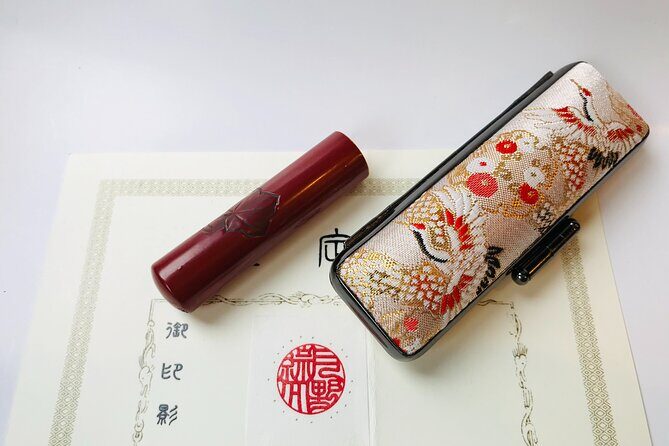
The included items matter for value. You get the hanko seal (listed as Japanese boxwood), an engraving fee for katakana, and an original pouch. Those pieces are part of what makes it feel complete when you use it later.
Just keep in mind where costs can rise:
- Upgraded materials (horn, wood, or gemstone) cost extra
- A case is sold separately
- Red ink is not included
If you want the full premium look, budget a bit more.
What you make: your name in katakana, turned into an engraved stamp
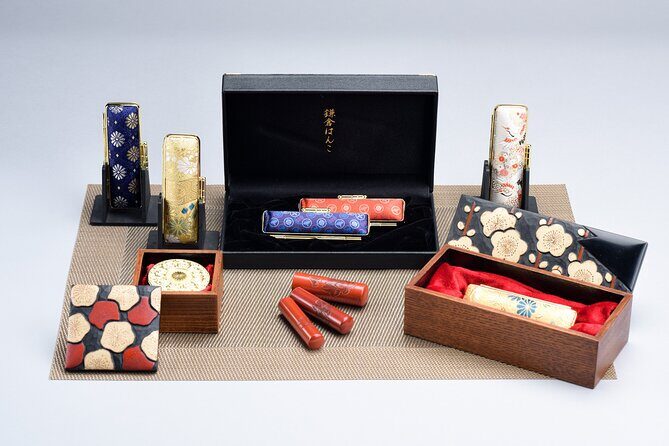
Your final product is an original hanko seal with your name. The process is built around katakana, which is often used for name seals and works well for sealing because the shapes can be made with clear carved edges.
You will choose:
- The type of seal (katakana)
- A font/typeface style
- Your materials and color options for the seal setup
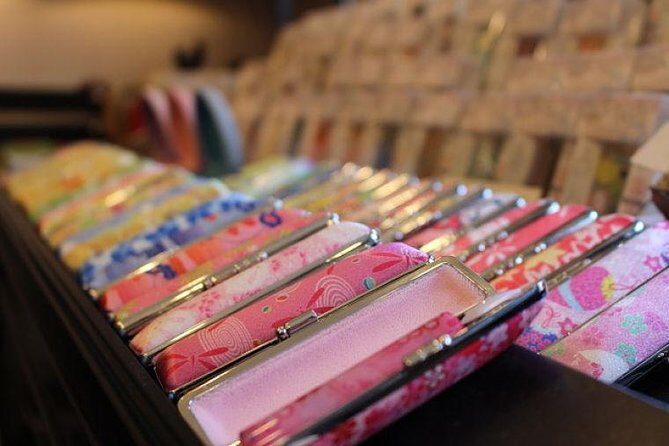
- The case type and color (sold separately)
Once you pick your choices, the shop engraves the design onto your seal blank and prepares it for use. In short, you leave with something that looks like Japanese craftsmanship, because it is.
The lesson part: history and styles of hanko writing
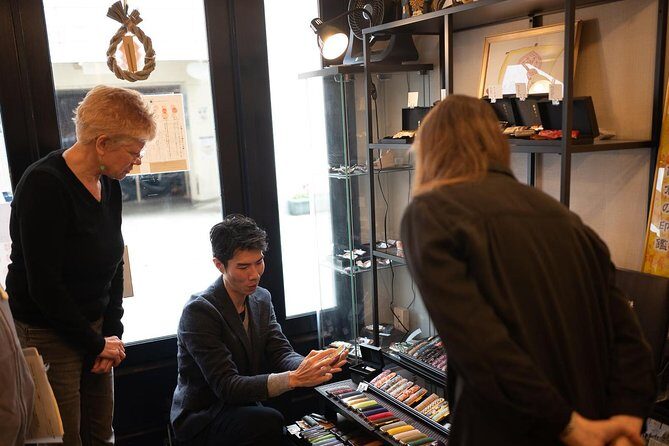
Before you touch design, you learn the background. The workshop explains the history and culture of Japanese name seals and walks you through different styles of hanko writing. That matters because hanko lettering is not just personal preference. It is built around how stamps behave when ink hits carved surfaces.
This is also where you get help turning your name into Japanese characters. You discover how to write your name in Japanese and how character forms can reflect your personality and style—at least within the constraints of seal-friendly lettering.
A big win here: the proprietor answers questions. In the feedback, people repeatedly mention clear explanations and no pushy sales. That makes it easier for you to participate confidently, even if your Japanese is minimal.
Designing your seal: fonts, character choices, and personal style
This is the part you will probably care about most. You get to design a seal that feels like you, but still looks like it belongs in Japan.
Expect a step-by-step approach:
- First, you set the direction by choosing your katakana setup
- Then you select a font that fits official-seal style guidance
- The shop helps you write your name in Japanese characters in a way that matches the style you choose
One practical tip: think about readability. A seal has to transfer clearly when stamped. So while you might like complicated forms, you also want a design that inks cleanly. The proprietor’s guidance on fonts and how official seals are typically done helps you pick something that will actually work.
Materials, ink, and cases: how to avoid disappointment later
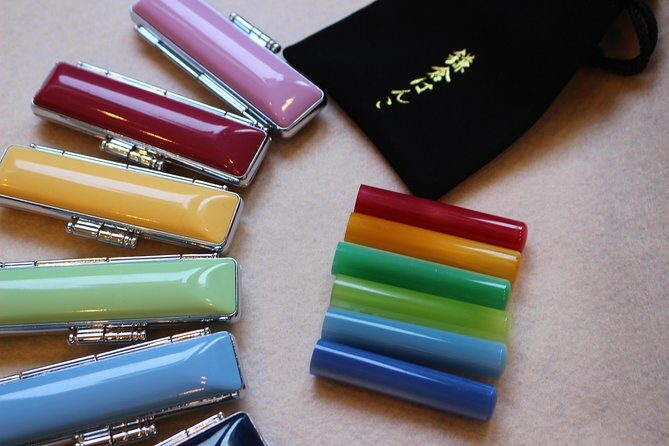
The included setup covers a good base, and then you decide how fancy you want to go.
What’s included:
- Hanko seal (Japanese boxwood)
- Engraving fee (katakana)
- Original pouch
What you may pay extra for:
- Upgraded materials such as horn, wood, or gemstone
- Case (sold separately)
- Potential typeface upgrades
- Red ink is not included
Also note the color and engraving substrate options mentioned in the workshop details. You can choose a preferred color, and the base engraving is described as happening on acrylic, with horn and wood as additional-fee options. The key for you: decide whether you want the seal to feel classic and traditional, or more customized in look and feel.
If you plan to use your hanko after the workshop, check what you have for stamping. Since red ink is not included, you might want to pick it up later if you want the full stamping experience.
The engraving process: machine rough cut, craftsman finishing
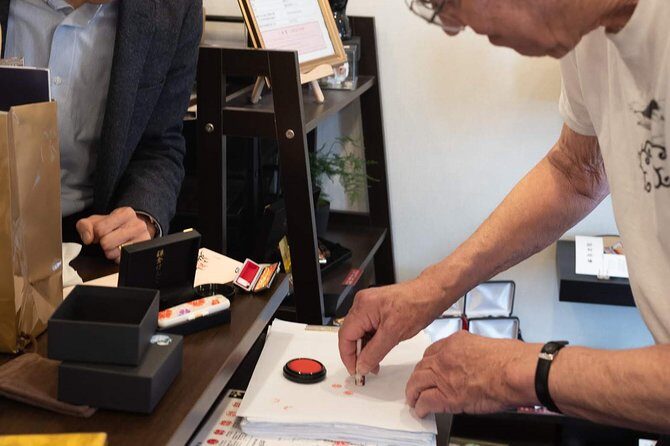
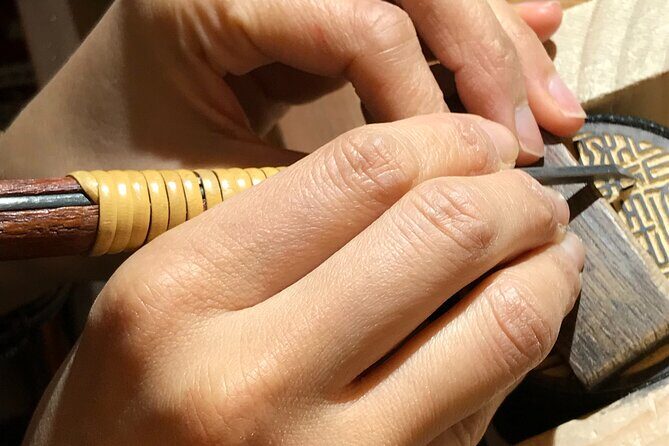
This workshop is honest about how the work gets done. Rough carving starts with an engraving machine, which makes the layout accurate. Then the final touches are done by hand by skilled craftsmen.
That hybrid method is a good sign for quality. It reduces the chance of small positioning errors, while still allowing a human to refine the carved edges that make stamped results crisp. It is also a practical reason your final seal is a piece of craft, not just a printed prop.
You are also told that the seal is hand-carved individually in Japan, and the shop describes it as a meticulous, art-like process. Even if you are not a craft nerd, you will see the difference when you get your finished seal in hand.
Timing in Kamakura: morning workshop, afternoon pickup
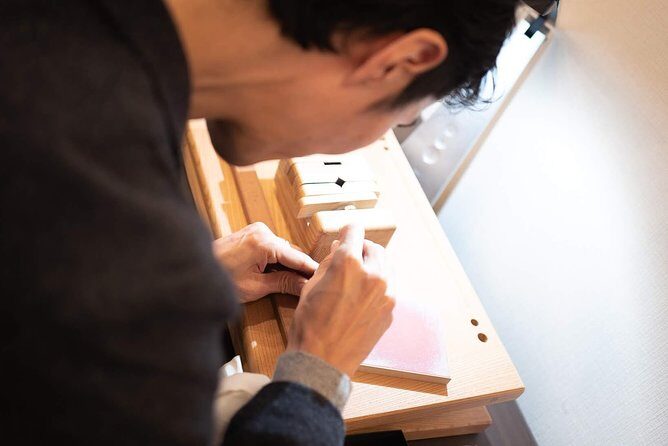
This one needs planning, because the workshop itself runs in the morning and you pick up later. You will choose your pick-up time within the afternoon window on the day of the experience.
One review highlights a return at 2pm, so you can use that as a rough marker when thinking about how to schedule your afternoon. The workshop detail says you can choose any pickup time in the afternoon, so expect flexibility within that range.
Also plan for punctual arrival. The shop notes that it requires preparation, and you should arrive on time. The session is only about 45 minutes for the active workshop portion, but your “experience” stretches across the day because the engraving needs time.
If you are trying to fit this between other Kamakura stops, I recommend treating it as your morning anchor. Then you can spend the afternoon roaming, because you already have your souvenir sorted for later.
Where to meet and how to get there without stress
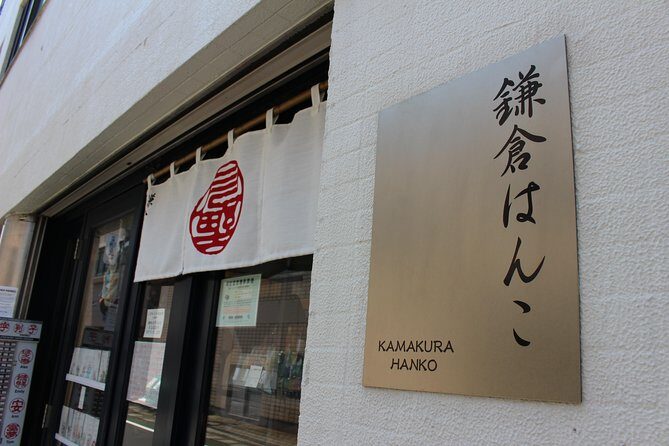
Meeting point is at the Kamakura seal shop Souvenir shop at 5-6 Onarimachi, Kamakura, Kanagawa 248-0012. The location is near public transportation.
One useful detail: people mention it is about a 5-minute walk south of Kamakura Station. That is exactly the kind of travel-friendly setup you want for a workshop. You can get there easily, without building in a huge buffer just to walk around.
The end of the activity returns you back to the meeting point. Since it is private and only your group participates, you are not stuck waiting around for strangers’ questions.
How this connects to real Japanese identity and everyday use
A lot of Japan activities focus on watching. This one focuses on making, with context. You learn that a hanko is considered representative of identity, and the workshop explains the importance and history behind hanko writing.
So when you stamp your own documents or creative projects later, you are not just repeating a tourist action. You are using a tool with cultural meaning. Even if you never need it for official paperwork, you can still use it for things like signing notes, labeling items, or making small letters feel more personal.
That is the value here: the craft lesson sticks, and the souvenir is something you can keep using.
The overall experience vibe: intimate, focused, and not salesy
The best feedback consistently points to a few things:
- intimate service because it is private
- clear, patient explanations
- the proprietor’s attention to materials and pros/cons
- finished seals that people feel proud of
There are also mentions that communication is manageable in English, which matters if you want to ask questions and understand design choices. If you like having direct interaction with the craftsperson, this is that kind of workshop.
You also get customization, not just a “your name, our machine” workflow. You choose style, font, and options, and you get the result engraved as a one-of-a-kind seal.
Who this workshop suits best
You should book this if you:
- want a hands-on Japanese craft experience in Kamakura
- like personalized souvenirs with real cultural context
- enjoy calligraphy-adjacent art, especially katakana-based design
- want something small and memorable you can actually use afterward
It is also a good fit for couples or friends, since the session is private and focused. If you are traveling solo, you can still enjoy the same attention.
Who might find it less perfect
This activity may feel less ideal if you:
- hate schedule commitments, because it is morning-only and pickup happens later
- only want a quick photo stop, because you need time for instruction and design
- expect everything to be included, because materials upgrades, case, and red ink are not included
If you go in knowing these boundaries, you will likely be happy with what you get.
Should you book this Kamakura name seal workshop?
Yes, if you want a memorable, real Japanese-made souvenir with genuine meaning. The price is justified by the one-of-a-kind engraved seal, the instruction on hanko culture and styles, and the craftsman-led process that mixes machine precision with hand finishing.
Book it especially early if you can. The experience is often reserved about 59 days in advance on average, and this is the kind of small workshop that can sell out around popular times.
If you are deciding between “cool craft” and “cool craft with context,” choose this one. You end up with a seal that feels personal, and you understand the logic behind it. That is when souvenirs stop being clutter and start being part of your trip story.
FAQ
What language support is available during the workshop?
The proprietor is described as able to communicate in English in at least one review, and explanations are given clearly with time for questions.
What does the workshop include in the price?
It includes a hanko seal (Japanese boxwood), an engraving fee for katakana, and an original pouch for your hanko.
Can I choose materials, colors, or a case?
Yes. You choose your seal style and font, and you can choose material/color options. A case is sold separately, and upgraded materials (such as horn, wood, or gemstone) can cost extra.
Do I get red ink with the seal?
No. Red ink is listed as not included.
How long is the workshop, and when do I get the finished seal?
The active workshop time is about 45 minutes. You choose a pickup time in the afternoon on the day of the experience.
What if I need to cancel?
You can cancel up to 24 hours in advance for a full refund. If you cancel later than that, you will not receive a refund. Changes within 24 hours of the start time are not accepted.
More Tour Reviews in Kamakura
More Days by the Great Buddha
Kamakura Day Trips, compared.
 ★ 4.5Kamakura & Enoshima Day Trip including Temple TicketsFrom $581,375 reviews
 ★ 4.5From Tokyo: Kamakura & Enoshima 1-Day Bus TourFrom $66189 reviews
 ★ 5.0Kamakura Historical Walking Tour with the Great BuddhaFrom $98129 reviews
Kamakura Private Tour: Temples, Nature, and the Great BuddhaFrom $98121 reviews
Kamakura Walking Tour – The City of ShogunFrom $35100 reviews
★ 5.0Kamakura Historical Walking Tour with the Great BuddhaFrom $98129 reviews
Kamakura Private Tour: Temples, Nature, and the Great BuddhaFrom $98121 reviews
Kamakura Walking Tour – The City of ShogunFrom $35100 reviews
 ★ 5.0Kamakura 8 hr Private Walking Tour with Licensed Guide from TokyoFrom $20180 reviews
 ★ 4.1Kamakura & Enoshima Day Tour with Pickup & Train RideFrom $1361 reviews
 ★ 4.8Kamakura: Private Guided Walking Tour with Local GuideFrom $10660 reviews
Browse the lists this tour appears in