
Reviewed · TOURS
Tokyo Toilet Tour
Toilet spotting in Tokyo sounds weird—until it clicks. This private, 3.5-hour walk takes you to small shrines, parks, and neighborhoods where architect-designed toilets are part of the urban design story. I love that you get to go at your own pace with Ken, and he connects each stop to the feel of the area around it.
One possible drawback: this is mostly a walking tour, linking spots from Shibuya toward Ebisu. If you’re not thrilled by steady city pace, plan for comfortable shoes and some stair-and-sidewalk energy.
In This Review
- Key Highlights You’ll Actually Care About
- Why a Tokyo Toilet Tour Makes a Surprisingly Good First Trip
- Walking the Route: From Yoyogi to Ebisu Without a Private Ride
- Stop 1: Yoyogi Hachimangu Shrine and Its Architect-Designed Toilets
- Stop 2: Miyashita Park, Tadao Ando, and Shibuya’s Redevelopment Energy
- Stop 3: Shibuya Crossing as a Quick Photo-and-Orientation Moment
- Stop 4: Nabeshima Shoto Park and Kengo Kuma in a Residential Pocket
- Stop 5: Ebisu Toilets by Fumihiko Maki, Kashiwa Sato, and Nao Tamura
- How Customization Works With Your Private Guide
- What You Pay and Why This Is Good Value for the Group
- Who This Tour Is Best For (and Who Might Skip It)
- Should You Book This Tokyo Toilet Tour?
- FAQ
- FAQ
- How long is the Tokyo Toilet Tour?
- Is this tour private?
- What is the meeting point and the end point?
- What does the tour cost?
- What is included in the price?
- What is not included?
- What stops are included?
- Are admission tickets required for the stops?
- What physical condition do I need?
- Is free cancellation available?
- Do I get a mobile ticket?
Key Highlights You’ll Actually Care About
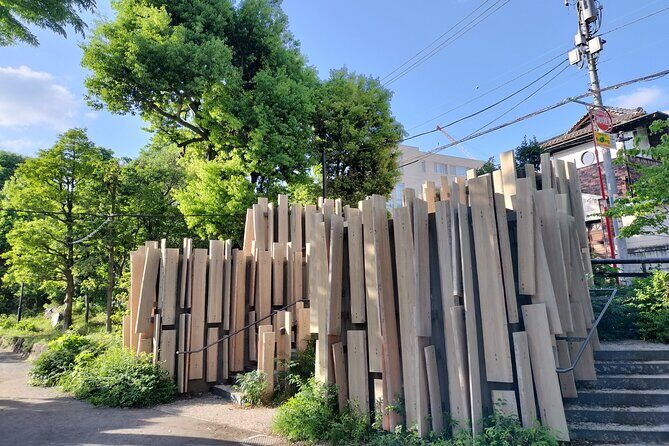
- Architect-name toilets in famous Tokyo neighborhoods: you’ll see work tied to designers like Shigeru Ban, Toyo Ito, Tadao Ando, Kengo Kuma, Fumihiko Maki, Kashiwa Sato, and Nao Tamura
- Private guide focus, not a bus-and-blur group: your guide can help shape what you emphasize during the route
- Shibuya without the crowds for most of the time: the route leans into parks and smaller streets, then punctuates with a quick look at Shibuya Crossing
- Movie-fan bonus at Yoyogi Hachimangu Shrine: the stop is linked to Wim Wenders’ Perfect Days lunch-break vibe
- Admission is free at each toilet stop: you’re paying for the guide and the time, not attraction tickets
Before you commit, see how this one stacks up against a few Tokyo favourites:
- Mt Fuji and Hakone 1-Day Bus Tour Return by Bullet Train★ 5.0 · 26,383 reviews
- 1-Day Tokyo Bus Tour★ 5.0 · 14,250 reviews
- Tokyo: teamLab Planets TOKYO Digital Art Museum Entry Ticket★ 4.6 · 9,779 reviews
Why a Tokyo Toilet Tour Makes a Surprisingly Good First Trip
Tokyo can feel like a blur of stations, signage, and neon. This tour slows it down on purpose. You’re not just ticking sights—you’re learning how Tokyo thinks about design, privacy, and public space in places you’d otherwise walk right past.
I like the angle because it’s specific. Instead of vague “culture” sightseeing, you’re using the toilets as a guide to architecture and neighborhood planning. And if you’re a first-timer, the route still gives you a real feel for Shibuya and Ebisu—not only the postcard corners.
There’s also a practical payoff: once you’ve walked this side of Tokyo with a guide, it’s easier to navigate on your own afterward. You’ll see what’s close to what, where the quieter parks sit, and how fast the city changes character block to block.
Walking the Route: From Yoyogi to Ebisu Without a Private Ride
This is built for walking. The tour starts at Yoyogi Fukamachi Mini Park (1-chōme-54-1 Tomigaya, Shibuya) and ends at Ebisu Station on the JR Yamanote Line and the Tokyo Metro Hibiya Line. Expect roughly 3 hours 30 minutes total.
Because it’s private and just your group, your guide can pace you based on how you move—quick stops or slower viewing. Each featured location comes with its own short time window (for example, about 30 minutes at the shrine and about 30 minutes in Ebisu), plus a brief crossing at Shibuya.
The good news is that you’re not trapped underground. Most segments are out in the open air, so you’ll get the city texture: side streets, park paths, and the way people actually use public space.
Stop 1: Yoyogi Hachimangu Shrine and Its Architect-Designed Toilets
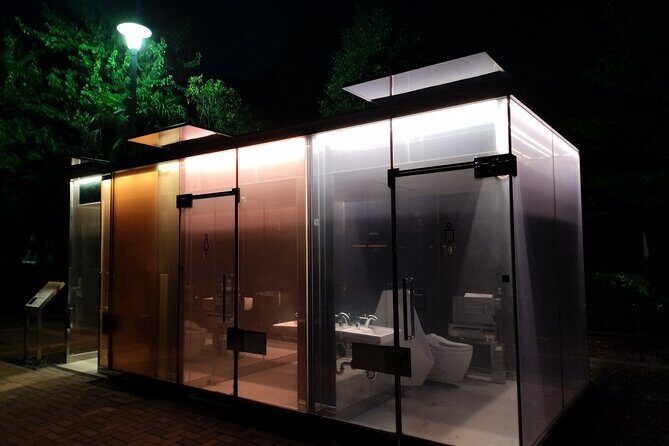
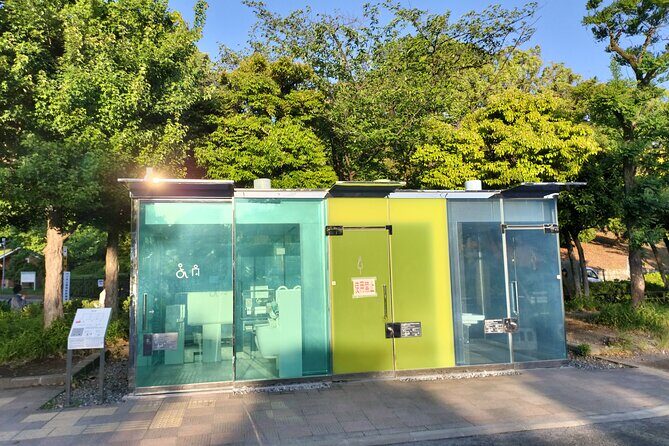
You begin at Yoyogi Hachimangu Shrine, a small Shinto shrine area that’s worth visiting even if you ignore the toilet theme. Here, you’ll see toilets designed by Shigeru Ban (with a transparent cubicle) and Toyo Ito nearby.
Why I think this stop works: it mixes sacred place energy with contemporary design. You get a strong contrast in one small area—quiet shrine surroundings, then modern architecture details that feel designed for everyday use.
There’s also a fun cultural hook for fans of Wim Wenders’ Perfect Days. This is the spot tied to the main character’s lunch-break routine in the film, which makes the viewing feel like more than just photos.
If you want the best experience here, take a few minutes to look at how the toilets sit relative to the shrine area. The value isn’t only the name attached to the design—it’s how the site integrates with the everyday flow of the neighborhood.
Stop 2: Miyashita Park, Tadao Ando, and Shibuya’s Redevelopment Energy
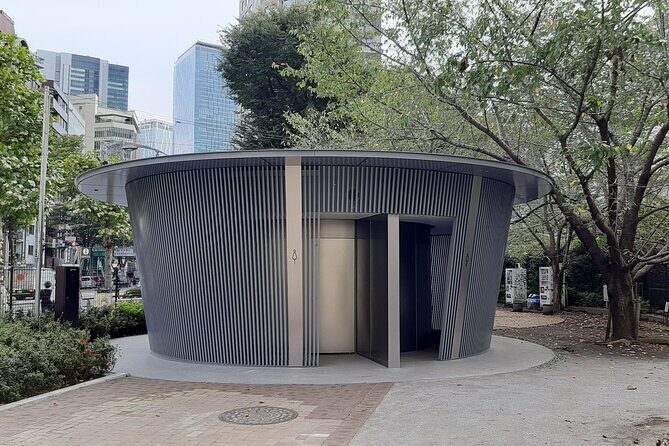
Next up is Miyashita Park, a location that sits between Shibuya and Harajuku. This part of the tour gives you a sense of how Tokyo keeps reshaping itself, since the area has seen major redevelopment in the last five years.
You’ll see a toilet designed by Tadao Ando here. Ando’s design language often feels calm and intentional, so this stop is a nice shift from the shrine setting. It’s also a good moment to notice how people move through the space around the toilet—because parks are social, even when you’re not there for the architecture.
What makes this stop valuable for first-timers: it’s a bridge between famous Shibuya energy and more local, park-based life. You’ll understand why Tokyo sometimes feels like it has multiple cities inside it.
Practical note: the stop is about 30 minutes, so you’ll want to balance looking closely with not getting stuck in one angle. You’re covering multiple architect styles in one afternoon.





Stop 3: Shibuya Crossing as a Quick Photo-and-Orientation Moment
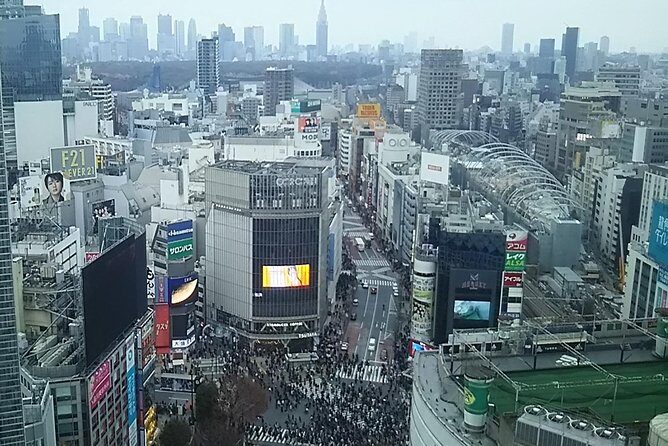
Then you’ll walk across Shibuya Crossing—not as the main event, but as a short, iconic checkpoint on your way to the next park. It’s about 5 minutes in the plan.
This is exactly how I’d recommend doing Shibuya Crossing on a limited schedule. If you spend too long there, you miss the quieter structure of the rest of the route. If you treat it as a quick reality check—yes, that’s the Tokyo you see online—you can move on with your day feeling oriented instead of drained.
Use this moment to orient your sense of direction. After this tour, it’ll be easier to connect your street map in your head to the real physical layout around Shibuya Station.
Stop 4: Nabeshima Shoto Park and Kengo Kuma in a Residential Pocket
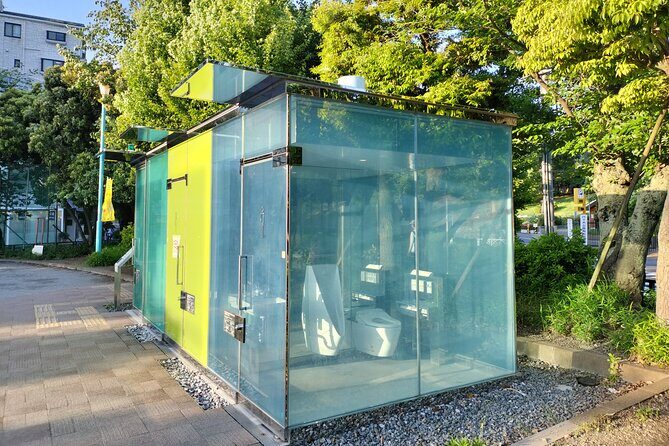
Nabeshima Shoto Park is about a kilometer from the main station, in a quieter residential area. This is where the tour gives you a real break from the tourist churn.
You’ll see a toilet designed by Kengo Kuma here. Kuma’s work often carries a lightness, and in a calmer neighborhood like this, that design feels like it belongs to the street rather than announcing itself.
This is also a great stop for how Tokyo feels on foot. The pace shifts. You’ll likely notice how the park borders homes and small local streets instead of major commercial fronts.
Timing is about 15 minutes here, so think of it as a short palate cleanser. Take a look, get your bearings, then keep moving. It’s not a long stop, but it adds contrast in a way that makes the whole route more memorable.
Stop 5: Ebisu Toilets by Fumihiko Maki, Kashiwa Sato, and Nao Tamura
The tour ends in Ebisu, one station south of Shibuya. Ebisu has a different tone—more low-key, more “people live here,” and less “everyone visits here.”
In the Ebisu neighborhood, you’ll see toilets by:
- Fumihiko Maki
- Kashiwa Sato
- Nao Tamura
The reason this section feels rewarding is that you’re seeing multiple designers within a single neighborhood endpoint. It makes the design conversation feel larger than just one famous toilet.
This is also a place where the route feels especially smart if you want Tokyo that doesn’t revolve around only the biggest transit hubs. You’ll get a sense of how Tokyo neighborhoods hold their own identity just by how they plan public space.
You’ll spend about 30 minutes in Ebisu, and the tour ends at Ebisu Station (JR Yamanote Line and Tokyo Metro Hibiya Line). That’s a practical finish: it’s easy to flow back into the rest of Tokyo from here.
How Customization Works With Your Private Guide
The tour is private, and the idea is that you collaborate with your guide to shape your day. That matters because “toilet tour” could sound like a rigid gimmick—but the real value comes from context and timing.
Your guide—often described as friendly and informative—can help you understand what you’re looking at and why it’s placed where it is. One guide example shared is Ken from Tanaka’s Tokyo Tours, who also explains how redevelopment and planning decisions shaped Shibuya’s story.
In practice, this means you can slow down for your favorite architect name or move faster if your energy is going elsewhere. It’s a relief in Tokyo, where getting “stuck in one spot” is easy.
So if you like the idea of a themed walk but still want control, this format fits. You’ll leave with a stronger mental map of the area and a clearer sense of how Tokyo designs for daily life.
What You Pay and Why This Is Good Value for the Group
The price is $223.34 per group for up to 4 people, with a tour duration of about 3 hours 30 minutes. The average booking window is around 39 days in advance, which tells me demand is steady—especially for people planning a first-timer day.
What you’re paying for is not just “someone walks with you.” You’re paying for:
- a private guide (included)
- time saved by having a planned route that links the sights efficiently
- interpretation so the toilet designs make sense in their neighborhood setting
What you’re not paying for is simple: lunch and private transportation are not included. You’ll handle meals on your own, and you’ll walk between points. For many people, that’s fine. In fact, walking is part of the value here because it reveals the less famous streets between parks.
Also, each stop lists free admission tickets for the locations you visit. That keeps the day from turning into an attraction-fee marathon.
If you’re traveling solo or as a couple, the per-person cost can feel higher than a bus tour. But for a small group, it can turn into one of those experiences where you feel like you bought time and local context, not just photos.
Who This Tour Is Best For (and Who Might Skip It)
This tour is especially good if you:
- are a first-timer in Tokyo and want a focused introduction to Shibuya and Ebisu
- like design, architecture, or the stories behind everyday public facilities
- want something private and personal, not a crowded group day
- are a fan of Perfect Days and want the film connection in real-life Tokyo
If you’re expecting a classic sightseeing itinerary filled with temples and long museum stops, this may not match your mood. It’s still Tokyo, but the theme is specific. You’re choosing a point of view.
The walking also matters. You should have moderate physical fitness and be comfortable with an active few hours. This isn’t a sit-down, get-a-car kind of day.
Should You Book This Tokyo Toilet Tour?
If you want Tokyo that feels offbeat in a smart way, book it. The route hits big landmarks quickly, then spends real time in parks and neighborhoods that make the city feel more lived-in. The private guide angle keeps it from feeling like a checklist.
I’d especially recommend it for small groups who can split the cost and for people who enjoy niche interests as long as there’s good explanation. If toilets and architecture sound strange to you, think of it like a design walking tour where the subject happens to be toilets. You’re really learning how public space works in Tokyo.
FAQ
FAQ
How long is the Tokyo Toilet Tour?
It runs for about 3 hours 30 minutes.
Is this tour private?
Yes. It’s a private tour, and only your group participates.
What is the meeting point and the end point?
The tour starts at Yoyogi Fukamachi Mini Park (1-chōme-54-1 Tomigaya, Shibuya, Tokyo 151-0063) and ends at Ebisu Station (1-chome-5 Ebisuminami, Shibuya, Tokyo 150-0022).
What does the tour cost?
The price is $223.34 per group (up to 4 people).
What is included in the price?
A private tour guide is included.
What is not included?
Lunch and private transportation are not included.
What stops are included?
The stops are Yoyogi Hachimangu Shrine, Miyashita Park, Shibuya Crossing, Nabeshima Shoto Park, and Ebisu.
Are admission tickets required for the stops?
Admission ticket entries for the listed stops are free.
What physical condition do I need?
The tour suggests a moderate physical fitness level.
Is free cancellation available?
Yes. You can cancel up to 24 hours in advance for a full refund.
Do I get a mobile ticket?
Yes. The tour uses a mobile ticket, and confirmation is received within 48 hours of booking.
More Tours in Tokyo


More Tour Reviews in Tokyo



Fresh reviews from around Tokyo






Tours, compared.
 ★ 5.0Shinjuku Food Tour (13 Dishes at 4 Local Eateries)From $866,603 reviews
 ★ 4.4Tokyo Mt Fuji 5th St & Hakone Cruise Bus Tour w/Bullet TrainFrom $1545,024 reviews
 ★ 5.0Flagship 2-Hours Official Street Go-Kart Tour – Tokyo Bay ShopFrom $644,974 reviews
 ★ 4.7Mt. Fuji Tour, Hakone Ropeway, Owakudani, Lake AshiFrom $544,002 reviews
 ★ 5.0Tokyo 6hr Private Tour with Government-Licensed GuideFrom $1553,902 reviews
 ★ 5.0Tokyo Bar Hopping Tour in Shinjuku (All-You-Can-Drink + Dinner)From $1063,587 reviews
 ★ 5.0Tokyo Tsukiji Fish Market Food and Culture Walking TourFrom $993,184 reviews
 ★ 4.9Shinjuku Food Tour (15 Dishes and 4 Eateries)From $852,033 reviews