
Reviewed · KAMAKURA DAY TRIPS
Sushi Making in a Century Old Kamakura Home
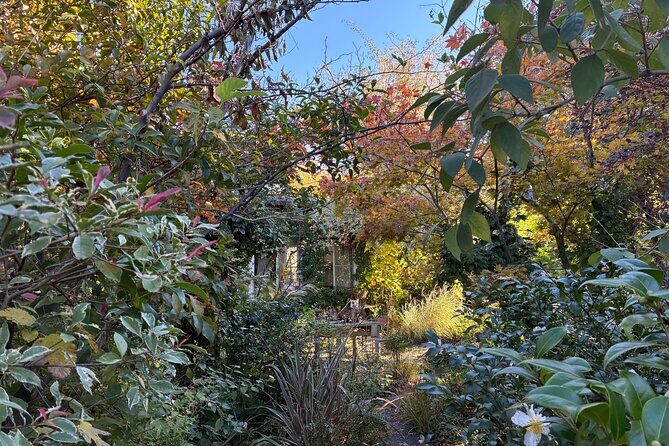
Sushi with the Enoden passing by. This Kamakura sushi making class happens in a century-old kominka house with a quiet garden, right near Kamakura’s Enoden line. You’ll learn classic nigiri technique while the train hums along beside the property.
I love the hands-on nigiri practice and the premium seafood you use, including tuna, sea bream, shrimp, squid, yellowtail, and salmon roe. I also like the small extras, like the calligraphy souvenir canvas and the calm setting that makes the meal feel special. The main drawback is that it’s not recommended for food allergies, so read ingredients carefully if you’re sensitive.
In This Review
- Key highlights worth planning for
- Entering a century-old Kamakura kominka (and why that matters)
- Getting to the meeting point near Kamakura Station and the Great Buddha route
- The Enoden train next door: a view you won’t get anywhere else
- Your chef: 20+ years in Ginza and clear, traditional technique
- Making 10 to 12 pieces of nigiri (and what you can expect to use)
- The pacing and meal part: eating what you make, in a calm garden setting
- Optional sake and the calligraphy canvas souvenir
- Price and value: is $74.93 per person fair?
- Who should book this Kamakura sushi workshop
- Tips to make the class go smoothly
- Should you book this sushi making class in Kamakura?
- FAQ
- How long is the sushi making experience in Kamakura?
- What’s included in the price?
- Does the class include sake?
- Where is the meeting point and when does it start?
- How many people are in the group?
- What happens if the weather is bad or you need to cancel?
Key highlights worth planning for
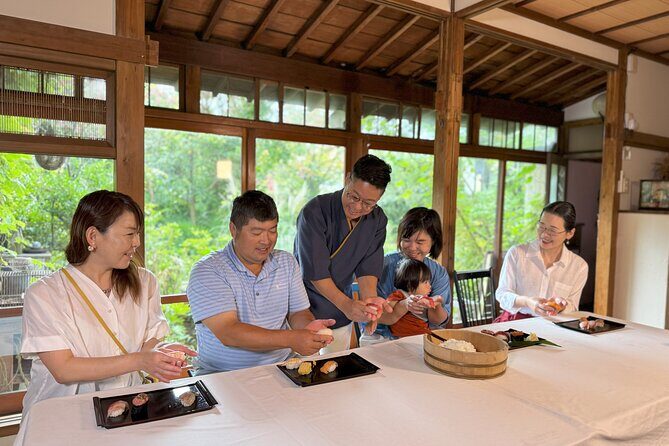
- Century-old kominka setting: a preserved traditional home that feels like a step back in time
- Enoden train views from the garden: you can watch the line right next to the grounds
- Ginza-trained sushi instruction: the chef has 20+ years of experience from top restaurants in Ginza
- You make 10 to 12 pieces of nigiri: seafood selection varies with the season
- Small group size (max 10 people): more time for questions and step-by-step guidance
- Complimentary calligraphy souvenir: a canvas inscribed with Kamakura Sushi Sake
Entering a century-old Kamakura kominka (and why that matters)
Kamakura already has that “slow down” energy, and this experience leans into it hard. The class takes place in a traditional house (a kominka) that blends Japanese and Western architectural elements. That mix makes the place feel both historical and oddly comfortable, like it has room for your hands and your questions.
I like that you’re not doing sushi in a classroom. You’re doing it in a preserved home, in a serene garden setting. The calm matters because sushi technique is all about timing and care. When the room feels rushed, your rice and toppings feel rushed too.
Also, the location near Enoden is more than a nice photo backdrop. The train passing beside the grounds gives you something to watch while you relax between steps, and it turns the workshop into a distinctly Kamakura experience instead of a generic food class.
Getting to the meeting point near Kamakura Station and the Great Buddha route
You start at 2-chōme-7-12 Yuigahama, Kamakura. The session begins at 10:30am, and it ends back at the same meeting point. The venue is described as about a 10-minute walk from Kamakura Station, and it’s on the way to the Great Buddha of Hase, which is handy if you’re already planning that side of town.
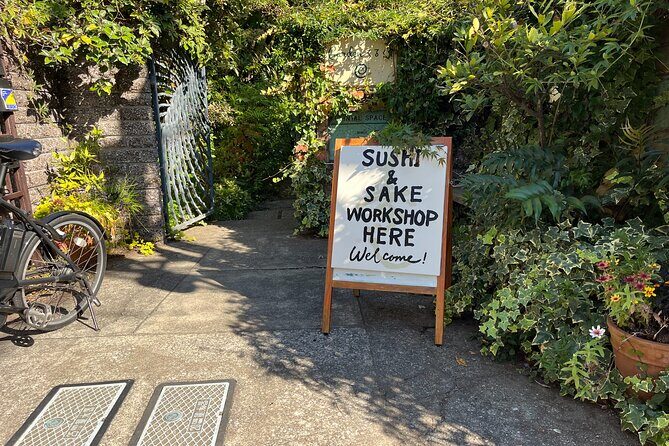
You’ll want to build in a little extra time to find the house calmly. The experience is in a residential area, and the workshop is in a traditional structure, so it’s not always as obvious as a big storefront. If you’re walking from the station, I suggest using your phone’s map navigation and moving at a steady pace rather than rushing the last blocks.
From there, it’s also easy to tack on a seaside walk afterward. The description notes that about a 10-minute stroll from the venue can bring you to the coast, where Mt. Fuji may be visible beyond Enoshima—often compared to the look of an ukiyo-e woodblock print.
The Enoden train next door: a view you won’t get anywhere else
Here’s the setting detail that makes this workshop feel different. The Enoden train passes right beside the property, so during the class you may hear it and see it as it goes by. You can enjoy the meal you made while watching that familiar Kamakura motion outside.
I think this is one of the best “value boosters” in the whole experience. You’re paying for sushi instruction, yes—but you’re also paying for a memorable setting that doesn’t require extra tickets or extra transit. It’s part of the experience, not an incidental bonus.
If you’re sensitive to noise, plan accordingly. The train line is close, and that’s the point of the atmosphere. For most people, it’s charming. For a few, it could be distracting—so if you’re easily bothered by steady sounds, it’s worth considering.
Your chef: 20+ years in Ginza and clear, traditional technique
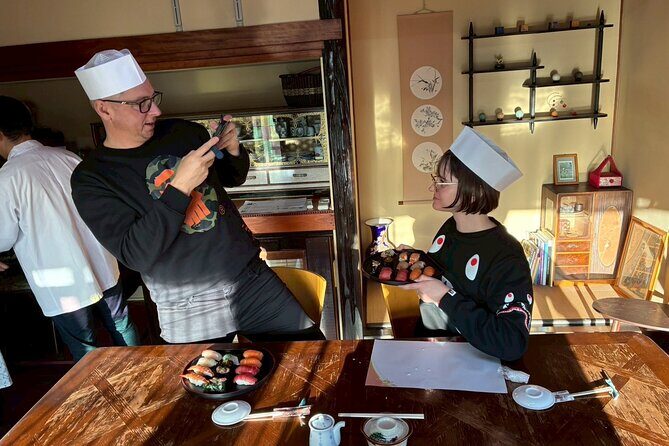
The sushi instruction is guided by a master chef who trained and worked for over 20 years at Ginza’s most prestigious restaurants. That background matters because you’re not just learning a recipe. You’re learning how sushi is built—how to handle fish, how to portion, and how to put together nigiri with the right feel.
The workshop focuses on “fundamental techniques,” which is exactly what you want if you’re serious about learning, even for a short class. In 1 hour 30 minutes, nobody becomes a sushi chef. But you can absolutely pick up the basics that make restaurant-style nigiri make sense.
It’s also a small group experience (maximum 10 people). In practice, that tends to mean more chance to ask a question and get personal correction. If you’ve ever tried to copy sushi videos at home and wondered why it looks different, this is the kind of class that can help you understand the gap.
Making 10 to 12 pieces of nigiri (and what you can expect to use)
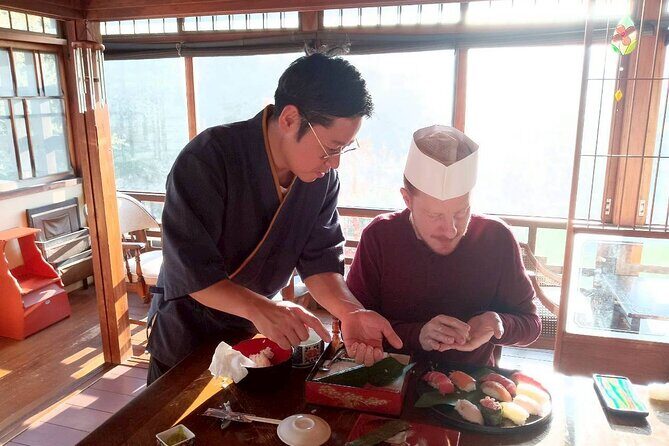
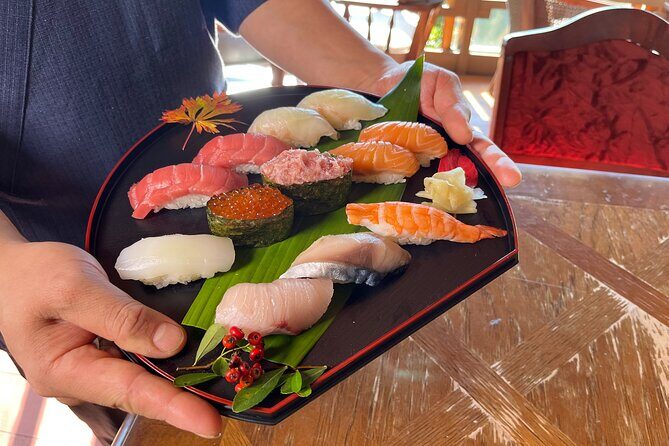
You’ll create 10 to 12 pieces of nigiri sushi during the workshop. The ingredients are described as premium, and the seafood list includes tuna, sea bream, shrimp, squid, yellowtail, and salmon roe. Importantly, the selection varies with the seasons.
That seasonal rotation is worth paying attention to. It means you’re not stuck with one “standard” set of fish regardless of when you visit. If you come to Kamakura in a different month, the class may feel different because the seafood changes.
You can think of this as both a meal and a mini craft lesson. The workshop isn’t just about tasting. It’s about doing the work—assembling each piece carefully enough that you can eat it right there.
One practical consideration: the class is not recommended for individuals with food allergies. The data doesn’t list whether alternatives are offered, so if allergies apply to you, you’ll want to reach out before booking. When it comes to seafood and rice vinegar seasoning, cross-contact and ingredient mix can be an issue.
The pacing and meal part: eating what you make, in a calm garden setting
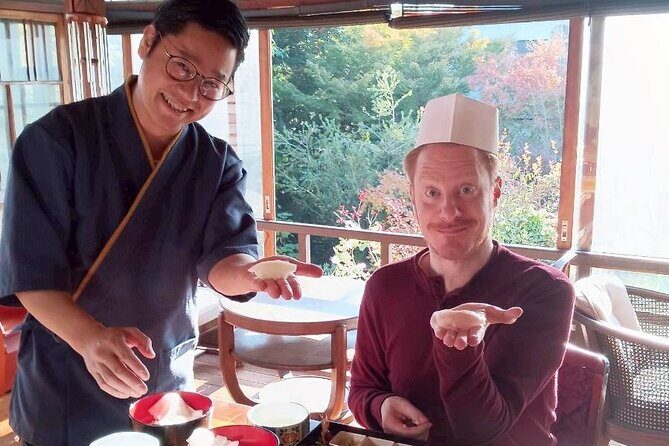
The full experience runs about 1 hour 30 minutes, with the activity starting at 10:30am. The length is “just right” for most people who want real instruction without a huge time commitment.
After you make your nigiri pieces, you’ll eat what you prepared. That simple setup is surprisingly satisfying. Sushi is best when it’s fresh, and eating immediately after assembly connects the technique to the taste. You’re not learning in theory and then eating something unrelated.
The garden setting also helps the pacing. When you’re in a quiet house with greenery around you, the meal doesn’t feel like a rushed snack between sightseeing stops. It feels like the proper end to the session you just did.
And yes, the view adds to it. Because of the Enoden line nearby, you may get small moments where you look up at the train passing while you eat. It’s a very Kamakura rhythm: craft inside, motion outside.
Optional sake and the calligraphy canvas souvenir
Alcohol isn’t included by default. The information notes that you can add a sake experience course for an additional charge. So if you want sake, plan for the extra cost and decide when you’re ordering.
Why consider the add-on? Because the workshop’s theme is very tied to Kamakura and sushi culture, and sake is commonly paired with this kind of meal format. But it’s also totally reasonable to skip it and keep the class purely food-focused.
Then there’s the souvenir detail that I really appreciate: a complimentary canvas inscribed with Kamakura Sushi Sake, hand-brushed by a professional calligrapher. That’s the kind of gift you’ll actually keep, because it’s not just a generic shopping bag item. It also fits the setting: traditional house, traditional craft, and a final touch that feels handmade.
Price and value: is $74.93 per person fair?
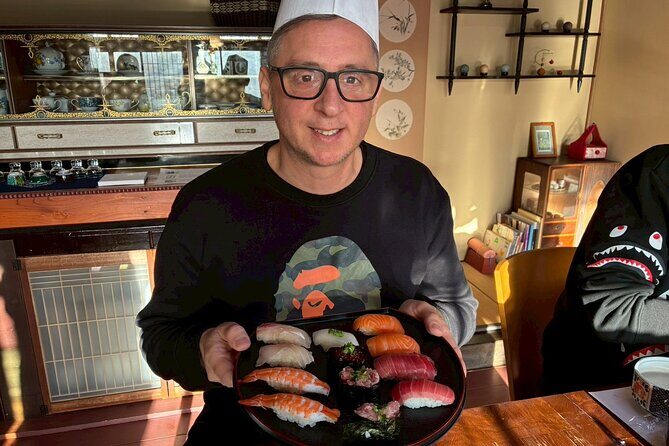
At $74.93 per person, this isn’t a budget workshop. But it also isn’t priced like a luxury omakase counter experience. The value comes from a few specific things you can’t easily replicate on your own:
- You’re getting instruction from a chef with 20+ years of Ginza restaurant experience.
- You’re making a meal: 10 to 12 pieces of nigiri with premium seafood.
- You’re doing it in a preserved century-old kominka with an Enoden view, which is rare.
- The class is small (max 10 people), which often translates to better coaching.
If you compare it to paying separately for a sushi lunch and then hunting down a DIY lesson, the bundle starts to look smarter. You’re not just eating; you’re learning technique and leaving with a calligraphy souvenir.
One more practical value note: the experience is described as booked around 40 days in advance on average. That suggests demand is steady. If you’re traveling in a popular season or on a weekend, I’d treat it as a “plan early” activity rather than a last-minute add-on.
Who should book this Kamakura sushi workshop
This class is a strong match if you:
- want real hands-on sushi technique, not just a tasting
- like traditional architecture and quiet neighborhoods
- enjoy experiences that connect food with place (like the Enoden view)
- want a small group setting with guidance from an experienced chef
It’s also ideal if you’re pairing it with the main Kamakura landmarks nearby. The route to the Great Buddha of Hase lines up well with the workshop location, so you can build a smooth half-day itinerary without complicated logistics.
Who should think twice? Anyone with food allergies, since the experience is explicitly not recommended in that case. Also, if you hate tight residential navigation or dislike walking to find tucked-away venues, you may find the location a bit tricky at first.
Tips to make the class go smoothly
A few practical moves can make a noticeable difference:
- Arrive with a little buffer so you can find the kominka calmly. This is not a huge commercial building.
- Bring your questions about sushi basics like fish handling and nigiri assembly. The chef’s experience is the main reason to do this class.
- Plan your meal expectations: you’ll create and eat 10 to 12 nigiri pieces, so it’s filling, especially as a midday meal alternative.
- Check weather: the experience requires good weather. If it gets canceled due to poor weather, you’ll be offered a different date or a full refund.
- Use the mobile ticket: the activity uses a mobile ticket, so make sure your phone battery is healthy.
Should you book this sushi making class in Kamakura?
I’d book it if you want a real craft session in a beautiful, unusual setting, with a chef who brings serious Ginza experience to a small-group workshop. The Enoden train view turns it into something you can’t easily copy elsewhere, and the included meal makes the time feel efficient.
Skip it if food allergies apply to you, because it’s not recommended for that situation. And if your schedule is tight and you hate any chance of “small-town wayfinding,” give yourself time to locate the house.
If you do book, I’d aim to pair it with the nearby sightseeing cluster around Kamakura Station, the Great Buddha of Hase, and an easy walk toward the coast afterward. It’s a satisfying way to balance big monuments with something quiet, hands-on, and distinctly Kamakura.
FAQ
How long is the sushi making experience in Kamakura?
The workshop lasts about 1 hour 30 minutes.
What’s included in the price?
The price includes meals of 10 to 12 pieces of nigiri sushi.
Does the class include sake?
Sake is not included by default. You can choose a sake experience course for an additional charge.
Where is the meeting point and when does it start?
You meet at 2-chōme-7-12 Yuigahama, Kamakura, Kanagawa 248-0014, Japan. The start time is 10:30am, and the activity ends back at the meeting point.
How many people are in the group?
There is a maximum of 10 people.
What happens if the weather is bad or you need to cancel?
If the experience is canceled due to poor weather, you’ll be offered a different date or a full refund. You can cancel for free up to 24 hours in advance for a full refund.
More Tour Reviews in Kamakura
More Days by the Great Buddha
Kamakura Day Trips, compared.
 ★ 4.5Kamakura & Enoshima Day Trip including Temple TicketsFrom $581,375 reviews
 ★ 4.5From Tokyo: Kamakura & Enoshima 1-Day Bus TourFrom $66189 reviews
 ★ 5.0Kamakura Historical Walking Tour with the Great BuddhaFrom $98129 reviews
Kamakura Private Tour: Temples, Nature, and the Great BuddhaFrom $98121 reviews
Kamakura Walking Tour – The City of ShogunFrom $35100 reviews
★ 5.0Kamakura Historical Walking Tour with the Great BuddhaFrom $98129 reviews
Kamakura Private Tour: Temples, Nature, and the Great BuddhaFrom $98121 reviews
Kamakura Walking Tour – The City of ShogunFrom $35100 reviews
 ★ 5.0Kamakura 8 hr Private Walking Tour with Licensed Guide from TokyoFrom $20180 reviews
 ★ 4.1Kamakura & Enoshima Day Tour with Pickup & Train RideFrom $1361 reviews
 ★ 4.8Kamakura: Private Guided Walking Tour with Local GuideFrom $10660 reviews
Browse the lists this tour appears in