
Reviewed · SHINJUKU BAR HOPPING
Sushi Making Experience in Shinjuku【Temaki】
Hand-rolling sushi is the fun part.
This Shinjuku class lets you build your own temaki sushi at the table, with seaweed, rice, and ready-to-use toppings so you are not stuck figuring things out. I especially like that you get a real chef-style start, including dashi-maki tamago (Japanese rolled omelet) and hands-on help rather than a one-way lecture. One thing to consider: some staff members may not speak fluent English, though translation support is available.
You also get a group-sized experience, not a mass production line. With a maximum of 8 people, the team can actually answer questions, and guides like Nina and Kai show you how to assemble before you take over. If you want a food activity you can do with friends or family, this one fits well because it is interactive and designed for sharing.
The only potential drawback is the pace can feel a bit “hands-on the whole time.” If you are hoping for more sitting and watching, you might wish for a less active format, since the core of the experience is assembling, rolling, and tasting at your own pace.
In This Review
- Key Things You’ll Notice Right Away
- Flower Wall Mone: A Shinjuku Spot That Makes Food Feel Social
- The 90-Minute Structure: How Temaki Rolling Actually Works
- What You’ll Be Making: Temaki Sushi Plus Dashi-Maki Tamago
- The Smoking Moment: Sakura-Wood Flavor Test
- Toppings, Tools, and the Good Kind of Prep
- Drinks Included: A Small Value Boost
- Location and Timing: Why Shinjuku Works
- Group Size and Atmosphere: Getting Help Without Feeling Watched
- Price and Value: When $47.09 Feels Like a Deal
- Who Should Book This Class
- Quick FAQ for Planning
- FAQ
- What is included in the price?
- What dishes will I make in the class?
- How long is the experience?
- Where does the experience start?
- Is there a limit on group size?
- Are the ingredients and utensils provided?
- Do I need to speak Japanese?
- What if I cancel?
- Should You Book This Temaki Sushi Experience in Shinjuku?
Key Things You’ll Notice Right Away
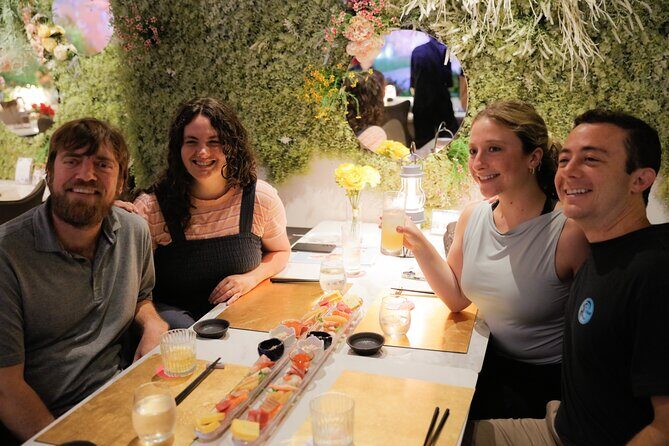
- A small group (up to 8) keeps the class friendly and question-friendly
- Temaki setup is do-it-yourself with ingredients and utensils prepared for you
- Dashi-maki tamago included, so you learn more than just rolling sushi
- Pick three topping types, then build your own rolls your way
- Sakura-wood smoking turns one of the fish options into a memorable flavor test
- Language support is built in, but not every interaction may be perfectly smooth
Different nights, same neon: more Shinjuku crawls
- Tokyo: Shinjuku Food Tour (13 Dishes at 4 Local Eateries)★ 5.0 · 6,603 reviews
- Tokyo Bar Hopping Tour in Shinjuku (All-You-Can-Drink + Dinner)★ 5.0 · 3,587 reviews
- Tokyo: Shinjuku Food Tour (15 Dishes and 4 Eateries)★ 4.9 · 2,033 reviews
Flower Wall Mone: A Shinjuku Spot That Makes Food Feel Social
Your experience starts at FLOWER WALL MONE (フラワーウォール モネ) in Shinjuku. This place is a cafe and bar setting with flowers all around, which matters more than you might think. In a class like this, a relaxed, good-looking space makes it easier to slow down and focus on technique instead of feeling rushed.
When you arrive, you check in with the staff by letting them know you have a reservation for the Temaki Sushi Experience. Then they take your drink order and set up the table for the number of participants. The “cafe first, cooking second” rhythm helps you settle quickly, especially if you are coming straight from walking around Shinjuku.
You will also see how the format is designed for people traveling together. The class works for friends and family, and it stays interactive without turning into a competitive cooking contest. If you like food activities that feel like hanging out with a mission, this one fits.
The 90-Minute Structure: How Temaki Rolling Actually Works
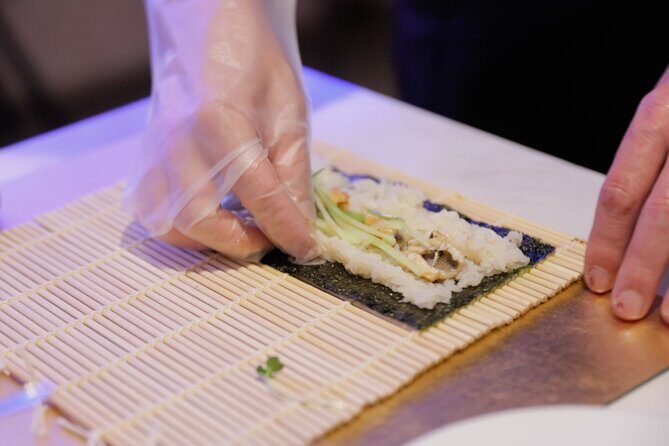
The experience is about 1 hour 30 minutes, and that time is used on purpose. It is long enough for a real demonstration and for you to make multiple hand rolls, but short enough that it stays lively and easy to fit into a Tokyo day.
Here is the flow you can expect:
1) Drink order + table prep
They prepare sushi items and utensils for your group size. That means less waiting and fewer moments where you are hunting for basics.
2) Demonstration from the staff
Staff demonstrate how to assemble the temaki-sushi correctly. Do not skip this step if you get any clarification during the demo. Rolling temaki is simple in theory, but the demo helps you avoid the most common mistakes, like uneven seaweed alignment or clumsy rice distribution.
3) Hands-on making at your own pace
After the demonstration, you make temaki sushi yourself with sushi rice and your chosen ingredients. The staff may step in with help, but the design is for you to drive the process.
A small but useful detail: some staff members may not speak fluent English, so you might have a translator machine used to bridge the gap. That usually makes the experience feel smooth enough, but it is still a good idea to come ready to use simple gestures and a friendly attitude.
What You’ll Be Making: Temaki Sushi Plus Dashi-Maki Tamago
This class is not only about hand-rolling. You also make dashi-maki tamago, a Japanese rolled omelet. That is a big deal for two reasons.
First, it broadens the meal beyond sushi. Sushi classes can sometimes focus on one technique only. Here, you learn another classic Japanese comfort food that shows up in lots of Japanese cooking traditions.
Second, dashi-maki tamago helps you understand why Japanese cooking cares so much about texture and consistency. Even if you are not an omelet expert, the rolled shape and seasoning idea show up quickly, and you can appreciate the method.
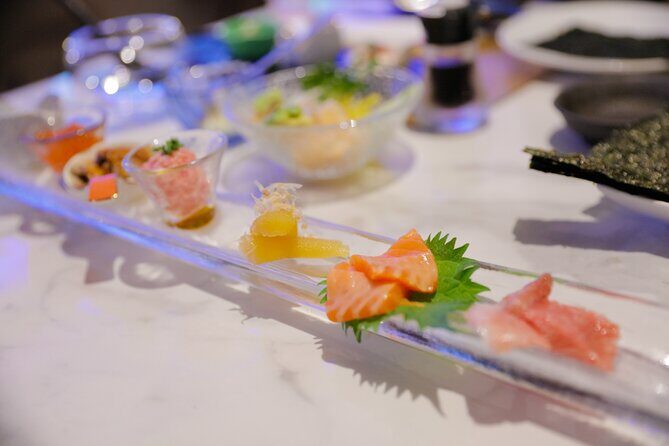
After that, you focus on temaki sushi. Temaki sushi typically uses seaweed and sushi rice with toppings you can choose and combine. The class specifically mentions fresh options like tuna, salmon, cucumber, and avocado, so you are not stuck with one flavor profile.
You will also select three types of sushi toppings. That choice is part of the fun. It turns the class from a fixed menu into something closer to “custom build-your-own,” which is especially good when you are traveling with people who have different tastes.
The Smoking Moment: Sakura-Wood Flavor Test
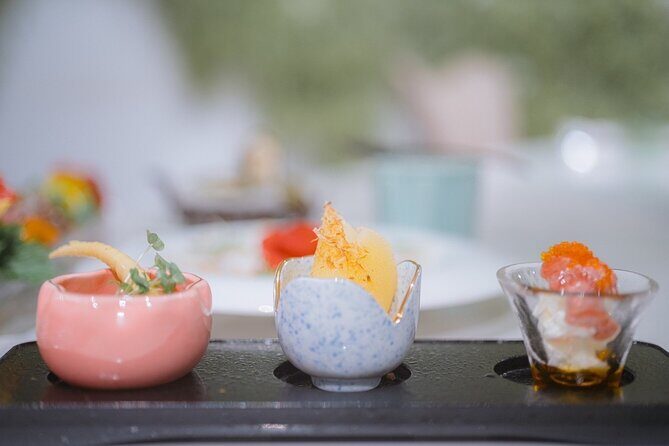
One of the standout features is that you can try smoking toppings, including fish. You may even get to taste smoked fish flavored with Sakura wood chips—this came up in the experience feedback as a memorable extra step.
Why does this matter for your enjoyment? Smoking adds an aroma you cannot replicate with simple seasoning. It also gives the class a small “technique arc,” where you go from basic assembly to a more sensory moment.
Even if you normally do not care about cooking techniques, this is the kind of detail that makes the class feel more special than just rolling rice and seaweed. It also gives you something to talk about while you eat, which makes the whole experience feel more like a meal with a story.





Toppings, Tools, and the Good Kind of Prep
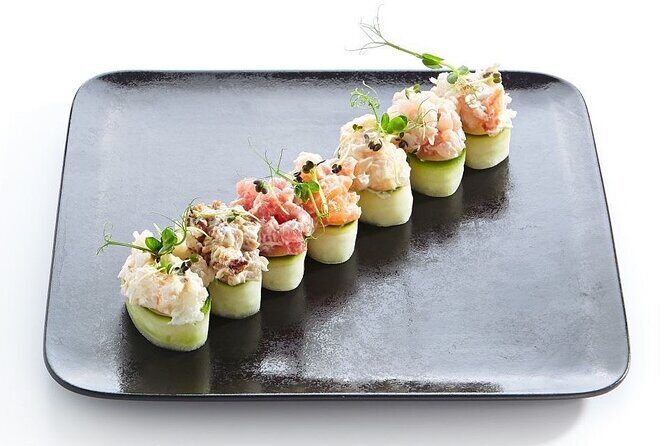
You are provided with prepared sushi ingredients and utensils. That is a quiet advantage. Many cooking experiences are either too hands-off or too complicated, but this one is set up so you can actually make the food without struggling to get started.
The class is described as using cut sushi ingredients and utensils, which helps keep the process efficient. It also makes it more beginner-friendly, since you are not dealing with raw ingredient prep from scratch.
Also, because the components are ready, you can focus on the main skill: building the temaki so it holds together enough to eat. If you have ever tried to make hand rolls at home, you know the hardest part is getting everything balanced in the roll. The demonstration helps you get past that learning curve.
Drinks Included: A Small Value Boost
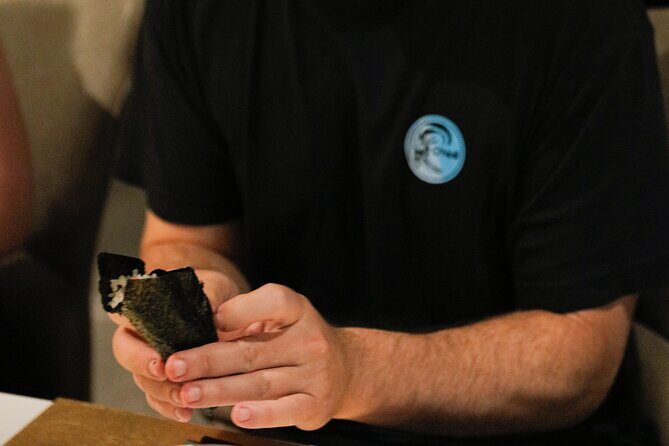
The price is $47.09 per person, and the experience includes 1 drink, plus all fees and taxes. Bottled drinks are not included, so if you see something in the menu you want, it might be smart to treat it as part of your planning.
Does the drink inclusion change the value? Yes, because it reduces one of the usual “hidden add-ons” you get with classes in Tokyo. You still pay transportation separately, but at least you do not have to think about buying a drink on top of the class cost.
The experience uses a mobile ticket, so you should expect the process to be easy once you arrive. If you like not juggling paper confirmations during travel, this is a point in its favor.
Location and Timing: Why Shinjuku Works
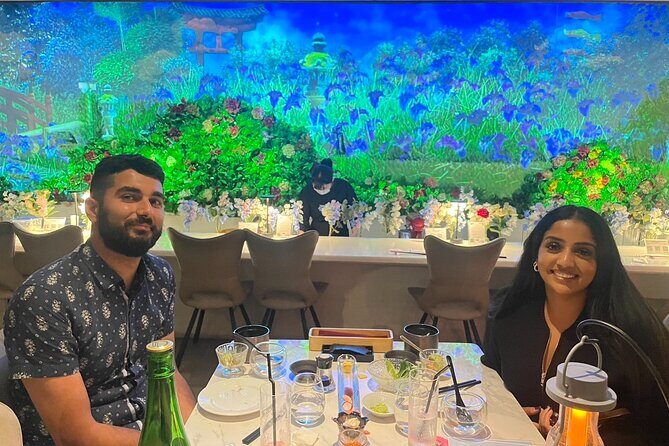
Shinjuku is convenient for a reason: you can usually plug food activities into a day without detouring too far. This meeting point is near public transportation, and you end back at the starting location.
The duration—about 1 hour 30 minutes—also makes it realistic. You can schedule it in the middle of a day of shopping and walking, or you can use it as an evening plan that gives you a clear ending point. If your Tokyo day feels too open-ended, this type of class gives structure.
One small scheduling note: the experience is commonly booked about 20 days in advance. That does not mean it will sell out instantly, but it is a sign this is a popular format. If your trip dates are firm, I would book earlier rather than later.
Group Size and Atmosphere: Getting Help Without Feeling Watched
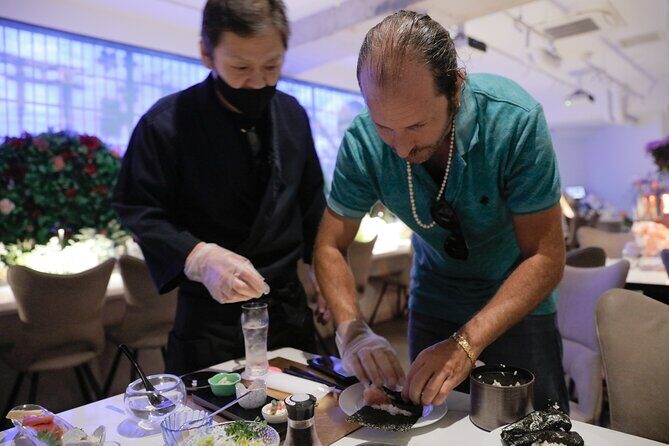
With a maximum of 8 travelers, you can expect a more personal class tone. The staff can talk through ingredients and assembly, and they can answer questions instead of just repeating instructions for the whole room.
The experience also seems to lean into warmth and comfort. Names like Nina and Kai came up in the feedback, along with appreciation for a translator who provided clear English support.
For you, the practical benefit is confidence. When you are learning technique, you do not just want instructions—you want permission to ask follow-ups and to get unstuck. This format is built for that, which is why it tends to work well for people who do not speak Japanese.
Price and Value: When $47.09 Feels Like a Deal
Temaki sushi experiences in Tokyo can vary a lot in structure. This one feels like good value because you get a full class experience, not just a tasting.
What you receive that you would normally pay for separately:
- A structured lesson with demonstration
- Hands-on making with prepared ingredients and utensils
- Dashi-maki tamago included
- Topping customization (three topping types)
- A smoked element to add variety to the meal
- 1 drink included
- All fees and taxes included
What you do pay separately:
- Transportation to the meeting point
- Bottled drinks (if you want them)
- Additional meals and drinks
So for your budget, think of it as a packaged food activity meal. If you were going to pay for a sit-down meal plus a cooking activity, the pricing starts to look more reasonable.
Who Should Book This Class
This experience is a strong match if you want:
- A hands-on Japanese food activity in Shinjuku
- Something social you can do with friends or family
- A class format that supports beginners
- A taste of more than just sushi rolling, including dashi-maki tamago
- An option that can work even with limited Japanese, thanks to translator support
It is also a good choice if you like the idea of making food you will actually eat right away, rather than just learning technique and walking away.
Quick FAQ for Planning
FAQ
What is included in the price?
The price includes 1 drink and all fees and taxes.
What dishes will I make in the class?
You will make temaki sushi (hand-rolled sushi) and dashi-maki tamago (Japanese rolled omelet). You will also assemble temaki with selected toppings.
How long is the experience?
It runs for about 1 hour 30 minutes.
Where does the experience start?
You meet at FLOWER WALL MONE (フラワーウォール モネ) 新宿, Shinjuku City, Shinjuku, Japan.
Is there a limit on group size?
Yes. The experience has a maximum of 8 travelers.
Are the ingredients and utensils provided?
Yes. Prepared sushi ingredients and utensils are provided so you can make the temaki easily.
Do I need to speak Japanese?
No. Some staff members may not speak fluent English, and a translator machine may be used.
What if I cancel?
You can cancel for a full refund if you cancel at least 24 hours before the experience start time. If you cancel less than 24 hours before, the amount paid is not refunded.
Should You Book This Temaki Sushi Experience in Shinjuku?
If you want an experience that is genuinely about doing—rolling, choosing toppings, and learning both temaki and dashi-maki tamago—this is an easy yes. The structure is beginner-friendly because ingredients and tools are already prepared, and the small group size helps you get answers instead of just watching from the sidelines.
I would especially book if you are traveling with others and want an activity that creates shared memories without needing advanced cooking skills. The smoked element and the flower-filled cafe setting also give you more than a standard sushi meal.
The only reason I would hesitate is if you strongly prefer passive sightseeing-style tours. This is not that. It is a working class, and the best part is jumping in and building your own hand rolls at the table. If that sounds fun to you, you are likely to enjoy this one.
More Tour Reviews in Tokyo



Shinjuku After Hours: The Other Crawls


Fresh reviews from around Tokyo






Shinjuku Bar Hopping, compared.
 ★ 5.0Shinjuku Food Tour (13 Dishes at 4 Local Eateries)From $866,603 reviews
 ★ 5.0Tokyo Bar Hopping Tour in Shinjuku (All-You-Can-Drink + Dinner)From $1063,587 reviews
 ★ 4.9Shinjuku Food Tour (15 Dishes and 4 Eateries)From $852,033 reviews
 ★ 4.9Shinjuku Local Bar and Izakaya Guided Walking TourFrom $341,794 reviews
 ★ 5.0Tokyo Shinjuku Chopsticks Making ClassFrom $201,763 reviews
 ★ 5.0Tokyo Shinjuku Sumo Show & Experience with PhotoFrom $791,750 reviews
 ★ 5.0Tokyo Night Foodie Tour in Shinjuku – Seasonal Sushi, Wagyu BeefFrom $1111,161 reviews
 ★ 4.8Sumo Show and Experience in ShinjukuFrom $691,001 reviews
Browse the lists this tour appears in