
Reviewed · TOURS
Shinto Shrine Tour: Explore Japanese Culture in Tokyo
Shinto shrines make Tokyo feel different fast. This tour is a practical way to learn the why behind what you see, without getting stuck decoding rituals on your own. I especially like the private, group-only format and the fact you can see three famous shrines in about three hours. One thing to plan for: it’s not a sit-and-watch experience. You’ll walk between stops and spend real time outdoors, so comfortable shoes matter.
The guide work is the other big win. I like how the lesson stays grounded in everyday culture, from how to purify yourself to how people pray for good fortune and success. Names you might meet include Hitomi, Ami, Atsuko Kobayashi, Asami, Ken, and Katsunori Fugiwara, and the consistent theme is clear explanations plus patient pacing (even with unexpected hiccups).
The only real drawback I see for some people is the pace. Even though each shrine gets about an hour, the combined walking time can feel long, so if you’re dealing with mobility issues, plan ahead and tell the guide early. Smart casual dress helps, and you’ll be glad you wore layers.
In This Review
- Quick hits before you go
- A Tokyo Shinto Primer in Three Stops
- Meiji Jingu: Forest Calm After the Harajuku Start
- Kanda Shrine: Ancient Roots and Rebuild Stories
- Tokyo Daijingu: The Marriage Fortune Stop
- How the Guide Makes Etiquette Feel Simple
- Getting There: Harajuku Meet, Public Transit Between Shrines
- Price and Value: What $206.26 Buys You
- Who This Tour Suits Best (and Who Might Skip)
- Should You Book This Shinto Shrine Tour?
- FAQ
- What shrines are included on this tour?
- How long is the Shinto Shrine Tour?
- Where do we meet, and what time does the tour start?
- Is this tour private for my group?
- What’s included in the price?
- What should I wear?
- Will the tour still happen if the weather is bad?
Quick hits before you go
- Private group experience: your group only, so questions don’t get lost in the crowd.
- Three shrines, one morning: you don’t waste half a day commuting between sites.
- Entrance fees included: you can focus on the rituals and stories, not ticket lines.
- Etiquette taught live: you’ll learn how to pray and how to approach the spaces respectfully.
- Guides who connect culture to daily life: you’ll get mythology plus modern context.
Before you commit, see how this one stacks up against a few Tokyo favourites:
- Mt Fuji and Hakone 1-Day Bus Tour Return by Bullet Train★ 5.0 · 26,383 reviews
- 1-Day Tokyo Bus Tour★ 5.0 · 14,250 reviews
- Tokyo: teamLab Planets TOKYO Digital Art Museum Entry Ticket★ 4.6 · 9,779 reviews
A Tokyo Shinto Primer in Three Stops
This tour is built for people who want Shinto culture without turning it into a research project. In Japan, shrines are everywhere, but the meaning isn’t always obvious from the outside. Here, a professional English-speaking guide walks you through what you’re looking at and what it’s for—mythology, religious practice, and the social habits around visiting.
The “three shrines” structure is smart value. With limited time, you get variety: one shrine tied to modern nation-building and imperial memory, one with ancient roots and rebuilt history, and one strongly associated with a specific hope (good fortune in love and marriage for girls). Instead of one long stop, you get three different flavors of the same tradition.
You’ll also get practical help with the flow of a shrine visit. The tour focuses on things like purification, praying properly, and understanding what people are asking for. That makes it much easier to participate respectfully instead of standing there guessing what comes next.
Meiji Jingu: Forest Calm After the Harajuku Start
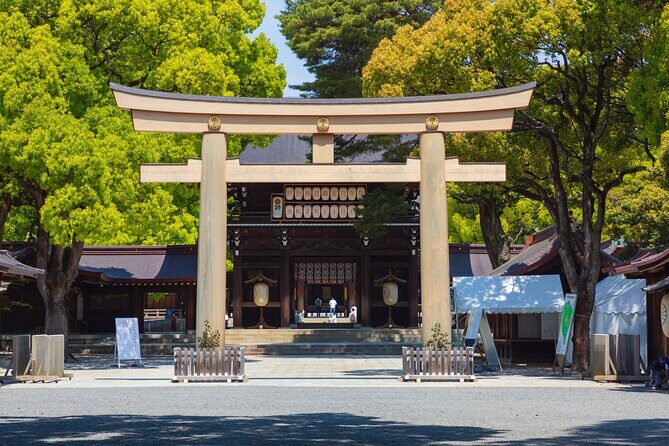
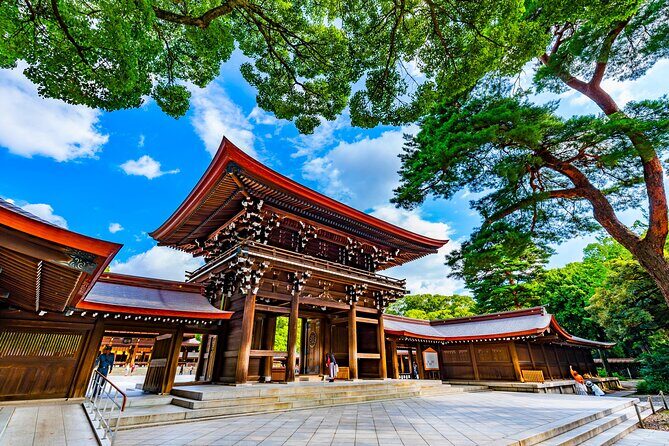
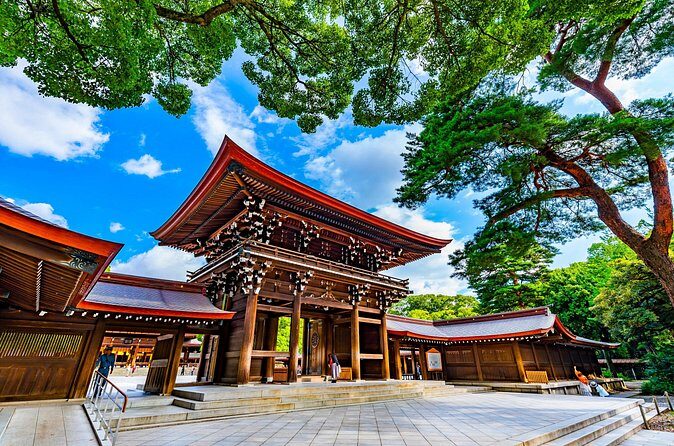
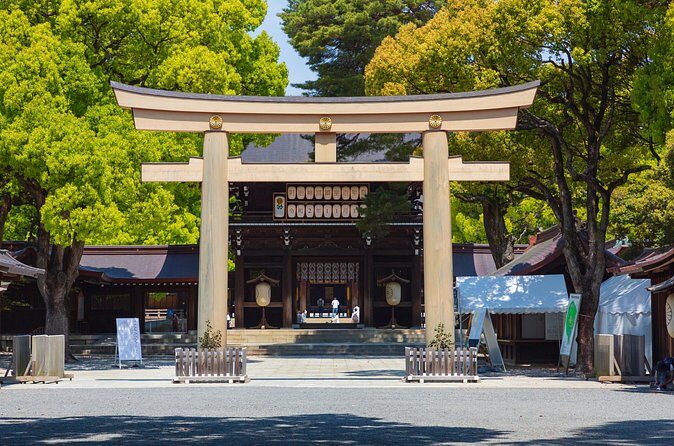
You begin at Harajuku Station (look for the meeting point around Jingumae in Shibuya). From there, the tour heads to Meiji Jingu, and you’ll feel the shift quickly. Meiji Jingu is dedicated to the souls of Emperor Meiji and Empress Shōken, and the approach is framed by a lush forest of trees donated from different regions of Japan.
That donated-tree detail matters. It’s not just pretty scenery; it’s part of the shrine’s message about connection across the country. When you’re walking under that canopy, it helps you understand why people come here to slow down. Even if you’re a first-timer, the setting does half the teaching.
What I like about this stop is that it’s usually the easiest one to “get” even without religion background. The space encourages the right mindset: quiet, respectful, and a little removed from the city’s pace. You’ll get about one hour here, which is plenty to see the main areas without feeling rushed.
A small consideration: the shrine grounds can involve walking within the site, so plan for steady steps and take your time. If you’re sensitive to heat or cold, dress accordingly since much of your time is outdoors.
Kanda Shrine: Ancient Roots and Rebuild Stories
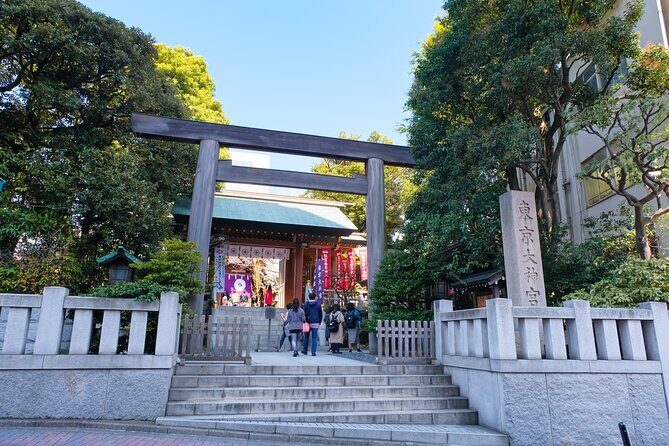
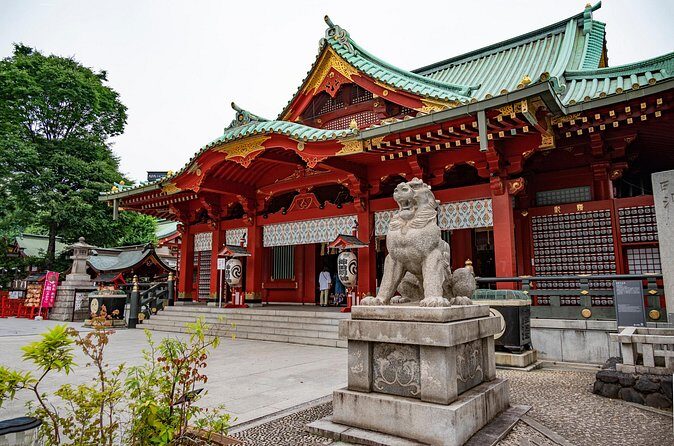
Next up is Kanda Shrine in Chiyoda. It’s one of those places where age isn’t just a number. The shrine dates back about 1,270 years, but the current structure was rebuilt multiple times because of fire and earthquakes.
This is a powerful lesson for anyone thinking of shrines as frozen in time. Kanda shows that cultural and spiritual spaces survive by changing and rebuilding. You’ll likely hear how the shrine’s presence kept going through disaster, which gives the site an added layer beyond sightseeing.
Kanda also tends to feel more “in Tokyo” than some of the bigger, more isolated shrine settings. You’re still in the city, so it can help you connect Shinto practice to real urban life. People visit, pray, and move through daily routines. That’s the part I find useful: it’s not only for tourists.
You get about one hour at this stop, including time to understand what you’re seeing and how to behave. If you want to ask questions about symbolism—what certain features represent, or why specific rituals happen—this is a strong chance, because the guide has room to explain instead of sprinting to the next location.
Tokyo Daijingu: The Marriage Fortune Stop
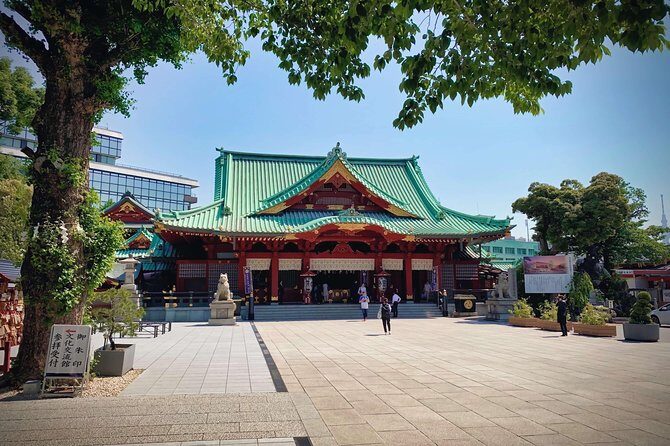
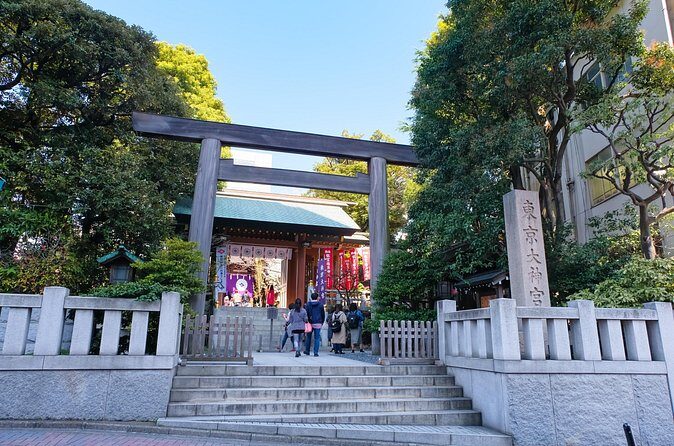
Tokyo Daijingu is often referred to as O-Ise-sama in Tokyo, which is a nickname you’ll hear because the shrine is associated with deities in a way people connect to the famous Ise Shrine tradition. It’s known as one of the notable shrines in Tokyo, but the standout detail here is its fame for the god of marriage among girls.
That means the hope people bring to this shrine is clear. If you’re curious about how Shinto connects spiritual practice to everyday wishes, this stop gives you a direct example. People come with a specific kind of prayer in mind, and the atmosphere reflects that focus.
I also like this stop because it rounds out the day. Meiji Jingu sets the tone with imperial history and a calming forest approach. Kanda brings the long timeline of survival and rebuilding. Tokyo Daijingu grounds everything with a very personal, understandable wish—good fortune related to marriage.
Again, you’ll spend about one hour here. That’s enough to learn the etiquette, see the main areas, and not feel like you’re just checking boxes.





How the Guide Makes Etiquette Feel Simple
A Shinto shrine tour can go two ways: you either memorize gestures like a dance routine, or you understand why the gestures exist. This tour leans toward understanding.
The guide teaches basics tied to actual shrine practice: how to purify yourself, how people pray for good fortune, and how to approach prayer respectfully. You’re not just told what to do; you’re given context so it feels less like performance and more like participation in a tradition.
The best part is that the explanations tend to connect to culture, not just doctrine. One guide might focus on the Meiji period background to frame what you’re seeing at Meiji Jingu, while another might emphasize modern life and the role shrines play in daily Japan. When the tone is right, you walk away with practical cultural literacy: how to act, what to look for, and what people believe they’re doing when they pray.
You’ll also have photo opportunities, which matters more than people think. Shrines can be very photogenic, but you don’t want photos to become the only goal. The tour helps you balance pictures with paying attention.
One more practical note: the tour is smart casual. You don’t need fancy outfits, but you should dress comfortably enough to stand, walk, and move through shrine grounds respectfully.
Getting There: Harajuku Meet, Public Transit Between Shrines
Logistically, this tour is built to reduce friction. There’s public transportation between shrines, so you’re not stuck figuring out routes across Tokyo while also trying to keep track of ritual timing.
The start time is 9:00 am, meeting at Harajuku Station (listed around 1 Chome-18 Jingumae, Shibuya). The tour ends in a different location, so you’ll plan your next stop accordingly.
Also, the guide will wait up to 30 minutes after the scheduled start time for late arrivals. If you’re cutting it close, give yourself buffer time around Tokyo station navigation, especially if you’re traveling with luggage.
You should know what’s on you versus what’s handled. Food and drinks aren’t included, and you’ll also cover transportation to and from the meetup if you need it. The tour does include transportation between shrines, plus entrance fees and a professional guide.
Price and Value: What $206.26 Buys You
At $206.26 per person for an approximate three-hour experience, you’re paying for more than a sightseeing walk. You’re paying for:
- A professional English-speaking guide
- Entrance fees for all three shrines
- Public transit support between stops
- Time-efficient routing that lets you hit major shrines without long line battles
If you price it out the DIY way, you’d still have to buy tickets/fees (where applicable), spend time figuring out transit, and then stop repeatedly to look up what you’re seeing. This tour compresses the learning curve. For visitors with limited time, that shortcut is real value.
The tour also mentions group discounts and a mobile ticket, which can help if you’re traveling with friends or family. And because it’s exclusive to your group, you avoid the problem of being one of many voices in a large pack.
So the money question comes down to your style. If you want quiet wandering alone, DIY can work. If you want to understand what you’re doing at the shrine—purification, prayer, etiquette—this is the more efficient way to get it.
Who This Tour Suits Best (and Who Might Skip)
This tour fits best if you’re:
- New to Shinto and want a clear introduction you can actually use
- Interested in Japanese culture and mythology, not just photos
- Short on time and want a meaningful hit of three major sites
- Traveling with a group and want the experience tailored through questions and pacing
It might be less ideal if you:
- Have limited mobility and struggle with walking between stops (the route can be a bit long overall)
- Want a completely unstructured visit with no guided etiquette focus
The good news is that guides tend to adapt to you. In the real-world feedback, people appreciated how guides stayed patient when someone needed to rest, which tells me the tour can handle normal human surprises. Still, tell the guide early if you have concerns.
Should You Book This Shinto Shrine Tour?
I’d book it if you want your shrine visit to feel meaningful from the first moment. Meiji Jingu gives you the ceremonial calm and national memory. Kanda brings the ancient roots and the story of rebuild after disaster. Tokyo Daijingu adds the practical, hope-driven side of shrine prayer with its strong association to marriage among girls.
It’s also a smart choice if you’re thinking, I’ll try to figure this out myself. You’ll spend less time guessing and more time understanding. The private, group-only format makes it easier to ask questions and slow down where you need it.
If you’re fit and comfortable walking, and you’re open to learning etiquette, this is a strong value for three culturally important stops in one morning.
FAQ
What shrines are included on this tour?
The tour visits Meiji Jingu Shrine, Kanda Shrine, and Tokyo Daijingu Shrine.
How long is the Shinto Shrine Tour?
The duration is about 3 hours.
Where do we meet, and what time does the tour start?
You meet at Harajuku Station (listed around 1 Chome-18 Jingumae, Shibuya, Tokyo 150-0001, Japan) and the start time is 9:00 am. The tour ends in a different location.
Is this tour private for my group?
Yes. It’s exclusively for your group, so you get a private and personalized experience.
What’s included in the price?
Included items are a professional English-speaking tour guide, photo opportunities, public transportation between the shrines, and entrance fees.
What should I wear?
The dress code is smart casual.
Will the tour still happen if the weather is bad?
If the tour is canceled due to typhoon or extreme weather, you’ll be offered an alternative date or a full refund.
More Tours in Tokyo


More Tour Reviews in Tokyo



Fresh reviews from around Tokyo






Tours, compared.
 ★ 5.0Shinjuku Food Tour (13 Dishes at 4 Local Eateries)From $866,603 reviews
 ★ 4.4Tokyo Mt Fuji 5th St & Hakone Cruise Bus Tour w/Bullet TrainFrom $1545,024 reviews
 ★ 5.0Flagship 2-Hours Official Street Go-Kart Tour – Tokyo Bay ShopFrom $644,974 reviews
 ★ 4.7Mt. Fuji Tour, Hakone Ropeway, Owakudani, Lake AshiFrom $544,002 reviews
 ★ 5.0Tokyo 6hr Private Tour with Government-Licensed GuideFrom $1553,902 reviews
 ★ 5.0Tokyo Bar Hopping Tour in Shinjuku (All-You-Can-Drink + Dinner)From $1063,587 reviews
 ★ 5.0Tokyo Tsukiji Fish Market Food and Culture Walking TourFrom $993,184 reviews
 ★ 4.9Shinjuku Food Tour (15 Dishes and 4 Eateries)From $852,033 reviews