
Reviewed · SHIBUYA TOURS
Shibuya: Tokyo Street Go-Kart Tour by Shibuya Annex
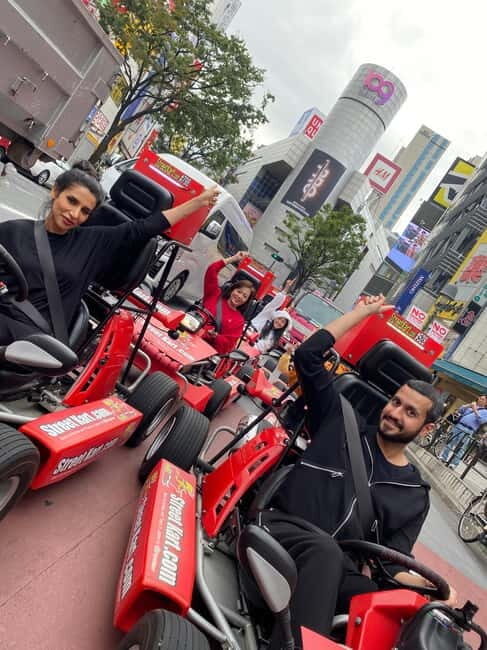
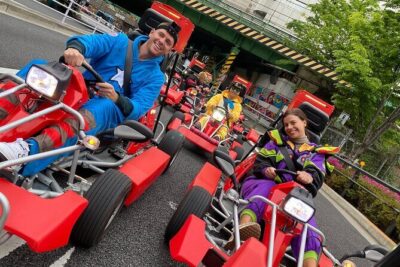
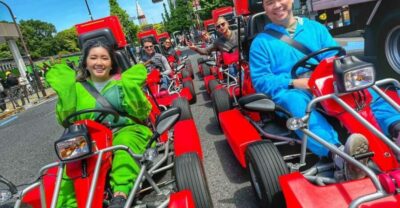
Shibuya Crossing, but make it motorized. This tour takes you through Tokyo’s best-known intersection on a custom-made legal street go-kart, then rolls you onward toward Harajuku and Omotesando. It’s the kind of thing you’ve seen in movies, but here you’re actually steering, following road rules, and getting professional help the whole way.
Two things I especially like about this experience are the professionally trained guides and the photo setup. You’ll get a briefing and hands-on coaching, and your guide will take as many photos as possible, then hand over the data at the end. One thing to consider up front: driving in Japan is paperwork-heavy, and you’ll need the right physical documents and a valid license setup before you even think about karts.
In This Review
- Key Highlights You’ll Feel During the Ride
- Why Shibuya Crossing in a Legal Go-Kart Is the Point
- The 1-Hour Ride Plan: Shibuya Crossing, Then Harajuku and Omotesando
- First hit: Shibuya Crossing
- Second chapter: Harajuku and Omotesando
- Getting Great Instructions: Guides Who Keep It Fun and Safe
- Photos and Costumes: Turning a Ride Into a Memory Folder
- Karts, Road Rules, and the Real Meaning of a Legal Street Kart
- Price and Value: What $67 Really Buys You in Tokyo
- Meeting Point Reality Check: The Second-Floor Logo
- Documents and Footwear Rules You Must Get Right
- The International Driving Permit rules (physical only)
- You must carry physical passport too
- Footwear and on-the-day do-not-pack list
- Who This Tour Suits (and Who Should Skip It)
- Great fit if you want
- Not suitable for
- Booking Decision: Should You Book This Shibuya Street Go-Kart Tour?
- FAQ
- How long is the Shibuya Tokyo Street Go-Kart Tour?
- Is the guide English-speaking?
- Where is the meeting point?
- What do I need to drive in Japan for this tour?
- Are International Driving Permits from all countries accepted?
- What footwear is not allowed?
- What’s included in the price?
- What is not included?
- Is there free cancellation?
Key Highlights You’ll Feel During the Ride
- Legal street go-karts that let you drive Shibuya Crossing in a controlled, guided way
- Professionally trained English-speaking guides focused on safety and clear instructions
- Photo data included, with your guide snapping lots of pictures during the ride
- Costume and accessory rental included, so you get extra attention in the crossing
- Small group (up to 6) for more personal guidance and smoother pacing
- Harajuku and Omotesando cruise right after the big Shibuya moment
More to do within sight of the Crossing
- Official Street Go-Kart in Shibuya★ 5.0 · 3,435 reviews
- Tokyo: Street Kart Experience in Shibuya★ 4.9 · 1,484 reviews
- Shibuya Meltdown Nightlife Tour: All-You-Can-Drink Bar Hopping★ 5.0 · 1,058 reviews
Why Shibuya Crossing in a Legal Go-Kart Is the Point
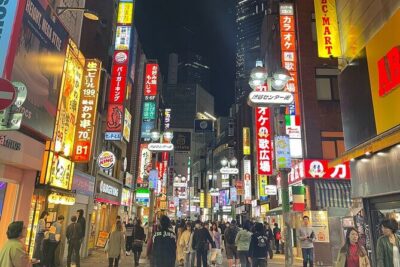
Tokyo has lots of impressive sights, but Shibuya Crossing is a specific kind of iconic. It’s huge, loud, and fast-moving, and it has that movie-magic feel even when you’re standing still. This tour turns that moment into something physical: you’re in a custom legal go-kart, driving through the crossing while a guide keeps things organized and safe.
What makes it work is the balance between freedom and structure. You’re not just watching from the sidewalk. You’re actively navigating an area that requires attention, timing, and obedience to road regulations. The guides are trained for exactly this situation, and that matters in a place that’s famous for constant motion.
You’ll also notice the social side right away. People in Tokyo react to karts, costumes, and spectacle. The tour leans into that with a free costume/accessory rental, so you’re not dressed like everyone else. It’s a simple trick: when you look like you’re part of the event, your ride becomes a memory instead of just a photo.
The 1-Hour Ride Plan: Shibuya Crossing, Then Harajuku and Omotesando
The activity is short on purpose: it’s built around a high-impact highlight, then a change of scenery while you’re still riding. Total duration is about 1 hour, and the format is designed for a “do it now” Tokyo experience rather than a long day of transport and sightseeing.
First hit: Shibuya Crossing
You start by driving through Shibuya Crossing multiple times from different directions. That detail is what makes this tour more than a single crossing “tick-box.” The crossing is visually overwhelming; approaching it from more than one direction helps you actually understand the space instead of just reacting to the chaos.
In practical terms, expect moments where you slow down, focus on signals and road behavior, and keep your eyes up. The guides’ job is to help you handle that without second-guessing what you’re supposed to do.
A possible drawback here is also the nature of the crossing: it’s busy and you’ll have to stay mentally switched on the whole time. If you’re the type who gets flustered in crowds or needs lots of time to process, you’ll want to lean into the briefing and follow the guide’s cues closely.
Second chapter: Harajuku and Omotesando
After Shibuya, you head toward Harajuku and Omotesando, Tokyo’s fashion-forward areas. The idea isn’t “touring boutiques.” It’s more like cruising through the energy of these neighborhoods while you’re still moving in your kart.
Harajuku and Omotesando tend to feel different from Shibuya. Shibuya is known for intensity and density. Harajuku/Omotesando often read as stylish and street-level creative, with big visual variety. So the ride gives you that contrast: one major iconic chaos moment, then a fashion-centric Tokyo feel while you keep driving.
The limitation, since the ride is only an hour total, is that you’re not there long enough to explore like a walking tour. Think of it as a moving “taste” of the areas, not a deep neighborhood study.
Other ways to drive the city in costume



Getting Great Instructions: Guides Who Keep It Fun and Safe
This experience is built around one core promise: safety and amusement go together. The tour includes a briefing video on road regulations and how to operate the karts, plus private and direct instructions from your guide.
That matters because go-karts sound simple until you add real street conditions and a place as famous as Shibuya. You need to understand basics like speed control, lane awareness, and how you’ll be guided through the crossing. The guide is also there to coach you in real time so you’re not guessing.
You’ll see this emphasis in the guide feedback that’s been shared by previous riders. People highlight that guides explain things well and stay attentive to safety. Names that have come up include Stanley, Tomas, and Cole, all of whom were praised for being helpful and clear while also taking lots of photos.
If you want the “I can actually do this” feeling, the training approach helps. You’re not thrown into traffic with zero prep. You get rules, then practice, then the main event.
Photos and Costumes: Turning a Ride Into a Memory Folder
Let’s be honest: most Tokyo street activities are photo-first. This one locks in the photo part by building it into the experience.
Your guide takes as many photos as possible during the tour, and you receive the data at the end. That’s a big practical win. In busy areas like Shibuya, it’s hard to time your own pictures while also driving safely. Having the guide handle photography means you can focus on the ride and still come away with strong images.
Then there’s the costume/accessory rental, which is included. Wearing a funky outfit is not only for fun. It’s also for visibility and energy in a place where you’re constantly moving through crowds. If you want to feel like a character in Tokyo for an hour, this is the easiest way to do it without packing extra clothes.
A small “consider this” point: if you plan to add an action camera, those gear costs are not included. You’ll see separate fees for camera-related items such as an action camera rental fee, micro-SD purchase fee, and camera mount rental fee.
Karts, Road Rules, and the Real Meaning of a Legal Street Kart
The word legal isn’t just marketing here. A street go-kart experience in a highly controlled, guide-led format changes the whole vibe. It’s not a random ride. It’s a structured way to drive in an urban environment where you need to obey road regulations.
You’ll get gasoline included, plus a setup that assumes you’ll be following the guide’s directions. The tour is also clear about what’s expected from drivers: road rules and operating procedures are covered in the briefing, and you receive direct instruction from your guide.
What I like about this structure is that it reduces friction. If you’ve ever tried to wing an activity on the fly in Tokyo, you know how quickly small misunderstandings can ruin a moment. Here, the system is built to prevent that.
Price and Value: What $67 Really Buys You in Tokyo
At $67 per person for about an hour, this tour can look like a “pay to play” activity. But the value isn’t just the kart rental. You’re paying for several pieces that add up fast in a city like Tokyo.
Here’s what you get in the price:
- Custom made go kart
- English-speaking guide on a kart
- Free costume/accessory rental
- Briefing video on road regulations and how to operate
- Gasoline
- Data of all photos taken by the guide
- Private, direct instructions
- Full support from Street Kart with guidance on required documents
So your money covers equipment, a trained guide, the “main event” location experience, and the photo package. The included costume also helps you get the most out of the public part of the ride without extra spending.
The one cost risk to plan for is anything camera-related that you choose to bring or rent, since action camera fees and extra storage/mounting are not included.
Meeting Point Reality Check: The Second-Floor Logo
This tour is easy to miss if you only glance at street-level signage. Your check-in is at the building where you’ll see the large Street Kart logo in the window, and the brand name Street Kart is right underneath it in neon lights.
Head to the second floor to check in. You can use the stairs or the elevator.
If you arrive early, use the time to locate the logo first, then confirm the details before you go looking for your group. In Tokyo, a five-minute delay can become a 20-minute scavenger hunt if you don’t know exactly where to go.
Also worth noting: Street Kart will email you necessary information within 24 hours of booking. That’s helpful for planning your documents and prep, so don’t ignore those messages.
Documents and Footwear Rules You Must Get Right
This is the part you can’t improvise. Everyone who drives needs special documents, and you must carry the physical versions.
The International Driving Permit rules (physical only)
For most countries, you need an International Driving Permit (IDP) issued in the booklet format compliant to the 1949 Geneva Convention. Important detail: valid IDPs are issued only by the same country that issued your domestic license, and you cannot obtain them online while traveling.
There’s also a specific exception: licenses issued in Switzerland, Germany, France, Taiwan, Belgium, or Monaco require a Japanese translation from the Japan Automobile Federation (JAF), not an IDP.
And if your license is from a country not covered by the 1949 Geneva Convention (the tour notes examples like China, Indonesia, Mexico, Qatar, Saudi Arabia, etc.), then you’re not permitted to drive in Japan.
You must carry physical passport too
You’ll need to carry your physical International Driving Permit (or your domestic license plus official translation for the exception countries) and your physical passport.
Footwear and on-the-day do-not-pack list
The tour is strict about footwear:
- Not allowed: high-heeled shoes
- Not allowed: sandals or flip flops
- Not allowed: bare feet
You’ll also be prevented from driving if you show up with alcohol or drugs in the mix, and those rules are clear for a reason: you’re driving on real roads, not a closed track.
Who This Tour Suits (and Who Should Skip It)
This go-kart experience has a “high-energy, hands-on driving” focus. That makes it perfect for some people and a bad fit for others.
Great fit if you want
- A memorable, movie-like Tokyo moment where you actively drive
- A short, structured activity that fits into a normal day
- An included photo package so you don’t have to manage cameras while driving
- A guide-led experience with safety and road rules covered
Not suitable for
The tour lists several groups it won’t accommodate, including:
- Pregnant women
- People with back problems
- People with mobility impairments
- People with heart problems
- Wheelchair users
- Children under 18
- People with respiratory issues
- People with epilepsy
- Visually impaired people
- People with recent surgeries
- People with low level of fitness
- People without driver’s license
- Drivers under 18
- Hearing-impaired people
If you fit into any of these categories, it’s best to choose a different Tokyo activity that matches your needs instead of forcing it.
Booking Decision: Should You Book This Shibuya Street Go-Kart Tour?
If you want one-hour Tokyo “wow” that’s different from the usual trains, temples, and long museum lines, this is a strong option. The biggest reason is the combination of Shibuya Crossing driving, a guided safety structure, and an included photo handoff. People also consistently appreciate that the guides are clear and careful, and the photo coverage is a real plus.
If you’re worried about the paperwork, don’t book until you confirm your license and IDP/translation details. This tour demands the right physical documents, and it’s not a “show up and sort it out” kind of activity.
My straight answer: book it if you have the driving documents sorted and you want a fun, guided ride through Tokyo’s best-known intersection. Skip it if paperwork stress would ruin your trip, or if you fall into one of the listed health/fitness or accessibility categories.
FAQ
How long is the Shibuya Tokyo Street Go-Kart Tour?
The tour duration is 1 hour.
Is the guide English-speaking?
Yes. The tour includes a live English-speaking guide on a kart.
Where is the meeting point?
You’ll check in on the second floor. Look for the large Street Kart logo in the window, with Street Kart written underneath in neon lights, then go to the second floor to confirm in.
What do I need to drive in Japan for this tour?
All participants who drive need special documents and must carry the physical documents plus a physical passport. For most countries, that means a physical International Driving Permit (IDP) in the 1949 Geneva booklet format.
Are International Driving Permits from all countries accepted?
No. The tour notes that IDPs must be compliant with the 1949 Geneva Convention for most countries, and it also lists specific exceptions (such as Switzerland, Germany, France, Taiwan, Belgium, and Monaco needing a Japanese translation from JAF). It also states some licenses are not permitted.
What footwear is not allowed?
High-heeled shoes are not allowed. Sandals or flip flops are not allowed, and bare feet are not allowed.
What’s included in the price?
Included items are the custom made go kart, an English-speaking guide, free costume/accessory rental, gasoline, a briefing video on road regulations and how to operate, private and direct instructions, photo data from pictures taken by the guide, and support for guidance of required documents.
What is not included?
Not included are action camera rental fees, micro-SD purchase fees, and camera mount rental fees.
Is there free cancellation?
Yes. The tour offers free cancellation up to 24 hours in advance for a full refund.
More Tour Reviews in Tokyo






More Street Karting in Tokyo
Still in Shibuya? Keep Going


Fresh reviews from around Tokyo






Shibuya Tours, compared.
 ★ 5.0Official Street Go-Kart in ShibuyaFrom $763,435 reviews
 ★ 4.9Street Kart Experience in ShibuyaFrom $741,484 reviews
 ★ 5.0Shibuya Meltdown Nightlife Tour: All-You-Can-Drink Bar HoppingFrom $1061,058 reviews
 ★ 5.0Shibuya Official Street Go-Kart in Shibuya AnnexFrom $69972 reviews
 ★ 5.0Shibuya Food Tour (13 dishes and 4 Eateries)From $77770 reviews
 ★ 5.0Best of Shibuya Food TourFrom $217612 reviews
 ★ 4.8Shibuya Highlights Walking TourFrom $19601 reviews
 ★ 4.7Premium Go-Kart Tour with Tower & Shibuya CrossingFrom $116528 reviews
Browse the lists this tour appears in