
Tokyo feels different at kart speed. You’ll drive a street-legal go-kart past Tokyo’s biggest sights, with the Shibuya Crossing stop as the headline and a guide steering you through the streets safely. I especially like how guides such as Izzy and Nao keep things relaxed but controlled, and how the team’s photo help plus costume changes turn the ride into a real memory, not just a blur of motion.
One big consideration before you get excited: in Japan, your regular driver’s license alone is not enough for this go-kart driving. If you show up without the right driving paperwork, they can refuse you on the day and there won’t be a refund on the spot, so do the IDP homework early.
In This Review
- Key highlights worth knowing
- Tokyo go-karts: Shibuya Crossing and Tokyo Tower in 90 minutes
- Meeting at Tokyo Joy Kart near Hamamatsuchō Station
- The legal driving part: the IDP rules you cannot wing
- Tokyo Tower segment: getting your bearings the fun way
- Roppongi: street energy with a guided pace
- Harajuku: costumes, cameras, and the big-city details
- Shibuya Crossing: the headline stop that makes the whole ride click
- Safety and guide style: the real difference between good and great
- Cost and value: is $96 a fair deal?
- Who should book (and who should skip)
- Timing tips: morning versus night and how much time to plan
- Should you book Kira Kira Tokyo Go-Karts?
- FAQ
- What do I need to drive a go-kart in Japan?
- How long is the tour, and how many people are in a group?
- What’s included in the price?
- Is the tour wheelchair accessible?
- What’s not allowed during the tour?
- Where is the meeting point?
Key highlights worth knowing
- Street-legal go-karts for real road driving, not just a theme-park loop
- Shibuya Crossing + Harajuku + Shinjuku-area views paced with guided stops
- Free costumes and photo support that make it easy to look good while you drive
- Small group size (limited to 11) for less chaos and smoother instruction
- English-speaking guides who do safety briefings and help with driving formations
- Tokyo Joy Kart setup with fuel included, plus free locker access
More to do within sight of the Crossing
- Official Street Go-Kart in Shibuya★ 5.0 · 3,435 reviews
- Tokyo: Street Kart Experience in Shibuya★ 4.9 · 1,484 reviews
- Shibuya Meltdown Nightlife Tour: All-You-Can-Drink Bar Hopping★ 5.0 · 1,058 reviews
Tokyo go-karts: Shibuya Crossing and Tokyo Tower in 90 minutes
If you want Tokyo without the usual walking pace, this is a fun swap. The whole idea is simple: you get a real steering wheel, a real route, and real city energy while you pass iconic areas like Tokyo Tower and Shibuya Crossing. It’s the kind of activity that feels a bit like taking your own personal movie set to the streets.
I also like the timing. Ninety minutes is long enough to feel like you actually did something, but short enough that you stay focused and not exhausted—especially after you add check-in and fitting time. Many people treat this as a main event, and I’d plan for closer to about 2 hours total in your day so you’re not rushing.
Meeting at Tokyo Joy Kart near Hamamatsuchō Station
You start at TOKYO JOY KART, 1F, トイヤビル 1F, 〒105-0014 Tokyo, Minato City, Shiba, 1 Chome−4−10. The nearest station is Hamamatsuchō, about a 5-minute walk, which is handy if you’re coming in from central Tokyo or doing other stops around Minato.
The shop itself is part of the experience. Expect a racing-inspired vibe, and you’ll be fitted and briefed before you head out. The tour also includes free locker access, so you can drop bags and keep the ride feeling straightforward.
A small practical tip: the address is easy to feed into Google Maps, but if you’re the type who likes redundancy, save the address in your notes too. Japan signage can be clear, but it still helps to have a backup.
The legal driving part: the IDP rules you cannot wing
This tour is for you only if you can legally drive a vehicle in Japan. The company is very explicit that your home driver’s license alone is not enough, and they can refuse you service on the day if requirements aren’t met.
Here are the acceptable options listed for driving, plus your passport:
- A valid 1949 International Driving Permit (IDP) issued under the 1949 Geneva Convention framework (valid for 1 year from issue date).
- Or an official JAF Japanese Translation plus passport, but only for specific countries (Germany, France, Switzerland, Belgium, Monaco, and Taiwan).
- Or for U.S. military based in Japan, you need a valid SOFA license plus military ID.
- Or a Japanese driver’s license (for Japan residents).
Also note the warning: don’t risk buying an IDP from scammy sites. The team says they cannot accept unofficial or counterfeit permits under Japanese law.
My advice: check your exact IDP validity dates and issuing authority before you buy anything else in Japan. This is the one thing that can turn a fun plan into a logistical headache.
Tokyo Tower segment: getting your bearings the fun way
The tour kicks off and then heads toward Tokyo Tower with a guided component. This part matters because it’s your first real chance to understand how the formation works and how the pace feels on actual streets.
Go-karts in Tokyo are not about speed only. They’re about control, confidence, and learning how to drive with a group while staying safe. The guides handle the training vibe quickly so you can focus on the view. A common theme in the feedback is that the briefing is clear and that guides pay attention to each person’s comfort level.
If you’re nervous, that’s normal. This is one of those tours where the guide’s job is to make you feel safe enough to enjoy it. People highlighted guides like Izzy and Nao for being both relaxed and attentive, and that’s exactly what you want at the start.
Other ways to drive the city in costume
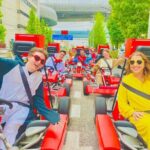
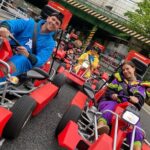
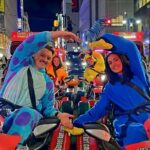

Roppongi: street energy with a guided pace
After Tokyo Tower, you roll toward Roppongi, again with a guided stop/segment. This is a good match for go-kart travel because it’s a place where you’ll recognize the vibe right away—busy roads, big city density, and lots of places you might’ve seen on a map.
Roppongi also tends to be visually strong at night, and some schedules can make the whole experience feel more electric through the city lights. One review specifically called out a later time slot (like 9pm) as a win because there can be less traffic, which makes the driving feel smoother.
What I like here is that you’re not just taking photos from the sidewalk. You’re moving through the area and seeing how neighborhoods connect. That’s a different kind of Tokyo understanding.
Harajuku: costumes, cameras, and the big-city details
The Harajuku part is where the tour starts to feel like a production, in the best way. You’ll be in an area associated with fashion and youth culture, and the go-kart format makes it feel playful rather than touristy.
This is also where the included perks really pay off. You get free use of costumes, so you can instantly lean into the fun theme. Add the guide-driven photo moments and you get pictures that look like an event, not just snapshots taken while you’re distracted by traffic and navigation.
In the feedback, people praised guides for posing suggestions and for taking lots of photos—especially guides like Bongo/Bingo (spelling varies in the reviews) and Blake. That matters because you’ll get better shots when someone is actively helping you frame the moment instead of hoping you’ll get it right while driving.
Shibuya Crossing: the headline stop that makes the whole ride click
If Tokyo has one visual symbol you recognize instantly, it’s Shibuya Crossing. This tour uses it as the centerpiece, and it’s the stop that makes the experience feel bigger than a ride around town.
Why it works: Shibuya Crossing is one of those places where walking can feel like a spectator sport. From a go-kart, you’re still in the flow of the city. You’re moving with the space, passing along the area while people nearby cheer and take in the spectacle—exactly the kind of moment that turns your Tokyo day into a story you’ll tell later.
You’ll still get guided structure, not random wandering. The guide controls the group’s formation and keeps you feeling safe. And because this is the famous segment, it’s also where the photo energy spikes. One reviewer talked about being celebrities at the crossing because people were grabbing photos of the kart and riders—so if you like attention (or at least like being part of the scene), this is the moment.
Safety and guide style: the real difference between good and great
Go-kart tours rise or fall on safety culture, and this one leans hard into that. The included guidance includes a safety briefing and a structured driving approach. One review specifically noted the group went over hand signals and driving formations, which is what you want when you’re sharing space with other road users and a group of different comfort levels.
The small group size helps. Limited to 11 participants, you’re less likely to feel like you’re herding a crowd. That usually means fewer delays and more time for the guide to check on individuals.
The best part, based on the reviews, is how the guides blend instructions with energy. People mentioned guides like Izzy, Nao, Bingo, and Blake being fun, relaxed, and attentive—and taking lots of photos. That combination matters because it makes you want to participate instead of just survive the experience.
Cost and value: is $96 a fair deal?
At $96 per person for 90 minutes, the question isn’t just whether it’s cheap. It’s whether the package gives you enough value to justify doing this rather than improvising something similar.
Here’s what you’re getting that usually costs extra when you DIY:
- A guided route through major areas
- A street-legal go-kart experience
- Free costumes
- Complimentary photo support included in the experience
- Fuel included
- Free locker access
In other words, you’re paying for coordination and a guided experience that turns Tokyo into a moving photo set. When people rate this tour highly for value, it’s usually because the staff handles the hard parts: briefing, guiding, pacing, and filming moments.
Would it be cheaper to find a kart rental and plan your own route? Maybe, but you’d also take on navigation, paperwork risk, and the stress of learning how group driving works on Tokyo streets. For most visitors, the guide-led structure is what makes the price feel fair.
Who should book (and who should skip)
This tour can be a great match if you want a high-energy Tokyo activity that’s still organized and safety-focused. It’s suitable for solo travelers, couples, and groups of friends, and people highlighted that it works well even when you end up effectively in a smaller group.
It’s also described as wheelchair accessible, which is a strong plus if mobility needs are part of your planning.
But it’s not for everyone. It lists these as not suitable:
- Pregnant women
- Divers without certification
And on the behavior/safety side, they clearly state:
- No alcohol or drugs
- No intoxication
- No open-toed shoes or bare feet
If you’re choosing between this and a more traditional sightseeing day, think about what you want. If you want calm photo stops and long museum breaks, a go-kart tour may feel too high tempo. If you want to feel the wind, try street driving, and see Tokyo from a totally different angle, this fits well.
Timing tips: morning versus night and how much time to plan
This tour runs for 90 minutes, but your whole experience depends on your arrival timing. People also suggested letting about 2 hours for the activity, which makes sense once you include check-in, gearing up, and the safety briefing before you ride.
Night can be a plus if you like city lights and you want roads to feel less crowded. One reviewer specifically praised a later slot around 9pm for minimal traffic and a smoother drive. Even if you’re not booking late, the key is to arrive early and be ready for instruction.
Should you book Kira Kira Tokyo Go-Karts?
Book it if you want a Tokyo highlight that’s active, photo-friendly, and guided by a team that takes safety seriously. The combination of street-legal driving, major-area route coverage, free costumes, and guide-led photo support makes it feel like a real event, not just a novelty.
Don’t book it if you’re not prepared for the driving paperwork in Japan. This is the one trip where showing up unready can end with you being refused on the day. If you’re confident you can meet the driving requirements (and you’ve double-checked your IDP option), then this is a strong choice for a memorable Tokyo day.
If you’re still deciding, I’d treat Shibuya Crossing as the tie-breaker. If that’s on your must-see list, a go-kart format gives you a view you can’t fully replicate on foot.
FAQ
What do I need to drive a go-kart in Japan?
The tour says your regular driver’s license alone is not enough. You’ll need at least one listed option (a valid 1949 IDP, a JAF Japanese Translation plus passport for certain countries, a SOFA license plus military ID for U.S. military in Japan, or a Japanese driver’s license), plus your passport.
How long is the tour, and how many people are in a group?
The duration is 90 minutes. The group is small, limited to 11 participants.
What’s included in the price?
Included are the tour guide, go-kart, fuel, pictures, free costume use, and free locker access.
Is the tour wheelchair accessible?
Yes, the activity is listed as wheelchair accessible.
What’s not allowed during the tour?
You’re not allowed intoxication, alcohol and drugs, open-toed shoes, or bare feet.
Where is the meeting point?
The meeting point is TOKYO JOY KART, 1F, トイヤビル 1F, 〒105-0014 Tokyo, Minato City, Shiba, 1 Chome−4−10. The nearest train station is Hamamatsuchō Station, about a 5-minute walk.
More Tour Reviews in Tokyo






More Street Karting in Tokyo
Still in Shibuya? Keep Going


Fresh reviews from around Tokyo






Shibuya Tours, compared.
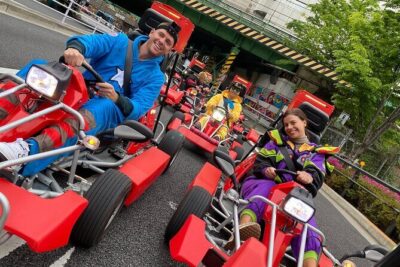 ★ 5.0Official Street Go-Kart in ShibuyaFrom $763,435 reviews
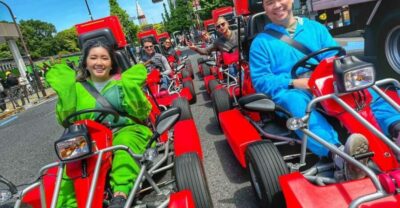 ★ 4.9Street Kart Experience in ShibuyaFrom $741,484 reviews
 ★ 5.0Shibuya Meltdown Nightlife Tour: All-You-Can-Drink Bar HoppingFrom $1061,058 reviews
 ★ 5.0Shibuya Official Street Go-Kart in Shibuya AnnexFrom $69972 reviews
 ★ 5.0Shibuya Food Tour (13 dishes and 4 Eateries)From $77770 reviews
 ★ 5.0Best of Shibuya Food TourFrom $217612 reviews
 ★ 4.8Shibuya Highlights Walking TourFrom $19601 reviews
 ★ 4.7Premium Go-Kart Tour with Tower & Shibuya CrossingFrom $116528 reviews
Browse the lists this tour appears in