
Want Tokyo on four wheels?
This go-kart ride turns into a moving city tour, with you in supplied costumes zipping through major neighborhoods like Ginza, Asakusa, and Akihabara. I especially like that you get a thorough safety briefing before you start and that the route is controlled so you’re not figuring things out on your own. My only real caution is the hard requirement for an International Driving Permit in the 1949 Geneva booklet format—if you show up without the right documents, you may be denied entry.
What makes this feel different from most tours is the mix of real driving and quick photo moments. You’ll stop along the way for a rest and pictures, and you’ll also get photos from the experience after the ride. In the better runs, the staff help you stay together with lead and follow vehicles, which is exactly what you want when you’re new to driving in Tokyo traffic.
The practical upside is that the whole thing runs about 2 hours 30 minutes, so it’s long enough to feel like you actually did something, but short enough to fit into a packed Tokyo schedule. The downside to know upfront: it’s more about the ride than a talk-heavy sightseeing tour, so don’t expect a deep narration at every stop.
In This Review
- Key points that make this go-karting tour worth it
- Why driving Tokyo Bay feels like a movie set
- Cost, what’s included, and whether it’s good value
- Before you ride: IDP rules that can make or break the trip
- Meeting point and timing that help you avoid stress
- What the route feels like: from Toyosu to Skytree views
- Stop-by-stop: what you’ll see and what to watch for
- Toyosu: waterfront modern Tokyo and a quick break
- Ginza: luxury streets and neon energy
- Nihonbashi Bridge: an old centerpiece with modern scale
- Akihabara: anime, gaming, and tech street buzz
- Ueno: park area energy with cultural options nearby
- Asakusa: Senso-ji area and street-food style Tokyo
- Near Tokyo Skytree: skyline payoff without the line
- Safety and control: why the lead-and-rear system matters
- Costumes, photos, and the odd delight of being seen
- Who this tour fits best (and who should skip it)
- Should you book this Tokyo go-kart tour?
- FAQ
- Do I need an International Driving Permit to drive in Japan?
- What kind of IDP is accepted for this tour?
- Are there any exceptions to needing an IDP?
- What does the tour price include?
- How long is the go-karting experience?
- Which parts of Tokyo are included on the route?
- What should I wear for the tour?
- How big is the group size?
Key points that make this go-karting tour worth it
- Real roads, guided pace: You’re driving on public roads, but the group stays marshaled so you’re not lost.
- Safety briefing first: Before you set off, you get a full rundown on how to operate the kart and how to drive safely.
- Costumes plus photo moments: Eye-catching costumes and organized photo stops make it feel like more than transport.
- Big-name Tokyo areas in one run: Ginza, Nihonbashi, Akihabara, Ueno, and Asakusa are all part of the route.
- Controlled group size: The tour caps at 20 travelers, which helps keep things moving.
Other ways to drive the city in costume
- Flagship 2-Hours Official Street Go-Kart Tour – Tokyo Bay Shop★ 5.0 · 4,974 reviews
- Official Street Go-Kart in Shibuya★ 5.0 · 3,435 reviews
- Official Street Go-Kart Tour – Akihabara★ 5.0 · 1,578 reviews
Why driving Tokyo Bay feels like a movie set
Tokyo looks best when you’re moving through it. This tour gives you that feeling fast, because the go-karts turn the city into a soundtrack you can drive to. You’re not trapped in one lane with nothing to do—you’re actively steering while the skyline and street life roll by.
The best part is how the ride is structured. You get a safety briefing, and then the experience is managed so you don’t end up spread out. Multiple people describe the lead and rear vans or guide cars as key to staying together, which matters a lot when you’re unfamiliar with left-side driving and Tokyo road flow.
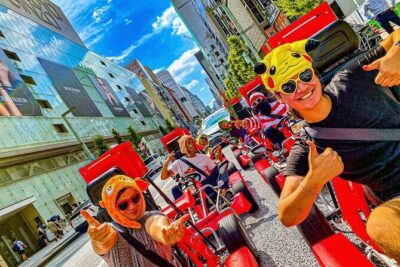
And yes, the costumes help. The “fun factor” isn’t just your speed. It’s that people see you, smile, and take photos too—making the whole thing feel like a parade you’re driving.
Cost, what’s included, and whether it’s good value
At $85.89 per person for about 2 hours 30 minutes, this isn’t a bargain on paper, but it’s also not just a short activity. The price covers go-karts, gas, costumes, and photos from the tour, plus the structured guidance and rest/photo break.
That matters because Tokyo activities often nickel-and-dime you. Here, you’re paying for the kart time and the full “package” experience, not just a rental. If you want the wind-in-your-face Tokyo moment that still feels organized, this is strong value for your time.
One nice added touch you might see in practice: phone mounts were included in at least one booking, which helps you take road photos safely without holding your phone.
Before you ride: IDP rules that can make or break the trip
This is the non-negotiable part. To drive, you must bring both:
- your driver’s license
- an International Driving Permit (IDP)
The IDP has to be issued in the format of the 1949 Geneva Convention and in booklet form (not A4 paper, not just a card). Permits issued under the Vienna Convention 1968 are not accepted in Japan.
There are a few country-license exceptions listed. If your license is from Switzerland, Germany, France, Taiwan, Belgium, or Monaco, you don’t use the usual IDP route—but you do need a Japanese translation of your license from the Japan Automobile Federation (JAF).
Also keep this rule in your head: it’s your job to have the right documents. If you show up without them, you can be denied participation and you may not get your money back. If you’re unsure, contact the operator ahead of time rather than gambling on assumptions.
One more “don’t get surprised” detail: alcohol before the tour is prohibited. Plan your day so you’re still ready to drive, not thinking about drinks.
Meeting point and timing that help you avoid stress
You start at:
JapanKart2-chōme-18-15 Azumabashi, Sumida City, Tokyo 130-0001
Arrive 15 minutes before your booking time. They can wait only up to 10 minutes after the reserved time, so don’t plan to wander in right at departure. The location is near public transportation, but the walk from a station can still eat time—especially if you’re navigating in a busy area.
After check-in, there’s an instructional video referenced in confirmation details. Watching it beforehand saves time and helps you understand how the carts work and what to expect.





What the route feels like: from Toyosu to Skytree views
This tour stitches together a cluster of Tokyo neighborhoods and sightlines so you get variety without doing multiple separate activities. The pacing is guided, and you’ll have stops for rest and photos rather than trying to pull over yourself.
The route includes:
- Toyosu
- Ginza
- Nihonbashi Bridge
- Akihabara
- Ueno
- Asakusa
- and driving near Tokyo Skytree
You’ll also likely get the “Tokyo at speed” feeling in between stops—streets, traffic lights, and city rhythm included.
Stop-by-stop: what you’ll see and what to watch for
Toyosu: waterfront modern Tokyo and a quick break
Your first stop is Toyosu, a sleek waterfront area in Tokyo. It’s known for seafood and the Toyosu Fish Market scene at dawn, but on the tour you’re mainly using it as a reset point—about 10 minutes with admission free.
What to expect: more of a look-and-photo moment than a deep dive. If you want calmer energy early in the ride, Toyosu does the job.
Ginza: luxury streets and neon energy
Next comes Ginza, Tokyo’s polished shopping and dining district. Even if you’ve only seen it in photos, it hits differently when you drive past it: bright storefronts, high-end atmosphere, and street views that feel like they’re changing every block.
Why it’s a good stop: Ginza is easy to recognize, so even short sightseeing time feels rewarding. The contrast between costume driving and luxury surroundings is also part of the fun.
Nihonbashi Bridge: an old centerpiece with modern scale
Then you’ll be at Nihonbashi Bridge, often described as the heart of Tokyo’s road system—an Edo-era stone bridge framed by modern skyscrapers. The visual payoff is the mix: tradition up close, big city power in the background.
Watch for photos here. This is the kind of place where a quick stop can give you an iconic “I was there” image even if your time on foot is limited.
Akihabara: anime, gaming, and tech street buzz
After that, Akihabara brings a totally different vibe: anime, gaming, and tech culture, with streets full of shops and colorful signage. The experience is fun if you like pop culture, but even if you don’t, it’s a useful “change the mood” stop.
Practical note: keep your expectations realistic. You’re not turning this into an all-day shopping crawl. You’ll see the area, then get back to driving.
Ueno: park area energy with cultural options nearby
Ueno adds a cultural angle. It’s the home of Ueno Park and a cluster of major museums and temples, plus plenty of outdoor space when the weather is right.
On this kart tour, you’ll get the general feel rather than a museum visit. If you love walking and want to go deeper, Ueno is a great place to come back later on your own day.
Asakusa: Senso-ji area and street-food style Tokyo
Then you reach Asakusa, where the vibe shifts toward classic Tokyo. You’ll be near Senso-ji Temple, and the surrounding area is known for food stalls and traditional shopping streets.
Why Asakusa works well in this format: it’s a visual and sensory neighborhood, so even a short stop can give you real “old Tokyo” energy. The mix of your kart adventure and the temple district backdrop is a memorable contrast.
Near Tokyo Skytree: skyline payoff without the line
Finally, you’ll drive near Tokyo Skytree—the tall landmark that punches the skyline at 634 meters. You won’t be doing a full viewpoint visit as part of this ride, but driving nearby still gives you a big-city moment and a great chance to frame the tower in motion.
On the photo front, one run also included a lookout-style stop for a big skyline angle (including the Rainbow Bridge view mentioned in one booking). If your tour includes that, it’s usually a highlight for photos.
Safety and control: why the lead-and-rear system matters
A big theme is that this is fast but not careless. You get a briefing before you go, and the staff structure the experience so the group doesn’t scatter. Multiple descriptions mention lead vehicles up front and another car/van behind to marshal riders and manage pace.
That’s a big deal for first-timers. Tokyo driving is intimidating even when you’re a pedestrian watching traffic, so having guidance cars that keep the formation helps you stay confident and focused.
There’s also the “left-side driving” learning curve. If you’re used to driving on the right, expect to feel a little awkward at first. The route pacing and staff support are what make that adjustment manageable.
Costumes, photos, and the odd delight of being seen
Costumes are not just decoration. They change how the ride feels socially. You’re in an eye-catching outfit, on a small kart, driving through major districts—so people notice you.
The experience includes photos from the tour, and at stops you’ll have brief windows for pictures. If you like travel photos that don’t feel staged, this is one of the rare activities where the setting actually responds to you.
Who this tour fits best (and who should skip it)
This is great for you if:
- you want a hands-on Tokyo activity, not just walking
- you’re comfortable driving for a couple of hours with guidance
- you have the correct IDP and want a real-road thrill
It may not fit you if:
- you don’t have the right driving documents and you can’t sort it out ahead of time
- you’re expecting a traditional guide narration for every landmark
- you prefer calm, slow sightseeing with lots of time on foot
One more “read this twice” factor: wear rules. The operator asks you not to wear long skirts, high heels, or sandals. Wear something that lets you move and control your feet comfortably.
Should you book this Tokyo go-kart tour?
Book it if you want a Tokyo highlight that feels active, funny, and genuinely different. The combination of real-road driving, costume fun, and organized safety support gives you a “this is why I came” kind of memory, not just another photo stop.
Think hard before booking if you’re missing the paperwork. This tour’s biggest make-or-break factor is the IDP requirement and the exact format rules. If you’ve got that handled, it’s one of the better ways to cover a lot of Tokyo neighborhoods in a short window without getting lost.
If you’re unsure whether you’ll enjoy driving in traffic, choose a tour day with good conditions and plan your schedule so you can arrive early and sober. Do that, and you’ll be in the right mindset to enjoy the ride instead of worrying about logistics.
FAQ
Do I need an International Driving Permit to drive in Japan?
Yes. You must present both your driver’s license and an International Driving Permit (IDP) to participate.
What kind of IDP is accepted for this tour?
The IDP must be in the format of the 1949 Geneva Convention and in booklet form. IDPs issued under the Vienna Convention 1968 are not accepted.
Are there any exceptions to needing an IDP?
Yes. If your license is from Switzerland, Germany, France, Taiwan, Belgium, or Monaco, the requirement is handled differently. You would need a Japanese translation of your license from JAF.
What does the tour price include?
It includes the go-karts, gas, costumes, and photos from the tour.
How long is the go-karting experience?
The duration is about 2 hours 30 minutes, and there is a rest and photo break en route.
Which parts of Tokyo are included on the route?
The route includes stops in Toyosu, Ginza, Nihonbashi Bridge, Akihabara, Ueno, and Asakusa, plus driving nearby Tokyo Skytree.
What should I wear for the tour?
Do not wear long skirts, high heels, or sandals.
How big is the group size?
This activity has a maximum of 20 travelers.
More Tour Reviews in Tokyo



More Street Karting in Tokyo


Fresh reviews from around Tokyo






Go-Karts, compared.
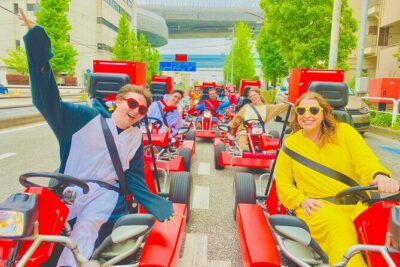 ★ 5.0Flagship 2-Hours Official Street Go-Kart Tour – Tokyo Bay ShopFrom $644,974 reviews
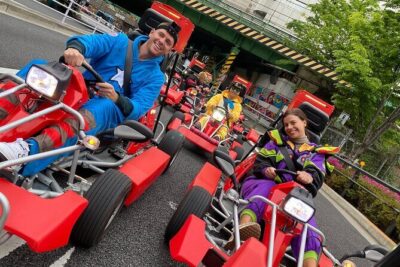 ★ 5.0Official Street Go-Kart in ShibuyaFrom $763,435 reviews
 ★ 5.0Official Street Go-Kart Tour – AkihabaraFrom $611,578 reviews
 ★ 5.0Shibuya Official Street Go-Kart in Shibuya AnnexFrom $69972 reviews
 ★ 4.7Premium Go-Kart Tour with Tower & Shibuya CrossingFrom $116528 reviews
Shibuya Kart: Premium Go-Karting Tour through Shibuya, TokyoFrom $63463 reviews
★ 4.7Premium Go-Kart Tour with Tower & Shibuya CrossingFrom $116528 reviews
Shibuya Kart: Premium Go-Karting Tour through Shibuya, TokyoFrom $63463 reviews
 ★ 4.7East Tokyo Go-Kart TourFrom $64370 reviews
 ★ 5.0Guided Tokyo Go-Kart Tour: Tokyo Tower to Shibuya CrossingFrom $155237 reviews
Browse the lists this tour appears in