
Reviewed · MT FUJI DAY TRIPS
Mt.Fuji view Hakone Private tour with English speaking driver
Hakone feels close with a private driver. This is an easy way to get out of Tokyo and into Hakone’s mix of volcanic sights, lake views, and classic Mount Fuji scenery—without wrestling with trains or buses in a language you don’t know. The route is also customizable, so you can steer the day toward the bits you care about most.
I really like two parts: the hotel pickup convenience and the English-speaking driver who helps the trip feel smooth and understandable. In this format, drivers like Vohra (who showed up early for a 7:30 pickup) and Diwan (who brings helpful background knowledge) can turn a list of stops into a real day out.
One thing to keep in mind: several sights have admission tickets not included, and lunch isn’t included either. Also, Mount Fuji views depend heavily on weather, and the tour notes it needs good conditions to run well.
In This Review
- Key highlights you’ll actually feel on the day
- Why a private driver makes Hakone feel easier from Tokyo
- Pickup timing and how you should think about Mount Fuji
- Lake Ashinoko: where the day starts and the photos usually land
- Tōgendai Port and the Hakone Pirate Ship cruise
- Owakudani Great Boiling Valley: the volcanic stop you shouldn’t rush
- Mishima Skywalk: short time, big Fuji payoff
- Hakone Jinja (and Kuzuryu Shrine Shingu): a calmer temple stop on Lake Ashi
- Hakone Open-Air Museum: art and nature in one break
- Optional Gotemba Premium Outlets: if shopping fits your group
- Price and value: what $450 buys for up to 6 people
- What the best guides do (and what you should ask)
- Who this tour is best for
- Should you book this Mt. Fuji Hakone private tour?
- FAQ
- How many people are in the group?
- How long is the Mt. Fuji view Hakone private tour?
- Where does the tour start and end?
- Is hotel pickup included?
- Is the driver English speaking?
- What is included in the price?
- What isn’t included?
- What about WiFi on board?
- What happens if the weather is poor?
Key highlights you’ll actually feel on the day
- Hotel-style pickup plus a calm plan: you avoid Tokyo navigation and ride in a comfortable air-conditioned vehicle.
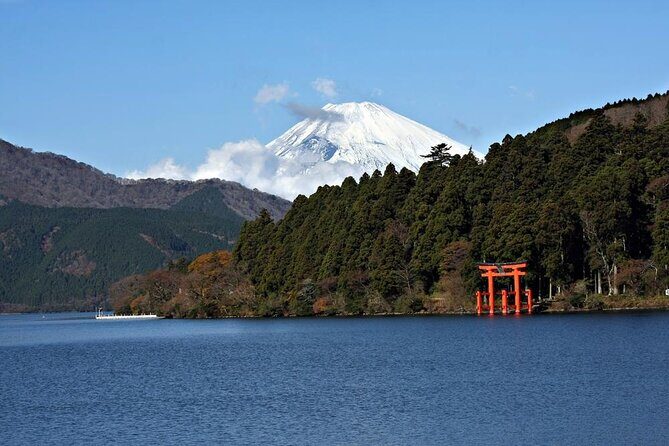
- Lake Ashinoko views with real photo angles: the lake is where Mount Fuji often shows up best.
- Tōgendai pirate ship energy: a lake cruise with a themed ship and prime viewpoints.
- Owakudani’s volcanic show: the Great Boiling Valley is dramatic, not just scenic.
- Mishima Skywalk for a Fuji-facing payoff: short stop, big views, great if you want that “wow” moment.
- Open-Air Museum break: art and walking time in Hakone’s mountain setting.
Other routes to the mountain, compared
- Mt Fuji & Hakone Cruise, Drum Show Bullet Train 1 Day from Tokyo★ 4.0 · 7,413 reviews
- Tokyo Mt Fuji 5th St & Hakone Cruise Bus Tour w/Bullet Train★ 4.4 · 5,024 reviews
- From Tokyo: Mount Fuji Full-Day Sightseeing Trip★ 4.5 · 4,970 reviews
Why a private driver makes Hakone feel easier from Tokyo
Hakone is one of those places where public transport can work, but it takes concentration—especially if you’re juggling time, connections, and the vocabulary for stations, tickets, and transfers. This private-tour setup is built for stress-free movement.
You get a comfortable air-conditioned vehicle and fuel plus toll tax included. That matters because Hakone’s road network is part of the experience, and private cars spare you from the “wait, transfer, stand in line, repeat” rhythm that can eat up your day.
The tour is for a group of up to 6, and it’s truly private—so you’re not sharing your ride or timing with strangers. In practice, that means you can move a little faster when everyone’s ready, or slow down for photos or restroom breaks without feeling like you’re holding up a big bus group.
Pickup timing and how you should think about Mount Fuji
Your day starts in Tokyo (with a start point in Asakusa at Kaminari mon2-chōme-3-1, Taito City). The overview also notes hotel pickup from your Tokyo accommodation, so your exact “where do we meet” moment will depend on how your booking is arranged. Either way, the key benefit stays the same: you’re not managing the logistics yourself.
The tour is listed as about 8 to 9 hours, so it’s a full day—long enough to hit the signature Hakone spots, but not so long that you feel wrecked at dinner. Most importantly, Mount Fuji isn’t guaranteed. The experience explicitly requires good weather, and if conditions are poor, you’ll be offered another date or a full refund.
So here’s the smart way to approach it: treat Fuji as the bonus, not the promise. Plan your mindset around the whole Hakone experience—lake views, volcanic valley, and museums—then enjoy Fuji when it appears.
In real-world terms, drivers can help you make the most of the visibility you get. The route includes multiple chances to catch the mountain from different angles (not just one). That’s exactly what you want on a day trip.
Lake Ashinoko: where the day starts and the photos usually land
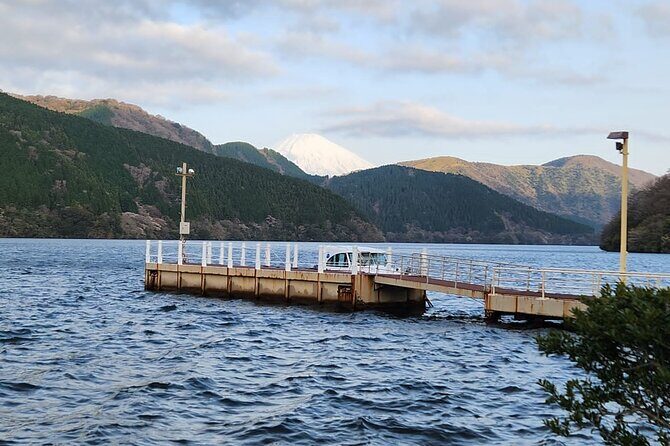
Lake Ashinoko (also called Lake Ashi) is the iconic Hakone centerpiece. It’s the first stop, about 1 hour, and admission is free for this stop.
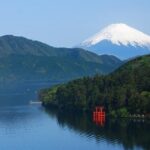
This is where the area’s volcanic geometry becomes visible in plain sight. You get open water, viewpoints, and the feeling that Hakone is more about nature’s forces than theme parks. If Mount Fuji is visible, it often looks best from the lakeside—so starting here increases your odds.
A practical note: one-hour stops can be enough for photos and a walk, but Hakone’s viewpoints can involve some moving around. If you’re the type who takes a lot of pictures, give yourself permission to spend a bit longer in the best angle spots.
Tōgendai Port and the Hakone Pirate Ship cruise
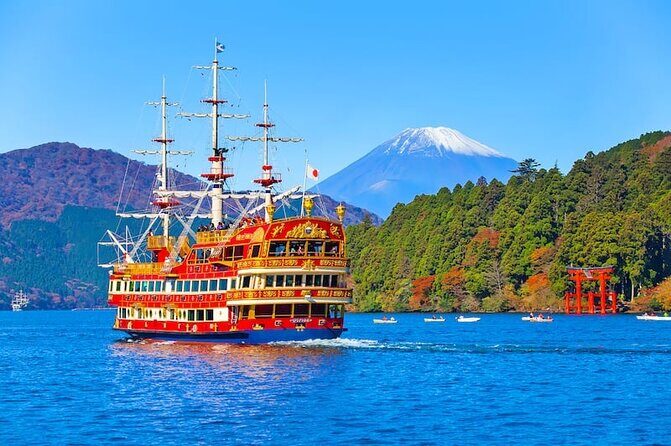
Next up is the Hakone Pirate Ship at Tōgendai Port, another 1 hour stop. Admission for the ship is not included, so you’ll pay separately.
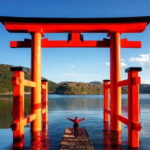
This is a fun, slightly theatrical way to experience Lake Ashinoko. The ship is designed as a pirate-style vessel, and the route gives you that classic lake-cruise perspective that’s hard to replicate from land. It’s also one of the better times to look for Mount Fuji reflections and to spot the famous torii gate area near Hakone-jinja.
The biggest “value” here is that you’re not just looking at a lake—you’re moving across it. That changes how the coastline, water texture, and mountain views register in your camera (and your brain).
More Hakone loops, ropeways and lake crossings
Owakudani Great Boiling Valley: the volcanic stop you shouldn’t rush
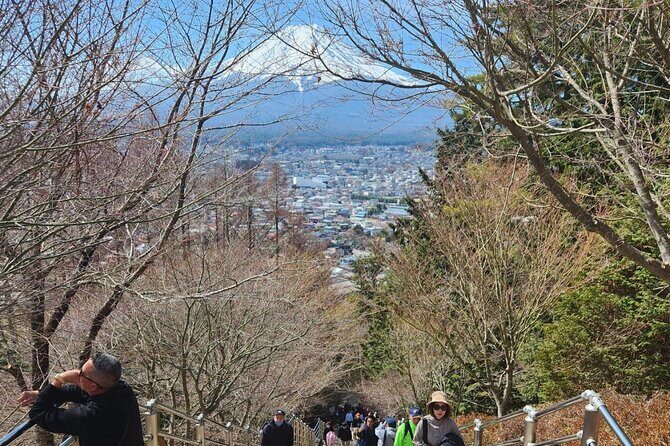
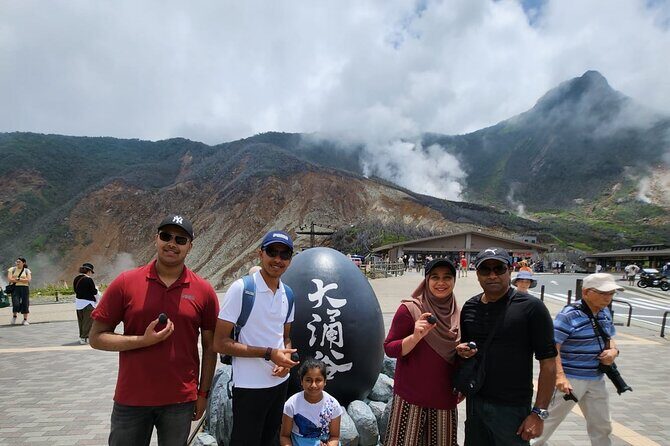
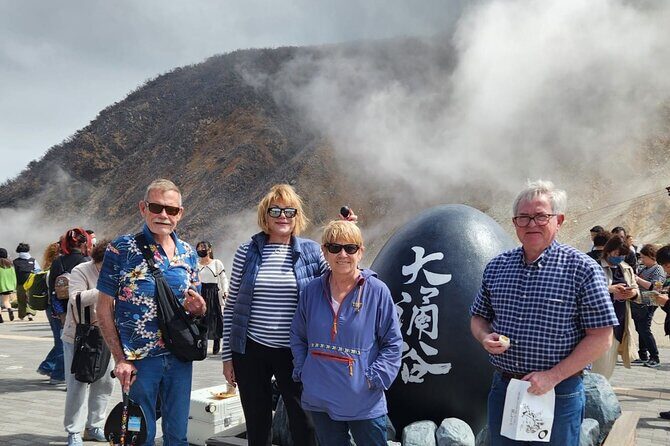
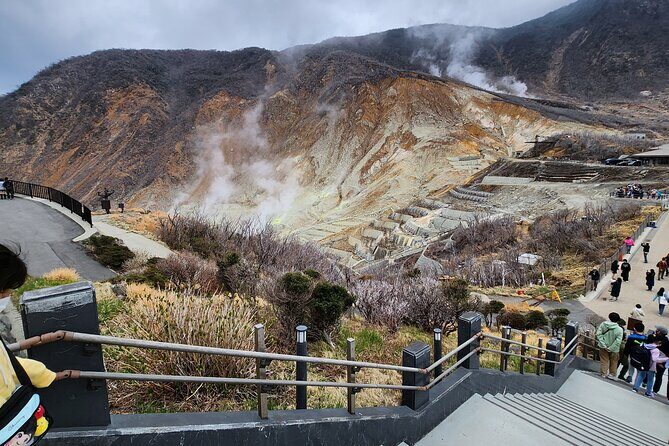
Owakudani (the Great Boiling Valley) is the dramatic middle of the day—about 1 hour—and admission is not included.
This is volcanic Hakone at full intensity: steam, rugged terrain, and a sense that the ground is still doing its thing. Even if you’ve seen volcanoes before, Owakudani is built to make you feel close to geothermal activity. It’s a sensory stop, not just a visual one.
How to handle this stop: don’t treat it like a quick photo stop. Build in time to look at the valley’s different viewpoints and to move carefully along paths. If the air is heavy with steam or visibility drops, you can still enjoy the texture and atmosphere—it just shifts from crisp views to a more eerie experience.
Also, this is where an English-speaking driver helps you stay oriented, especially if you’re deciding where to stand for the best angle or when to head back toward the next stop.
Mishima Skywalk: short time, big Fuji payoff
After Hakone’s valley and lakes, the itinerary shifts to Mishima Skywalk for about 30 minutes. Admission is not included.
This is a pedestrian suspension bridge with panoramic Mount Fuji views and wide-scope scenery. The reason this works in a day trip is that it’s relatively time-efficient. You get a “wow” viewpoint moment without losing half the afternoon.
If you’re traveling with kids or anyone who gets tired from lots of walking, this is one of the stops that can feel like a strong payoff per minute. Just remember it’s a bridge—so if your group is sensitive to height or wind, you might want to use the available time to take it calmly and decide how far you want to walk.
Hakone Jinja (and Kuzuryu Shrine Shingu): a calmer temple stop on Lake Ashi
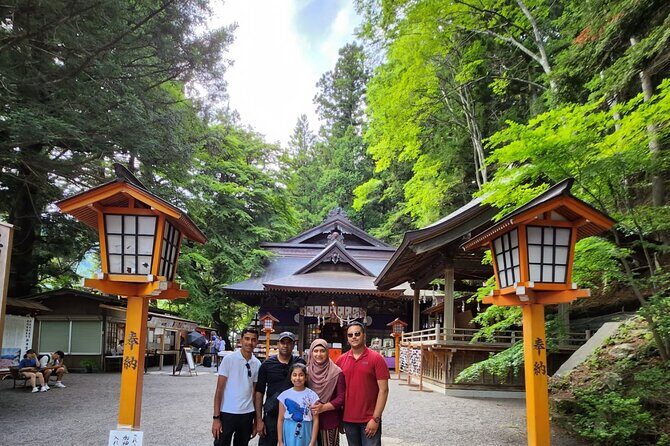
Next comes Hakone Jinja (Kuzuryu Shrine Shingu, 九頭龍神社 新宮) near the lake. It’s about 30 minutes, and admission is free.
This is a more grounded, quieter kind of stop compared with the steam and boat energy. You’re near Lake Ashi, so the shrine area often feels like a pause—somewhere to breathe, stretch your legs, and shift gears from sightseeing mode to cultural mode.
It’s also conveniently timed in the flow of the day. After Owakudani and before the Open-Air Museum, it works as a reset. If the weather has shifted, you’ll still get something out of it—temple stops tend to be more forgiving than purely viewpoint-based ones.
Hakone Open-Air Museum: art and nature in one break
The Hakone Open-Air Museum is the longer mid-to-late stop at about 1 hour. Admission is not included.
This is where the tour adds texture. Instead of another “stand and look” location, you get a mix of indoor galleries and landscaped grounds across a large museum setting. The value here is pacing: you trade pure nature-watching for a more thoughtful, slower kind of wandering.
For many people, the Open-Air Museum is the stop that keeps the day from feeling like a checklist. It also helps if you’ve had enough steam/boat bridge action for one day—you can walk, look at art, and take a break without it feeling like downtime you’d regret.
Optional Gotemba Premium Outlets: if shopping fits your group
If you want a shopping stop, Gotemba Premium Outlets is listed as optional for about 1 hour. Admission is free.
Gotemba is at the foot of Mount Fuji, and outlet malls can be a practical way to spend time after all the main sights—especially for families or anyone who wants to pick up snacks, seasonal clothing, or souvenirs without hunting around the city.
If your group hates shopping, skip it. You’ll still have plenty to do in Hakone, and keeping the schedule tighter can help you protect your chance for clearer views later in the day.
Price and value: what $450 buys for up to 6 people
The price is $450 per group, up to 6 people. That’s the heart of the value equation.
Included costs that usually matter on a day trip like this:
- A private, air-conditioned vehicle
- Fuel and toll tax
- A basic English-speaking driver
Not included costs to budget for:
- Admission tickets for several stops (Pirate Ship, Owakudani, Mishima Skywalk, Open-Air Museum)
- Lunch
Here’s the practical math: if you fill all 6 seats, your cost per person drops a lot. If you only have 2 or 3 people, it becomes pricier per head—but you’re buying back time and energy. In other words, it’s often worth it if your group values an easy schedule, clear communication, and minimal friction.
Also, this is the kind of tour where “time saved” really counts. Hakone is far enough from central Tokyo that a self-planned trip can become a coordination headache. Private transport turns that into a calmer day, especially when visibility for Fuji changes throughout the day.
What the best guides do (and what you should ask)
The tour is built around the driver’s basic English support, and you’ll likely find that good guides do more than drive. One of the reviews highlighted a family-friendly approach where the driver doubled as a guide and helped weave in key highlights. Another mentioned Diwan’s knowledge of Japanese history and background info, which can make temple and museum stops feel less random.
If you want to get the most out of the day, ask questions like:
- Which stop usually offers the best chance for Mount Fuji if the sky is mixed?
- Can we adjust the order slightly if the weather changes?
- Do we have time for any extra viewpoints near the scheduled stops?
You can’t control the weather. But you can control how efficiently you respond to it.
Who this tour is best for
This private Hakone day trip makes the most sense if you:
- Want a low-stress day trip from Tokyo without trains and transfers
- Travel as a family or a small group (up to 6) and want everyone together
- Care about Mount Fuji views, but don’t want to gamble your day on public transport timing
- Prefer an adaptable itinerary over a rigid bus tour
It’s also a strong match for people who like a mix of experiences: lakeside scenery, volcanic drama, shrine quiet, and an art break.
If you’re the type who loves DIY planning and already knows the Hakone routes well, you might find a public-transport day cheaper. But you’d be trading that for time and mental load—the very things this tour is designed to remove.
Should you book this Mt. Fuji Hakone private tour?
I think this one is a good booking when you want a smooth, confidence-building day trip. The combination of hotel pickup (or an organized Tokyo start), a comfortable car, and an English-speaking driver makes Hakone easier to enjoy, especially if you’re traveling with kids or you simply don’t want to figure out routes for a single day.
Book it if:
- Your group can fill most of the 6 seats
- You want Lake Ashinoko, Owakudani, and a Fuji-facing viewpoint stop
- You’d rather pay for convenience than spend your day planning connections
Skip it or reconsider if:
- Your travel dates are set no matter what and you’ll be deeply unhappy if weather ruins Fuji visibility
- Your group is extremely price-sensitive and willing to plan independently
If you do book, go in ready for Hakone even on cloudy days. Fuji is the prize, but the volcanic valley, lake cruise vibe, and the Open-Air Museum pacing are what carry the day.
FAQ
How many people are in the group?
This is a private tour/activity, and the group size is up to 6 people.
How long is the Mt. Fuji view Hakone private tour?
It runs about 8 to 9 hours (approximately).
Where does the tour start and end?
It starts at Kaminari mon2-chōme-3-1 Asakusa, Taito City, Tokyo 111-0032, Japan, and it ends back at the meeting point.
Is hotel pickup included?
Pickup is offered, and the overview specifically mentions hotel pickup from your Tokyo accommodation.
Is the driver English speaking?
Yes. You get a basic English-speaking driver.
What is included in the price?
Included items are an air-conditioned vehicle, fuel and toll tax, and a basic English-speaking driver. A mobile ticket is also provided.
What isn’t included?
Lunch is not included. Admission tickets are also not included for several stops on the itinerary (some stops are free, but others require paid entry).
What about WiFi on board?
WiFi (hotspot) is not included, but it may be available when the vehicle has it.
What happens if the weather is poor?
The experience requires good weather. If it’s canceled due to poor weather, you’ll be offered a different date or a full refund.
Your Own Wheels: More Private Driver Days

Hakone, Three More Ways


The Fuji Shortlist: Other Days Out to the Mountain

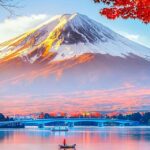
Fresh reviews from around Tokyo






Mt Fuji Day Trips, compared.
 ★ 4.0Mt Fuji & Hakone Cruise, Drum Show Bullet Train 1 Day from TokyoFrom $1497,413 reviews
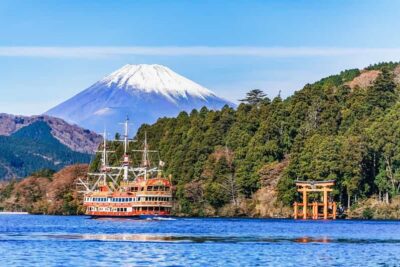 ★ 4.4Tokyo Mt Fuji 5th St & Hakone Cruise Bus Tour w/Bullet TrainFrom $1545,024 reviews
 ★ 4.5From Tokyo: Mount Fuji Full-Day Sightseeing TripFrom $684,970 reviews
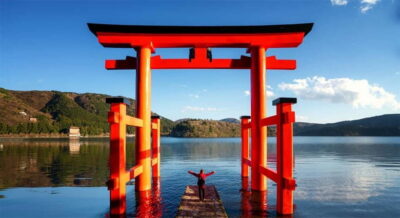 ★ 4.7Mt. Fuji Tour, Hakone Ropeway, Owakudani, Lake AshiFrom $544,002 reviews
 ★ 5.0Private Tour to Mt. Fuji and Hakone (Fully Licenced Operator)From $4971,910 reviews
 ★ 4.9Mount Fuji Full-Day Private Tour from Tokyo (Customizable)From $3931,470 reviews
 ★ 4.0Mt Fuji & Hakone Cruise, Drum Show Bus 1 Day from TokyoFrom $1221,287 reviews
 ★ 4.2From Tokyo: Mt. Fuji & Hakone Tour w/ Return by Bullet TrainFrom $1171,278 reviews
Browse the lists this tour appears in