
Reviewed · MT FUJI DAY TRIPS
Mt fuji & Hakone customizable day tour w/ English speaking driver
A day trip that actually feels personal. This private Mt Fuji & Hakone tour is built around comfort and control: hotel pickup, a dedicated English-speaking driver, and route options that let you steer the day toward the views you care about most. I especially like the no-sharing ride in a clean, air-conditioned vehicle with WiFi, so you can focus on photos instead of logistics.
The one thing to watch is that it’s a long, full day, and many stops require ticket payments on the spot. If the weather turns foggy, you may not get the clear Fuji moments you hoped for, and the plan may shift through rescheduling.
In This Review
- Key points to know before you go
- The real deal: a private Fuji and Hakone day from Tokyo
- Pickup and timing: why 10 hours can be perfect or exhausting
- Mt Fuji 5th Station: the high-altitude must if the weather cooperates
- Oshino Hakkai and Saiko Iyashi no Sato: Fuji’s calm side
- Lake Kawaguchiko and Oishi Park: the Fuji mirror effect
- Chureito Pagoda and Arakurayama Shrine: the classic image with stairs
- Ropeways and scenic rides: turning travel time into a viewpoint
- Ōwakudani: volcanic heat and the Hakone mood shift
- Hakone Open-Air Museum: art with a mountain backdrop
- Hakone Shrine and Lake Ashi: a peaceful ending with big scenery
- Gotemba Premium Outlets: shopping with Fuji views built in
- Routes 1 to 6: pick a shape for your day
- Admission fees and the cash question (paying on the spot)
- What the driver adds: names you might hear and why it matters
- Price and value: when $530 per group makes sense
- Who should book this (and who should skip it)
- Should you book this Mt Fuji and Hakone private day tour?
- FAQ
- Is this tour private?
- How big is the group for this tour?
- Is hotel pickup included?
- Do you speak English with the driver?
- Is WiFi available during the ride?
- Are admission tickets included?
- What about the Subaru Line toll at the 5th Station?
- What if the weather is bad?
Key points to know before you go
- Private driver, not a bus group: you keep your own pace and can make small adjustments during the day.
- English-speaking licensed driver with lots of time on Japanese roads: driving experience matters on winding mountain routes.
- Fuji views come in layers: from the dramatic height at Mt Fuji 5th Station to the mirror-like scenes around Lake Kawaguchiko.
- Hakone adds volcanic drama: Ōwakudani and the ropeway rides give you a very different feel than the lakeside Fuji stops.
- You’ll handle some admission fees directly: plan for cash or ready payment for places not covered in advance.
- Six ready-made routes plus customization: pick a route or message your own plan through the organizer.
Other routes to the mountain, compared
- Mt Fuji & Hakone Cruise, Drum Show Bullet Train 1 Day from Tokyo★ 4.0 · 7,413 reviews
- Tokyo Mt Fuji 5th St & Hakone Cruise Bus Tour w/Bullet Train★ 4.4 · 5,024 reviews
- From Tokyo: Mount Fuji Full-Day Sightseeing Trip★ 4.5 · 4,970 reviews
The real deal: a private Fuji and Hakone day from Tokyo
This tour is for people who want the headline places without the headache. Instead of juggling trains, timed transfers, and crowded buses, you get a dedicated car and driver for about 10 hours. That time is the currency here. When you spend it well, you feel like you did a lot. When you don’t, it can feel like you were rushing.
I like how flexible it is. You can choose one of six “outstanding routes,” or customize your own itinerary with help from a coordinator. The tour still runs as a day plan, but the order and emphasis can shift toward your priorities, like lakeside views, shrines, ropeways, or art.
It’s also a comfort upgrade. The vehicle is modern, clean, and air-conditioned, and you get a WiFi hotspot in the car. On a long day, that small thing helps a lot for maps, messaging, and keeping everyone calm.
Pickup and timing: why 10 hours can be perfect or exhausting
Your day typically starts with pickup in Tokyo around 8:00 AM. If you’re picked up from the Fuji, Hakone, or Kanagawa region, pickup is typically later, around 9:30 to 10:00 AM. The return is usually around 6:00 PM back to Tokyo hotels, or earlier if you’re dropped off closer to Fuji/Hakone.
Here’s the practical trade-off. A 10-hour format is built for seeing multiple key spots, not for long lingering. Many stops are around 30 to 45 minutes. That’s great for checking off the big sights, but you should go in ready to move, not to “slow travel.”
Also, if you go beyond the allotted time, overtime may be charged at 5,000 JPY per hour and paid directly to the driver at the end. That’s not something you can ignore on a day-trip, so keep your priorities tight: what matters most, and what can you photograph quickly?
Mt Fuji 5th Station: the high-altitude must if the weather cooperates
Mt Fuji’s 5th Station is the closest most people get to the mountain’s high-country feel without serious hiking. It sits around 2,300 meters above sea level, so the air is thinner and the scenery changes quickly compared with lower viewpoints.
This stop is usually about 30 minutes. That’s enough time to walk to viewpoint areas, soak in the big geometry of the mountain, and grab a few photos if the sky is clear. The catch is simple: you want good visibility. The tour requires decent weather for this adventure, and if conditions are bad or there are unavoidable issues, you’re offered a new date or a complete refund.
Practical tip: take layers seriously. Even in warmer months, it can feel cooler up high.
Oshino Hakkai and Saiko Iyashi no Sato: Fuji’s calm side
After the height of 5th Station, these stops slow the pace and show a more human scale.
Oshino Hakkai is known for its eight ponds fed by melted snow from Mt Fuji. The area feels like a small village built around water and quiet paths, with that “how is this so clear” look that shows up in photos. Your time here is often about 30 minutes.
Nearby style options can include Saiko Iyashi no Sato Nemba, a cultural village with traditional thatched-roof houses against a Fuji backdrop. It’s also usually about 30 minutes, which means you’ll see the main viewpoints and the vibe, but you won’t get stuck wandering for hours.
Why this matters: Fuji days can be either all intensity (height, crowds, dramatic angles) or balanced with calmer scenes. These stops help you get the story of the region, not just one mountain pose.
More Hakone loops, ropeways and lake crossings
Lake Kawaguchiko and Oishi Park: the Fuji mirror effect

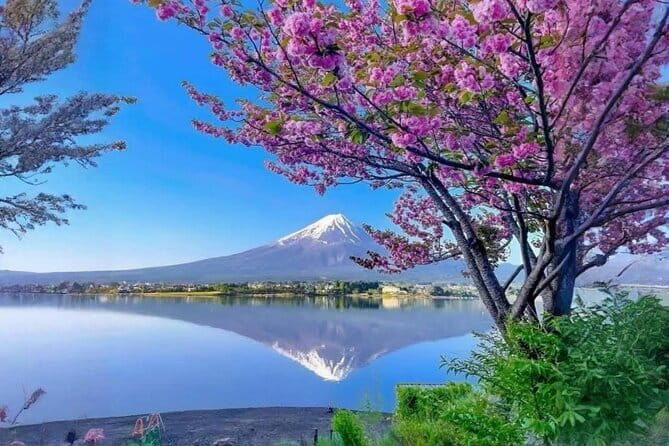
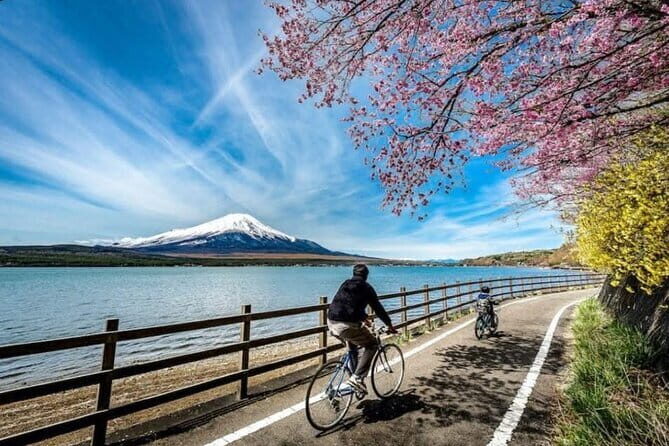
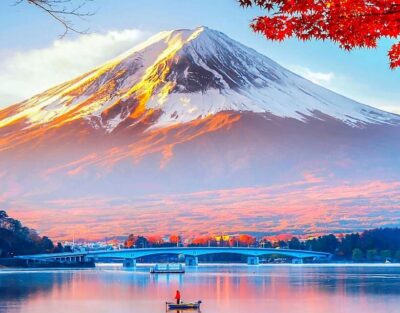
If you want the “Mount Fuji postcard” feeling, Lake Kawaguchiko is the center of it. This stop is typically about 30 minutes, and it’s one of the key places where the mountain can reflect in calmer water—on the right day.
Oishi Park is on the northern shore and is famous for wide Fuji views framed by seasonal flowers. In practice, it’s all about angle and timing. If the air is clear, the views can be dramatic even in a short visit.
These two stops are among the ones where admission is listed as included. That’s a nice value touch, because some other attractions on the day aren’t.
If you only care about one lakeside moment, this is the pair I’d prioritize.
Chureito Pagoda and Arakurayama Shrine: the classic image with stairs
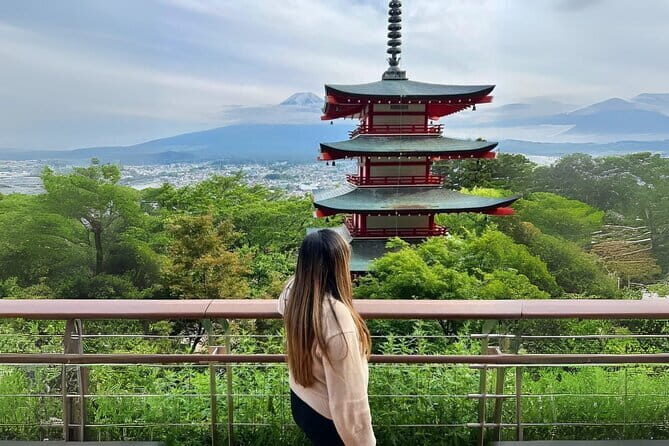
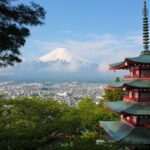
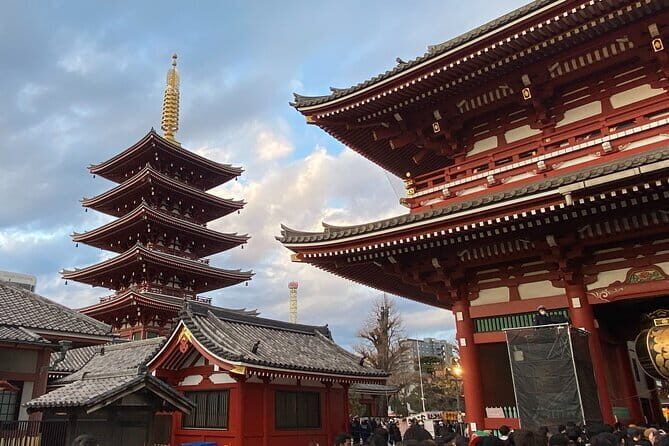
Chureito Pagoda is the iconic five-story pagoda view most people recognize. It sits on a hillside area associated with Arakurayama Shrine, and the whole setup is famous for that Fuji-in-the-background composition.
This stop is often about 45 minutes, which is helpful because you may want to walk a bit and find your angle. You’ll also have time to handle the queue reality that comes with a famous photo spot.
Admission is listed as included here, which again helps the value equation. Just remember: views at this height can still depend on weather.
Ropeways and scenic rides: turning travel time into a viewpoint
A ropeway is one of the simplest ways to add variety to a Fuji–Hakone day. You’re not just driving; you’re gaining elevation for views you wouldn’t otherwise see quickly.
The tour includes options like Mt Fuji Panoramic Ropeway (time listed around 1 hour), but this one is noted as not included for admission. Another ride, Hakone Ropeway, is also listed with admission not included and time around 45 minutes.
This is why I like a private format. If you feel energetic, ropeways add a thrill and a viewpoint. If you’re tired, your driver can steer you toward the most valuable angles.
Ōwakudani: volcanic heat and the Hakone mood shift

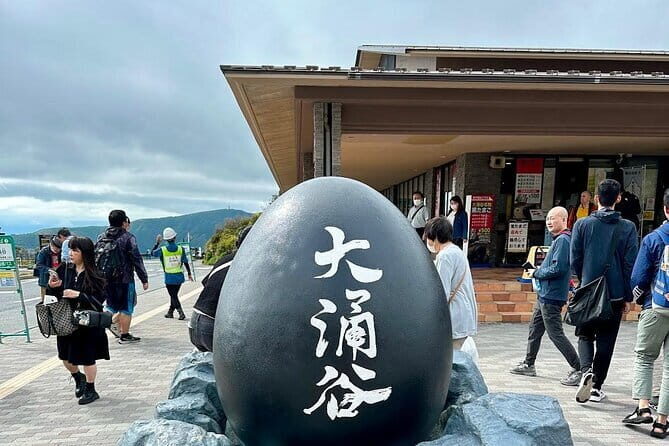
Hakone’s character flips from lake-and-shrine calm to something more otherworldly at Ōwakudani Valley. It’s known for steaming vents and volcanic landscapes. This stop is usually about 30 minutes.
You’re getting a dose of geology on a day that starts with a mountain peak. It’s one of those places where you instantly understand why the area is famous for hot springs and why the region looks different from places around Tokyo.
A word on comfort: volcanic areas can be windy, and steam can be intense near vents. Wear shoes you’re happy to stand in.
Hakone Open-Air Museum: art with a mountain backdrop
Hakone Open-Air Museum is an art stop that’s also a nature stop. The idea is sculptures and installations spread with mountains around them, so it doesn’t feel like you’re trapped indoors for a museum break.
Your time here is often around 40 minutes. That’s not enough to do it like a slow museum day, but it’s a solid “see something different” pause in the middle of a packed loop.
Admission is listed as not included, so budget for tickets paid on the spot if this is on your chosen route.
Hakone Shrine and Lake Ashi: a peaceful ending with big scenery
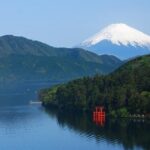
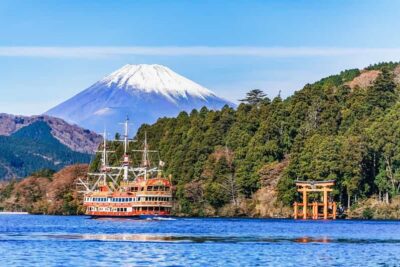
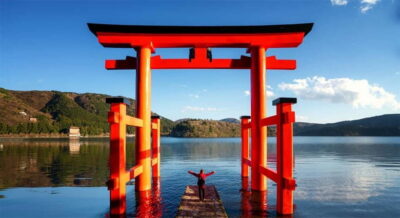
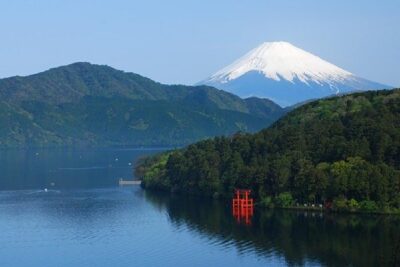
Back in the Hakone rhythm, Hakone Jinja is known for its red torii gate in the waters of Lake Ashi. It’s a forested, quieter pause compared with the more active volcanic zones. Time is often about 40 minutes.
Then comes Lake Ashinoko (Lake Ashi) for around 45 minutes, and admission is listed as included. On clear days, Lake Ashi can show Fuji in the distance, and even without perfect visibility, the water-and-mountain composition still looks great.
Some route options also include a cruise on Lake Ashi, depending on which route you choose. That’s one of the easiest ways to make the day feel less like a checklist and more like a trip.
Gotemba Premium Outlets: shopping with Fuji views built in
Gotemba Premium Outlets is a long-ish stop, about 2 hours, and admission is listed as included. It’s a shopping mall, yes, but it’s also timed into the geography of the Fuji area, so you can get Fuji views while you browse.
This stop matters if you like practical add-ons. It’s also useful if your group needs a break from constant sightseeing.
If shopping isn’t your thing, you can usually swap this for another Fuji/Hakone viewpoint by customizing your route.
Routes 1 to 6: pick a shape for your day
The tour gives you six ready-made routes, each with a slightly different emphasis. You also can customize. Here’s how to choose without overthinking it.
- Route 1 (Fuji region adventure) leans toward Oshino Hakkai, Chureito Pagoda/Arakurayama Shrine, Lake Kawaguchiko, plus Saiko and Iyashi no Sato. Great if you want classic Fuji sights plus a village-style change of pace.
- Route 2 pairs Fuji lakeside time with Gotemba Premium Outlets. Best for a mixed day: views and shopping.
- Route 3 centers on Mt Fuji 5th Station, then Oshino Hakkai, Chureito Pagoda/Arakurayama, and Lake Kawaguchiko (including Kachi Kachi Ropeway time). Good if altitude and the main Fuji photo spots are your top priority.
- Route 4 mixes 5th Station, Lake Kawaguchiko or Lake Ashinoko, and Gotemba. Good compromise for couples or small groups with different interests.
- Route 5 (Fuji and Hakone combo) adds Ōwakudani, Lake Ashi, and Hakone Shrine, with Lake Kawaguchiko photo time. A solid “both regions, one day” route.
- Route 6 (Hakone focus) leans hard into Hakone: Ōwakudani, Hakone Ropeway, Open-Air Museum, Lake Ashi (with cruise time), and Hakone Shrine. Best if Fuji is a bonus but Hakone is the main show.
If you’re unsure, I’d build your day around one “anchor” viewpoint and one “anchor experience.” For many people, the anchor viewpoint is 5th Station or Lake Kawaguchiko, and the anchor experience is a ropeway ride or a volcanic stop.
Admission fees and the cash question (paying on the spot)
Here’s the reality check. Many attractions have admission not included, and you’ll pay directly on the spot. That includes several stops like Oshino Hakkai, Ōwakudani, Hakone Open-Air Museum, Hakone Shrine, and the ropeways (based on the details provided).
That’s why I recommend you carry some cash. Even if you’re good with cards, on-the-spot payments can be easier with cash, especially when you’re moving quickly between stops.
One important exception to plan for: Subaru Line 5th Station toll. The toll fee at Subaru Line Fifth Station is not included and must be paid at the toll gate. It ranges from 2,100 JPY to 3,460 JPY per vehicle. That’s not a personal per-person fee, so think of it as a vehicle cost you’ll need available.
What the driver adds: names you might hear and why it matters
The driver isn’t just a chauffeur. The operator lists drivers as licensed, with English and Japanese ability, and around 26 years of driving experience in Japan. That experience helps on mountain roads, traffic timing, and choosing the best photo moments within short stop windows.
In the feedback I saw, punctuality and communication showed up again and again. One driver named Adnan was praised for professional, organized communication, even when holiday traffic got intense. Another guest mentioned Anique for going the extra mile to adapt for seniors with walking difficulties, which is exactly the kind of real-world flexibility that matters on a day like this. Ali also came up as friendly and helpful, including a unique food highlight people remember from Hakone.
Even if your driver isn’t the same person, the pattern is clear: the driver makes the difference between a chaotic day and a calm one.
Price and value: when $530 per group makes sense
The price is $530 per group, up to 5 people. That matters because this isn’t a per-person bus tour. A private ride plus hotel pickup is often where costs rise in Japan. Here, your money goes into time savings and comfort.
Is it good value? For small groups, yes—especially if you would otherwise spend time piecing together transport, transfers, and separate guided stops. The private format also helps you avoid spending half the day on logistics.
Where the value can shrink is if your group is small and very budget-driven, or if you plan to skip most ticketed attractions and ropeways. Because the vehicle cost stays the same, you’ll get better value if you actually use the stops and experiences in the route.
The sweet spot is couples, friends, and families who want convenience, photo angles, and a driver who keeps things moving.
Who should book this (and who should skip it)
This tour fits you best if you want:
- Hotel pickup and a private ride with no sharing.
- English speaking support during the day.
- A structured way to see both Fuji viewpoints and Hakone’s volcanic scenery in one swing.
- Flexibility through the six routes or a customized plan.
You might skip it if:
- You want a slower trip where you linger at fewer places for longer.
- You’re okay with doing train transfers and crowded buses.
- You’re chasing one single view and would rather plan it on your own from the Tokyo area.
If you’re traveling with seniors or anyone who benefits from less walking, the private format can be a real advantage, especially when your driver can adjust the pacing.
Should you book this Mt Fuji and Hakone private day tour?
I’d book it if you want a low-stress way to cover the big Fuji and Hakone highlights with a driver who’s practiced at doing it efficiently. The hotel pickup, private car comfort, WiFi hotspot, and route flexibility add up to a day that feels planned instead of squeezed.
I’d think twice if the weather in your travel window is a gamble for you. Since clear Fuji views are a big part of the payoff, you’ll want to pick dates when skies are more likely to cooperate.
If you do book, do two things: plan around ticket payments on the spot, and pick the route that matches your group’s mix of views versus experiences.
FAQ
Is this tour private?
Yes. It’s a private tour, and only your group participates.
How big is the group for this tour?
The price is for a group of up to 5 people.
Is hotel pickup included?
Pickup is offered, including meet-and-greet, for convenience.
Do you speak English with the driver?
Yes. The driver provides English and Japanese speaking support.
Is WiFi available during the ride?
Yes. A WiFi hotspot router is provided in the vehicle.
Are admission tickets included?
Not all of them. Some stops have admission listed as included, but many others require you to pay tickets directly on the spot.
What about the Subaru Line toll at the 5th Station?
The Subaru Line Fifth Station toll fee is not included. It must be paid at the toll gate and ranges from 2,100 JPY to 3,460 JPY per vehicle.
What if the weather is bad?
Good weather is required. If unavoidable circumstances or bad weather occurs, you’ll be given a new date or a complete refund.
Your Own Wheels: More Private Driver Days

Hakone, Three More Ways


The Fuji Shortlist: Other Days Out to the Mountain

Fresh reviews from around Tokyo






Mt Fuji Day Trips, compared.
 ★ 4.0Mt Fuji & Hakone Cruise, Drum Show Bullet Train 1 Day from TokyoFrom $1497,413 reviews
 ★ 4.4Tokyo Mt Fuji 5th St & Hakone Cruise Bus Tour w/Bullet TrainFrom $1545,024 reviews
 ★ 4.5From Tokyo: Mount Fuji Full-Day Sightseeing TripFrom $684,970 reviews
 ★ 4.7Mt. Fuji Tour, Hakone Ropeway, Owakudani, Lake AshiFrom $544,002 reviews
 ★ 5.0Private Tour to Mt. Fuji and Hakone (Fully Licenced Operator)From $4971,910 reviews
 ★ 4.9Mount Fuji Full-Day Private Tour from Tokyo (Customizable)From $3931,470 reviews
 ★ 4.0Mt Fuji & Hakone Cruise, Drum Show Bus 1 Day from TokyoFrom $1221,287 reviews
 ★ 4.2From Tokyo: Mt. Fuji & Hakone Tour w/ Return by Bullet TrainFrom $1171,278 reviews
Browse the lists this tour appears in