
Reviewed · KAMAKURA DAY TRIPS
Kamakura: A Journey Through Medieval Japan
Zen temples, samurai stories, and sea air. This Kamakura outing strings together medieval Japan in a way that actually makes sense: you start in Zen at Engaku-ji, then move to the samurai-era heart of town at Tsurugaoka Hachimangu, and end with the Great Buddha at Kōtoku-in. You also get a real break from pure sightseeing by using public transport between key areas, so the day stays lively instead of exhausting.
I love how the tour balances atmosphere with logistics: there’s walking, but there’s also sitting time and smart transit legs, which keeps your energy for photos and details. I also love the storytelling style you get from the English-speaking guide, including quick context that ties religion, politics, and daily life together. One consideration: it’s not wheelchair-friendly and it involves enough walking that you should plan for it—plus, you’ll pay extra for entry fees and lunch on top of the base price.
In This Review
- Key Moments That Make This Tour Worth Your Time
- Kamakura in Half a Day: Why This Route Works
- Meeting at Kita-Kamakura Station: Start Simple, Then Get Moving
- Engaku-ji Temple: Zen Meets Medieval Power
- Tokei-ji: A Quick Stop With a Women’s Pilgrimage Past
- Shojin-ryori Lunch: Monk-Style Vegetarian Food That Feels Like Part of the Tour
- Tsurugaoka Hachimangu: The Big Shrine in the Middle of Town
- Getting Between Sites: Buses, Coaches, and One Train Ride
- Kōtoku-in and the Great Buddha: Why This One Matters
- Enoshima for the 8-Hour Private Option: Sacred Island Meets Sea Kitsch
- Pacing, Comfort, and Real Walking Reality
- Price and Value: What $35 Buys, and What You’ll Still Pay
- Who Should Book This Tour (and Who Might Skip It)
- Should You Book This Kamakura Walking Tour?
- FAQ
- How long is the Kamakura tour?
- Where do I meet the guide?
- Is the tour mostly walking?
- What does the tour cost?
- Are entry fees included in the price?
- Is shojin-ryori lunch included?
- Is this tour suitable for wheelchair users?
Key Moments That Make This Tour Worth Your Time
- Engaku-ji Temple: Zen practice explained with Japan’s medieval political angle in mind
- Tokei-ji (women’s pilgrimage spot): a short stop that adds depth without dragging the schedule
- Shojin-ryori meal: monk-style vegetarian food that turns lunch into part of the story
- Tsurugaoka Hachimangu: the shrine most people head to for a reason
- Kōtoku-in and the Great Buddha: one of Japan’s biggest Buddha statues, seen up close
- Enoshima option (8-hour private): holiness, kitsch, and sea views in the same trip
Kamakura in Half a Day: Why This Route Works
Kamakura is the easy “get away from Tokyo” choice. It feels older. It moves slower. And it’s packed with places that helped shape medieval Japan, especially during the Kamakura Period, when the samurai class built their first warrior government.
What makes this tour practical is the pacing. You get a tight hit of the big spiritual and historical anchors without spending the whole day grinding uphill in crowds. Instead of trying to do everything alone, you let the guide connect the dots between temples and power—so the day feels like a guided story, not a checklist.
You’ll also notice the tour’s theme early. It doesn’t treat religion as a museum piece. It talks about how Zen influenced politics, art, and everyday life—then you walk through places where that influence is still visible in rituals, architecture, and layout.
Meeting at Kita-Kamakura Station: Start Simple, Then Get Moving
You meet outside the East Exit of Kita-Kamakura Station. That matters more than it sounds. Kita-Kamakura is not the busiest station in Japan, so the meeting point is usually straightforward. Once you’re gathered, you head straight into the day’s first major stop rather than wandering to find your bearings.
Starting in the area of the temples also sets your route up well. You’re not burning energy backtracking later. And since you’ll be hopping between sites with buses/coaches and trains, it helps to begin with a clean plan instead of improvising.
Engaku-ji Temple: Zen Meets Medieval Power
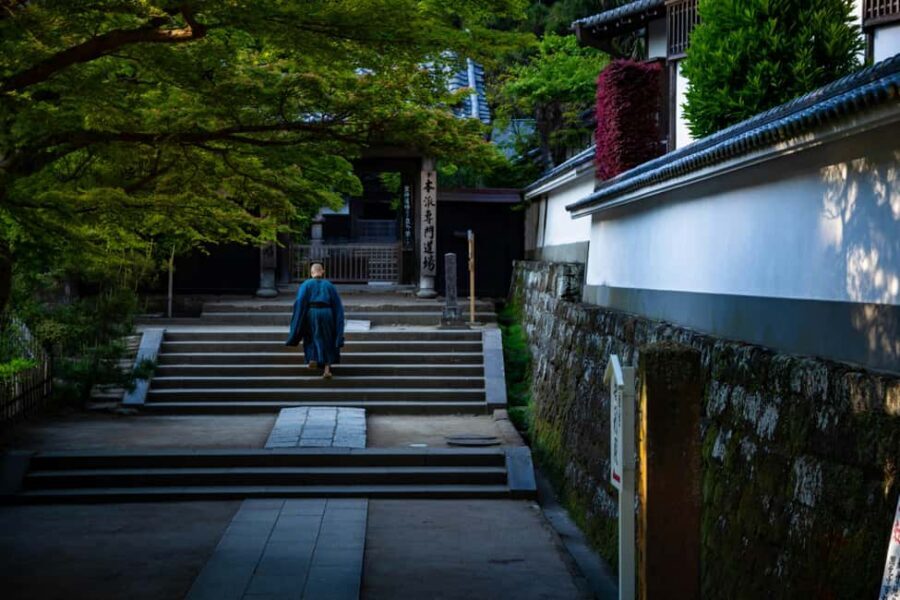
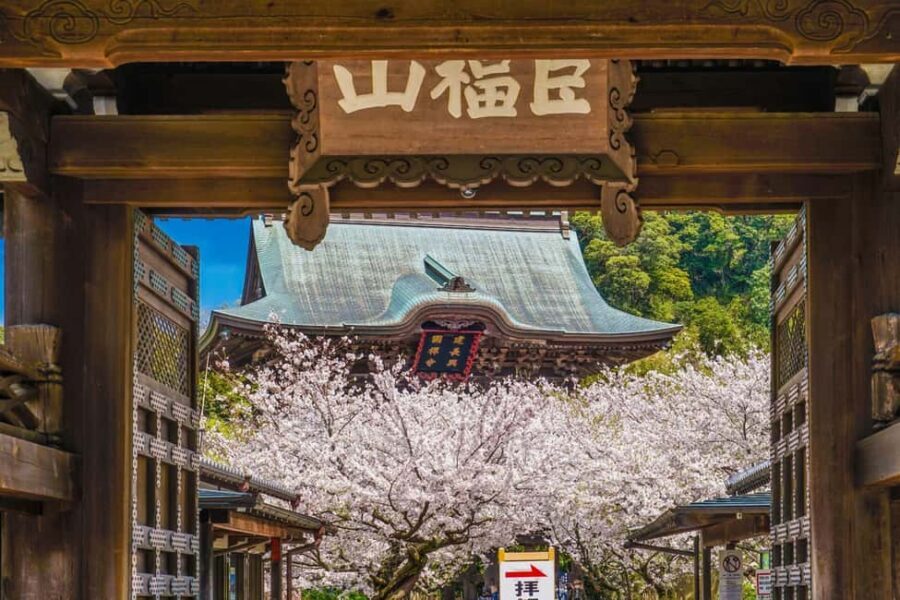
Your first big guided stop is Engaku-ji Temple, with about an hour on site. This isn’t just a “nice temple.” It’s one of the most important Zen temples in Japan, so the guide’s job is to translate what you’re looking at into something you can actually understand.
Here’s what I like about starting with Engaku-ji: it gives you a foundation. If you’ve ever seen Japanese Zen gardens or temple gates but felt like they were just pretty backgrounds, this kind of opening helps. You’ll hear why Zen mattered politically and culturally during the Kamakura era. Suddenly, the buildings and spaces don’t feel random. They feel intentional.
Practical tip: show up with a little patience for quiet detail. Zen spaces reward slow looking—incense scent, stone paths, the rhythm of hallways and courtyards. The guide can point out what to focus on so you’re not left guessing.
Tokei-ji: A Quick Stop With a Women’s Pilgrimage Past
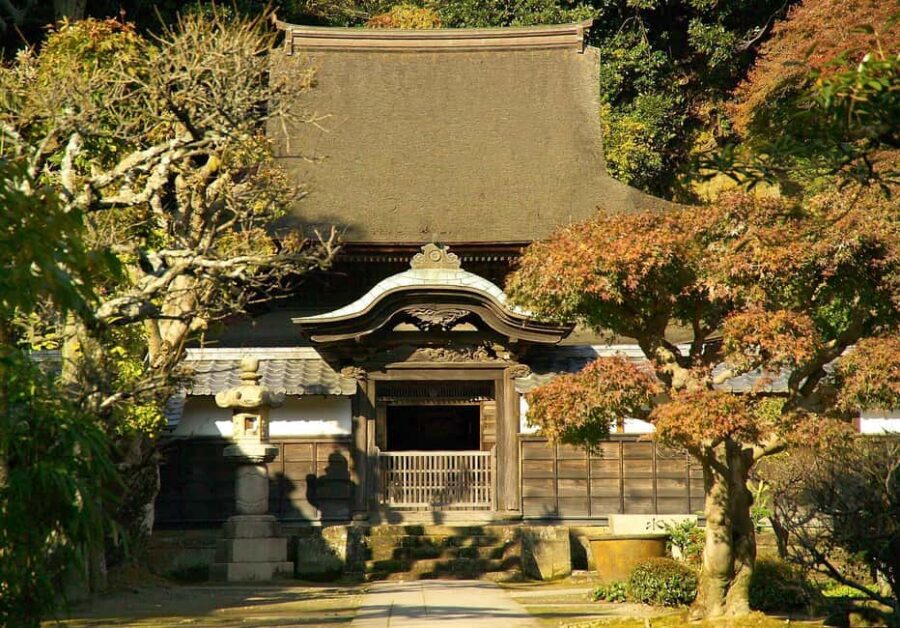
Next up is Tokei-ji, a shorter guided visit of about 15 minutes. This is a classic “small stop, big meaning” kind of place. Tokei-ji is a former nunnery, and it’s also known as a pilgrimage spot for women from across Japan.
Even though the time here is brief, this stop adds balance to the day. You’re not only seeing the public face of power (shrines and major political-era landmarks). You’re also getting a quieter angle on how Buddhism shaped lives—who practiced, who traveled, and how faith created community.
Expect it to feel calmer than the more famous, busier sites. Take the time to slow down here. Five extra minutes of looking can make a small stop stick with you.
Shojin-ryori Lunch: Monk-Style Vegetarian Food That Feels Like Part of the Tour
Lunch is built in, usually around 45 minutes at a local restaurant. The star is shojin-ryori, the traditional vegetarian food Buddhist monks eat every day.
This is where the tour stops being only historical and becomes cultural. Shojin-ryori is not “diet food” in the modern sense. It’s structured around Buddhist practice: simple ingredients, careful preparation, and a sense of discipline. Eating it while surrounded by temple context makes it easier to understand why people treat meals as spiritual practice, not just fuel.
A key scheduling note: shojin-ryori is generally offered for the 8-hour tour. If you choose the 4-hour option, it may still be available if you ask in advance. That’s a huge plus if you’re short on time but want the full experience.
If you have dietary needs, tell the guide beforehand. The tour info says you can share restrictions, and the vibe here is that they’ll do their best to meet you. One extra example from real-world experience: if you’re dealing with gluten needs, the guide has helped arrange an appropriate lunch option by finding a restaurant that can handle it.
Practical tip: eat with a little curiosity. Shojin-ryori can include ingredients and textures that are familiar, but the overall style is different from a standard Japanese set meal. Treat lunch like a lesson, not just a break.
Tsurugaoka Hachimangu: The Big Shrine in the Middle of Town
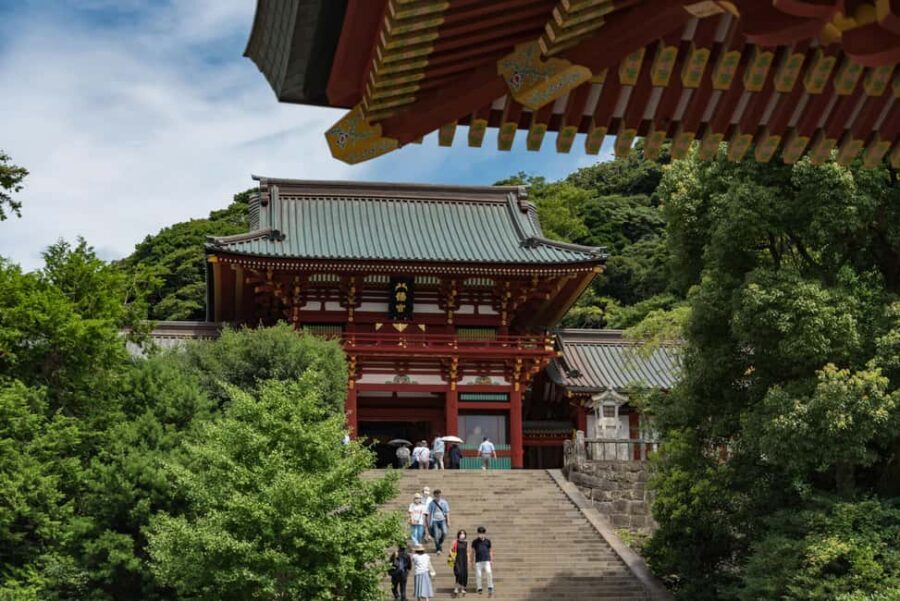
After lunch, you head to Tsurugaoka Hachimangu, with about 30 minutes of guided time. This shrine is huge, extremely popular, and tied closely to Kamakura’s samurai-era identity.
This is one of those sites where scale matters. You’ll see why people love coming here: the shrine grounds feel ceremonial and central, not tucked away like a minor temple. And it’s the kind of place where the guide can translate symbolism—what the shrine represents and why it was so important to medieval political life.
Drawback to plan around: it’s popular for a reason. Expect crowds, especially around peak hours. The good news is that you’re not wandering alone—you’re moving with a schedule and guidance, so you can still enjoy it without feeling trapped.
Getting Between Sites: Buses, Coaches, and One Train Ride
Between Tsurugaoka Hachimangu and Kōtoku-in, you’ll take a bus/coach leg (~20 minutes). Later there’s also a train leg (~15 minutes) before you reach the next phase.
These transit breaks are not filler. They’re part of why the tour feels doable. Kamakura is spread out enough that trying to do everything purely on foot can drain you quickly, especially in summer heat.
Another advantage: this structure lets you cover more ground without turning the day into constant walking. Even with short temple visits, the “between” time helps you keep your attention where it matters—on the sites themselves.
Kōtoku-in and the Great Buddha: Why This One Matters
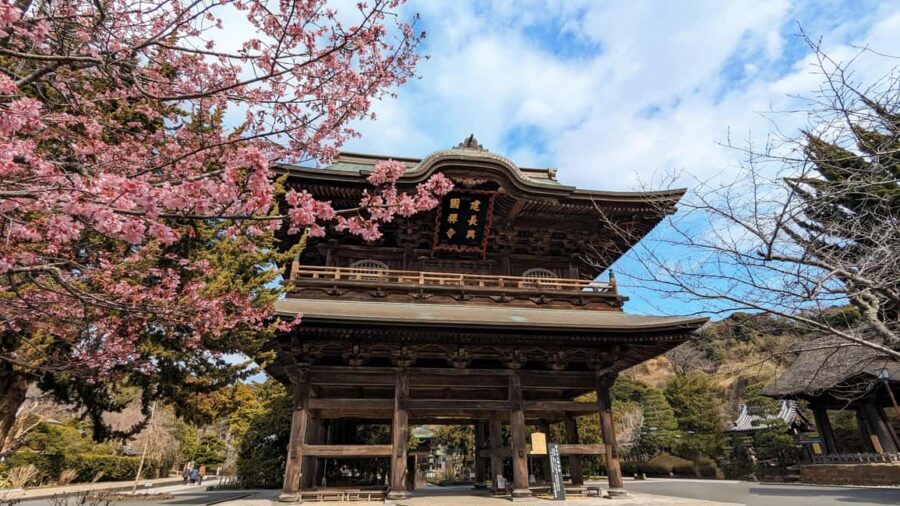
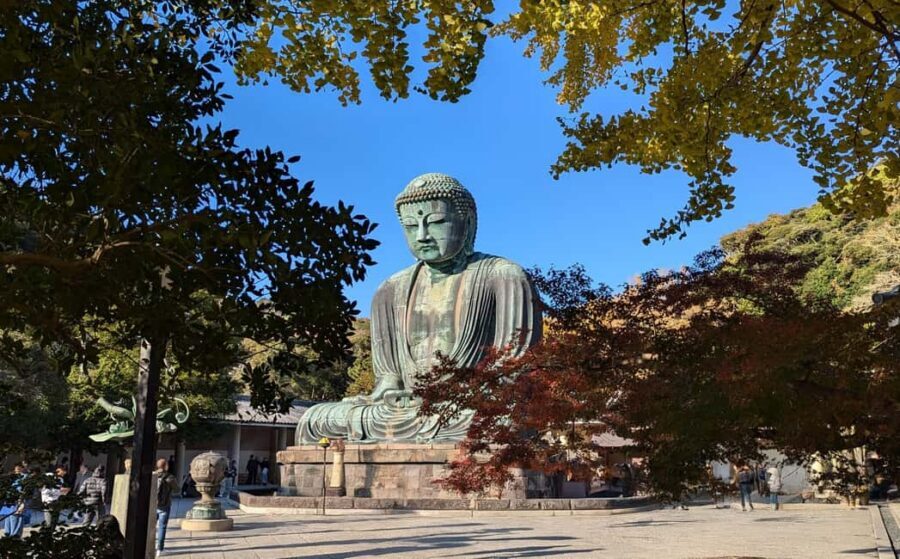
Your next guided stop is Kōtoku-in, about 30 minutes, and the highlight here is the Great Buddha of Kamakura. This is one of the largest Buddha statues in Japan, and it’s often described as exceptionally beautiful.
Seeing a major Buddha statue in person hits different than seeing it in a photo. The scale pulls your attention up and out. It’s not just a statue; it’s a landmark that shapes how you understand the temple area around it.
When you’re touring, this is the point where the day’s theme crystallizes. Earlier stops gave you Zen context and medieval spiritual-political links. Now you’re at a physical centerpiece of Buddhist devotion, and the symbolism becomes more immediate.
Practical tip: give yourself a moment to step back and take it in. Don’t rush right to the nearest view. A small change in position can completely change how the statue feels.
Enoshima for the 8-Hour Private Option: Sacred Island Meets Sea Kitsch
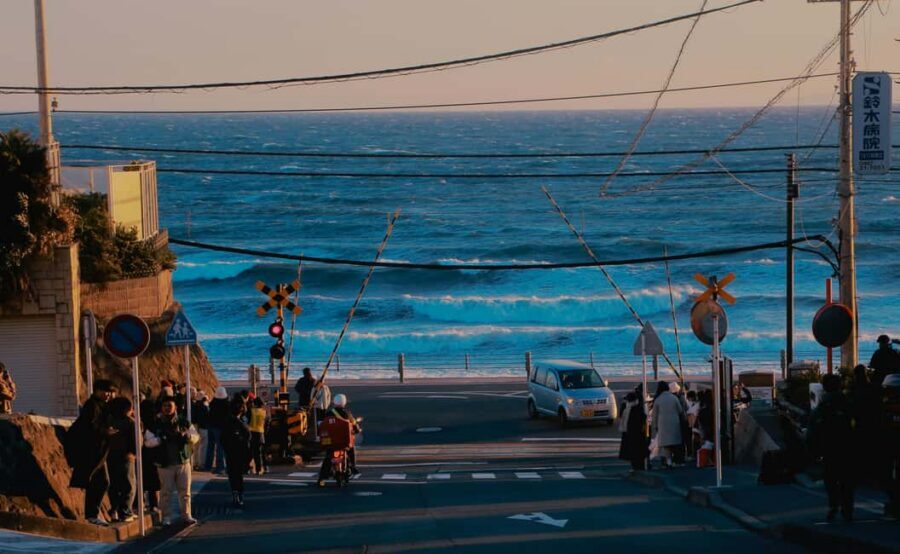
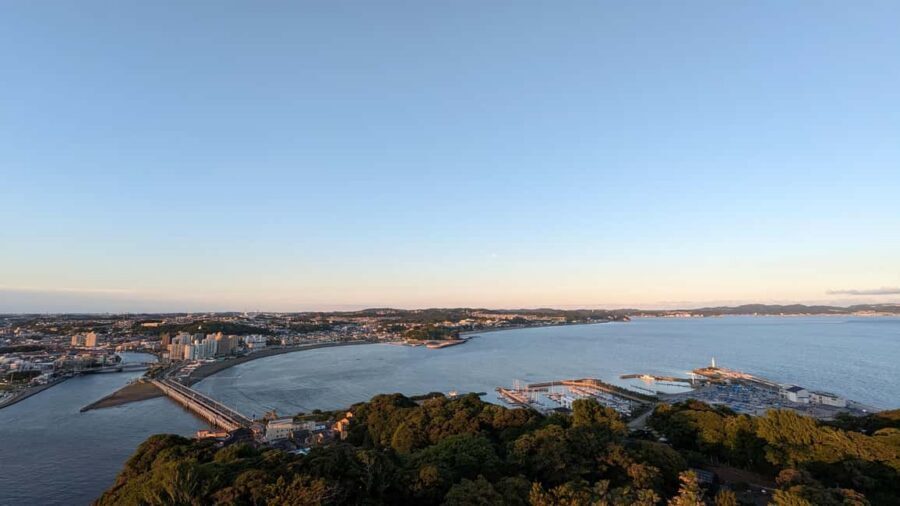
If you’re doing the private 8-hour option, the tour adds Enoshima at the end, with about 2 hours there. Enoshima is described as a holy island in ancient times and now a popular seaside spot for couples and families.
This is a fun shift from temples-inland to seaside energy. You’ll get views, a change in pace, and the kind of setting where spirituality and modern fun can coexist. The phrase holiness meets kitsch fits well here—part of the charm is how the island blends old meaning with playful tourism.
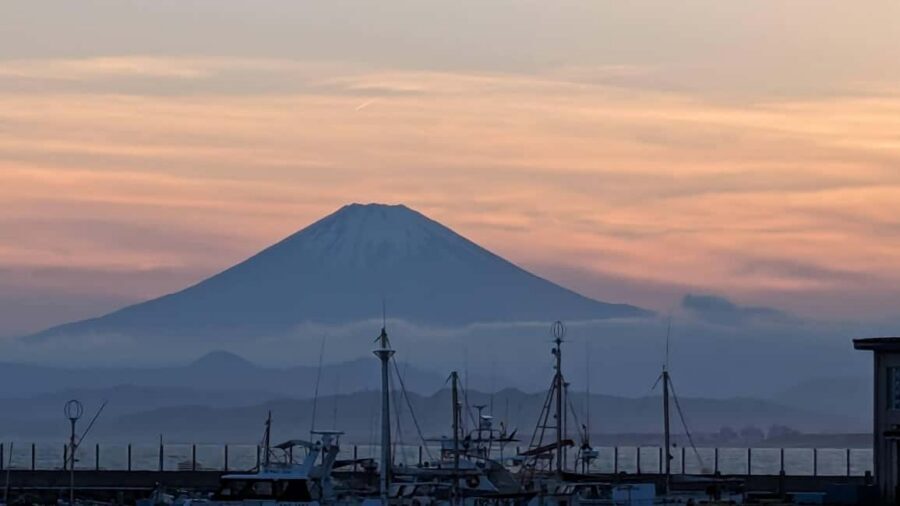
Timing can matter a lot. One guide approach is to help you catch the best scenes. If your schedule lines up, you might find that the light at the end of the day makes Enoshima feel especially photogenic.
Pacing, Comfort, and Real Walking Reality
This tour is designed as a walking tour, but it’s not a “never stop moving” kind of day. You’ll still walk enough to feel like you did something, but the itinerary uses transit between zones and includes places where you can sit.
That said, there’s still walking involved, and the tour is explicitly not suitable for wheelchair users or people with mobility impairments. If you’re managing knees, ankles, or energy levels, don’t treat it as an easy stroll. Plan for breaks, use comfortable shoes, and be ready for crowds at major stops.
If you’re traveling from Tokyo for a half-day outing, this is a good length. You’ll get context, major sights, and a meal that ties into the theme. And the duration spread from 4 to 8 hours lets you choose based on stamina and interest.
Price and Value: What $35 Buys, and What You’ll Still Pay
The tour price is $35 per person, and that’s the part many people feel most directly. But the real value question is what’s included versus what’s extra.
What you’re paying for with the base price:
- Guide fee and an English-speaking local guide
- The guided flow that ties sites together into one coherent story
- Vegetarian and vegan-friendly support (tell them beforehand)
What you should expect to pay separately:
- Entry fees (roughly 800–1,500 yen per person, varies by site)
- Transportation fees (around 400 yen per person)
- Lunch (about 1,000 yen per person)
Even with the extras, this price structure is usually fair for an organized half-day to full-day. The biggest value isn’t just ticket access—it’s time and interpretation. Without a guide, you can absolutely visit these places on your own. But the “why” behind Zen, the medieval political connections, and the way the stops fit together are exactly the kind of things that make guided time worth it.
If you care about history but get bored by lecture-y tours, this style tends to work because it stays grounded in what you see and why it mattered.
Who Should Book This Tour (and Who Might Skip It)
This is a strong match if you want:
- A medieval Japan overview without a full-day commitment
- Zen and Buddhist context explained in plain terms while you’re standing in the places
- A mix of temples + shrine power + a real food experience
- An English guide who can handle questions and keep pacing comfortable
You might choose something else if:
- You need wheelchair access or have limited mobility
- You dislike crowds, and you’re visiting at peak times
- You want zero transit and a strictly slow, single-neighborhood stroll
If you’re going to Kamakura as a day trip, this tour hits the sweet spot. It turns the commute into a payoff.
Should You Book This Kamakura Walking Tour?
I’d book it if you like the idea of seeing Kamakura’s spiritual and political sides in one connected route. The schedule is built to keep you moving, but not wiped out. The shojin-ryori lunch adds a real sensory layer, and the guide’s storytelling approach helps you understand why these places mattered in the Kamakura Period.
If you’re comfortable with walking and you can handle a few extra costs for entry and lunch, this is a solid value at the base price—and it earns its money by turning famous stops into a coherent, memorable day.
FAQ
How long is the Kamakura tour?
It runs about 4 to 8 hours, depending on which option you choose and what’s included in your route.
Where do I meet the guide?
Meet outside the East Exit of Kita-Kamakura Station.
Is the tour mostly walking?
It’s a walking tour, but it uses public transport between areas and includes places to sit down along the way.
What does the tour cost?
The price is $35 per person. Entry fees, transportation, and lunch are not included.
Are entry fees included in the price?
No. Entry fees are estimated at roughly 800–1,500 yen per person, depending on the sites.
Is shojin-ryori lunch included?
Lunch is not included in the base price. Shojin-ryori is generally for the 8-hour tour, and it may be available for the 4-hour tour upon request.
Is this tour suitable for wheelchair users?
No. It’s not suitable for people with mobility impairments or wheelchair users.
More Tour Reviews in Kamakura
More Days by the Great Buddha
Kamakura Day Trips, compared.
 ★ 4.5Kamakura & Enoshima Day Trip including Temple TicketsFrom $581,375 reviews
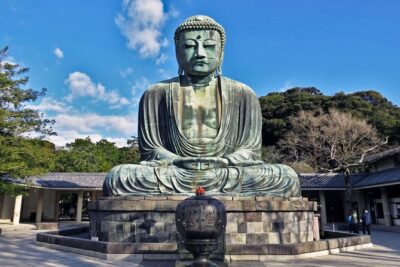 ★ 4.5From Tokyo: Kamakura & Enoshima 1-Day Bus TourFrom $66189 reviews
 ★ 5.0Kamakura Historical Walking Tour with the Great BuddhaFrom $98129 reviews
Kamakura Private Tour: Temples, Nature, and the Great BuddhaFrom $98121 reviews
Kamakura Walking Tour – The City of ShogunFrom $35100 reviews
★ 5.0Kamakura Historical Walking Tour with the Great BuddhaFrom $98129 reviews
Kamakura Private Tour: Temples, Nature, and the Great BuddhaFrom $98121 reviews
Kamakura Walking Tour – The City of ShogunFrom $35100 reviews
 ★ 5.0Kamakura 8 hr Private Walking Tour with Licensed Guide from TokyoFrom $20180 reviews
 ★ 4.1Kamakura & Enoshima Day Tour with Pickup & Train RideFrom $1361 reviews
 ★ 4.8Kamakura: Private Guided Walking Tour with Local GuideFrom $10660 reviews
Browse the lists this tour appears in