
Reviewed · FUJIYOSHIDA
From Tokyo: 5 Best Mount Fuji Photo Spots Private Day Trip
Fuji photos start fast on this day trip. You get a tight loop of the most camera-friendly spots around Kawaguchiko, with different angles of the mountain and seasonal color. I love the chance to chase classic views without renting a car, especially the iconic Chureito Pagoda backdrop that frames Fuji like a postcard.
I also like the added rhythm in the middle: Oshino Hakkai ponds and Honcho Shopping Street give you more than just photos, with calm walking and local snack culture. The only drawback is schedule pressure if weather or crowds slow things down, since this is a 10-hour route with short stops.
In This Review
- Key things to know before you go
- Why this private Fuji route works from Tokyo
- Arakura Sengen Shrine and Chureito Pagoda: the classic framing shot
- Honcho Shopping Street: a local-feeling break, not a roadside stop
- The Lawson Fuji Kawaguchiko Store photo stop: quirky and effective
- Lake Kawaguchi break and lunch time: give your feet a chance
- Oshino Hakkai: the calm ponds that balance the day
- Mt. Fuji Dream Bridge: panoramic views with sunset potential
- Transportation, timing, and what the private setup really buys you
- Price and value: $451 per group up to 5
- Who should book this day trip (and who should skip it)
- Should you book it?
- FAQ
- What are the main photo stops on this day trip?
- How long is the trip?
- How much does it cost and what is the group size?
- Is hotel pickup from Tokyo included?
- Will the driver be on time?
- What’s included in the price?
- Are meals included?
- Are drones allowed?
- What is the cancellation policy?
Key things to know before you go
- Multi-angle Fuji photography across shrine, street, lake-area, and viewpoints
- Chureito Pagoda timing at Arakura Sengen Shrine for big postcard framing
- Honcho Shopping Street breaks to stretch your legs and grab local bites
- Lawson Fuji Kawaguchiko Store for a quirky, instantly recognizable Fuji photo spot
- Oshino Hakkai ponds for a calmer, greener stop that feels like a reset button
- Mt. Fuji Dream Bridge for panoramic views, especially when sunset hits
Before you commit, see how this one stacks up against a few Fujiyoshida favourites:
- From Tokyo: Full-Day Mount Fuji Tour in English or Spanish★ 4.7 · 101 reviews
- Tokyo: Private Mt. Fuji Luxury Day Tour – Fully Customizable★ 4.9 · 17 reviews
- From Tokyo: 5 Best Mount Fuji Photo Spots Private Day Trip★ 4.9 · 12 reviews
Why this private Fuji route works from Tokyo
This is the kind of day trip that makes sense if you want the famous Mount Fuji shots but don’t want to spend your vacation figuring out trains, transfers, and parking. You’re in a private, air-conditioned vehicle with an English-speaking driver, and you’re picked up directly from your Tokyo accommodation. It’s built for efficiency, not wandering for hours hoping you land on the right angle.
And the value is in the variety. You don’t just see Mount Fuji from one viewpoint. You move from a shrine hillside photo scene, to a shopping street feel, to a lake break, and then into Oshino Hakkai’s pond landscape before finishing with wide panoramic views from the Dream Bridge. That mix is exactly what makes Fuji days feel satisfying, even when the weather does its usual dramatic thing.
One more practical point: this is a private group up to 5 for a fixed price per group. If you’re traveling with a couple of friends or family, the cost spreads out fast. If you’re solo, it’s still doable, but it’s less of a bargain than joining a shared tour.
Arakura Sengen Shrine and Chureito Pagoda: the classic framing shot
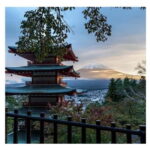
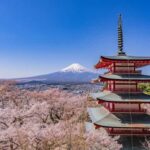
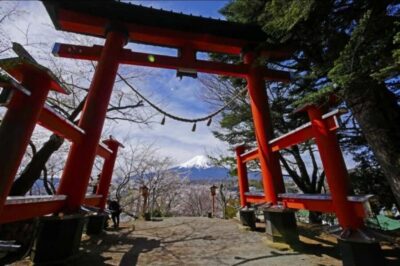
The day begins with Arakura Sengen Shrine and the famous Chureito Pagoda area. This is the spot that photographers talk about for a reason: the pagoda sits on a hillside, and Mount Fuji often appears behind it in that clean, layered look. The experience is simple but memorable—short walks, shrine atmosphere, and then the big moment when you line up Fuji with the pagoda.
If you care about seasonal scenes, this stop is especially helpful. Cherry blossoms in spring and colorful autumn leaves can transform the same view into something totally different. Even when conditions are less ideal, the pagoda itself remains a striking subject, so you still get images that feel like Japan, not just a mountain photo.
Honcho Shopping Street: a local-feeling break, not a roadside stop
After the first photo hit, you head to Honcho Shopping Street in the Shimoyoshida area. This is where the day starts to feel more human. Instead of only chasing viewpoints, you get an hour to stroll, browse small shops, and snack at your own pace.
This kind of stop matters more than you’d think. If you only do scenic lookouts all day, you burn out. Honcho gives you a normal daily rhythm—people moving around, storefronts, and small finds that feel specific to the neighborhood rather than souvenir-bus-style. It’s also a good window to reset your legs after any uphill walking at the shrine.
The Lawson Fuji Kawaguchiko Store photo stop: quirky and effective
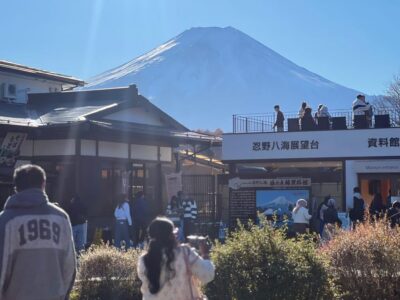
Then comes one of the most fun, instantly recognizable photo opportunities: the Lawson Fuji Kawaguchiko Store. This is that Mount Fuji shot you’ve probably seen online, with the convenience-store building acting like the perfect foreground anchor. It’s not about deep culture or a long history lesson. It’s about getting the picture and moving on—clean composition, clear subject, and Mount Fuji doing its job in the background.
You’ll usually get a short break here with time for your photos and a little breathing room. The driver’s job is to position you for the photo moment and keep things flowing so you don’t lose the rest of the day to delays.
If you’re the type who likes practical photography—foreground, framing, and quick composition—this stop is a win. It turns Fuji into something more playful than just a distant peak.
Lake Kawaguchi break and lunch time: give your feet a chance
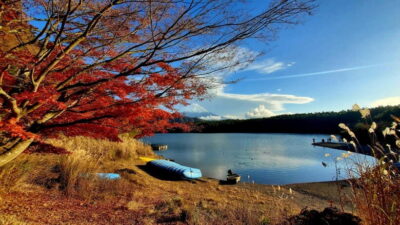
Next you head to the Lake Kawaguchi area, with time for a break and lunch. This is a sensible choice in a 10-hour day because it prevents the classic problem of day trips: your energy runs out before you reach the best viewpoints.
In practical terms, you’ll have enough time to eat on your own and just sit for a bit if the weather gives you a moment to watch the water. Even if you don’t get the clearest view of Fuji every minute, Lake Kawaguchi still gives you that Fuji-day atmosphere—cool air, open space, and a chance to refocus.
Tip for photographers: this is often a good moment to plan your next stop shots. If Fuji is peeking through clouds, you’ll want to know how quickly you need to move to catch it from the next viewpoint.
Oshino Hakkai: the calm ponds that balance the day
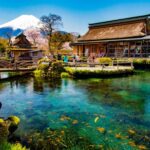
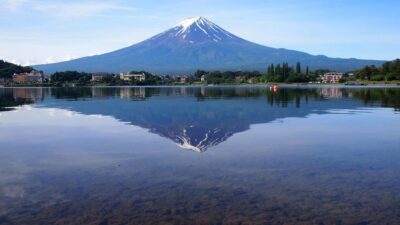
Then you shift gears to Oshino Hakkai, known for its clear ponds fed by Mount Fuji’s snowmelt. This is a very different mood from the shrine and shopping street. The walk here feels quieter, and the surroundings are more about nature than crowds.
The ponds are the big draw, and this stop is the perfect contrast if you want variety in your photos. Instead of only distant mountain framing, you get reflections, water textures, and greenery. It’s also an easy place to slow down and enjoy the atmosphere without constantly looking for the next photo pose.
You’ll have time to visit and also some free time for shopping, which helps if you want small local treats or souvenirs. The big benefit for most people is mental. After a couple of picture-heavy stops, Oshino feels like a reset.
Mt. Fuji Dream Bridge: panoramic views with sunset potential
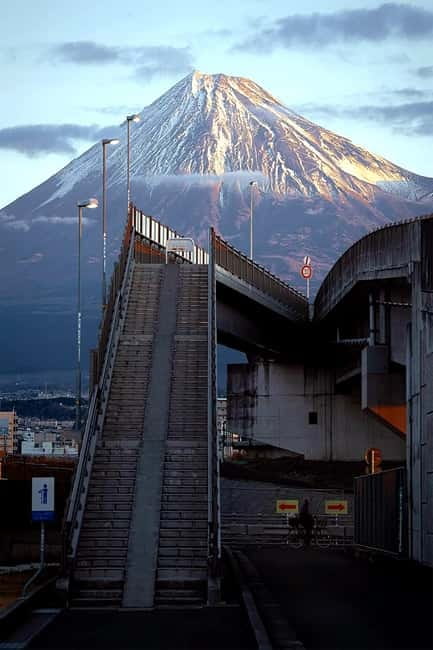
Finally, you head to Mt. Fuji Dream Bridge for panoramic views. This is your wide-angle finish: fewer narrow frames, more open perspective. If Mount Fuji is visible that day, this is where it tends to feel most dramatic because you’re stepping into a larger view with a naturally “stretched” line of sight.
The timing here can matter. The route is designed so that, when conditions allow, sunset can add warm tones to the mountain. Even if sunset doesn’t deliver a perfect golden moment, the bridge viewpoint still gives you a satisfying closing shot. It’s also a good place to double-check your photo set before heading back.
One important reality check: Fuji visibility depends heavily on weather and cloud cover. Check the forecast before you go, and keep expectations flexible. You can still have a strong day with Fuji partly hidden, because you’re collecting multiple scenes, not just one.
Transportation, timing, and what the private setup really buys you
This trip is private, with private transportation in an air-conditioned vehicle. That’s a comfort upgrade right away, especially if it’s hot, cold, or rainy. You also get a Wi-Fi hotspot in the vehicle, subject to availability, which can help with quick weather checks and mapping.
The driver is English-speaking, and that matters when you have photo goals. Good communication can save you minutes, and minutes add up on a day trip. The driver can also adjust pacing if the group needs extra time at a stop.
Pickup is included from your Tokyo accommodation, but traffic can happen. The driver may be up to 30 minutes late due to traffic, so don’t book anything tight right after your return time.
Also note the rules: no alcohol and drugs. And for photography, drones are not allowed. Regular cameras and phones are encouraged, and you’ll have several planned stops where getting out and shooting is part of the deal.
Price and value: $451 per group up to 5
At $451 per group for up to 5 people, the math can work out well if you fill the group. Split five ways, you’re around the $90 level per person for a full 10-hour day with private transport and pickup/drop-off. If you only have one or two people, it’s still a straightforward option, just less of a per-person bargain.
Where the value really shows up is in the “no friction” factor:
- You don’t need to coordinate multiple transit legs.
- You don’t need to negotiate parking.
- You get an English-speaking driver who focuses on getting you to the right spots.
- The route balances busy photo scenes with calmer nature and a street walk.
If you want a strict itinerary and maximum Fuji photo return, private is the way to go. If you love going slow and figuring it out yourself, you might prefer a more flexible option. But for most people, this strikes a practical balance.
Who should book this day trip (and who should skip it)
This tour is best for you if you:
- Care about classic Mount Fuji photo spots and want them in one day
- Travel with a small group and want private comfort
- Want a mix of shrine views, photo storefront framing, ponds, and panoramic viewpoints
- Prefer English-speaking help over DIY planning
It may not be ideal if you:
- Need very long stops at each location, because the day is paced across several short windows
- Want a fully guided, museum-style explanation (a driver is included, but a tour guide is not)
- Have mobility needs that make repeated walking and steps tough
There’s also an age note: it is not suitable for people over 95 years. If that applies to someone in your group, double-check with the operator.
Should you book it?
If your goal is to leave Tokyo and come back with a solid set of Mount Fuji photos—pagoda framing, Lawson-store quirky foreground, pond reflections, and a panoramic bridge view—then yes, I’d book this. The private setup reduces stress, and the route gives you variety instead of one long slog.
I’d especially consider it if:
- You’re traveling with 3 to 5 people and want good value per person
- You want an English-speaking driver who can handle changes when weather and visibility shift
- You like structured photo stops but still want one or two breaks that feel local
If you’re chasing Fuji only as a single perfect view, you might feel frustrated if clouds block it. But if you’re after multiple angles and scenes, this is exactly the right kind of day plan.
FAQ
What are the main photo stops on this day trip?
You’ll visit Arakura Sengen Shrine with the Chureito Pagoda photo stop, Shimoyoshida Honcho Shopping Street, the Lawson Fuji Kawaguchiko Store, Lake Kawaguchi, Oshino Hakkai, and Mt. Fuji Dream Bridge. If time allows, there may be extra area photo opportunities.
How long is the trip?
The duration is 10 hours.
How much does it cost and what is the group size?
It costs $451 per group, for up to 5 people.
Is hotel pickup from Tokyo included?
Yes. Pickup and drop-off from your Tokyo accommodation are included.
Will the driver be on time?
Traffic can affect timing. Your driver may be up to 30 minutes late due to traffic.
What’s included in the price?
Included are hotel pickup and drop-off, private transportation in an air-conditioned vehicle, a Wi-Fi hotspot in the vehicle (subject to availability), an English-speaking driver, and fuel and tolls.
Are meals included?
No. Meals are not included.
Are drones allowed?
No. Drones are not allowed.
What is the cancellation policy?
You can cancel up to 24 hours in advance for a full refund.
More Tour Reviews in Fujiyoshida
Fresh reviews from around Fujiyoshida
Fujiyoshida, compared.
 ★ 4.7From Tokyo: Full-Day Mount Fuji Tour in English or SpanishFrom $90101 reviews
 ★ 4.9Private Mt. Fuji Luxury Day Tour – Fully CustomizableFrom $38717 reviews
 ★ 4.9Mount fuji and Hakone full day private tour with English guiFrom $34012 reviews
 ★ 4.8Fuji/Hakone Private Tour, English speaking guide, PhotographFrom $35711 reviews
 ★ 5.0Private Hiking Tour to View Mt. FujiFrom $11710 reviews
 ★ 5.0Yabusame Adventure with Mt. Fuji ViewsFrom $13010 reviews
 ★ 4.0Mount Fuji Full Day Private Tour from Tokyo Full CustomizedFrom $3299 reviews
 ★ 4.4Mount Fuji Trip with English speaking guide ( customizable)From $4078 reviews
Browse the lists this tour appears in