
Reviewed · HIKING & TREKKING
Hiking Tour in Enoshima with a Local Guide
Enoshima Island delivers serious payoff in a short window. You’ll walk through shrines, street spots, and viewpoints while your local guide helps you make sense of what you’re seeing.
What I like most is the balance: you get the outdoors (that long stair-and-walk portion), then you slow down for cultural stops like omikuji fortune paper and a hands-on arcade break. The other big win is the guide experience. In particular, Daichi’s English was easy to follow, and he kept the walk moving with helpful explanations (and good conversation).
The main thing to consider is physical effort. This route is heavy on stairs, and the tour is built for people with at least moderate fitness—so if you hate steps or want a fully relaxed stroll, plan on going slow.
In This Review
- Key highlights you’ll feel during the walk
- Enoshima Island: why this hike feels like a real escape
- Getting there at 9:30 and what “near public transportation” means
- The stair-heavy climb to Enoshima Observation Deck
- A practical tip for the climb
- Enoshima Sea Candle: one included viewpoint with time to breathe
- Omikuji at a main Enoshima shrine: culture you can actually do
- 朝日軒 (射的・スマートボール): a playful break from stairs
- Value check: is $23 worth it on Enoshima?
- Weather and timing: the one condition you can’t ignore
- Who should book this Enoshima hiking tour with a local guide
- Should you book this Enoshima hike?
- FAQ
- How long is the Enoshima hiking tour?
- What time does the tour start?
- Where is the meeting point?
- How many people are in the group?
- What’s included in the price (around $23)?
- What do I need to pay for myself?
- Is the route strenuous?
- What if the weather is poor or I need to cancel?
Key highlights you’ll feel during the walk
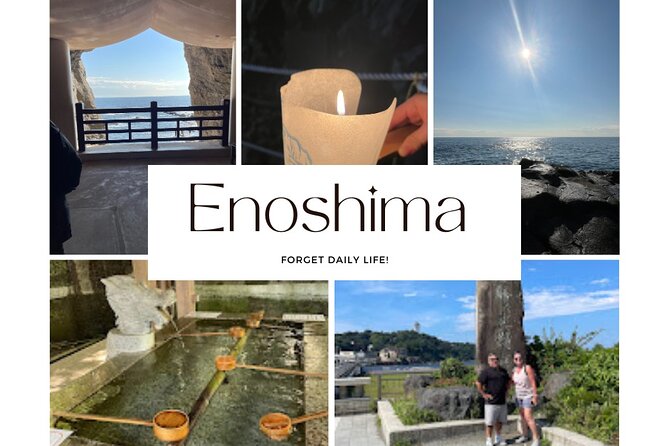
- Big views on a small island: Enoshima Observation Deck is the main sight, with time to take it in.
- Stairs with a plan: the hike portion takes more than an hour and rewards you when you keep going.
- Sea Candle stop is included: you’ll get time at the top viewpoint at no extra admission cost.
- Omikuji at a main shrine: fortune paper and praying are part of the experience, not an add-on.
- Traditional arcade break: 朝日軒 (射的・スマートボール) gives you a playful, very Japanese intermission.
- Small group size (up to 8): easier pacing and more personal guide time.
Enoshima Island: why this hike feels like a real escape
Enoshima is one of those places that works as a break from city life without needing an all-day commitment. You start in Kanagawa and end back where you began, but the island still feels like its own world: coast air, shrines you can actually visit, and viewpoints that make the effort feel worthwhile.
A local guide is what makes the experience click for non-Japanese speakers. You’re not just copying a route. You’re being pointed toward what to notice—textures, rituals, and small street details—so the island becomes understandable, not just pretty.
If the weather cooperates, you’re also setting yourself up for the big prize: views of Mount Fuji and the sea from the higher parts of Enoshima. Even if you don’t catch Fuji that day, the island views tend to stay the star.
Getting there at 9:30 and what “near public transportation” means
The tour meets at 1-chōme-14-8 Katasekaigan, Fujisawa, Kanagawa 251-0035, Japan, and it ends back at the same place. Starting at 9:30 am matters. Earlier morning light usually makes the viewpoints nicer, and it also helps you avoid dragging your energy through the middle of the day.
Because the meeting point is described as near public transportation, you’ll likely have an easy time getting to Katasekaigan before the start. The tour uses a mobile ticket, so you can keep everything in your phone instead of chasing paper confirmations.
Group size is capped at 8 people, which helps in two ways. First, the guide can keep a steady rhythm around stairs. Second, it’s easier to ask questions without feeling lost in a crowd.
The stair-heavy climb to Enoshima Observation Deck
Stop 1 is Enoshima Observation Deck, and this is where most of the walking effort is going to land. The tour is built as a hike around the island, and the main stretch takes more than one hour at least. The deck itself is one of the most famous view spots on Enoshima, so you’re earning access to a payoff.
There’s also a small timing clue here: you get around 20 minutes at the deck area, and the admission ticket is listed as free for this stop. The time at the top is usually what you’ll remember—when you’re finally above the crowds and you can see how the island sits between coast and sky.
From experience with this kind of route (and based on what people felt on the walk), the biggest thing to plan for is pace. Expect steps, and expect them to keep coming. The guide approach helps: you can slow down, and the walking doesn’t force you to sprint between photo stops.
If you’re bringing a camera, bring it—but also plan to put it away during the harder sections. Getting your breathing under control will make the views feel better, not just farther away.
A practical tip for the climb
If the stairs are tiring, use short breaks. Stop for a few breaths, look at the scenery, then move on. The guide’s job is to keep you comfortable and on track, and it’s easier when you don’t try to race the group.
Enoshima Sea Candle: one included viewpoint with time to breathe
Stop 2 is Enoshima Sea Candle, described as an observation deck at the top. The important part for your planning is that the admission is included, and you’ll get about 20 minutes here.
This is a classic “let’s go up” moment. Even if you’ve already seen good views from the Observation Deck, this second viewpoint helps you appreciate the island from another angle. Think of it like getting a second chapter of the same story.
Because this stop is included, you’ll avoid the annoying end-of-the-tour feeling of paying for something you thought was covered. And since the time is clearly defined, you can treat it like a scheduled breather in a stair-based experience.
If you’re sensitive to heights or enclosed spaces, keep that in mind when you’re near any viewpoint infrastructure. The tour includes an elevator fee, which suggests there are vertical transitions along the route. Still, the core walk is the main challenge, so plan to take it slowly either way.
Omikuji at a main Enoshima shrine: culture you can actually do
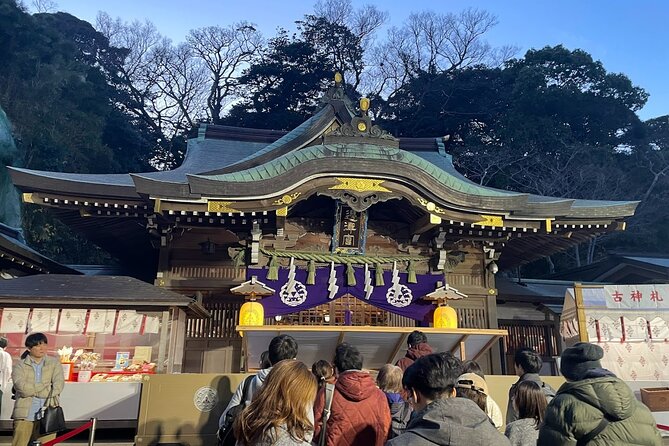
At a main Enoshima shrine, you’ll have a chance to do omikuji, the fortune paper ritual. You’ll also participate in the usual act of praying.
This is a small stop, but it’s one of the most meaningful parts because it turns sightseeing into participation. Instead of just looking at buildings, you’re doing something people have been doing for a long time: drawing a fortune, reading it, and following the ritual as best you can.
You don’t need to speak Japanese to get something out of this. A guide can help with what to expect and how to handle the ritual. In plain terms, it’s a way to slow down and feel the island’s spiritual rhythm instead of treating it like a checklist.
A practical note: omikuji is fun when you’re willing to accept whatever it gives you. Even if you can’t read every line, the act itself—the choosing, the prayer, the attention—still makes it worthwhile.
朝日軒 (射的・スマートボール): a playful break from stairs
Stop 3 is 朝日軒(射的・スマートボール), a traditional Japanese arcade-style experience. This is included in the tour price for the arcade fee, and you get about 20 minutes.
The wording is important: if this arcade isn’t opened, the tour says they cannot go that time. So don’t count on it as a guaranteed win every day. It’s still one of the most memorable stops when it works, because it’s hands-on and lighthearted after the stair effort.
射的 (target-shooting) and スマートボール (a smart-ball style game) are the kind of old-school amusement that feels very local. Even if you’re not trying to master the games, it’s a fun way to interact without needing perfect language skills.
One more practical detail: you’ll likely be walking between stops and doing activities indoors or at counters. Wear shoes you can move easily in. Flip-flops are cute for the beach, but not for stair days and arcade pacing.
Value check: is $23 worth it on Enoshima?
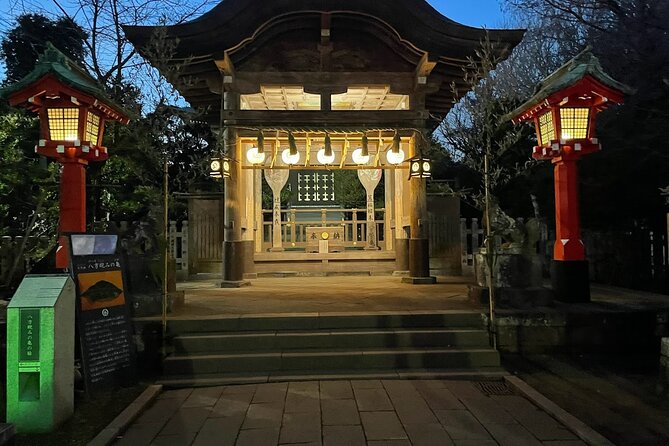
At $23, this tour is priced like a solid local-guided experience rather than a full-on premium sightseeing package. And the value comes from a few clear buckets:
- Guide support for people who don’t speak Japanese
- Admission coverage for at least one viewpoint (Sea Candle)
- Elevator fees included, which you’d otherwise pay separately
- Arcade fee included for the 朝日軒 stop
What’s not included is what you’d normally expect: snacks and food. There are shops lining the road where you can walk around and eat, and you’ll have time to eat—but you pay yourself.
So the “real cost” for many people will be: $23 plus whatever you spend on snacks and drinks. If you like trying local treats, that keeps the day flexible.
Also, because it’s small (up to 8 people) and lasts about 3 to 4 hours, you’re buying time with a guide instead of just buying transport between pins on a map. That’s often the difference between a good day and a forgettable one.
Weather and timing: the one condition you can’t ignore
This experience is explicitly weather-dependent. It requires good weather, and if it gets canceled due to poor conditions, you’ll be offered a different date or a full refund.
That matters because Enoshima viewpoints are the point. If visibility is bad, the Observation Deck and Sea Candle moments become less dramatic. Even a cloudy day can be nice, but the tour is set up for clear views.
Timing-wise, a half-day hike also means you need to start strong at 9:30. If you sleep in or wander around waiting for the group, you’ll eat into the view time.
If you’re planning your day around photographs, build in patience. The climb is the hardest part, and once you reach the top, you’ll want to linger without rushing back down.
Who should book this Enoshima hiking tour with a local guide
This tour fits best if you want:
- A walkable half-day with structure and a guide
- Views from Enoshima’s height points without trying to figure everything out alone
- A mix of outdoors and culture (shrines, omikuji, and a classic arcade)
It’s especially good if you don’t speak Japanese. The guide experience can turn confusing signage into meaningful context. And if you’re the kind of person who likes talking to locals while sightseeing, this one has that energy.
It may be less ideal if:
- You need a very flat route
- You’re hoping for a completely relaxed stroll with no stair effort
The tour lists moderate physical fitness as a requirement, and the feedback pattern around stairs is consistent—go slow and you’ll be happier.
Should you book this Enoshima hike?
I’d book it if you want a guided Enoshima day that feels authentic, not just a route you copy. The small group size, the included viewpoint (Sea Candle), and the inclusion of elevator fees make it feel like someone designed it for a real experience, not just paying for a leader.
I’d think twice if your body hates stairs or you’re extremely sensitive to uneven walking. This is a stair day by design. If you’re okay with pacing and taking breaks, that challenge turns into part of the reward.
If you’re traveling on a tight schedule and want Enoshima’s viewpoints plus shrine culture and a fun arcade break, this $23 tour is a strong value. Just keep an eye on the weather, dress for walking, and expect that you’ll be earning those views.
FAQ
How long is the Enoshima hiking tour?
The tour lasts about 3 to 4 hours.
What time does the tour start?
It starts at 9:30 am.
Where is the meeting point?
The meeting point is 1-chōme-14-8 Katasekaigan, Fujisawa, Kanagawa 251-0035, Japan, and the tour ends back at the same location.
How many people are in the group?
The tour has a maximum group size of 8 people.
What’s included in the price (around $23)?
The arcade fee and elevator fees are included. Sea Candle admission is also listed as included.
What do I need to pay for myself?
Snacks and food are not included. There are shops along the road on Enoshima where you’ll have time to eat, but you pay for it yourself.
Is the route strenuous?
It’s listed for people with moderate physical fitness. The walk includes hiking and a stair-heavy portion to the Observation Deck.
What if the weather is poor or I need to cancel?
The experience requires good weather. If it’s canceled due to poor weather, you’ll be offered a different date or a full refund. You can cancel up to 24 hours in advance for a full refund.
Hiking & Trekking, compared.
 ★ 5.0Full Day Hiking Tour at Mt.Takao including Hot SpringFrom $11852 reviews
 ★ 5.0Hike Hakone HachiriFrom $23148 reviews
 ★ 5.0Hike Japan Heritage Hakone Hachiri with certified mountain guideFrom $15846 reviews
 ★ 5.0Traverse Outer Rim of Hakone Caldera and Enjoy Onsen Hiking TourFrom $15830 reviews
 ★ 4.9Hakone Hachiri: Old Tokaido Highway Hiking TourFrom $16722 reviews
 ★ 5.0Private Local Hiking to enjoy the nature and culture of Mt.FujiFrom $13122 reviews
 ★ 5.0Hike Japan Heritage Hakone Hachiri (Half Day)From $11418 reviews
 ★ 5.0Mt.Fuji Trekking 1 Day Tour up to the summitFrom $2,93914 reviews
Browse the lists this tour appears in