
Reviewed · ASAKUSA TOURS
Asakusa: Tokyo Skytree Exploration and History Tour
Asakusa and Tokyo Skytree fit in one smooth story. This tour is interesting because it explains what you’re seeing as you walk through classic Asakusa landmarks, then connects that world to the modern skyline from 350m and 450m up at Tokyo Skytree. I especially like how the guide uses real places to explain the bigger arc of Japan, not just the next photo stop.
Two things I really love: the meaning-first route through spots like Kaminarimon and Sensō-ji, and the way the Skytree portion turns the city into something you can actually read from above. One possible drawback is that it’s a lot of walking with stairs and crowds in Asakusa, so you’ll want solid shoes and a plan for breaks.
In This Review
- Key Points You’ll Care About
- Asakusa Starts With a Story, Not a Checklist
- From Tokyo Cruise Pier to Asakusa Info Center: Getting Your Bearings
- Kaminarimon Gate: The Symbol You’ll Want to Understand
- Nakamise Street: Shopping With Context, Not Chaos
- Hōzōmon Gate and Sensō-ji: When the Tour Slows Down
- Asakusa Shrine: The Side Stop That Adds Balance
- The Sumida River Transition: Old Tokyo to New Tokyo
- Tokyo Skytree Tembo Deck (350m): First the Big View
- Tembo Galleria (450m): Higher, Sharper, and More Intense
- Skytree Town Shopping Time: Your Souvenir Window
- The Price: What $116 Covers and Why It Can Be Worth It
- Guides Matter: Why Names Like Machiko, Keiko, and Aki Show Up
- A Few Practical Considerations Before You Go
- Should You Book This Asakusa + Skytree Tour?
- FAQ
- Where is the meeting point for the tour?
- How long is the experience?
- What language is the tour?
- How big is the group?
- What does the price include?
- Do I need to pay train fare for the ride from Asakusa to Skytree?
- Will I skip the ticket line at Tokyo Skytree?
- What observation deck heights will I visit?
- What is the cancellation policy?
- Final Take: Book It If You Want Meaning and Views in One Go
Key Points You’ll Care About
- Small-group size (up to 8) keeps the history walk calm enough for questions and photos
- Sumida River theme links Japan’s isolation-and-opening story to modern Tokyo
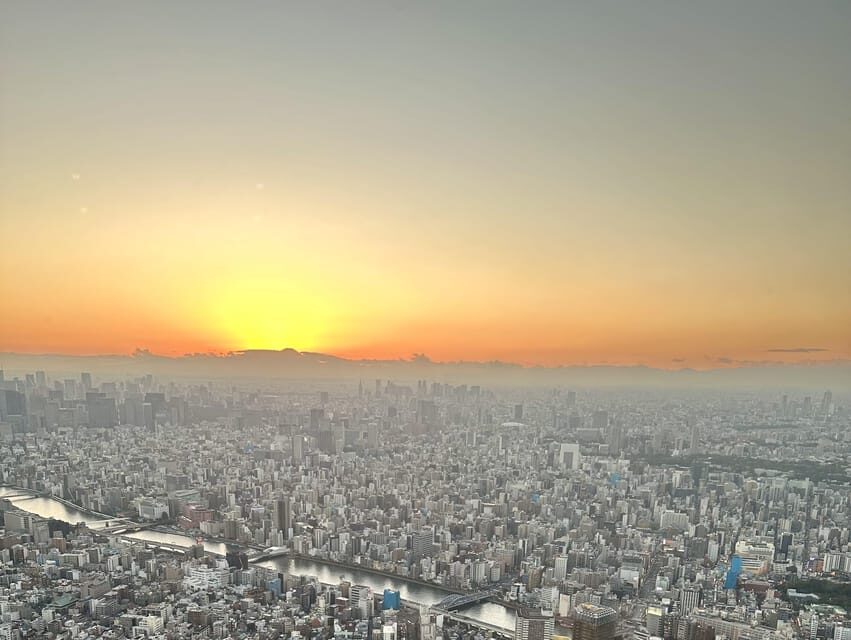
- Skytree access to both decks at 350m (Tembo Deck) and 450m (Tembo Galleria)
- Big-picture view help: you’ll get guidance on where Tokyo’s major landmarks sit
- Glass floor moment gives you a real sense of height, not just a distant view
- Skytree extras like a downloadable photo option and a postcard to send worldwide
Asakusa Starts With a Story, Not a Checklist
You’ll begin at Burger King Asakusa Azumabashi, right by Exit 4 of Asakusa Station on the Ginza line. That meeting point matters because it’s easy to find, and it sets the pace: you’re not wandering first—you’re listening, then moving. Expect a guided walk that connects religion, symbolism, and global history while you’re still at ground level.
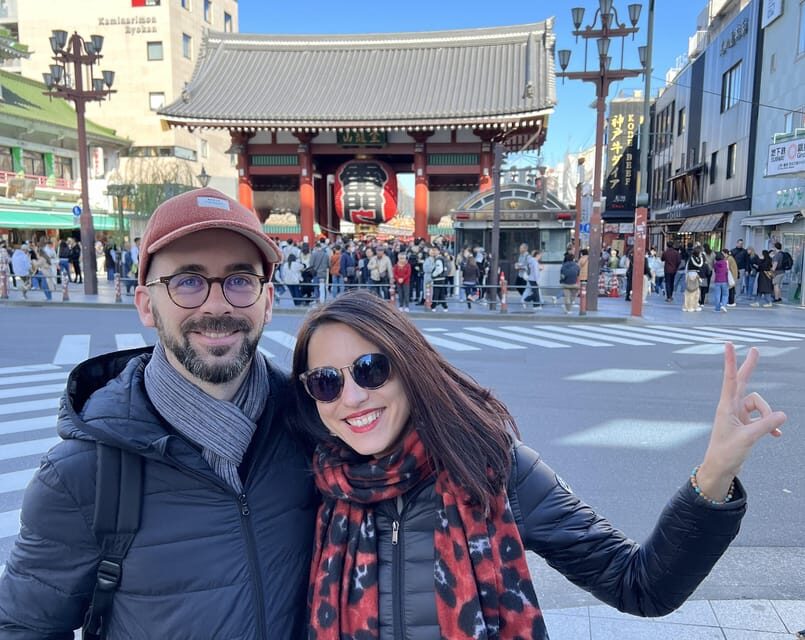
What makes this feel different is how the guide builds context as you go. You pass familiar sights like Kaminarimon Gate and Nakamise Street, but the tour explains why those symbols exist and what they mean in Japan’s broader timeline. You don’t just walk past. You learn how to read the place.
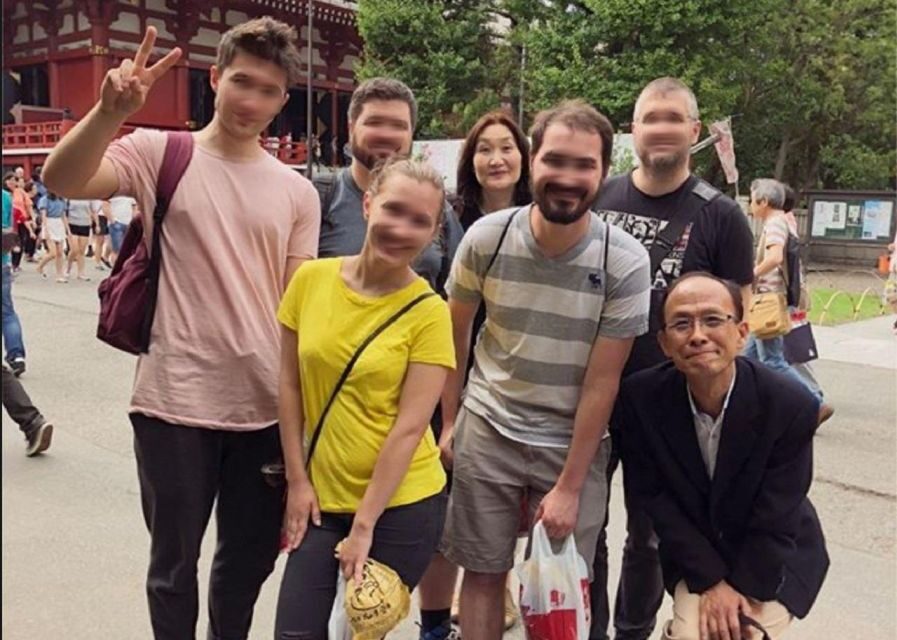
This is also where the tour’s small-group setup helps. With limited participants (up to 8), the guide can slow down when needed. In real-world conditions, that shows up as the guide checking in for comfort, including rest opportunities on hotter or harsher days. Even if you’re not the type to ask lots of questions, you’ll still feel guided instead of pushed through.
From Tokyo Cruise Pier to Asakusa Info Center: Getting Your Bearings
The early minutes include a stop by the Tokyo Cruise Asakusa Pier. Even if you’re not taking a boat, this gives you a sense of the river orientation—Asakusa isn’t just temples and shopping streets. It’s a river neighborhood, and the Sumida River becomes a key thread later in the experience.
Next comes the Asakusa Culture Tourist Information Center. This is a smart “warm-up” stop because it helps you understand the area’s layout and what you’ll be seeing right after. It’s also a good moment to mentally switch gears from casual sightseeing to guided interpretation.
Then you’ll move into the core sights. The value here is timing: you get the story foundation before crowds peak, and your eyes learn to spot details instead of just chasing big landmarks.
Kaminarimon Gate: The Symbol You’ll Want to Understand
Kaminarimon is one of those places you’ve probably seen in pictures. The tour’s approach makes it more useful than a photo moment. The guide explains the deeper meaning behind what you see, tying it to Japanese religious practice and how symbolism communicates power and protection.
You’ll also notice that Asakusa has its own rhythm. There’s a flow of people between gate, street, and temple grounds, and this stop teaches you how to move with that flow without feeling lost. That sounds small, but it can make the difference between enjoying a famous area and just surviving it.
If you’re traveling with family, this is a strong early hit: it’s easy to recognize, and the meaning gives it an extra layer without needing any prior study.
Nakamise Street: Shopping With Context, Not Chaos
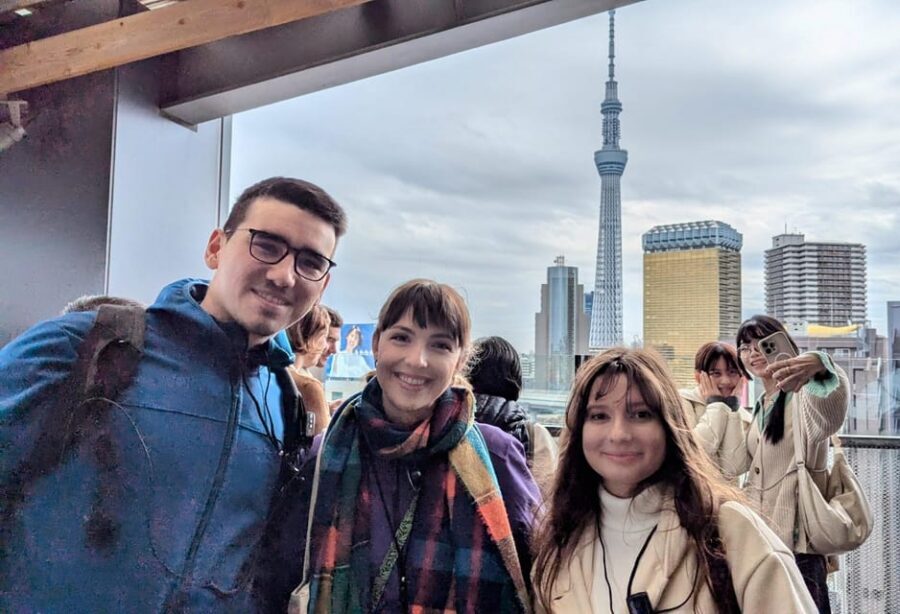
Nakamise Shopping Street is famous for snacks and souvenirs, and it can feel overwhelming if you treat it like a random marketplace. Here, the guide connects what you’re passing to the site’s spiritual and cultural role—so the street feels purposeful instead of purely transactional.
This portion typically runs around 30 minutes, which is just enough time to browse without losing the rest of the day. One nice touch: some guides have been known to build in short taste moments through the market area, so you get a quick feel for local flavors without turning it into a full food tour.
Also, the headset audio makes a difference in a busy street. Still, keep expectations realistic: one review noted that a softly spoken guide can make it harder to hear unless you’re close. If you’re sensitive to audio, position yourself where you can hear and don’t be afraid to ask the guide to repeat something.
Hōzōmon Gate and Sensō-ji: When the Tour Slows Down
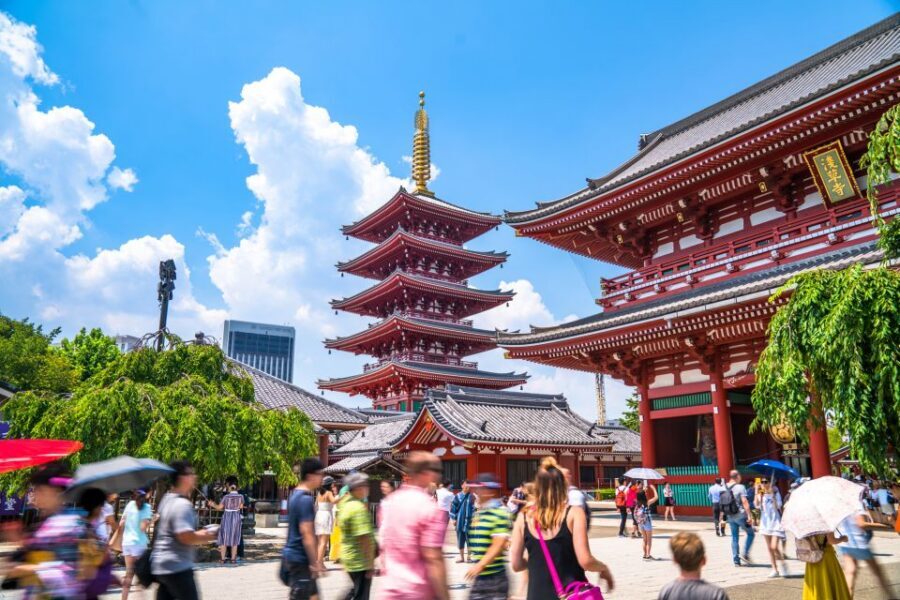
Hōzōmon Gate sets up your entry into Sensō-ji Temple, and that transition feels important. The experience is designed so you arrive at the temple area with context already in your head. Instead of feeling like you walked from one landmark to another, it feels like you’re stepping into a meaning system.
At Sensō-ji, you’ll get guided explanation for what you see and why it matters. This matters for two reasons. First, Asakusa’s temple culture isn’t just aesthetic. Second, the tour links the temple world to broader historical forces—so you’re not only learning what’s on the grounds, you’re learning how Japan’s identity was shaped over time.
If you enjoy photos, you’ll still get plenty of those opportunities. Just remember: the best part isn’t capturing an angle. It’s learning what your eyes should look for.
Asakusa Shrine: The Side Stop That Adds Balance
After Sensō-ji, you’ll visit Asakusa Shrine. This stop adds balance. Sensō-ji often grabs all the attention, but the shrine helps you see how the wider area’s spiritual landscape works as a system rather than a single headline monument.
Practically, it also helps break up the “big crowd” energy with another kind of space—less of a funnel, more of a place to slow down and take in details. If you’re the type who likes to understand how different sites relate, you’ll appreciate this pacing.
The Sumida River Transition: Old Tokyo to New Tokyo
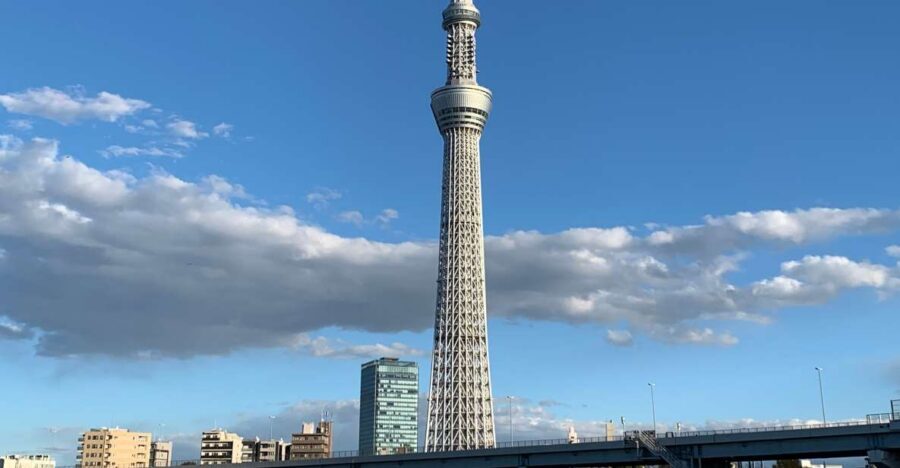
After building your Asakusa foundation, the tour makes its big move: a short train ride across the Sumida River to Tokyo Skytree. It’s only described as a two-minute ride, but it does something bigger for your brain. You go from the old Tokyo feel of gates, streets, and temple grounds into a modern landmark designed to be seen from everywhere.
This is also where the tour’s history angle really pays off. You’ll learn how Japan once closed itself off from the world, then later reopened—one of those macro stories that can feel abstract until you see it paired with today’s Tokyo. The river becomes the bridge between eras, both physically and historically.
Tokyo Skytree Tembo Deck (350m): First the Big View
Once you reach Skytree, you go up to the Tembo Deck at 350 meters. The tour includes tickets to both observation decks, and the experience is set up to help you use the height. This is not just a ride-and-stand situation.
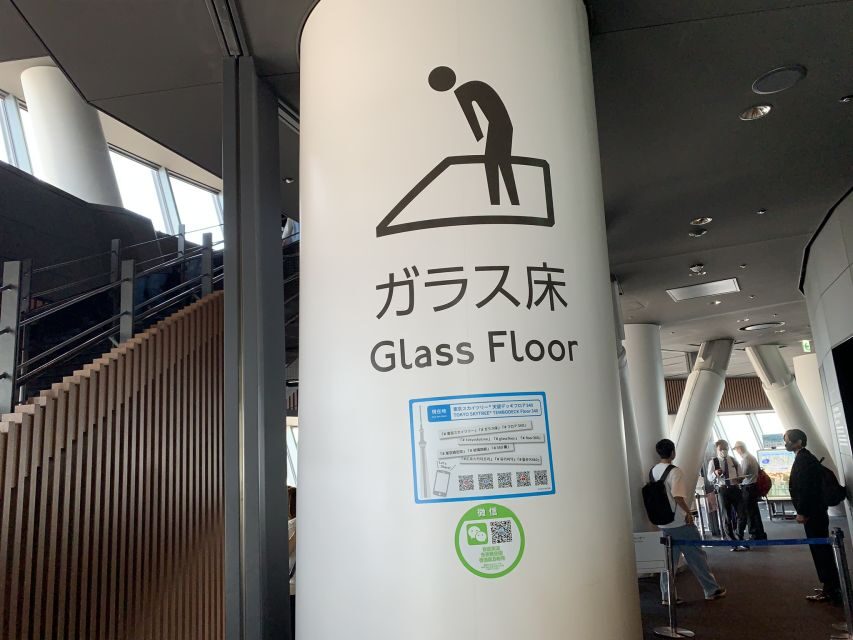
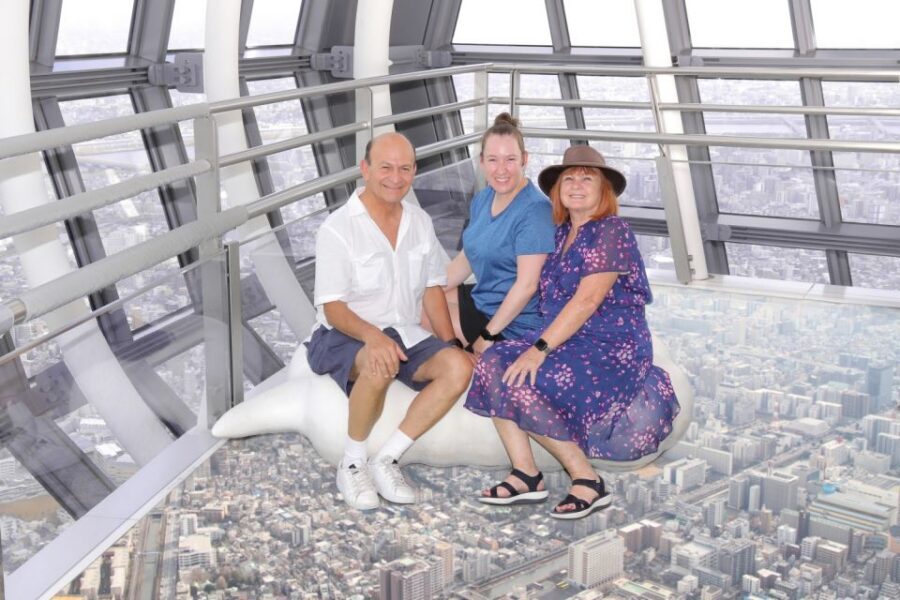
You’ll have time to step onto a glass floor section, which is a clean way to get a real sense of scale. From that height, Tokyo stops looking like “a bunch of streets” and starts looking like an organized spread of neighborhoods, rivers, and distant structures.
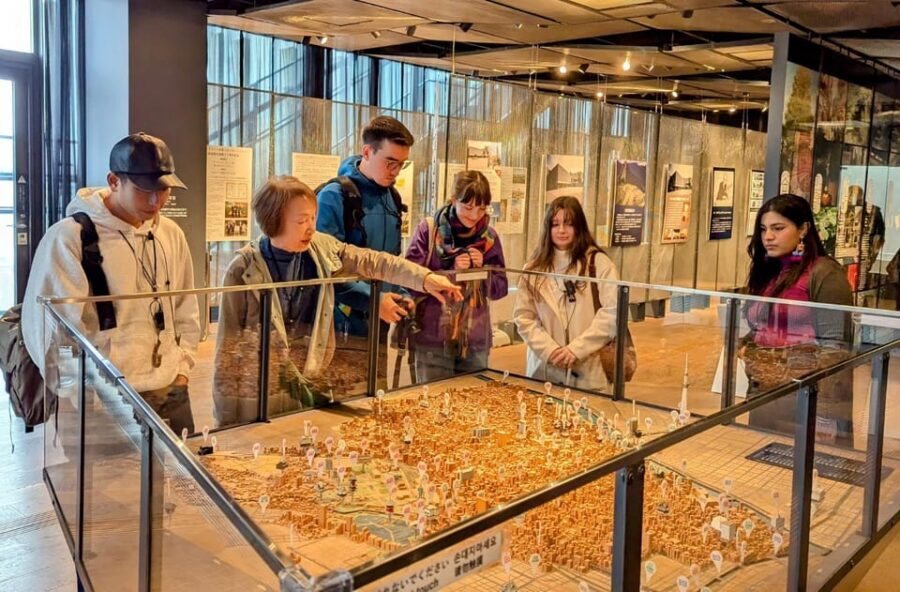
A guide also helps you identify major landmarks across the metropolis. That matters because Tokyo is huge and confusing. With pointing and context, you’ll leave with a clearer mental map—useful even after you’ve gone back to street level.
There’s also an option for a commemorative photo with a downloadable copy. If you want a souvenir that doesn’t require you to hunt for the right framing alone, this is one of the easiest wins on the day.
Tembo Galleria (450m): Higher, Sharper, and More Intense
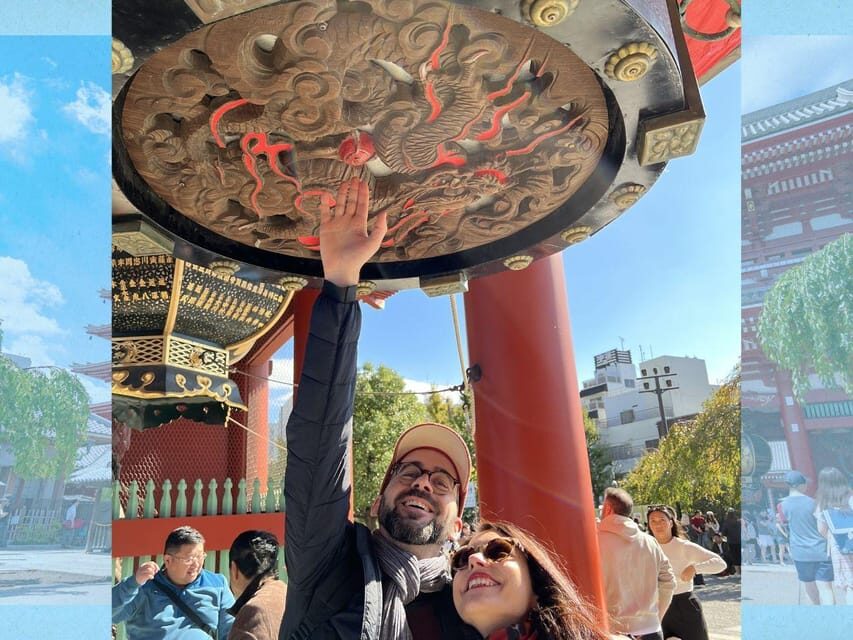
Next comes the Tembo Galleria at 450 meters. Higher makes the city feel more “readable,” even if you can’t see everything. At this level, the view tends to emphasize how wide Tokyo is and how different districts spread outward.
You’ll also have a chance to send a Skytree-exclusive postcard to anywhere in the world. It’s a small thing, but it’s one of those practical souvenirs that feels fun and personal without taking time to shop. You get the postcard, you write a note, you send it.
If glass floor moments are your thing, expect another strong “wow” element here. If you’re not into heights, the good news is you can pace yourself. The tour has enough structure that you can stop, look, and regroup rather than rushing.
Skytree Town Shopping Time: Your Souvenir Window
After you come back down, you get free time to explore the shopping complex at the base of the tower. This is a smart finish because you can handle souvenirs and snacks without dragging that pressure into the earlier temple and market areas.
Think of it as your “I can actually browse” window. If you want a quick gift, a postcard backup, or something local to bring home, this part makes it easier. It also gives you a natural landing after the height portion, so you’re not ending the tour feeling drained.
The Price: What $116 Covers and Why It Can Be Worth It
At $116 per person for 210 minutes, the big question is value. This price includes:
- live English guide support for the full experience
- tickets to both Skytree observation decks
- access to the decks without dealing with the ticket line
Skytree’s two-deck setup is the headline value driver. You’re paying for more than one viewpoint, including the Tembo Deck at 350m and the Tembo Galleria at 450m. Many “tower” tours give you one deck and call it done. Here, you get two, plus structured help identifying landmarks and a couple of Skytree extras like the postcard and photo option.
You’ll also pay a small additional amount for train fare (JPY160 from Asakusa Station to Tokyo Skytree Station), and hotel pickup/drop-off isn’t included. Still, for what you’re getting—guided meaning in Asakusa plus two real heights at Skytree—it usually pencils out as solid value, especially if you want the “why” behind the landmarks rather than only the “what.”
Guides Matter: Why Names Like Machiko, Keiko, and Aki Show Up
The tour’s quality shows in the guide experience. Names that have come up include Machiko, Yasu (including Yasu Kanno), Keiko, and Aki. Across these accounts, a consistent pattern appears: guides make the walk feel personal and paced, and they help with comfort and photos.
One standout example from reviews: Machiko adjusted for vegan needs by providing vegan restaurant guidance, and she made sure there were chances to rest and drink on a very hot day. Another: Keiko and Aki were described as stopping for questions and even helping with picture moments. Yasu was praised for compassion and also for helping guests organize a taxi after the tour.
So, if you care about a guide who can answer questions and adjust to real conditions, this tour has that track record.
A Few Practical Considerations Before You Go
This is an “on your feet” experience. You’ll walk through Asakusa for multiple segments and also deal with gates and temple areas that involve stairs and up-and-down movement. One review suggested that a short sit-down drink stop would have helped, so plan to take water breaks when the guide offers them.
Hearing can also depend on where you stand. Even with a headset system, if a guide’s voice is softer, you’ll want to stay in a spot where you can clearly catch the story.
Finally, tickets to the observation decks are included, but the online ticket approach is important: it’s advised to buy tickets online early, and the tour notes that dates are non-changeable for those tickets. The cancellation policy is non-refundable. This is one of those tours where you should be sure of your date before committing.
Should You Book This Asakusa + Skytree Tour?
I’d book it if you want Tokyo that has context. You’ll get Asakusa’s top landmarks with meaning—Kaminarimon, Nakamise Street, Hōzōmon Gate, Sensō-ji, and Asakusa Shrine—then you’ll connect that world to modern Tokyo from two observation decks at 350m and 450m. If you’re the kind of traveler who likes knowing why a place matters, not just snapping it, this fits.
Skip it if you want a completely relaxed day with minimal walking. This route is structured and active, and Asakusa crowds are real. Also, because observation tickets are date-locked and the experience is non-refundable, be confident about your schedule.
If you meet those two conditions—comfortable shoes and a confirmed date—this is a strong value way to see Tokyo with story, not just scenery.
FAQ
Where is the meeting point for the tour?
You meet in front of a Burger King restaurant next to Exit 4 of Asakusa subway station (Ginza line, G19). The instructions say to step outside when you reach Exit 4.
How long is the experience?
The duration is 210 minutes.
What language is the tour?
The live tour guide is English, and an English audio guide is included.
How big is the group?
It’s a small group limited to 8 participants.
What does the price include?
The price includes entrance tickets to the lower and upper observation decks of Tokyo Skytree.
Do I need to pay train fare for the ride from Asakusa to Skytree?
Yes. Train fare of JPY160 from Asakusa Station to Tokyo Skytree Station is not included.
Will I skip the ticket line at Tokyo Skytree?
Yes, the tour notes that you skip the ticket line.
What observation deck heights will I visit?
You’ll visit the observation decks at 350 meters and 450 meters above ground.
What is the cancellation policy?
The activity is non-refundable.
Final Take: Book It If You Want Meaning and Views in One Go
If you want a day that connects old Tokyo to modern Tokyo—ground-level history in Asakusa, then skyline perspective at Skytree—this is a great match. Just go in expecting stairs and crowds in Asakusa, and lock in your date since tickets are non-changeable.
Asakusa Tours, compared.
 ★ 4.8Japanese Dance Cabaret Theater Asakusa-Kaguwa TicketFrom $492,270 reviews
 ★ 4.7Meiji Shrine, Asakusa, Skytree Bus Tour and CruiseFrom $1221,986 reviews
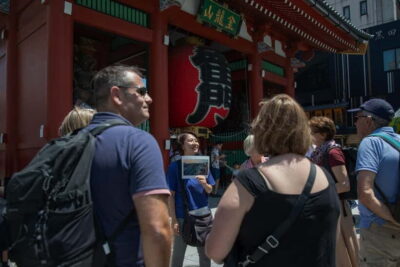 ★ 4.8Asakusa Walking Tour with Sensoji Temple VisitFrom $221,583 reviews
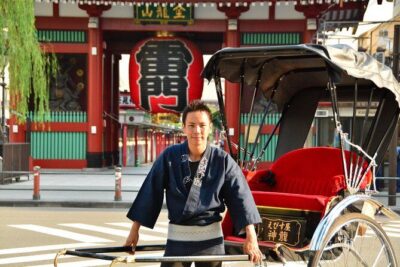 ★ 5.0Tokyo Asakusa Rickshaw TourFrom $421,375 reviews
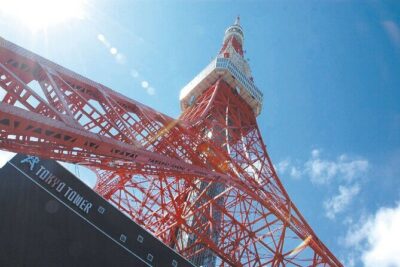 ★ 4.5Tokyo Panoramic 1 Day: Meiji Shrine, Asakusa, Odaiba and SKYTREE®From $851,222 reviews
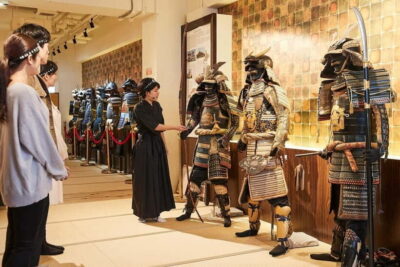 ★ 4.8Samurai Ninja Museum Asakusa: Samurai Sword Lesson & TourFrom $63306 reviews
Asakusa Sightseeing Tour by RickshawFrom $35195 reviews
Asakusa Kimono Dressing and Matcha ExperienceFrom $56173 reviews
★ 4.8Samurai Ninja Museum Asakusa: Samurai Sword Lesson & TourFrom $63306 reviews
Asakusa Sightseeing Tour by RickshawFrom $35195 reviews
Asakusa Kimono Dressing and Matcha ExperienceFrom $56173 reviews
Browse the lists this tour appears in