
Reviewed · TOKYO
Urban Geometry with Laurence Bouchard
Seeing Tokyo as geometry helps.
This workshop is less about ticking off sights and more about training your eye. You move through Tokyo with a photographer’s mindset, aiming for structured, graphic compositions from ordinary corners, reflections, and shadow patterns. The focus on high-contrast and black-and-white shooting means you’ll see the city in a way that actually transfers to anywhere you travel.
I especially liked two things right away. First, you get practical feedback that’s tied to your camera and your skill level, not generic “try harder” notes. Second, the group stays small (a maximum of 6), so Laurence Bouchard can slow down, explain, and even model a pose or act as a stand-in when you need a subject.
One drawback to plan for: this is a photo workshop, so you’ll want your phone/camera fully charged. If your battery life is shaky, you’ll feel it fast—Tokyo is photogenic, but you can’t shoot on low power.
In This Review
- Key takeaways before you go
- A photographer’s route through Tokyo’s lines and shadows
- Ebisu Garden Place: trellis shadows as your first subject
- Roppongi’s hidden spots before the big glass facade
- The National Art Center’s glass facade: where contrast becomes a composition
- Tokyo International Forum and Yurakucho: graphic depth instead of obvious sights
- How Laurence Bouchard’s feedback helps your photos actually improve
- Timing, light, and the walk rules you should follow
- What $130.31 buys you in Tokyo photo coaching terms
- Who this workshop fits best (and who might want something else)
- Quick practical checklist for your photo day
- Should you book Urban Geometry with Laurence Bouchard?
- FAQ
- How long is the workshop?
- Where does the experience start?
- What time does it start?
- What are the main shooting stops?
- Is there a mobile ticket?
- How many people are in the group?
- How much does it cost?
- What should I bring or prepare?
- What’s the cancellation policy?
Key takeaways before you go
- Laurence Bouchard tailors feedback to your camera and skill level, so the advice stays useful.
- Small group (max 6) keeps the pace thoughtful instead of rushed.
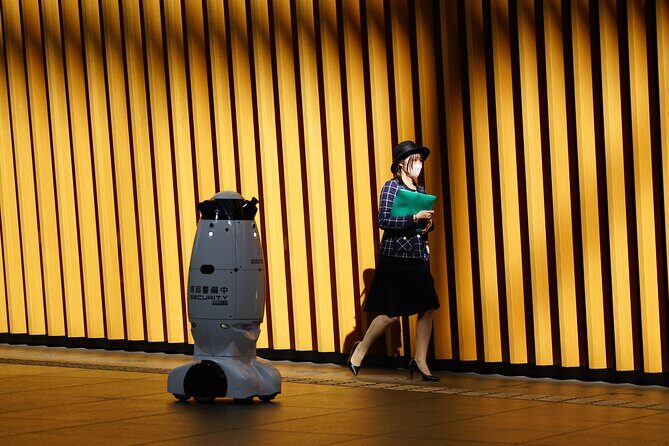
- Black-and-white plus high-contrast pushes you to notice light, edges, and shadow shapes.
- No postcard route: you chase lines, reflections, and graphic compositions across multiple neighborhoods.
- You practice timing and framing, skills that carry to any city.
Before you commit, see how this one stacks up against a few Tokyo favourites:
- Mt Fuji and Hakone 1-Day Bus Tour Return by Bullet Train★ 5.0 · 26,383 reviews
- 1-Day Tokyo Bus Tour★ 5.0 · 14,250 reviews
- Tokyo: teamLab Planets TOKYO Digital Art Museum Entry Ticket★ 4.6 · 9,779 reviews
A photographer’s route through Tokyo’s lines and shadows
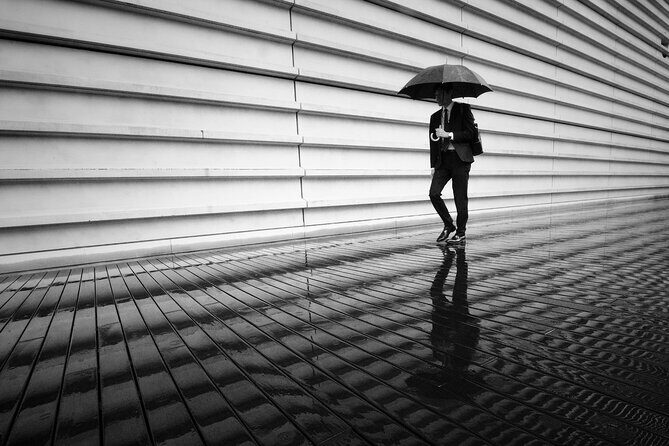
Tokyo has a way of overwhelming you in color and motion. This workshop flips that switch by steering you toward contrast, edges, and structure. You’re not just photographing what’s in front of you—you’re learning to read the scene: where the light lands, how surfaces mirror or blur, and how shadows can turn a walkway into a composition.
The itinerary also supports that mindset. You start in Ebisu, then move through Roppongi, and then hit two major architecture-heavy stops: the National Art Center and the Tokyo International Forum area. Finally, you continue into Yurakucho for more of those less-obvious angles and “wait, that’s a photo” moments.
If you like cities for their details—signs, frames, reflections, glass, metal—this is a strong match. If you’re hoping for a guided tour where someone explains every historical fact, you may find it different. This one is about seeing and shooting.
Ebisu Garden Place: trellis shadows as your first subject
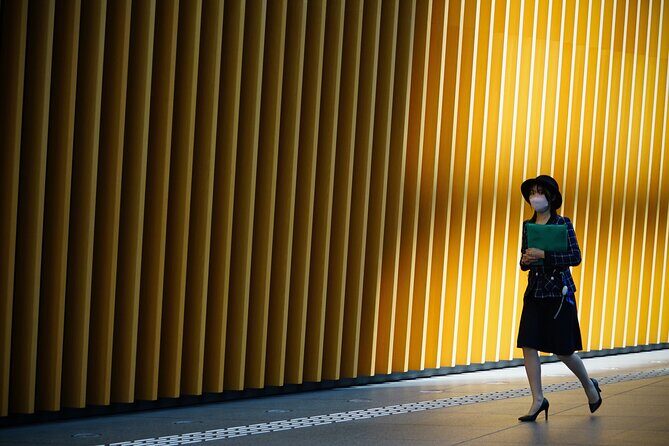
You begin in Ebisu at Garden Place, a spot that works perfectly for the workshop theme. The area includes a large, landscaped setting, and the key visual hook is the shadows cast by the trellised canopy. In other words, you don’t need a landmark-sized building. You need the right light pattern on the right surface.
This first stop matters because it sets your “camera rules” for the walk. You practice looking for geometry: repeated lines, strong shapes, and the way shade creates clean boundaries. You’re also likely to experiment with black-and-white at the start, because shadows tend to look dramatic even before you fully understand the rest of the day’s subjects.
The practical side: this is a comfortable way to warm up. You can test your settings, get your framing rhythm, and learn how Laurence wants you to approach the next locations.
Roppongi’s hidden spots before the big glass facade
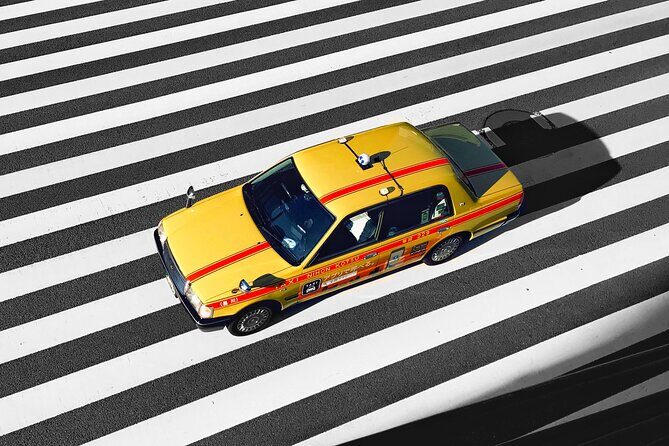
After Ebisu, you head to Roppongi. The workshop doesn’t treat Roppongi like a single highlight you rush through. Instead, you’re directed to a few hidden spots—places where Tokyo’s architecture gives you clean lines and strong graphic contrast.
Roppongi is a good mid-walk transition. You go from a shadow-led start into a neighborhood where surfaces can reflect, intersect, and create layered compositions. That’s ideal for a photographer’s perspective, because it rewards you for slowing down and scanning for edges.
One nice element here is how the group dynamic supports practice. Because the group is small, Laurence can help you adjust in real time: repositioning your angle, tightening your frame, or changing how you wait for light to hit. That kind of micro-coaching is hard to get on big, noisy group tours.
The National Art Center’s glass facade: where contrast becomes a composition
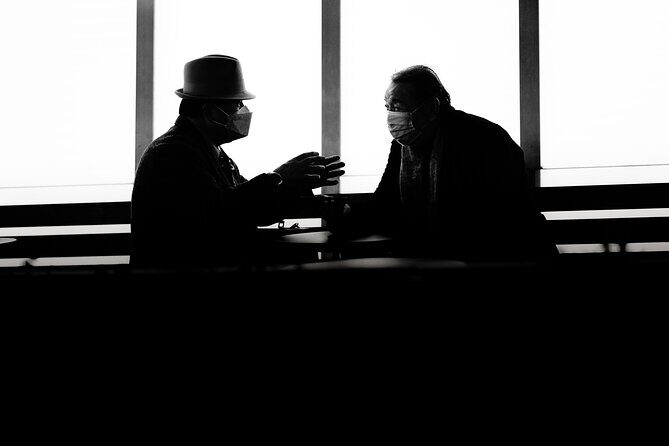
The National Art Center, Tokyo is the workshop’s architecture moment. You enter the building area specifically to take advantage of its massive glass facade and the shadows it casts. Glass is tricky to photograph in daylight, but it’s also where you learn the most.
This is where the black-and-white focus really pays off. When you remove color, reflections and highlights become the story. You start seeing the city as shapes—bright planes, darker gradients, and crisp lines where the building’s structure interrupts the view.
What I’d pay attention to during this stop is how you control what’s inside your frame. With glass, small composition changes can turn a messy scene into a strong graphic image. Laurence’s coaching on framing and timing is especially valuable here, because this kind of light-driven architecture can shift quickly as the sun angle changes.





Tokyo International Forum and Yurakucho: graphic depth instead of obvious sights
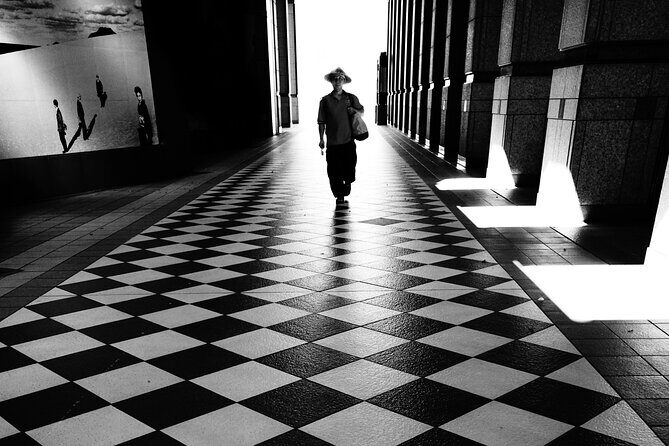
To close the walk, you head toward Yurakucho, exploring the hidden depths of the Tokyo International Forum area. This part keeps the workshop true to its goal: structured images instead of tourist checklists.
The “Forum” zone is the kind of place that gives you layers—walkways, facades, and angles that create depth even when you’re shooting from a simple position. Yurakucho then adds variety, helping you keep practicing rather than repeating the same visual trick over and over.
In a workshop like this, the ending matters. You want to leave with more than one good photo. You want a handful of different problem-solving skills: using shadows at one stop, finding reflections at another, and then learning how to build depth and framing in a more complex built environment.
The best part is that these are reusable habits. When you go home and walk outside your own neighborhood, you’ll automatically scan for the same geometric cues.
How Laurence Bouchard’s feedback helps your photos actually improve

The photographer behind the workshop makes the difference. Laurence Bouchard doesn’t just point at spots and hope you figure it out. He gives feedback that’s tailored to what you shoot with and where you are in your skills.
One highly praised detail from the experience: Laurence actively explains the idea behind the images, not only the technical setup. That means you’re learning an approach. You’re practicing how to think about light and subject placement, so you can recreate the results on future days.
There’s also a very practical aspect to his teaching. In situations where a scene doesn’t naturally offer a subject, Laurence will step in and act as a stand-in. That’s a smart move, and it’s one reason the workshop feels efficient. You can test your framing with a person in the scene and then compare how the image changes.
Even better, he reviews what you captured and gives suggestions. The feedback loop is a big part of why small groups shine here. You don’t waste time waiting for the guide to catch up with everyone.
Timing, light, and the walk rules you should follow
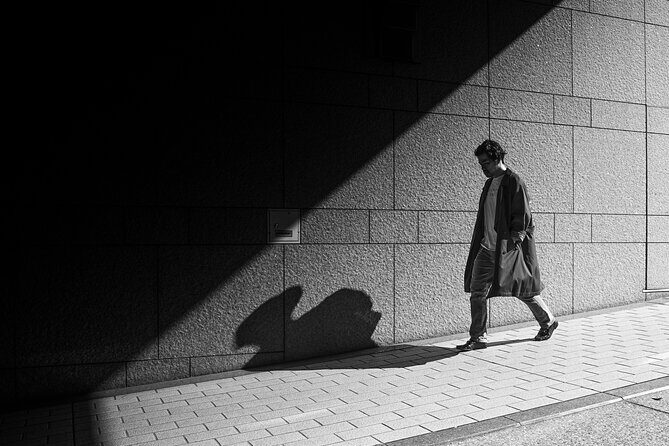
This workshop is about timing and light, but you don’t need to be a weather-forecast genius. You just need to show up ready to move, notice, and adjust. The route is designed around places where light and shadow shape the scene.
A few rules I’d treat as non-negotiable:
- Bring comfortable shoes. This is a walking photography session.
- Have your phone/camera at 100% charge before you start. You’ll use it.
- If you can, bring a Suica or Pasmo card for the metro. It’ll make getting around easier.
- Expect that your best shots may depend on waiting a moment for the right shadow edge or reflection angle.
Also, go in with a mindset shift. Your goal isn’t to capture one perfect photo at each stop. Your goal is to build visual instincts: scanning for lines, refining framing, and learning what contrast does to a scene.
If that sounds like your kind of fun, you’ll get a lot out of it.
What $130.31 buys you in Tokyo photo coaching terms
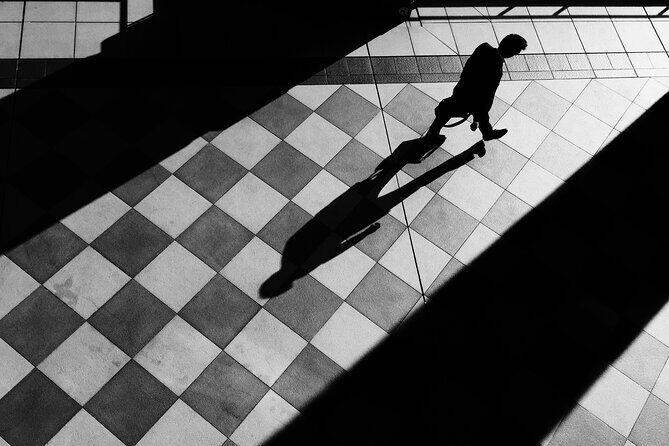
At $130.31 per person for an approximately 4-hour session, this isn’t a bargain price. It’s also not priced like a full-day private shoot. So the value question comes down to what you’re buying: guided access to photogenic architecture plus hands-on feedback, in a group capped at 6.
In practice, that small-group limit matters. More attention means less guesswork. Instead of wandering with a camera and hoping the light cooperates, you get coaching aimed at making your next shot better than the last one.
You’re also getting a specific photographic focus—high-contrast and black-and-white—which can be a faster path to improvement than a broad “take photos of everything” approach. If you like the idea of sharpening a style you can use anywhere, this price starts to make sense.
Finally, the workshop is built around a guided sequence of locations that support the theme. That means you’re spending your time shooting, not planning your own architecture route on the fly.
Who this workshop fits best (and who might want something else)
I think this workshop is perfect if you:
- Want to learn a photo approach you can reuse beyond Tokyo.
- Like architecture, edges, reflections, and shadow patterns.
- Want feedback tied to your camera and skill level.
- Prefer a smaller group pace over a mass tour.
It may feel less ideal if you:
- Want only scenic viewpoints and broad “sightseeing” explanations.
- Need a lot of seated time or a very relaxed pace.
- Don’t plan to actually shoot much, since the whole structure is built around photographing and refining.
For many people, the sweet spot is being curious but not totally confident. Laurence’s coaching seems designed for that. You’ll leave with better habits, not just a set of decent images.
Quick practical checklist for your photo day
Before you go, I’d prep like this:
- Charge your phone and camera to 100%.
- Wear comfortable shoes for the walking.
- Bring a Suica/Pasmo if you have one and plan to use the metro.
- Expect a small group experience with active guidance and photo review moments.
Also, if you have a preference—black-and-white only, or a mix—you’ll likely benefit by telling Laurence what you’re aiming for early in the session. That helps him tailor his feedback as you move through the stops.
Should you book Urban Geometry with Laurence Bouchard?
Book it if you want Tokyo through a photographer’s thinking style, with hands-on coaching and a focus on black-and-white contrast. The small group size and the feedback loop are the big wins, especially if you’d rather improve than simply collect photos.
Skip it or look for another option if you’re mainly after classic sightseeing or you’re unsure you’ll have the battery life and comfort for a walking workshop. This experience rewards people who show up ready to shoot and willing to adjust.
If you’re the type who notices light patterns on walls and likes turning those into frames, you’ll probably love this one.
FAQ
How long is the workshop?
It runs for about 4 hours.
Where does the experience start?
The meeting point is at 4-chōme-2-6 Ebisu, Shibuya, Tokyo 150-0013, Japan.
What time does it start?
It starts at 9:00 am.
What are the main shooting stops?
You’ll visit Ebisu Garden Place, then Roppongi, the National Art Center, Tokyo International Forum, and Yurakucho.
Is there a mobile ticket?
Yes, the experience includes a mobile ticket.
How many people are in the group?
The group maximum is 6 travelers.
How much does it cost?
The price listed is $130.31 per person.
What should I bring or prepare?
Bring a phone/camera with 100% charge, wear comfortable shoes, and have a Suica/Pasmo card if possible.
What’s the cancellation policy?
You can cancel for free up to 24 hours in advance of the experience start time for a full refund.
More Tour Reviews in Tokyo



Fresh reviews from around Tokyo






Tokyo, compared.
 ★ 5.0Mt Fuji and Hakone 1-Day Bus Tour Return by Bullet TrainFrom $16326,383 reviews
 ★ 5.01-Day Tokyo Bus TourFrom $12914,250 reviews
 ★ 4.6teamLab Planets TOKYO Digital Art Museum Entry TicketFrom $259,779 reviews
 ★ 4.0Mt Fuji & Hakone Cruise, Drum Show Bullet Train 1 Day from TokyoFrom $1497,413 reviews
 ★ 5.0Shinjuku Food Tour (13 Dishes at 4 Local Eateries)From $866,603 reviews
 ★ 4.4Tokyo Mt Fuji 5th St & Hakone Cruise Bus Tour w/Bullet TrainFrom $1545,024 reviews
 ★ 5.0Flagship 2-Hours Official Street Go-Kart Tour – Tokyo Bay ShopFrom $644,974 reviews
 ★ 4.5From Tokyo: Mount Fuji Full-Day Sightseeing TripFrom $684,970 reviews