
Reviewed · TOKYO
Unique Afternoon Live Sumo training tour in Tokyo
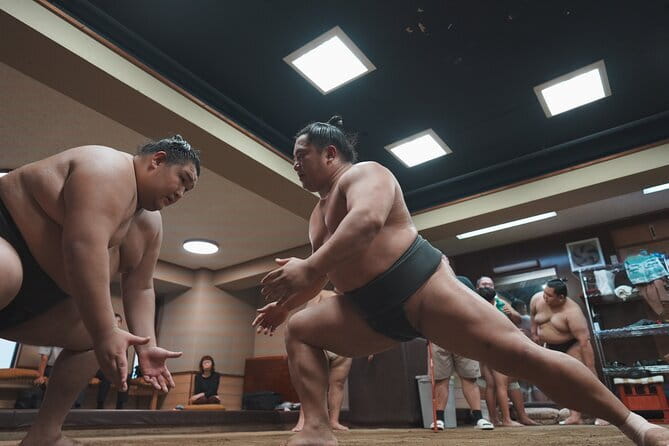
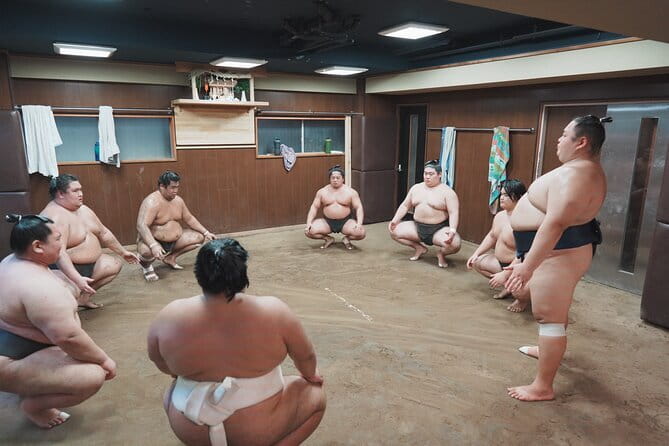
Sumo keiko is training, not a staged show. In Tokyo, that difference matters. You’ll watch the intense routines at Nakamura-beya Sumo Stable as wrestlers warm up, then hit harder practice with stomps and clashes right in front of you. I love that this is a small-group experience (max 10) that keeps the atmosphere close and focused, and I also love the built-in extras: a photo with the wrestlers plus an explanation pamphlet. One thing to consider: the first stretch can feel like slow warm-up before the action really ramps up.
This tour also comes with practical perks that make city travel easier. You get free Wi‑Fi and phone charging points, and you’ll receive a mobile ticket instead of needing to print anything. It’s a nice touch for a place where you’ll want your phone ready for directions, translations, and that souvenir photo.
Language won’t be a deal-breaker either. The audio guide covers 10 languages, and there are 11 language choices overall, with the guide able to speak English, Japanese, and Korean. You’ll still want to show up with a curious attitude, because sumo training has its own rhythm.
In This Review
- Key Things to Know Before You Go
- Why Ryogoku Sumo Keiko Feels Different Than a Show
- Nakamura-beya Sumo Stable: What You’ll See During Keiko
- Timing Matters: Afternoon Training and the Warm-Up Phase
- Seating, Atmosphere, and How to Watch From Up Close
- Language Support and the Audio Guide Setup
- Your Sumo Souvenir Photo and the Included Pamphlet
- Price and Value for Tokyo’s Small-Group Sumo Access
- Who Should Book This Training Tour
- Should You Book This Tour
- FAQ
- How long is the sumo training tour?
- Where does the tour take place?
- Is the tour a small group?
- What languages are available?
- What’s included in the price?
- Is pick-up or drop-off included?
- What if I need to cancel?
Key Things to Know Before You Go
- Real sumo practice at Nakamura-beya: you’re watching keiko, not a performance.
- Small group, max 10: easier viewing and less crowd noise.
- Audio guide in 10 languages plus 11 language options: translation help from the start.
- Photo souvenir with the wrestlers: a concrete take-home memory.
- Seating is mixed: chairs for about 8–10 people; the rest sit on the floor.
- Training timing can vary: it’s usually afternoon, but sometimes morning—check the time.
Before you commit, see how this one stacks up against a few Tokyo favourites:
- Mt Fuji and Hakone 1-Day Bus Tour Return by Bullet Train★ 5.0 · 26,383 reviews
- 1-Day Tokyo Bus Tour★ 5.0 · 14,250 reviews
- Tokyo: teamLab Planets TOKYO Digital Art Museum Entry Ticket★ 4.6 · 9,779 reviews
Why Ryogoku Sumo Keiko Feels Different Than a Show
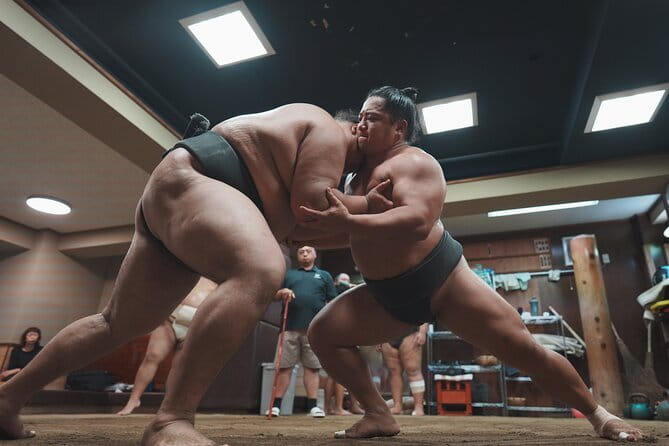
Ryogoku is where sumo lives, not where it visits. That’s why this kind of training tour works better than most “watch-sumo-for-an-hour” options. Instead of polished entrances and crowd cues, you see athletes repeating movements for discipline, stamina, and timing.
I like that the focus stays on the actual keiko process. You’ll get the sense that sumo is part sport, part ritual, and part routine. The training atmosphere also tends to reward patience. If you think you’re only coming for the big moments, you might miss what makes keiko special: the build-up, the concentration, and the controlled intensity before the hardest wrestling begins.
Nakamura-beya Sumo Stable: What You’ll See During Keiko
Your whole experience centers on one place: Nakamura-beya Sumo Stable in Sumida City, in the heart of Ryogoku. The main event is watching sumo keiko up close as the wrestlers prepare for competition. You’ll observe the discipline and rigorous routine that doesn’t look flashy on paper, but feels powerful in real life.
Here’s what to expect in plain terms:
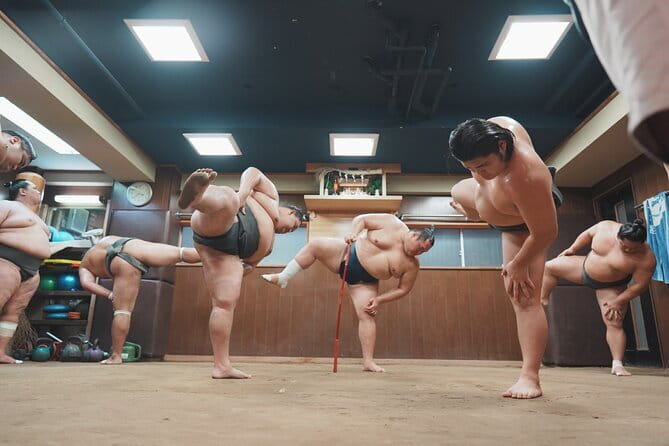
- You’ll start by watching wrestlers prepare with warm-ups and practice movements.
- As training progresses, the intensity rises, including the famous stomps and clashes.
- You’ll be able to follow what you’re seeing thanks to the tour’s sumo keiko explanation and the audio guide.
The best part is that this isn’t a performance staged for viewers. It’s training energy—serious, focused, and physical. And because it’s a stable setting, you’ll pick up on the pace and flow that make sumo more than just a match.
Timing Matters: Afternoon Training and the Warm-Up Phase
The tour is about 1 hour 30 minutes, give or take. It’s usually done in the afternoon, but sometimes it happens in the morning. That matters because your body clock will notice it fast if you’re expecting “ready-to-go action” right away.
Also, plan for a rhythm shift. The first 20–30 minutes can feel uneventful if you’re only waiting for full wrestling. That slow start is part of keiko. It’s when wrestlers get their minds and bodies coordinated, and it’s where you start understanding why the later action lands with weight.
My advice: treat the warm-up as the intro. Watch for posture, timing, and how quickly they adjust. When the training ramps up into real wrestling, you’ll feel the difference more clearly.
Seating, Atmosphere, and How to Watch From Up Close
This is a place where proximity is the point. The tour uses chair-type seats for about 8 to 10 people, and everyone else sits on the floor. That means you should expect a mixed setup, not stadium-comfort.
If you’re visiting with older knees or you just want comfort, consider arriving with a plan: wear supportive shoes, and don’t assume you’ll have a chair the whole time. If you’re fine sitting on the floor, the payoff is a close view of the training space and the wrestlers’ powerful movement.
Atmosphere-wise, you’ll feel the impact of the practice. The stomps and clashes are described as shaking the ground, and in a stable environment that effect tends to register instantly. It’s one of those experiences where you stop thinking about photos and start thinking about how physical the training really is.





Language Support and the Audio Guide Setup
If you’re worried about understanding sumo, this tour handles it in two ways. First, there’s an audio guide available in 10 languages. Second, there are 11 language options for the experience, so you should be able to pick one that matches your comfort level.
You also get added written support: a sumo keiko explanation pamphlet. That’s useful because it gives context while you’re watching, not after the fact.
The guide can speak English, Japanese, and Korean, which helps if you have a question during the visit. Even if your Japanese is basic, you’ll still be able to connect what you’re seeing with the meaning behind it.
Your Sumo Souvenir Photo and the Included Pamphlet
You’re not going to leave with vague memories. One of the most practical inclusions is a photo with the sumo wrestlers. That’s not just cute—it’s a clear marker that you were at the stable during real training.
You’ll also receive a pamphlet designed to explain what you’re watching. When you’re standing there in the moment, it can be hard to connect terminology to action. The pamphlet helps close that gap so the training doesn’t feel like a blur.
This combination works well for both first-timers and repeat Tokyo visitors. First-timers get structure. Repeat visitors get something specific instead of another city checklist.
Price and Value for Tokyo’s Small-Group Sumo Access
At $137.71 per person for about 1.5 hours, this tour isn’t the cheapest thing on your Tokyo list. But it’s also not priced like a theme-park show. You’re paying for access to a stable, admission included, small-group attention (max 10), and the extras that make the visit smoother.
Here’s what you’re getting for the money:
- Admission ticket included for the training observation
- Audio guide in 10 languages
- Photo souvenir with the wrestlers
- Sumo keiko explanation pamphlet
- Free Wi‑Fi and charging service
- A guide who can speak English, Japanese, and Korean
- A mobile ticket so you can manage check-in fast
For families and active travelers, the value is in the “real” factor. A staged spectacle costs less in many markets, but it doesn’t give you the same sense of how serious and disciplined keiko is. If you want a Tokyo experience that feels rooted in daily practice rather than performance, this price starts to make sense.
Who Should Book This Training Tour
I think this tour fits best if you:
- Want something more authentic than a match-day event
- Like hands-on cultural experiences with strong local context
- Travel with kids or teens who can stay focused for about 90 minutes (the training intensity ramps up after the warm-up)
- Care about small groups and don’t want to fight for a view
It also works well for frequent Tokyo visitors. If you’ve already done the major sights, this gives you a slice of Japanese culture that’s harder to recreate on your own—especially the stable setting and the explanation support.
Should You Book This Tour
Book it if you want real keiko at Nakamura-beya and you appreciate the value of a small group plus translation help. The combo of an audio guide, a pamphlet, and a photo souvenir makes this more than just sitting and watching.
Skip or rethink it if you hate sitting on the floor for part of the time, or if you only want action with no patience for warm-up. Also, make sure you check whether your session is in the afternoon or morning before you lock in your day plan.
FAQ
How long is the sumo training tour?
It runs for about 1 hour 30 minutes.
Where does the tour take place?
It starts at Nakamura-beya Sumo Stable, 1-chōme-18-7 Ryōgoku, Sumida City, Tokyo 130-0026, Japan, and ends back at the meeting point.
Is the tour a small group?
Yes. The tour has a maximum of 10 travelers.
What languages are available?
There are 11 language options. You also get an audio guide in 10 languages.
What’s included in the price?
Admission ticket, audio guide, a photo with sumo wrestlers, the sumo keiko explanation pamphlet, and free Wi‑Fi and charging service. The guide can speak English, Japanese, and Korean.
Is pick-up or drop-off included?
No. Pick-up and drop-off are not included.
What if I need to cancel?
You can cancel for a full refund if you cancel up to 24 hours in advance of the experience start time. If you cancel less than 24 hours before, the amount paid is not refunded.
More Tour Reviews in Tokyo



Fresh reviews from around Tokyo






Tokyo, compared.
 ★ 5.0Mt Fuji and Hakone 1-Day Bus Tour Return by Bullet TrainFrom $16326,383 reviews
 ★ 5.01-Day Tokyo Bus TourFrom $12914,250 reviews
 ★ 4.6teamLab Planets TOKYO Digital Art Museum Entry TicketFrom $259,779 reviews
 ★ 4.0Mt Fuji & Hakone Cruise, Drum Show Bullet Train 1 Day from TokyoFrom $1497,413 reviews
 ★ 5.0Shinjuku Food Tour (13 Dishes at 4 Local Eateries)From $866,603 reviews
 ★ 4.4Tokyo Mt Fuji 5th St & Hakone Cruise Bus Tour w/Bullet TrainFrom $1545,024 reviews
 ★ 5.0Flagship 2-Hours Official Street Go-Kart Tour – Tokyo Bay ShopFrom $644,974 reviews
 ★ 4.5From Tokyo: Mount Fuji Full-Day Sightseeing TripFrom $684,970 reviews