
Reviewed · TOKYO
Tokyo:Enjoy street food & Japanese food culture at Tsukiji Market
Tsukiji is a snack story in motion. This short tour turns the Tsukiji Outside Market into something you can actually use: an English-speaking guide helps you read what you’re looking at, then feeds you small bites while you learn how Tokyo’s seafood culture works. I love the food tastings that go past the usual tourist picks, and I also love the small group size (max 6) that keeps the pace human. The main drawback is simple: it’s not wheelchair accessible, and you’ll do a good bit of walking and standing in busy areas, plus the tastings lean seafood and meat—so bring allergy questions up front.
It also helps that the guide experience has real personality. People have gone out of their way to praise guides such as Yoshi, Yuki, Haruka, and Hiro for being friendly and for sharing practical food-culture details (including stuff like dashi). In other words, you’re not just eating. You’re learning the language behind the menu.
In This Review
- Quick hits: what you’ll do and why it matters
- Tsukiji Now: the Outside Market and the old wholesale vibe
- The 3-hour plan: snack pacing that won’t exhaust you
- Stop 1: Tsukiji Honganji Temple and the sea-food culture angle
- Stop 2: Tsukiji Jogai Market snack sampling (what you can expect)
- Stop 3: buying lunch at 魚河岸 海幸橋棟 (boxed lunch time)
- Stop 4: Namiyoke Shrine and the sea-safety story
- English-speaking guidance that actually helps you order
- Price and value: what $100.34 buys you here
- When this Tsukiji tour is the best choice
- The trade-offs: who might want to choose something else
- Practical tips for your day
- Book it or skip it: my straight answer
- FAQ
- How long is the Tsukiji street food and Japanese food culture tour?
- What’s included in the price?
- Is lunch included?
- Is the tour wheelchair accessible?
- Where does the tour start and end?
- About how many people are in the group?
Quick hits: what you’ll do and why it matters
- Temple start at Tsukiji Honganji to set the tone for the area’s sea-related faith
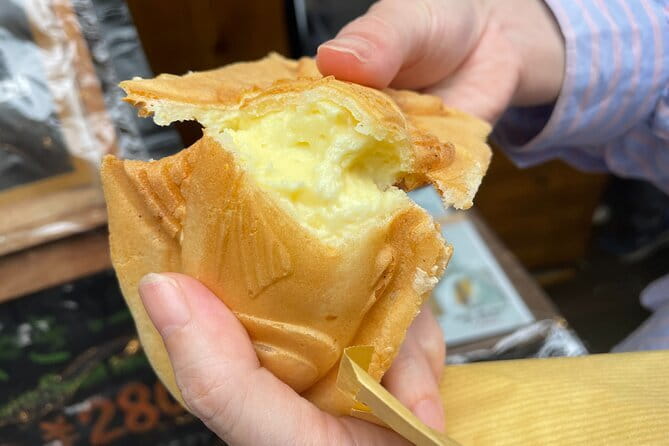
- Outside Market snack stop with easy sampling items like seasoned seaweed and dried fish
- Lunch time at 魚河岸 海幸橋棟 where you can buy a boxed lunch (lunch fee not included)
- Namiyoke Shrine tied to generations of market prayers for sea safety
- English-speaking guidance that helps you order and understand what you’re tasting
Before you commit, see how this one stacks up against a few Tokyo favourites:
- Mt Fuji and Hakone 1-Day Bus Tour Return by Bullet Train★ 5.0 · 26,383 reviews
- 1-Day Tokyo Bus Tour★ 5.0 · 14,250 reviews
- Tokyo: teamLab Planets TOKYO Digital Art Museum Entry Ticket★ 4.6 · 9,779 reviews
Tsukiji Now: the Outside Market and the old wholesale vibe
Tsukiji today isn’t the same animal it was when the main wholesale auctions ran at full steam. The central market has closed, but the food life didn’t disappear. The Tsukiji Outside Market still feels like a place where people come to buy and eat, not just to take photos.
That’s the key reason this tour works. Instead of treating Tsukiji like a checklist, you get guided context right away. Your guide walks you through what the area is good at now, and how it connects to its wholesale past and the food culture that grew around it. If you’ve only seen Tsukiji through screens, you’ll likely find it easier to understand on the ground—because you’re tasting as you go.
The 3-hour plan: snack pacing that won’t exhaust you
The whole experience is about 3 hours from start to finish. It’s paced so you can sample several stalls without eating one huge meal at the first stop and then feeling stuffed for the rest of the walk.
A few practical points matter here:
- The group is capped at 6 travelers, which keeps it from turning into a cattle-line scramble.
- You’ll want moderate physical fitness, since it’s not a sit-and-watch tour.
- You’ll use a mobile ticket, which is handy for last-minute day changes in Tokyo.
Also, you’re moving between a temple area, the Outside Market stalls, a boxed-lunch purchase stop, and finally a shrine. That mix is smart. It slows the day down just enough that the food has room to make sense.
Stop 1: Tsukiji Honganji Temple and the sea-food culture angle
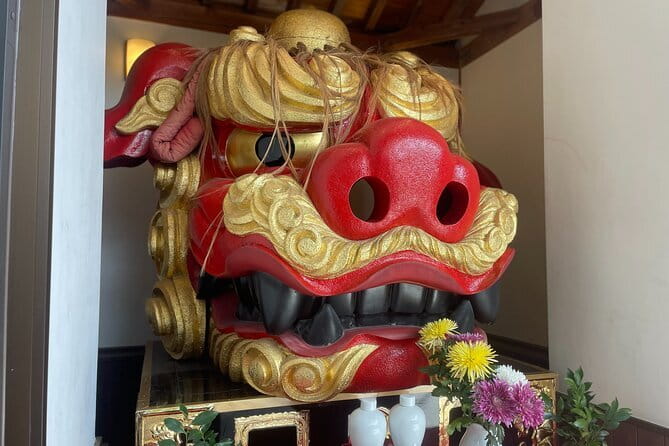
Your tour begins at 築地本願寺 正門, and the first big stop is Tsukiji Honganji Temple. You’re there for about 20 minutes, and admission is free.
This is more than a pretty building detour. Tsukiji’s food world is tied to community rituals, and this temple helps explain why. The architecture includes influences from other parts of Asia, and the atmosphere feels different from the market streets. That contrast matters because it gives you a baseline for the rest of the tour: sea food here isn’t just commerce; it’s also tradition.
If you like tours that give you a reason behind the scenery, this opening stop is a good fit. It sets context early, before you start ordering anything.
Stop 2: Tsukiji Jogai Market snack sampling (what you can expect)
Next you’ll spend about 1 hour at the Tsukiji Outside/Jogai Market area, where the real fun starts: guided tasting. Admission is free, but you’ll be buying snacks as you go.
The snack list in the tour format includes items like:
- seasoned seaweed
- dried fish
- roast beef sushi
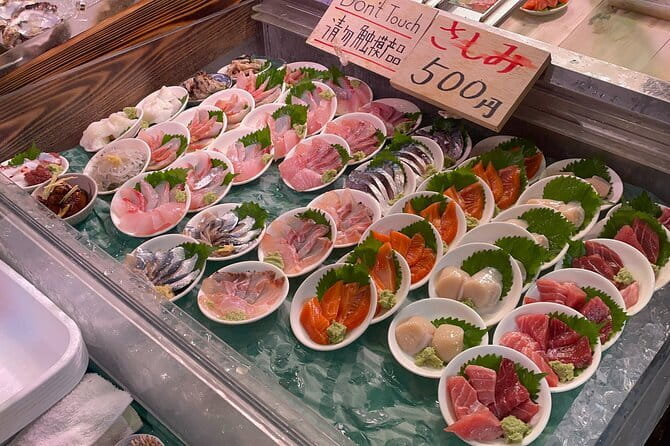
- oysters or sashimi
- bean snacks
Here’s the practical value: you’re not trying to decode a menu while surrounded by crowds. Your guide helps you choose, and the tastings are spaced so you can compare flavors and textures instead of just grabbing whatever looks good.
One important consideration: the tour notes seafood and meat are part of the tastings. If you have allergies, you need to tell the guide. That’s not optional good manners here—it’s the difference between a fun day and a stressful one.





Stop 3: buying lunch at 魚河岸 海幸橋棟 (boxed lunch time)
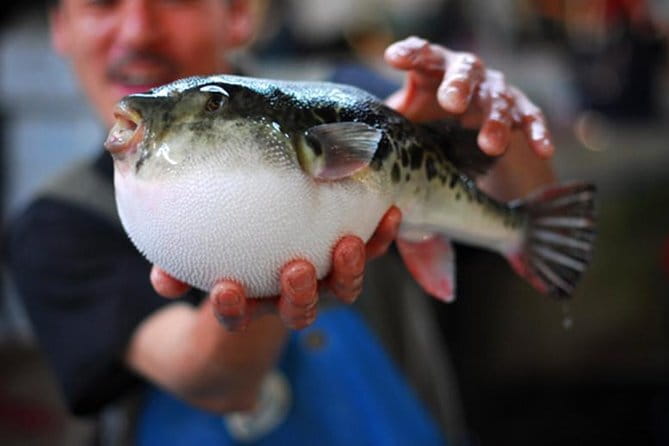
When lunch time hits, you move to 築地魚河岸 海幸橋棟. You’ll have about 1 hour 10 minutes at this segment, and the tour provides a snack rhythm that lines up with the meal purchase.
This is where you’ll buy your favorite boxed lunch (the lunch fee is not included). The idea is simple: you buy what you want, and you eat it with the snack tastings from earlier.
Why I like this setup: Tsukiji food can be intense. With a guided tasting, you get the exploration. With a lunch stop, you still get choice. If you want something classic and safe, you can lean that way. If you want to continue sampling seafood flavors, you can do that too—without turning the whole tour into one long gamble.
Stop 4: Namiyoke Shrine and the sea-safety story
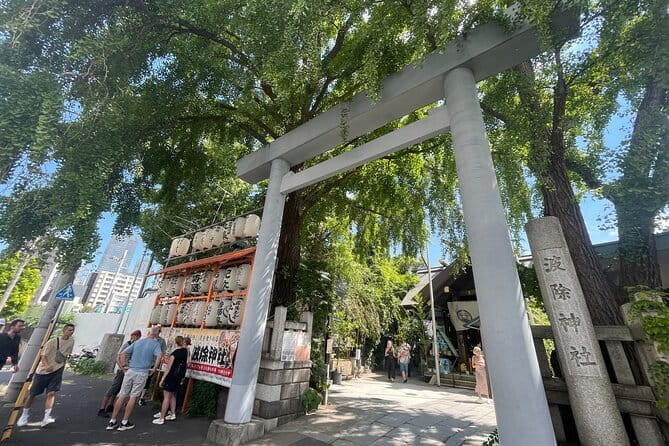
You finish at Namiyoke Shrine, with about 30 minutes on site.
This shrine is tied to the market’s long-running relationship with the sea. The market people have prayed there for the safety of the sea for many years, and that theme makes the whole food tour feel more coherent. You taste seafood; you learn about risks and respect; you end at a shrine that reflects that mindset.
It’s also a nice emotional close to the day. Markets can be loud and fast. A shrine stop gives your brain a moment to reset.
English-speaking guidance that actually helps you order
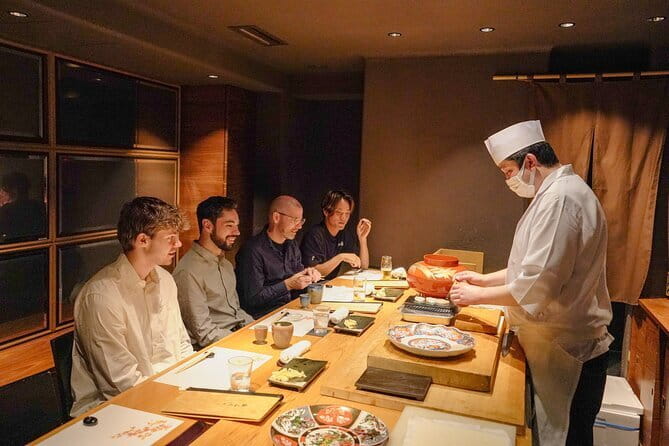
A big part of the value here is how the guide functions as a translator for more than just words. In a place like Tsukiji, food culture is built on small cues—what’s eaten where, how items pair, and why certain ingredients show up again and again.
From the guide praise you can feel a pattern: people loved how friendly and story-focused the experience felt, and how guides answered questions instead of just marching forward. Some mentions also include practical knowledge about things like dashi and how it fits into Japanese flavor thinking.
And because the group is small, it’s easier to get real recommendations. If you get temporarily lost in the maze of shops, your guide can steer you back and suggest what’s worth your money and time.
Price and value: what $100.34 buys you here
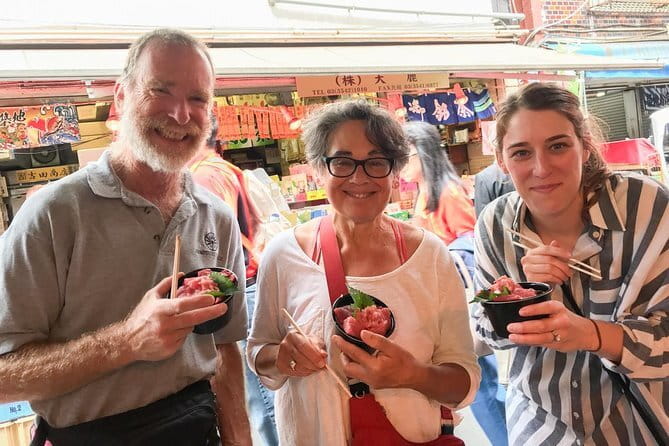
At about $100.34 per person for roughly 3 hours, this doesn’t look like a “cheap eats” deal. But it also isn’t trying to be one.
Here’s what you’re paying for in concrete terms:
- A guide who’s there to help you navigate the market efficiently
- Included tasting snacks such as seasoned seaweed, dried fish, roast beef sushi, and oysters or sashimi
- Context through temple and shrine visits that explain how the area’s food culture connects to local tradition
Since the tour includes multiple bites rather than a single tasting, the per-person cost starts to make more sense. You’d spend time figuring things out on your own, and you’d also likely miss the cultural hooks that make Tsukiji feel more meaningful than just seafood on sticks.
The one cost you should expect is lunch. Lunch is not included, and shopping costs vary by what you choose.
When this Tsukiji tour is the best choice
This tour is a smart fit if you want:
- A guided way to eat at Tsukiji without spending your whole day reading menus and pointing at photos
- A mix of food + culture, not just food
- Seafood-forward tastings and the chance to try a range of textures, from dried to raw to savory snacks
- A pace that’s short enough to fit into a Tokyo itinerary without burning half a day
It’s also great for food lovers who like learning the logic behind what they’re eating. If you enjoy understanding ingredients (like how dashi shows up in Japanese cooking ideas), this kind of guided explanation can add a lot.
The trade-offs: who might want to choose something else
A few situations can make this less ideal:
- If you need wheelchair accessibility, this tour is not suitable.
- If you’re sensitive to seafood or don’t eat meat, you may find the tastings challenging. You can ask questions, but the tour structure clearly includes seafood and meat.
- If you hate walking in crowded areas, the market environment may feel like work instead of fun. The tour is only a few hours, but the standing adds up.
Finally, if you prefer total independence, you might decide to roam Tsukiji on your own. The difference is that you’ll trade the guided ordering help for lower structure.
Practical tips for your day
A few things can help you enjoy it more:
- Bring a plan for allergies before you arrive. Tell the guide clearly about what you can’t eat.
- Eat slowly during tastings. The goal is comparisons, not speed-chugging.
- Be ready to buy your lunch at the purchase stop. You’ll want to budget extra for whatever boxed meal you choose.
- Dress for walking. Even a short tour feels like a lot when you’re in a market.
If you want to get the most from the cultural stops, don’t treat them as photo breaks. Ask one question per stop. That’s where the tour gets memorable.
Book it or skip it: my straight answer
Book this tour if you want an efficient, guided Tsukiji experience that pairs snacks with context, and you’re comfortable with seafood-forward tastings. The included tastings and the guided explanation (plus temple and shrine stops) make it feel like more than just another market stroll.
Skip or consider another option if accessibility is a concern, if you strongly avoid seafood/meat, or if you’d rather spend your money on a full self-guided food crawl with total freedom. In Tsukiji, both styles can work—you just need to pick which one matches your comfort level.
FAQ
How long is the Tsukiji street food and Japanese food culture tour?
It’s approximately 3 hours.
What’s included in the price?
The tour includes a guide and tasting snacks such as seasoned seaweed, dried fish, roast beef sushi, oysters or sashimi, and bean snacks.
Is lunch included?
No. You can purchase a lunch (often a boxed lunch) at the lunch stop, but the lunch fee is not included.
Is the tour wheelchair accessible?
No, this tour is not wheelchair accessible.
Where does the tour start and end?
It starts at 築地本願寺 正門3-chōme-15-1, Tsukiji, Chuo City, Tokyo 104-0045, Japan, and ends at Namiyoke Shrine 6-chōme-20-37, Tsukiji, Chuo City, Tokyo 104-0045, Japan.
About how many people are in the group?
The maximum group size is 6 travelers.
More Tour Reviews in Tokyo



Fresh reviews from around Tokyo






Tokyo, compared.
 ★ 5.0Mt Fuji and Hakone 1-Day Bus Tour Return by Bullet TrainFrom $16326,383 reviews
 ★ 5.01-Day Tokyo Bus TourFrom $12914,250 reviews
 ★ 4.6teamLab Planets TOKYO Digital Art Museum Entry TicketFrom $259,779 reviews
 ★ 4.0Mt Fuji & Hakone Cruise, Drum Show Bullet Train 1 Day from TokyoFrom $1497,413 reviews
 ★ 5.0Shinjuku Food Tour (13 Dishes at 4 Local Eateries)From $866,603 reviews
 ★ 4.4Tokyo Mt Fuji 5th St & Hakone Cruise Bus Tour w/Bullet TrainFrom $1545,024 reviews
 ★ 5.0Flagship 2-Hours Official Street Go-Kart Tour – Tokyo Bay ShopFrom $644,974 reviews
 ★ 4.5From Tokyo: Mount Fuji Full-Day Sightseeing TripFrom $684,970 reviews