
Reviewed · TOKYO
Tokyo Wagyu Culinary Tour Cooking Culture and Tasting
Tokyo Wagyu is expensive. This tour makes it teachable. You’ll start with a seasonal welcome drink, then move through Wagyu basics like origins and grading, followed by hands-on cooking and tastings that connect the beef to Tokyo’s cooking culture. It’s not just watching. You’re learning what to do and why.
What I like most is the focus on cut-by-cut understanding and real cooking control. You’ll see sirloin and tenderloin explained, watch a butchery demonstration, then practice cooking with guidance on seasoning, timing, and heat control—skills that matter when you cook steak at home. You’ll also finish with what you made, plus beverages paired to complement the flavor.
One consideration: two hours goes fast. If you’re expecting a long, sit-and-stare food tour, this is more of a concentrated class than a slow dinner crawl.
In This Review
- Key highlights at a glance
- Wagyu cooking in Tokyo: why this class feels different
- Your first stop: the seasonal welcome drink and Wagyu basics
- How they teach cuts: sirloin, tenderloin, and the butchery demo
- Cooking demo time: seasoning, heat control, and timing that actually matter
- Your hands-on cooking session: learn by doing, not watching
- Tasting your Wagyu and pairing it with drinks
- Tokyo through food craft: how ingredients connect to culture
- What you’ll bring home for steak night (yes, it transfers)
- Price and value: is $920 worth it for 2 hours?
- Where the experience shines (and where it may not)
- Logistics you’ll care about: where to start and how it runs
- Should you book the Tokyo Wagyu Culinary Tour?
- FAQ
- How long is the Tokyo Wagyu Culinary Tour?
- Where is the meeting point?
- Is this tour small group?
- What’s included at the start of the class?
- Do you cover Wagyu cuts and grading?
- Is there a butchery demonstration?
- Do you actually cook during the tour?
- Will there be tastings and drinks?
- Can you accommodate dietary restrictions?
- What is the cancellation policy?
Key highlights at a glance
- Seasonal welcome drink sets the tone before the kitchen work starts
- Wagyu grading and origins explained in plain language
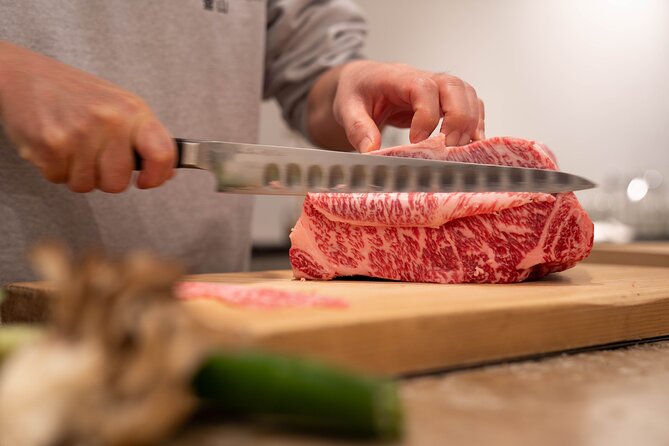
- Butchery demonstration helps you see how cuts become cooking choices
- Heat control practice on timing and temperature basics you can repeat at home
- Hands-on cooking with chef help for multiple Wagyu cuts
- Tasting with paired beverages turns lessons into a real meal
Before you commit, see how this one stacks up against a few Tokyo favourites:
- Mt Fuji and Hakone 1-Day Bus Tour Return by Bullet Train★ 5.0 · 26,383 reviews
- 1-Day Tokyo Bus Tour★ 5.0 · 14,250 reviews
- Tokyo: teamLab Planets TOKYO Digital Art Museum Entry Ticket★ 4.6 · 9,779 reviews
Wagyu cooking in Tokyo: why this class feels different
If you’ve ever bought a fancy steak and then worried you might ruin it, you’ll get the point fast. This Tokyo Wagyu culinary tour is built around one idea: Wagyu isn’t magic, and it’s not all the same. Different cuts behave differently, and the cook’s job is to respect that.
In this class, you’re taught to distinguish Wagyu cuts and understand the care behind each slice. That matters because Wagyu quality is only part of the story. The other part is how you season, how you manage heat, and how you time the cook so the meat lands where you want it.
The format helps too. With a small group (up to 6), you get room for questions and more hands-on guidance. And because it’s a cooking class, you’ll leave with usable skills instead of just photos.
Your first stop: the seasonal welcome drink and Wagyu basics
The experience starts with a welcome drink inspired by seasonal flavors in Japan. It’s a small thing, but it gives you an easy on-ramp. You’re not thrown into beef theory right away. You’re in Japan-food mode.
Next comes the intro to Wagyu beef: where it comes from, what makes it special, and how Wagyu is graded. Grading can sound abstract until you connect it to what you’ll actually taste and cook. The lesson here is practical—learning what the grading means for texture, flavor, and cooking expectations.
You’ll also learn why Wagyu is treated carefully. Not as a raw ingredient you can manhandle. More like something you handle with intention. That attitude carries into the cooking demo and then into your own practice later.
How they teach cuts: sirloin, tenderloin, and the butchery demo
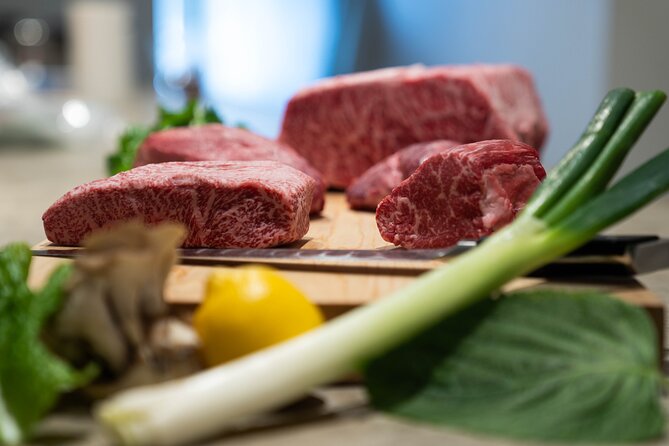
After the basics, you’ll get a look at different Wagyu cuts—specifically examples like sirloin and tenderloin—with clear explanations of what each cut is good for. The goal is to help you stop thinking in vague terms like expensive steak and start thinking in cut logic: what it does in the pan, and what style of cooking fits it.
Then comes a butchery demonstration. This is the moment I’d call the mental reset for most people. When you see how cuts are prepared for cooking, it becomes easier to understand why certain parts respond well to certain methods. It’s not just meat trivia. It’s the difference between cooking by hope and cooking by decision.
One benefit of teaching cuts this way: it makes your tasting more useful. When you sample later, you’re not guessing. You’re applying what you learned about each cut’s role.
Cooking demo time: seasoning, heat control, and timing that actually matter
Now you get the part that makes you feel like the class is worth the money. The cooking demonstration focuses on the techniques you’ll need at home: proper seasoning and heat control, plus timing so the meat comes out right.
Wagyu can be forgiving in one sense, because it’s rich. But it can also punish sloppy cooking—overcook it and it loses its edge. Undercook it and you miss the texture you came for. The lesson here is control, not bravado.
Pay attention to how they talk about heat and timing. Steak cooking sounds simple until you realize your pan, your burner, your cut thickness, and your pace all change the outcome. This tour trains you to manage those variables instead of relying on luck.





Your hands-on cooking session: learn by doing, not watching
Then it’s your turn. You’ll cook different cuts yourself with chefs helping you along. This is where you’re likely to learn the most, because you feel the difference between theory and reality.
You’ll practice what you learned in the demo: seasoning correctly and managing the cook so you get the result you want. And because the class is small, you can get quick corrections instead of waiting for generic advice.
Even if you’ve grilled at home, you’ll still come away with better habits. Rich beef changes the stakes. Your job becomes balancing doneness with texture, while keeping flavor intact. That’s exactly what this kind of class is designed to teach.
Tasting your Wagyu and pairing it with drinks
After cooking, you get to taste the dishes you made. This isn’t just a payoff; it’s part of the learning loop. You cooked based on the cut information and the cooking technique. Now you match your results to the flavor and texture you were aiming for.
Your meal also includes beverages paired to complement Wagyu’s flavor. Pairing is one of those things that can feel fancy until you try it. Then you notice how certain drinks bring out richness, clean the palate, or shift the whole perception of the meat.
This is a great time to ask what to adjust next time. For instance, if one cut came out better than another, the guide can help you connect that to the technique.
Tokyo through food craft: how ingredients connect to culture
One of the more interesting parts of the tour is the way it links ingredients to Tokyo culinary traditions. You’re not only learning Wagyu. You’re learning the cooking culture around it—how Tokyo cooks think in terms of cut choice, heat management, and respectful handling.
And you’ll circle back to Wagyu’s role in Japanese culture before you go. That matters because it helps you understand why the care and technique aren’t random. They’re part of a broader way of cooking that values precision.
Also, in a small-group setting, conversation tends to happen naturally. In my experience with this kind of class vibe, the local guide can point you toward smart next steps in Tokyo. Here, that includes recommendations for food and activities, which is especially useful if you’re early in your trip and still figuring out what to prioritize.
What you’ll bring home for steak night (yes, it transfers)
The best souvenir is skill. This tour is designed so you can cook Wagyu at home with better results. You’ll leave with practical tips around:
- Distinguishing different Wagyu cuts and choosing what to cook
- Using proper seasoning without overcomplicating it
- Managing heat control so you get timing right
- Understanding that preparation and handling affect final texture
If you take one idea from the class, make it this: don’t treat steak like a single universal method. Treat it like cut-specific cooking. Once you start thinking that way, shopping feels easier and your results improve.
One more value point: you’ll know what “done just right” means in terms you can reproduce. That’s far more useful than collecting restaurant names and hoping you remember what worked.
Price and value: is $920 worth it for 2 hours?
Let’s talk money without pretending it’s not a lot. At $920 for a 2-hour experience, this isn’t for casual food sightseeing. It’s for people who really want skill, not only sampling.
Here’s the value case, based on what’s included:
- A welcome drink at the start
- Intro to Wagyu origins and grading
- Cut education with examples like sirloin and tenderloin
- A butchery demonstration
- A cooking demo focused on seasoning and heat control
- A hands-on cooking session where you cook different cuts
- Tastings of what you cook
- Beverages paired with Wagyu dishes
- A small group size (up to 6), which helps you get attention
So you’re paying for instruction plus food plus guided cooking practice, not just a meal. If you love cooking—or you want to level up fast—this is closer to a premium culinary workshop than a standard tour.
If you’re mainly looking for a cheap way to eat Wagyu, you may feel disappointed. But if you want to understand what you’re tasting and how to reproduce it, the price starts to make more sense.
Where the experience shines (and where it may not)
This class is ideal if you:
- Want hands-on cooking skills, not a passive food stop
- Are curious about Wagyu cuts and how grading connects to cooking
- Appreciate precise technique like timing and heat control
- Prefer smaller groups where questions actually get answered
It may not fit you as well if:
- You prefer a slower pace and lots of walking around
- You want a broad tour of Tokyo sights, not a focused kitchen session
- You’re hoping for a long, multi-course dinner format
Think of it as a focused workshop with a meal at the end. If that’s your style, you’ll enjoy it.
Logistics you’ll care about: where to start and how it runs
You’ll meet at 3-chōme-25-17 Oshiage, Sumida City, Tokyo 131-0045, Japan, and the experience ends back at the meeting point. It runs about 2 hours, so plan for an efficient block of time rather than a full evening.
You’ll receive a mobile ticket, and confirmation comes at booking time. If you have dietary restrictions, you should let the team know ahead of time so they can accommodate you.
Also note: maximum group size is 6 travelers, so the class stays interactive. That’s part of the value.
Should you book the Tokyo Wagyu Culinary Tour?
Book it if you want more than tasting. This is a smart choice if you care about cooking technique and want to understand Wagyu in a cut-specific, practical way. The combination of grading basics, a butchery demo, cooking practice with heat control, and then eating what you cooked makes it feel like real skill-building.
Skip it if you mainly want a sightseeing day or you’re chasing the cheapest way to eat Wagyu. This is premium and focused, and you get the most from it when you’re ready to learn and cook.
If you’re on your first days in Tokyo and you’re open to a concentrated culinary session, it can also serve as your launching point for better meal choices afterward—especially with a guide who’s ready to share helpful directions for what to do next.
FAQ
How long is the Tokyo Wagyu Culinary Tour?
The experience lasts about 2 hours.
Where is the meeting point?
You’ll meet at 3-chōme-25-17 Oshiage, Sumida City, Tokyo 131-0045, Japan.
Is this tour small group?
Yes. The tour/activity has a maximum of 6 travelers.
What’s included at the start of the class?
You’ll be greeted with a welcome drink inspired by the flavors of the season in Japan.
Do you cover Wagyu cuts and grading?
Yes. You’ll learn about Wagyu origins, what makes it special, and how Wagyu is graded, plus explanations of cuts such as sirloin and tenderloin.
Is there a butchery demonstration?
Yes. A butchery demonstration shows how the cuts are prepared for cooking.
Do you actually cook during the tour?
Yes. You’ll cook different cuts yourself with chefs’ help.
Will there be tastings and drinks?
Yes. After cooking, you’ll taste what you made, paired with beverages that complement Wagyu’s flavor.
Can you accommodate dietary restrictions?
The experience notes that dietary restrictions can be accommodated if you let them know.
What is the cancellation policy?
Free cancellation is available. You can cancel up to 24 hours in advance for a full refund; within 24 hours, the amount paid is not refunded.
More Tour Reviews in Tokyo



Fresh reviews from around Tokyo






Tokyo, compared.
 ★ 5.0Mt Fuji and Hakone 1-Day Bus Tour Return by Bullet TrainFrom $16326,383 reviews
 ★ 5.01-Day Tokyo Bus TourFrom $12914,250 reviews
 ★ 4.6teamLab Planets TOKYO Digital Art Museum Entry TicketFrom $259,779 reviews
 ★ 4.0Mt Fuji & Hakone Cruise, Drum Show Bullet Train 1 Day from TokyoFrom $1497,413 reviews
 ★ 5.0Shinjuku Food Tour (13 Dishes at 4 Local Eateries)From $866,603 reviews
 ★ 4.4Tokyo Mt Fuji 5th St & Hakone Cruise Bus Tour w/Bullet TrainFrom $1545,024 reviews
 ★ 5.0Flagship 2-Hours Official Street Go-Kart Tour – Tokyo Bay ShopFrom $644,974 reviews
 ★ 4.5From Tokyo: Mount Fuji Full-Day Sightseeing TripFrom $684,970 reviews