
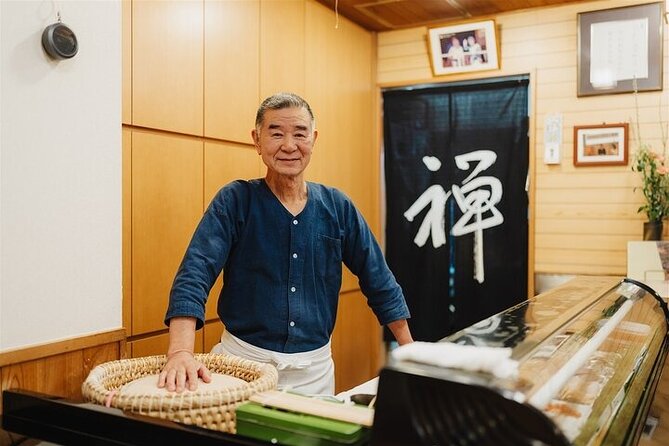
Reviewed · TOKYO
Tokyo Time Machine: Exploring Old School Monzen-Nakacho
Monzen-Nakacho tastes like Tokyo used to. This small-group walk mixes street-level food with temple ritual and sake culture, all in a neighborhood most visitors skip. I especially like that the day is built around included tastings and drinks, so you’re not constantly doing the math in your head. I also like the people-first approach: your guide helps you move through tiny places with confidence and gets you into spots you’d never find alone. A fair consideration: this is an 18+ food-and-drink focus, so if you don’t want alcohol involved, plan accordingly.
You start at Monzen-nakacho Station in the afternoon, and the pace is set for real conversations and full meals over roughly 5 to 6 hours. With a maximum of 6 travelers, you get explanations at the table and time to ask questions, not just a quick photo stop.
In This Review
- Key reasons this walk works
- Why Monzen-Nakacho Feels Like a Tokyo Time Machine
- Meeting at Monzen-nakacho Station: a simple start that keeps you moving
- Fukagawa Fudodo and the spiritual side of sake
- What to expect at this stage
- Stop 1 flavors: sushi and fukagawa meshi with local rhythm
- A possible snag
- From respect to watering holes: how the afternoon turns into evening
- The sake specialist and oyster shucker: pairing taste with real story
- Dinner, snacks, coffee/tea, and the value math of included drinks
- A note on gluten-free and Celiac
- What makes the guides matter: Michelle, Elly, and Mairi as examples
- Logistics that affect your comfort: walking, timing, and what to wear
- Who should book this Monzen-Nakacho food-and-sake walk
- Should you book Tokyo Time Machine: Exploring Old School Monzen-Nakacho?
- FAQ
- How long is the Tokyo Time Machine: Exploring Old School Monzen-Nakacho tour?
- What time does the tour start?
- Where do we meet?
- How much does it cost?
- What’s included in the price?
- Is private transportation included?
- How big is the group?
- Do I need to be a certain age?
Key reasons this walk works
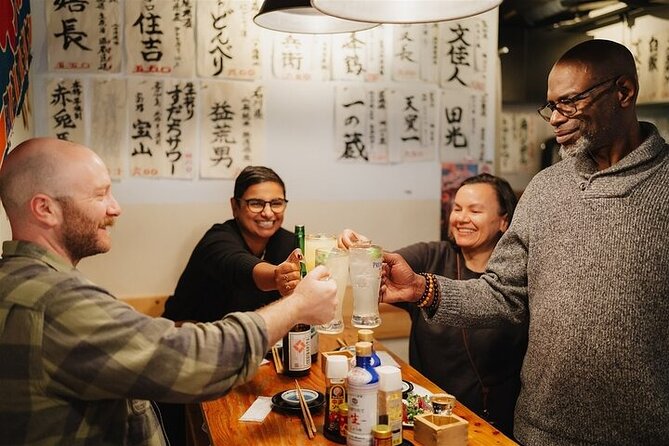
- Off-the-tourist-trail Monzen-Nakacho: backstreets, tiny storefronts, and neighborhood bars
- Food and drinks are included: dinner, snacks, coffee/tea, and alcoholic beverages
- Temple ritual + sake culture: not just tasting, but the meaning behind it
- Guides with real local relationships: past groups praised guides like Michelle, Elly, and Mairi
- Celiac/gluten-free may be workable: at least one review specifically called this out as a positive
Before you commit, see how this one stacks up against a few Tokyo favourites:
- Mt Fuji and Hakone 1-Day Bus Tour Return by Bullet Train★ 5.0 · 26,383 reviews
- 1-Day Tokyo Bus Tour★ 5.0 · 14,250 reviews
- Tokyo: teamLab Planets TOKYO Digital Art Museum Entry Ticket★ 4.6 · 9,779 reviews
Why Monzen-Nakacho Feels Like a Tokyo Time Machine
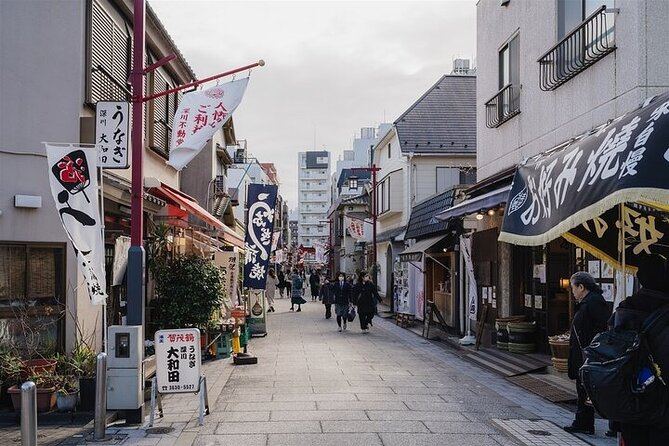
If your Tokyo plan is all landmark selfies, this tour offers a different kind of souvenir: the feeling of how locals eat, drink, and worship in the same small area. Monzen-Nakacho is the kind of place where streets narrow, shop signs stay low, and the best seats are the ones you only get because you’re with someone who knows the flow.
What makes this experience click is the blend. You’re not only doing an izakaya crawl. You’re also paying attention to the spiritual side of the day—especially around sake culture and temple ceremony—so the food doesn’t feel random. One moment you’re learning why sake shows up in religious practice; the next, you’re eating something classic from the area with your hands tied to the schedule (in a good way), not to your own wandering plan.
The included meals matter, too. Paying for tastings as you go can turn a fun food day into a stressful budget day. Here, the structure keeps you fed and keeps the focus on taste, not receipt management.
And yes, the tour leans adult and drink-forward. That’s part of the point. Just make sure that fits your travel style.
Meeting at Monzen-nakacho Station: a simple start that keeps you moving
You’ll meet at Monzen-nakacho Station (2 Chome-4, Monzennakacho, Koto City). The location is described as near public transportation, which matters because it lets you start the walk without burning time figuring out the last leg.
The start time is 1:00 pm, and you should expect the day to run about 5 to 6 hours. That timing is smart for two reasons. First, it catches daylight so you can actually read the neighborhood as you walk. Second, it transitions into evening naturally, which is when the standing bars and izakaya energy kick in.
Group size is capped at 6 travelers. That’s not a random number. In a small group, you get time to hear what matters (why a dish exists, what to look for in the flavors, what a ritual symbolizes) instead of just walking past it.
Fukagawa Fudodo and the spiritual side of sake
The walk’s first anchor is Fukagawa Fudodo, where you’ll mix backstreet exploring with temple time. This isn’t just a photo stop. You’re taking part in a temple visit that includes a ceremony feel—described as multisensory—and you’ll get context for what you’re seeing.
One of the tour’s strongest praised moments is the ceremony itself. Past participants pointed out the religious fire ceremony as a highlight. Even if ceremonies aren’t your usual travel interest, the guide framing helps you understand why sake and ritual belong together here. You’re not asked to pretend you know the tradition. You’re guided through it.
Then comes the sake angle. The tour explains the spiritual side of sake drinking and the place it holds in Japanese culture and religion. After that setup, you taste special renditions of sake. That sequence works: tasting has meaning when you know what it’s connected to.
What to expect at this stage
You’ll also spend time in small places along the way. The day is described as going deep into Monzen-Nakacho backstreets, stopping in tiny storefronts and then out-of-the-way izakayas and bars. The point is to meet the people behind the food and to learn how the neighborhood keeps itself fed.
A practical note: temple time can mean you’ll be standing or moving at a slower pace than the street sections. Wear comfy shoes.





Stop 1 flavors: sushi and fukagawa meshi with local rhythm
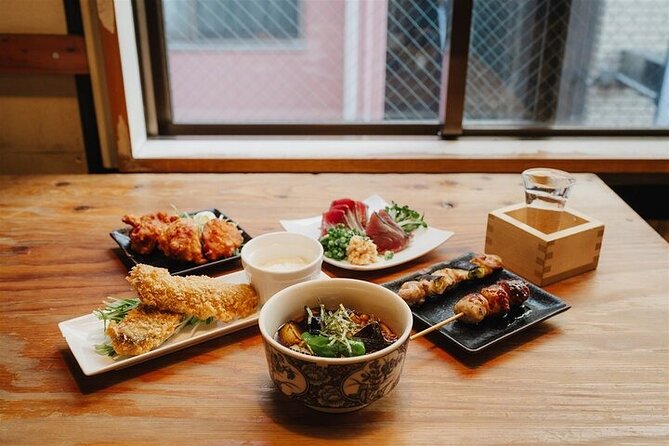
Before you settle into the temple experience, the tour starts with a neighborhood classic: sushi and fukagawa meshi, a local specialty made with clams served over rice. This is the kind of dish that gives you a clear flavor baseline for the rest of the walk. Salty-sweet briny clams on rice is comforting, filling, and distinctly tied to the area’s identity.
More than one participant praised the opening meal as simple and hearty—especially the fisherman-style broth of clams and rice. Even if you think you’re too full to start, the structure of the tour helps. You’re not expected to eat massive portions at every stop; it’s a sequence of flavors that builds.
This stage also sets you up for the alcohol portions later. You’ll be in a good place to enjoy tastings without feeling like you’re starting the day on an empty stomach.
A possible snag
If you’re avoiding seafood, this stop may not be ideal. The tour centers clams early, and other stops involve oyster shucking later. You should still book if you can eat seafood, but if you have strict dietary limits, message your operator before you go.
From respect to watering holes: how the afternoon turns into evening
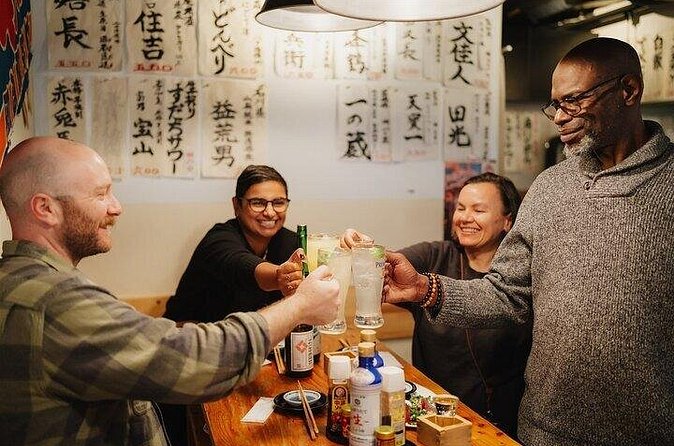
After temple time, the tour shifts gears into neighborhood eating and drinking. This is where the day feels most like a guided version of what locals might do: moving from one watering hole to the next, with food that’s built to match the drinks.
The tour description emphasizes that drinks come with expertly crafted bites. That’s one of the best ways to do a bar crawl in Japan: the food isn’t an afterthought, and it’s not just bar snacks. It’s chosen to pair with what you’re tasting.
The pacing stays relaxed. Participants specifically mentioned relaxed timing of meals and drinks, with explanations that came with both history and food information. In other words, you’re not rushed and you’re not left guessing.
The sake specialist and oyster shucker: pairing taste with real story
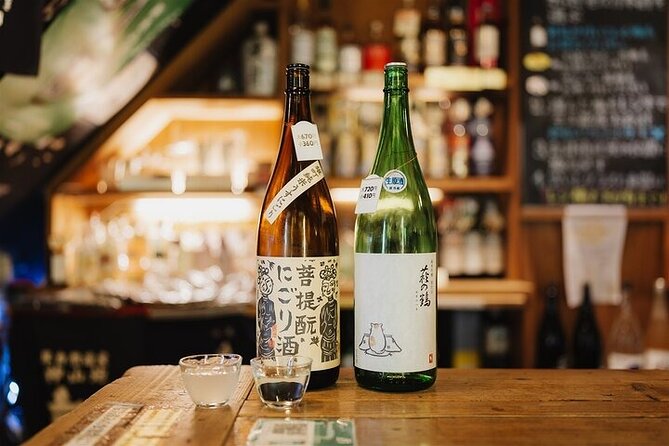
One of the most memorable planned stops is a sake specialist. This is where the day moves from general Japanese drinking into something more specific. The guide’s job here is to help you taste with context—how to notice differences, what you’re picking up from the aroma and the finish.
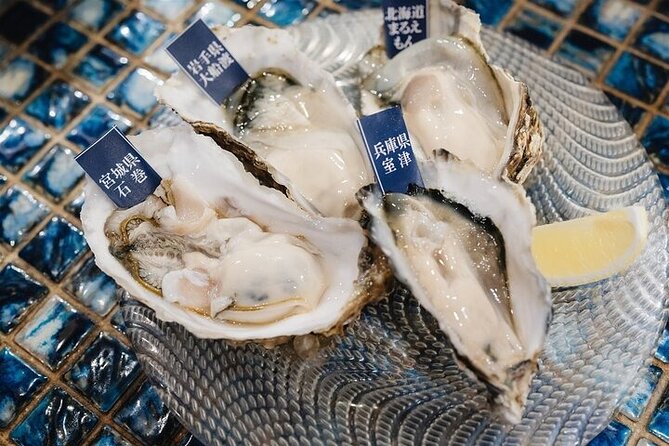
Then you’ll stop by an oyster shucker, and this is where the tour adds a meaningful real-world layer. The shucker is described as helping fisherman recover from the lingering effects of the 2011 tsunami by buying bivalves directly from them. You’re tasting food, yes—but you’re also seeing how a local business can support the people behind the ingredients.
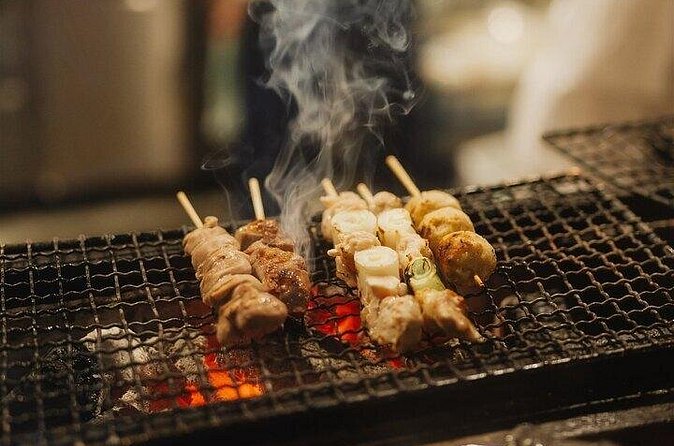
After that, you head to a hidden tachinomi, a standing bar. It’s described as having a small kitchen that still manages to turn out edible wonders. Standing bars can be hit or miss on tours. Here, the structure is that you’re not just standing and sipping—you’re eating something made for the moment, in the kind of cramped, casual space that feels like a neighborhood secret.
Dinner, snacks, coffee/tea, and the value math of included drinks
The tour includes dinner, snacks, alcoholic beverages, and coffee and/or tea. That’s not a small detail. In Tokyo, even one or two “just grab something” stops can add up fast—especially if you’re doing them in the evening when prices climb.
So the $195 per person price becomes easier to judge. You’re paying for:
- a guided route through places you’d probably miss on your own
- access to food and drink that’s already portioned into the plan
- conversation and cultural context (temple + sake focus)
- time saved and stress reduced, since you’re not constantly choosing where to eat next
Also, it’s small-group, max 6. That extra attention tends to be worth money in food tours, because food is sensory and questions matter.
A note on gluten-free and Celiac
One review specifically praised the tour as great for Celiac/gluten free. That’s an encouraging sign. Still, don’t assume it means zero cross-contact everywhere. If that matters to you, confirm directly with the operator before you go.
What makes the guides matter: Michelle, Elly, and Mairi as examples
The tour’s heart is the guide. In past experiences, names that came up included Michelle (described as Canadian and living in Japan for 20 years), Elly, and Mairi. Participants praised guides for warm, friendly presence and strong connections with local small businesses.
That connection isn’t just social. It shapes what you taste and how you learn. A guide who knows the food people can explain why a shop exists, what makes a dish local, and what to notice when you sit down. It also helps with language barriers—your guide shows you around and makes the order-and-explain moments feel normal, not awkward.
If you like asking questions, this is a good format. If you prefer silence and quick bites, you may still enjoy it, but the experience is designed for back-and-forth.
Logistics that affect your comfort: walking, timing, and what to wear
You’re on your feet for roughly 5 to 6 hours, and the day includes walking through backstreets plus time at a temple. That means your comfort choices matter more than usual.
Bring:
- comfortable shoes (you’ll want support)
- a light layer (Tokyo can shift in temperature later in the day)
- an appetite (this is a full meal + tastings plan)
Also remember: alcohol is included. Even if you don’t drink much, you’ll still be in an adult setting built around tasting. Pace yourself, and don’t feel you have to finish everything offered.
Who should book this Monzen-Nakacho food-and-sake walk
This is a strong match if you want:
- food plus culture, not just a checklist of restaurants
- a neighborhood experience off the usual tourist trail
- included drinks and a guided plan that keeps you from spending time hunting
- a temple-and-sake angle that adds meaning to what you eat
You might skip it if:
- you want a purely seafood-free meal plan
- you don’t want an 18+ alcohol-focused day
- you hate walking in the afternoon and evening
Should you book Tokyo Time Machine: Exploring Old School Monzen-Nakacho?
Yes, if your idea of a great Tokyo day includes more than famous sights. This tour is built around a single neighborhood identity, and that structure pays off. You get a clear arc: temple ceremony and sake culture, then backstreet bites, sake tasting, oyster-focused eating, and finally standing-bar energy.
The biggest reasons to book are also the most practical:
- you get dinner, snacks, coffee/tea, and alcoholic beverages included
- it’s a small group of 6, which supports real explanations
- it’s positioned to help you access places you’d likely overlook on your own
If you do drink alcohol, you’ll get the most from the experience. If you don’t, it’s still a good cultural food walk, but confirm how the tastings will work for you.
If you want Tokyo that feels lived-in, this one is worth your afternoon and your money.
FAQ
How long is the Tokyo Time Machine: Exploring Old School Monzen-Nakacho tour?
It runs about 5 to 6 hours.
What time does the tour start?
The start time is 1:00 pm.
Where do we meet?
You meet at Monzen-nakacho Station, 2 Chome-4, Monzennakacho, Koto City, Tokyo 135-0048, Japan.
How much does it cost?
The price is $195.00 per person.
What’s included in the price?
Alcoholic beverages, dinner, snacks, and coffee and/or tea are included.
Is private transportation included?
No, private transportation is not included.
How big is the group?
The tour has a maximum of 6 travelers.
Do I need to be a certain age?
Yes, travelers need to be 18 or older.
More Tour Reviews in Tokyo



Fresh reviews from around Tokyo






Tokyo, compared.
 ★ 5.0Mt Fuji and Hakone 1-Day Bus Tour Return by Bullet TrainFrom $16326,383 reviews
 ★ 5.01-Day Tokyo Bus TourFrom $12914,250 reviews
 ★ 4.6teamLab Planets TOKYO Digital Art Museum Entry TicketFrom $259,779 reviews
 ★ 4.0Mt Fuji & Hakone Cruise, Drum Show Bullet Train 1 Day from TokyoFrom $1497,413 reviews
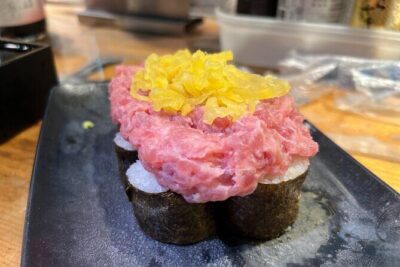 ★ 5.0Shinjuku Food Tour (13 Dishes at 4 Local Eateries)From $866,603 reviews
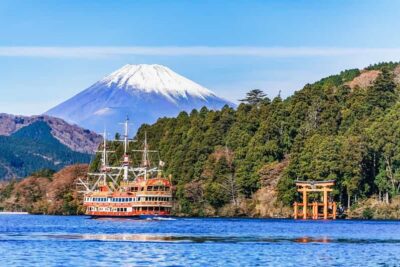 ★ 4.4Tokyo Mt Fuji 5th St & Hakone Cruise Bus Tour w/Bullet TrainFrom $1545,024 reviews
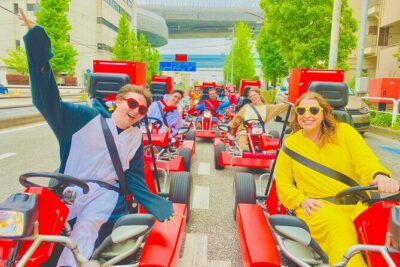 ★ 5.0Flagship 2-Hours Official Street Go-Kart Tour – Tokyo Bay ShopFrom $644,974 reviews
 ★ 4.5From Tokyo: Mount Fuji Full-Day Sightseeing TripFrom $684,970 reviews