
Reviewed · TOKYO
Tokyo: Taiko Drumming Experience
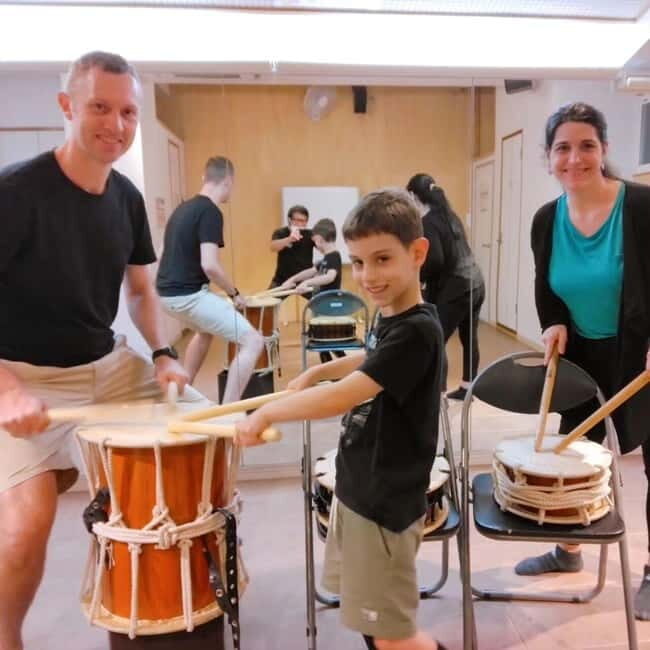
Taiko has a way of getting your attention fast. This hands-on taiko drumming experience turns a Japanese tradition into something you can actually do—sticks in hand, body moving, drumbeats hitting hard enough to feel in your chest. I especially like that the instruction starts from scratch (no experience needed) and that you learn the core mechanics—how to hold the sticks and strike with power—rather than just watching.
The main drawback to consider is reliability. One verified booking noted a teacher did not show up the first night, which meant lost time and a rebook. The class itself earned praise for being fun and encouraging, but it’s worth building a little buffer into your schedule.
Price-wise, at $35 for a 1-hour session with a small group (up to 6) and all equipment included, you’re paying for personal coaching. If you’re coming for the sound and the feel of real taiko—rather than a long cultural lecture—that value can make sense.
In This Review
- Key takeaways before you book
- Why taiko feels different from other drumming
- Ōkubo Station meeting point: a simple start, if you arrive early
- The 1-hour flow: how you’ll spend your time
- Learning the grip: the quickest way to sound better
- Strike with power (without burning out)
- Body rhythm: why movement is part of taiko training
- What the drumbeats should feel like
- Price and value: $35 for a real coach session
- Who should book this taiko session
- Practical notes that make the day smoother
- Should you book the taiko drumming experience?
- FAQ
- Where is the meeting point for the taiko drumming experience?
- How long is the taiko drumming session?
- Is prior drumming experience required?
- What languages will the instructor speak?
- What should I bring and wear?
- Is the experience refundable if plans change?
Key takeaways before you book
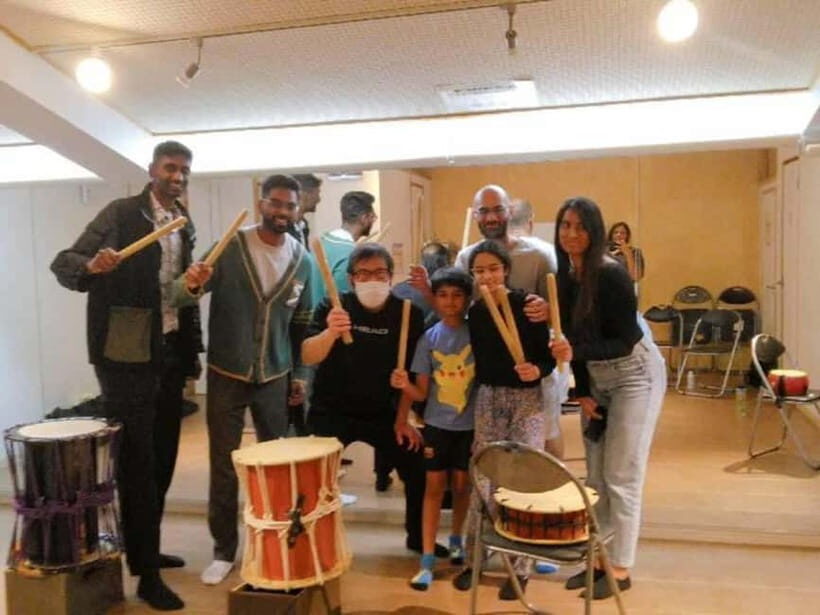
- Expert coaching from English/Japanese instructors so you can follow the technique even if you’re brand-new
- Learn grip + striking power instead of only doing casual rhythm practice
- Move with the beat so taiko feels physical, not like tapping along
- All equipment provided, which saves you the hassle of figuring out gear
- Small group capped at 6, which helps you get real correction and feedback
Before you commit, see how this one stacks up against a few Tokyo favourites:
- Mt Fuji and Hakone 1-Day Bus Tour Return by Bullet Train★ 5.0 · 26,383 reviews
- 1-Day Tokyo Bus Tour★ 5.0 · 14,250 reviews
- Tokyo: teamLab Planets TOKYO Digital Art Museum Entry Ticket★ 4.6 · 9,779 reviews
Why taiko feels different from other drumming
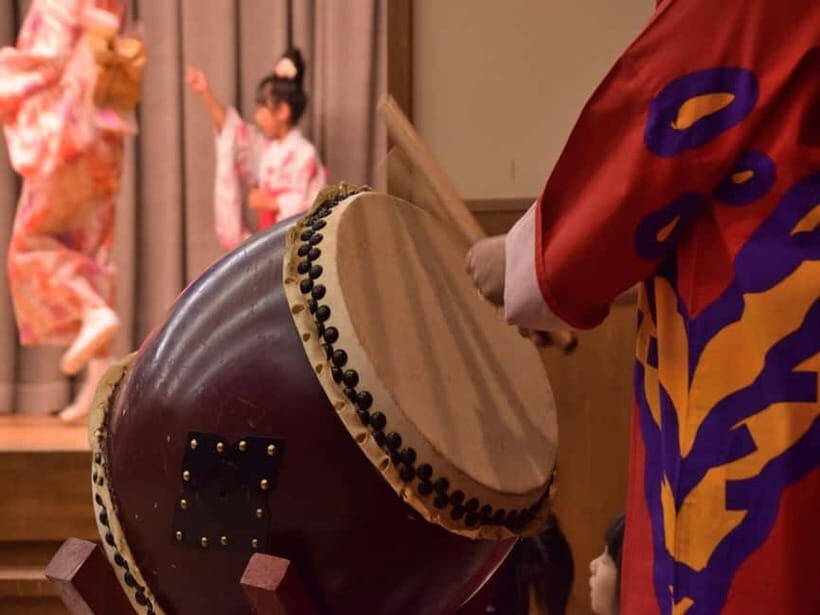
Taiko isn’t just percussion. It’s performance, training, and energy management all rolled into one. In a good session, you don’t only hear the drums—you feel them. That “deep vibrations” part matters, because taiko is designed to be experienced with your whole body. When the strikes land with the right angle and force, you get that physical thump and the rhythm locks in faster than you expect.
What I like about this kind of lesson is that it treats taiko as skill-building. You’re not being asked to guess. The focus is on fundamentals: how to hold the drumsticks and how to strike with real power, plus how to move so your body supports the rhythm. That’s the difference between casual noise and the kind of drumming that feels powerful and controlled.
Ōkubo Station meeting point: a simple start, if you arrive early
This class meets at the South Exit of Ōkubo Station. You’ll wait for the instructor there and check in before you start. The schedule is tight for a 1-hour experience, so the practical advice is to show up 15 minutes early as instructed. That gives you time to find the correct person and get settled without rushing.
Also note the “skip the ticket line” detail. It’s small, but it helps when you’re fitting activities into a day of Tokyo trains and transfers. You can focus on getting ready to move, not on paperwork and queues.
The small group size (limited to 6 participants) matters here. With fewer people, the instructor can keep an eye on your grip, spacing, and timing. In a bigger class, you’d often be left to figure out the technique on your own.
The 1-hour flow: how you’ll spend your time
Even though it’s only an hour, the session is structured around real basics. Here’s what that usually looks like in practice, based on the way the experience is described and what good drumming instruction targets:
First, you’ll get set up with the drums and sticks. Then you move into technique: holding the drumsticks correctly and learning where and how to strike. This part is about efficiency—if your grip is off or your strike comes from the wrong angle, you’ll feel it immediately.
Next comes power. Not “harder for the sake of it,” but controlled force. You’ll learn how to strike with power in a way that supports rhythm rather than fights it. The goal is to make your hits sound strong and consistent.
Finally, you add movement. Taiko asks your body to work with the rhythm, not against it. That’s why they emphasize moving with the beat. Expect to coordinate timing with stance and body motion, so the drumming feels like one action instead of separate steps.
You also get traditional sound as the backdrop. The experience explicitly includes the unique sounds of traditional Japanese music, so you’re learning technique while hearing how taiko fits into the musical context.
Learning the grip: the quickest way to sound better
The biggest beginner win in any taiko lesson is getting your hands positioned right. In this session, the instruction covers how to hold the drumsticks. That means you’re not stuck with random grip choices that make it harder to hit consistently.
Here’s what I’d pay attention to as you practice:
- Your grip should feel stable, not tense.
- Your strikes should come from coordinated motion, not just “arm slams.”
- You should be able to repeat the same type of hit without guessing.
This is also where English support matters. The instructor can guide you in English and Japanese, which is a helpful safety net when you’re trying to understand technical cues on the fly.
The good news: the class starts from scratch, so you won’t be penalized for doing it wrong at first. In fact, your corrections are the point.





Strike with power (without burning out)
Taiko can feel deceptively simple—until you try to hit with power in a way that stays rhythmic. This class teaches striking with power as a skill. That typically means you’re learning how to put force into the strike while keeping timing steady.
If you’ve ever tapped a drum and thought, okay, that’s loud… then you try to do it again and it sounds different each time—that’s usually technique drift. A structured lesson helps you keep your strikes consistent, so the drumming becomes more controlled and less exhausting.
Also, because the session is only 1 hour, pacing matters. You want to focus on quality in each attempt, not speed for speed’s sake. The instructor’s job is to steer you toward hits that build sound and rhythm together.
Body rhythm: why movement is part of taiko training
The experience doesn’t treat drumming as stationary. It emphasizes moving with the rhythm, and that changes how you experience the instrument. When you add body motion, your strikes tend to feel more natural, and your timing usually improves because your whole body becomes a metronome.
For you, that means wearing comfortable clothes and shoes. You’ll need room to shift stance and keep balance during practice. The session explicitly says:
- Bring comfortable shoes
- Wear comfortable clothing suitable for physical activity
If you show up in stiff clothes or slippery footwear, you’ll spend your energy adjusting instead of learning.
What the drumbeats should feel like
Taiko’s signature effect is the physical impact. This experience highlights the deep vibrations from the drumbeats. That’s not marketing fluff. When the drum is struck properly, the sound isn’t just audible—it has weight.
I like that the description frames the experience as both sound and sensation. Many music activities are mostly listening. Here, your job is to help generate the rhythm, so the vibrations become part of the learning loop.
And yes, the “traditional Japanese music” element is part of the atmosphere. It helps you understand that taiko isn’t random noise—it’s tied to a musical structure, even when you’re learning only the basics.
Price and value: $35 for a real coach session
Let’s talk money. $35 per person for a 1-hour lesson sounds like a lot until you consider what’s included and what you’re getting.
You do get:
- Expert instruction
- All necessary equipment
- A small group limited to 6
That combination often costs more than you’d expect in Tokyo, because equipment logistics and instructor attention add up. The small group cap is the “value multiplier.” If you’re paying for one-on-one correction or close group coaching, your hour becomes more productive.
Now the honest part: the rating is 2.4 based on 3 reviews, and one review specifically complained about a teacher not showing up on a scheduled day. That’s a reliability issue, and it can hurt perceived value even if the drumming lesson is good once it happens.
My advice: if you’re on a tight trip schedule, don’t book this as your only plan for that night. Leave breathing room around it.
Who should book this taiko session
This experience fits best if you:
- Want a hands-on Tokyo activity where you actually learn technique
- Like energetic, physical cultural experiences
- Are a beginner who wants coaching from scratch
- Prefer smaller groups with a real instructor focus
It’s also a smart choice if you’ve got an evening free and want a single, focused activity. It’s 1 hour, so you won’t lose your whole night.
The one clear “no” from the details: it’s not suitable for people with back problems. If that applies, skip it. The class involves movement and striking, and you don’t want to gamble with your body.
Practical notes that make the day smoother
A few small details can save you stress:
- Show up at the South Exit of Ōkubo Station
- Arrive 15 minutes early for check-in
- Wear comfortable shoes and clothes for physical activity
- No smoking during the activity
- You’ll be working with the drum setup, so leave your fragile stuff in your bag
Also, because the instructor speaks English and Japanese, you should feel comfortable asking for clarification if something doesn’t click. Technique lessons are easiest when you can confirm what you’re doing.
Should you book the taiko drumming experience?
If your goal is to learn the real basics of taiko—grip, power, and rhythm with movement—this lesson can be a memorable Tokyo experience. I’d also call it good value for what’s included: expert instruction, equipment, and a small group.
But book with eyes open. The low overall rating and the report of a teacher missing a session are real concerns. If you can build in flexibility and you’re excited to get physical with traditional Japanese drumming, it’s still a solid option. If you need everything to run perfectly on a single night, consider choosing a different activity or scheduling this earlier in your trip with a backup plan.
FAQ
Where is the meeting point for the taiko drumming experience?
You’ll meet your instructor at the South Exit of Ōkubo Station. Wait there for the instructor at check-in time.
How long is the taiko drumming session?
The experience lasts 1 hour. Starting times depend on availability.
Is prior drumming experience required?
No. The lesson starts from scratch, so you can join even if you have no prior experience.
What languages will the instructor speak?
The instructor provides guidance in English and Japanese.
What should I bring and wear?
Bring comfortable shoes and wear comfortable clothes suitable for physical activity.
Is the experience refundable if plans change?
Yes. There is free cancellation up to 3 days in advance for a full refund.
More Tour Reviews in Tokyo



Fresh reviews from around Tokyo






Tokyo, compared.
 ★ 5.0Mt Fuji and Hakone 1-Day Bus Tour Return by Bullet TrainFrom $16326,383 reviews
 ★ 5.01-Day Tokyo Bus TourFrom $12914,250 reviews
 ★ 4.6teamLab Planets TOKYO Digital Art Museum Entry TicketFrom $259,779 reviews
 ★ 4.0Mt Fuji & Hakone Cruise, Drum Show Bullet Train 1 Day from TokyoFrom $1497,413 reviews
 ★ 5.0Shinjuku Food Tour (13 Dishes at 4 Local Eateries)From $866,603 reviews
 ★ 4.4Tokyo Mt Fuji 5th St & Hakone Cruise Bus Tour w/Bullet TrainFrom $1545,024 reviews
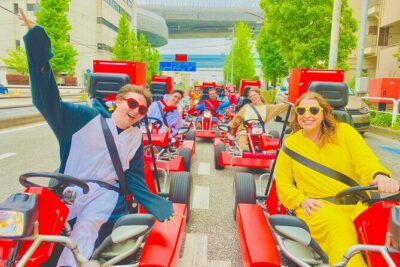 ★ 5.0Flagship 2-Hours Official Street Go-Kart Tour – Tokyo Bay ShopFrom $644,974 reviews
 ★ 4.5From Tokyo: Mount Fuji Full-Day Sightseeing TripFrom $684,970 reviews