
Reviewed · TOKYO
Tokyo: Sumo Morning Practice with Photo Banzuke and Guide
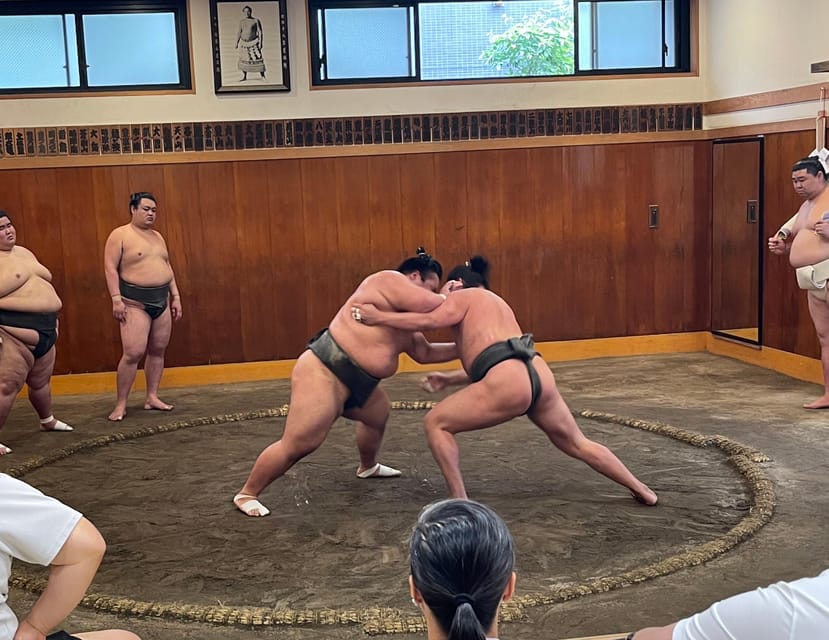
Sumo in the morning feels powerful. This Tokyo session is one of those rare chances to see sumo practice at a working stable, when the sport is still quiet and focused. You’ll watch wrestlers drill throws and pushes, learn why sumo has no weight class, and get that sense of scale you only notice once you’re near the action.
What I like most is how close you get without turning it into a circus. You’ll sit in chairs and watch the training flow in real time, then switch gears into a short guide presentation with the basics and traditions so you understand what you’re seeing, not just what photos look like. The only real drawback: it’s a group schedule, and you need to be on time—if people arrive late, your whole rhythm can shift.
In This Review
- Key highlights to know before you go
- Sumo practice in Tokyo: why this access is special
- The meeting point you must get right: Kiyosumi-shirakawa Exit B1
- Watching from chairs: what the morning practice feels like
- Photo banzuke and timing: how to get good shots (and meaning)
- The guided presentation: basics you can use right away
- How the 7 hours actually flow (and why it feels long sometimes)
- Price and value: is $115 worth it?
- Who this tour fits best (and who should skip)
- A quick practical checklist before you go
- FAQ
- How long is the sumo morning practice tour?
- Where do I meet the guide?
- Is there an English-speaking guide?
- What will I do during the tour?
- Is this tour wheelchair accessible?
- What’s the group size?
- Is this tour suitable for children?
- Should you book this sumo morning session?
Key highlights to know before you go
- Real morning practice at a sumo stable with chairs so you can actually see the action
- No weight class competition that makes size and technique feel totally different than other sports
- Photo banzuke moment so you can connect what you see with what comes next in tournaments
- English guide basics on rules, history, and traditions you can explain back home
- Small group (max 9) for a calmer, easier experience and better viewing
- Be at Exit B1 by FamilyMart since the group depends on punctual arrivals
Before you commit, see how this one stacks up against a few Tokyo favourites:
- Mt Fuji and Hakone 1-Day Bus Tour Return by Bullet Train★ 5.0 · 26,383 reviews
- 1-Day Tokyo Bus Tour★ 5.0 · 14,250 reviews
- Tokyo: teamLab Planets TOKYO Digital Art Museum Entry Ticket★ 4.6 · 9,779 reviews
Sumo practice in Tokyo: why this access is special
Tokyo is full of sumo-related stops, but this is the category you’ll remember: a real morning practice inside a stable environment. Sumo doesn’t run year-round. Tournaments happen only about 90 days a year, so when you see training like this, it feels less like a show and more like the sport in progress.
Another thing I appreciate is the framing. You’re not just watching bodies collide. The tour is set up to help you understand sumo as a craft—ritual, timing, and fundamentals—so the practice session makes sense instead of feeling like random wrestling moves.
And yes, it’s a sport with no weight class, which changes how you think about strength. You’ll notice how leverage, balance, and footwork matter even when bodies are hugely different sizes. That’s a big reason this kind of morning session stands apart from watching highlights later.
The meeting point you must get right: Kiyosumi-shirakawa Exit B1
The start is simple, but strict: you meet at Exit B1 at Kiyosumi-shirakawa Station, near a FamilyMart. The guide is waiting right at the exit, specifically so people arriving by taxi don’t miss the group.
This matters more than you’d think. The tour is about 7 hours, and it’s paced as a group flow. If you’re even a little late, it can knock timing off for everyone. If you’re running behind, you should contact the organizer right away. The tour notes are clear that the group schedule comes first—so build in buffer time.
Practical tip: go straight to the exit area and get your bearings early. Bring your camera, but also wear comfortable shoes. There’s a bit of walking, and you’ll want your feet happy before the training even starts.
Watching from chairs: what the morning practice feels like
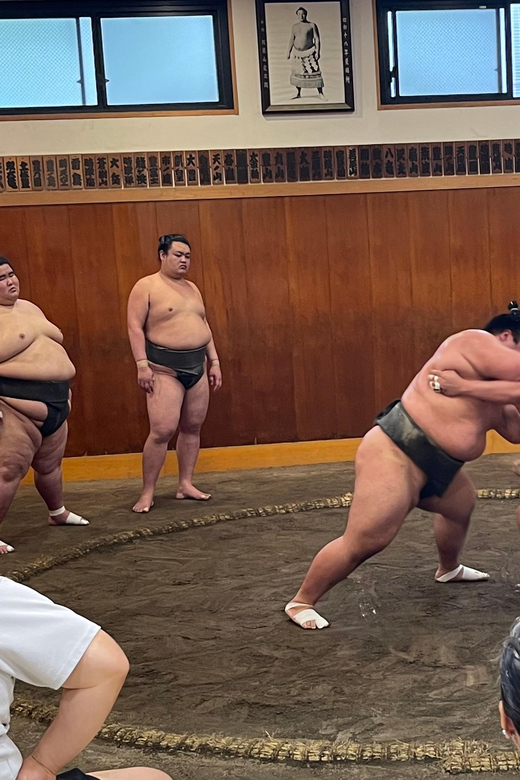
Once you’re settled, the core experience is the same every time: you observe a sumo practice session, up close, in a stable setting. The highlight mention of SIT IN CHAIRS isn’t just an instruction—it’s what makes the viewing realistic. You’re not hunting for a standing spot. You can watch footwork, resets, and how wrestlers repeat technique until it sticks.
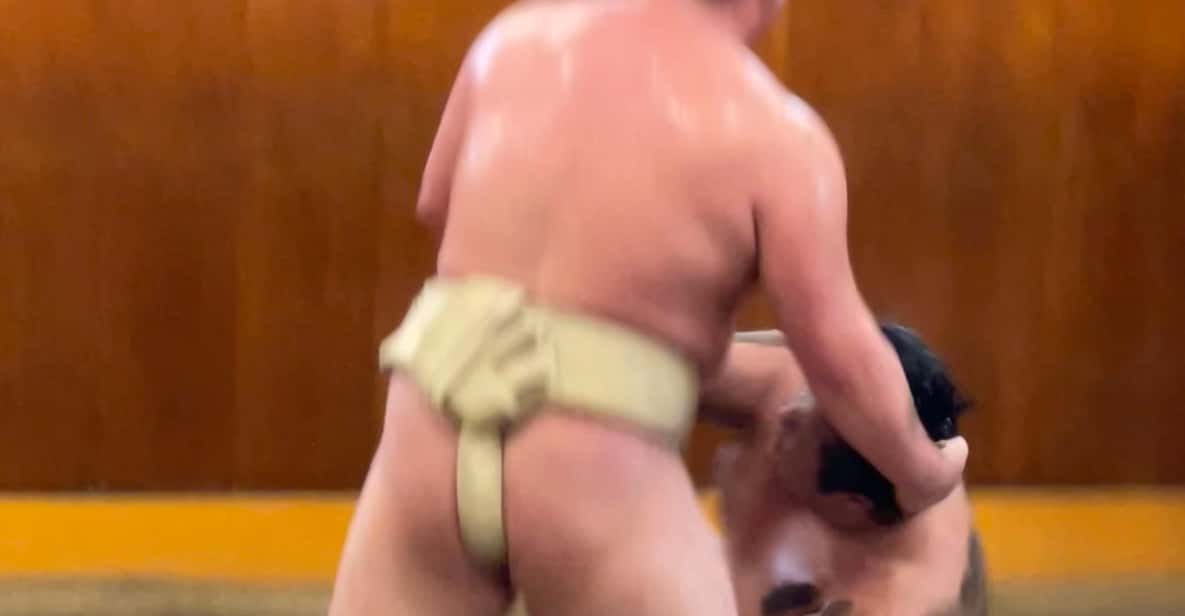
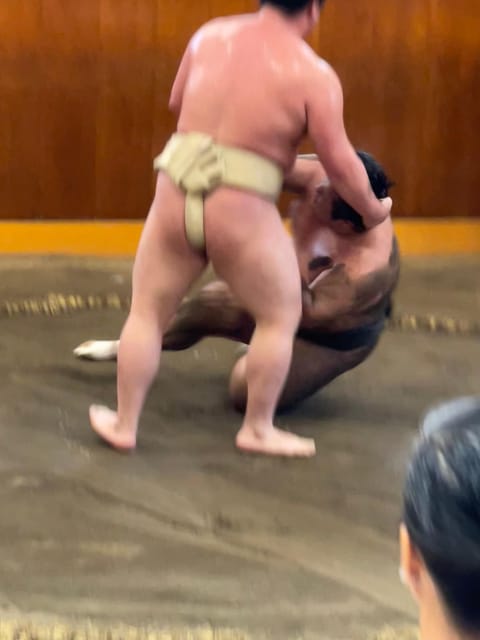
From your seat, you’ll see how disciplined and physical the session is. Expect training that looks like controlled aggression: timed bursts of shoving, grabbing, and maneuvering, followed by instruction and repetition. This is where you start to understand why sumo is so steeped in tradition. The practice doesn’t feel like freestyle wrestling; it feels like work.
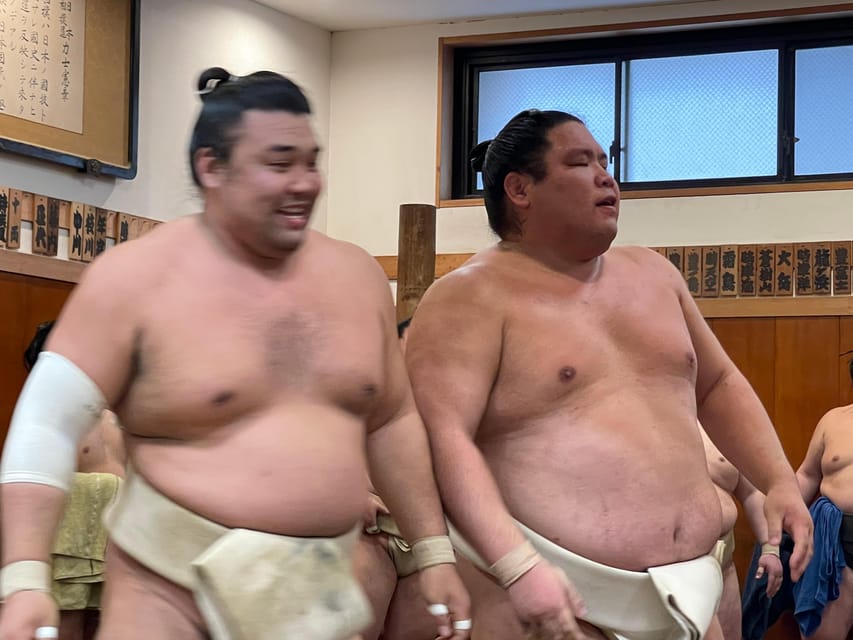
Also, because this is a stable practice rather than a tournament match, you’ll notice the difference in energy. You’re seeing preparation and refinement—wrestlers drilling and adjusting—so the sport feels more human. It’s not just peak performance; it’s the day-to-day craft that leads to tournament action.
Photo banzuke and timing: how to get good shots (and meaning)
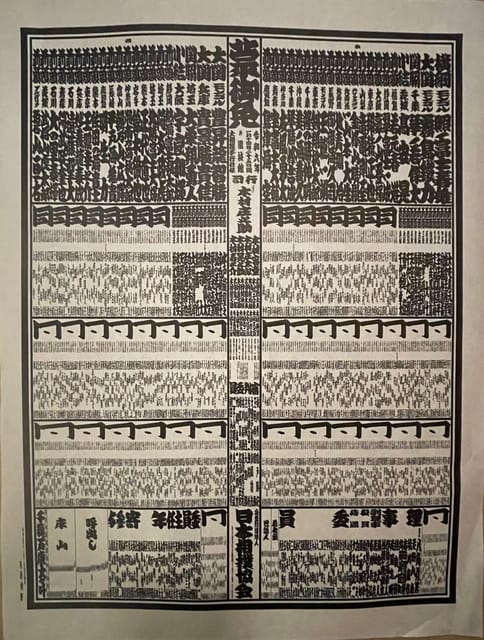
One part of the experience is a photo stop (about 15 minutes). This is your window for photos, and the tour is also built around the idea of photo banzuke—a way to connect what you’re seeing with the sport’s formal ranking system.
You don’t need to be an expert to appreciate this. In fact, this is where the guide helps. A good practical approach for your camera time:
- Focus on the wrestlers’ movement first, not just faces.
- Capture the training rhythm before you try for close-up detail shots.
- Use the photo stop to get images that will later help you remember terms the guide explains.
If you like learning as you shoot, this format works well. You’ll leave with pictures and a mental map of what those scenes mean—especially important because sumo is full of specific traditions and terminology, and most people only learn that after the fact.




The guided presentation: basics you can use right away
After the observation, you get a short guide presentation on the basics of sumo wrestling. The goal is clear: learn enough background that you can take the experience home, not just the most photogenic moments.
Even if you already know sumo as a sport, the value here is understanding why the practice looks the way it does. The guide covers history and tradition, plus foundational basics so you know how to interpret what you watched.
This is also where your experience stops feeling like a one-off photo outing. Instead, you walk away with context:
- what makes sumo different from other combat sports
- why ritual and form matter
- how technique and balance create outcomes that don’t depend on weight categories
The short nature of the session is part of the charm. You’re not stuck in a lecture hall. You get just enough explanation to make the morning practice click.
How the 7 hours actually flow (and why it feels long sometimes)
The day runs for about 7 hours, and it’s paced with a mix of guided time, observation, photos, and walking back. You start at the station, then have a first guided segment (about 15 minutes) and later another guided period (about 2.5 hours). There’s then a 15-minute photo stop, followed by two walking blocks of about 10 minutes each back toward Kiyosumi-shirakawa Station.
What you should expect emotionally: it can feel like a lot of time, mostly because group tours involve waiting, regrouping, and keeping everyone together. One practical consideration is timing at the start—if arrivals are delayed, the schedule can stretch. That’s not about the guide being slow; it’s about group logistics.
If you want to maximize your rest-of-day plans, do two things:
- Don’t schedule tight reservations immediately after the tour ends.
- If you know you might need to leave early to use your time in the city, tell the guide. The group has to stay coordinated, but communication helps.
For many people, this length is worth it because you’re getting both the close-up observation and the explanation afterward. But if you’re the type who likes fast in-and-out tours, you’ll want to plan accordingly.
Price and value: is $115 worth it?
At $115 per person, this isn’t a “cheap ticket and off you go” activity. The value comes from two things you can’t reliably buy elsewhere:
- Rare stable access. Only a select number of stables allow guests to observe morning practice sessions, and that’s the entire point of the experience.
- A guided explanation. You’re not just observing. You’re also getting a short talk on basics, history, and tradition. That’s what turns “cool photos” into “I understand what I saw.”
The small group size—limited to 9 participants—also matters for value. More people would mean less comfortable viewing and more noise and jostling. Here, you can focus, and the guide can keep the group moving smoothly.
So if you’re the kind of visitor who hates generic attractions and loves learning in context, this price is easier to justify. If you only care about watching things from far away, you might find other free or cheaper sumo experiences in Tokyo. But for hands-on access to a working stable session, it’s positioned as a premium morning activity.
Who this tour fits best (and who should skip)
This tour fits best if you:
- want real sumo training, not just a performance
- like guided context that helps you interpret what you’re seeing
- enjoy morning energy and don’t mind the day being structured as a group
- appreciate small-group pacing (max 9)
It’s also practical for different needs: it’s listed as wheelchair accessible, and it’s in English with a live guide. That’s a big deal for visitors who don’t want to rely on signage and translation apps.
It’s not suitable for children under 9, so if you’re traveling with younger kids, this may not match your family needs.
A quick practical checklist before you go
You don’t need special gear, but do bring what the tour asks for:
- Comfortable shoes (you will walk)
- Camera (you’ll have a photo moment)
- Wear clothes you can move in; stable viewing is active even if you’re seated
And again: be early. The meeting point is very specific—Exit B1 near FamilyMart at Kiyosumi-shirakawa—and the whole day depends on starting on time.
FAQ
How long is the sumo morning practice tour?
The tour lasts about 7 hours.
Where do I meet the guide?
You meet at Exit B1 of Kiyosumi-shirakawa Station, near a FamilyMart.
Is there an English-speaking guide?
Yes. The tour includes a live English guide.
What will I do during the tour?
You’ll observe a sumo practice session, have a short presentation on the basics of sumo, and have a scheduled photo stop, plus some walking time.
Is this tour wheelchair accessible?
Yes, the activity is listed as wheelchair accessible.
What’s the group size?
It’s a small group limited to 9 participants.
Is this tour suitable for children?
No, it’s listed as not suitable for children under 9 years.
Should you book this sumo morning session?
If your goal is to see sumo as a living tradition—training, ritual, technique—rather than a one-time spectacle, I’d book it. The combination of close stable observation, a photo banzuke moment, and an English guide who explains basics makes the day feel like more than a walk-by.
The main reason to hesitate is scheduling. This is a structured 7-hour group tour, and you have to be at the meeting point on time. If you’re great with that and want the rare access to an actual practice session, this is a strong choice.
More Tour Reviews in Tokyo



Fresh reviews from around Tokyo






Tokyo, compared.
 ★ 5.0Mt Fuji and Hakone 1-Day Bus Tour Return by Bullet TrainFrom $16326,383 reviews
 ★ 5.01-Day Tokyo Bus TourFrom $12914,250 reviews
 ★ 4.6teamLab Planets TOKYO Digital Art Museum Entry TicketFrom $259,779 reviews
 ★ 4.0Mt Fuji & Hakone Cruise, Drum Show Bullet Train 1 Day from TokyoFrom $1497,413 reviews
 ★ 5.0Shinjuku Food Tour (13 Dishes at 4 Local Eateries)From $866,603 reviews
 ★ 4.4Tokyo Mt Fuji 5th St & Hakone Cruise Bus Tour w/Bullet TrainFrom $1545,024 reviews
 ★ 5.0Flagship 2-Hours Official Street Go-Kart Tour – Tokyo Bay ShopFrom $644,974 reviews
 ★ 4.5From Tokyo: Mount Fuji Full-Day Sightseeing TripFrom $684,970 reviews