
Reviewed · TOKYO
Tokyo Shibuya Crossing & Hidden Streets Walking Tour
Shibuya is louder than you expect, and this walk makes it make sense. You’ll start with Shibuya’s famous flow at Shibuya Crossing, then move into the quieter details that make the district feel lived-in. I love the small group size (max 12) and the way guides keep you from getting turned around when Shibuya Station alone can feel like a mini city. A small drawback: you should expect some walking uphill, and the meeting point can be tricky to spot inside a mall.
What I really like is the mix: one big intersection, then street-level Japan—art, a park with unusual layers, and old-school alley vibes near the station. Guides I’ve seen highlighted in feedback include Loc, Rio, Grey, Zac, and Daichi, so you may get someone who can answer questions and steer you toward good food ideas too.
In This Review
- Key things you’ll notice on this Shibuya walk
- Why Shibuya Crossing hits harder when you walk with a guide
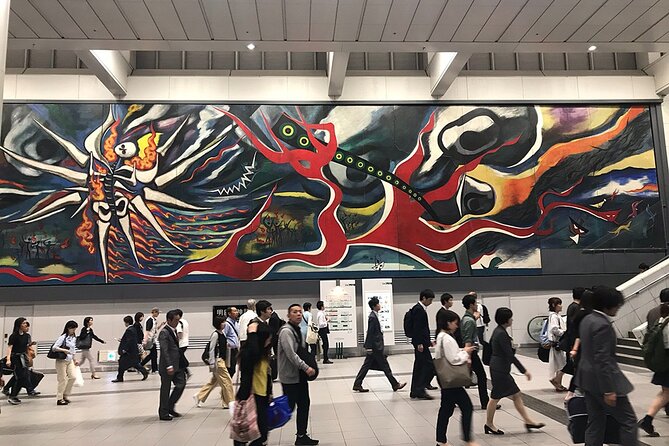
- Myth of Tomorrow: Taro Okamoto’s mural in Shibuya Station
- Crossing the Scramble: Shibuya Crossing without the lost-in-the-crowd problem
- Miyashita Park layers and why this stop feels different from the streets
- Nonbee Yokocho, Center-gai, and Maruyamacho: side streets with a past
- Hachiko: a clean ending point and a Shibuya landmark you can reuse
- How to walk Shibuya like you planned it: timing, pace, and what to ask
- Price and value at about $25 for 2 hours
- Should you book this Shibuya Crossing and hidden streets tour?
- FAQ
- How long is the Shibuya Crossing & Hidden Streets walking tour?
- How many people are in the group?
- How much does the tour cost?
- Where do I meet the tour?
- Where does the tour end?
- Is admission included for the stops?
- What ticket format will I use?
- Is tipping included in the price?
- FAQ
- Is the tour affected by weather?
Key things you’ll notice on this Shibuya walk
- Shibuya Crossing on purpose, not just a stop for a photo
- Myth of Tomorrow, a powerful Taro Okamoto mural inside Shibuya Station
- Miyashita Park’s multi-level design, where sports and city life overlap
- Nonbee Yokocho near the station, an alley that feels old-school in a modern area
- Center-gai and Maruyamacho, shopping energy plus district history in a short loop
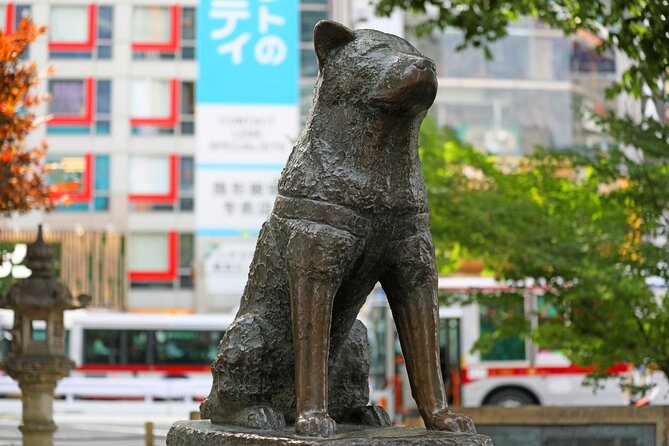
- Ending at Hachiko, a landmark that’s easy to re-use later as your meetup point
Before you commit, see how this one stacks up against a few Tokyo favourites:
- Mt Fuji and Hakone 1-Day Bus Tour Return by Bullet Train★ 5.0 · 26,383 reviews
- 1-Day Tokyo Bus Tour★ 5.0 · 14,250 reviews
- Tokyo: teamLab Planets TOKYO Digital Art Museum Entry Ticket★ 4.6 · 9,779 reviews
Why Shibuya Crossing hits harder when you walk with a guide
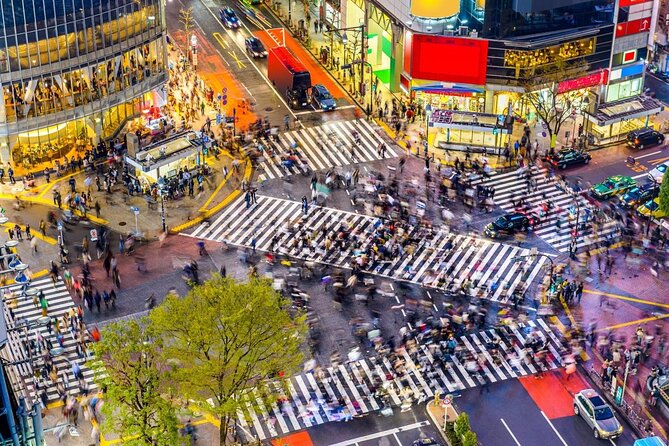
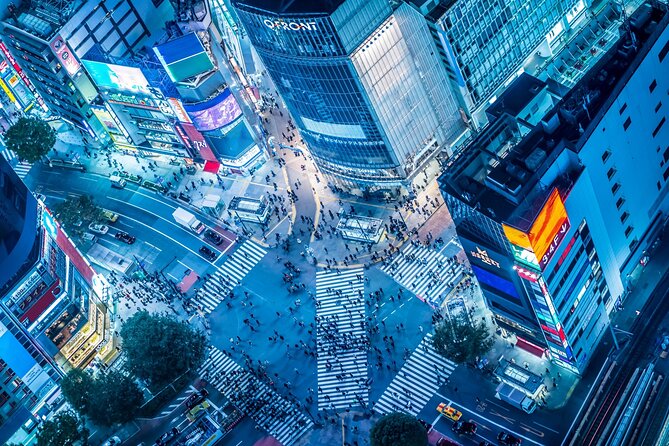
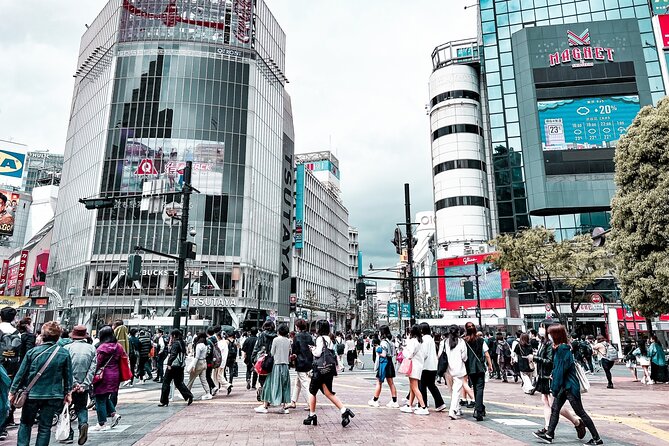
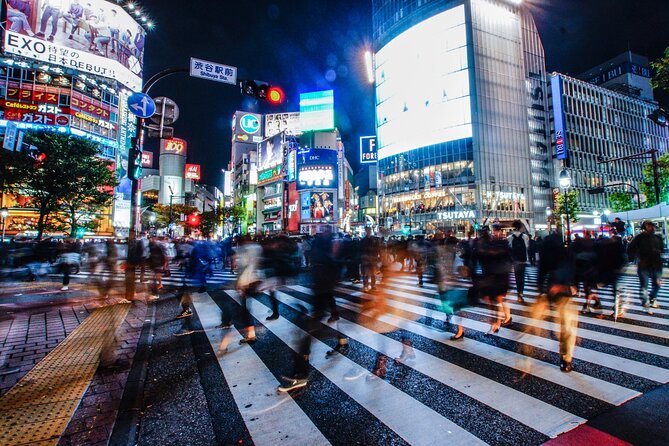
Shibuya Crossing is famous for a reason. From street level, it looks chaotic, but the crossings are surprisingly organized, and locals know exactly how to move through it without panic. A guided walk helps you understand the rhythm—when to cross, where to position yourself for the best sightlines, and how the station crowds spill into the surrounding streets.
I also like that this tour doesn’t treat Shibuya as a single postcard. You’ll get the big moment at the scramble, then you’ll keep walking long enough to see what’s around it: station art, a park built into the urban structure, and lanes that don’t show up on the typical “crossing and coffee” itinerary.
Small groups matter here. With a cap of 12, you’re less likely to lose your guide and more likely to actually hear the street stories while you move. Price-wise, $25 for about two hours is fair for Tokyo, especially since the stops you visit are free to enter.
Myth of Tomorrow: Taro Okamoto’s mural in Shibuya Station
Your first key stop is Myth of Tomorrow, a large mural by Taro Okamoto inside Shibuya Station. This isn’t a random decoration. It’s a serious artwork tied to Japan’s modern history and the impact of atomic bombings, shown through a dramatic, high-contrast style that can feel intense right in the middle of an otherwise fast-moving station.
What makes this stop worth your time is contrast. You’re about to see one of the world’s busiest intersections, but you start with something that asks you to slow down for a minute and notice what you’re standing next to. If you like art and context, this is a smart way to make Shibuya more than just a photo wall.
A practical note: stations can be crowded and echo-y. You’ll want to keep your pace steady and give yourself a moment to focus before the group moves on.
Crossing the Scramble: Shibuya Crossing without the lost-in-the-crowd problem
Then comes the headline: Shibuya Crossing, often called The Scramble. It sits right in front of Shibuya Station, and it’s one of those places where you instantly understand why people come here with cameras.
You’re going to do two things that are both useful:
- You’ll see it from the right angles for photos.
- You’ll understand how the crossing works as pedestrians stream across multiple directions.
The guide’s job here is underrated. When you’re in the crowd, it’s easy to freeze, walk the wrong way, or spend too long trying to find a spot. With a plan, you can enjoy the scene without turning it into a stressful maze.
One more detail: Shibuya feels busy even when it’s not rush hour. If you’re sensitive to noise and crowds, start by watching the crossing in short bursts, then step back between the photo moments. Your guide can help you time it so you’re not always standing still.
Miyashita Park layers and why this stop feels different from the streets
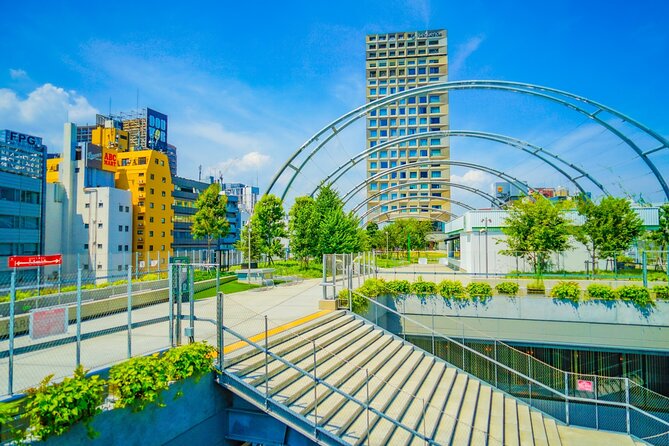
After the scramble, you get a change of pace at Miyashita Park. This place is part of an urban renewal project, and it’s built in levels, turning a conventional park into a multi-level sports and recreation space.
Why it works on a walking tour: it gives you a breath without leaving the Shibuya story behind. You’re still in the same district, but now you’re looking at Shibuya as a designed city space rather than just a traffic junction.
You’ll likely notice how the park connects people moving vertically—stairs, platforms, and different viewpoints—so you’re not trapped only at sidewalk level. If you like photo angles, the layered setup is helpful. If you just need a moment to cool your brain after crossing crowds, this is a good place to reset.
The only “gotcha” is that you may encounter stairs or uneven steps as you move around. It’s not a problem if you’re comfortable walking, but it’s worth knowing upfront since reviews also mention hills.





Nonbee Yokocho, Center-gai, and Maruyamacho: side streets with a past
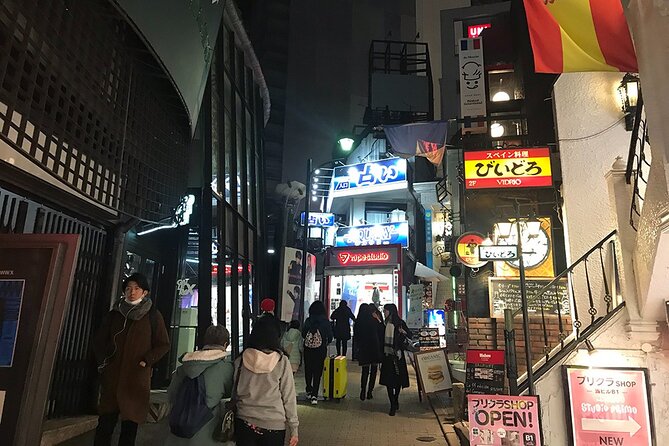
This is where the tour earns its hidden-streets promise.
Nonbee Yokocho (also translated as Drunkard’s Alley) is a narrow alley near Shibuya Station. It’s known for its historical feel and tiny, traditional-style spaces. In a district where everything can look polished and new, this kind of small lane gives you a different sensory picture—smaller entrances, tighter sightlines, and a street scale that feels more human than the big intersections.
Then you move to Shibuya Center-gai, a pedestrian shopping street at the heart of Shibuya. It’s a chance to see the district’s everyday energy up close, especially if you like trend shops and walking-through-street-scenes. It’s not just about buying; it’s about watching how people actually move and browse.
Finally, you’ll pass through Maruyamacho, a neighborhood with historical significance as the former red-light district. Today it’s transformed into an area that mixes the old and the newer, with a more eclectic vibe. Having the neighborhood history in your head changes how you look at the street. The same sidewalks feel less random when you know what they used to be.
A reasonable caution: these streets can involve short climbs and turns. If you’re tired, focus on short stops for photos and let your guide keep the group moving efficiently.
Hachiko: a clean ending point and a Shibuya landmark you can reuse
The tour finishes at the Hachiko Statue, just outside Shibuya Station. Hachiko is one of Japan’s most famous meet-up symbols, and even if you’ve seen photos before, seeing it in person lands differently. It’s a bronze figure at the center of a district where people constantly pass by—so it functions like a living reference point.
I like ending here for one simple reason: after a two-hour walk, you’ll likely want an easy anchor for dinner, shopping, or catching a train. Hachiko is perfect for that. You can point it out to anyone and you won’t have to explain complicated directions.
How to walk Shibuya like you planned it: timing, pace, and what to ask
Shibuya has hills, and your legs will notice. Expect some uphill walking. Guides do adjust pace when needed, and the experience can be more comfortable if you’re ready with good shoes and water.
A few practical tips that make this tour smoother:
- Arrive a little early so you can check your bearings before the start.
- Wear shoes you’d use for a long city day. Shibuya isn’t flat.
- If you’re curious about the district beyond the main sights, ask your guide what to look for as you pass shops and alleys.
In feedback, guides have also shared extra local topics when asked, like love hotel history. You won’t need that to enjoy the tour, but if your brain likes side stories, your guide is usually the right person to ask.
Price and value at about $25 for 2 hours
For $25 per person, you’re paying for a guided route, a small group cap (12), and all fees and taxes. Also, the major stops here are free to enter, which matters in Tokyo where paid attractions can add up fast.
In plain terms: you’re buying time and clarity. Shibuya Station is a maze, and the streets around it can feel confusing if you’re hopping between trains and landmarks on your own. With a guide managing the sequence, you spend less time searching and more time looking.
This tour is especially good if:
- You’re first-timing Shibuya and want the must-sees plus a real sense of place
- You want local context without reading a guidebook for every block
- You prefer walking tours that feel organized, not rushed
Should you book this Shibuya Crossing and hidden streets tour?
If you want Shibuya in two hours with less stress, I think this is an easy yes. You’ll get the iconic crossing, plus meaningful variety—art inside Shibuya Station, Miyashita Park’s layered layout, alley atmosphere at Nonbee Yokocho, shopping streets, and the historical edge of Maruyamacho, capped by Hachiko.
Book it if you’re comfortable with walking and can handle crowds at the crossing. Skip it only if you strongly dislike hills or you need a very low-walking day.
FAQ
How long is the Shibuya Crossing & Hidden Streets walking tour?
It’s about 2 hours.
How many people are in the group?
There’s a maximum of 12 travelers.
How much does the tour cost?
It costs $25.00 per person.
Where do I meet the tour?
Meet at SABON Shibuya Mark City, East Mall 3F, 150-0043 Tokyo, Shibuya, Dōgenzaka, 1-chōme123.
Where does the tour end?
The tour ends at the Hachiko Statue (2 Chome-1 Dogenzaka, Shibuya, Tokyo 150-0043).
Is admission included for the stops?
All fees and taxes are included, and the listed stops have free admission.
What ticket format will I use?
You’ll use a mobile ticket.
Is tipping included in the price?
Tips to the guide are not included.
FAQ
Is the tour affected by weather?
Yes. It requires good weather, and if it’s canceled due to poor weather you’ll be offered a different date or a full refund.
More Tour Reviews in Tokyo



Fresh reviews from around Tokyo






Tokyo, compared.
 ★ 5.0Mt Fuji and Hakone 1-Day Bus Tour Return by Bullet TrainFrom $16326,383 reviews
 ★ 5.01-Day Tokyo Bus TourFrom $12914,250 reviews
 ★ 4.6teamLab Planets TOKYO Digital Art Museum Entry TicketFrom $259,779 reviews
 ★ 4.0Mt Fuji & Hakone Cruise, Drum Show Bullet Train 1 Day from TokyoFrom $1497,413 reviews
 ★ 5.0Shinjuku Food Tour (13 Dishes at 4 Local Eateries)From $866,603 reviews
 ★ 4.4Tokyo Mt Fuji 5th St & Hakone Cruise Bus Tour w/Bullet TrainFrom $1545,024 reviews
 ★ 5.0Flagship 2-Hours Official Street Go-Kart Tour – Tokyo Bay ShopFrom $644,974 reviews
 ★ 4.5From Tokyo: Mount Fuji Full-Day Sightseeing TripFrom $684,970 reviews