
Reviewed · HISTORICAL TOURS
Tokyo Private Tour to Learn History and Shinto
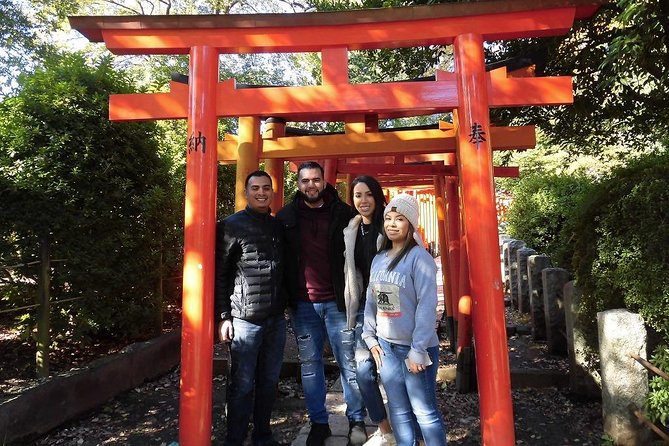
A red torii tunnel right in Tokyo. This private 6-hour route connects Shinto shrines and classic temple sights, with an English guide and hotel pickup, using the subway so you can focus on meaning, not maps. I love the Senbon Torii at Nezu Shrine, and I like how the day includes a traditional wedding procession at Meiji Jingu.
One catch: you’ll do plenty of walking and some stairs, so comfy shoes matter. It also requires good weather, and admission isn’t included for Nezu Shrine and Senso-ji Temple, so plan for a little extra on the day.
In This Review
- Key highlights you’ll actually feel
- A private, subway-friendly way to understand Shinto in Tokyo
- Price and what you’re really buying at $123.57
- Stop 1: Nezu Shrine and the Senbon Torii red gate tunnel
- Stop 2: Senso-ji Temple’s classic temple layout and pagoda focus
- Stop 3: Asakusa Shrine and Edo-period Sanjya Festival energy
- Stop 4: Meiji Jingu’s wedding procession moment
- How the 6-hour route keeps Tokyo from eating your day
- What to do before you go (so you enjoy it more)
- Who this tour suits best
- Should you book this Shinto history tour?
- FAQ
- What is the duration of the Tokyo Private Tour to Learn History and Shinto?
- Is hotel pickup included?
- Are admission fees included?
- What does the tour include?
- Is this tour private or shared?
- Does the tour use public transportation?
- What if the weather is bad?
Key highlights you’ll actually feel
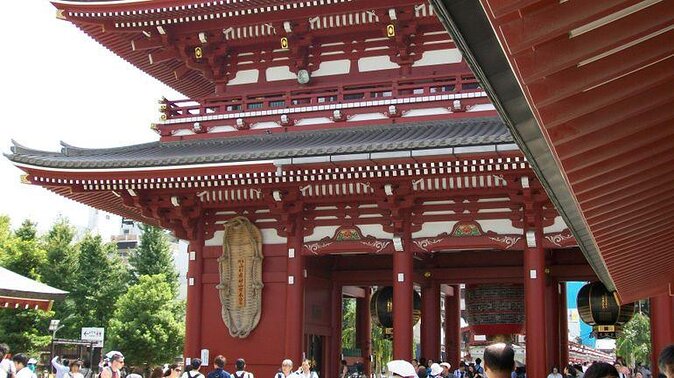
- Senbon Torii at Nezu: walk the iconic red torii gate tunnel and learn why it’s so special in Shinto practice
- Meiji Jingu wedding procession: a rare, moving moment that shows living tradition rather than museum history
- Subway-led route: you’ll travel by public transit with your guide, so you can copy the method later
- Big culture stops in one run: Nezu, Senso-ji, Asakusa, and Meiji Jingu in about six hours
- Guides like Yoshinori or Kono: expect friendly explanations and practical help getting oriented
A private, subway-friendly way to understand Shinto in Tokyo
This tour works because it’s built around how Tokyo really moves. You start with hotel pickup, then you ride the subway with your guide to key spiritual sites. That matters because shrines and temples are spread out, and the subway is the fastest way to keep the day from turning into slow logistics.
What you’re paying for is time and focus. An English-speaking guide doesn’t just point at buildings; they explain the stories behind the space—why torii gates matter, what a shrine is doing, and how to read the symbolic details you’ll see along the walkways. If you’ve ever wandered into a shrine and felt like you were missing half the meaning, this is the fix.
Also, it’s set up for a wide range of ages. It’s great for kids and adults, which usually means your guide won’t drown you in dates and terms. You’ll still get history, but it’ll come with human-scale context.
Price and what you’re really buying at $123.57
At $123.57 per person for a private tour, you should think “value for a guide-led day,” not “cheap entry fee.” Private tours in Tokyo often cost more because you’re paying for personalized navigation, interpretation, and a tight route that wouldn’t happen by accident.
Here’s what’s included that helps the math make sense:
- An English-speaking professional guide
- A private format (just your group)
- Hotel lobby meeting/pickup
- Public transportation to/from the guide (so your movement is handled as part of the experience)
And here’s what’s not included:
- Food and drinks
- Public transport for you (your own transit costs)
- Admission fees for customers (notably Nezu Shrine and Senso-ji Temple)
So the “best value” scenario is when you’ve got more than one person to share the cost, and you want a guided day where you don’t have to plan every transfer and stopping point. If you’re the type who enjoys doing your own itinerary, a private guide may feel pricey. If you want fewer decisions and more cultural context, it’s easier to justify.
Stop 1: Nezu Shrine and the Senbon Torii red gate tunnel
Nezu Shrine is where the tour starts leaning into visual symbolism. This Shinto shrine is dedicated to the gods that appear in Japanese mythology, and the site has a long thread—about 1900 years of history.
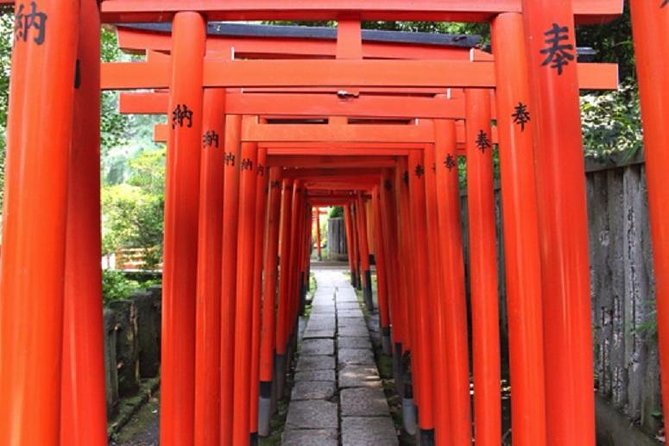
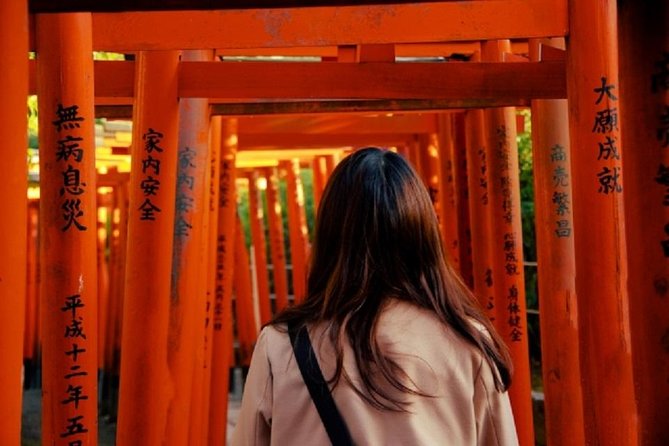
Then there’s the torii corridor: the Senbon Torii. You’ll walk through bright red torii gates that form a tunnel-like path. It’s not just photogenic. In Shinto practice, torii gates mark a boundary between ordinary space and sacred space. Seeing dozens of them stacked into a walkway makes that idea feel physical, not abstract.
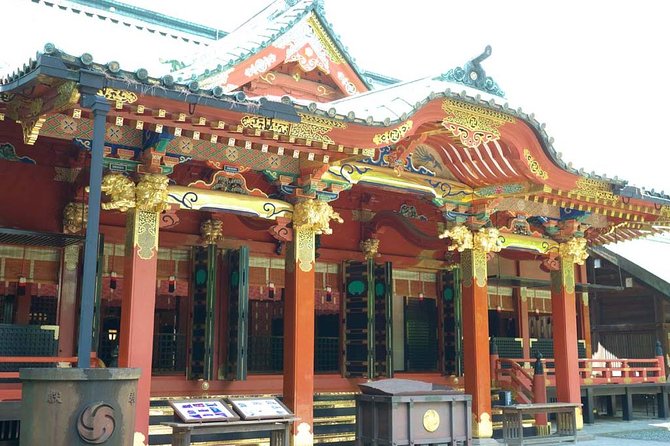
Nezu also includes an architectural side that’s worth slowing down for. Seven buildings in the shrine grounds are designated as important cultural properties. That means you’re not just looking at a shrine sign and moving on—you’re stepping into a place with recognized heritage value.
My practical advice: keep your phone charged and your pace easy here. The torii tunnel is a natural place to pause for photos, but the best experience is also the quiet in-between—taking a moment when the walkway straightens and the gates repeat into the distance.
Stop 2: Senso-ji Temple’s classic temple layout and pagoda focus
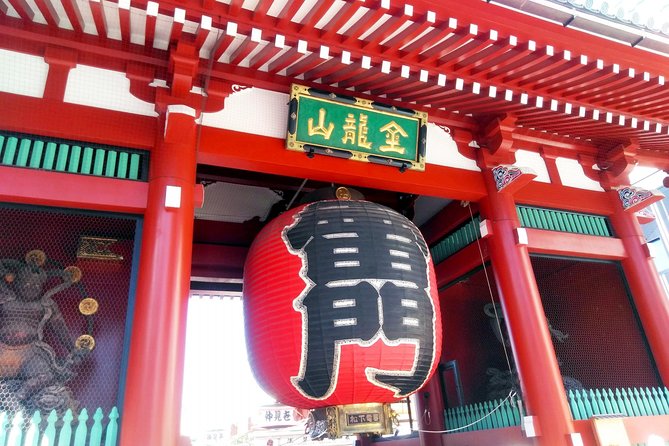
Next you’ll head to Senso-ji Temple, one of Japan’s most popular temple areas. It’s famous for good reason, but the useful part on a guided day is how you move through the complex without missing the key landmarks.
Inside the temple grounds, you can see major historical structures, including the five-story pagoda and the Hozo-mon Gate (Treasure-House Gate). Those are the kinds of sights that help you understand why Asakusa is associated with traditional Japan even though the neighborhood is far from “stuck in the past.”
This stop is also a reminder that temples in Tokyo often feel layered. You’ll see modern foot traffic around the older structures, and the guide’s job is to help you separate what’s symbolic from what’s just convenient for visitors. On this tour, that context helps you feel like you’re reading the site, not just passing it.
Budget note: admission isn’t included here, so plan for an extra small cost at the entrance.
Stop 3: Asakusa Shrine and Edo-period Sanjya Festival energy
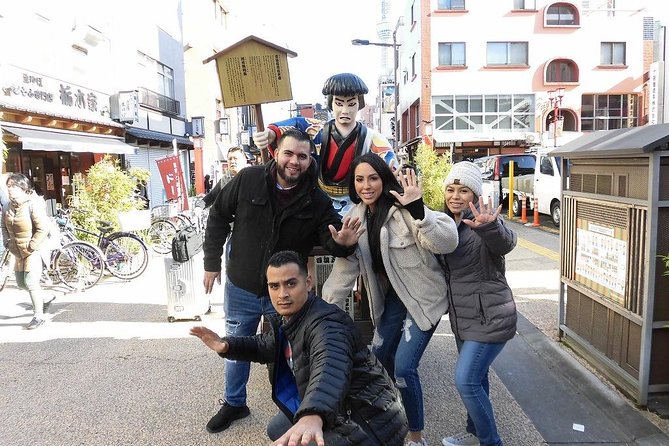
After Senso-ji, you’ll shift into Asakusa Shrine, which is a Shinto site tied to Edo-era identity. The shrine is also known by the name Sanjya Gongen, and the Sanjya Festival in May is one of the Edo’s three major festivals.
This stop is valuable because it ties religious space to cultural rhythm. It’s easy to treat shrines as static scenery. A guide helps you connect the buildings to the kinds of public events they support—celebrations that turn belief into community.
Even if you aren’t there in May, you can still feel the Edo-period flavor in the way the shrine is described and presented as part of a longer Tokyo story. You get a sense of how people have used these sacred spaces for generations, not just as stops on a sightseeing circuit.
Practical tip: if you’re traveling with kids, this is often a good mid-tour anchor. It’s easier for them to stay engaged when you’re linking what they see to a bigger event or tradition.
Stop 4: Meiji Jingu’s wedding procession moment
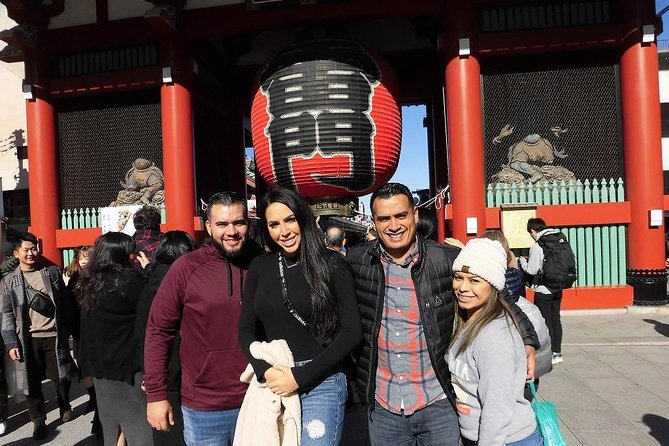
Meiji Jingu is one of the tour’s biggest “human moments.” The shrine was built in 1920, and it enshrines Emperor Meiji and Empress. The site draws worshipers throughout the year, and the contrast between the solemn shrine atmosphere and everyday visitor life is part of what makes it feel real.
The highlight here is the traditional Japanese wedding procession. That detail changes the stop from sightseeing into witnessing. When you see a ceremony tied to the shrine environment, you get a stronger sense of how Shinto symbolism operates in modern life, not just in old books.
You’ll also notice the guide’s role again. A good guide helps you notice what to look for—design elements, symbolic artwork, and delicate sculptures—so your time at Meiji Jingu becomes more than “standing in front of a main hall.”
My advice for this stop: give the ceremony space. Don’t sprint for photos. Instead, stand at a respectful distance, watch how the procession moves through the shrine setting, then circle back for calmer photos afterward.
How the 6-hour route keeps Tokyo from eating your day
A six-hour tour sounds straightforward until you think about Tokyo transit and walking time. The reason this format works is that it’s structured around nearby-to-noticeable connections using the subway. Your guide helps you navigate, and that can save you from doing guesswork at every transfer.
In practice, the guide experience matters a lot. Some guides on this tour—like Yoshinori (often called Yoshi) and Kono—bring a friendly energy and take the time to help you understand where you are and how to get around. That’s not just comfort. It’s a way to learn the city at the same time as the culture.
Because it’s private, your pace can be reasonable. If you want to move faster between shrines, you can. If you want a slower look at Nezu’s details or a longer pause at Meiji Jingu, you can ask.
What to do before you go (so you enjoy it more)
You’ll get the best day if you treat shrines and temples as living places. That means a few mindset shifts:
- Plan for walking time. Even with transit, the experience includes strolling through shrine grounds and moving between stops.
- Dress comfortably. You may stand, walk, and pause for ceremonies. Simple layers help if the weather changes.
- Bring water if you need it. Food and drinks aren’t included, so don’t assume you can buy your way through every break.
- Slow down at symbolism. Torii gates, shrine architecture, and ceremonial moments are the main event here. If you rush, you’ll miss what the guide is pointing out.
And remember the tour requires good weather. Tokyo can change quickly, so if your travel dates are flexible, aim for a day with stable conditions.
Who this tour suits best
This is a smart fit if you want:
- A guided introduction to Shinto practices and shrine meaning
- Major Tokyo religious sites in one manageable day
- A private day that works well for families and mixed ages
It’s also a good choice if you’re not in the mood to build an itinerary from scratch. Tokyo is amazing, but it can be mentally tiring to plan transit while you’re also trying to appreciate cultural sites.
Should you book this Shinto history tour?
I’d book it if you want a guided route that helps you understand what you’re seeing at Nezu, Senso-ji, Asakusa, and Meiji Jingu. The $123.57 per person price makes more sense when you value expert interpretation, hotel pickup, and a tight six-hour plan that uses the subway efficiently.
I’d think twice if:
- You prefer fully independent travel and don’t want to pay for a guide
- You’re sensitive to walking and stairs
- Your day depends on tight weather conditions and you don’t want any weather-related risk
If you’re aiming for the kind of Tokyo day where you leave with real meaning—torii symbolism, shrine context, and that wedding procession moment—this is a strong choice.
FAQ
What is the duration of the Tokyo Private Tour to Learn History and Shinto?
The tour runs about 6 hours.
Is hotel pickup included?
Yes. The meeting point is the hotel lobby, and pickup is offered by your guide.
Are admission fees included?
Admission fees are not included for Nezu Shrine and Senso-ji Temple. Asakusa Shrine and Meiji Jingu Shrine are listed as free.
What does the tour include?
It includes an English-speaking professional guide, a private tour, public transportation to/from the guide, and meeting in your hotel lobby.
Is this tour private or shared?
It’s private. Only your group participates.
Does the tour use public transportation?
Yes. The tour uses public transportation with your guide. Public transport for customers is not included.
What if the weather is bad?
The experience requires good weather. If it’s canceled due to poor weather, you’ll be offered a different date or a full refund. You can cancel for a full refund up to 24 hours in advance.
Historical Tours, compared.
 ★ 4.9Imperial Palace Japanese History Walking TourFrom $32987 reviews
 ★ 5.0Shinjuku Historical Walking Tour & Secret BackstreetsFrom $25530 reviews
 ★ 4.9From Tokyo: Nikko World Heritage Site Private Full-Day TripFrom $483243 reviews
 ★ 5.0Yanaka Historical Walking Tour in Tokyo’s Old TownFrom $81182 reviews
 ★ 5.0Kamakura Historical Walking Tour with the Great BuddhaFrom $98129 reviews
From Tokyo: Nikko World Heritage Sight Full Day Private TourFrom $362127 reviews
★ 5.0Kamakura Historical Walking Tour with the Great BuddhaFrom $98129 reviews
From Tokyo: Nikko World Heritage Sight Full Day Private TourFrom $362127 reviews
 ★ 4.8Yanaka District: Historical Walking Tour in Tokyo’s Old TownFrom $79117 reviews
 ★ 4.8Nikko Heritage & Nature Day Trip from TokyoFrom $39194 reviews
Browse the lists this tour appears in