
Reviewed · TOKYO
Tokyo: Old Town Asakusa Guided Tour -Senso-ji Temple Visit
Senso-ji is more than a photo stop. This 90-minute small-group walk in Tokyo’s old-town Asakusa helps you understand what you’re looking at—starting at the Kaminarimon Gate and continuing through the temple grounds with a guide who keeps the story clear and practical. I like that it’s small-group sized (max 10), so you can actually ask questions while you move through the crowds.
I also like the way the tour threads together temple meaning and real-life sightseeing. You’ll walk down Nakamise-dori for shopping street classics, and your guide helps you navigate what to look for and how not to feel rushed. One possible drawback: 1 hour 30 minutes is fast. If you love lingering at sacred spaces, you may want to add extra time on your own after the tour ends.
In This Review
- Key things that make this Senso-ji tour worth your time
- Tokyo’s Asakusa, minus the guesswork
- Where you start: Asakusa Azumabashi and an easy return
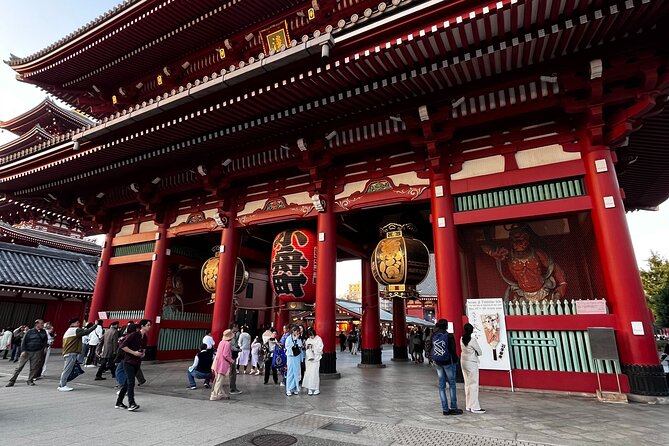
- Kaminarimon Gate: the first “I get it now” moment
- Nakamise-dori shopping street: souvenirs with a plan
- Main hall time: rituals, etiquette, and fortune drawing
- How the guide makes a short tour feel worth it
- Price and value: is $43 for 90 minutes reasonable?
- Best timing, weather, and comfort tips for Asakusa
- Who this tour suits (and who might want to skip it)
- Should you book this Senso-ji guided tour?
- FAQ
- How long is the Tokyo Old Town Asakusa guided tour to Senso-ji?
- How much does the tour cost?
- How many people are in the group?
- Where is the meeting point?
- Is the tour ticket mobile?
- Do I have to pay admission to enter Senso-ji on this tour?
- What happens if the weather is bad?
- Can I cancel for free?
- Does the tour allow service animals?
- Will I get confirmation after booking?
Key things that make this Senso-ji tour worth your time
- Up to 10 people: a more relaxed pace and easier question time.
- Famous landmarks, explained: Kaminarimon Gate, Nakamise-dori, and the main hall route make sense fast.
- Nakamise-dori shopping street guidance: you’re not just wandering stalls.
- Rituals + etiquette: you’ll learn how to behave and why people do things a certain way.
- Fortune-drawing time: a classic temple moment fits into the visit.
- English-speaking guide noted by past guests: Yoshiko / Yoshi has been praised for clear English and local insight.
Before you commit, see how this one stacks up against a few Tokyo favourites:
- Mt Fuji and Hakone 1-Day Bus Tour Return by Bullet Train★ 5.0 · 26,383 reviews
- 1-Day Tokyo Bus Tour★ 5.0 · 14,250 reviews
- Tokyo: teamLab Planets TOKYO Digital Art Museum Entry Ticket★ 4.6 · 9,779 reviews
Tokyo’s Asakusa, minus the guesswork
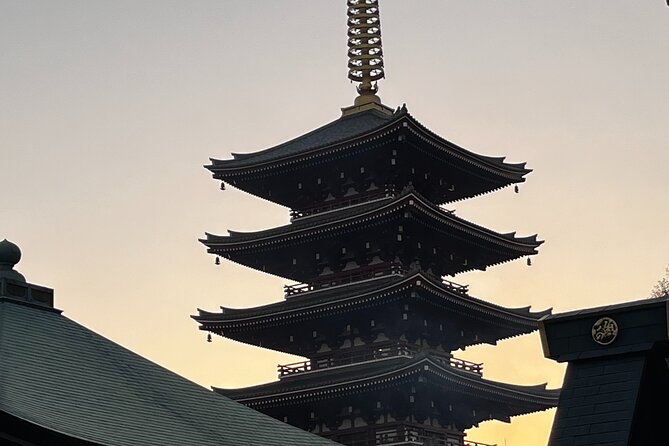
Senso-ji is one of those places where it’s easy to feel like you’re doing everything you’re supposed to do… without fully getting the point. This tour fixes that. You start with the big visual icons—especially the Kaminarimon Gate—then you move through the temple approach and grounds with explanations that connect the sights to everyday Japanese cultural habits.
The best part is the pacing. In a short time, you get oriented: where to look, what matters most, and what actions mean. That matters in Asakusa because the area can feel packed and noisy, and it’s easy to waste energy just trying to keep your bearings.
You’ll also get that helpful “local guide” layer. Past guests praised the guide Yoshiko (also referred to as Yoshi) for perfect English and solid local knowledge. In plain terms: you won’t just hear dates and names. You’ll hear what people do, why they do it, and how to be respectful while doing it.
Where you start: Asakusa Azumabashi and an easy return
Your meeting point is Burger King Asakusa Azumabashi, at Kaminarimon, 2-chōme (the full address includes Cross Bill Royal Palace). The tour ends back at the same meeting point, so there’s no mid-tour scramble to match your next train or plan.
Why I think that’s a plus: Asakusa sightseeing often creates small timing headaches. You arrive near one landmark, wander toward another, then realize you’re far from where you started. A start-and-finish loop helps you keep your day organized, especially if you’re combining this with other Tokyo stops.
It also helps that the tour is described as near public transportation. You don’t need to build your whole day around getting to one complicated remote corner. You can keep your schedule flexible.
Kaminarimon Gate: the first “I get it now” moment
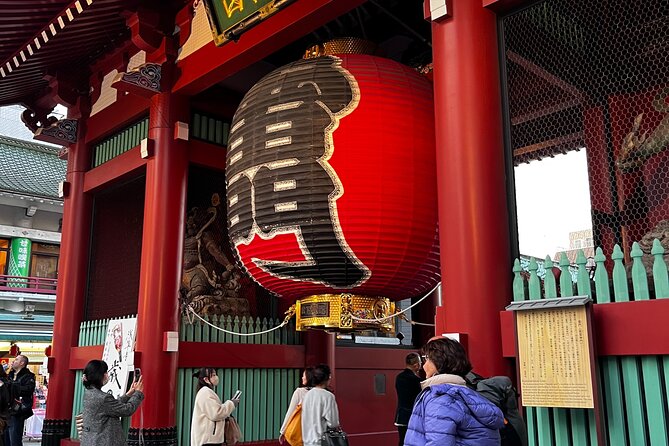
The Kaminarimon Gate is the headline view, but it’s more than an impressive entrance. This tour gives you the context early, so when you’re standing there with everyone else, you’re not just admiring the structure—you understand what you’re looking at and how it fits into the temple experience.
This is also where a small group helps. With up to 10 people, you’re more likely to stay together and still see what you need to see. You can catch the guide’s explanations without constantly watching where everyone is walking next.
Practical note: the gate area can get crowded fast. If you’re the type who likes calm photo moments, you’ll still be in the middle of it—but at least you’ll know what you’re seeing and where to look for the most meaningful angles once you move on.
Nakamise-dori shopping street: souvenirs with a plan
Nakamise-dori is where Asakusa starts to feel like an adventure. The shopping street is lined with stalls and classic temple-area treats. The temptation is real: snacks, handcrafted items, cute souvenirs everywhere you turn.
What makes this tour useful is the guidance. You’re not just dropped into a street of shops. Your guide helps you navigate what to find and how to shop without getting overwhelmed. Past guests specifically mentioned the guide helping with local food and treats, which is exactly what you want in this area.
And yes, this is where you can make your souvenir budget count. One guest shared that the guide helped them purchase a beautiful kimono. Even if you’re not buying something that big, you’ll benefit from having someone explain what you’re looking at—quality cues, common styles, and what kinds of shops tend to carry what.
If you’re traveling as a couple or in a small group, this is also where you can split your interests. One person might focus on snacks; another on crafts. The guide’s role is to keep the group moving while still giving you time to browse.





Main hall time: rituals, etiquette, and fortune drawing
The main hall visit is where the tour becomes more than sightseeing. You’ll hear about the temple’s traditions and the cultural practices around the space. That includes how to be respectful, not just what to photograph.
One of the nicest touches is fortune drawing. You’ll get the chance to do a classic activity that many visitors see but don’t fully understand. The guide’s role here is to help you connect the act to the setting, and to keep you from accidentally doing the wrong thing in the wrong place.
I like this part because it’s interactive in a gentle way. You can participate without it feeling complicated. And once you’ve done it, you’ll usually find the whole area feels more meaningful—because you’re not treating the temple like a museum display.
Important reality check: you’ll be walking in a real sacred space with other people doing the same rituals. Even with a guide, you’re going to encounter lines and crowds. Go in expecting that, and you’ll enjoy it more.
How the guide makes a short tour feel worth it
A 90-minute guided temple visit sounds simple. But the value depends on how the guide handles the “too much to see” problem. This one is built around key landmarks, and the guide helps you move between them with purpose.
Past guests praised Yoshiko/Yoshi for kindness, attentiveness, and a clear way of explaining history and significance. That combination is what turns the tour from a walk into a learning experience you can actually use during the rest of your Tokyo trip.
You also get real-time help that you simply can’t get from reading a sign. For example, the guide can point out which corners are more interesting and how to approach the space respectfully. If you’ve ever been in a crowded place with conflicting crowd directions, you already understand why this matters.
And if you’re worried you’ll feel stuck in a rigid itinerary: the small-group size helps. You can ask questions as you go, and the guide can adjust pacing when someone needs an extra moment at a stall or at a viewpoint.
Price and value: is $43 for 90 minutes reasonable?
At $43 per person for about 1 hour 30 minutes, this isn’t the cheapest way to see Senso-ji. But it’s also not priced like a private tour. So you’re paying for something specific: a guided route through the temple highlights plus help with navigating Nakamise-dori.
Here’s how I’d frame the value:
- If you’d otherwise visit on your own, you’d still spend time figuring out what to prioritize and how to behave respectfully in a live religious setting.
- If you’re paying for a guide, you’re buying speed with understanding. In a city like Tokyo, that’s the difference between “I went there” and “I understood what I saw.”
- Admission for the temple stop is listed as free in the tour details, which helps the overall cost feel more justified.
For most people, the question isn’t whether it’s worth $43 on paper. It’s whether you want the shortcut that includes explanation, routing, and etiquette. If yes, the price starts to make sense.
Best timing, weather, and comfort tips for Asakusa
This experience requires good weather. That’s a straight-up consideration because Asakusa temple visits are mostly outdoor walking. If you’re booking on a date that looks questionable, you may want a backup plan in mind so you’re not disappointed if weather forces a change.
Also, assume you’ll walk. Comfortable shoes are not optional here. Even for a short tour, the pace can pick up when you’re moving from gate to shopping street to main hall areas.
Finally, bring realistic expectations about crowds. Even when you go with a guide, you’re still in a famous Tokyo neighborhood. Think of this tour as a way to handle the crowd with less confusion, not a way to avoid it completely.
Who this tour suits (and who might want to skip it)
This is a great fit if you want your first Senso-ji visit to come with meaning, not just movement. It’s also ideal if you:
- prefer small-group tours over large bus-style crowds
- want help shopping along Nakamise-dori without getting overwhelmed
- care about doing cultural practices respectfully
It may be less ideal if you want a long, slow temple day. With only about 1 hour 30 minutes, you’ll cover the highlights, but you won’t have endless quiet time to sit and absorb the atmosphere.
And if you already know Asakusa well and you’re comfortable navigating cultural sites on your own, you might decide you don’t need a guide. But most first-timers benefit from the structure fast.
Should you book this Senso-ji guided tour?
I’d book it if you’re visiting Tokyo and want a smarter first pass through Senso-ji and Nakamise-dori. The combination of landmark orientation, explanations from a guide praised for clear English (Yoshiko/Yoshi), and hands-on temple moments like fortune drawing makes it feel like more than just a “see the sights” walk.
I’d hesitate if you already planned to spend several hours in Asakusa and you want total freedom to wander without a fixed route. In that case, you may prefer independent time before or after the tour.
If you want an efficient, friendly introduction to Asakusa’s spiritual side—this hits that target.
FAQ
How long is the Tokyo Old Town Asakusa guided tour to Senso-ji?
It’s approximately 1 hour 30 minutes.
How much does the tour cost?
The price is $43.00 per person.
How many people are in the group?
The maximum group size is 10 travelers.
Where is the meeting point?
The tour starts at Burger King Asakusa Azumabashi, Tokyo, Taito City, Kaminarimon, 2-chōme 206 Cross Bill Royal Palace (111-0034).
Is the tour ticket mobile?
Yes, it uses a mobile ticket.
Do I have to pay admission to enter Senso-ji on this tour?
The tour details list admission for the Senso-ji visit as free.
What happens if the weather is bad?
The tour requires good weather. If it’s canceled due to poor weather, you’ll be offered a different date or a full refund.
Can I cancel for free?
Yes. You can cancel up to 24 hours in advance for a full refund.
Does the tour allow service animals?
Yes, service animals are allowed.
Will I get confirmation after booking?
Confirmation is received at the time of booking.
More Tour Reviews in Tokyo



Fresh reviews from around Tokyo






Tokyo, compared.
 ★ 5.0Mt Fuji and Hakone 1-Day Bus Tour Return by Bullet TrainFrom $16326,383 reviews
 ★ 5.01-Day Tokyo Bus TourFrom $12914,250 reviews
 ★ 4.6teamLab Planets TOKYO Digital Art Museum Entry TicketFrom $259,779 reviews
 ★ 4.0Mt Fuji & Hakone Cruise, Drum Show Bullet Train 1 Day from TokyoFrom $1497,413 reviews
 ★ 5.0Shinjuku Food Tour (13 Dishes at 4 Local Eateries)From $866,603 reviews
 ★ 4.4Tokyo Mt Fuji 5th St & Hakone Cruise Bus Tour w/Bullet TrainFrom $1545,024 reviews
 ★ 5.0Flagship 2-Hours Official Street Go-Kart Tour – Tokyo Bay ShopFrom $644,974 reviews
 ★ 4.5From Tokyo: Mount Fuji Full-Day Sightseeing TripFrom $684,970 reviews