
Reviewed · TOKYO
Tokyo: Learn about Japanese Traditional art KABUKI in Ginza
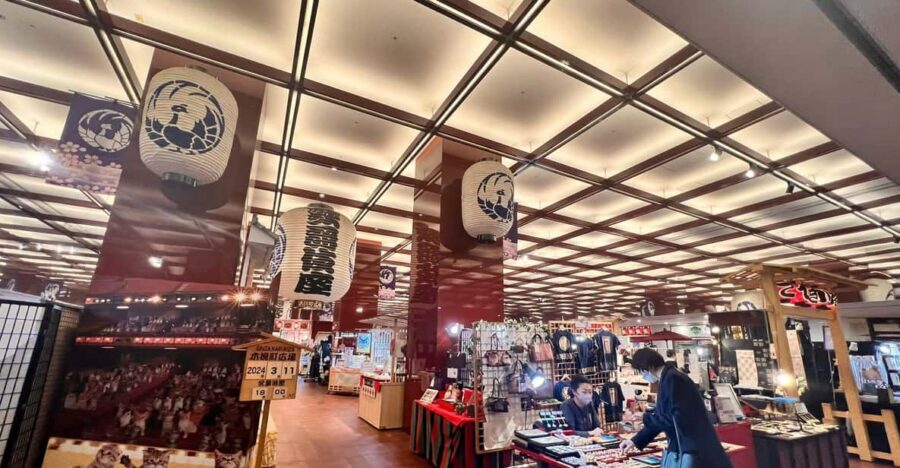
Kabuki, fast and close by. In Ginza, this small-group tour gives you a short, guided walk through the Kabukiza gallery so you can understand what Kabuki is about without committing to a full night at the theater. I like that it’s timed for people with limited hours, and I like the small group size—up to 9—so you’re not just herded through.
One thing to note up front: Kabuki viewing is not included. If you’re hoping for a short performance in the schedule, you’ll want to book that separately. On the plus side, the second stop at Mitsukoshi Ginza is a fun contrast—browse for quality goods and traditional crafts after you’ve learned the basics.
In This Review
- Key things you’ll notice on this Ginza Kabuki tour
- Kabukiza in Ginza: the theater you can’t miss
- The 90-minute plan that fits a tight Tokyo day
- Kabukiza gallery time: what you’ll do and what you won’t
- Shopping at Kabukiza: where theater souvenirs actually matter
- Mitsukoshi Ginza: an old department store break after Kabukiza
- The guide factor: friendly, informative, but clarity varies
- Price and value: does $51 make sense for you?
- Who this Ginza Kabuki tour suits best
- Quick practical notes before you go
- Should you book this Kabuki-in-Ginza tour?
- FAQ
- How long is the tour?
- Is Kabuki viewing included?
- What is included in the price?
- Where do we meet?
- Is the tour available in English?
- How big is the group?
Key things you’ll notice on this Ginza Kabuki tour
- Kabukiza gallery focus, built for a quick intro if you skip a full show
- Kabukiza-only souvenir shopping, where you can hunt for items you won’t find elsewhere
- English live guide, with small-group pacing (max 9 people)
- Nissan Crossing meeting point in the heart of Ginza for easy orientation
- A second stop at Mitsukoshi Ginza, including traditional craft and gift browsing
Before you commit, see how this one stacks up against a few Tokyo favourites:
- Mt Fuji and Hakone 1-Day Bus Tour Return by Bullet Train★ 5.0 · 26,383 reviews
- 1-Day Tokyo Bus Tour★ 5.0 · 14,250 reviews
- Tokyo: teamLab Planets TOKYO Digital Art Museum Entry Ticket★ 4.6 · 9,779 reviews
Kabukiza in Ginza: the theater you can’t miss
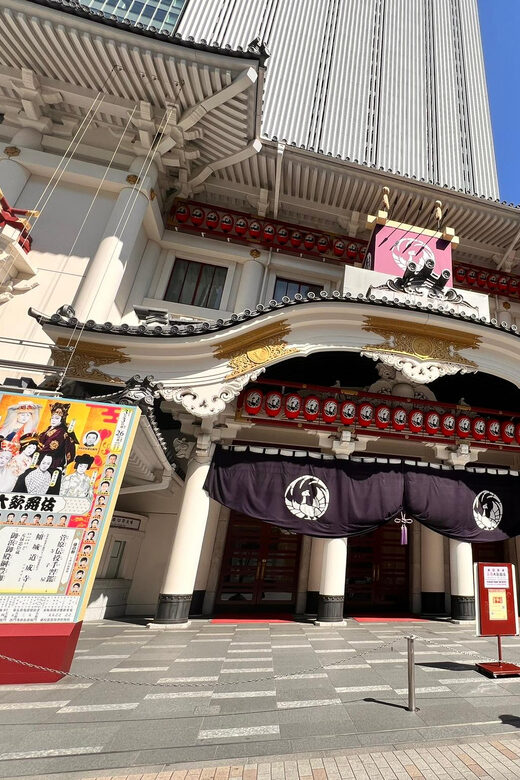
Ginza is where Tokyo goes to look polished. Even if you’ve never seen a Kabuki show, the Kabukiza building is the kind of landmark that makes the neighborhood feel themed. Your tour uses that advantage. You get the visual hit first—seeing the theater—then the guide helps you connect what you’re looking at to what Kabuki is as an art form.
This is the key idea behind the experience: it’s designed for travelers who feel Kabuki is “a must,” but don’t want to spend hours sorting tickets, timing, and show seats. Instead, you get an organized visit to the Kabukiza exhibits while everything stays compact and doable.
And because this is a guided experience, you’re not left staring at display cases and guessing. You’ll walk through the gallery with a live English guide and learn enough to feel oriented rather than lost.
The 90-minute plan that fits a tight Tokyo day
Let’s talk timing, because that’s where this tour earns its place. At 90 minutes, you’re looking at a short loop: meet, walk, gallery intro, then shopping time, then a department store stop. It’s not a marathon, so you can pair it with other Ginza plans without feeling like you’ll run out of daylight.
The duration matters most if:
- you’re in Tokyo for a limited number of days
- you want a Kabuki taste without committing to a performance schedule
- you enjoy structured “see and understand, then shop” outings
It’s also why the small group size matters. With up to 9 participants, the guide can keep things moving while still answering questions. That’s especially helpful when you’re trying to learn something that’s visual and cultural, not just informational.
Kabukiza gallery time: what you’ll do and what you won’t
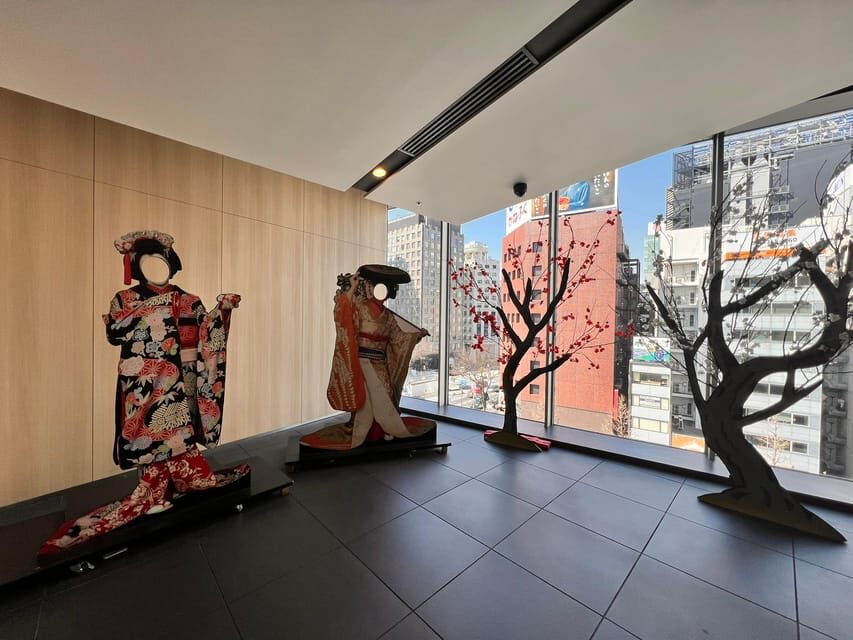
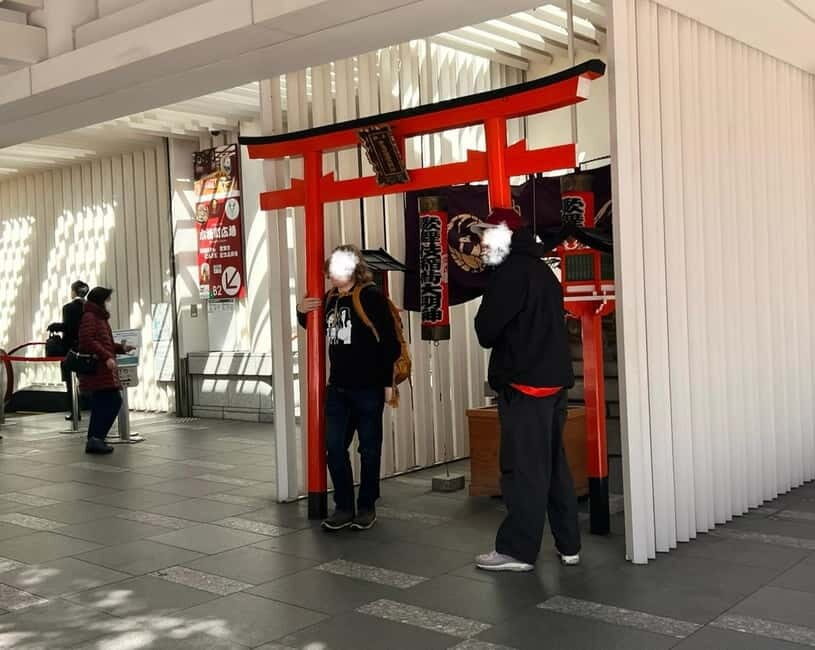
This tour’s heart is learning Kabuki through the Kabukiza gallery. Expect a guided introduction focused on the theater and the world around Kabuki. You’ll also be able to see the Kabukiza building itself, so it doesn’t feel like a museum-only detour.
Here’s the part you should get clear before you go: Kabuki viewing is not included. The experience is about cultural learning and theater-related browsing. That means there’s no guaranteed show moment during your 90 minutes.
Why this design works for some people:
- If you don’t have time to watch a performance, you still leave with context.
- If your main goal is the theater setting plus souvenir hunting, you get exactly that.
- If you’re traveling with mixed interests, this can be a compromise that doesn’t require everyone to sit through a show.
A possible drawback: if you expected a performance (even a short one), your time may feel thin. The tour can still teach you, but it won’t give you the moment of watching Kabuki on stage.
Shopping at Kabukiza: where theater souvenirs actually matter
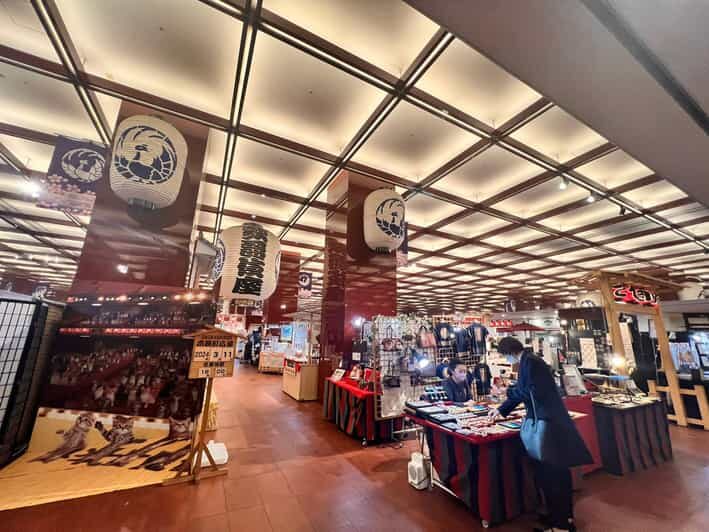
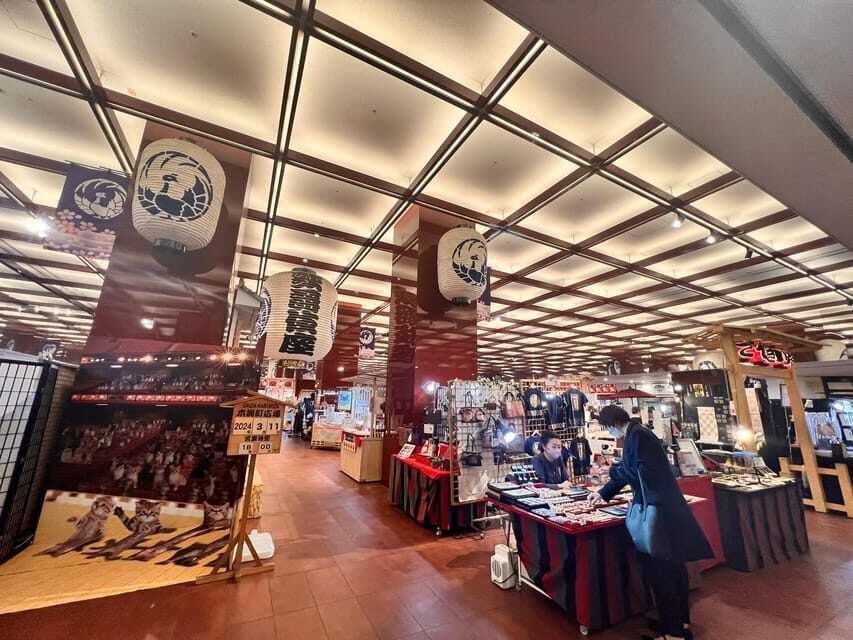
One of the highlights is the chance to buy souvenirs that are only available at Kabukiza. That’s a big difference from generic souvenir stops. You’re not just browsing gifts; you’re shopping in the theater’s own orbit, where the merchandise ties directly to what you saw in the gallery.
This is also where the tour becomes more than “learning.” Japan shopping can be half the experience, and Ginza has lots of options. By focusing your time at Kabukiza, you’re more likely to find items that feel specific to the theater rather than repeat copies of the same magnet-and-charm lineup.
Just be smart about expectations on cost: the tour does not include shopping, and the shopping budget is up to you. If you love gifts, set a target amount before you walk in. If you’re a light shopper, you’ll still enjoy the browsing without feeling pressure.





Mitsukoshi Ginza: an old department store break after Kabukiza
After Kabukiza, you’ll head to Mitsukoshi Ginza branch. The tour highlights it as the Japanese oldest department store, and that framing makes sense for why it’s a good pairing. You go from theater exhibits into a classic retail setting where you can browse high-quality traditional crafts and other goods.
Think of this stop as a palate cleanser. It’s not another museum-style lesson. It’s your chance to translate what you saw into something tangible—handmade craft items, gifts, or Japanese goodies you can bring home.
Because this is a short tour, the Mitsukoshi stop is best used for:
- browsing with intention (pick categories you care about)
- comparing what you find there to what you saw at Kabukiza
- grabbing a snack or small treat if you want a break
You don’t need to buy anything to enjoy the store itself. The value is in walking through a historic retail landmark right after a cultural theater visit.
The guide factor: friendly, informative, but clarity varies
A live English guide is included, and that matters a lot when you’re learning through exhibits instead of reading pamphlets. One English guide named Nori stood out for friendliness in at least one account of the experience, and another account emphasized that the guide was informative.
Still, there’s a caution worth taking seriously: one experience noted that the Kabuki theater history intro felt basic, and that might be related to language clarity. That doesn’t mean the tour is bad. It does mean you should treat this as a short orientation, not a deep lecture.
How to get the most from your guide:
- Ask a simple question early, like what you should pay attention to in the gallery.
- If you want more detail, ask for it directly.
- If your group has different levels of interest, you’ll usually get more value by guiding the discussion.
If you’re someone who needs a heavy history briefing to feel satisfied, you might want a longer option elsewhere. This one aims for quick understanding and good timing.
Price and value: does $51 make sense for you?
At $51 per person, the pricing is easiest to judge by what’s included. The tour includes a tour guide, plus your guided access to Kabukiza’s exhibits and the planned stops around Kabukiza and Mitsukoshi.
What’s not included:
- the cost of shopping
- Kabuki viewing (no show ticket is part of this)
So the value equation depends on your priorities. This tour is good value if:
- you want a guided Kabuki introduction without a performance
- you want the theater-only souvenir shopping opportunity
- you want a second stop at Mitsukoshi with minimal extra planning
It may feel less valuable if:
- you thought the price bought you a Kabuki show
- you want an in-depth history lesson with lots of detail
- you only care about stage performance and not exhibits or shopping
One practical tip: if you truly want a Kabuki performance, treat this as the warm-up. Use it to understand the basics, then spend your main money on the show.
Who this Ginza Kabuki tour suits best
This is a strong match for:
- first-timers who want a taste of Kabuki without a big time commitment
- people who enjoy structured cultural stops and then want free time to shop
- visitors staying in central Tokyo who can reach Ginza easily
- travelers who prefer a small group and an English guide rather than self-guided wandering
It’s a weaker match if:
- you’re coming specifically for a Kabuki performance
- you expect the tour to replace show tickets
- you want a very detailed historical deep dive (this one stays short and practical)
Quick practical notes before you go
You’ll meet in front of NISSAN CROSSING, which is handy if you’re already using Ginza landmarks to navigate. The tour runs for 90 minutes, and it’s limited to up to 9 participants. English is the language on the live guide, and it’s designed for a smooth experience without complicated logistics.
If you’re the type who likes flexibility, you can book now and pay later, and you can cancel up to 24 hours in advance for a full refund. That’s useful if you’re still shaping your Tokyo schedule.
Should you book this Kabuki-in-Ginza tour?
Book it if you want a quick, guided Kabuki introduction at Kabukiza, plus the chance to shop souvenirs tied directly to the theater, then end with browsing at Mitsukoshi Ginza. It’s a smart “small dose” option for travelers who don’t have time for a show.
Skip it if your main goal is to watch Kabuki on stage. Since Kabuki viewing isn’t included, you may walk away feeling like you paid for learning and shopping when you really wanted a performance moment.
If you’re okay with that trade-off, you’ll likely enjoy the practicality: central meeting point, compact timing, and a guided path through the Kabukiza exhibits that helps you feel oriented fast.
FAQ
How long is the tour?
The tour lasts 90 minutes.
Is Kabuki viewing included?
No. Kabuki viewing is not included in this experience.
What is included in the price?
The tour includes a tour guide. Shopping costs are not included.
Where do we meet?
You meet in front of NISSAN CROSSING.
Is the tour available in English?
Yes. The live tour guide is English.
How big is the group?
The group is limited to 9 participants.
More Tour Reviews in Tokyo



Fresh reviews from around Tokyo






Tokyo, compared.
 ★ 5.0Mt Fuji and Hakone 1-Day Bus Tour Return by Bullet TrainFrom $16326,383 reviews
 ★ 5.01-Day Tokyo Bus TourFrom $12914,250 reviews
 ★ 4.6teamLab Planets TOKYO Digital Art Museum Entry TicketFrom $259,779 reviews
 ★ 4.0Mt Fuji & Hakone Cruise, Drum Show Bullet Train 1 Day from TokyoFrom $1497,413 reviews
 ★ 5.0Shinjuku Food Tour (13 Dishes at 4 Local Eateries)From $866,603 reviews
 ★ 4.4Tokyo Mt Fuji 5th St & Hakone Cruise Bus Tour w/Bullet TrainFrom $1545,024 reviews
 ★ 5.0Flagship 2-Hours Official Street Go-Kart Tour – Tokyo Bay ShopFrom $644,974 reviews
 ★ 4.5From Tokyo: Mount Fuji Full-Day Sightseeing TripFrom $684,970 reviews