
Reviewed · TOKYO
Tokyo: Knife Making Workshop (Sharpening, Engraving)
Your hands learn Japanese steel fast.
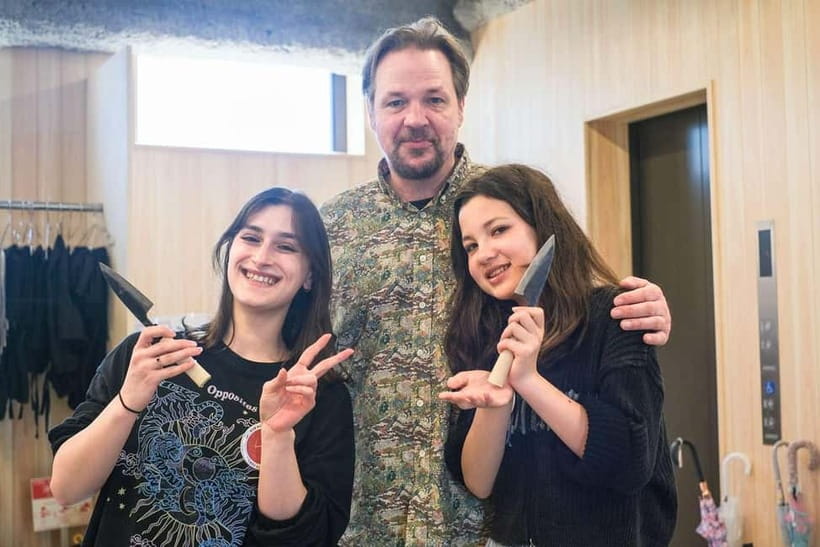
In Asakusa at BUB Activity Center, you sharpen a chosen knife, assemble it, and engrave your name in Japanese on the handle. I like how hands-on the whole session feels, with real coaching so you’re not just watching from the sidelines.
You start by slipping into a light version of a haori to protect your clothes, then you relax with tea or juice while the instructor explains the world behind Japanese blades—knives and swords, and how they differ. English support is part of the package, and you may be guided by friendly English-speaking staff like Mori and Agata, or Lisa and Joe, depending on the day.
One thing to keep in mind: the engraving is the part where steady hands matter. You’ll get help, but your first attempt might not look like perfect calligraphy right away.
In This Review
- Key Things That Make This Workshop Worth It
- Knife Making Workshop in Asakusa: a 90-minute hands-on souvenir
- Finding BUB Activity Center on the 5th Floor
- Haori, tea, and the short history of Japanese knives and swords
- Picking Your Blade: up to five knife types (and smart upgrade choices)
- Sharpening like a pro: the coached, meditative edge
- Assembling the handle and engraving your name in Japanese
- What’s included in the box: knife, key-holder, snacks, and packaging
- Price check: why $161 feels reasonable for this kind of souvenir
- A note on rules, observers, and how to get home with your knife
- Who should book this Tokyo knife workshop (and who might not)
- Should you book this Tokyo knife workshop or not?
- FAQ
- How long is the Tokyo knife making workshop?
- Where is the meeting point?
- Do I need prior experience to sharpen a knife?
- What language is the workshop taught in?
- What knife do I take home if I choose the standard option?
- Can I choose different types of knives to sharpen?
- What is included besides the knife?
- Can I engrave my name on the handle?
- Can others watch if I’m doing the workshop?
- How should I transport the knife after the workshop?
Key Things That Make This Workshop Worth It
- Pick your knife style: up to five options, with some upgrade fees for larger styles
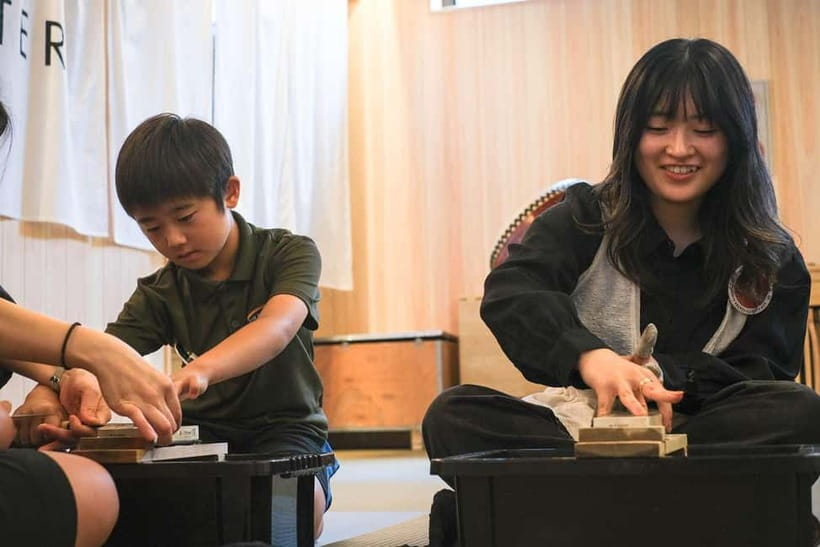
- Real coaching, not just a demo: staff correct your sharpening motions as you work
- A short history lesson with practical meaning: you learn how Japanese knives (and swords) fit together
- Engrave your name in Japanese: it’s personalized, and staff teach the basics if you want
- Take-home extras go beyond the knife: snacks, tea, aesthetic packaging, and a custom key-holder
- You leave with a plan for the edge: you get advice on care so the knife stays sharp
Before you commit, see how this one stacks up against a few Tokyo favourites:
- Mt Fuji and Hakone 1-Day Bus Tour Return by Bullet Train★ 5.0 · 26,383 reviews
- 1-Day Tokyo Bus Tour★ 5.0 · 14,250 reviews
- Tokyo: teamLab Planets TOKYO Digital Art Museum Entry Ticket★ 4.6 · 9,779 reviews
Knife Making Workshop in Asakusa: a 90-minute hands-on souvenir
This is the kind of activity that sounds specific until you’re doing it. In about 90 minutes, you go from choosing your blade to walking out with a finished, customized Japanese-style knife—plus your own name on the handle. It’s tactile. It’s focused. And it turns a “souvenir shopping” day into something you actually practiced.
The workshop is also structured so you get more than one payoff. First, you sharpen. Then you assemble. Finally, you engrave. That last step is where it feels most personal, because you’re turning your name into part of the knife’s identity—not just attaching a label to your day.
You’ll also get a culture lesson that’s not stuck in theory. You learn the history and differences behind Japanese knives and swords, and you also get practical context for kitchen knives—so you can make better choices later when you’re browsing knives in Tokyo.
Finding BUB Activity Center on the 5th Floor
The meeting point is BUB Activity Center in Asakusa (Taito-ku, Asakusa, 2 Chome 6-11, Heiwa Building). Plan to take the elevator to the 5th floor. Simple, but worth noting because this is one of those locations where people get stuck searching for the right entrance.
Once you’re inside, the vibe is set quickly. You get a light haori to protect your clothes, and you’ll be guided through the start of the session before you touch any sharpening gear. That helps if you’re new—no guesswork, no “figure it out” moment.
If you’re coming with someone who wants to watch, there’s an observation option. You’ll pay an observation fee on site if your friend or family member doesn’t participate.
Haori, tea, and the short history of Japanese knives and swords
Before the workshop turns into grinding and polishing, you get a calmer intro. You’ll sit down with tea or juice, and the instructor shares cultural and historical context around Japanese knives and swords. That’s not just trivia. It helps you understand why the sharpening and finishing steps matter.
This is also where English support really matters. Multiple staff members are described as fluent in English, and the team is set up to keep explanations clear and simple. You’re not left translating. If you want to ask questions, you can—there’s time for chat and casual conversation with the staff.
One highlight you’ll likely notice: the session explains differences between Japanese swords (like katanas) and Western swords, and then connects that thinking back to kitchen knives. It’s a tidy way to connect art, tools, and daily use—without making you read a textbook while your hands are itching to start.
Picking Your Blade: up to five knife types (and smart upgrade choices)
You get to choose the type of knife you want to sharpen, and the workshop offers up to five types. Some knife types are included as part of the standard experience, while certain larger styles cost extra.
The key included baseline is a standard size multitasking knife that you take home. If you want to go beyond that, the workshop mentions extra fees for larger knife styles such as usuba, deba, and petit yanagiba. Those names can feel intimidating, but the advantage of this class is that the instructor helps you think through what you’re choosing.
Here’s how to make this choice work for you:
- If you want the easiest path to something practical, stick with the included multitasking knife.
- If you cook with Japanese knives already (or you’re shopping for one), the larger styles may be worth the extra cost for the specific feel and edge.
- If you’re new, ask for advice. You’ll get personalized guidance while you sharpen, and that will help you decide whether an upgrade makes sense.
Also note: knife size matters during sharpening. You’re working with concentration, and a bigger blade can mean more effort. One reason this workshop is so loved is that staff keep checking your motions so you don’t get lost mid-process.





Sharpening like a pro: the coached, meditative edge
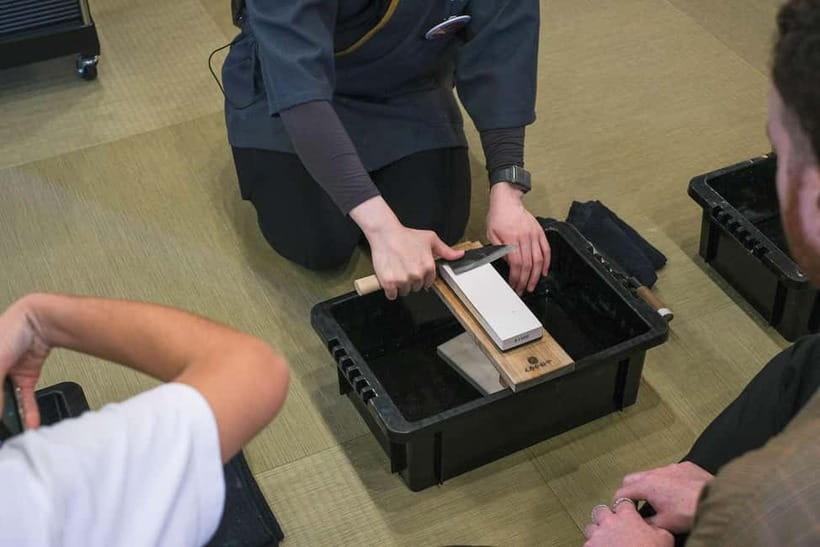
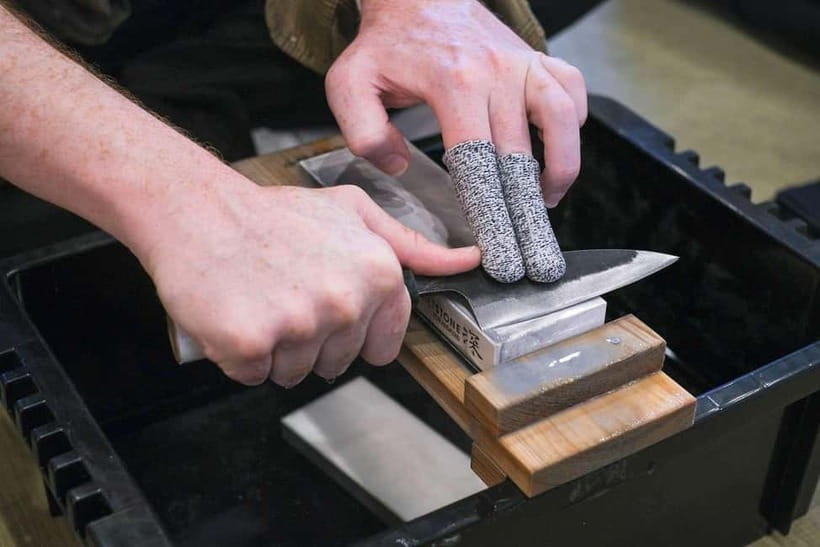
The sharpening portion is where the workshop becomes more than a craft project. It’s described as meditative and stress-relieving, mainly because you’re forced to slow down and focus on precise movements.
You’ll sharpen your chosen blade step by step. English-speaking crew members stay close, correct your technique, and help you adjust your grip and angle. That coaching is a big deal for beginners. Sharpening is one of those skills where a small change can make a visible difference, and you don’t want to guess for 90 minutes.
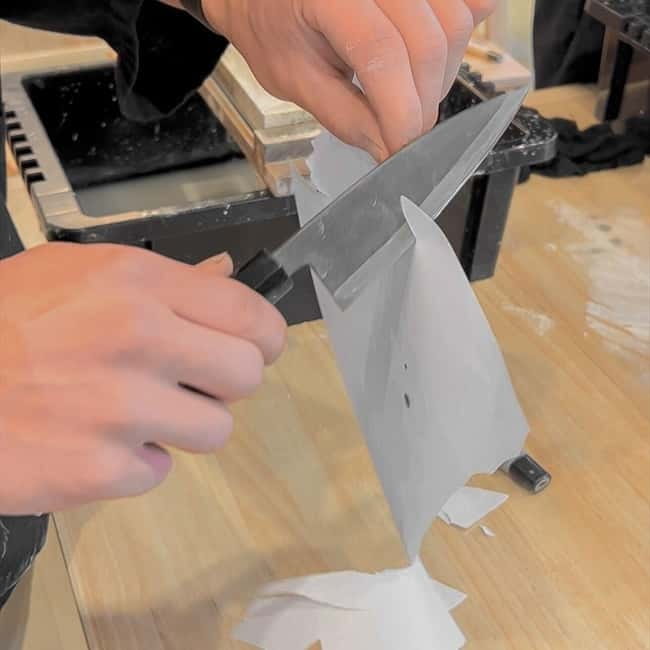
You’ll also notice the work has a satisfying rhythm. As you polish and refine the edge, the knife changes. That’s the moment the workshop earns its keep: you’re not just assembling a souvenir. You’re finishing something you can actually use.
One practical thing to remember: sharpening requires concentration, not brute strength. If you’re the type who wants to rush, try to fight that instinct. The process rewards patience.
And yes, you’ll learn how to care for your knife. The class frames it as part of the art. So later, when you’re tempted to toss a new knife into the drawer, you’ll already have the basics fresh in your mind.
Assembling the handle and engraving your name in Japanese
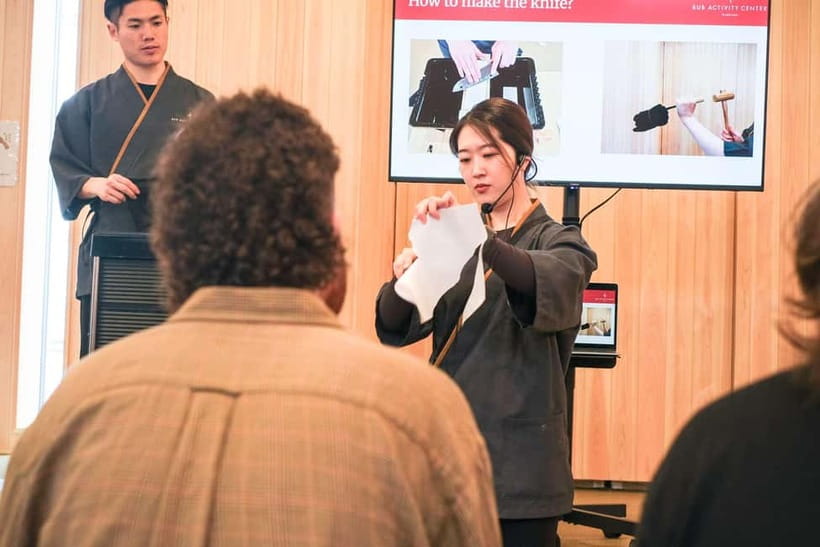
After sharpening, you move into assembly. You attach the handle using a traditional hammer method. It’s a fun pivot from fine-detail sharpening to hands-on construction—still controlled, but more physical.
Then comes the moment you’ll remember in Tokyo: engraving your name in Japanese on the handle. You’ll receive guidance for Japanese basics if you’re interested, and staff help you get set up with the characters. Some people find this challenging, but that’s also why it feels special. Your knife becomes truly yours.
You’re not limited to just your name. The workshop also says you can engrave a picture or other ideas, as long as you bring your imagination to the tool. A helper will guide you through the process, so you’re not stuck guessing how deep or detailed to go.
Two practical tips for engraving success:
- Slow down. If you rush the characters, you’ll feel it immediately.
- Choose what you want to engrave thoughtfully. The class gives Japanese letter engraving a highlight, so if you want maximum meaning, use your name.
Is it perfect calligraphy on day one? Maybe not. That’s the drawback to keep in mind. But the workshop’s staff approach is supportive. You’ll still walk out proud, even if you know you’re learning as you go.
What’s included in the box: knife, key-holder, snacks, and packaging
This workshop isn’t only about the work you do with your hands. You also get thoughtful extras that make it feel like an experience, not a “buy a thing” pit stop.
Included items:
- A standard size multitasking knife to take home
- The crafted experience itself (sharpening + assembling + engraving)
- Japanese snacks and tea or juice
- Bilingual staff assistance
- Aesthetic packaging
- A customized key-holder with a unique design
That packaging and key-holder matter more than you’d think. They solve the souvenir question. You’re leaving with something you can put on a shelf or gift without immediately worrying about wrapping or presentation.
One more transport note you should plan for: you’re advised to put your knife box into your check-in luggage or ask the staff to ship it. That’s a lifesaver if you’re traveling with carry-on only or you don’t want to deal with airline rules in transit.
Price check: why $161 feels reasonable for this kind of souvenir
At $161 per person, you’re paying for three things that are hard to replace with casual shopping:
1) Instruction and coaching while you sharpen and assemble
2) The personalized engraving on the knife’s handle
3) The take-home package: a usable knife plus extras (snacks, tea, key-holder, packaging)
If you were only buying a knife, you’d pay for the steel and brand—not for the lesson and craft process. Here, the price buys time, attention, and skill transfer. It also buys the chance to choose from multiple knife types (with upgrades for some), so your finished product matches your interest level.
Could you spend less by buying a knife set on your own? Sure. But you’d lose the skill you practiced—plus the personalized Japanese engraving that turns your blade into a memory.
Also, remember the potential add-on cost: larger knife styles can cost extra. Still, the included knife is part of the deal, so you don’t have to upgrade to get a complete experience.
A note on rules, observers, and how to get home with your knife
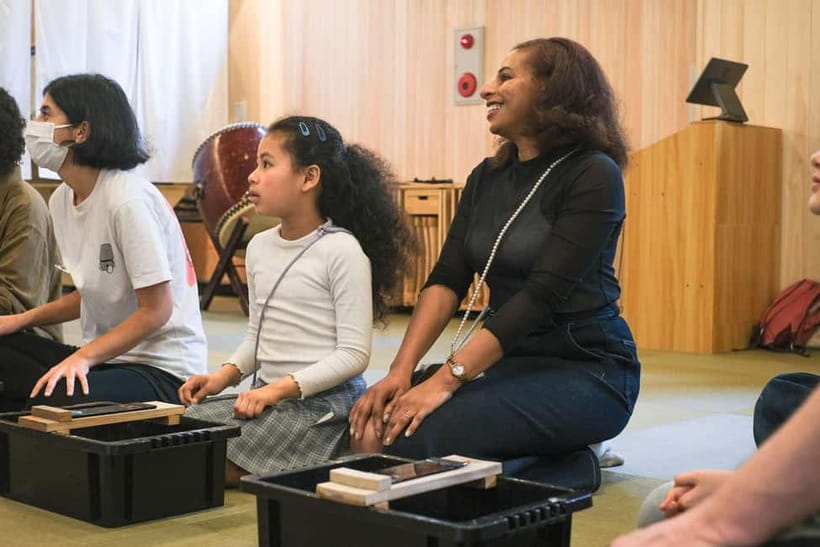
A couple of practical boundaries help keep the workshop safe and clean:
- Alcohol and drugs are not allowed.
- If someone comes with you to watch instead of participate, an observation fee is charged on site.
This matters for planning if you’re traveling as a pair. One practical strategy: if both people want to do the full sharpening and engraving, book two spots. If one person is “just watching,” plan for the observation fee rather than assuming it’s free.
When it’s time to leave, think ahead about luggage. The knife box goes into check-in luggage, or you can ask staff about shipping. Either way, you should keep that last step in mind so you don’t scramble at the gate.
Who should book this Tokyo knife workshop (and who might not)
You’ll probably love this workshop if:
- You like hands-on skills and want to learn something you can use back home.
- You’re curious about Japanese tools, not just Japanese aesthetics.
- You want a souvenir that you helped make, and you can explain how it was sharpened.
It may not be the best fit if:
- You want a passive activity with zero concentration.
- You only care about shopping time and don’t want to work for your souvenir.
- You expect engraving to look perfect on the first try. The staff helps, but it’s still a skill practice.
The sweet spot is beginners who enjoy guided structure. Multiple people have highlighted how patient and attentive the team is, and how corrections are given in a way that keeps you moving forward.
Should you book this Tokyo knife workshop or not?
Book it if you want a Tokyo memory with weight—literally, because you’ll carry a finished knife home—and you want more than a photo. The 90-minute pace is long enough to learn real motions, but short enough that it doesn’t swallow your entire day.
Skip or rethink if you hate detailed tasks that require patience. The sharpening and engraving take focus, and the experience is built around that.
If you do book, go in with the right expectations: you’re learning a craft, not manufacturing a flawless masterpiece. The staff’s support, the clear English explanations, and the chance to engrave your name in Japanese make it a smart buy for people who value skill, culture, and a personal take-home object.
FAQ
How long is the Tokyo knife making workshop?
The workshop duration is approximately 1.5 hours, so plan for about 90 minutes on site.
Where is the meeting point?
You’ll meet at BUB Activity Center in Tokyo, Taito-ku, Asakusa, 2 Chome 6-11, Heiwa Building. Take the elevator to the 5th Floor.
Do I need prior experience to sharpen a knife?
No prior experience is required. It’s suitable for beginners.
What language is the workshop taught in?
The workshop instructor and support are available in English.
What knife do I take home if I choose the standard option?
You take home a standard size multitasking knife.
Can I choose different types of knives to sharpen?
Yes. You can choose the type and size of the knife, with up to five types available. Some larger knife types require an additional fee.
What is included besides the knife?
You get Japanese snacks and tea or juice, bilingual staff assistance, aesthetic packaging, and a customized key-holder.
Can I engrave my name on the handle?
Yes. You can engrave your name in Japanese letters on the handle, and staff can help with Japanese basics if you want.
Can others watch if I’m doing the workshop?
Yes, there is an observation option. Friends or family who observe instead of participating need to pay an observation fee on site.
How should I transport the knife after the workshop?
You can put your knife box into your check-in luggage, or you can ask the staff to ship it.
More Tour Reviews in Tokyo



Fresh reviews from around Tokyo






Tokyo, compared.
 ★ 5.0Mt Fuji and Hakone 1-Day Bus Tour Return by Bullet TrainFrom $16326,383 reviews
 ★ 5.01-Day Tokyo Bus TourFrom $12914,250 reviews
 ★ 4.6teamLab Planets TOKYO Digital Art Museum Entry TicketFrom $259,779 reviews
 ★ 4.0Mt Fuji & Hakone Cruise, Drum Show Bullet Train 1 Day from TokyoFrom $1497,413 reviews
 ★ 5.0Shinjuku Food Tour (13 Dishes at 4 Local Eateries)From $866,603 reviews
 ★ 4.4Tokyo Mt Fuji 5th St & Hakone Cruise Bus Tour w/Bullet TrainFrom $1545,024 reviews
 ★ 5.0Flagship 2-Hours Official Street Go-Kart Tour – Tokyo Bay ShopFrom $644,974 reviews
 ★ 4.5From Tokyo: Mount Fuji Full-Day Sightseeing TripFrom $684,970 reviews