
Reviewed · TOKYO
Tokyo Hidden Shrine and Temple Tour
Morning shrines change Tokyo’s mood. This 3-hour walk is built for the quieter side of the city, mixing spiritual stops with photo-friendly Tokyo moments, and it’s planned with extras like aerial views or boating in mind. I like that every main stop is free to enter, and I also like the way the guide keeps things practical and flexible. One thing to consider: Senso-ji is popular, so your time there is set, and you’ll likely move at a walking-tour pace rather than hanging out all day.
The route also makes sense if you’ve had enough of racing from one landmark to the next. You start at Meiji Jingu near the Ichino Torii gate, then shift to Toyokawa Inari’s unusual blend of faiths, and finish at Senso-ji in Asakusa. It’s a small-group tour (up to 20), with a mobile ticket and a 9:00am start—easy to fit into a morning plan.
You’re basically getting three temple styles in one go: calm forest-like shrine time, a fox-and-folk-faith stop, and then the big classic Asakusa vibe with the gate and shopping street. If you want a guided day that feels local and not like a checklist, this tour is a strong pick.
In This Review
- Key things that make this tour worth your time
- Why this Tokyo shrine-and-temple route feels different
- Meiji Jingu: starting at the Ichino Torii and easing into the day
- Toyokawa Inari: fox statues and the Buddhism-Shinto mix
- Senso-ji in Asakusa: the gate, the street, and where the tour naturally ends
- The 3-hour timing: how to plan your morning without stress
- Local-guide value: what you’re really paying for
- Price and value: $84.92 for a morning with three sites and a food finish
- What kind of traveler this suits best
- Should you book this Tokyo hidden shrine and temple tour?
- FAQ
- How long is the Tokyo Hidden Shrine and Temple Tour?
- How much does the tour cost?
- What time does the tour start?
- Where does the tour start and end?
- Is admission included for the shrines and temples?
- Do I get a mobile ticket?
- Is the tour near public transportation?
- How large is the group?
- What is the cancellation policy?
Key things that make this tour worth your time
- Small group size (max 20): more time to ask questions and less waiting around
- Free admission at each stop: you spend money on guidance, not tickets
- Meiji Jingu as a calm reset: start with nature-walk energy right in central Tokyo
- Toyokawa Inari’s mix of Buddhism and Shinto: plus fox statues for extra visual punch
- Finish at Senso-ji in Asakusa: the iconic gate and shopping street, timed for a morning visit
- Comfort-food finale: the tour ends with a taste of Japan’s comfort foods, not just photos
Before you commit, see how this one stacks up against a few Tokyo favourites:
- Mt Fuji and Hakone 1-Day Bus Tour Return by Bullet Train★ 5.0 · 26,383 reviews
- 1-Day Tokyo Bus Tour★ 5.0 · 14,250 reviews
- Tokyo: teamLab Planets TOKYO Digital Art Museum Entry Ticket★ 4.6 · 9,779 reviews
Why this Tokyo shrine-and-temple route feels different
Tokyo can feel like speed and neon. This tour slows the pace on purpose. You move through religious spaces with room to breathe, then you end in the most famous style of “old Tokyo” you’ll find—Asakusa—with an actual plan for where your time goes.
I like how the day isn’t only about famous names. Meiji Jingu is well known, sure, but it’s famous for calm and nature-walk vibes, not for rushing. Toyokawa Inari is a more unusual style of stop, including fox statues and a blend of Buddhism and Shinto, which gives you a perspective you don’t always get when you only chase one religion’s landmarks.
Meiji Jingu: starting at the Ichino Torii and easing into the day
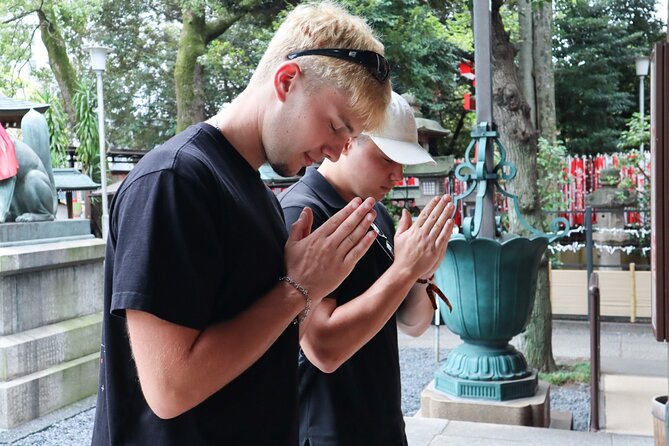
Your morning starts at the Meiji Jingu Ichino Torii area in Shibuya. That matters because you’re beginning at a shrine entrance point that sets the tone right away. It’s a “quiet Tokyo” kind of start: the shrine is known for being peaceful, and the experience includes time for a nature walk feel.
The best part here is how it changes your pace. Before you’re fully in shrine mode, the city is still there around you. Then the path and atmosphere start doing their job, and your brain stops treating Tokyo like a race.
Practical note: the admission is free, so you can focus on the experience instead of ticket logistics. You also get about 40 minutes at this first stop, which is long enough to wander and observe without the tour dragging.
Toyokawa Inari: fox statues and the Buddhism-Shinto mix
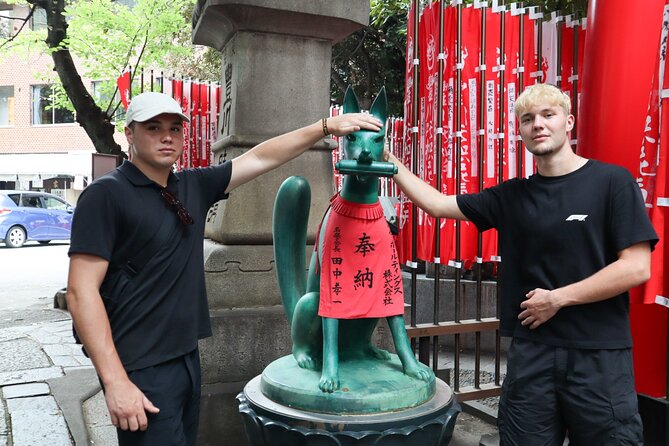
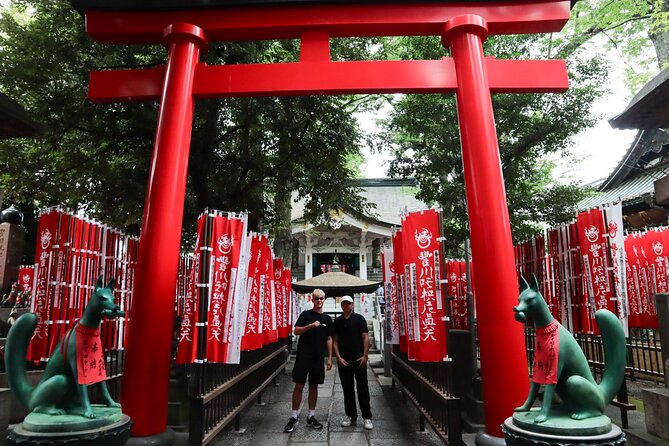
Next you shift to Toyokawa Inari, which is less of a “big tourist magnet” stop and more of a “wait, that’s interesting” stop. This temple is described as a rare blend of Buddhism and Shinto. It also stands out visually because of the fox statues—an easy way to remember what you saw, even after the photos pile up.
This is the kind of stop that works especially well for photos, but it’s not only about pictures. When a site blends traditions, you tend to notice details you’d otherwise skim: symbols, how the space is arranged, and how people show respect.
You’ll have about 30 minutes here. That’s enough to look around and take in the vibe without feeling rushed through the whole thing. The main drawback risk is simple: if you want longer time on one location to really study it, you may wish you had an extra chunk at Toyokawa Inari. But in exchange, you still get to finish at Senso-ji.
Senso-ji in Asakusa: the gate, the street, and where the tour naturally ends
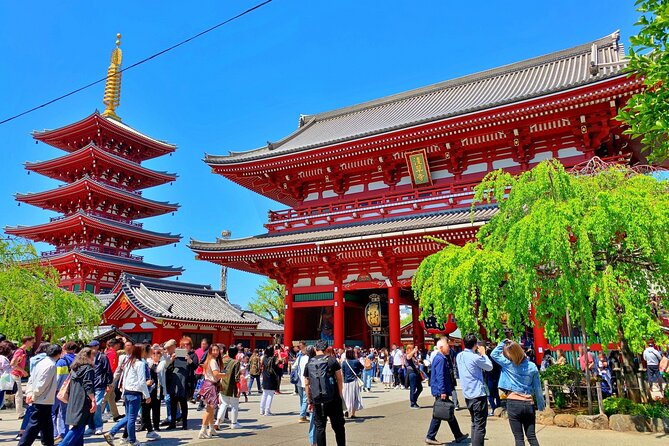
Then comes the classic finish: Senso-ji, Tokyo’s oldest and most famous temple. You’ll spend about 45 minutes here, and you’ll see the iconic gate plus the surrounding shopping street that brings all the energy.
This stop is where the day turns from “quiet shrine walking” into “Tokyo in public.” Even if you’re not shopping, the street atmosphere is part of the experience. It’s also a good moment to reset your bearings in Asakusa, because the tour ending point is right at the temple area.
Admission at Senso-ji is also free, which makes the finale feel like you’re getting a full cultural experience without extra paid add-ons. One consideration: because it’s famous, crowds are part of the deal. The tour pacing helps you move through it, but if you hate crowds, you’ll want to keep expectations realistic and accept that you’re visiting one of the big ones.





The 3-hour timing: how to plan your morning without stress
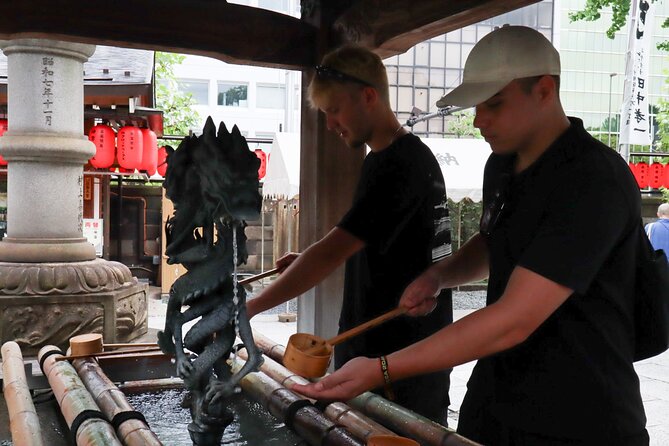
This experience runs for about 3 hours, starting at 9:00am and ending at Senso-ji Temple in Asakusa. That timing is a sweet spot for many people. You get morning energy, you avoid some later-day crush, and you still have time afterward to explore independently.
The route is structured as a walking tour, so wear comfortable shoes. The good news is that it’s designed as a manageable day, not a marathon. You also get a mobile ticket, which helps you avoid the hassle of printed documents.
Group size is kept under control too: up to 20 travelers. That matters because in smaller groups, you’re more likely to stay together and keep moving smoothly instead of waiting on a train-or-bathroom-or-rain-delay loop.
If you like to plan ahead, note that the typical booking window averages about 9 days in advance. For popular travel dates, earlier booking can help you lock in a slot.
Local-guide value: what you’re really paying for

The most consistently praised part of this tour is the guiding. The experience is led by a local team, and one name that comes up is Ryu—described as friendly, informative, and flexible. That last word is where the value lives.
Tokyo crowds can shift fast, and the guide’s job is to keep the day enjoyable, not just scheduled. On busy days like New Year’s season, it makes a difference when the guide plans timing around crowd flow and keeps you moving smartly between stops.
So yes, you get the shrine visits. But you’re also paying for someone to translate what you’re seeing and keep the pace human. A good guide turns “I walked there” into “I understood what I was looking at.”
You’ll likely also get help spotting photo-worthy moments. The tour description explicitly mentions Instagram spots and a rare spiritual experience, and those sorts of details are exactly what a good guide handles without making the experience feel forced.
Price and value: $84.92 for a morning with three sites and a food finish

At $84.92 per person for about 3 hours, this isn’t a bargain-price street walk. It’s a guided experience, and the math makes sense when you look at what’s included.
Here’s the practical breakdown of value:
- You pay for guidance and timing, not entrance fees. All listed sites have free admission.
- You get three different spiritual stops in one morning, instead of trying to stitch them together yourself while figuring out transit and crowd timing.
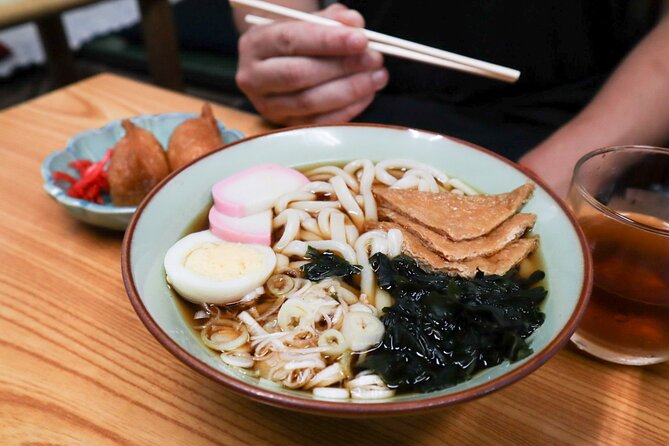
- You end with a comfort-food taste, which adds a real cultural bite at the end of the walking.
If you’re the type of traveler who enjoys learning from a person, asking questions, and having a plan that stays flexible, the price feels more reasonable. If you’re the type who prefers to freestyle entirely, you might be tempted to compare it to a DIY day. But the whole point of this tour is not just getting to the places—it’s moving through them smoothly and with context.
What kind of traveler this suits best
This tour fits well if you want a Tokyo morning that’s:
- Less crowded than you might fear, thanks to route planning and pacing
- Focused on religious spaces and spiritual atmosphere, not only sightseeing
- Photo-friendly, with help finding strong visuals
- Guided in a small group setting (max 20)
It also works nicely for first-time visitors who have limited time and want a structured “Tokyo spiritual day” without turning it into a long commute. And it’s a good choice if you’re trying to balance iconic sights with a few less obvious details—like the Toyokawa Inari Buddhism and Shinto blend.
If you hate walking or you need long sits at each stop, you may find the pacing a bit brisk. The tour’s length is set, and time at each stop is limited by design.
Should you book this Tokyo hidden shrine and temple tour?
I’d book it if you want a morning that feels thoughtful, local, and well managed. The best reason is the guide-driven quality—especially the emphasis on flexibility and timing—plus the fact that you get three major spiritual stops with free admission and a food finale.
I’d think twice if your ideal day is slow and unstructured, with lots of solo wandering time in one place. You’re still free to explore after you finish at Senso-ji, but during the tour you’ll follow a group flow.
Overall, this is a solid value when you look past the sticker price and focus on what you gain: context, pacing, and a well-shaped introduction to Tokyo’s shrine-and-temple side.
FAQ
How long is the Tokyo Hidden Shrine and Temple Tour?
It runs for about 3 hours.
How much does the tour cost?
The price is $84.92 per person.
What time does the tour start?
The start time is 9:00am.
Where does the tour start and end?
It starts at Meiji Jingu Ichino Torii (1-chōme-18-20 Jingūmae, Shibuya, Tokyo) and ends at Sensoji Temple (2-chōme-3-1 Asakusa, Taito City, Tokyo).
Is admission included for the shrines and temples?
Yes. Admission is listed as free for Meiji Jingu, Toyokawa Inari, and Senso-ji.
Do I get a mobile ticket?
Yes, the tour uses a mobile ticket.
Is the tour near public transportation?
Yes, it is listed as near public transportation.
How large is the group?
The maximum group size is 20 travelers.
What is the cancellation policy?
You can cancel for free up to 24 hours in advance for a full refund.
More Tour Reviews in Tokyo



Fresh reviews from around Tokyo






Tokyo, compared.
 ★ 5.0Mt Fuji and Hakone 1-Day Bus Tour Return by Bullet TrainFrom $16326,383 reviews
 ★ 5.01-Day Tokyo Bus TourFrom $12914,250 reviews
 ★ 4.6teamLab Planets TOKYO Digital Art Museum Entry TicketFrom $259,779 reviews
 ★ 4.0Mt Fuji & Hakone Cruise, Drum Show Bullet Train 1 Day from TokyoFrom $1497,413 reviews
 ★ 5.0Shinjuku Food Tour (13 Dishes at 4 Local Eateries)From $866,603 reviews
 ★ 4.4Tokyo Mt Fuji 5th St & Hakone Cruise Bus Tour w/Bullet TrainFrom $1545,024 reviews
 ★ 5.0Flagship 2-Hours Official Street Go-Kart Tour – Tokyo Bay ShopFrom $644,974 reviews
 ★ 4.5From Tokyo: Mount Fuji Full-Day Sightseeing TripFrom $684,970 reviews