

Reviewed · TOKYO
Tokyo: Discover the Art of Kintsugi in Ginza
A broken ceramic becomes a story.
That is the hook of this Kintsugi class in Ginza, where you learn how lacquer and metallic details turn cracks into something worth keeping. I like that it is run in a small group format (up to 8) in a cozy private room just a few minutes from Ginza Station, and that the instructor gives step-by-step guidance while you make your own repaired piece. One consideration: because you finish and take your item home within 90 minutes using synthetic lacquer, it is not the traditional month-long process you might read about.
The setting also matters in Tokyo. You meet at Cafe AOU Ginza forest inside the Daiwa Ginza Building area, and you get a calmer workshop atmosphere tucked away from the rush of Ginza shopping streets. You’re not just watching either. You keep your repaired ceramic as a souvenir, and you’ll get it packed for the trip.
The big practical trade-off is also the easy one to plan around. This workshop is built for making and taking home, so it is not designed for fragile, precious, museum-style materials that take weeks. Also, the finished piece is for decoration only and is not microwave-safe.
In This Review
- Key things that make this Kintsugi class worth your time
- Kintsugi in Ginza: turning cracks into character (without feeling rushed)
- Price and value: what $75 buys you in this 90-minute class
- Where you meet near Ginza Station (and how not to waste time)
- Inside the cozy private room: what the 90 minutes feel like
- The Kintsugi technique you’ll learn here: synthetic lacquer and metallic powder
- Choosing a souvenir: what you can take home (and how to treat it)
- Who should book this Ginza Kintsugi workshop
- Pair it with a Ginza day: practical ways to plan your route
- Should you book Tokyo: Discover the Art of Kintsugi in Ginza?
- FAQ
- How long is the Kintsugi workshop?
- What is the price per person?
- Where is the meeting point in Ginza?
- How big is the group?
- What languages are the instructors?
- What’s included in the workshop fee?
- What do I take home at the end?
- Is the Kintsugi process traditional or faster?
- Is the repaired ceramic microwave-safe?
- Is hotel pickup included?
- Is there free cancellation?
Key things that make this Kintsugi class worth your time
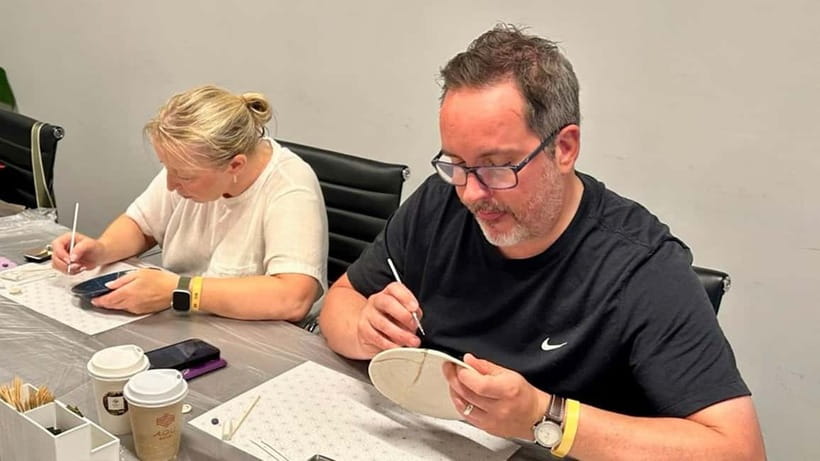
- Ginza convenience: meeting point is at Cafe AOU Ginza forest on the ground level of the Daiwa Ginza Building.
- Small group feel: limited to 8 participants, so you get real attention as you work.
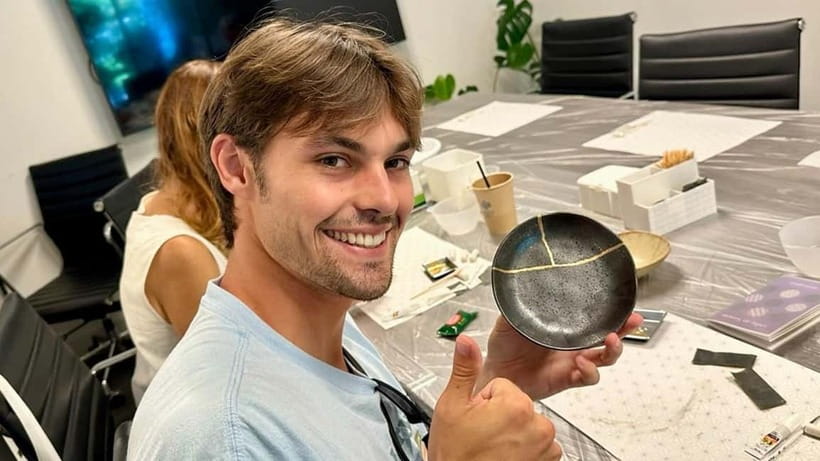
- You take home your repair: you keep the restored ceramic piece, packed for transport.
- Guided, step-by-step technique: instruction is available in English and Japanese.
- Fast version of a slow tradition: synthetic lacquer and metallic powder let you finish in 90 minutes.
- A calm craft break in busy Tokyo: the workshop sits in a dedicated private room near Ginza Station.
Before you commit, see how this one stacks up against a few Tokyo favourites:
- Mt Fuji and Hakone 1-Day Bus Tour Return by Bullet Train★ 5.0 · 26,383 reviews
- 1-Day Tokyo Bus Tour★ 5.0 · 14,250 reviews
- Tokyo: teamLab Planets TOKYO Digital Art Museum Entry Ticket★ 4.6 · 9,779 reviews
Kintsugi in Ginza: turning cracks into character (without feeling rushed)
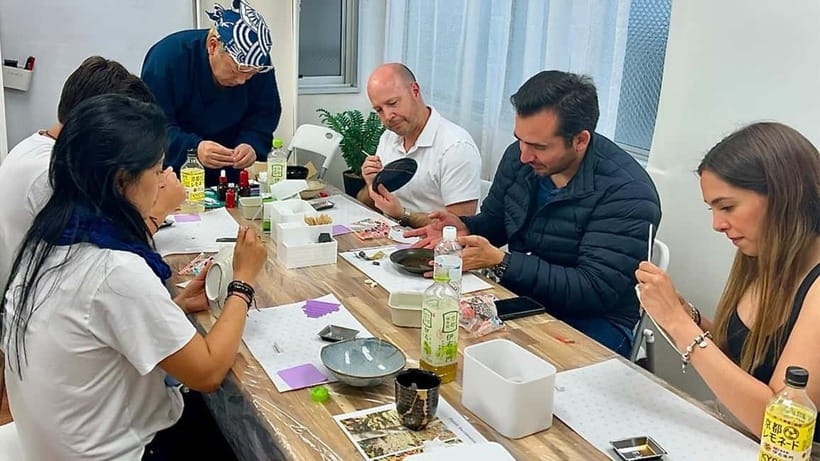
Ginza is all polished floors and fast foot traffic, so a hands-on craft class there can feel like a small miracle. This one works because it gives you a quiet pocket of time to focus on a very human idea: breakage happens, and you can still make something beautiful out of it.
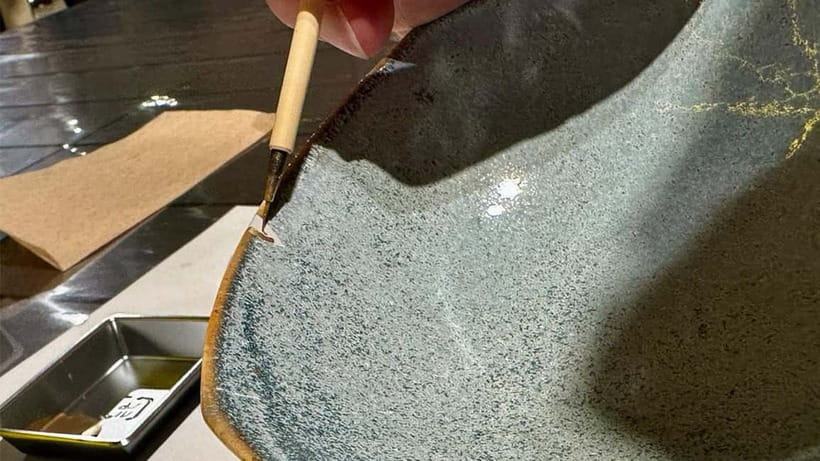
The workshop is built around the Japanese aesthetic philosophy behind Kintsugi: celebrate imperfections instead of hiding them. You work with a ceramic item meant to be restored, and you follow clear instructions from the instructor to rebuild the repair line so it looks intentional, not like a fix that got covered up.
Two things I think you’ll appreciate right away are how practical the format is and how personal the result feels. You are not leaving with a generic craft souvenir. You are leaving with your own repaired ceramic piece that reflects the choices you made during the process.
The only “hold up your expectations” note is about authenticity versus experience. Traditionally, authentic Kintsugi takes about a month to complete. This workshop uses synthetic lacquer and metallic powder instead of natural lacquer and gold, so the experience is faster and designed for take-home completion in the same 90 minutes.
Price and value: what $75 buys you in this 90-minute class
$75 for a 90-minute workshop in central Tokyo can sound like a lot until you look at what’s included. Here, the value comes from the full set-up: all necessary tools and materials are provided, plus you get a ceramic piece to restore. That means you are not paying for seat time only.
You also get expert guidance throughout. The instructor is there to walk you through the essential techniques, and the group size (max 8) keeps the experience from turning into a crowded demo.
One small bonus that helps with the Tokyo mood: you get a complimentary soft drink during the workshop. Some participants also described coffee as part of the welcome, so it tends to start in a friendly, not-stressed way.
So where does the price make sense? It makes sense because you’re paying for:
- a guided repair process,
- materials you don’t have to source,
- and a take-home ceramic you can actually use as a gift or display item.
Where you meet near Ginza Station (and how not to waste time)
You meet at Cafe AOU Ginza forest, located on the ground level of the Daiwa Ginza Building. This matters because Ginza can swallow time if you’re wandering without a plan.
The workshop itself is in a private room near Ginza Station, described as about three minutes away. That means you can realistically fit it into a day that also includes shopping, department stores, or a meal. You do not need a hotel pickup, either, so you’ll want to be comfortable navigating Tokyo by train and a short walk.
One more planning detail: the venue may change depending on availability and reservation numbers. If that happens, you’ll be emailed the new location details one day before the workshop. It’s rare for travel days, but it is worth knowing so you do not panic if you check in and something looks slightly different.
Inside the cozy private room: what the 90 minutes feel like
The workshop runs for 90 minutes, and the format is intentionally hands-on. You’re in a dedicated room that stays quiet enough to focus, with the instructor guiding you through the process step by step.
If you want a sense of pacing, you can think of it as:
- start with explanation and setup,
- work through the essential Kintsugi technique using the provided materials,
- finish with your completed repaired piece,
- and then get it packaged so it survives the walk back to your hotel and the trip home.
The tone tends to be friendly and calm. Multiple participants mentioned that the instructor made conversation and explained the steps clearly. Some sessions also included small storytelling about Ginza during the lesson, which is a nice touch if you’re trying to experience the city beyond storefronts.
You also get a choice in how your ceramic repair begins. One participant noted choosing between two colored cracked plates, which is a simple way to make the class feel less like a cookie-cutter craft.
One possible downside to plan around: if the class timing runs slightly behind for any reason, you may end up working a bit faster toward the end to finish within the 90-minute window. That is not a deal-breaker, but it’s why I’d treat this as a workshop that rewards focus more than leisurely tinkering.





The Kintsugi technique you’ll learn here: synthetic lacquer and metallic powder
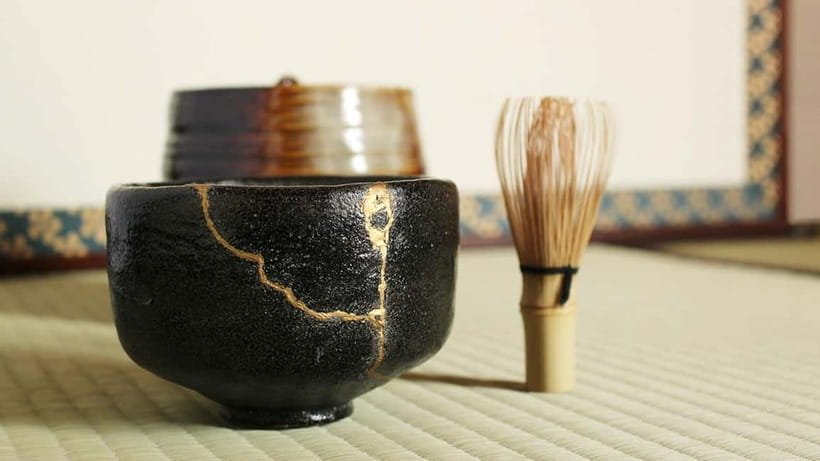
Here’s the key technical point you should know before you go: this workshop uses synthetic lacquer instead of natural lacquer, and it uses metallic powder as a substitute for gold.
That swap is what makes take-home completion possible within 90 minutes. It also makes the experience more accessible. You can learn the look and logic of Kintsugi—turning cracks into lines of beauty—without waiting weeks for the full traditional curing process.
The instructor guidance is central because you’re not just brushing on something and hoping for the best. You follow clear instructions for the essential techniques, and you end with a repaired ceramic piece that represents the Kintsugi aesthetic in a practical, modern workshop setting.
Another thing worth valuing: you’re not only getting the cultural idea. Participants described learning the history and also some practical background about how the binding process works in tableware. So you get both the meaning and the mechanics, without turning the class into a science lecture.
Choosing a souvenir: what you can take home (and how to treat it)
You take your repaired ceramic piece home at the end of the workshop. For many people, this is the whole point. Instead of another postcard or magnet, you bring back something personal and visual.
Packaging is a real part of the experience. Several participants mentioned that the piece was packaged in a way that helps protect it for travel, which is exactly what you want when you’re moving through crowded train stations and squeezing into a suitcase.
Two important care notes are also included:
- The repaired item is recommended for decorative use only.
- The repaired item is not microwave-safe due to the risk of ignition.
Those notes matter because they keep you from accidentally using your new souvenir like a normal dish. If you’re hoping for something functional for everyday eating, this class isn’t positioned for that. Think display, desk item, shelf centerpiece, or a gift with meaning.
Who should book this Ginza Kintsugi workshop
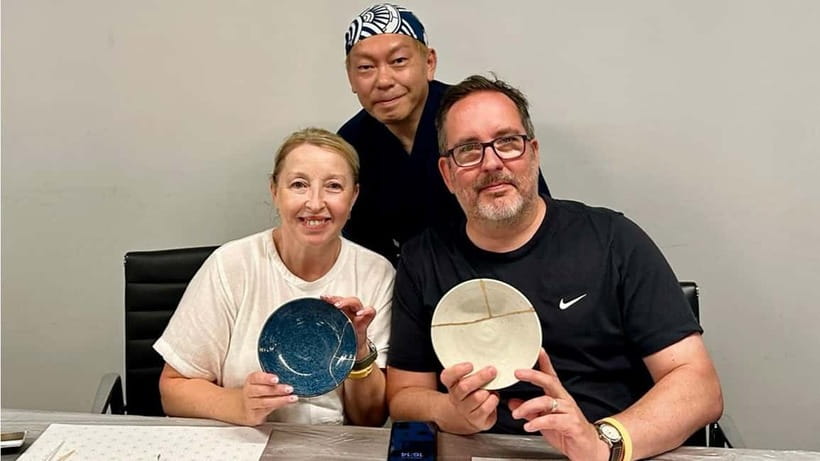
This is a great fit if you want a calmer Tokyo moment and you like hands-on crafts with a cultural backbone. It also suits couples, solo travelers, and small groups who don’t need a huge “tour” and prefer making something tangible.
It can also work for families with older kids. One participant said their children ages 10 and 14 had fun. Still, the class is not suitable for children under 10, so plan accordingly.
That said, there are clear “skip it” cases:
- People with mobility impairments
- People with a cold
- Babies under 1 year
- Hearing-impaired people
If any of those apply to your group, you’ll want to choose a different activity.
Also keep in mind the classroom nature of the experience. You’ll be working during the full 90 minutes, so bring patience and expect a focused atmosphere rather than a casual walk-through.
Pair it with a Ginza day: practical ways to plan your route
Because it’s so close to Ginza Station, this class slots into a normal day smoothly. You can do it before dinner or after a meal without feeling like you must structure the entire day around it.
Ginza is great for wandering because of the grid-like layout and the mix of old and new vibes. If you go to the class first, you can treat the rest of the day as your reward period: window shop, pick up a souvenir, then come back to a hotel knowing you have one meaningful item already made.
If you plan to shop after class, consider how you’ll carry things. Even with packaging, you’ll want to keep your restored ceramic protected while you move through department stores and back streets.
Should you book Tokyo: Discover the Art of Kintsugi in Ginza?
Book it if you want:
- a hands-on cultural craft with real instruction,
- a small-group class in central Ginza,
- a take-home piece that feels personal (and is packaged for travel),
- and a fast, doable version of a tradition that usually takes much longer.
Skip it if:
- you’re looking for a traditional, month-long authentic Kintsugi process with natural lacquer and gold,
- you need a microwave-safe functional tableware item,
- or accessibility needs make a workshop setting difficult.
My honest take: this is one of those Tokyo experiences that gives you something you can hold. Not just a memory, but an object with meaning, made in a calm room while Ginza buzzes just a few minutes away.
FAQ
How long is the Kintsugi workshop?
The workshop lasts 90 minutes.
What is the price per person?
The price is $75 per person.
Where is the meeting point in Ginza?
You meet at Cafe AOU Ginza forest. It is on the ground level of the Daiwa Ginza Building.
How big is the group?
The class is a small group limited to 8 participants.
What languages are the instructors?
The instructor speaks English and Japanese.
What’s included in the workshop fee?
Included are the 90-minute workshop, all necessary tools and materials, a ceramic piece to restore, expert guidance from the instructor, and a complimentary soft drink.
What do I take home at the end?
You take home the repaired ceramic piece.
Is the Kintsugi process traditional or faster?
This workshop uses synthetic lacquer instead of natural lacquer and metallic powder instead of gold, so you can complete and take home your piece within 90 minutes. Traditional authentic Kintsugi takes about a month.
Is the repaired ceramic microwave-safe?
No. The item is not microwave-safe due to the risk of ignition.
Is hotel pickup included?
No. Hotel pickup or drop off is not included.
Is there free cancellation?
Yes. You can cancel up to 24 hours in advance for a full refund.
More Tour Reviews in Tokyo



Fresh reviews from around Tokyo






Tokyo, compared.
 ★ 5.0Mt Fuji and Hakone 1-Day Bus Tour Return by Bullet TrainFrom $16326,383 reviews
 ★ 5.01-Day Tokyo Bus TourFrom $12914,250 reviews
 ★ 4.6teamLab Planets TOKYO Digital Art Museum Entry TicketFrom $259,779 reviews
 ★ 4.0Mt Fuji & Hakone Cruise, Drum Show Bullet Train 1 Day from TokyoFrom $1497,413 reviews
 ★ 5.0Shinjuku Food Tour (13 Dishes at 4 Local Eateries)From $866,603 reviews
 ★ 4.4Tokyo Mt Fuji 5th St & Hakone Cruise Bus Tour w/Bullet TrainFrom $1545,024 reviews
 ★ 5.0Flagship 2-Hours Official Street Go-Kart Tour – Tokyo Bay ShopFrom $644,974 reviews
 ★ 4.5From Tokyo: Mount Fuji Full-Day Sightseeing TripFrom $684,970 reviews