
Reviewed · ASAKUSA TOURS
Tokyo Asakusa Sensoji Temple Night Walking Tour
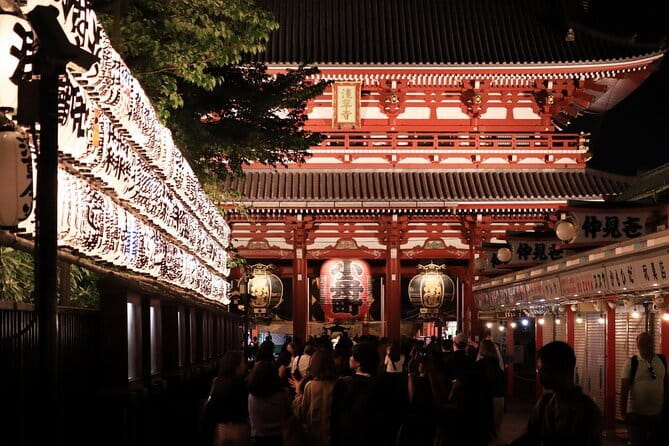
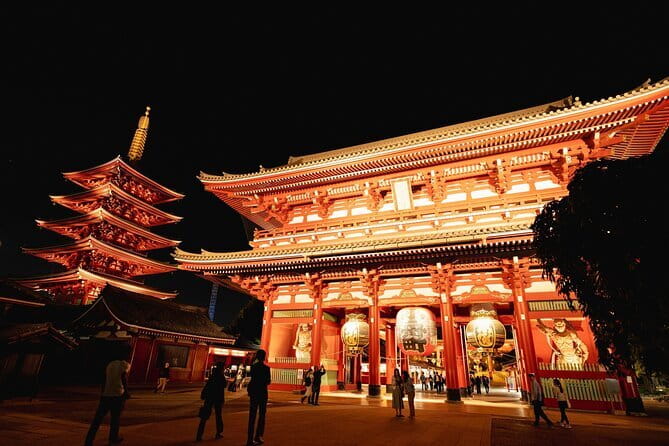
Tokyo at night has a special rhythm. This Asakusa Sensoji Temple Night Walking Tour gives you a tight, one-and-a-half-hour hit of the neighborhood’s most famous sights after the day crowds thin out. I like the small group size (capped at 8) because it stays friendly and easy to ask questions. I also like the mix of landmarks and food-and-shopping streets, so you leave with practical ideas for dinner nearby. One heads-up: the main hall at Senso-ji closes at 6pm, so you might not be able to enter the building even though you’ll still see the iconic gate and temple grounds.
If you want a walk with direction, this tour fits. You’ll move between major photo stops, then shift into the lanes where locals actually eat and drink. It’s priced at $35, which is a fair way to buy local guidance and a simple route at night, without paying for entry fees along the way.
In This Review
- Key Things I’d Pay Attention To
- Why This Night Walk Changes the Way You See Asakusa
- The Small-Group Advantage: Less Hustle, More Local Flow
- Kaminarimon Gate: Start Here for the Fastest Mental Map
- Nakamise Shopping Street: Snacks, Souvenirs, and a Smoother Walk
- Senso-ji Temple: The Iconic Complex, With a Key Timing Catch
- Hanayashiki Street: Old Tokyo Mood Without the Theme-Park Noise
- Hoppy Street: Izakaya Culture and the Local Drink Called Hoppy
- Price and Value: Why $35 Can Make Sense at Night
- What You’ll Want to Bring (And What to Skip)
- Who This Tour Fits Best
- Should You Book This Asakusa Sensoji Temple Night Walking Tour?
- FAQ
- How long is the Tokyo Asakusa Sensoji Temple Night Walking Tour?
- What does the tour cost?
- How many people are in a group?
- What is included in the tour ticket?
- Is there an admission fee for the temple stops?
- Can I enter the main hall at Senso-ji during the tour?
- Where do I meet the guide?
- Where does the tour end?
- What is the cancellation policy?
- Do I need to be physically fit?
Key Things I’d Pay Attention To
- Small group (up to 8): easier pacing and more chance to get answers instead of just following a crowd
- Night timing: you get Asakusa’s best-known scenes at a calmer hour
- Senso-ji plus streets: you see the temple and also how people snack, shop, and unwind nearby
- Hoppy Street stop: a direct look at izakaya culture with the local drink called hoppy
- Mobile ticket: less hassle on the day; you just show up with your phone
- Photo-ready landmarks: Kaminarimon Gate and the main approach streets are built for pictures
Why This Night Walk Changes the Way You See Asakusa
Asakusa is famous for a reason, but day visits can feel like a marching band of people. This tour takes you through the same area at a quieter time of day, so the sights feel more readable. The guide keeps the route tight, which matters because Asakusa’s streets are charming but a little maze-like once you’re wandering without a plan.
What also makes this worth your time is that it’s not only temple sightseeing. You’re shown the streets that feed the neighborhood vibe: snack stops, souvenir shops, and then the pub lanes on Hoppy Street. In one evening, you get the story of the area—spiritual landmark first, then everyday life.
The Small-Group Advantage: Less Hustle, More Local Flow
With a maximum of 8 travelers, this is the kind of tour that moves like a group of friends rather than a conveyor belt. That matters at night, when lighting is different and crossing streets takes a second longer. You’ll typically get a steadier pace, and you can ask questions without shouting over other people.
Another practical plus: this is an easy meeting setup. You start at the Asakusa Culture Tourist Information Center near Kaminarimon, and the end is on Hoppy Street. That gives you a clean beginning and a clear place to land for more food or drinks after the tour. Also, you’re using a mobile ticket, so you’re not stuck hunting for paper when you should be looking around.
Kaminarimon Gate: Start Here for the Fastest Mental Map
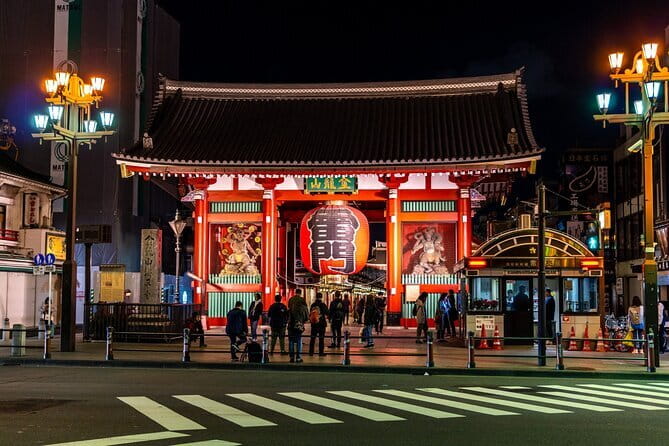
You’ll begin at Kaminarimon Gate, also known as the Thunder Gate. It’s the iconic entrance to Senso-ji, and it’s instantly recognizable thanks to the huge red lantern and the statues on either side—Fujin and Raijin, the gods of wind and thunder.
This stop works as an orientation tool. Even if you only spend about 10 minutes here, you learn how the space is laid out: the gate, the main approach, and how everything funnels toward the temple complex. It’s also one of the easiest places to get photos without needing a perfect plan, because the gate is designed to be front-and-center.
What I’d do as you’re waiting for the group to move: take a second to look at the statues and the lantern. It helps your brain connect the details to what you’ll see in the next streets.
Nakamise Shopping Street: Snacks, Souvenirs, and a Smoother Walk
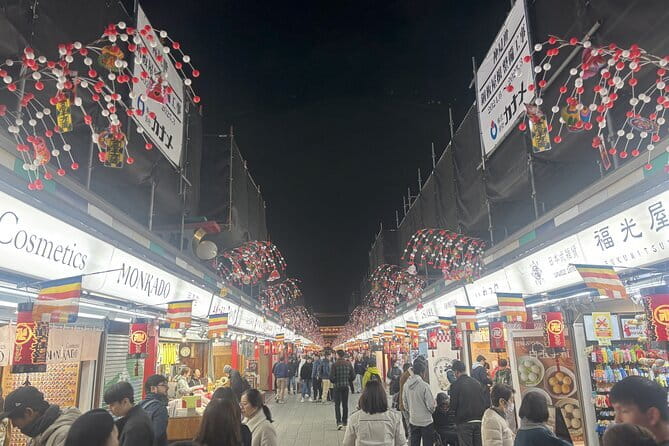
Next comes Nakamise Shopping Street, the line of shops that leads directly from Kaminarimon toward Senso-ji. This is where you get the classic Asakusa feel: traditional snacks, souvenir-style goods, and small craft items.
The value of this stop isn’t that you must shop. It’s that the guide helps you understand what you’re seeing and why it’s here. When you know what to look for, you spend less time guessing and more time enjoying.
At night, this street can feel more manageable than midday. You still get the lively atmosphere, but you’re less likely to feel trapped in a wall of people. If you’re the kind of traveler who likes to pick up one meaningful item rather than random clutter, this is a good time to look for something small to bring home.
Senso-ji Temple: The Iconic Complex, With a Key Timing Catch

Your main landmark stop is Senso-ji Temple itself. The temple is dedicated to the goddess of mercy, Kannon, and it’s one of Tokyo’s oldest and most famous temples. The tour time here is about 30 minutes, and admission is listed as free for what you’re visiting.
There’s one timing detail you should respect: the main hall closes at 6pm. So you can absolutely enjoy the temple setting and the surrounding areas, but you may not be able to enter the main hall building. That’s not a dealbreaker, but it can change your expectations. If seeing the inside is your top priority, you’ll want to match the tour timing to your visit window.
Even without entry, this stop is still meaningful. The temple grounds and the way the complex sits around the approach streets give you the atmosphere. Think of it as a once-per-trip way to experience Asakusa’s spiritual heart with guidance so you don’t miss the important angles.
Hanayashiki Street: Old Tokyo Mood Without the Theme-Park Noise
After the temple, you head to Hanayashikidori (often described as Hanayashiki Street). This area is named after Hanayashiki, Japan’s oldest amusement park, which sits nearby. During your stop—about 20 minutes—you’ll see a street lined with shops, restaurants, and cafes with that nostalgic, older-street feel.
This is a nice pivot point. You’re no longer at the monumental architecture. Instead, you’re in the neighborhood space between sights, where people grab snacks and hang out. It’s also a practical moment for you to think about food choices later. If you spot a place you like here, you can often circle back on your own after the tour.
One thing to keep in mind: since this is more of a street stop, it’s less about one single “must-see” object and more about sensing the texture of the area.
Hoppy Street: Izakaya Culture and the Local Drink Called Hoppy
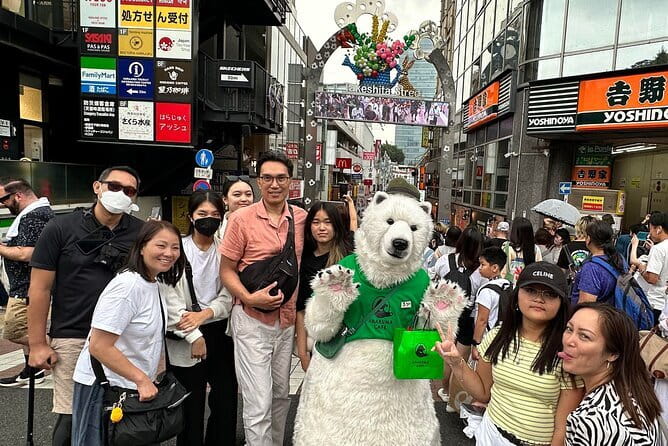
The tour ends on Hoppy Street, about 20 minutes. This is the strip known for a high concentration of izakayas—Japanese pubs—and for serving the local drink called hoppy.
Hoppy is the kind of detail that makes your evening feel specific to the neighborhood, not generic Tokyo sightseeing. Here, you’ll also run into familiar comfort foods people order at izakayas, such as yakitori (grilled chicken skewers) and oden (a hot pot dish). The vibe is relaxed and friendly, which is exactly what you want at the end of a night walk.
Ending the tour here is smart. You’re not shipped back to a train station right after your last stop. You’re delivered to a place where you can keep going. If you’re traveling solo, this also makes it easier to start a casual food plan without feeling lost.
Price and Value: Why $35 Can Make Sense at Night
At $35 per person for about 1 hour 30 minutes, this tour sits in the “you’re buying convenience and guidance” category. You’re not paying for temple admission, since the stops are listed as ticket-free for what’s included. Instead, you’re paying for the route, the pacing, and the local context—how to interpret what you’re seeing on the ground.
So when is $35 a good deal?
- If you’d rather not spend time figuring out where to go first in Asakusa after dark
- If you want a structured walk that hits the key sights in a short evening
- If you value small-group attention more than you value spending hours wandering alone
It also helps that this gets booked ahead often (the average is about 25 days). That’s usually a sign people like the format and timing, especially for travelers who don’t want to gamble on last-minute planning.
What You’ll Want to Bring (And What to Skip)
Because this is a walking tour with stops outside, your biggest “gear” is simple: comfortable shoes and a jacket or layer. Night air in Tokyo can feel different from daytime, and you’ll be outdoors between photo spots and street stops.
The tour is also designed for a relaxed pace. You don’t need to sprint between landmarks. Just be ready to walk and stand for photos. The tour info also suggests moderate physical fitness. If you’re comfortable with a one-and-a-half-hour stroll and short periods of standing, you’re in the right zone.
For your personal spending: you’ll pass through areas where you can shop for souvenirs and where people eat and drink. The tour gives you time to look around and get ideas, but it doesn’t list any meals included. Plan to pay for what you choose on your own.
Who This Tour Fits Best
This tour is a great match if you:
- Love classic Tokyo neighborhoods and want a simple evening plan
- Want the basics of Asakusa—Senso-ji and the surrounding streets—without doing research at night
- Prefer small groups and an easy route you can follow
- Enjoy street life: snacks, souvenir browsing, and the end-of-day food scene
It may not fit as well if you:
- Care most about long time inside temple buildings, since the main hall closes at 6pm
- Want a super deep, all-day museum-style experience (this is short and focused)
- Need a perfectly quiet experience, since the streets can still be active
Should You Book This Asakusa Sensoji Temple Night Walking Tour?
I’d book it if you want an efficient, guided way to see Asakusa’s top sights and end in an actual food-and-drink street. The small group size helps, the route is clear, and the combination of Kaminarimon, Senso-ji, Hanayashiki Street, and Hoppy Street makes the evening feel like a real neighborhood walk rather than a checklist.
Skip it only if you’re set on being inside the main hall after 6pm, or if you prefer to wander completely without any structure. Otherwise, this is a solid value at $35 for the amount of ground it covers and the way it helps you understand what you’re looking at.
FAQ
How long is the Tokyo Asakusa Sensoji Temple Night Walking Tour?
It lasts about 1 hour 30 minutes.
What does the tour cost?
The price is $35.00 per person.
How many people are in a group?
The tour has a maximum of 8 travelers.
What is included in the tour ticket?
You’ll have a mobile ticket.
Is there an admission fee for the temple stops?
Admission is listed as free for the stops included (including the main temple viewing time).
Can I enter the main hall at Senso-ji during the tour?
The main hall closes at 6pm, so you may not be able to enter depending on the time.
Where do I meet the guide?
Meet at the Asakusa Culture Tourist Information Center, 2-chōme-18-9 Kaminarimon, Taito City, Tokyo 111-0034.
Where does the tour end?
It ends on Hoppy Street (Hoppy St, 2-chōme-8 Asakusa, Taito City, Tokyo 111-0032).
What is the cancellation policy?
Free cancellation is available up to 24 hours in advance for a full refund.
Do I need to be physically fit?
You should have a moderate physical fitness level since it’s a walking tour.
Asakusa Tours, compared.
 ★ 4.8Japanese Dance Cabaret Theater Asakusa-Kaguwa TicketFrom $492,270 reviews
 ★ 4.7Meiji Shrine, Asakusa, Skytree Bus Tour and CruiseFrom $1221,986 reviews
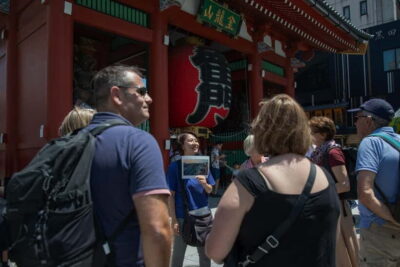 ★ 4.8Asakusa Walking Tour with Sensoji Temple VisitFrom $221,583 reviews
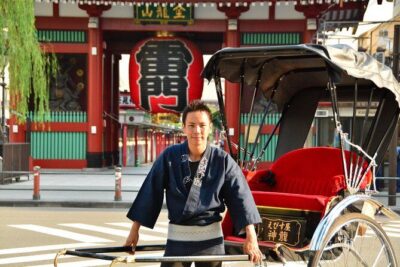 ★ 5.0Tokyo Asakusa Rickshaw TourFrom $421,375 reviews
 ★ 4.5Tokyo Panoramic 1 Day: Meiji Shrine, Asakusa, Odaiba and SKYTREE®From $851,222 reviews
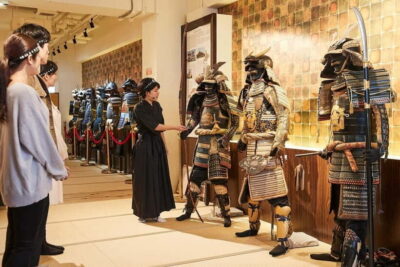 ★ 4.8Samurai Ninja Museum Asakusa: Samurai Sword Lesson & TourFrom $63306 reviews
Asakusa Sightseeing Tour by RickshawFrom $35195 reviews
Asakusa Kimono Dressing and Matcha ExperienceFrom $56173 reviews
★ 4.8Samurai Ninja Museum Asakusa: Samurai Sword Lesson & TourFrom $63306 reviews
Asakusa Sightseeing Tour by RickshawFrom $35195 reviews
Asakusa Kimono Dressing and Matcha ExperienceFrom $56173 reviews
Browse the lists this tour appears in