
Reviewed · TOKYO
Tokyo: 3 Towers Tour – A Sky-High View of the City
Tokyo from above feels different. This 5-hour tower circuit is a smart way to see the city in slices, from three iconic heights, with an English-speaking guide to connect the dots. I like that you start at the Tokyo Metropolitan Government Building for a modern, wide-angle view, then move up to the classic and the sky-high giants with Tokyo Tower and Tokyo Skytree.
Two things I especially like: you get guided context at each stop, and you’re not stuck trying to figure out viewpoints on your own. One consideration: if you’re not comfortable with heights, the observation decks may be tough, so think carefully before booking.
The route also makes sense. You’ll see how Tokyo changes as you move around the city and climb to different levels, plus you have a real shot at Mount Fuji on a clear day from the first and last stops. And if the weather is doing its thing, the tour still runs, so you’ll want to dress for walking and for shifting skies.
In This Review
- Key things to know before you go
- Entering Tokyo from the Tokyo Metropolitan Government Building
- Tokyo Tower’s classic silhouette and the “middle” view
- Tokyo Skytree: the highest viewpoint and the 360-degree payoff
- The itinerary rhythm: how 1.5 hours per stop works
- Taking the subway as part of the tour
- Who this tour fits best (and who should skip it)
- Price and value: what you’re really paying for
- Best ways to get the most from your photos and eyes
- Should you book this Tokyo 3 Towers Tour?
- FAQ
- Where do I meet the guide?
- What’s included in the tour price?
- How long is the tour?
- Does the tour run in bad weather?
- Are meals included?
- Is this tour suitable for people afraid of heights?
Key things to know before you go
- Three towers, three perspectives so you can compare height and location instead of taking one generic skyline photo
- English commentary that stays practical while you walk between stops and pause for photos
- Fuji may appear from the Tokyo Metropolitan Government Building and the Skytree on clear days
- Day and night both work depending on when you go, with city lights as the big payoff after sunset
- Subway time is part of the experience since subway fares within the tour are covered
- Comfortable shoes matter because each stop includes sightseeing and walking
Before you commit, see how this one stacks up against a few Tokyo favourites:
- Mt Fuji and Hakone 1-Day Bus Tour Return by Bullet Train★ 5.0 · 26,383 reviews
- 1-Day Tokyo Bus Tour★ 5.0 · 14,250 reviews
- Tokyo: teamLab Planets TOKYO Digital Art Museum Entry Ticket★ 4.6 · 9,779 reviews
Entering Tokyo from the Tokyo Metropolitan Government Building
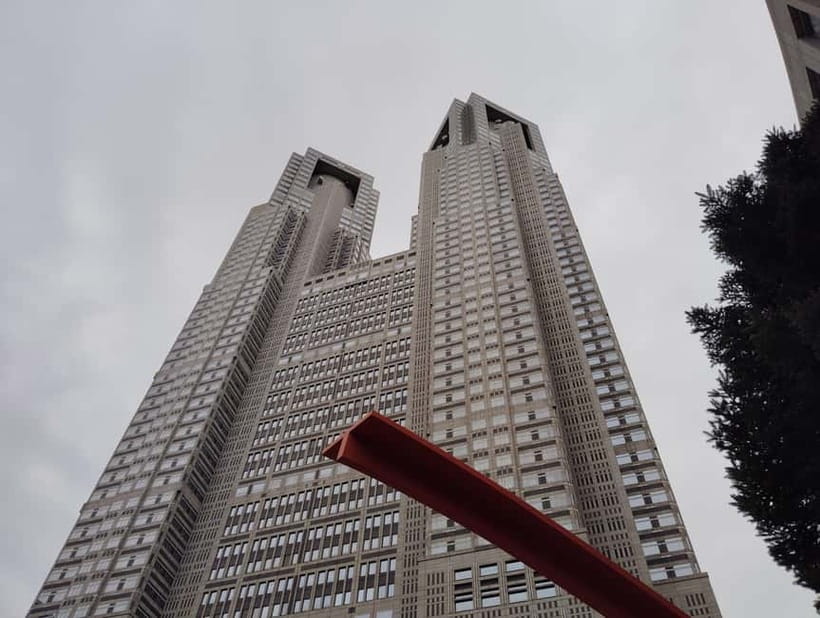
Your tour begins at Tomin Hiroba at the Tokyo Metropolitan Government Building, with the guide holding a yellow Deep Experience sign. This is a strong start because the building is an administrative hub, not just a viewpoint. It gives Tokyo a bit of structure right away, and it helps you understand how the city is run before you spend the rest of the day staring at it from above.
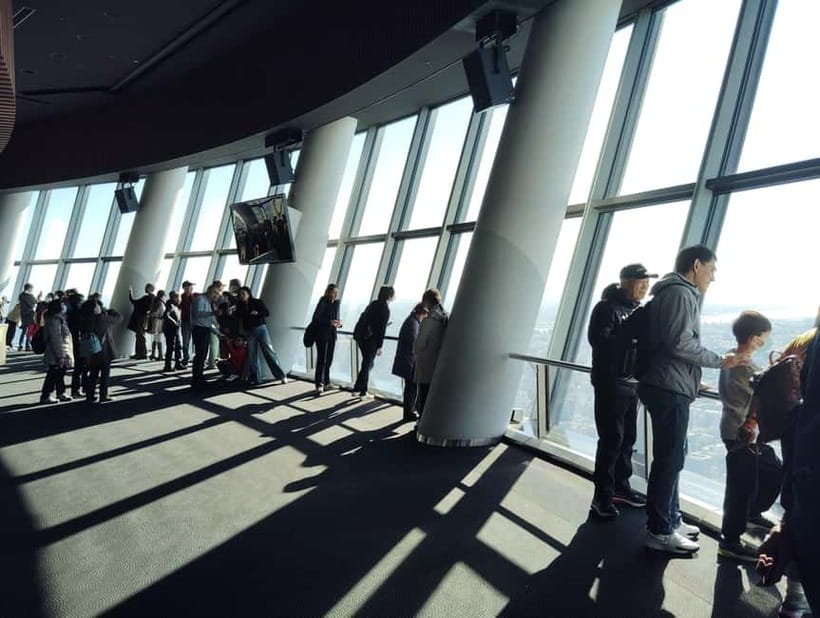
The observation decks sit on the 45th floor, and that’s where the big “how far can you see?” feeling starts. On clear days, you may be able to spot Mount Fuji, which instantly turns a city view into a geography lesson. Even if Fuji isn’t visible, the wide sweep is still useful. You can orient yourself, recognize major areas, and start thinking in terms of Tokyo’s shape and distance rather than only what’s in front of you at street level.
This stop also includes time for photos, a guided visit, and sightseeing with some walking. That timing matters. The first tower can feel like a warm-up, but it’s also where I’d expect you to get your bearings fast—especially if this is your first time in Tokyo. If you’re the type who wants the best possible view early, this start gives you that chance before the day fills up with light changes.
One practical note: because this stop is higher up and often open to the elements, having a camera ready and water on hand is smart. The tour asks you to bring water and wear comfortable shoes, and those aren’t throwaway suggestions for this leg.
Tokyo Tower’s classic silhouette and the “middle” view
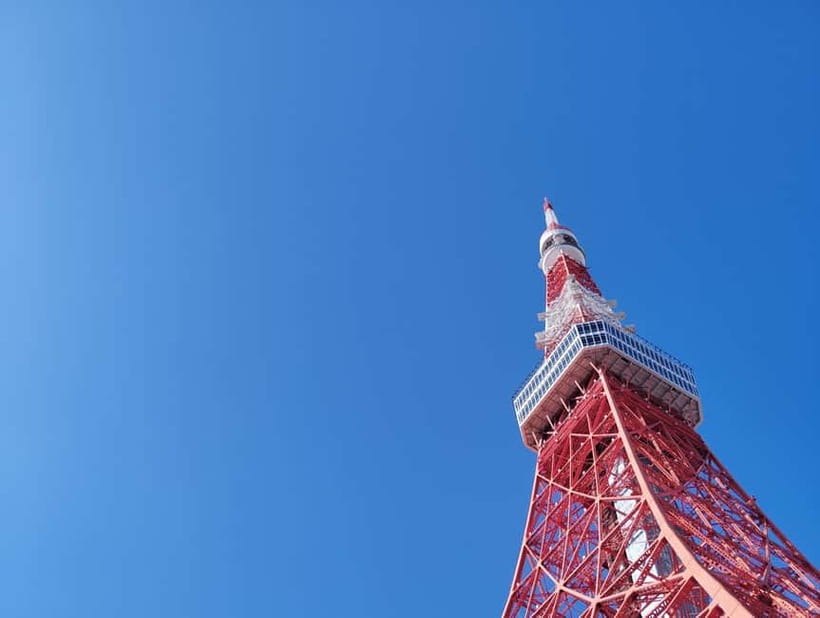
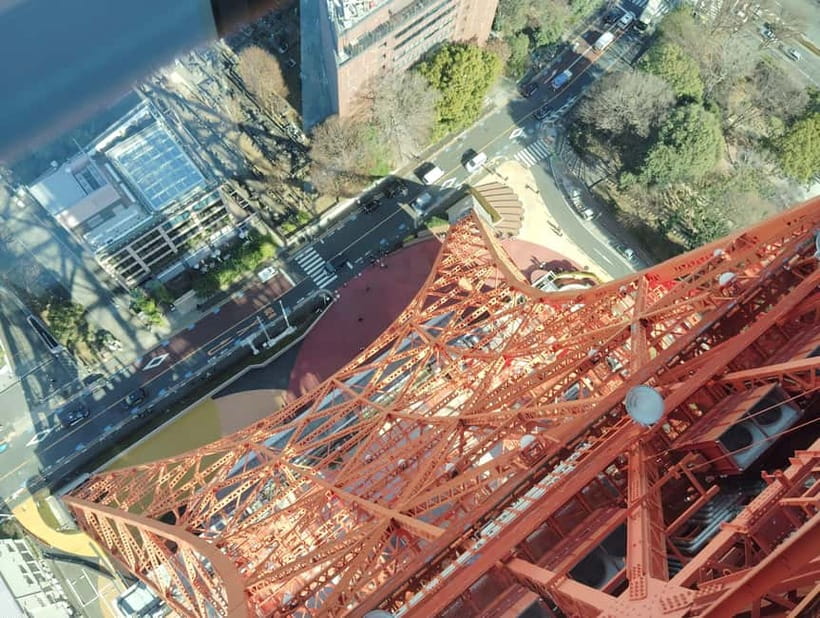
Next you head to Tokyo Tower, the long-running symbol of the city and the one that made headlines back when it was Japan’s tallest tower. Completed in 1958, it’s the kind of landmark locals know by instinct, and first-timers instantly recognize from photos, films, and posters.
From the observation decks, the view tends to feel different than the government-building panorama. You’re looking at Tokyo not as a flat map stretching into the distance, but as layers—neighborhoods, major routes, and landmarks popping into view. The tour’s framing includes distance references like Roppongi Hills and Tokyo Bay, which helps you connect what you see to places you might visit later.
Time of day changes this stop a lot. In daylight, it’s about the sprawl: big sightlines and the sense that everything is packed tightly and planned out at huge scale. In the evening, the payoff shifts to lights. Tokyo Tower can be a great bridge between day sightseeing and night photography, especially when you’re working your way toward the Skytree for the 360-degree moment.
Here’s the balanced truth: Tokyo Tower is iconic, but it can feel a bit more “classic” than the other two stops. In one group experience shared with me, Tokyo Tower was the least interesting part for that particular day, even though the rest of the tour still worked well. That doesn’t mean Tokyo Tower is bad—it just means your personal taste might skew toward the futuristic feeling of the Skytree or the wide, modern sweep from the government building.
If you love retro landmarks and you enjoy seeing how the skyline evolved, Tokyo Tower is a must. If you’re chasing only the most dramatic views, treat this as the essential in-between, not the grand finale.
Tokyo Skytree: the highest viewpoint and the 360-degree payoff
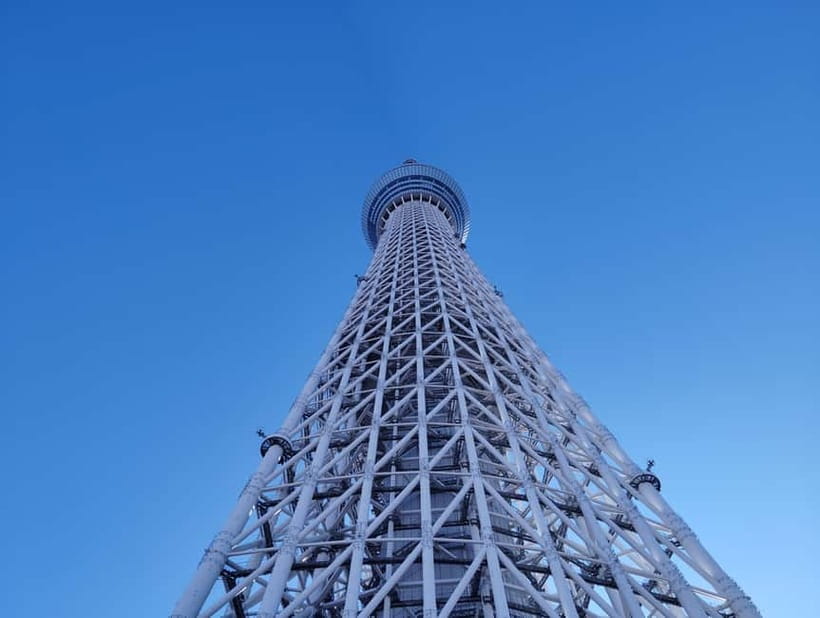
The final major stop is Tokyo Skytree, currently the tallest tower in the world at 634 meters. This is the point in the tour where your brain usually goes quiet for a second. Even if you’re not a heights person, the scale from the top is hard to fake with pictures.
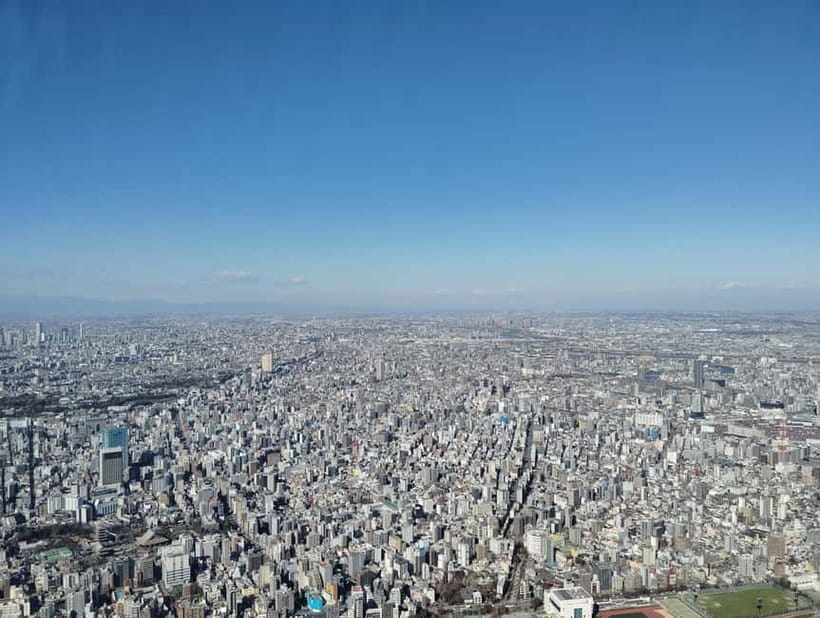
What makes the Skytree viewpoint especially useful is the 360-degree panoramic format. Instead of a single favorite angle, you get options. You can look in one direction and try to trace what the city looks like toward the bay side. You can spin toward the horizon and hunt for Mount Fuji if the weather allows it. Then, if you’re there after sunset, you get the city lights turn on, which is where many people remember Tokyo as more than just a place—they remember it as a pattern of light.
The tour includes photo stops, guided explanations, and sightseeing time at each level. For this last stop, the guidance matters because it keeps you from wandering around with no plan. You’ll get pointed toward what’s visible and why, and that helps you capture better photos without turning the day into a frantic photo sprint.
One more angle to consider: the Skytree view can be dramatic even when conditions are less perfect. Clouds, haze, or rain can soften distances, and you might not get the sharpest horizon. But you’ll still get the feeling of Tokyo’s density and the way it stretches out under you. In other words, even when the ideal version isn’t available, the experience doesn’t collapse.
The itinerary rhythm: how 1.5 hours per stop works
Each tower stop is built around a similar rhythm: photo time, visits, guided commentary, and walking around to see things from different spots. That consistent structure is a practical gift. You spend less time wondering what you’re supposed to do next, and more time comparing views at each height.
The total duration is listed as 5 hours, with about 1.5 hours at each of the three stops. That’s enough time to do the essentials without feeling like you’re stuck in a long line marathon, but it’s also not so long that you can fully ignore your watch. You’ll want to arrive ready to move.
This is also a tour where weather can change your experience quickly. It runs in all weather conditions, so if it’s raining, you’ll still go. That’s why comfortable shoes matter as much as your jacket. Water, a camera with a strap, and a willingness to adjust your expectations will make the day feel smooth rather than stressful.




Taking the subway as part of the tour
A small but real value-add here is the way the tour uses public transit. Subway fares within the tour are included, and the ride itself becomes part of the day’s story. Tokyo’s train system isn’t just transportation—it’s part of how the city operates, and it’s also one of the easiest ways to see how different areas connect.
In one experience shared with me, the subway segment felt like more than a transfer. It was a reminder that you’re moving through Tokyo like a Tokyo person would, not trapped in a car.
Why this matters for you: when you do this circuit yourself, you’d have to manage directions, station navigation, and the timing of viewpoint opening hours. Having the route handled—and paying for subway rides inside the tour—reduces friction. That can be the difference between enjoying the day and spending it glued to your phone.
Who this tour fits best (and who should skip it)
This is a good fit if you want three major towers with no language barrier stress and a guide who can explain what you’re seeing. The tour is also a private group, which usually means you’re more likely to get individualized pacing and attention, even while you’re following the same stops.
It also suits people who like structure. You’ll have a set meeting point, a set sequence, and a guide who helps you make sense of Tokyo from above. And since the tour includes admission to all three towers, you don’t need to track separate tickets while you’re in the middle of sightseeing.
It’s not a good fit if you’re afraid of heights. The observation decks are the point of the trip, and you won’t get a half-measure alternative.
Price and value: what you’re really paying for
At $307 per person for a 5-hour tour, you’re paying for convenience, not just viewpoints. The key value pieces are:
- Admission included for three observation experiences
- An English-speaking professional guide
- Subway fares covered within the tour
- Time saved by having a pre-planned route and pacing
If you priced this out yourself, the cost would depend on ticket prices and how much you’d spend in time and stress figuring out the best order. Tokyo Tower, the Tokyo Metropolitan Government Building decks, and Skytree are all popular. Even if you can technically manage it, doing it with a guide reduces the risk of missing something or arriving at the wrong time.
There’s also a human value that shows up in guide behavior. One guide named Atsushi was described as professional and flexible, adjusting pace based on weather and even pointing guests toward shopping spots for gifts right before they left Japan. That kind of flexibility isn’t something you should expect on every day, but it’s a good signal: these guides aren’t just handing you a script. They’re trying to make the tour work for the group’s real energy level.
Another shared detail: a group praised a guide’s strong English and added that using the subway felt like an experience in itself. That matters because the best tower views are the ones you understand while you’re looking at them.
Best ways to get the most from your photos and eyes
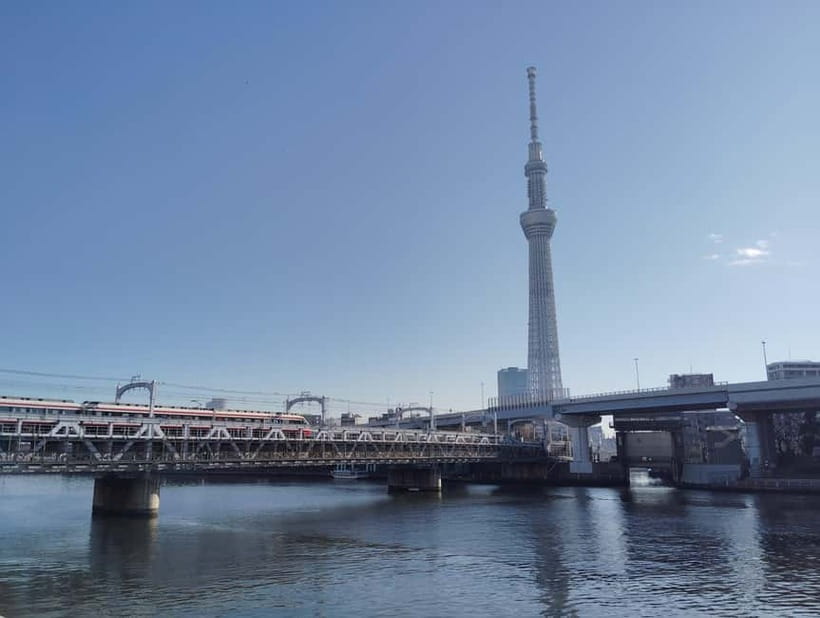
This tour is built for skyline viewing, but you can sharpen your results with a few choices:
- Bring a camera (the tour lists it), but also plan your shots before each deck moment. You’ll have time, but not unlimited time.
- Bring water and stay comfortable. The tour includes walking, and you’ll enjoy the views more if you’re not rushing.
- Aim for clear-sky moments if you can. Fuji visibility is mentioned from the first and last stops, and that’s usually the difference between a good photo day and a memorable one.
- If you’re going for night lights, treat the Skytree as your main event. It’s the final stop and the 360-degree view is where night scenes really make sense.
Should you book this Tokyo 3 Towers Tour?
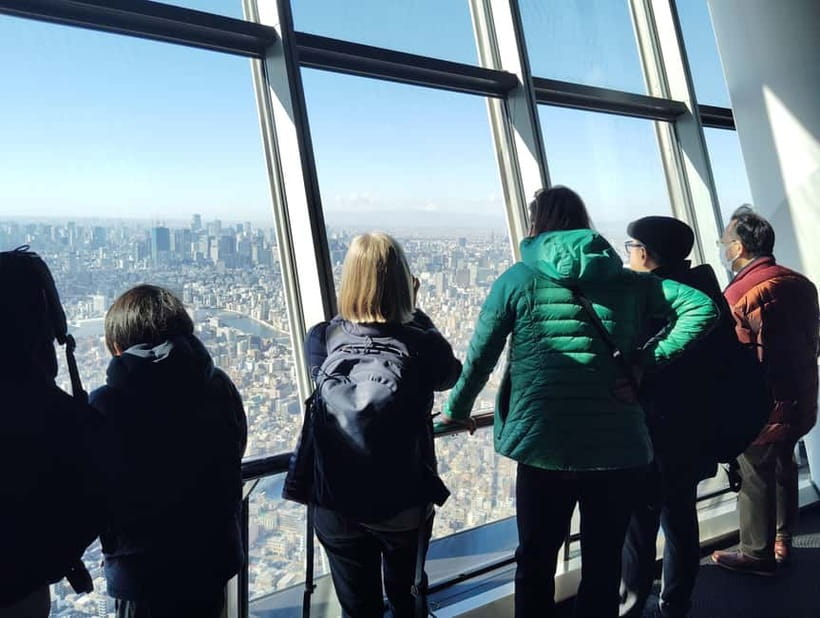
I think this is a strong booking choice if you want a well-paced, low-friction way to hit three of Tokyo’s biggest viewpoint stops with an English guide. You get a logical route, admission included at every stop, and the chance to see how the city shifts with height and direction.
I would hesitate only if you hate heights, or if you’re the kind of solo planner who already has your skyline itinerary nailed down with perfect timing. In that case, you might replicate the trip yourself for less money. But if you want the day managed for you and you care about making sense of what you’re seeing, this tour has practical value baked in.
If your priority is Fuji, start with the hope of clear weather. If your priority is night energy, plan your timing so the Skytree lands in the dark. Either way, you’ll come away with a much clearer mental map of Tokyo than you’d get from a single viewpoint.
FAQ
Where do I meet the guide?
Meet at the Tokyo Metropolitan Government Building’s Tomin Hiroba (都民広場). The guide will be holding a yellow sign for Deep Experience.
What’s included in the tour price?
The tour includes a professional English-speaking guide, admission to the Tokyo Metropolitan Government Building, Tokyo Tower, and Tokyo Skytree, plus subway fares within the tour.
How long is the tour?
The tour duration is listed as 5 hours.
Does the tour run in bad weather?
Yes. The tour operates in all weather conditions, so you should dress appropriately.
Are meals included?
No. Meals and drinks are not included.
Is this tour suitable for people afraid of heights?
No. The tour is not suitable for people afraid of heights.
More Tour Reviews in Tokyo



Fresh reviews from around Tokyo






Tokyo, compared.
 ★ 5.0Mt Fuji and Hakone 1-Day Bus Tour Return by Bullet TrainFrom $16326,383 reviews
 ★ 5.01-Day Tokyo Bus TourFrom $12914,250 reviews
 ★ 4.6teamLab Planets TOKYO Digital Art Museum Entry TicketFrom $259,779 reviews
 ★ 4.0Mt Fuji & Hakone Cruise, Drum Show Bullet Train 1 Day from TokyoFrom $1497,413 reviews
 ★ 5.0Shinjuku Food Tour (13 Dishes at 4 Local Eateries)From $866,603 reviews
 ★ 4.4Tokyo Mt Fuji 5th St & Hakone Cruise Bus Tour w/Bullet TrainFrom $1545,024 reviews
 ★ 5.0Flagship 2-Hours Official Street Go-Kart Tour – Tokyo Bay ShopFrom $644,974 reviews
 ★ 4.5From Tokyo: Mount Fuji Full-Day Sightseeing TripFrom $684,970 reviews