
Reviewed · TOKYO
Sushi-Making in Nakameguro, Tokyo with a Professional Chef
Sushi starts with VR fishing. I like how this class turns prep into play, then keeps moving straight into technique. The two big wins for me are the VR fishing kickoff and the fact that you shape and taste your own nigiri right there.
One thing to keep in mind: at about 1 hour 30 minutes, it’s a highlight-session, not a full day of sushi mastery. You’ll learn a lot, but you’ll still feel the time moving fast.
In This Review
- Key things to know before you go
- Sushi Katsu LAB in Nakameguro: where the class starts
- VR fishing sets the tone before you touch the fish
- Hands-On nigiri training: cutting, shaping, and fresh wasabi
- Itamae-san’s tamagoyaki demo and the warm egg reward
- What you eat: tasting the nigiri you made on the spot
- Group size, timing, and what to expect in 90 minutes
- Price and value: is $114.45 worth it?
- Who this works for in Nakameguro
- Should you book this sushi-making experience?
- FAQ
- Where is the meeting point for the Nigiri Sushi Experience?
- How long does the experience take?
- How much does the class cost?
- What happens during the experience?
- Do I make nigiri sushi myself or just watch?
- Is there a limit on the number of people in the group?
- Is free cancellation available?
Key things to know before you go
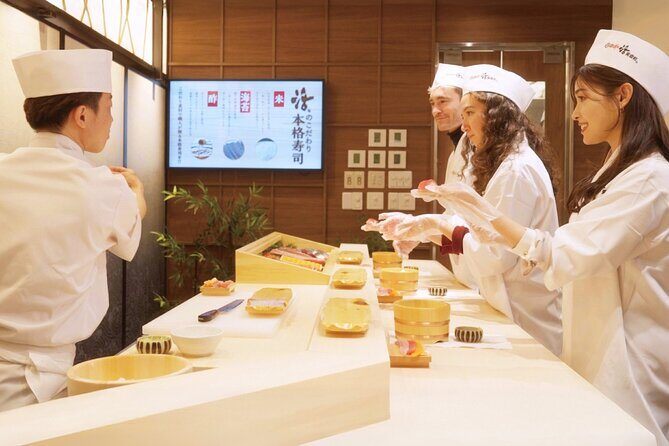
- VR fishing at the start: get the experience going before the knife work begins
- A pro chef guides every step: hands-on instruction, not just watching
- Fresh wasabi grating: you learn a more “real” approach than jarred shortcuts
- Live tamagoyaki demonstration: warm rolled egg is part of the flow
- You taste what you make: the meal happens on the spot
- Small group (max 6): more attention and better pacing
Before you commit, see how this one stacks up against a few Tokyo favourites:
- Mt Fuji and Hakone 1-Day Bus Tour Return by Bullet Train★ 5.0 · 26,383 reviews
- 1-Day Tokyo Bus Tour★ 5.0 · 14,250 reviews
- Tokyo: teamLab Planets TOKYO Digital Art Museum Entry Ticket★ 4.6 · 9,779 reviews
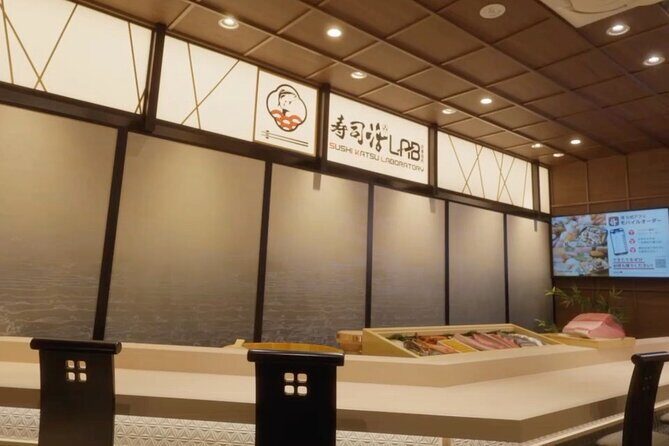
Sushi Katsu LAB in Nakameguro: where the class starts
This experience takes place in Nakameguro, Tokyo, at GEMS Nakameguro (2-chōme-13-3 Kamimeguro, Meguro City, Tokyo 153-0051). It’s a short, focused activity that also ends back at the same meeting point, so you’re not left wondering how to piece together the rest of your day.
What makes this location feel practical is that it’s near public transportation. That matters in Tokyo, where getting anywhere can be fast or slow depending on timing. Here, you can plan it as a bite-sized cultural stop between other sights without building a long commute.
Also, you’ll be in a small group. With a maximum of 6 people, the pace stays manageable and the chef can keep an eye on what you’re doing instead of juggling a bigger class.
VR fishing sets the tone before you touch the fish
The class kicks off with a virtual-reality fishing adventure. This isn’t a random gimmick. It gives you a story thread: sushi comes from ingredients caught and handled with care, not just finished on a plate.
I like that it lowers the intimidation factor. If you’re worried about cutting fish or making something you’ve only seen in restaurants, VR acts like a “warm-up.” It also creates an easy-to-share moment with your group—something you can laugh about and remember even after the sushi is gone.
Once the VR segment wraps, the energy shifts from play to technique. That timing is smart. You’re not waiting around for the real work; you go from “how it starts” to “how it becomes sushi.”
Hands-On nigiri training: cutting, shaping, and fresh wasabi
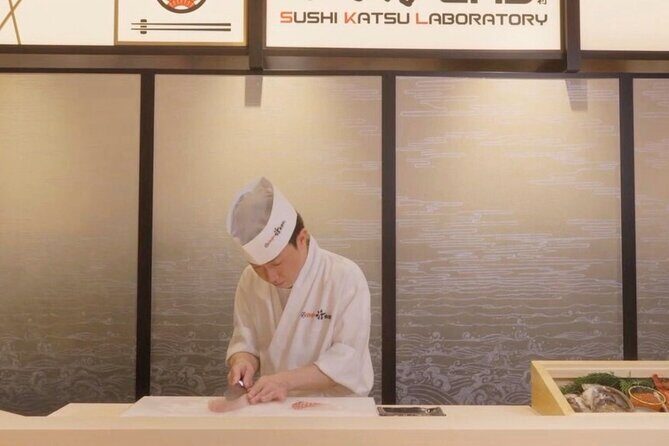
After the VR part, you move into the core of the experience: hands-on nigiri sushi making under guidance from the professional chef.
Here’s what you’re set up to learn:
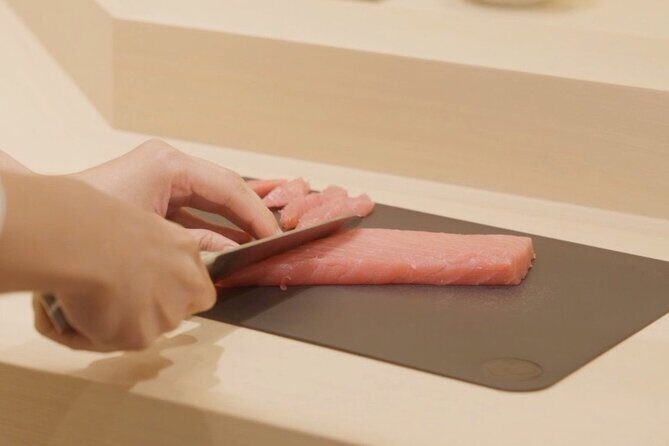
- how to handle fresh fish
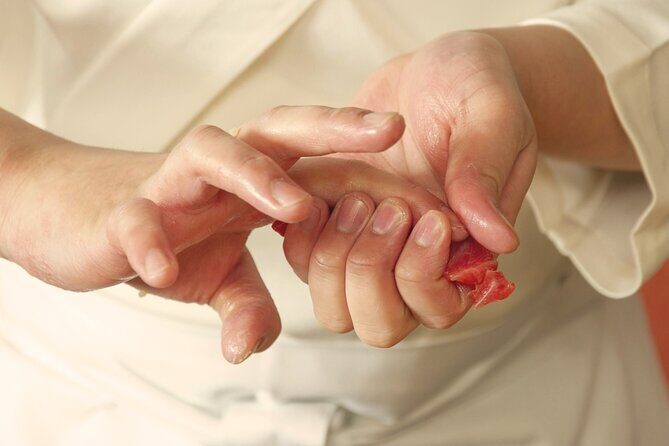
- how to shape authentic nigiri
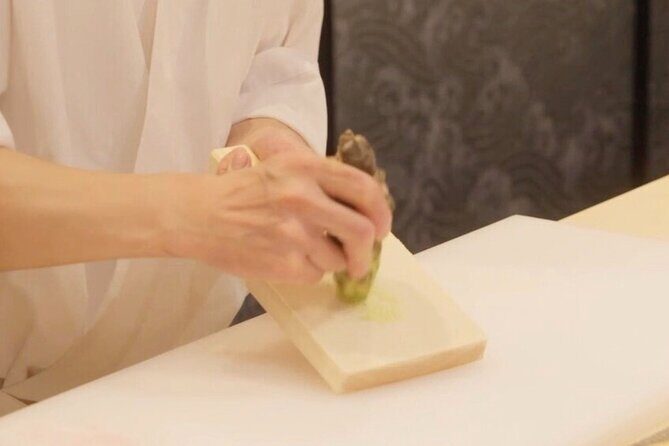
- how to grate fresh wasabi
That set of skills is the difference between a basic cooking demo and something you can actually use as sushi context. Restaurants show you the end result. This class shows you the in-between steps: how careful handling matters, how nigiri needs the right form, and how wasabi behaves when it’s fresh.
There’s also a fun confidence boost reported in the experience: you’ll cut fish and make sushi without getting bored, and you’ll leave with memorable photos—including time in the chef’s outfit. That’s a small detail, but it makes a big difference for families and groups. It turns the class into something you’ll want to look back on, not just something you ate.
A practical consideration: this is hands-on food work. Even though appropriate clothing is provided, you should still expect a little mess risk. Plan to dress like you’re doing a workshop, not like you’re going straight to a formal dinner afterward.
Itamae-san’s tamagoyaki demo and the warm egg reward
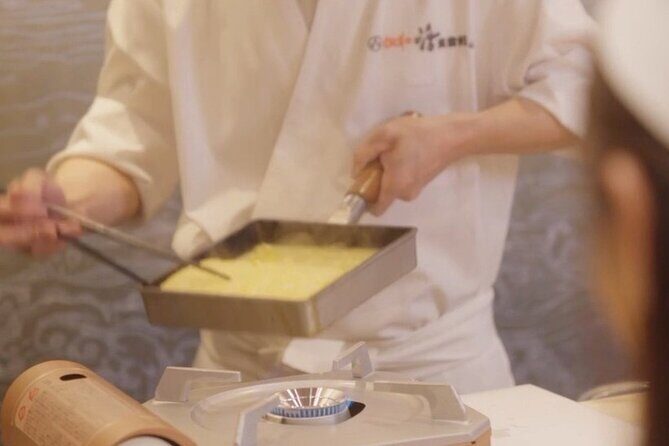
One of the most satisfying parts of the flow is the live demonstration of tamagoyaki, the Japanese omelet. You don’t just hear about it—you see it made while the class is happening.
The rolled egg shows up as a real “instant payoff.” One description highlights freshly cooked broth rolled eggs as especially excellent. Even if your tastes are different, warm egg is a crowd-pleaser and a great bridge between technique and eating.
Watching the chef make tamagoyaki matters because it teaches a different kind of control than nigiri shaping. Nigiri is about form and handling; tamagoyaki is about timing and rolling. Seeing both in one session gives you a more complete picture of why Japanese sushi counters can feel like performance art.





What you eat: tasting the nigiri you made on the spot
This is not a class where you make things and walk away empty. You taste the sushi you create yourself right there during the experience.
That on-the-spot tasting is a big value point. It lets you connect effort with flavor immediately. If you shape the nigiri slightly differently than you expected, you can taste the result while the guidance is still fresh in your mind. That feedback loop is hard to replicate if you only watch and then eat later elsewhere.
And the meal isn’t just your nigiri. The program includes that tamagoyaki demo, so you get at least one additional hot element. If you’re planning this between sightseeing blocks, this timing is helpful because it fills you up without requiring a separate reservation.
Group size, timing, and what to expect in 90 minutes
The experience runs about 1 hour 30 minutes, and the group size caps at 6 travelers (maximum). The short duration isn’t a flaw—it’s the whole design. This is meant to be doable between flights of stairs, station transfers, and museum hours.
With a small group, you also get a better rhythm. You’re not competing for attention. You can ask questions, follow the pace, and still finish with enough time to taste what you made.
On logistics, you’ll receive a mobile ticket and you start and end at the same location. You’ll also get confirmation at booking. If you like plans that don’t require too much mental overhead, this fits.
What about clothing? The experience includes appropriate clothing for the class. So you’re not stuck wearing your nicest outfit and worrying about smudges. Still, if you’re bringing cameras or going straight from the session to something else, you’ll feel more comfortable if you wear shoes and sleeves that you can move in.
Price and value: is $114.45 worth it?
At $114.45 per person for about 1 hour 30 minutes, this isn’t a bargain like a quick street-food stop. But it also isn’t just a generic cooking class.
The value is in the mix:
- VR fishing, which adds a distinct beginning to the story
- hands-on nigiri training with a professional chef
- fresh wasabi grating and fish handling
- a live tamagoyaki demo
- tasting what you make during the session
- a small group setup (max 6), which usually means more direct coaching
If you’re comparing it to a sushi meal alone, you’re paying for the lesson plus the experience around it. If you’re comparing it to a longer, more expensive multi-hour class, you’re paying for focus and momentum. For me, the sweet spot is: you get enough technique to feel like you learned something real, and you leave with a full, satisfying taste of the results.
Who this works for in Nakameguro
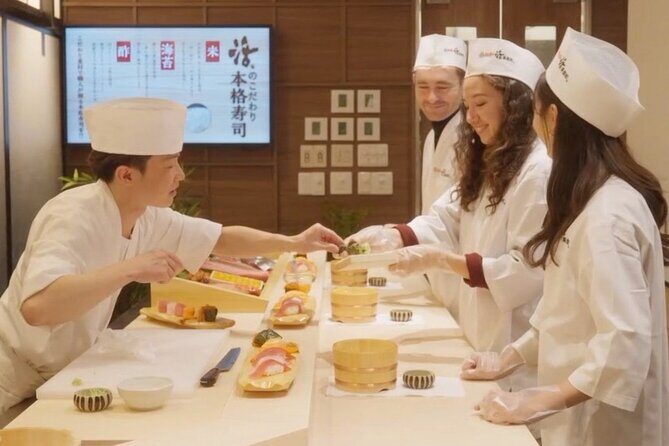
This is a strong choice if you want something hands-on but not exhausting. The structure—VR first, then technique, then tasting—keeps the session moving and gives you multiple ways to participate.
It also fits families well. One description points out the class is fun and accessible for people traveling together, and the presence of photos in the chef’s outfit helps make it feel like an event.
It’s especially good if you’re the kind of person who likes to understand food beyond ordering it. You’ll learn how fresh wasabi changes the experience, and you’ll see how tamagoyaki fits into the rhythm of a sushi-focused kitchen.
If you’re only interested in eating and nothing else, this may feel like paying for instruction. But if you want the story behind sushi—and a chance to make it—you’ll likely feel satisfied with the outcome.
Should you book this sushi-making experience?
Book it if you want a short, high-impact sushi workshop in Tokyo that includes both playful setup (VR fishing) and serious technique (fresh fish handling, nigiri shaping, fresh wasabi). The small group size also makes it feel more personal than the larger, watch-only cooking sessions.
Pass or look for a longer class if you’re hoping for slow, deep practice of sushi fundamentals over many hours. With about 1 hour 30 minutes, you’re going to learn the essentials and taste your results, not become a sushi pro before you head back to your hotel.
My practical bottom line: if you’re in Nakameguro anyway and you want a meal that comes with a lesson, this is one of the more direct ways to turn your Tokyo trip into something you can actually talk about later—especially when you can point to the nigiri you made and remember how it tasted.
FAQ
Where is the meeting point for the Nigiri Sushi Experience?
The start (and end) point is GEMS Nakameguro, 2-chōme-13-3 Kamimeguro, Meguro City, Tokyo 153-0051, Japan.
How long does the experience take?
It runs for about 1 hour 30 minutes.
How much does the class cost?
The price is $114.45 per person.
What happens during the experience?
You begin with a virtual-reality fishing adventure, then do hands-on sushi making with a professional chef. You’ll also grate fresh wasabi, watch a live tamagoyaki demonstration, and taste the sushi you make.
Do I make nigiri sushi myself or just watch?
You make sushi yourself. The experience includes hands-on nigiri shaping and tasting your own sushi on the spot.
Is there a limit on the number of people in the group?
Yes. The experience has a maximum of 6 travelers.
Is free cancellation available?
Yes. You can cancel up to 24 hours in advance for a full refund. If you cancel less than 24 hours before the start time, the amount paid is not refunded.
More Tour Reviews in Tokyo



Fresh reviews from around Tokyo






Tokyo, compared.
 ★ 5.0Mt Fuji and Hakone 1-Day Bus Tour Return by Bullet TrainFrom $16326,383 reviews
 ★ 5.01-Day Tokyo Bus TourFrom $12914,250 reviews
 ★ 4.6teamLab Planets TOKYO Digital Art Museum Entry TicketFrom $259,779 reviews
 ★ 4.0Mt Fuji & Hakone Cruise, Drum Show Bullet Train 1 Day from TokyoFrom $1497,413 reviews
 ★ 5.0Shinjuku Food Tour (13 Dishes at 4 Local Eateries)From $866,603 reviews
 ★ 4.4Tokyo Mt Fuji 5th St & Hakone Cruise Bus Tour w/Bullet TrainFrom $1545,024 reviews
 ★ 5.0Flagship 2-Hours Official Street Go-Kart Tour – Tokyo Bay ShopFrom $644,974 reviews
 ★ 4.5From Tokyo: Mount Fuji Full-Day Sightseeing TripFrom $684,970 reviews