
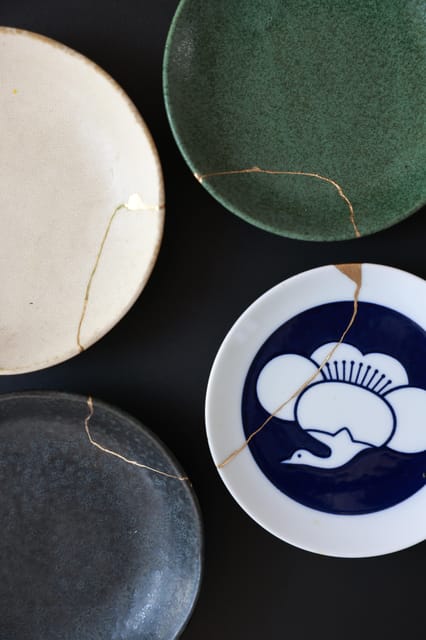
Reviewed · TOKYO
Shibuya Tokyo: Modern Kintsugi Workshop in Shibuya
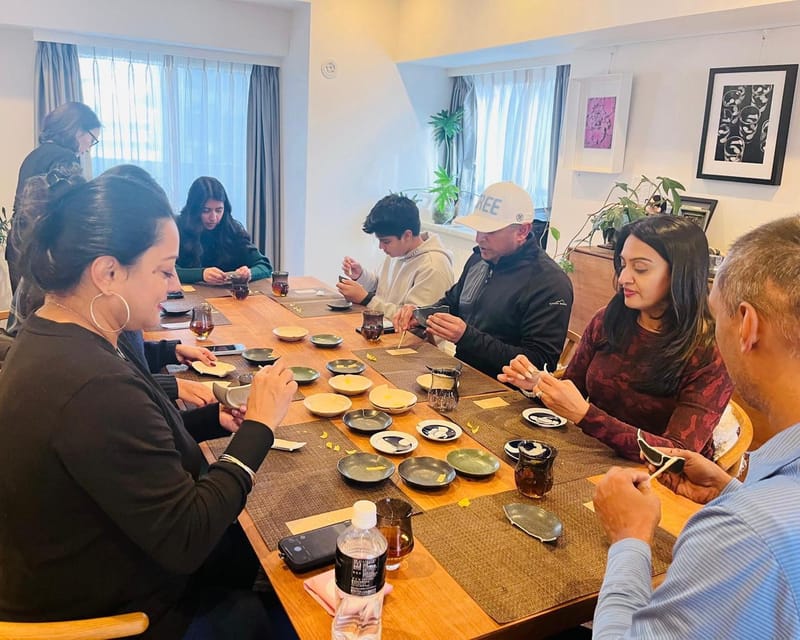
A broken dish can turn into art fast. This modern kintsugi workshop in Shibuya slows the day down with matcha and seasonal sweets, then puts you right into the repair process. The class is small (up to 6), so you get real attention, not a quick demo and a shrug.
I also like the location and pacing. You’re up the hill from Shibuya Crossing, so you start in a calmer studio setting, and the steps are clearly explained before you try them. One practical drawback: you must arrive on time. If you’re more than 15 minutes late for your reserved start time, you won’t be able to join.
In This Review
- The best reason to do kintsugi in Shibuya: it’s hands-on, not museum-staring
- Getting to the studio above Shibuya Crossing without losing your mind
- Matcha and seasonal sweets set the tone before repairs begin
- Picking your crockery: choose what you’d actually want to live with
- Modern kintsugi, not mythic tradition: what you’re really learning
- The hands-on process: calm focus with close coaching
- What’s in your kit (and what that means for value)
- Taking home a kintsugi souvenir you’ll actually want
- Pricing: is $141 worth it for a 2-hour workshop?
- Who should book this (and who might skip it)
- Practical tips to make your 2 hours smoother
- Should you book mon cadeau’s modern kintsugi in Shibuya?
- FAQ
- How long is the modern kintsugi workshop?
- Where is the meeting point in Shibuya?
- Do I need to bring anything with me?
- Is there an English-speaking instructor?
- What’s included in the price?
- Can I record video during the class?
- What are the group sizes like?
- Is the workshop suitable for young children?
- What if I arrive late?
The best reason to do kintsugi in Shibuya: it’s hands-on, not museum-staring
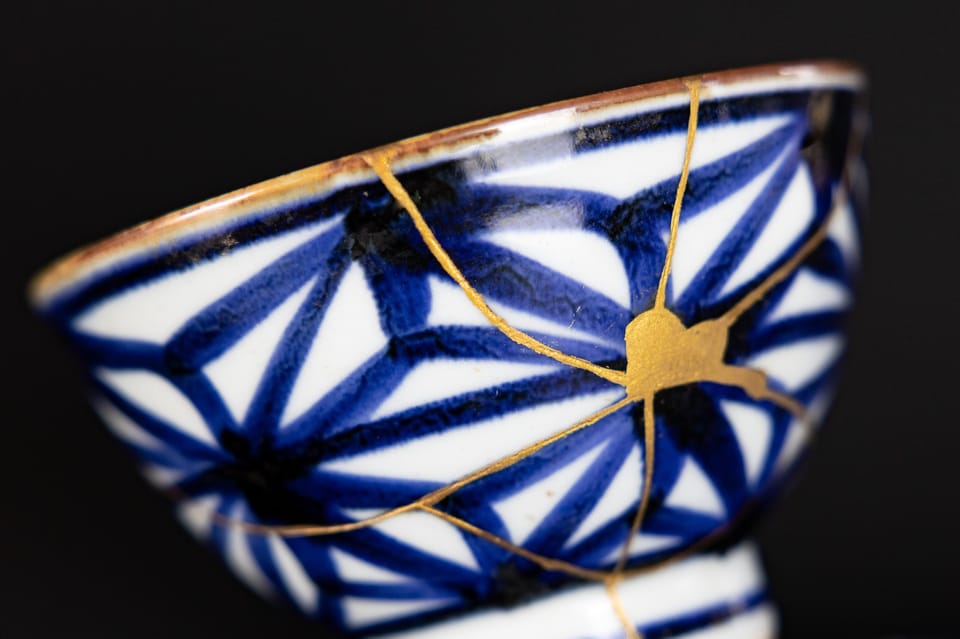
Tokyo is full of beautiful things. A lot of them are behind glass. This experience is different. You work with a real piece of crockery and repair it using modern kintsugi techniques, with guidance you can actually follow.
And yes, there’s culture in it. Kintsugi is connected to wabi-sabi, the idea that imperfections have meaning. Here, that idea isn’t a lecture. It’s part of the workflow: you see how broken edges become lines of character, and you understand why the restoration matters beyond just fixing something.
Before you commit, see how this one stacks up against a few Tokyo favourites:
- Mt Fuji and Hakone 1-Day Bus Tour Return by Bullet Train★ 5.0 · 26,383 reviews
- 1-Day Tokyo Bus Tour★ 5.0 · 14,250 reviews
- Tokyo: teamLab Planets TOKYO Digital Art Museum Entry Ticket★ 4.6 · 9,779 reviews
Getting to the studio above Shibuya Crossing without losing your mind
The workshop meets in a quiet pocket near Shoto 2-Chome Crossing. Your meeting spot is outside the studio next door to the Central Hospital Annex building, at the top of Bunkamura-dori. Plan to show up about 5 minutes early.
Two practical notes help a lot:
- Google Maps may try to send you into a side alley. The entrance is on the main street. Look for the tiled façade and the large brown double door with a narrow glass panel.
- The studio is up the hill from Shibuya Crossing. It’s not far, but you will feel it after the flat scramble of the station area.
If you arrive late, the workshop won’t bend. The rules say you won’t be able to join if you show up more than 15 minutes past your reserved start time. I’d rather you arrive early and get your bearings fast.
Matcha and seasonal sweets set the tone before repairs begin
You start inside with matcha tea and seasonal Japanese sweets. This is more than a snack break. It’s a built-in reset. Matcha slows people down. It also cues the mindset: be careful, be present, and treat the process like something worth doing well.
You’ll also get an introduction explanation sheet. That matters because kintsugi has small steps that can feel technical. The sheet gives you a reference point while you’re working, so you’re not relying only on memory.
Picking your crockery: choose what you’d actually want to live with
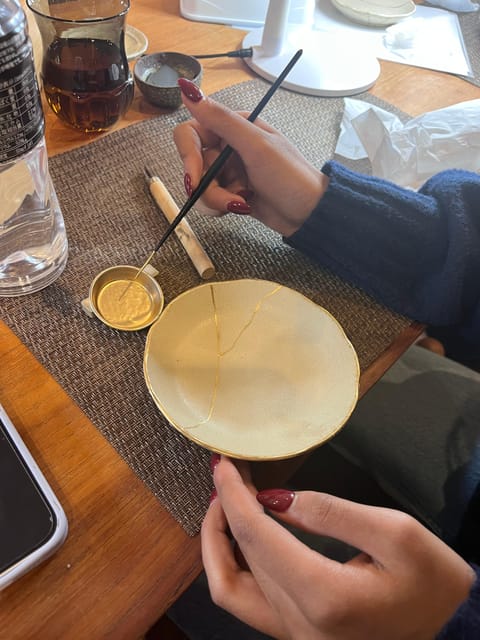
Once you’re in the right mood, you choose a piece of crockery from the workshop’s collection. You don’t need to bring your own item. The piece is provided, and so are the materials.
Here’s how to think about the choice:
- Pick something you’ll enjoy displaying or using. It’s a souvenir, but it’s also a functional object once it’s restored.
- Consider the shape and what kind of break it has. Different repairs can look different once the gold-toned restoration lines are finished.
- Go with your taste, not the “hardest option.” The class is designed to be doable with close help.
Modern kintsugi, not mythic tradition: what you’re really learning
This is called modern kintsugi, and that name is useful. One host approach uses contemporary materials rather than the traditional ones. That can make the process faster and safer, and it lowers the stress level for beginners.
You’ll learn a workflow, step by step:
- The instructor demonstrates each stage of reassembly, repair, and restoration.
- You try each step with supervision before moving on.
- The goal is a confident finish you can take home, not a perfect replica of a master artisan’s workshop.
The English instruction is also a big deal. The teacher names you might hear include Michiko (the main host/teacher in multiple sessions), plus Yuki, Koto, and Rita, depending on the day and group. Across different classes, the pattern is consistent: warm hospitality, patient guidance, and clear explanations.





The hands-on process: calm focus with close coaching
The workshop structure is what makes it work for real people. You’re not stuck watching. You’re not rushed, either.
Typically, it goes like this:
- A demonstration of each repair stage.
- Then you do that stage yourself.
- You move to the next step only when you’re comfortable.
Because the group is limited to 6 participants, your instructor can correct technique right away. That matters in kintsugi because tiny timing and placement choices affect the final look.
If you’re a craft person, you’ll probably enjoy the precision. If you’re not, you’ll still be surprised by how quickly your hands learn. Several past participants specifically called out the careful supervision and how the tools were prepared and handed in a precise, almost surgical rhythm.
What’s in your kit (and what that means for value)
Everything is provided. You don’t need to bring supplies, tools, or even a damaged item. The materials to do the restorations and repairs are included, along with:
- Matcha tea
- Seasonal sweets
- Introduction explanation sheet
- All restoration/repair materials
- A piece of crockery to repair
You also take it home in special gift packaging. That’s a quiet detail, but it’s a big practical win. You’re not wrapping fragile work on the train at the last minute.
Taking home a kintsugi souvenir you’ll actually want
The end result is your restored crockery piece. You’re not just taking photos. You’re taking a real object that represents your own decisions during the repair.
The finished look usually means:
- repaired lines that show the break rather than hiding it
- a modern, gold-accented aesthetic tied to kintsugi principles
This is one of those souvenirs that feels personal. It’s hard to find mass-made items in Tokyo that carry the same meaning as something you restored yourself.
If you’re buying gifts, this is also a strong option. A repaired dish in a gift box feels thoughtful without requiring you to guess sizes, flavors, or tastes.
Pricing: is $141 worth it for a 2-hour workshop?
At $141 per person for 2 hours, it’s not a cheap “walk-in activity.” But it also isn’t overpriced for what’s included.
Here’s what you’re paying for, in plain terms:
- A small group setup (max 6) and hands-on guidance
- Materials and tools, including the piece of crockery you restore
- Tea and seasonal sweets
- Instruction in English
- A finished, take-home object packed for travel
When you break it down, the cost covers more than the class itself. You’re paying for attention, materials, and the finished keepsake. If you’ve ever wanted to try a traditional art form but worried you’d be left out of the process, this is the kind of workshop that answers that worry.
Who should book this (and who might skip it)
This workshop is a great fit if you want:
- a focused craft experience with calm, step-by-step teaching
- a unique take-home souvenir that doesn’t feel generic
- a gentle introduction to kintsugi and wabi-sabi ideas without heavy technical baggage
- a small-group setting where an instructor can correct your technique
It may be less ideal if:
- you arrive late or hate time rules (because you must be on time to join)
- you want purely visual entertainment. This is active work.
- you plan to record video. Video recording is not allowed.
For families: it’s not suitable for children under 5. One past experience included kids around middle-school age, with a strong thumbs-up—so if you have older kids who enjoy crafts, it can work well.
Practical tips to make your 2 hours smoother
These are the things that help most on workshop days:
- Wear comfortable clothes. Repairs involve close hand work and staying seated.
- Plan to get there early. The studio is up the hill, and the area around Shibuya can be a maze.
- Don’t plan on video. You can still take photos if that’s allowed in practice, but the workshop clearly bans video recording.
- If you’re sensitive to sharp smells or adhesives, note that you’ll be working with restoration materials. The workshop is supervised, but it’s still an active craft setting.
Should you book mon cadeau’s modern kintsugi in Shibuya?
If you like craft, meaning, and a hands-on Tokyo experience, I’d book it. This workshop hits the sweet spot: small group attention, clear teaching in English, and a real souvenir you restore yourself. The vibe is also described as cosy and welcoming, with hosts like Michiko leading the experience and team members such as Yuki, Koto, and Rita supporting along the way.
I’d skip it only if you’re very low on patience for careful steps, or if you know you won’t be able to arrive within your reserved window.
FAQ
How long is the modern kintsugi workshop?
The workshop lasts 2 hours.
Where is the meeting point in Shibuya?
You’ll meet outside the mon cadeau studio next door to the Central Hospital Annex building, at the top of Bunkamura-dori on Shoto 2-Chome Crossing. Meet about 5 minutes before the start time.
Do I need to bring anything with me?
No. You don’t need to bring tools or supplies. The workshop provides all materials and a piece of crockery to repair. Wear comfortable clothes.
Is there an English-speaking instructor?
Yes. The instructor teaches in English.
What’s included in the price?
The price includes matcha tea, seasonal Japanese sweets, an introduction explanation sheet, all materials for the restoration/repair, and the crockery piece you restore.
Can I record video during the class?
No. Video recording is not allowed.
What are the group sizes like?
It’s a small group limited to 6 participants.
Is the workshop suitable for young children?
It is not suitable for children under 5 years.
What if I arrive late?
You will not be able to join if you arrive more than 15 minutes past your reserved start time.
More Tour Reviews in Tokyo



Fresh reviews from around Tokyo






Tokyo, compared.
 ★ 5.0Mt Fuji and Hakone 1-Day Bus Tour Return by Bullet TrainFrom $16326,383 reviews
 ★ 5.01-Day Tokyo Bus TourFrom $12914,250 reviews
 ★ 4.6teamLab Planets TOKYO Digital Art Museum Entry TicketFrom $259,779 reviews
 ★ 4.0Mt Fuji & Hakone Cruise, Drum Show Bullet Train 1 Day from TokyoFrom $1497,413 reviews
 ★ 5.0Shinjuku Food Tour (13 Dishes at 4 Local Eateries)From $866,603 reviews
 ★ 4.4Tokyo Mt Fuji 5th St & Hakone Cruise Bus Tour w/Bullet TrainFrom $1545,024 reviews
 ★ 5.0Flagship 2-Hours Official Street Go-Kart Tour – Tokyo Bay ShopFrom $644,974 reviews
 ★ 4.5From Tokyo: Mount Fuji Full-Day Sightseeing TripFrom $684,970 reviews