
Reviewed · TOKYO
Retro Shibuya Food Tour
Tokyo has a second personality in Shibuya.
This walking tour takes you through Shibuya’s back streets and Showa-era context, so the neighborhood feels like a living story instead of a photo stop. I really like the way the route is built around real meeting points like Hachiko and Shibuya Crossing, then quickly shifts into smaller alleys where you can sample local eats and drinks you’d struggle to spot alone.
I also like the payoff for the money: you get local food tastings, dessert, and three complimentary drinks that can include beer and local sake, guided by a local English speaker. Guides like Josh and Jacob, and Sharon in past groups, are praised for mixing history facts with good pacing and solid food picks. One drawback to consider: it is not recommended for vegans, so if that’s your diet, this may be a stretch.
In This Review
- Key Points at a Glance
- Why a Retro Shibuya Walk Works So Well at 4 pm
- From Shibuya Station to Hachiko: Getting Context Fast
- Center-gai to Don Quijote: Snacks, Drinks, and Easy-to-Miss Corners
- Mark City, Shibuya 109, and Nonbeiyokocho: The Retro Night Shift
- What You Actually Get: 3 Drinks, Dessert, and Food Tastings That Add Up
- Guide-Driven Storytelling: What Makes the Tour Feel Personal
- Diet Needs, Who It Suits, and Who Should Pass
- Real-World Tips: Weather, After-Party, and End Point Under the Station
- Should You Book the Retro Shibuya Food Tour?
- FAQ
- FAQ
- How long is the Retro Shibuya Food Tour?
- Where do I meet and where does the tour end?
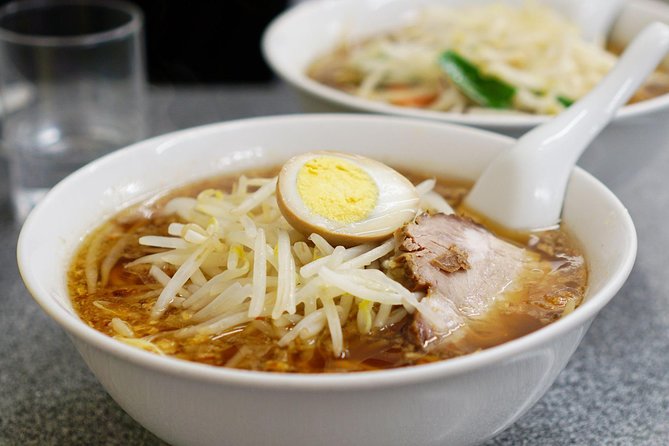
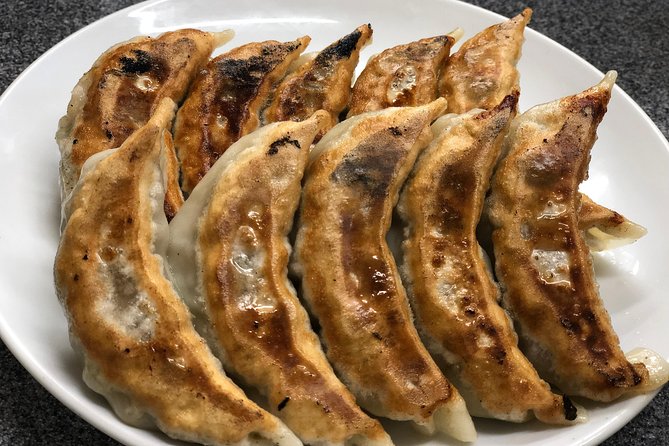
- What food and drinks are included?
- Is the tour suitable for vegetarians or people with gluten-free needs?
- Is the tour recommended for vegans?
- How big is the group?
Key Points at a Glance
- 4 pm start time is ideal for moving from iconic landmarks into dinner-and-drinks energy
- 3 included drinks plus dessert means you’re not just sampling bites
- Small group size (max 10) helps you move smoothly through tight back-street spots
- Showa-era stories add meaning to places that can otherwise feel like a blur
- Nonbeiyokocho style alley stops fit the retro Shibuya vibe and standing-bar culture
- Vegetarian and pescetarian friendly, plus gluten-free friendly, but vegans should plan carefully
Before you commit, see how this one stacks up against a few Tokyo favourites:
- Mt Fuji and Hakone 1-Day Bus Tour Return by Bullet Train★ 5.0 · 26,383 reviews
- 1-Day Tokyo Bus Tour★ 5.0 · 14,250 reviews
- Tokyo: teamLab Planets TOKYO Digital Art Museum Entry Ticket★ 4.6 · 9,779 reviews
Why a Retro Shibuya Walk Works So Well at 4 pm
This tour starts at 4:00 pm, which matters more than it sounds. Shibuya at late afternoon hits that sweet spot where storefronts are open, crowds are present, and the area starts shifting into dinner mode. You begin with big, easy-to-locate landmarks, then the tour steadily turns into smaller lanes where food and drinks are the point.
The walking format also keeps things practical. You’re not spending your evening hunting for places, figuring out train exits, or waiting around at a restaurant for a long sit-down meal. Instead, you get a guided, step-by-step route that keeps you moving through the neighborhood’s different “moods.”
Another quiet win: the tour uses a mobile ticket, which makes the meeting part less of a hassle when you’re juggling transit and getting to the exact start point.
From Shibuya Station to Hachiko: Getting Context Fast
You meet at Shibuya Station (2-chome-24, Shibuya). That’s a smart choice because Shibuya Station can be a maze, especially when you’re arriving from different train lines. Starting here means you can anchor yourself quickly and stop wasting time on orientation.
Next comes Hachiko Statue, a place that’s easy to find but often misunderstood if you only treat it as a photo spot. With your local English-speaking guide, you get insights into local life and Japanese culture, which helps you read what you’re seeing around you—people crossing, patterns of daily commuting, and the way Shibuya acts like a social hub as much as a shopping district.
Then you head toward Shibuya Crossing. The tour’s key here is not just the spectacle. You get a look at the history of Shibuya dating back to the Showa era, which turns the intersection from a single moment into something shaped over time. Even if you’ve seen the crossing on video, the added context makes it feel less like a theme park and more like a real neighborhood.
What to watch for: Shibuya is crowded, and the crossings and station areas can be busy. If you prefer a quieter pace, keep your expectations realistic. The guide will help keep you moving, but you’ll still be in the flow of one of Tokyo’s most active districts.
Center-gai to Don Quijote: Snacks, Drinks, and Easy-to-Miss Corners
After the major landmarks, the route makes a turn toward Shibuya Center-gai, where the tour shifts into tasting mode. This is where you start building your evening’s food plan: you sample a range of local and seasonal dishes plus three drinks total across the stops. The exact mix can vary, but you know it will include both food and alcoholic options.
Center-gai can feel like a shopping corridor on first glance, but the guide helps you treat it like a map. You learn what to look for and why certain kinds of places matter in Shibuya—especially the kind of older, familiar spots that locals use when they want something quick, cheap, and satisfying.
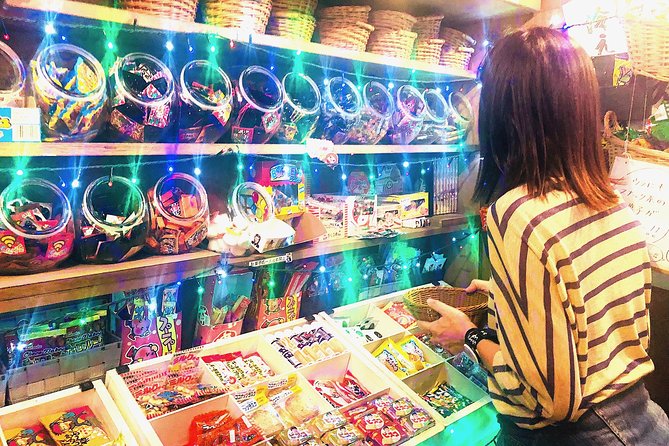
From there you head toward MEGA Don Quijote. This stop isn’t just about souvenirs. It’s part of the “retro Shibuya” vibe—one of those places where the energy is loud and the choice is massive. You also get a peek inside as you move from the main retail streets into side streets that lead to the real food experience: the tour’s hidden-spots feel without requiring you to guess your way through back alleys.
If you’re thinking, Wait, are we going from big neon to tiny bars? Yes. And that contrast is a big part of the appeal. You’ll learn where the tourist crowd thins out and where local social habits—standing, snacking, grabbing a drink—take over.
Mark City, Shibuya 109, and Nonbeiyokocho: The Retro Night Shift
The tour continues around Shibuya Mark City and Shibuya 109, both major landmarks that many people pass through quickly. Here, you get a different angle. Instead of shopping for the sake of shopping, these stops become waypoints that frame how Shibuya mixes styles and generations.
This matters because the Retro part is not just about food. Shibuya’s identity is layered—fashion, youth culture, and everyday routines all jostle in the same small area. The guide’s Showa-era framing helps you connect those dots without turning the tour into a lecture.
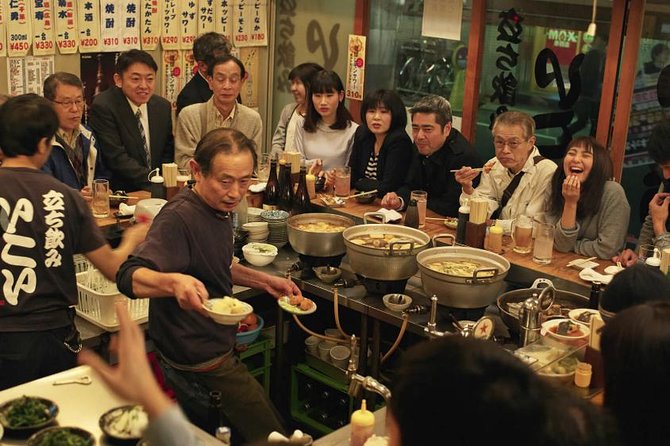
Then you reach Nonbeiyokocho, which is where the tour’s evening feel comes alive. This is the kind of place where narrow lanes and small venues create a more intimate atmosphere. Think: alley-style drinking, close-by chatter, and the vibe of people treating one hour as a whole event. It’s also the kind of stop that’s hard to recreate on your own because it’s easy to walk past without knowing what’s inside.
Practical tip: wear shoes you trust. Even with a moderate pace, you’ll be on your feet for about 3 hours and moving between crowded zones and tighter alleys. If you’re used to long walks, you’ll be fine. If your “city walking” is usually only short distances, plan for it to be more active than a typical sightseeing stroll.





What You Actually Get: 3 Drinks, Dessert, and Food Tastings That Add Up
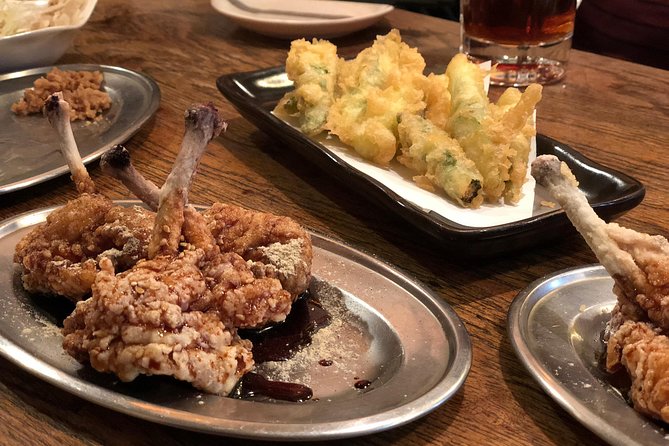
Here’s where the value starts to make sense. The tour includes:
- Local food tastings
- Dessert
- Three complimentary drinks, ranging from options like beer and local sake and other beverages
At $221 per person for roughly 3 hours, you’re not paying for a single meal. You’re paying for a guided tasting route: the time of a local English speaker, access to multiple places, and a tasting structure that keeps you from over-ordering at one restaurant or under-eating because you guessed wrong.
In Tokyo, the cost of alcohol and convenience adds up fast. So getting those drinks included changes the math. You’re building a mini food-and-drink circuit instead of just buying one dinner.
Also, the tour is designed to fit what you want from Shibuya at night. It’s not only about heavy, sit-down dishes. It includes the kind of places where you might be standing or ordering small plates, and those are exactly the formats that the guide helps you navigate.
One more plus: the tour allows vegetarian, pescetarian, and gluten-free-friendly choices. That doesn’t mean every single bite will be a perfect match, but it means you’re not automatically locked out of the experience if you eat differently.
Guide-Driven Storytelling: What Makes the Tour Feel Personal
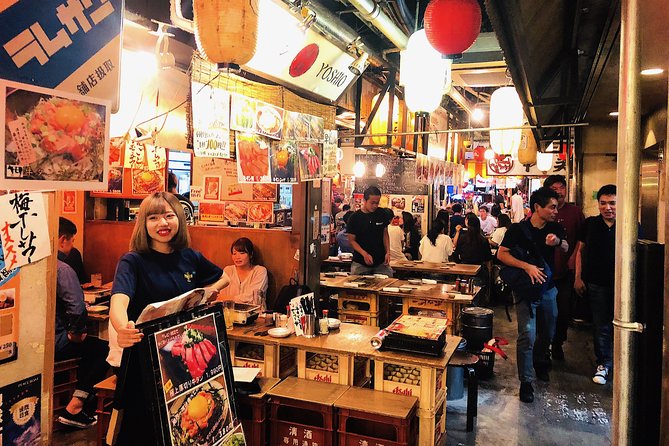
The best tours have a secret ingredient: a guide who can connect details to the street in front of you. This one seems to do that well. Past groups have praised guides such as Josh and Jacob and Sharon for sharing both interesting historical facts and delicious food finds.
So what should you expect from the guiding style? You’ll get:
- History tied to specific places (Showa-era context around Shibuya landmarks)
- Clear transitions so the tour feels like it flows rather than jumping randomly between restaurants
- Help choosing what to eat and drink when you’re in places you’d likely find intimidating on your own
This is also why the maximum group size matters. With up to 10 travelers, the guide can keep things moving and respond to questions without losing the rhythm of the food stops.
If you want your Shibuya evening to feel like a local plan, not a tourist route, this guide-led structure is the core of the value.
Diet Needs, Who It Suits, and Who Should Pass
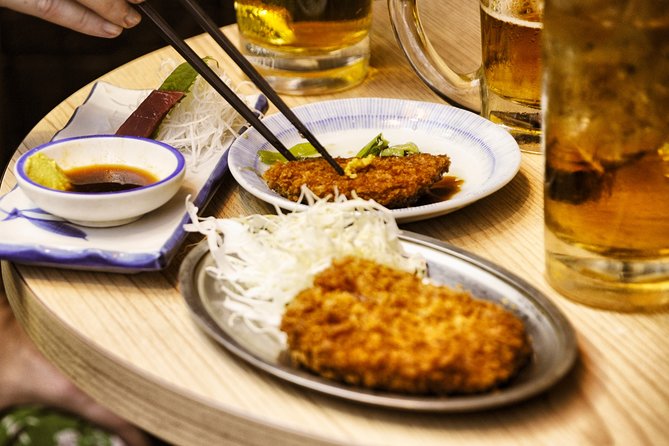
This tour is vegetarian, pescetarian, and gluten-free friendly. It is not recommended for vegans. If you’re vegan, you’ll want to skip this one and look for a plant-based-focused Tokyo tour where substitutions are more than a hope.
The tour also asks for moderate physical fitness. It’s a walking experience with a group route through busy areas and tighter alleys. You don’t need to be a marathon runner, but you should be comfortable standing, walking, and moving on and off short stretches throughout the evening.
Who it fits best:
- You want a Shibuya experience that’s more than crossing photos
- You like food tastings paired with short explanations
- You enjoy a drink-included evening (because alcohol is part of the plan)
- You want small-group energy
Solo travelers are welcome too, but you may need to email in advance. If you’re a solo traveler, it’s worth reaching out early so the operator can confirm arrangements that work for you.
Real-World Tips: Weather, After-Party, and End Point Under the Station
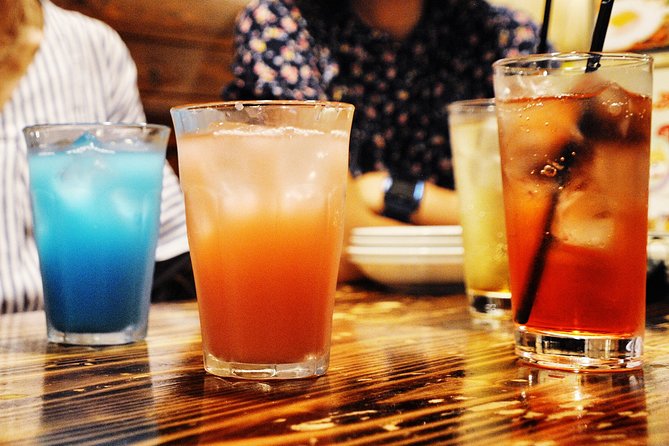
This experience is listed as requiring good weather. That’s common for a walking tour, and it’s especially true in a place like Shibuya where the streets can funnel crowds. If weather is poor, the tour can be moved to a different date or you can get a refund.
There’s also a Karaoke after party available. The key detail here is that it’s optional. If you enjoy that kind of social add-on, it can turn the food tour into a longer night. If you prefer to head back, you’re not stuck with it.
Finally, note the end point: you finish at the Tokyu Department Honten Store, basement level under the station. That’s convenient because it’s back near transit. It makes it easier to keep your evening from turning into one more navigation puzzle.
Should You Book the Retro Shibuya Food Tour?
Book it if you want an evening that mixes Showa-era storytelling with practical eating stops, where alcohol and tastings are part of the package. The small group size, the structured 4 pm start, and the included drinks and dessert make it feel like a planned night out rather than a random food crawl.
Skip it if vegan eating is non-negotiable, or if you’d rather do Shibuya at your own pace without guided pacing and fixed tasting stops. Also, if standing and walking are harder for you, you might find the tour more active than a relaxed sightseeing walk.
If you like the idea of learning Shibuya while you eat and drink your way through it, this is a strong choice.
FAQ
FAQ
How long is the Retro Shibuya Food Tour?
The tour is about 3 hours.
Where do I meet and where does the tour end?
You meet at Shibuya Station (2-chome-24, Shibuya) and end at the Tokyu Department Honten Store basement level under the station (2-chōme-24-1 Dōgenzaka).
What food and drinks are included?
The tour includes local food tastings, dessert, and three complimentary drinks (including options such as beer and local sake, plus other beverages).
Is the tour suitable for vegetarians or people with gluten-free needs?
Yes. It is listed as vegetarian, pescetarian, and gluten-free friendly.
Is the tour recommended for vegans?
No. The tour is not recommended for vegans.
How big is the group?
The tour has a maximum of 10 travelers.
More Tour Reviews in Tokyo



Fresh reviews from around Tokyo






Tokyo, compared.
 ★ 5.0Mt Fuji and Hakone 1-Day Bus Tour Return by Bullet TrainFrom $16326,383 reviews
 ★ 5.01-Day Tokyo Bus TourFrom $12914,250 reviews
 ★ 4.6teamLab Planets TOKYO Digital Art Museum Entry TicketFrom $259,779 reviews
 ★ 4.0Mt Fuji & Hakone Cruise, Drum Show Bullet Train 1 Day from TokyoFrom $1497,413 reviews
 ★ 5.0Shinjuku Food Tour (13 Dishes at 4 Local Eateries)From $866,603 reviews
 ★ 4.4Tokyo Mt Fuji 5th St & Hakone Cruise Bus Tour w/Bullet TrainFrom $1545,024 reviews
 ★ 5.0Flagship 2-Hours Official Street Go-Kart Tour – Tokyo Bay ShopFrom $644,974 reviews
 ★ 4.5From Tokyo: Mount Fuji Full-Day Sightseeing TripFrom $684,970 reviews