
Reviewed · TOKYO
Private Zen Meditation in English in Shinjuku, Tokyo
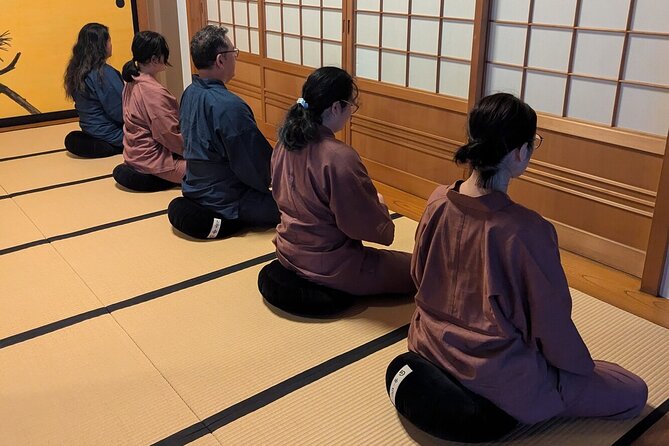
Silence hits different in Tokyo. This private zazen session at Denchuji Temple gives you direct Zen instruction in English, in a calm historic space tucked into the Shinjuku area. I love the clarity of the monk’s guidance, plus the way the experience is built for beginners without making you feel judged for not knowing anything yet.
Two things really stand out for me: the English guidance from a Zen monk (plus extra support from a local guide), and the fact that chair zazen is available for kids or anyone who can’t sit cross-legged. One possible drawback to think about first: it starts in the early evening (5:30 pm) and lunch or dinner isn’t included, so you’ll want to plan what you eat before you go.
In This Review
- Key points worth knowing
- Denchuji Temple at 5:30 pm: a calm pocket near Shinjuku
- English monk guidance: what “private zazen” changes for you
- The three essentials: posture, breathing, and mind
- Denchuji’s Soto lineage: the Eiheiji connection
- Chair zazen in Japan: practice for kids and limited mobility
- What the temple visit feels like: peaceful, personal, and structured
- Shintoism and Kannushi-led meditation: a Japan-spirit crossover you may hear
- Price and logistics: is $169.08 per person good value?
- Who this fits best (and who should reconsider)
- Should you book this private zazen in Shinjuku?
- FAQ
- FAQ
- Where does the experience start and what time is it?
- How long does the private Zen meditation last?
- Is this experience private or shared?
- Is the meditation session suitable for beginners?
- Is instruction available in English?
- Can I do chair zazen instead of sitting cross-legged?
- Is pickup included?
- What’s included in the price?
- What isn’t included?
- When will I receive confirmation after booking?
- Is the experience refundable if I cancel?
Key points worth knowing
- Denchuji Temple (Soto Zen) practice since 1640, tied to the Soto world through Eiheiji
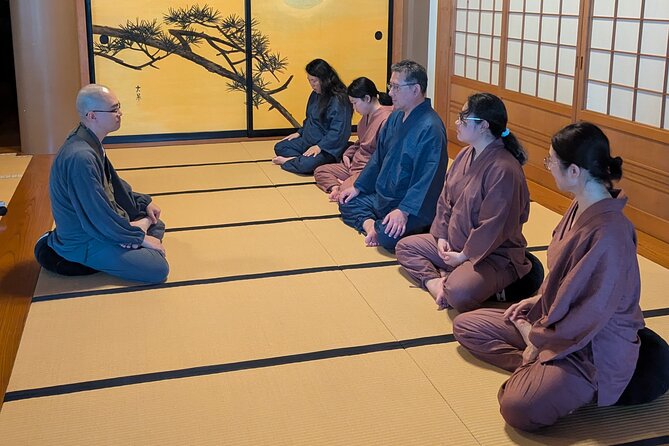
- English instruction from a Zen monk, plus a multilingual local guide if you want extra context
- Zazen basics broken into three essentials: posture, breathing, and mind
- Chair zazen available, so the practice isn’t limited to very flexible bodies
- Private format for just your group, making it easier to ask questions and settle in
- Evening timing (start 5:30 pm) in a quieter temple setting, not a daytime crowd scene
Before you commit, see how this one stacks up against a few Tokyo favourites:
- Mt Fuji and Hakone 1-Day Bus Tour Return by Bullet Train★ 5.0 · 26,383 reviews
- 1-Day Tokyo Bus Tour★ 5.0 · 14,250 reviews
- Tokyo: teamLab Planets TOKYO Digital Art Museum Entry Ticket★ 4.6 · 9,779 reviews
Denchuji Temple at 5:30 pm: a calm pocket near Shinjuku
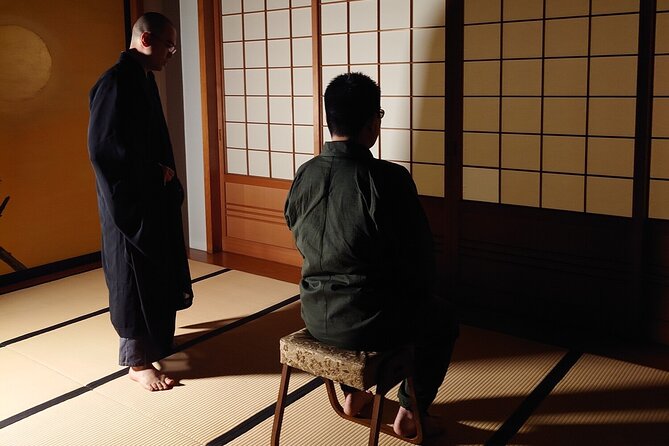
Shinjuku can feel like a nonstop machine. That’s why I like this schedule. Starting at 5:30 pm, you’re heading into Denchuji Temple when the day’s pressure has started to cool off, and you can actually hear yourself think.
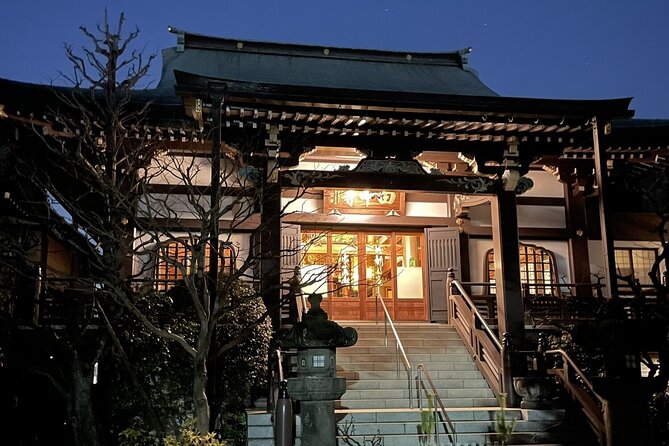
Denchuji is not a brand-new “try Zen” setup. It traces back to 1628, and its Soto Zen zazen practice has been known since 1640. The temple’s name even shows up on maps from an early Edo period timeframe, which gives you a strong sense that this is a lived religious practice, not just a performance for visitors.
There’s also a big historical footnote: it was named by Tokugawa Iemitsu, the third shogun of the Edo shogunate. That matters because it frames Denchuji as part of Japan’s long continuity of discipline and routine—exactly the kind of atmosphere that makes meditation feel grounded instead of gimmicky.
English monk guidance: what “private zazen” changes for you
In a private format, you stop doing “tour brain” and start doing “practice brain.” Here, your session is private—only your group participates—so you’re not trying to keep your pace with someone else’s questions or distractions.
The real win is the instruction style: you get direct guidance in English from a Zen monk. That’s not just translation. The whole experience is designed to explain the essentials clearly enough for a first-timer, and it uses visual guidance to help you understand what you’re doing while you’re doing it.
Your local guide is also there for support and context. The experience includes a multilingual local guide in English / French / German / Spanish, and you can request flexible tour planning in English. If you like having extra layers of meaning—why posture matters, what breath regulation is trying to do—this setup is built to help you stay oriented.
And from the tone of past participants’ experiences, the interaction style lands well: people have described the monk as informative and understanding, and the guides as genuinely friendly and helpful. That combination matters. A meditation session can be technical, but if the person teaching you is comfortable and clear, you feel safe enough to relax into it.
The three essentials: posture, breathing, and mind
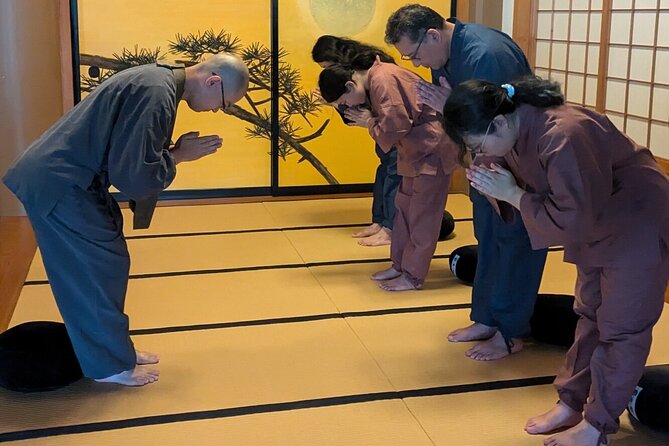
Zen zazen can sound mysterious until someone breaks it down in human terms. This experience does that by focusing on three essential principles—not a long list of complicated steps.
You work on:
- Adjusting posture so your body supports stillness
- Regulating breathing so your attention doesn’t constantly get pulled away
- Adjusting your mind so thoughts don’t become a panic event
What I like about this approach is that it prevents the most common beginner mistake: turning meditation into a performance where you’re trying to hit a perfect “meditation face.” The guidance here emphasizes relaxing and enjoying the practice instead of feeling pressured to follow every technique in a rigid way.
For you, that means you can treat the session like training wheels. You’re learning what to pay attention to, and you’re learning what to do when your attention wanders. That’s the entire point—and it’s way more useful than expecting instant calm.
Denchuji’s Soto lineage: the Eiheiji connection
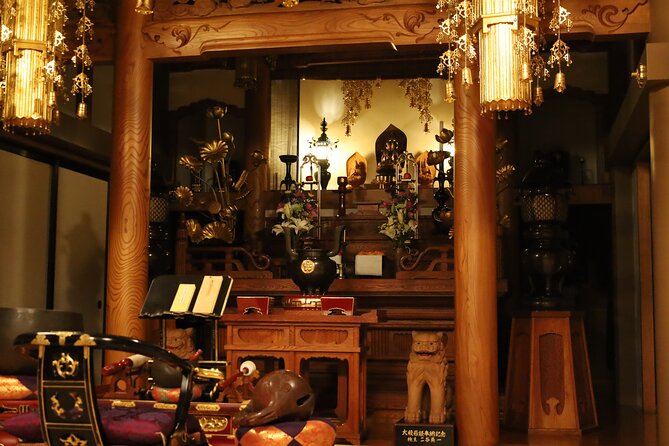
There’s a reason this temple is described as significant for Soto Zen meditation practice. Denchuji’s former head priest, Zen Master Hata Egyoku, served as the 76th chief priest at Eiheiji Temple in Fukui Prefecture—a major head temple in the Soto school.
Why should you care? Because Zen isn’t just a technique. It’s a tradition carried through people, discipline, and teaching lineage. When you learn in a place connected to Eiheiji, the practice feels less like an optional wellness activity and more like something with a careful pedagogical history.
You don’t need to be a scholar to feel the effect. The lineage context helps your brain stop treating the session as a one-off. It becomes part of a broader map of how Soto Zen teaches stillness and attention over time.





Chair zazen in Japan: practice for kids and limited mobility
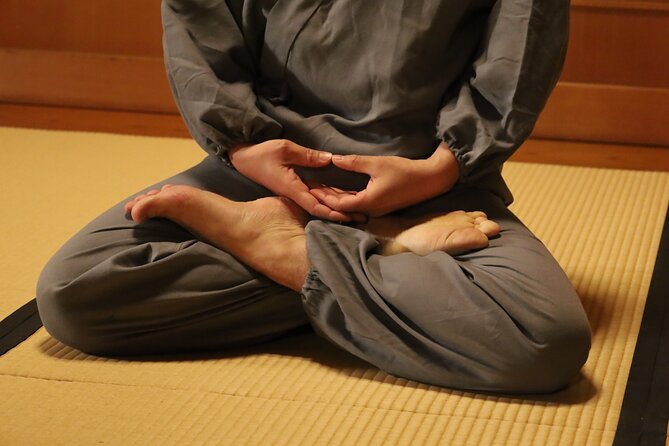
Not everyone can sit cross-legged comfortably. This experience explicitly offers chair zazen, and it’s mentioned as available for children or people with physical limitations.
That detail is more important than it sounds. A lot of meditation activities accidentally exclude real bodies. Here, you’re encouraged to tell the organizers in advance if you want to use the chair zazen option. That gives you a smoother session—no last-minute scrambling to figure out seating while everyone is trying to settle into quiet.
If you’re traveling with family, this is also the difference between “we tried” and “we practiced.” People have described the private, peaceful nature of the session as powerful and relaxing. The chair option is part of why that’s possible: you can focus on the mind and breath instead of fighting discomfort.
What the temple visit feels like: peaceful, personal, and structured
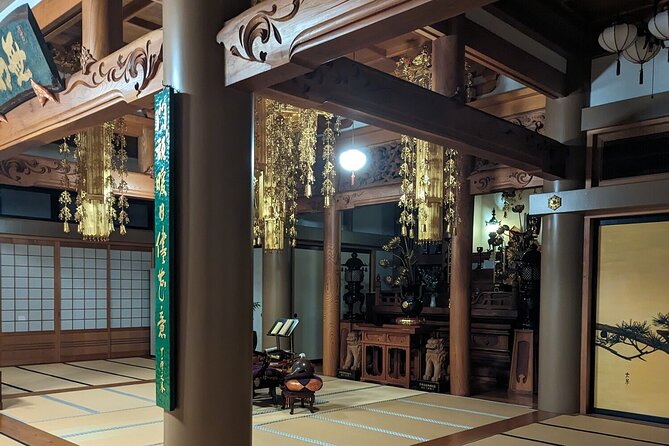
You’re stepping into a real temple environment. The guide uses the setting to support your practice, and the session stays structured around learning zazen rather than turning into a long lecture.
Because it’s private and guided in English, you can ask questions in the moment. That’s a big deal if you’re the type who needs to understand why something works. It’s also a big deal if you’re nervous about getting the posture wrong, because the monk can correct without making it feel embarrassing.
Past participants described the session as peaceful and relaxing, and also as powerful. That pairing makes sense. When you get instruction that fits your level, your mind stops resisting. The calm becomes real, not forced.
One more practical note: the session is about 1 hour 30 minutes. That’s long enough to learn and settle in, but short enough that you won’t feel mentally depleted. You’ll likely leave feeling like you practiced, not like you endured.
Shintoism and Kannushi-led meditation: a Japan-spirit crossover you may hear
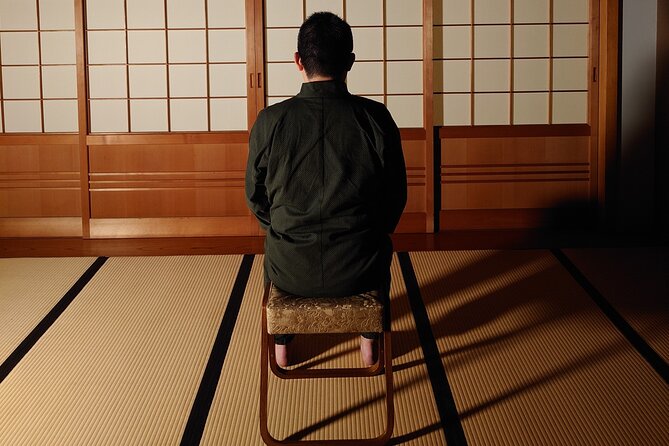
One review points out something extra: there can be discussion on Shintoism and Kannushi-related themes alongside guided meditation. The same review references ideas around harmony with nature and how older traditions evolved over time, and how spiritual beliefs can relate across Buddhist and Shinto contexts.
Is it guaranteed every time? The information provided doesn’t spell out a fixed script beyond the zazen experience. So treat it as something you might encounter as part of the teaching conversation.
Still, even if you only catch portions, it can deepen the experience. In Japan, religion isn’t always a clean box. Hearing how different spiritual threads intersect can help you understand why temples like this one have endured in public life, not only in academic discussions.
Price and logistics: is $169.08 per person good value?
Let’s talk money honestly. The price is $169.08 per person for a private experience lasting about 1 hour 30 minutes. That’s not cheap for a short time slot, so you’re really paying for three things:
- Private instruction by a monk (not a large group class)
- English guidance, including supportive translation-style help via a local guide
- A historic temple context tied to Soto Zen practice
Where the value usually lands well is for people who want real teaching, not just “sit quietly and hope for the best.” If you’re traveling with family, a private format also reduces the usual chaos factor.
The experience also includes pickup offered, plus mobile ticket, and group discounts may be available. It’s scheduled for people who book ahead too: on average it’s booked about 7 days in advance, so if you have a tight Tokyo window, plan earlier rather than later.
Because lunch and dinner are not included, you should treat this as an early-evening activity. Eat beforehand, then head to the meeting point without stressing about meal timing.
Who this fits best (and who should reconsider)
This experience makes a lot of sense if you want Zen practice with actual instruction. It’s described as a private Zazen experience suitable for beginners and family, which tells me it’s designed to welcome first-timers instead of expecting them to already know the basics.
You should also consider it if:
- You care about learning in English and understanding the meaning behind the steps
- You want chair zazen rather than forcing cross-legged sitting
- You prefer a quieter, focused session with a monk in a temple environment rather than a crowded class
You might reconsider if:
- You dislike evening activities starting at 5:30 pm
- You’re expecting a long sightseeing day with multiple stops (this is one focused practice experience)
- You need a full meal included, since lunch and dinner are not included
If you want a short, high-impact spiritual skill you can actually use after your trip, this is the kind of session that can stick.
Should you book this private zazen in Shinjuku?
I’d book this if you’re looking for real guided practice and you want the comfort of a private group. The combination of a Soto Zen setting at Denchuji, English instruction by a monk, and chair zazen availability makes it unusually beginner-friendly without turning it into a gimmick.
If you’re on the fence because of the price, treat it like paying for coaching. You’re not just buying a spot to sit. You’re paying for someone to help you get posture, breathing attention, and mind training into working order—then you leave with a method you can repeat later.
FAQ
FAQ
Where does the experience start and what time is it?
The session starts at Edogawabashi Sta. 1-chōme-19-6 Sekiguchi, Bunkyo City, Tokyo 112-0014, Japan, with a start time of 5:30 pm.
How long does the private Zen meditation last?
It lasts about 1 hour 30 minutes.
Is this experience private or shared?
It’s a private tour/activity. Only your group participates.
Is the meditation session suitable for beginners?
Yes. It’s described as suitable for beginners, and also for families.
Is instruction available in English?
Yes. The Zazen experience is guided in English by a monk at Denchuji Temple, and the local guide can support in English plus other languages.
Can I do chair zazen instead of sitting cross-legged?
Yes. Chair zazen is available, including for children or those with physical limitations. You should inform the provider in advance if you want chair zazen.
Is pickup included?
Pickup is offered.
What’s included in the price?
Included features are the monk-guided Zazen in English, chair zazen availability, a multilingual local guide (English / French / German / Spanish), and flexible tour planning in English.
What isn’t included?
Lunch and dinner aren’t included.
When will I receive confirmation after booking?
Confirmation is received within 48 hours of booking, subject to availability.
Is the experience refundable if I cancel?
This experience is non-refundable and cannot be changed for any reason.
More Tour Reviews in Tokyo



Fresh reviews from around Tokyo






Tokyo, compared.
 ★ 5.0Mt Fuji and Hakone 1-Day Bus Tour Return by Bullet TrainFrom $16326,383 reviews
 ★ 5.01-Day Tokyo Bus TourFrom $12914,250 reviews
 ★ 4.6teamLab Planets TOKYO Digital Art Museum Entry TicketFrom $259,779 reviews
 ★ 4.0Mt Fuji & Hakone Cruise, Drum Show Bullet Train 1 Day from TokyoFrom $1497,413 reviews
 ★ 5.0Shinjuku Food Tour (13 Dishes at 4 Local Eateries)From $866,603 reviews
 ★ 4.4Tokyo Mt Fuji 5th St & Hakone Cruise Bus Tour w/Bullet TrainFrom $1545,024 reviews
 ★ 5.0Flagship 2-Hours Official Street Go-Kart Tour – Tokyo Bay ShopFrom $644,974 reviews
 ★ 4.5From Tokyo: Mount Fuji Full-Day Sightseeing TripFrom $684,970 reviews