
Reviewed · TOKYO
Private Workshop for Making Paper Last 1,000 years in Ueno
Paper making feels magical, then suddenly it’s work. In this private washi workshop in Ueno, you learn the full flow from tree to sheet and you create multiple items with your own hands. I like how structured the session is: a clear intro, then real steps you can follow, including Hyouhitor (peeling outer bark) and Dakai (beating fibers).
The best part for me is what you leave with. You make four things—two postcard designs, Rakusui paper, and an A5 sheet—so it’s not just watching. And because it’s private, you can ask questions as you go, with an instructor who speaks both Japanese and English.
One thing to consider: there’s a cat in the workshop. If you have allergies, tell them ahead of time so you can plan safely.
In This Review
- Key points to know before you go
- Washi in Ueno: A 150-Minute Workshop With Real Results
- Start With Kozo: The Explanation That Makes the Process Click
- From Outer Bark to Fiber Pulp: Hyouhitor and Dakai
- Mold, Deckle, and Sifting: Crafting Even Sheets of Rakusui and A5
- Two Postcards Plus Your Own Paper Suite
- Kozo Leaf Tea and Local Sweets While Paper Dries
- Instructor, Workspace, and Meeting Mascot Cat Kami-chan
- Price, Value, and Who This Workshop Fits
- Should You Book This Washi Workshop?
- FAQ
- How long is the workshop in Ueno?
- What location is this workshop in?
- Is this a private group experience?
- What products will I make?
- What parts of the papermaking process will I learn?
- What languages are used during the workshop?
- Are materials included?
- Is coffee or tea included?
- Is there a cat in the workshop?
- How much does it cost, and is there free cancellation?
Key points to know before you go
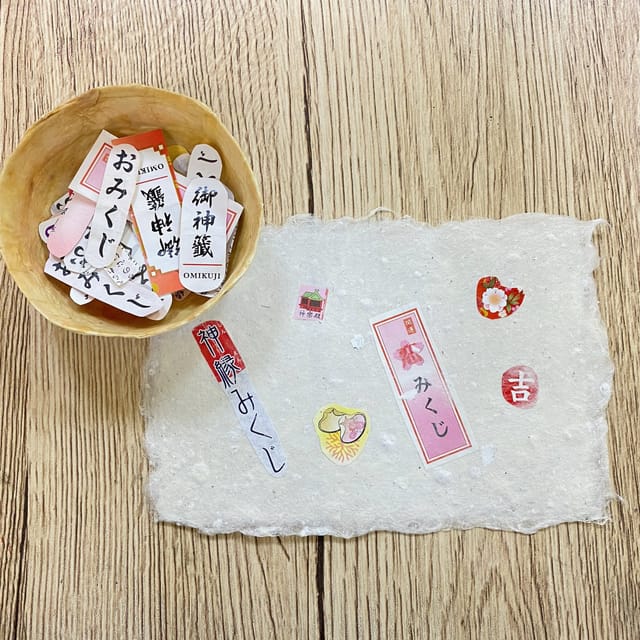
- Four handmade results: two postcards, Rakusui paper, and an A5 sheet
- Real papermaking steps: kozo peeling (Hyouhitor), fiber beating (Dakai), and sheet-forming
- Mold-and-deckle action: you’ll form an even sheet by sifting the pulp mixture
- Tea and sweets break: Japanese paper tea made from kozo leaves while your paper dries
- Private setup: a small, focused workspace with a friendly instructor and work clothes provided
Before you commit, see how this one stacks up against a few Tokyo favourites:
- Mt Fuji and Hakone 1-Day Bus Tour Return by Bullet Train★ 5.0 · 26,383 reviews
- 1-Day Tokyo Bus Tour★ 5.0 · 14,250 reviews
- Tokyo: teamLab Planets TOKYO Digital Art Museum Entry Ticket★ 4.6 · 9,779 reviews
Washi in Ueno: A 150-Minute Workshop With Real Results
This is a Ueno-area workshop built around one idea: you do the work. Not just the fun part. You’ll go through the process that turns kozo plant fibers into paper, step by step, and then you’ll make finished items you can actually keep and use.
The timing matters. At 150 minutes, you get enough hands-on time to feel confident with the basic motions—peeling, beating, mixing, and forming sheets—without the whole day slipping away. It’s also private, so you’re not squeezed into a large group where you’re mostly waiting your turn.
If you’re the type who likes crafts because you want to understand the cause-and-effect, you’ll enjoy this. When you press the mold, sift the pulp, and manage the deckle, you quickly see how technique changes the look and feel of the paper.
Start With Kozo: The Explanation That Makes the Process Click
The session begins with a general explanation, and it’s not just a lecture. You’ll get the background you need to follow the steps without feeling lost. They set up what kozo is for, where the fibers come from, and why different actions in papermaking change the final sheet.
You’ll also learn the key roles of the main stages:
- Outer bark removal (Hyouhitor), so the fibers are usable
- Fiber preparation (Dakai), so the material turns into pulp-friendly strands
- Sheet forming using a mold and deckle and then sifting to level the sheet
Why this matters: if you only care about the postcard art, you could skip the process and just decorate. Here, the art comes after you’ve built the foundation. Even if you’re not an expert, the explanation helps you understand what you’re controlling.
The instructor speaks both Japanese and English, and everything is demonstrated as well. That combo is what makes the handwork feel doable.
From Outer Bark to Fiber Pulp: Hyouhitor and Dakai
Hyouhitor and Dakai are where the workshop stops being a craft activity and becomes a process. You’re working with plant material, so there’s a real physical feel to it. Expect hands-on prep and a bit of messiness—this is paper-making, not a museum demo.
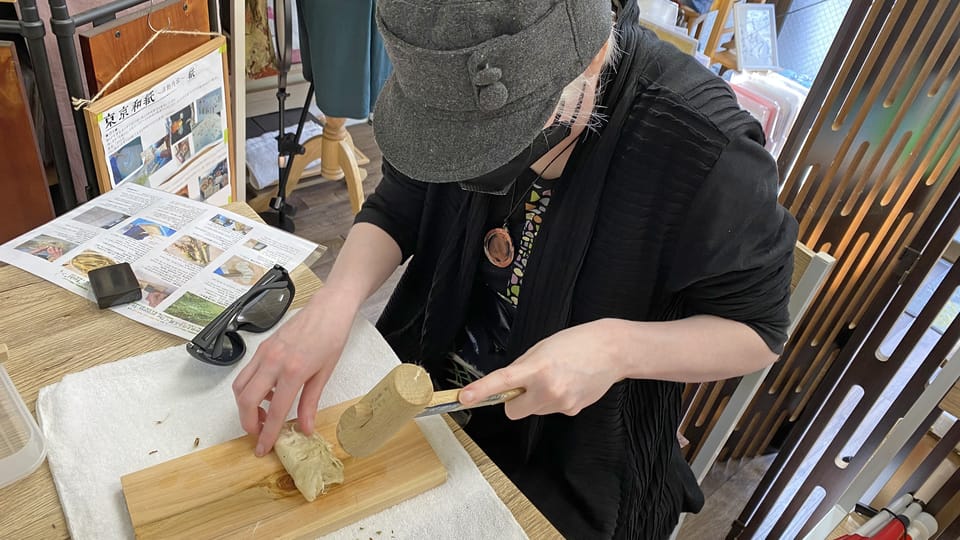
Hyouhitor is the peeling stage. You’ll peel the outer bark so you can access the fibers that become paper. This is a key moment because it’s one of the first places you’ll see how papermaking is about preparation, not shortcuts.
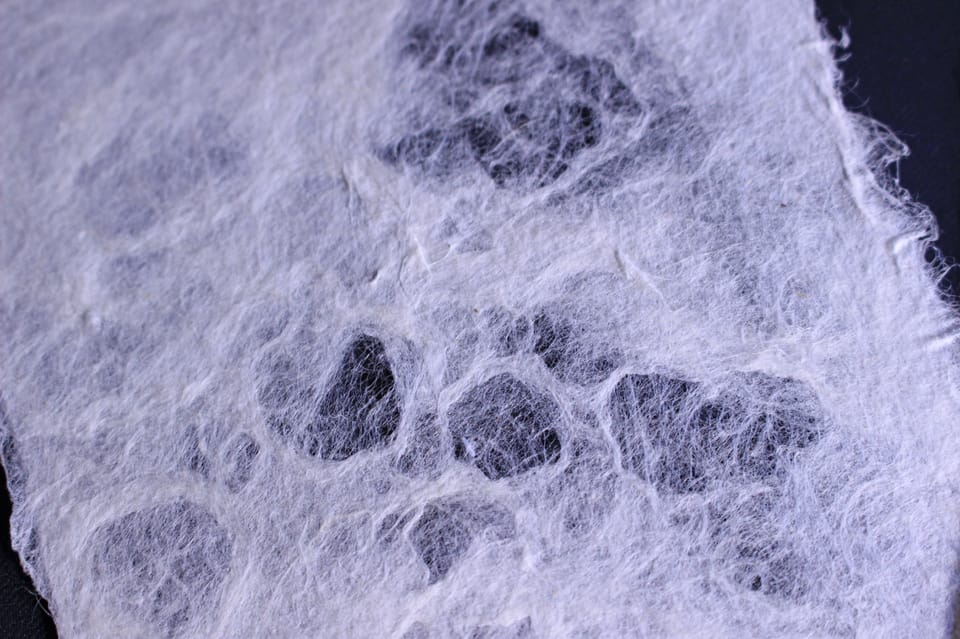
Then comes Dakai: beating the fibers. This step helps break down and condition the fibers so they can be mixed into a workable pulp. It’s not just labor for its own sake. You’re doing the mechanical work that turns raw material into something the mold can shape evenly.
If you like being shown the motion first and then practicing it, you’ll be comfortable here. The instructor’s job is to keep you moving through the steps without turning the session into a guessing game.
Mold, Deckle, and Sifting: Crafting Even Sheets of Rakusui and A5
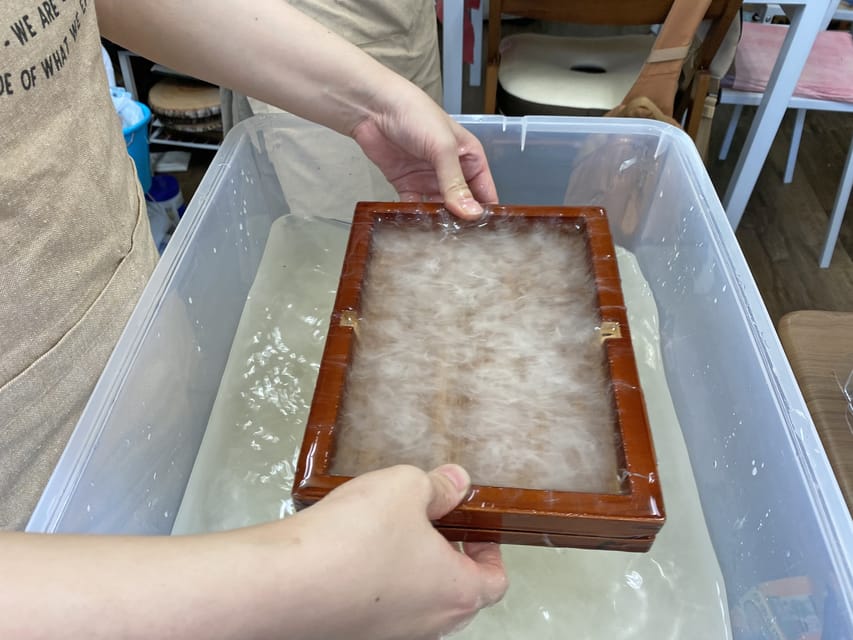
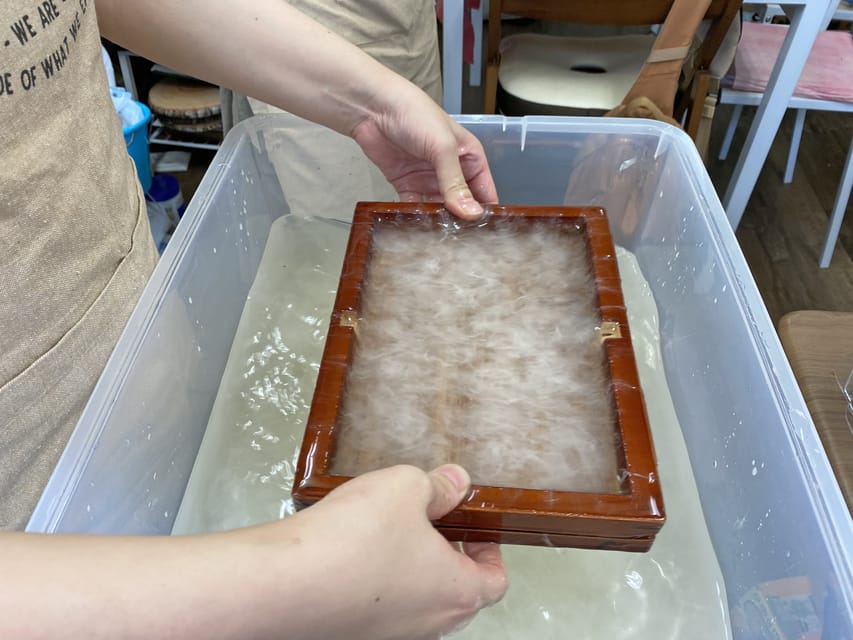
Once the pulp is ready, you shift into sheet-making. This is the part that feels most satisfying because you watch the sheet take shape right in front of you.
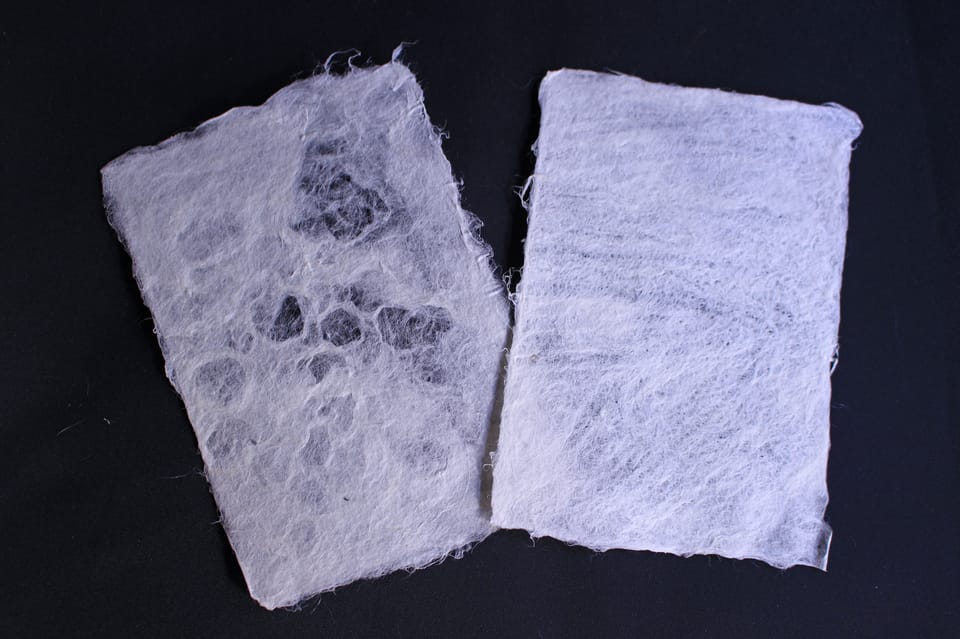
You’ll pour the raw material into a paper-making mold and add the deckle. That setup controls the size and edges of your sheet. Then you’ll sift the solution so the fibers spread more evenly. Evenness is everything: a good sift helps the sheet look flatter and more consistent, instead of patchy.
From there, your paper needs time to dry. You won’t be staring at wet pulp the whole time, though. The workshop keeps momentum with tea and sweets while the drying stage happens.
Two specific outputs are built into this phase:
- Rakusui paper, which you’ll make as one of your finished pieces
- A5 paper, giving you a clean, standard-sized sheet
If you’re planning to bring something home that feels truly handmade, this is the stage that does it. The mold-and-deckle steps turn your effort into a tangible form.





Two Postcards Plus Your Own Paper Suite
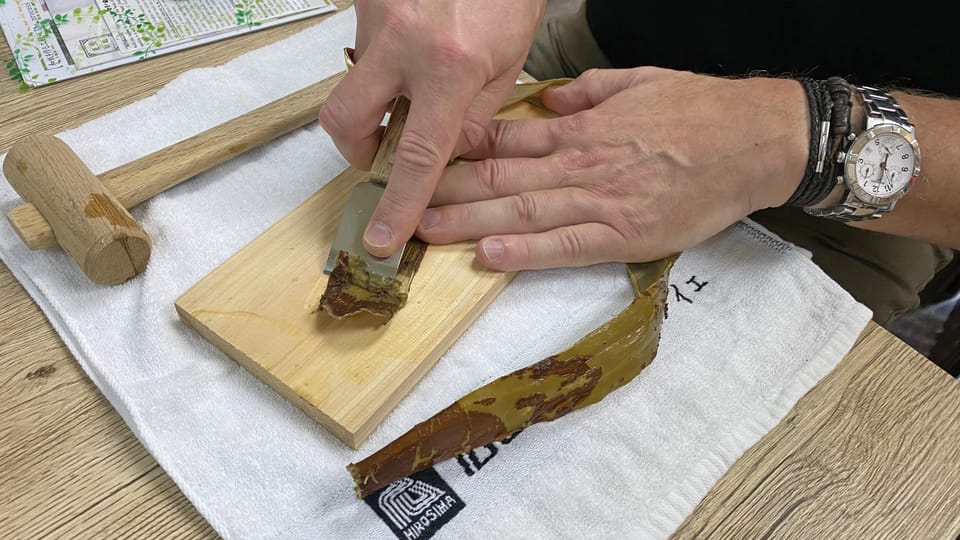
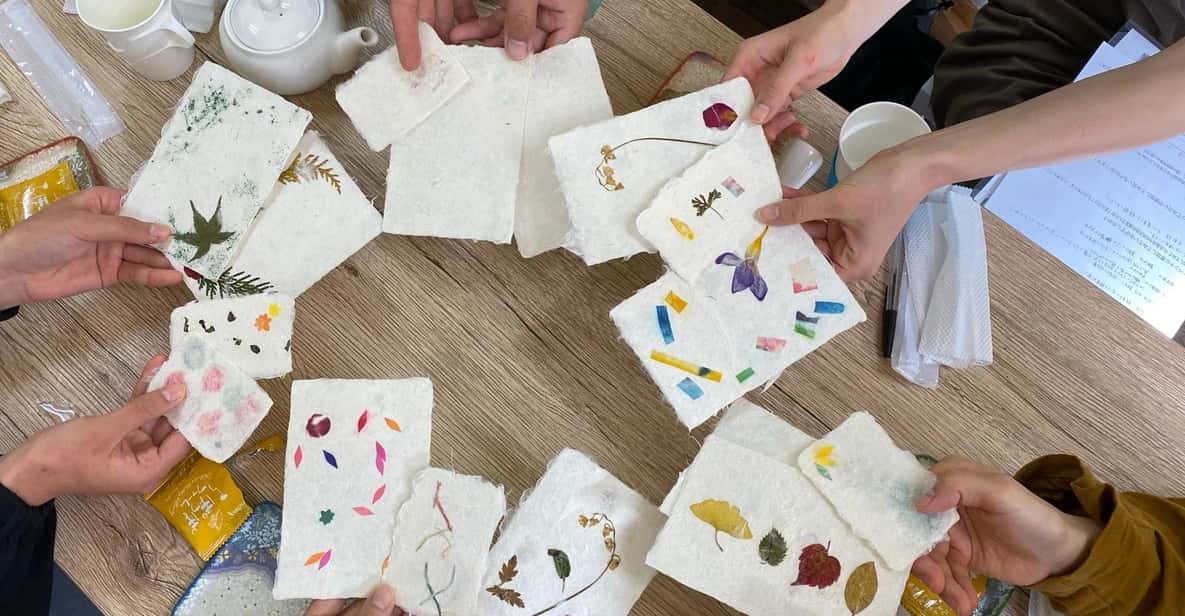
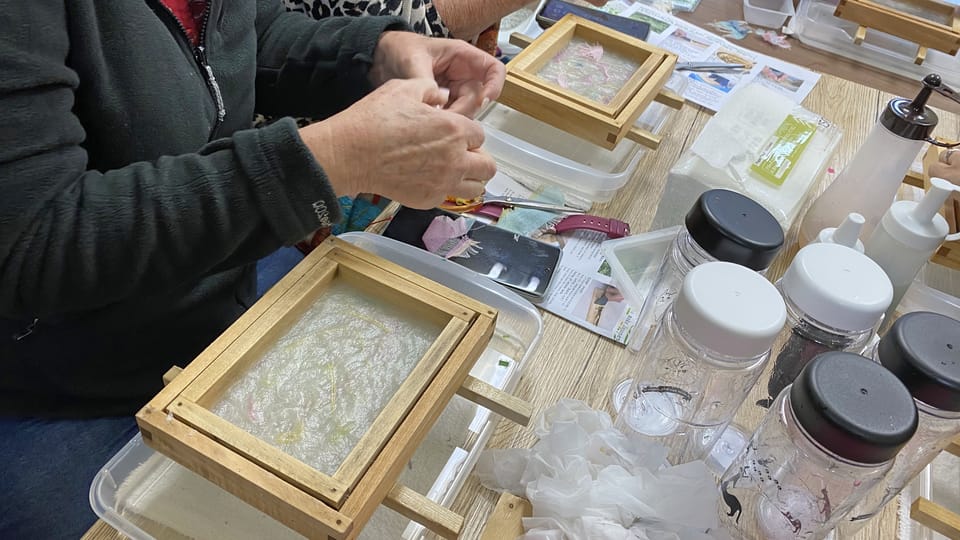
By the end, you’ll make four finished items. The postcards are where your “I made this” moment meets something usable and giftable.
You create two designs for postcards. That means you can choose a style and commit to it twice, instead of making one quick prototype. Even if you’re not an artist, postcard scale is friendly: you can aim for a simple composition and let the paper quality do part of the work.
Alongside the postcards, you also leave with:
- Rakusui paper
- A5 paper
That pairing is smart. Postcards are the creative souvenir. A5 and Rakusui are the practical paper you can keep for notes, letters, or just to show friends what “real washi” feels like.
One of the quiet benefits of making multiple items is pacing. You’ll have more than one moment of focus, so the time doesn’t feel repetitive. If you like finishing tasks you can hold in your hands, this workshop is built for that.
Kozo Leaf Tea and Local Sweets While Paper Dries
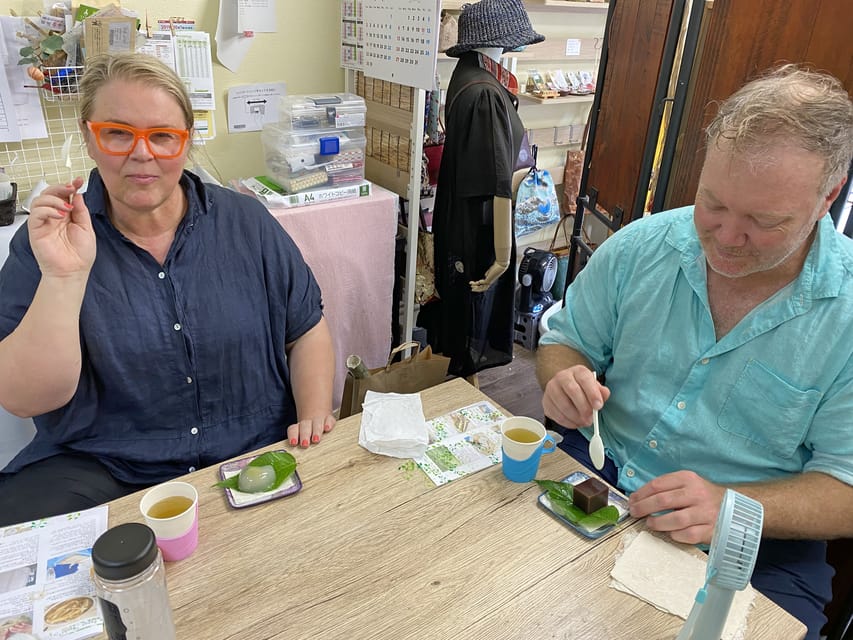
Paper dries slowly, so the workshop uses that in-between time well. While your sheets are drying, you’ll be offered their original Japanese paper tea along with local Japanese sweets.
The tea is made from kozo leaves—the same plant theme as the papermaking. That connection is more than marketing. It keeps the day cohesive, so you feel like you’re learning one craft system, not just doing separate steps.
You’ll also get something sweet from a local shop. It’s a small detail, but it matters on a hands-on day. Warm tea and a break help you reset your hands and attention so you can return to the next step and final touches with fresh energy.
If you care about food that feels tied to the activity, this is a nice match: you’re tasting the raw material story while waiting for the paper.
Instructor, Workspace, and Meeting Mascot Cat Kami-chan
This is a private group, and that shows in the vibe. The space is described as beautiful and well organized, with everything ready so the session feels smooth. Work clothes are provided, which is a big help when you’re dealing with pulp and the kind of mess that happens in traditional papermaking.
The instructor is attentive, and the experience stays friendly and easy to follow even with language differences. Because instruction is in Japanese and English and demonstrations are part of the process, you’re not stuck trying to interpret what a step means from a script.
Then there’s the cat. A cat is in the workshop, and the mascot cat is named Kami-chan. If you’re sensitive to animal presence, tell them about allergies before you go. If you’re okay around cats, expect a cozy, almost comical atmosphere while you work—paper making with a cat supervising is oddly memorable.
Price, Value, and Who This Workshop Fits
$130 per person for 150 minutes is not a cheap “try it once” rate. You’re paying for a focused private session plus real instruction through multiple stages, and you leave with multiple finished products. That value works best when you truly want the hands-on method and don’t mind paying for guided craft time.
Here’s what you’re getting for that price:
- A complete flow: intro, Hyouhitor, Dakai, mold/deckle, and sifting
- Four items made by you: two postcards, Rakusui, and A5
- Provided materials and work clothes
- Tea and local sweets while paper dries
- A private setup with an instructor speaking Japanese and English
Who it fits:
- You want a workshop where the outcome is tangible and useful
- You like learning crafts with clear steps, not vague instructions
- You’re in Ueno and want an activity that feels local and personal
If you hate messy work or you need a strictly animal-free environment, this might be a mismatch. Otherwise, it’s a strong choice for a rainy day or any day when you want your hands to do something.
Should You Book This Washi Workshop?
If you want to do more than watch washi being made, I’d book it. This workshop is built for action: you peel, beat, form, sift, and then you make postcards plus sheets you can take home. The combination of step-by-step teaching, provided materials, and multiple finished products makes the price feel earned.
Book it especially if:
- You want a private, instruction-led craft session in Ueno
- You enjoy process-based activities
- You like the idea of taking home paper you helped create, not just a small souvenir
Use one caution check before booking: if cat allergies are an issue for you, notify them. And if you’re arriving by subway, give yourself a little extra time to reach the workshop location smoothly, since transit hiccups can happen.
All in all, this is the kind of experience that turns Japanese papermaking from a concept into something you can hold, mail, and show.
FAQ
How long is the workshop in Ueno?
The workshop lasts 150 minutes.
What location is this workshop in?
It takes place in Ueno, on Honshu, Japan.
Is this a private group experience?
Yes, it’s listed as a private group workshop.
What products will I make?
You’ll make two designs of postcards, Rakusui paper, and an A5 paper.
What parts of the papermaking process will I learn?
You’ll go through the full process, including Hyouhitor (peeling off the outer bark) and Dakai (beating tree fibers), plus forming paper with a mold and deckle and sifting to make an even sheet.
What languages are used during the workshop?
The instructor uses Japanese and English.
Are materials included?
Yes, required materials for the workshop are included.
Is coffee or tea included?
Yes. Coffee or tea is included, and the session also includes Japanese paper tea made from kozo leaves along with local Japanese sweets.
Is there a cat in the workshop?
Yes. There is a cat in the workshop (Kami-chan), so you should inform them if you have any allergies.
How much does it cost, and is there free cancellation?
It costs $130 per person, and you can cancel up to 24 hours in advance for a full refund.
More Tour Reviews in Tokyo



Fresh reviews from around Tokyo






Tokyo, compared.
 ★ 5.0Mt Fuji and Hakone 1-Day Bus Tour Return by Bullet TrainFrom $16326,383 reviews
 ★ 5.01-Day Tokyo Bus TourFrom $12914,250 reviews
 ★ 4.6teamLab Planets TOKYO Digital Art Museum Entry TicketFrom $259,779 reviews
 ★ 4.0Mt Fuji & Hakone Cruise, Drum Show Bullet Train 1 Day from TokyoFrom $1497,413 reviews
 ★ 5.0Shinjuku Food Tour (13 Dishes at 4 Local Eateries)From $866,603 reviews
 ★ 4.4Tokyo Mt Fuji 5th St & Hakone Cruise Bus Tour w/Bullet TrainFrom $1545,024 reviews
 ★ 5.0Flagship 2-Hours Official Street Go-Kart Tour – Tokyo Bay ShopFrom $644,974 reviews
 ★ 4.5From Tokyo: Mount Fuji Full-Day Sightseeing TripFrom $684,970 reviews