
Reviewed · TOKYO
Private Toyosu & Tsukiji Market Adventure with Tuna Auction
Toyosu at dawn has a way of making time feel fast. This private morning adventure puts you close to the bluefin tuna auction at Toyosu, then carries you into Tsukiji’s Outer Market for early shopping and food. It is equal parts market science and breakfast mission.
I especially love how the guide turns a chaotic-looking scene into something you can actually follow. Second, I like that you get real freedom to shop and eat at a pace that fits you, even with a group capped at 10.
The main trade-off is the schedule and logistics. You start before most transit runs, so you’ll rely on a taxi for the Toyosu connection, and the first-floor auction view is only possible if the market lottery works out.
In This Review
- Key Points at a Glance
- A 5am Start That Feels Worth It
- Toyosu Market and the Tuna Auction: What You’re Really Seeing
- First-floor vs second-floor viewing
- The Guide Makes the Difference (Names You Might Get)
- Shopping for Tools, Not Souvenirs
- Tsukiji Outer Market After Toyosu: Street Food With a Plan
- Food you might try
- Food Break Reality: What Is Included and What You Should Budget For
- Price and Timing: Is $153 Good Value?
- Logistics That Can Catch You Off Guard
- Who Should Book This Tour?
- Should You Book This Toyosu and Tsukiji Morning?
- FAQ
- How long is the private Toyosu and Tsukiji tour?
- Is this tour private?
- Where do I meet my guide?
- Do I need to pay for transportation?
- Is the tuna auction first-floor viewing guaranteed?
- What happens if I do not win the tuna auction lottery?
- Do I need to bring my passport?
- What should I bring to the tour?
- Is breakfast included?
- Can vegetarians and vegans join?
Key Points at a Glance
- Bluefin auction observation: Watch professional buyers evaluate and bid, with clear guidance so you know what matters
- First-floor viewing lottery: Optional, not guaranteed, and December has limits—plan for second-floor viewing too
- Private pacing (up to 10): You can slow down for food stops or shopping without feeling rushed
- Practical market shopping: Look for Japanese knives, pottery, chopsticks, matcha whisk, and even a wasabi grater
- Two iconic markets in one morning: Toyosu for the auction, Tsukiji for street food and kitchenware wandering
Before you commit, see how this one stacks up against a few Tokyo favourites:
- Mt Fuji and Hakone 1-Day Bus Tour Return by Bullet Train★ 5.0 · 26,383 reviews
- 1-Day Tokyo Bus Tour★ 5.0 · 14,250 reviews
- Tokyo: teamLab Planets TOKYO Digital Art Museum Entry Ticket★ 4.6 · 9,779 reviews
A 5am Start That Feels Worth It
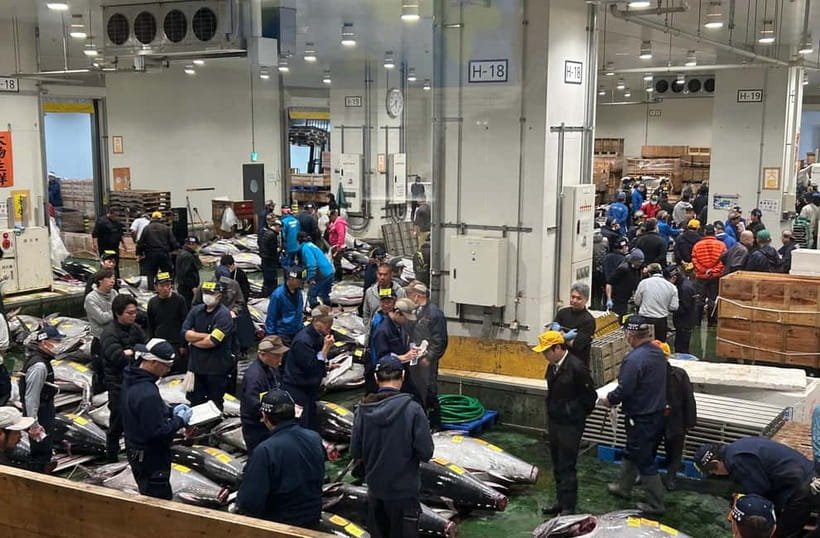
Tokyo in the early morning is a different city than the one you see later. This tour starts so early that you are basically arriving while Tokyo is still waking up, and that changes everything. The markets feel more focused. You get to walk without the heavy crowds that build later, and your guide can point you where to go first.
For the tuna auction portion, you also need to be mentally ready for the reality of market mornings. You’ll meet your guide around 5:00 am, and the meeting details are simple but strict: the guide connects via the GetYourGuide app or WhatsApp, and you meet at Shijō-mae Station (Yurikamome Line) or at your hotel if pickup is selected. One extra detail that matters in the dark: escalator shutters do not open until 5:00 am, so plan on stairs or the elevator to reach the 2nd-floor ticket gate.
And yes, it is cold. Even if you are used to Japan weather, the market is still an outdoor-feeling experience. Dress in layers so you can concentrate on the auction instead of fighting the temperature.
Toyosu Market and the Tuna Auction: What You’re Really Seeing
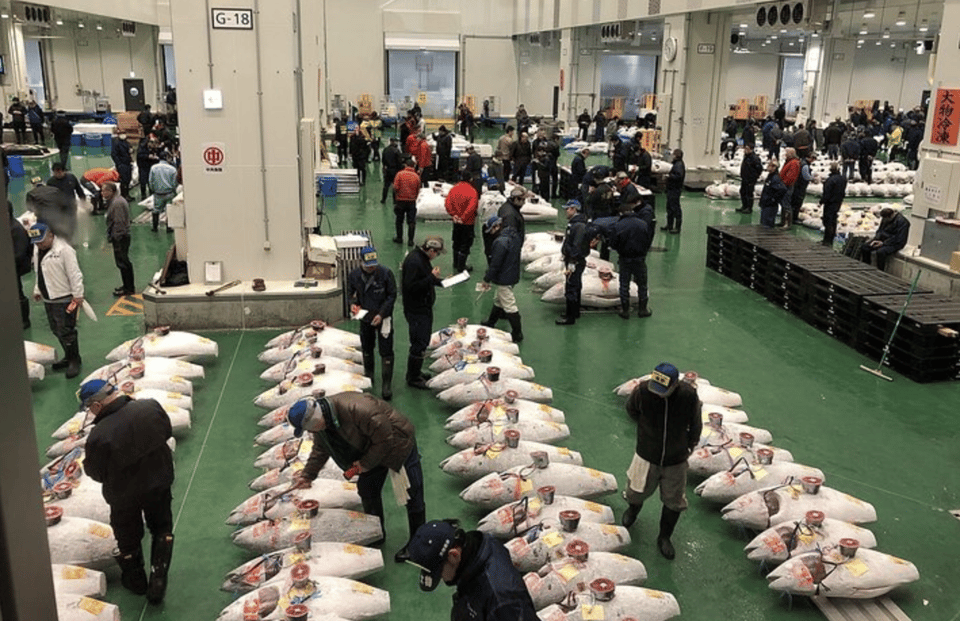
Toyosu’s fame is not just about fish. It is about the auction process—fast decisions, careful evaluation, and the kind of teamwork you only see when money and quality are on the line.
What makes the tuna auction exciting is how quickly everything moves. Professional buyers look at bluefin tuna and make choices in real time. With a guide, you learn what to watch for so it stops being random yelling and starts making sense. Guides on this tour use clear explanations and visual aids—one guide shared diagrams and pictures in a binder, which made the process feel much more logical.
Here is the key: you are not just watching a spectacle. You are seeing how Japan’s seafood industry handles quality control at scale. You also get background that helps you understand why the auction still matters even when the world talks about global food supply chains.
First-floor vs second-floor viewing
Observation is sometimes possible from the 1st-floor observation deck if you win the lottery. If you do not, you still watch the auction from the 2nd floor, which is still worth it. In December, the lottery does not run at the end of the month, so expect second-floor viewing during that period.
If you win, bring your passport or ID card on the day. The tour does not treat this as a casual add-on—it is an official observation setup managed by the market authorities.
The Guide Makes the Difference (Names You Might Get)
This tour is private, but it still has personality. Your guide’s style shapes how you experience the markets—especially at Toyosu, where the logic of the space is not obvious at 5:00 am.
From past groups, you might get guides such as Nobby, Sachiyo, Mayumi, Emi, Eriko, Yumi, or Tomoko. What stays consistent is that the guide handles three jobs for you:
1) explains what you are seeing during the auction
2) navigates Toyosu and Tsukiji so you avoid aimless wandering
3) steers you toward food and shopping that makes sense for your tastes and timing
In particular, guides tend to focus on getting you to good spots early. Some groups even described the advantage of arriving before crowds, plus the feeling that you are not spending the morning translating signs and guessing where to eat.





Shopping for Tools, Not Souvenirs
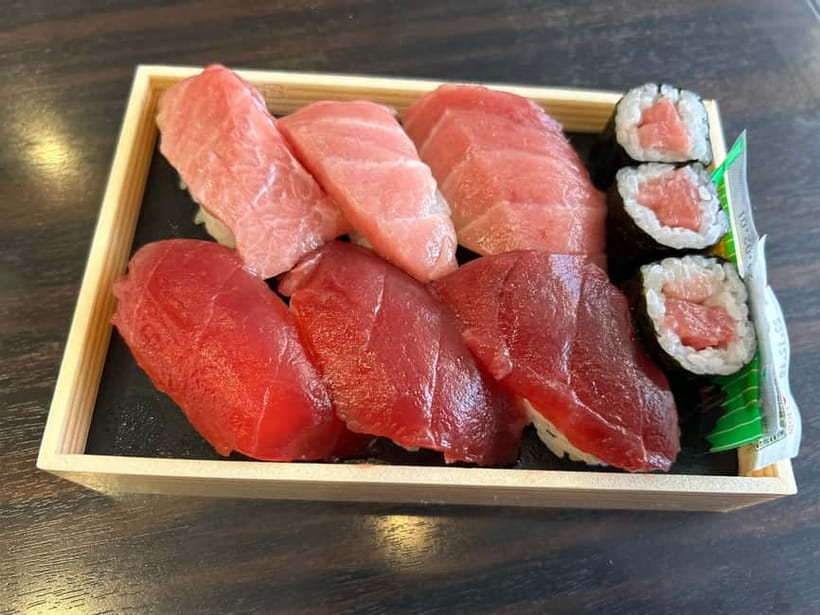
One of the best parts of the morning is what you can buy after the auction. This is not just a walk-through. You can actually shop for the stuff that Japanese kitchens use every day.
At Toyosu, you’ll visit market areas where you can browse Japanese kitchen utensils, including:
- Japanese knives
- matcha items (like a matcha whisk)
- wasabi tools (a wasabi grater is specifically mentioned)
- pottery and kitchenware
- shops connected to basics like miso, pickles, and sake
- matcha and tea-related items
Then, at Tsukiji, the shopping vibe shifts. You are still in a market world, but it leans more into everyday counter culture: small stores for pottery, knives and kitchenware, and food-focused stands.
A practical tip: set a budget before you go. Knives and ceramics can get addictive once you start handling things. If you are buying, bring cash as requested, and plan your extra packing space. If you are not buying, you can still enjoy the browsing—this is one of the few times in Tokyo where you really see how people outfit their kitchens.
Tsukiji Outer Market After Toyosu: Street Food With a Plan
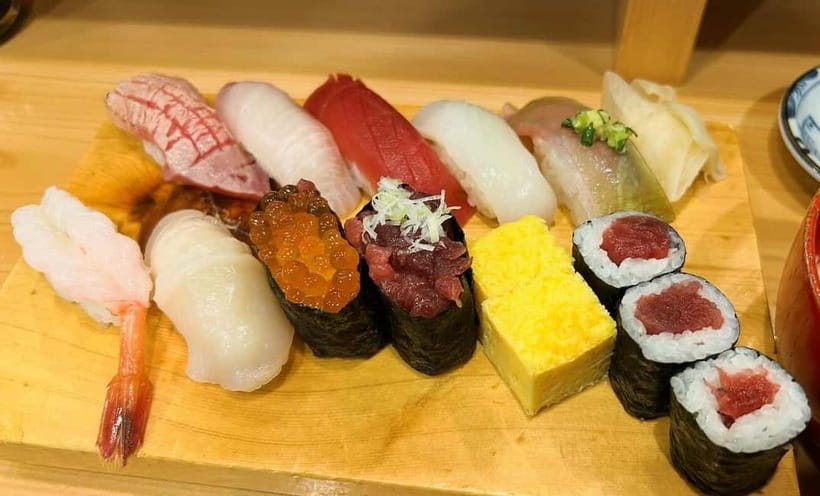
After the auction, you move toward Tsukiji’s Outer Market for about another 70 minutes of guided wandering and tastings. The rhythm changes here. At Toyosu, the morning energy is about watching buying decisions. At Tsukiji, it is about eating, tasting, and exploring.
Your guide helps you pick stops based on what you want: quick bites, grilled items, desserts, or seafood tastes. Tsukiji is a place where you can snack your way through the morning without committing to a full sit-down meal.
Food you might try
The tour experience includes local tasting along the way, and the kinds of foods mentioned include:
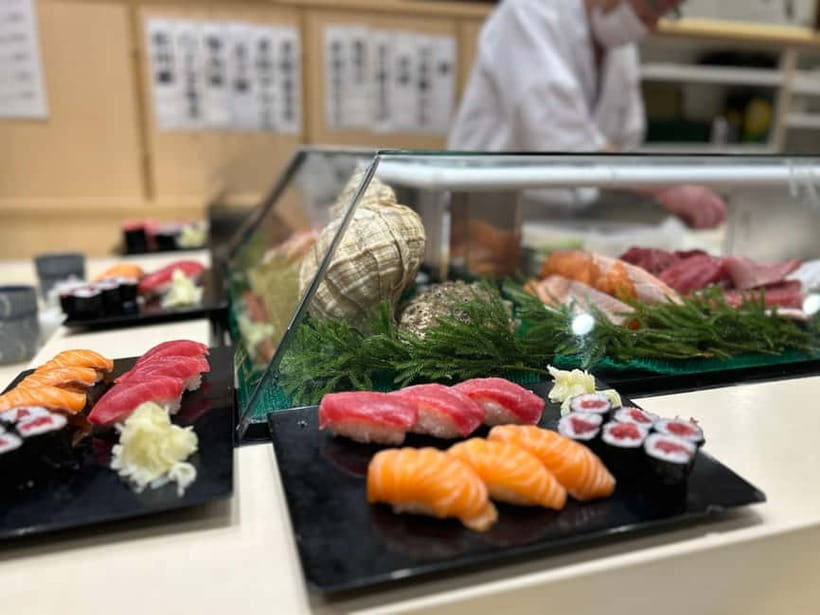
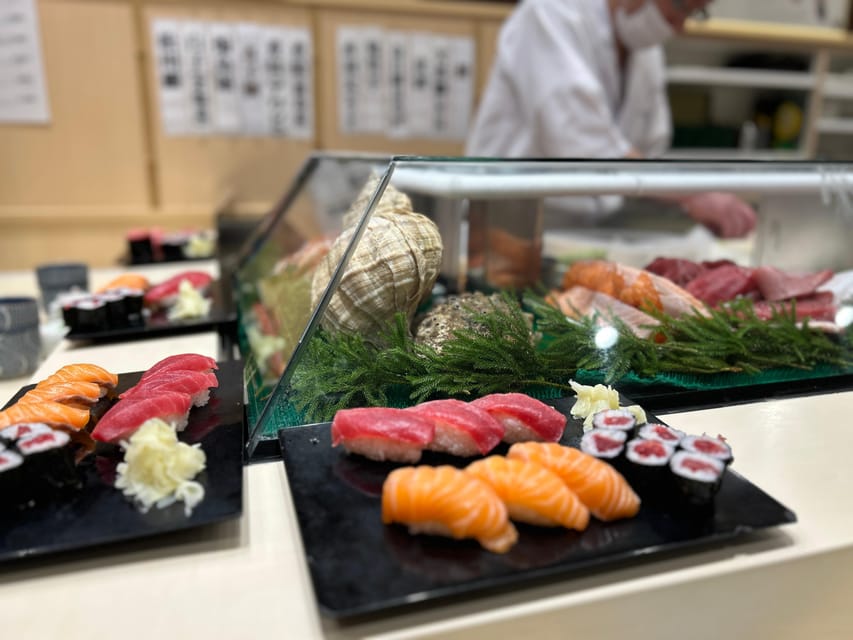
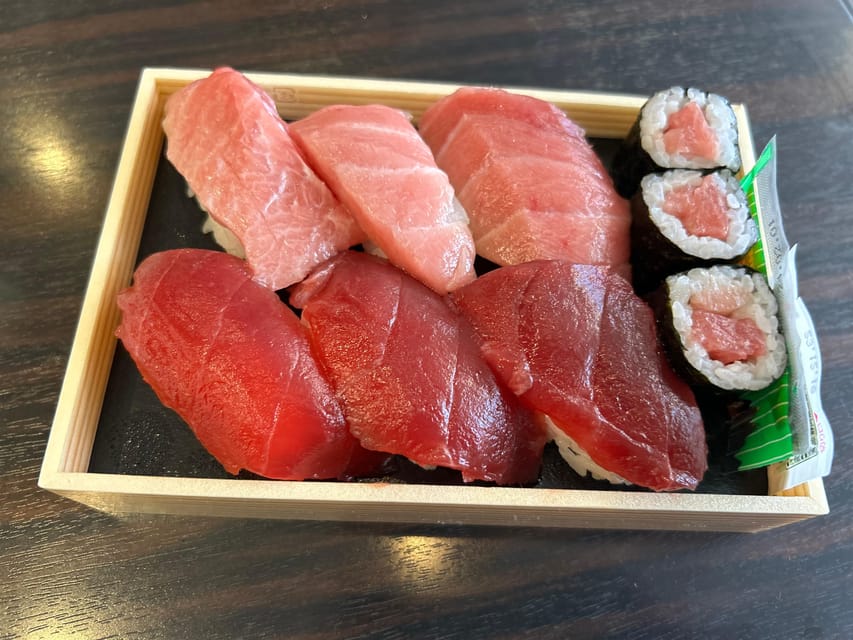
- sushi and seafood breakfast options
- matcha and mochi
- grilled eel
- tamago
- yakitori (grilled chicken)
- sashimi (sliced seafood)
- tuna steak
- seasonal fruit and local vegetable items
- pickles and dry goods like kombu and dried mushrooms
Some groups highlighted that the guide can steer you toward places that are easier and cheaper than you’d find by guessing. That matters because market food can be a little overwhelming at peak times.
Also, you might have an optional shrine visit during the Tsukiji portion. If you want to keep it strictly food-and-shopping, skip it. If you like a brief cultural pause, it can break up the morning’s momentum.
Food Break Reality: What Is Included and What You Should Budget For
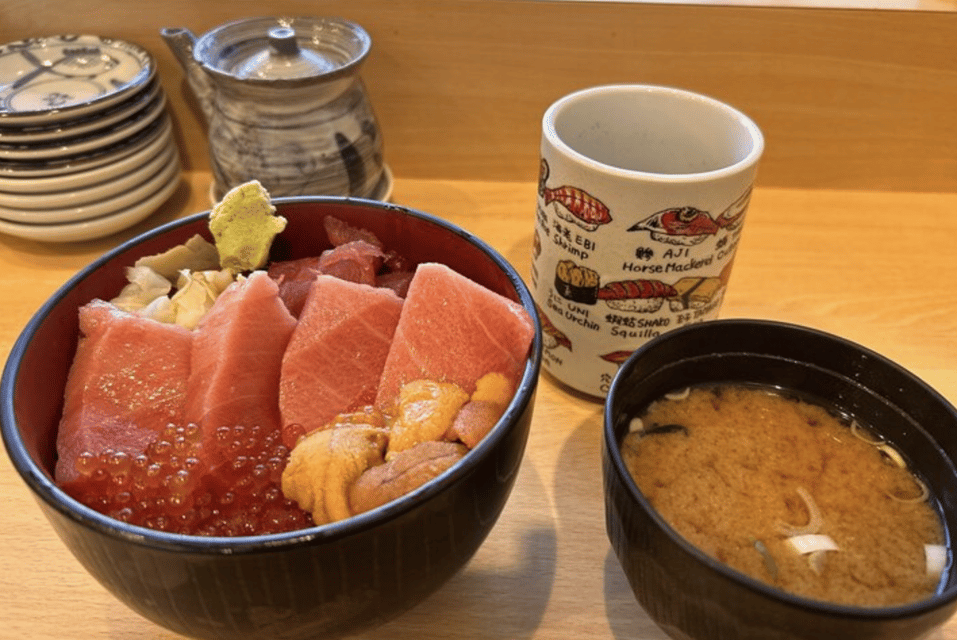
The price includes the guide and the walking tour, but it does not include breakfast or drinks. In practice, this matters because the tour day runs early, and you will be hungry.
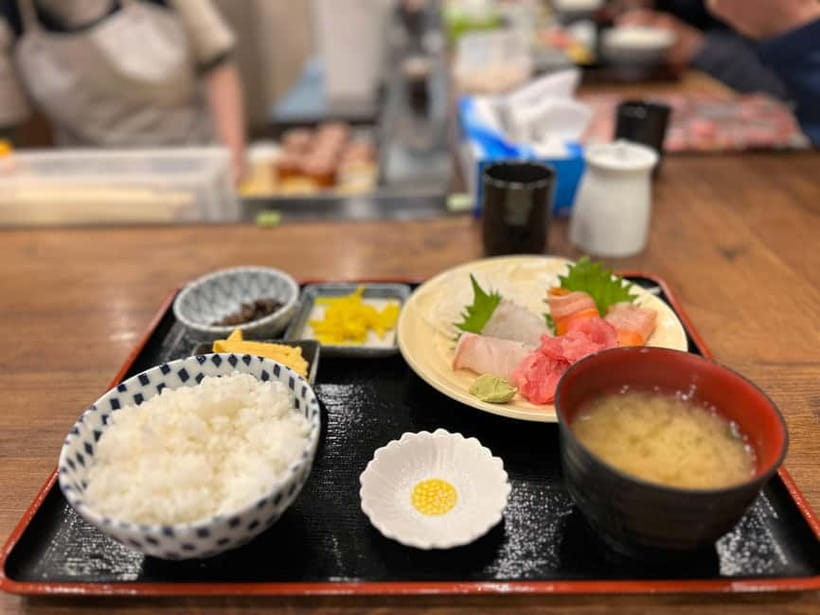
The good news is that there are planned tasting and meal opportunities, including options for sushi or seafood breakfast either around Toyosu or Tsukiji depending on timing and the day’s flow. If you want a sit-down breakfast, some guides also recommend specific spots once you finish the walking portion. That said, you should still treat food and drinks as your personal budget line.
Here is how I’d plan it:
- If you love sampling: expect to spend on multiple small items.
- If you want one proper meal: use the guide’s suggestions to choose one strong breakfast option, then shop lightly after.
Either way, bring cash since that is specifically called out for the day.
Price and Timing: Is $153 Good Value?
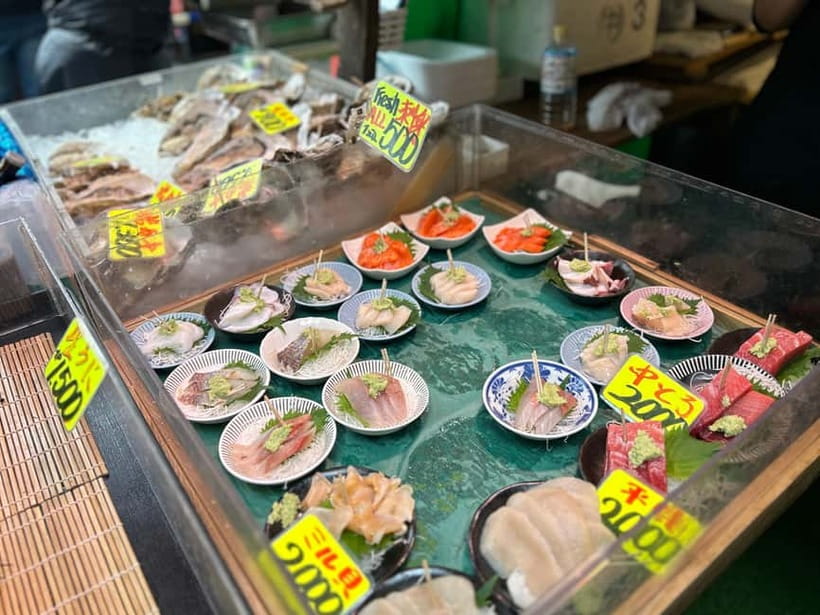
At $153 per person for 3 hours, the value depends on what you care about most: the auction viewing plus the guidance, or just seeing markets casually.
What you are paying for:
- an English-speaking private guide
- a walking-focused tour format
- help navigating the early morning and the market layout
- explanation during the auction so you can actually understand what is happening
- shopping and food recommendations that save time
What you do not get included:
- taxi fare from your hotel to the market (required because early morning transit is not running)
- bus fare from Toyosu to Tsukiji
- breakfast and drinks
If you stay in areas like Toyosu, Tsukiji, or Ginza, you’ll likely cut taxi costs. If your hotel is farther out, the taxi expense can turn into the real deciding factor.
Still, when you consider what a knowledgeable guide does for auction viewing and market navigation, the per-person cost starts to make sense—especially for small groups. The cap of 10 keeps it from feeling like a mass tour, so you get actual attention.
Logistics That Can Catch You Off Guard
This tour asks for early setup. That is not a small detail—it changes your morning.
Key realities to plan for:
- You’ll need a taxi to reach Toyosu because subways and buses are not running early. Your guide can meet you at your hotel, but you pay taxi fare.
- Meet at Shijō-mae Station if you choose the station meet option, and be ready for the escalator rule before 5:00 am.
- WhatsApp download is needed so the guide can contact you, and you should enable notifications from Japanese phone numbers.
- Passport or ID is required only if you win the lottery for first-floor observation.
- Cash is recommended for the day.
If you do not like early mornings, you can still enjoy this tour, but you should prepare yourself for the cold and the early start. It is not a relaxed late breakfast kind of experience.
Who Should Book This Tour?
This is a great fit if you:
- want to see the auction with context, not just watch from afar
- like market food and want help choosing where to eat and what to try
- want practical shopping for kitchen items like knives, pottery, and matcha tools
- travel with a small group and prefer private pacing
It is also family-friendly. Children are welcome, and vegetarian and vegan guests are welcome too, with help finding suitable ingredients.
If you only want a casual stroll with no early alarm and minimal spending, this might feel like too much effort. But if your goal is an authentic market morning with real explanations, it lands exactly where it should.
Should You Book This Toyosu and Tsukiji Morning?
I think you should book it if you treat the tuna auction like the main event and you want a guide to handle the hard parts: timing, navigation, and understanding what you are looking at. The auction viewing plus the shopping and food choices make it more than a photo stop.
Skip it only if early mornings and taxi logistics are a deal-breaker for you, or if you strongly prefer to travel without any structured food stops.
If you do book, my best advice is simple: wear layers, bring cash, and go in with a plan for what you want to buy—knives and matcha tools are the obvious temptations, and you will feel it fast once you start browsing.
FAQ
How long is the private Toyosu and Tsukiji tour?
It lasts about 3 hours.
Is this tour private?
Yes. It is a private tour for up to 10 people.
Where do I meet my guide?
Meet at the ticket gate of Shijō-mae Station on the Yurikamome Line, unless you select the optional hotel pickup.
Do I need to pay for transportation?
Yes. Taxi fare from your hotel to the market is not included, and bus fare from Toyosu to Tsukiji is also not included.
Is the tuna auction first-floor viewing guaranteed?
No. First-floor observation requires an optional lottery, and winning is not guaranteed.
What happens if I do not win the tuna auction lottery?
You can still observe the tuna auction from the 2nd-floor viewing area.
Do I need to bring my passport?
If you win the lottery for first-floor viewing, you should bring your passport or ID card for that observation.
What should I bring to the tour?
Bring passport (if winning the lottery) and cash.
Is breakfast included?
Breakfast is not included. The tour includes options for sushi or seafood breakfast, but you should plan for costs since breakfast is listed as not included.
Can vegetarians and vegans join?
Yes. Vegetarian and vegan guests are welcome, and the guide will help find suitable ingredients.
More Tour Reviews in Tokyo



Fresh reviews from around Tokyo






Tokyo, compared.
 ★ 5.0Mt Fuji and Hakone 1-Day Bus Tour Return by Bullet TrainFrom $16326,383 reviews
 ★ 5.01-Day Tokyo Bus TourFrom $12914,250 reviews
 ★ 4.6teamLab Planets TOKYO Digital Art Museum Entry TicketFrom $259,779 reviews
 ★ 4.0Mt Fuji & Hakone Cruise, Drum Show Bullet Train 1 Day from TokyoFrom $1497,413 reviews
 ★ 5.0Shinjuku Food Tour (13 Dishes at 4 Local Eateries)From $866,603 reviews
 ★ 4.4Tokyo Mt Fuji 5th St & Hakone Cruise Bus Tour w/Bullet TrainFrom $1545,024 reviews
 ★ 5.0Flagship 2-Hours Official Street Go-Kart Tour – Tokyo Bay ShopFrom $644,974 reviews
 ★ 4.5From Tokyo: Mount Fuji Full-Day Sightseeing TripFrom $684,970 reviews