
Reviewed · TOKYO
Private tour – Scenic Fuji Escape: Hakone, Peace Park & More
Mount Fuji in one day is a real treat. This private Scenic Fuji Escape strings together Hakone, the Fuji Five Lakes area, and a quieter Peace Park, so you spend the day looking at views instead of hunting trains. You’ll ride through volcanic country, pause at classic Fuji photography spots, and get an English-speaking guide who helps you make sense of what you’re seeing.
What I like most is how personal it feels for a group of up to 6. With the guide named Puskal, you’re not just handed a schedule; he shows you where to go and helps with pictures along the way, which makes a big difference when you’re moving between viewpoints. I also like the mix of stops: lakes (Lake Yamanaka and Lake Kawaguchiko), a pair of shrine experiences (Kitaguchi Hongu Fuji Sengen Jinja and a Mt. Fuji peace memorial), and even the Gotemba Peace Park, all in one logical loop.
One consideration: entrances and lunch aren’t included, and Mount Fuji depends on the weather. On clear days, places like Chureito Pagoda are stunning; on cloudy or rainy days, you may see less of the peak even with the best plan.
In This Review
- Key highlights worth planning for
- Why a private Fuji day beats a train-and-taxi day
- The guide factor: what makes Puskal’s style matter
- Hakone-machi: torii views, volcanic history, and that classic Fuji energy
- Lake Yamanaka: calmer water and a more relaxed Fuji tempo
- Oshino Hakkai: Fuji-fed ponds and a village feel
- Kitaguchi Hongu Fuji Sengen Jinja: a forest shrine that feels bigger than it looks
- Lake Kawaguchiko and Oishi Park: where the view is the main event
- Mt. Fuji 5th Station: a different kind of Fuji viewpoint
- Chureito Pagoda: 398 steps and the peace memorial angle
- Fuji Bussharito Heiwa Park (Peace Park): a quieter end with real meaning
- Price and what you actually get for $465 per group
- Practical tips so you don’t burn the day
- Should you book this private Fuji escape?
- FAQ
- How long is the Scenic Fuji Escape tour?
- What is the group size for this private tour?
- Where does the tour start and end?
- Is pickup included?
- Are entrance fees included?
- Does this tour include mobile tickets?
- Can I cancel and get a full refund?
Key highlights worth planning for
- Private pickup and drop in Tokyo with an air-conditioned vehicle for a calmer day trip
- Puskal’s hands-on guiding and photo help at the key stops
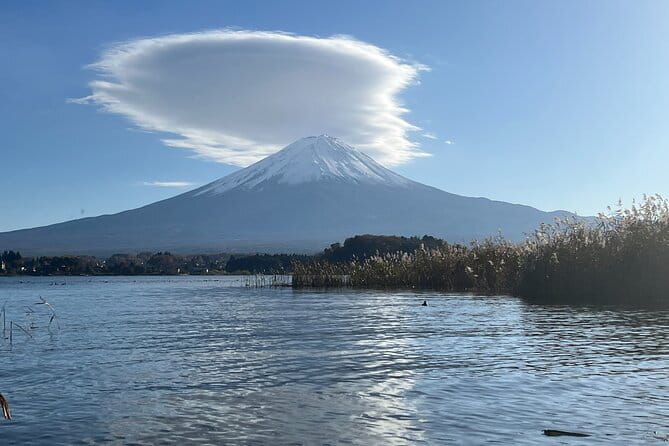
- Fuji lakes in two styles: Lake Yamanaka’s quiet trails and Lake Kawaguchiko’s big-view parks
- UNESCO-listed shrine setting at Kitaguchi Hongu Fuji Sengen Jinja with a long, forested approach
- Meaningful Peace Park time in Gotemba with a Buddha stupa and views back toward Fuji
Before you commit, see how this one stacks up against a few Tokyo favourites:
- Mt Fuji and Hakone 1-Day Bus Tour Return by Bullet Train★ 5.0 · 26,383 reviews
- 1-Day Tokyo Bus Tour★ 5.0 · 14,250 reviews
- Tokyo: teamLab Planets TOKYO Digital Art Museum Entry Ticket★ 4.6 · 9,779 reviews
Why a private Fuji day beats a train-and-taxi day
A Mount Fuji day can turn into a logistics project fast. This tour is built around a private group (up to 6) and includes pickup and drop, so you’re not spending your energy figuring out connections, ticket machines, or where the last bus goes.
The other big win is time control. You’re out for about 9 hours (the experience is noted as eight hours, with extra time billed if you go beyond), so the guide can keep the flow moving. And because it’s private, you’re not forced to wait for a slow group or sprint with a fast one. It’s the difference between seeing Fuji and chasing it.
Also, most listed stops have admission ticket marked as free, which matters when you start adding up fees across multiple sites. Lunch isn’t included, but many people find that having freedom for food timing is easier than committing to a fixed lunch stop far from where you want to be.
The guide factor: what makes Puskal’s style matter
The guide named Puskal is repeatedly described as friendly, helpful, and very at-ease with the route. That may sound generic, but it shows up in practical ways.
On a day like this, the difference is usually in three things:
- Finding the right viewpoint quickly so you’re not wandering in crowds
- Helping with photos—including how to frame stops so you actually get the shot, not just a blurry souvenir
- Making the day work when weather is less than ideal—one experience described a day plan change due to conditions, with timely pickup and a smoother reset than you’d manage alone
If you want a Fuji day that feels guided rather than scripted, this is the right vibe. You’ll still get time to wander, but the heavy lifting is handled by someone who knows the area.
Hakone-machi: torii views, volcanic history, and that classic Fuji energy
Hakone is the opening act for a reason. It sits in Fuji-Hakone-Izu National Park, and the whole area feels like a living map of Earth’s geology—hot springs, sulfur valleys, and frequent Mount Fuji viewpoints on clear days.
At Hakone-machi, you’ll start with the core highlights:
- Hakone Shrine, a Shinto shrine with a red torii gate overlooking Lake Ashi
- Owakudani Valley, known for boiling sulfur springs
Admission at this stop is marked as free, so you can spend money on what matters: getting comfortable, taking your time, and snapping photos before you move on.
Two practical notes for Hakone:
- Expect the air and atmosphere around the sulfur area to feel strong. Even if you’re not sensitive to smells, it’s a different kind of experience than a shrine courtyard.
- If the weather is hazy, Hakone is still worth the visit because it’s not only about the peak. The volcanic setting and shrine architecture are interesting even when Fuji is partly hidden.
And because the tour description also calls out a ropeway ride in Hakone, you can reasonably expect the route to include a transportation moment that gives you height and broader views, not just flat walking.
Lake Yamanaka: calmer water and a more relaxed Fuji tempo
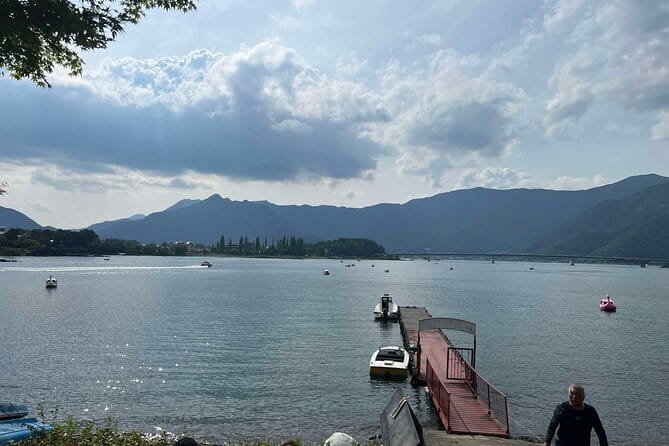
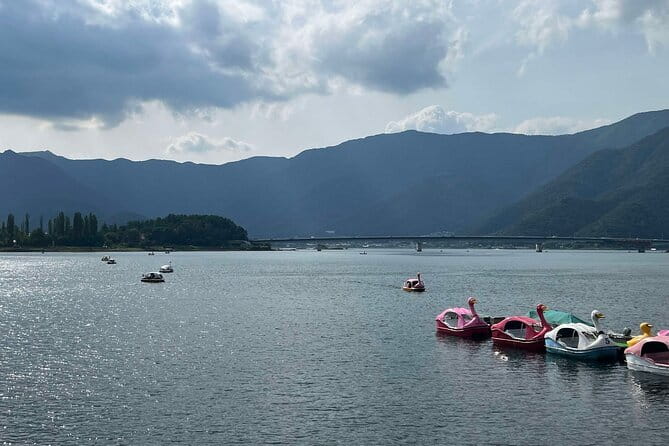
After Hakone’s dramatic volcanic mood, Lake Yamanaka slows things down. You get about 30 minutes here, and that’s enough time to breathe, take in the lake-and-mountain composition, and get a feel for the quieter side of the Fuji region.
Lake Yamanaka is known for:
- Mount Fuji views (when visibility is good)
- Tranquil waters
- Outdoor walking trails around the lake
If you’re the type who likes “pause and look” travel—rather than photo-stop, next-stop—you’ll appreciate this shorter segment. It also serves as a useful buffer before you hit the more structured crowd magnets later.





Oshino Hakkai: Fuji-fed ponds and a village feel
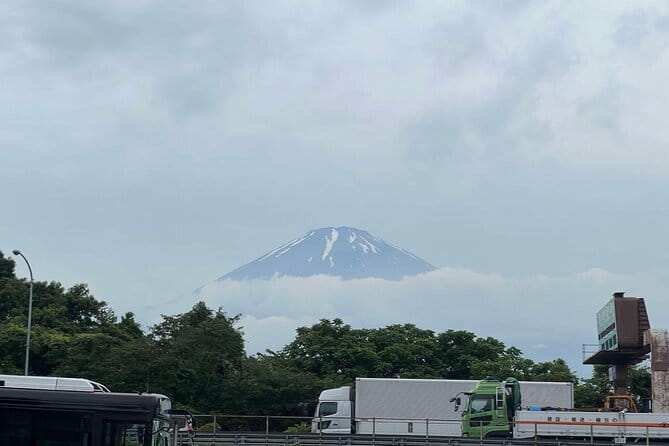
Oshino Hakkai is one of those places where the theme is simple and the details do the work. You’ll have about an hour, which is a solid amount of time for reading the scene, walking the paths, and pausing by the ponds.
What makes it special here is the water story. Oshino Hakkai is made up of eight clear, spring-fed ponds fed by Mount Fuji’s snowmelt. It’s scenic, yes, but it’s also the kind of location where you can connect the dots between Fuji as a mountain and Fuji as a water source.
The area also has:
- Traditional thatched-roof houses
- A rural, laid-back atmosphere
Because there’s no entrance fee noted for this stop, it’s also a good value component in the day.
Kitaguchi Hongu Fuji Sengen Jinja: a forest shrine that feels bigger than it looks
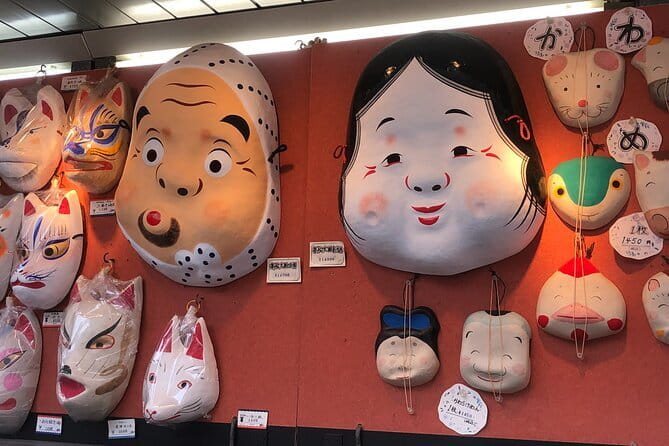
This is the stop that feels like a calm switch in the middle of a very active day. Kitaguchi Hongu Fuji Sengen Jinja is part of the Mt. Fuji UNESCO World Cultural Heritage site, designated in 2013, and it’s set in an old-growth forest.
You’ll spend about 45 minutes here, and the approach is a big part of the experience:
- The long walk to the main shrine is lined with mossy stone lanterns
- Tall cedar trees shade the path
- The shrine grounds cover about 99,000 square meters, making it one of the largest forest shrines in Japan
One detail that sticks: there are four trees on the grounds believed to be around 1,000 years old, with a girth of about 23 meters. That’s the kind of scale you can’t fully get from a photo. In person, it changes how you experience the space.
Admission isn’t included for this stop, but the value is in the setting and the way the guide can help you notice what you might otherwise miss—like why a dense forest matters to a shrine experience connected to volcano deities and Mount Fuji.
Lake Kawaguchiko and Oishi Park: where the view is the main event
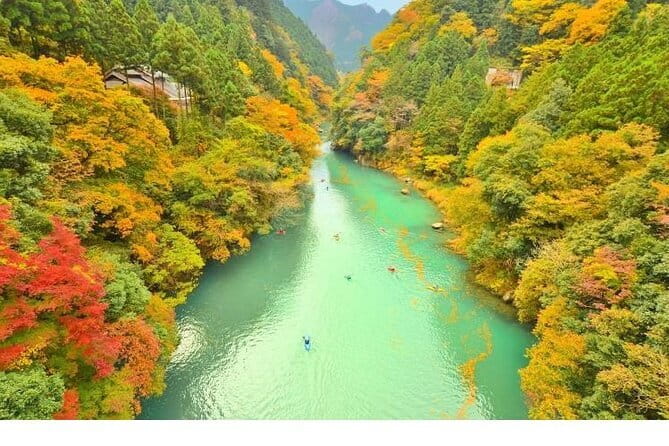
Once you reach the Kawaguchiko area (Fujikawaguchiko), the day shifts back into “wow” territory. Lake Kawaguchi is part of the Fuji Five Lakes and is described as the second largest by surface area and at the lowest elevation.
You get two stops in this area:
- Fujikawaguchiko (about 45 minutes, free admission)
- Oishi Park (about 45 minutes, free admission)
Oishi Park is specifically praised for getting a view of Mt. Fuji and Lake Kawaguchiko at the same time. It’s also known for flowers that bloom along the lakeside promenade depending on the season. On sunny mornings, photographers crowd the area—so yes, you’ll likely see a lot of people with cameras, but that’s because it works.
Two ways to enjoy Oishi Park:
- Walk slowly along the promenade and treat it like your main “sit and stare” stop.
- If the sky is clear, take a few minutes to compare angles. The lake + Fuji pairing changes as you move.
The tour description also includes a cruise on Lake Kawaguchiko, and even if you only spend a short time on it, that’s an important change of pace. It turns a viewpoint visit into something you feel in motion, with the shoreline shifting behind you.
Mt. Fuji 5th Station: a different kind of Fuji viewpoint
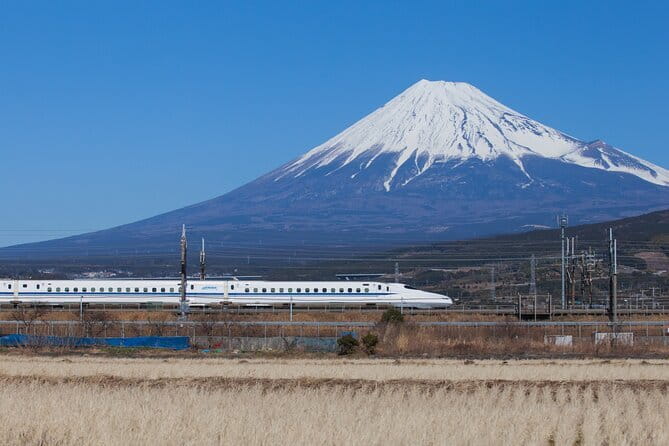
At Mt. Fuji 5th Station, you’re dealing with a more altitude-forward experience. It’s about an hour, and this is where the day becomes more about the mountain itself than the surrounding towns.
Mount Fuji is described as an active volcano and Japan’s tallest peak at 3,776 meters. It’s a pilgrimage site for centuries, and its profile is famous worldwide—thanks in part to Edo Period prints by Hokusai and Hiroshige.
What you should expect from a 5th Station stop:
- A viewpoint built for seeing the mountain’s shape rather than only the reflection-and-lake compositions
- A “Fuji is real and massive” feeling you don’t get from lower viewpoints
Because admission isn’t included for this stop, check what you’ll need to pay on site. Still, the payoff is straightforward: even when visibility changes, 5th Station gives you a sense of place that’s hard to replicate.
Chureito Pagoda: 398 steps and the peace memorial angle
If you love iconic photos but also like knowing the story behind them, Chureito Pagoda is worth the effort. It’s a five-story pagoda at Arakurayama Sengen Park, part of the Arakura Fuji Sengen Shrine area, added in 1963 as a peace memorial.
You reach it by 398 steps, so plan your pace. This stop is about an hour, and admission is free.
Two things to know before you go:
- The pagoda is impressive when the weather is clear, since the visibility affects the famous Fuji-in-the-background composition.
- It’s not only a photo stop. The peace memorial purpose adds emotional weight to the views, especially if you pause at the top instead of rushing through.
Moderate physical fitness is recommended for the tour overall, and the steps here are a big reason why.
Fuji Bussharito Heiwa Park (Peace Park): a quieter end with real meaning
Not every Fuji day ends with something reflective. This one does. In Gotemba City, Fuji Bussharito Heiwa Park offers a beautiful Mount Fuji view along with a Buddhist stupa that carries a heavy backstory.
You’ll have about 45 minutes here, and admission is free.
Key details:
- The park has a chalky stupa with Buddha’s ashes presented by late Indian Prime Minister Jawaharlal Nehru
- Four golden images of Buddha are also housed
- There are guardian dogs of respective Asian countries near the stupa
- It includes a pond-style Japanese garden with a circuit walk
If you’ve been busy all day with “look and take photos,” this is where you slow down again. The view stays in the frame, but the meaning shifts from geography to message. It’s a nice contrast to the more classic tourism rhythm.
Price and what you actually get for $465 per group
At $465 per group (up to 6), the math makes sense if you split cost among people and you value private transport.
Here’s what’s included:
- Air-conditioned vehicle
- English-speaking guide
- Pickup and drop
- Private transportation
- Highway charge
- Mobile ticket
Not included:
- Entrance fees
- Lunch
- Tips
So the day’s structure is mostly covered. The main variable cost you’ll manage is entrance fees and whatever you choose for lunch. That’s normal for Japan sightseeing, but it’s good to plan so you don’t get surprised.
Also, consider timing value. On an area day trip, transportation is usually the biggest headache. Paying for the convenience of pickup, a private car, and a guide who keeps you moving can be a bargain compared to paying taxis repeatedly while trying to coordinate every stop yourself.
Practical tips so you don’t burn the day
This is a long, full day. Even though it’s “only” about 9 hours, you’ll be walking through multiple zones—shrines, lakesides, and viewpoint climbs.
Do this and you’ll feel comfortable:
- Wear shoes that can handle steps. The biggest one is Chureito Pagoda’s 398 steps.
- Bring a layer. In Japan’s mountain regions, conditions can change quickly even if Tokyo feels mild.
- Bring something small for weather changes, especially if you’re aiming for Fuji visibility.
One more practical point: expect the best Fuji views when weather cooperates. Some stops explicitly note that clear weather makes the famous views more impressive. When it’s cloudy or rainy, you still get worthwhile experiences, but the mountain may be partly hidden.
Should you book this private Fuji escape?
I’d book it if you want a guided, private Mount Fuji day that covers the big emotional hits: volcanic Hakone mood, Fuji lake viewpoints, Oshino Hakkai’s Fuji-fed ponds, a UNESCO forest shrine, iconic Chureito Pagoda, and the Gotemba Peace Park’s meaning.
Skip it (or at least temper expectations) if:
- You’re allergic to paying a few entrance fees and doing your own lunch planning.
- You’re chasing only a crystal-clear Mount Fuji peak from every single stop. Cloud cover can ruin the “classic postcard” look, even with the best route.
If you want to reduce stress and maximize real time looking, this tour is a strong pick—especially because the guide support (including photo help) is the kind of detail that turns a good itinerary into a memorable day.
FAQ
How long is the Scenic Fuji Escape tour?
It runs for about 9 hours (approx.). The tour notes it as an eight-hour experience, and any additional hours beyond that can incur an extra charge.
What is the group size for this private tour?
It’s a private tour/activity, and only your group participates. The price is listed per group for up to 6 people.
Where does the tour start and end?
The activity starts in Tokyo, Japan and ends back at the meeting point.
Is pickup included?
Yes. Pickup and drop are included, and the tour includes private transportation with an air-conditioned vehicle.
Are entrance fees included?
No. Entrance fees are not included, so you’ll want to budget separately for any sites that charge on arrival.
Does this tour include mobile tickets?
Yes. Mobile ticket is listed as a feature.
Can I cancel and get a full refund?
You can cancel for a full refund if you cancel up to 24 hours in advance of the experience start time. If you cancel less than 24 hours before, the amount paid is not refunded.
More Tour Reviews in Tokyo



Fresh reviews from around Tokyo






Tokyo, compared.
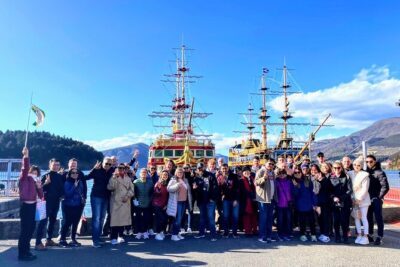 ★ 5.0Mt Fuji and Hakone 1-Day Bus Tour Return by Bullet TrainFrom $16326,383 reviews
 ★ 5.01-Day Tokyo Bus TourFrom $12914,250 reviews
 ★ 4.6teamLab Planets TOKYO Digital Art Museum Entry TicketFrom $259,779 reviews
 ★ 4.0Mt Fuji & Hakone Cruise, Drum Show Bullet Train 1 Day from TokyoFrom $1497,413 reviews
 ★ 5.0Shinjuku Food Tour (13 Dishes at 4 Local Eateries)From $866,603 reviews
 ★ 4.4Tokyo Mt Fuji 5th St & Hakone Cruise Bus Tour w/Bullet TrainFrom $1545,024 reviews
 ★ 5.0Flagship 2-Hours Official Street Go-Kart Tour – Tokyo Bay ShopFrom $644,974 reviews
 ★ 4.5From Tokyo: Mount Fuji Full-Day Sightseeing TripFrom $684,970 reviews