
Reviewed · TOKYO
Official Japan Go-Kart Shibuya / Tokyo Tower (IDP Required)
Tokyo feels bigger from a kart.
This guided go-kart ride strings together several top sights without the usual sightseeing-bus headache. I like the small-group setup capped for an easier, calmer experience, and you cruise in a guided convoy so you’re not playing map detective in the middle of the city. Expect a fun, outdoor way to tick off big Tokyo landmarks fast, with staff along the way to keep things moving.
I also like how the route packs in major icons—Shibuya Crossing, the Imperial Palace area, Tokyo Tower, and Tokyo Station—so you’re not just driving in circles or stuck in one neighborhood. The kart rental is included, and the plan is built around seeing the city as you ride, not just standing around at viewpoints.
One big consideration: the paperwork. You must bring your International Driving Permit (IDP) in the right format (and a physical copy), plus your home driving license. If you don’t have the documents exactly as required, you can lose your chance to ride.
In This Review
- Key things to know before you book
- Why this Shibuya-to-Tokyo-Tower kart ride feels special
- Meeting at JAPANKART Kanda Branch and getting ready to drive
- The big rule: IDP requirements that Japan actually enforces
- What you do during the 2.5–3 hour ride (and why it stays fun)
- Stop-by-stop: from the Imperial Palace area to Shibuya Crossing
- Imperial Palace area: calm walls, moats, and big-city scale
- Shibuya Crossing: the neon scramble from the street
- Roppongi on the route: nightlife energy, day-and-night options
- Tokyo Tower and Tokyo Station: the classic finishers
- Tokyo Tower: a 333-meter icon with Eiffel-style looks
- Tokyo Station: red-brick architecture in a modern city
- Price check: is $145.35 good value?
- Who should book this go-kart ride (and who should skip)
- Should you book Japankart Shibuya / Tokyo Tower?
- FAQ
- Do I need an International Driving Permit to drive?
- What if my IDP is not the correct type?
- Where does the tour start?
- How long is the go-kart experience?
- Is Tokyo Tower admission included?
- What happens if the weather is bad?
Key things to know before you book
- IDP required for most riders: Japan accepts specific IDP types, and photos or digital copies are not a substitute.
- Small-group convoy: you’ll ride with a capped group, guided as a moving line rather than a free-for-all.
- Tokyo icons, not just one neighborhood: Shibuya, the Imperial Palace area, Roppongi, Tokyo Tower, and Tokyo Station show up on the route.
- Tokyo Tower admission not included: you’ll likely get views, but don’t assume deck access is covered.
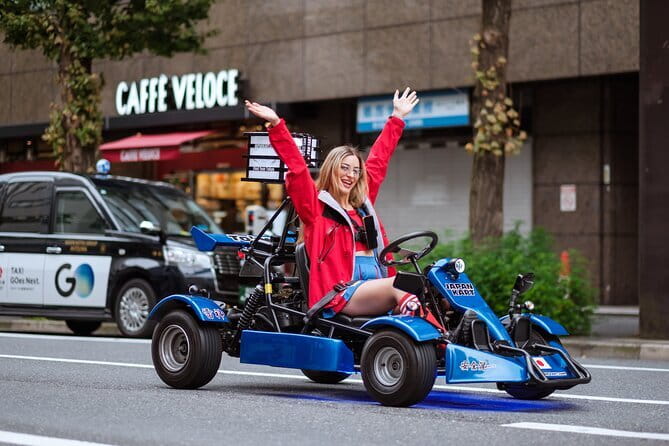
- Go in with the right shoes: no long skirts, high heels, or sandals, and plan to arrive early for instructions.
Before you commit, see how this one stacks up against a few Tokyo favourites:
- Mt Fuji and Hakone 1-Day Bus Tour Return by Bullet Train★ 5.0 · 26,383 reviews
- 1-Day Tokyo Bus Tour★ 5.0 · 14,250 reviews
- Tokyo: teamLab Planets TOKYO Digital Art Museum Entry Ticket★ 4.6 · 9,779 reviews
Why this Shibuya-to-Tokyo-Tower kart ride feels special
Tokyo is intense. Even on a good day, getting from point A to point B can turn into a subway puzzle, then another short walk, then another crowd. This experience flips that rhythm. Instead of hopping between spots on foot, you ride through the city itself—on streets—while the route hits several headline areas.
What makes it work is the “convoy” style. You’re guided with a group, so you don’t need to stress about directions, lanes, or where you should be at each moment. Think of it like a moving sightseeing line where you’re doing the transport and seeing the sights at the same time.
It’s also designed to feel outdoors and energetic without being a pure race. One of the most helpful things from people who did it: the vibe is more about cruising and sightseeing than about blasting around. That matters because Tokyo’s traffic flow and road complexity can be intimidating. A guided plan helps you focus on enjoying the ride.
Meeting at JAPANKART Kanda Branch and getting ready to drive
You start at the JAPANKART Kanda Branch (Chiyoda City, Kanda Higashimatsushitachō). It’s in an area that’s close to public transportation, which matters in Tokyo—you don’t want to base your day on a location that’s hard to reach.
Arrive 15 minutes early. That time buffer is not just politeness; it’s for getting checked in, watching the instructional video, and getting fitted and briefed. Most people miss the fun part when they show up right on time and spend the first few minutes rushing.
Dress smart for movement. The rules are clear: no long skirts, high heel shoes, or sandals. You’ll be on a kart, doing basic driving movements, and you want secure footing. If you plan to wear sneakers, that’s usually the best bet.
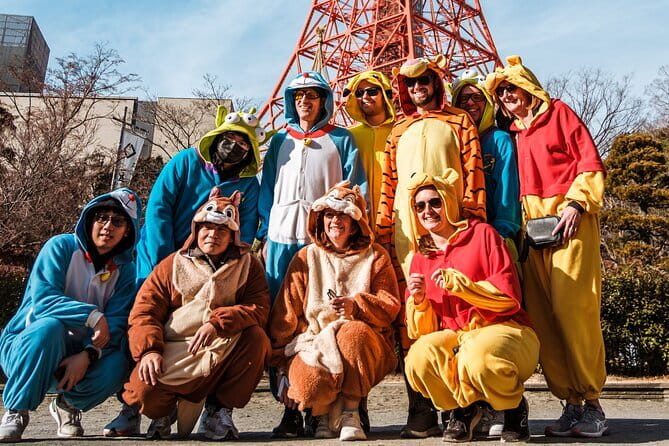
Some departures also lean playful. In feedback, people noted themed costumes (like dressing up early). Don’t assume every time slot does the same thing, but if they offer costumes on your day, it’s worth using them. It’s a fun photo opportunity and adds to the “this is Tokyo, but we’re doing it differently” feeling.
The big rule: IDP requirements that Japan actually enforces
This is not the place to wing it. To drive, you must present a valid International Driving Permit along with your home driving license and passport. The IDP has to be the booklet format issued under the 1949 Geneva Convention by an authorized government association.
Here’s what you need to be careful about:
- The IDP must be booklet form, not loose paper, not A4-style formats.
- Japan does not accept IDPs issued under the Vienna Convention 1968.
- Some online sellers advertise IDPs that aren’t officially recognized. Don’t risk it. If you buy from an unofficial source, you’re gambling with your ride.
- In Japan, you need a physical copy on the day of driving. Photos or digital copies can cause problems, and you may not be allowed to ride.
There’s also an exception list based on where your license was issued. If your license comes from Switzerland, Germany, France, Taiwan, Belgium, or Monaco, you still need your own driving license plus a Japanese translation arranged through the Japan Automobile Federation (JAF), using the online application.
If your documents aren’t ready, you’ll lose the experience—no rerun, no easy fix. So before you pack your bags, treat the IDP as a required trip item, like your passport.
What you do during the 2.5–3 hour ride (and why it stays fun)

The ride runs about 2 hours 30 minutes to 3 hours. You’ll be in the kart long enough to feel the momentum, but not so long that it becomes exhausting or monotonous.
Because group size is capped (and the overall activity has a maximum limit), you’re not dealing with a giant crowd. That affects the whole vibe. You get a more personal setup: staff can explain the plan clearly, and the convoy can stay organized through busy streets.
This is also why it’s less stressful than a do-it-yourself plan. You’re not trying to time trains and crossings while also navigating a route. The convoy approach handles the “where do we go next” part for you.
You can also expect lots of staff support. People highlighted that the crew helps with safety and makes the experience feel well organized. Another repeated detail: staff take photos along the way, and you end up with a record of the ride after. If that’s your thing, it’s a nice bonus—because driving around Tokyo is hard to capture when you’re the one behind the wheel.




Stop-by-stop: from the Imperial Palace area to Shibuya Crossing
Imperial Palace area: calm walls, moats, and big-city scale
One stop centers on the Imperial Palace area, known as the primary residence of Japan’s Emperor. From the outside, the setting stands out: it sits on the former site of Edo Castle and is surrounded by moats and stone walls, with traditional architecture and gardens.
Why this stop works on a kart: it gives contrast. Tokyo can feel all motion and neon. Seeing this more controlled, ceremonial space helps your brain reset. Also, it’s a famous location even if you’ve never studied Japanese history—so you get that instant “I’m in the real place” feeling.
Possible drawback: you won’t be inside every area. This is a drive-and-view style stop, not a long guided walking tour.
Shibuya Crossing: the neon scramble from the street
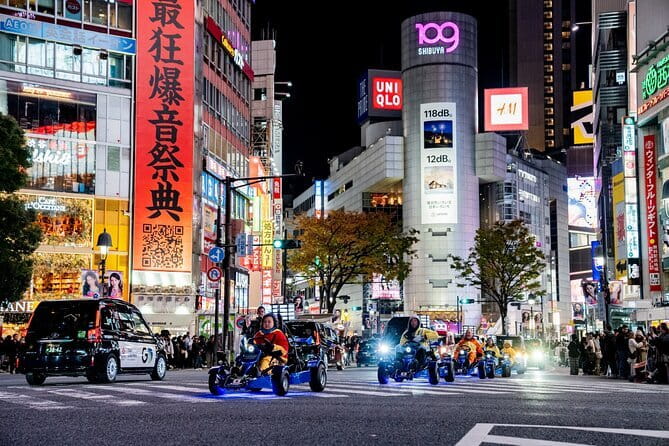
Next up is Shibuya Crossing, the iconic crossing where crowds surge when the light changes. It’s one of those Tokyo scenes that looks like a movie until you’re there and realize how many people actually move at once.
On a kart, it feels different from watching it from sidewalks. You’re close to the action, and you can see the street rhythm rather than just the crowd. For first-timers, this is the kind of stop that helps you understand why Shibuya is so famous.
What to watch for: your attention will be pulled in multiple directions. The lights are intense, and it’s busy. Focus on the road instructions from staff and let the scene impress you without trying to multitask.
Roppongi on the route: nightlife energy, day-and-night options
The plan also includes Roppongi, a well-known nightlife area with a mix of bars, clubs, and international dining. By day, it’s associated with places like the Mori Art Museum and stylish shopping. By night, it shifts into light-and-music mode.
Even if you’re riding during the day, Roppongi adds variety to your Tokyo sampler. You go from major landmark zones into a more modern, entertainment-heavy district.
Since this is a drive route, you’ll get views and atmosphere rather than a deep stay. If you want a longer Roppongi visit after the ride, you’ll be primed to head back.
Tokyo Tower and Tokyo Station: the classic finishers
Tokyo Tower: a 333-meter icon with Eiffel-style looks
Tokyo Tower is one of those landmarks you can’t really miss—an orange-and-white structure designed in the style of the Eiffel Tower. It rises to 333 meters, and its observation decks offer panoramic views.
One important detail: Tokyo Tower admission is not included. So plan to treat this as a highlight you’ll experience from the route—views from the street area and the fact that you’re there in the middle of Tokyo’s skyline energy—rather than a guaranteed ticketed visit to the top.
Even so, it’s often a memorable stop. If your timing lines up with evening lights, you’re more likely to catch that wow-factor Tokyo Tower look people rave about.
Tokyo Station: red-brick architecture in a modern city
The final major city landmark on the route includes Tokyo Station. Opened in 1914, it’s famous for its red-brick facade that contrasts with Tokyo’s modern skyline.
This stop is also helpful for practical travel reasons. Tokyo Station is a huge hub, and seeing it at least briefly gives you a mental anchor point for the rest of your trip. Plus, Tokyo Station is the kind of place where there’s always something to look at inside—shops and restaurants—so it’s an easy place to wander later if you have time.
Price check: is $145.35 good value?
At $145.35 per person, you’re paying for more than a ride. You’re paying for:
- Go-kart rental included
- A guided, small-group convoy sightseeing route
- Time-efficient access to several major Tokyo sights in one package
- On-site staff support and photo capture along the way (based on recurring feedback)
So the value angle is simple: this is a way to do “a lot of Tokyo” with one activity slot, without the heavy logistics of building your own transport chain between far-flung points.
The main cost downside is indirect: you may need to spend money and effort on obtaining the correct IDP. If you don’t already have one in the accepted format, that could change the math fast.
Also remember Tokyo Tower admission is not included, so if you were hoping this would cover the top decks, you’ll need to budget separately.
Who should book this go-kart ride (and who should skip)
This experience is a great fit if you want:
- A fun, active way to see Tokyo that’s not just walking and photos
- A guided route that reduces decision fatigue
- Small-group energy and a crew that focuses on safety and organization
- A memorable drive that hits multiple iconic stops, including Shibuya and Tokyo Tower
It’s a weaker fit if:
- You don’t already have the correct IDP and supporting documents in physical form
- You’re not comfortable following strict driving-related rules and dress guidance
- You mainly want museum-style time at major sites (this is view-from-the-route driving)
If you’re planning a first Tokyo trip and your schedule feels packed, this can be a high-impact activity—especially when you want the city’s big hits without spending hours commuting between them.
Should you book Japankart Shibuya / Tokyo Tower?
If you meet the document requirements and you’re excited by the idea of driving on Tokyo streets, I’d book it. The structure does the heavy lifting: small convoy, guided route, and an itinerary that covers several of Tokyo’s most recognizable places in one go.
The main thing to double-check before you pay is the IDP. Get the right booklet format, make sure you bring the physical documents, and don’t assume a digital copy will work. If you do that homework, you’ll likely end up with a truly different Tokyo memory—one made from motion, views, and a route that feels like your city highlights are happening to you, not just next to you.
FAQ
Do I need an International Driving Permit to drive?
Yes. You must present both your driver’s license and an International Driving Permit (IDP) to participate. The IDP must be issued in the 1949 Geneva Convention format and in booklet form.
What if my IDP is not the correct type?
Japan does not accept IDPs issued under the Vienna Convention 1968. You also should not buy from unofficial online companies, since unofficial IDPs may not be accepted.
Where does the tour start?
The meeting point is JAPANKART Kanda Branch, located at 42 2階, Kanda Higashimatsushitachō, Chiyoda City, Tokyo 101-0042, Japan. The tour ends back at the meeting point.
How long is the go-kart experience?
Plan for about 2 hours 30 minutes to 3 hours.
Is Tokyo Tower admission included?
No. Tokyo Tower is listed with an admission ticket not included.
What happens if the weather is bad?
This experience requires good weather. If it is canceled due to poor weather, you’ll be offered a different date or a full refund.
More Tour Reviews in Tokyo



Fresh reviews from around Tokyo






Tokyo, compared.
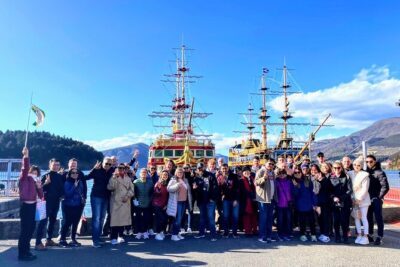 ★ 5.0Mt Fuji and Hakone 1-Day Bus Tour Return by Bullet TrainFrom $16326,383 reviews
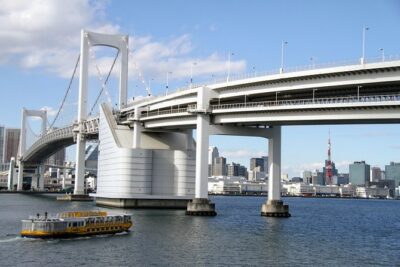 ★ 5.01-Day Tokyo Bus TourFrom $12914,250 reviews
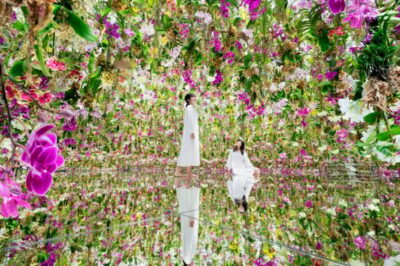 ★ 4.6teamLab Planets TOKYO Digital Art Museum Entry TicketFrom $259,779 reviews
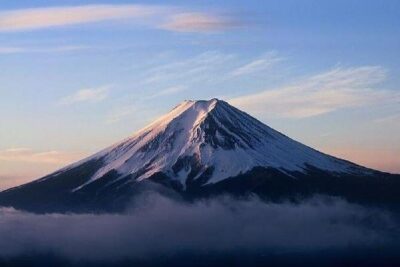 ★ 4.0Mt Fuji & Hakone Cruise, Drum Show Bullet Train 1 Day from TokyoFrom $1497,413 reviews
 ★ 5.0Shinjuku Food Tour (13 Dishes at 4 Local Eateries)From $866,603 reviews
 ★ 4.4Tokyo Mt Fuji 5th St & Hakone Cruise Bus Tour w/Bullet TrainFrom $1545,024 reviews
 ★ 5.0Flagship 2-Hours Official Street Go-Kart Tour – Tokyo Bay ShopFrom $644,974 reviews
 ★ 4.5From Tokyo: Mount Fuji Full-Day Sightseeing TripFrom $684,970 reviews