
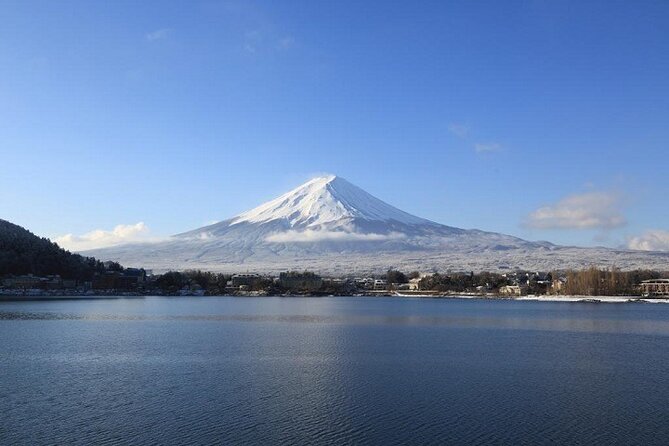
Reviewed · TOKYO
Mt Fuji & Hakone Cruise, Drum Show Bus 1 Day from Tokyo Sta. Area
Fuji and Hakone in one long bus day. What makes this trip work is the simple plan: a bus from Tokyo plus major sights like Mt. Fuji’s high viewpoint and a Lake Ashi cruise without you juggling trains. If you choose the lunch option, you also get a traditional wadaiko drum performance timed into the day.
I also like how they keep the day moving with smart fallbacks. When the Fuji route is blocked, the tour can switch to other Fuji-region stops instead of turning the day into a bust. The one drawback to plan for is weather and timing: Mt. Fuji may be hidden even at the base, and delays can affect how much you actually see at later stops.
In This Review
- Key points before you go
- A One-Day Fuji and Hakone Plan That Skips the Planning Headache
- Price and What $123.36 Buys You (and What It Doesn’t)
- Lunch at Fuji Zakura Hotel: Four Meal Styles and a Wadaiko Moment
- Mt. Fuji 5th Station: High Altitude Views and Winter Reality Checks
- Lake Ashinoko Cruise on the Sorakaze: Short Ride, Big View Potential
- Hakone Komagatake Ropeway: Mototsumiya and the Scenic Hakone Angle
- Odawara and the Hakone-to-Tokyo Flow
- How Weather and Traffic Can Reshape Your Day (and How to Handle It)
- Group Day-Tour Tips That Actually Help
- Who This Tour Suits Best
- Should You Book This Mt. Fuji & Hakone Cruise Bus Tour?
- FAQ
- How long is the Mt. Fuji & Hakone cruise bus day trip?
- Where is the meeting point, and what time does the tour start?
- Is lunch included?
- What lunch options are available with the With Lunch option?
- What happens if the Fuji Subaru Line is closed or views from Mt. Fuji 4th/5th Station aren’t likely?
- What if the Lake Ashi cruise or Komagatake Ropeway can’t operate due to weather or congestion?
- Is the lunch-time wadaiko drum performance guaranteed?
- Can I cancel for a full refund?
Key points before you go
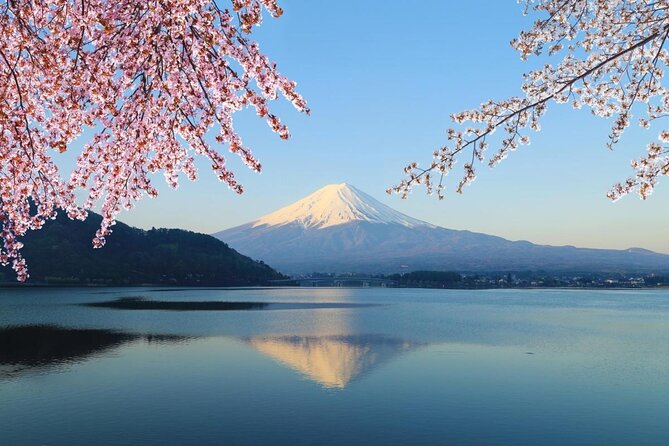
- Mt. Fuji 5th Station reaches 2,300 meters, so you get real altitude views even on a short schedule
- Lake Ashinoko on the Sorakaze is a quick cruise that’s built for Fuji sightings when skies cooperate
- Hakone Komagatake Ropeway gets you up near Mototsumiya for classic Hakone panorama angles
- Lunch-with-drum-show option adds more culture than just eating on the road
- Clear-weather goals with weather backups mean the tour keeps running even if Fuji is shy
Before you commit, see how this one stacks up against a few Tokyo favourites:
- Mt Fuji and Hakone 1-Day Bus Tour Return by Bullet Train★ 5.0 · 26,383 reviews
- 1-Day Tokyo Bus Tour★ 5.0 · 14,250 reviews
- Tokyo: teamLab Planets TOKYO Digital Art Museum Entry Ticket★ 4.6 · 9,779 reviews
A One-Day Fuji and Hakone Plan That Skips the Planning Headache
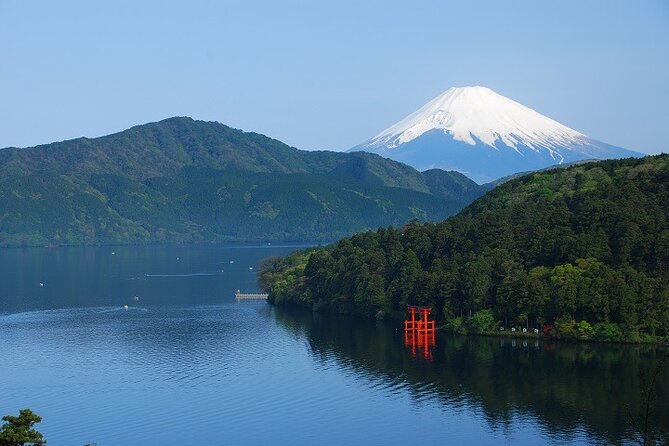
This is an economical group bus day trip from central Tokyo. You’re not renting a car, not navigating transfers, and not doing the “wait—what line is that again?” routine. Pickup is at Tokyo Midtown Yaesu (inside the terminal, underground levels), and the day ends back in Tokyo at Tokyo Station.
The schedule is long—about 12 hours 10 minutes—but it’s designed to hit the big-name sights efficiently: high Mt. Fuji access, Hakone’s Lake Ashi area, and a ropeway climb. The bus is climate controlled too (heated and air-conditioned), which matters on cold mornings up near Fuji.
Group size is limited to up to 44 travelers, so it feels like a proper day tour rather than a crush. Also, the vehicle might be a large bus or something smaller depending on who books.
Price and What $123.36 Buys You (and What It Doesn’t)
At about $123.36 per person, you’re paying for the structure: transportation, an English guide interpreter, and admission tickets to the included activities. The tour also covers other admission fees listed as included, plus lunch only if you select the With Lunch option.
What you’re not paying for is lunch if you select No Lunch, plus any extra spending at the stops. The practical value here is that the tour removes a lot of travel friction. For most visitors, the cost difference versus “just doing it yourself” comes down to time and stress—especially on a day where weather can change everything.
If you’re the type who hates logistics, this price makes more sense. If you love freedom and don’t mind public transit planning, you might do cheaper on your own—but you’ll trade away some of the easy pacing and organization.
Lunch at Fuji Zakura Hotel: Four Meal Styles and a Wadaiko Moment
The tour offers a real lunch choice, which I appreciate. With the lunch option, you go to Fuji Zakura Hotel for about 50 minutes. Tea/coffee is included, and you’ll get a Japanese-style meal with options for different dietary needs:
- Vegetarian dishes (Japanese-style vegetarian)
- Muslim-friendly meals (no pork or alcohol, but not halal certified)
- Indian thali (a vegetarian menu with no meat or fish)
One detail I’d plan around: the lunch includes a wadaiko (Japanese drum) performance at the lunch break area. This is tied to traditional arts training work done by Social Welfare Corporation Fugakukai. It’s a highlight because it adds an active cultural break, not just another meal stop.
But here’s the honest tradeoff. If the bus is significantly delayed from traffic or road conditions, you might miss the performance. And there’s a specific hard date note: wadaiko is not held on February 28, 2026, with no partial refunds for that reason.
If you’re counting on the show, pack extra patience. If the show happens, it’s the kind of “small memory” that makes a day tour feel special.
Mt. Fuji 5th Station: High Altitude Views and Winter Reality Checks
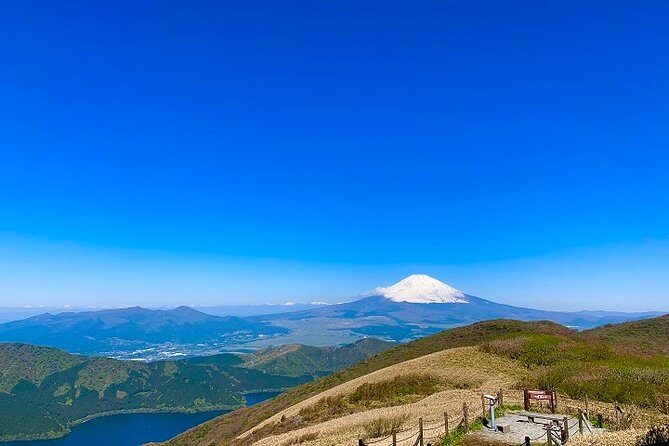
Your main Fuji stop is Mt. Fuji 5th Station, with a drive up the Subaru Line if it’s open—or they go to the highest point accessible otherwise. The 5th Station sits around 2,300 meters (7,546 feet).
At that altitude, you’ll feel the difference fast. Even if the morning starts mild in Tokyo, it can drop hard near Fuji. The tour recommends warm clothing, and the data is pretty clear: daytime temps can be around 14°C in summer and around -5°C in winter. Bring layers. Bring gloves if you run cold.
The bigger point: your Fuji view depends on weather, not effort. Even from the base, Mt. Fuji may be obscured. The tour doesn’t cancel and doesn’t refund just because the mountain can’t be seen. That’s not a gimmick—it’s the reality of mountain forecasting and cloud cover.
Still, I like that the tour sets expectations and then gives you options. If the Fuji route is closed or visibility is unlikely from 4th/5th stations, the itinerary can switch to alternatives like Fujisan Museum, Lake Kawaguchi Oishi Park, Fujisan World Heritage Center, Itchiku Kubota Art Museum, or Oshino Hakkai.
This matters because a “fallback plan” is the difference between a good day and a frustrating one when weather acts up.





Lake Ashinoko Cruise on the Sorakaze: Short Ride, Big View Potential
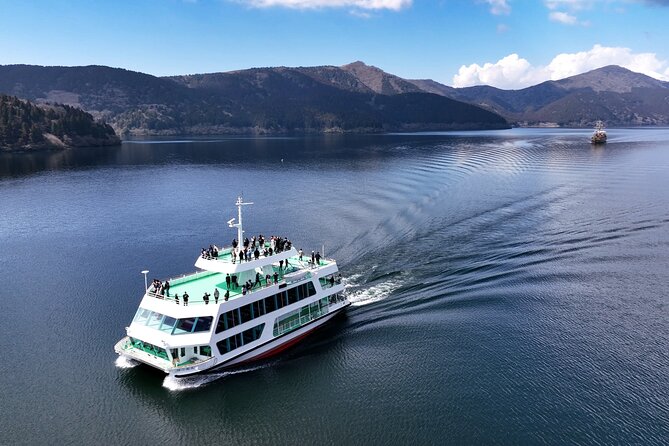
Next up is Lake Ashinoko. You board the Sorakaze cruise ship for about 15 minutes (admission included). This is a short window on purpose: the cruise gives you a classic lake-and-mountain angle without consuming most of your day.
What makes this stop worth it is the perspective shift. From the water, the shoreline and slopes wrap around you differently than they do from the bus viewpoint. On a clear day, Lake Ashi is one of the easiest places to catch Mt. Fuji in the background.
On a cloudy day, it’s still a pleasant break—cooler air, open views, and a less frantic pace than constant sightseeing stops. Just don’t expect the cruise to magically force a Fuji sighting. The weather variables are real.
If weather prevents the cruise or road congestion blocks sightseeing, the tour may swap in other lake experiences such as an Appare sightseeing boat on Lake Kawaguchi or cruises/boats on other lakes in the area. The point is continuity: they keep the day moving.
Hakone Komagatake Ropeway: Mototsumiya and the Scenic Hakone Angle
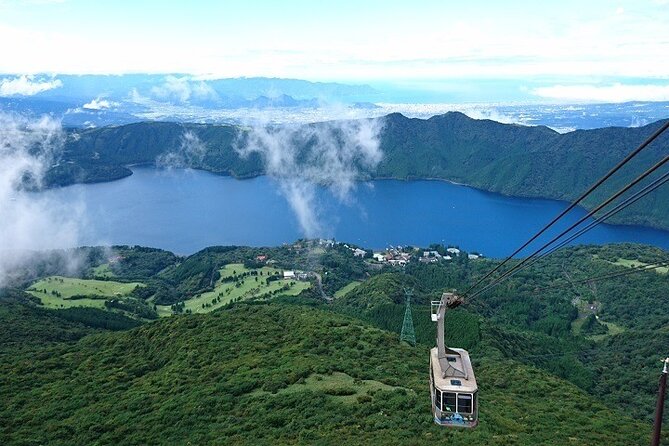
After Lake Ashi, you go to Hakone Komagatake Ropeway for about 50 minutes. This is the part of the day where Hakone gets more “mountain shrine + panoramic views” than “sit and look.”
You take the cableway up to Hakone Shrine Mototsumiya (original shrine) at the mountaintop. The area gives you a chance to see Lake Ashi spread out in the Hakone National Park setting.
What I like about this stop is that it’s not just a ride. It’s a viewpoint with a meaningful destination, which helps the time feel more worth it even if Fuji is hiding. You’re not rushing through a photo spot—you’re doing a short climb-and-look that feels like Hakone, not just an accessory to Fuji.
Odawara and the Hakone-to-Tokyo Flow
The itinerary includes Odawara Station as a possible stop. Here’s the practical catch: the bus may not stop there unless customers booked the Odawara drop-off option in advance.
That means if Odawara matters to your onward plans, confirm it when you book. Otherwise, don’t assume you’ll be able to hop off there just because the name appears in the outline.
From there, the day ends at Tokyo Station. Arrival is generally between 6pm and 9pm, depending on traffic and road conditions. Translation: build a loose evening plan. Don’t schedule a far-off dinner reservation that requires you to be sprint-ready.
How Weather and Traffic Can Reshape Your Day (and How to Handle It)
This tour runs on roads that can be slow, especially near mountain access. Traffic can vary, and arrival times may get pushed later than the neat printed schedule.
The other big factor is weather. Mt. Fuji visibility can be low even at the highest point they can reach. If the cruise and ropeway stop operations, they switch to alternatives, including other boats, ropeway/cable car experiences, art museums, shrine areas, and even options like Owakudani depending on conditions.
What does that mean for you? It means you should treat the day as a “Hakone + Fuji region highlights” tour, not a guaranteed Fuji summit photography session. The upside is you still see meaningful sights, and you don’t get stranded with nothing to do.
Group Day-Tour Tips That Actually Help
A long day works best when you show up with the right expectations.
- Arrive early for pickup. Late arrivals can have reservations canceled, so give yourself extra time getting to Tokyo Midtown Yaesu.
- Dress for cold. Mt. Fuji access is colder than Tokyo, even in daytime.
- Expect timing shifts. The tour may change the order due to road conditions.
- If you want the drum performance, don’t plan tight afterwards. Delays could affect whether you catch it.
- Bring patience for the view factor. If clouds roll in, your “win” becomes enjoying Hakone anyway, not chasing one perfect Fuji photo.
Also, if you’re traveling with dietary needs: lunch options exist, but allergy-specific meals (like gluten-free) are not available. If you need those, the data suggests booking the tour without lunch included so you can handle food safely on your own.
Who This Tour Suits Best
I’d point you toward this tour if you want:
- a low-stress day trip out of Tokyo
- a mix of Fuji-area viewpoint + Hakone lake + ropeway shrine
- the convenience of a planned day with tickets handled
- a lunch add-on that includes a cultural stop (wadaiko)
It’s also a good fit if you don’t want to spend your day working out routes and transfers. The bus approach is made for visitors who’d rather spend energy on the scenery than on schedules.
If you’re the type who wants total control, you might prefer arranging everything yourself. But for many first-timers, the tradeoffs of self-planning aren’t worth the savings.
One more note: guide quality matters on a day this long. Some departures have English guide interpreters whose names you may hear like Shin, Joe, or Marie—and the common thread is friendliness and competence, which helps keep a long route feeling manageable.
Should You Book This Mt. Fuji & Hakone Cruise Bus Tour?
Yes, if you want a simple, ticketed day that hits Fuji’s high viewpoint and Hakone’s classic lake-and-ropes sights without renting a car. The value is strongest when you use what’s included: the bus, admissions, and (if you need it) the lunch with cultural drum performance.
Book with realistic eyes: you’re not guaranteed a crystal-clear Fuji photo, and weather can push timing. But the tour is built with alternatives, so you’re not left with nothing to do.
If you’re traveling in colder months, dress for altitude cold and accept that the Subaru Line might be closed. If you’re laser-focused on the best possible Fuji visibility, you could be happier with a more flexible plan—but if you want an efficient, organized day, this one is a strong match.
FAQ
How long is the Mt. Fuji & Hakone cruise bus day trip?
The duration is about 12 hours 10 minutes.
Where is the meeting point, and what time does the tour start?
You meet at Bus Terminal Tokyo Yaesu (Tokyo Midtown Yaesu, Chuo City, Yaesu). The start time is 7:35 am.
Is lunch included?
Lunch is included only if you select the With Lunch option. If you choose No Lunch, meals are not included.
What lunch options are available with the With Lunch option?
You can choose from vegetarian, standard, Muslim-friendly, and Indian thali meals. Muslim-friendly meals do not use pork or alcohol, and Indian thali is a vegetarian menu without meat and fish.
What happens if the Fuji Subaru Line is closed or views from Mt. Fuji 4th/5th Station aren’t likely?
The tour will guide you to alternative Fuji-region facilities such as Fujisan Museum, Lake Kawaguchi Oishi Park, Fujisan World Heritage Center, Itchiku Kubota Art Museum, or Oshino Hakkai.
What if the Lake Ashi cruise or Komagatake Ropeway can’t operate due to weather or congestion?
If those stops can’t run, the tour will switch to alternative activities such as cruises/boats on other lakes, ropeway/cable car options, art museums, shrines/checkpoints, or Owakudani, depending on conditions.
Is the lunch-time wadaiko drum performance guaranteed?
It depends on timing. The tour notes that the performance may not be viewed if arrival is delayed, and it may be canceled without prior notice. It also states wadaiko is not held on February 28, 2026.
Can I cancel for a full refund?
Yes. You can cancel up to 24 hours in advance for a full refund. If you cancel less than 24 hours before the start time, the amount paid is not refunded.
More Tour Reviews in Tokyo



Fresh reviews from around Tokyo






Tokyo, compared.
 ★ 5.0Mt Fuji and Hakone 1-Day Bus Tour Return by Bullet TrainFrom $16326,383 reviews
 ★ 5.01-Day Tokyo Bus TourFrom $12914,250 reviews
 ★ 4.6teamLab Planets TOKYO Digital Art Museum Entry TicketFrom $259,779 reviews
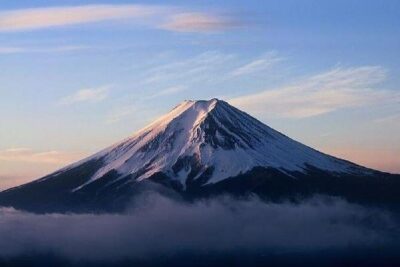 ★ 4.0Mt Fuji & Hakone Cruise, Drum Show Bullet Train 1 Day from TokyoFrom $1497,413 reviews
 ★ 5.0Shinjuku Food Tour (13 Dishes at 4 Local Eateries)From $866,603 reviews
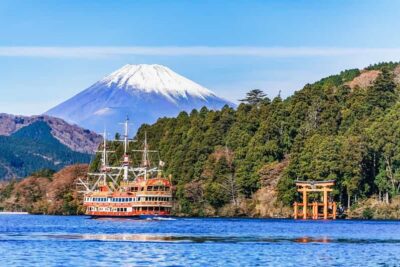 ★ 4.4Tokyo Mt Fuji 5th St & Hakone Cruise Bus Tour w/Bullet TrainFrom $1545,024 reviews
 ★ 5.0Flagship 2-Hours Official Street Go-Kart Tour – Tokyo Bay ShopFrom $644,974 reviews
 ★ 4.5From Tokyo: Mount Fuji Full-Day Sightseeing TripFrom $684,970 reviews