
Reviewed · TOKYO
Mt Fuji Exclusive Tour with Private Car English Guide
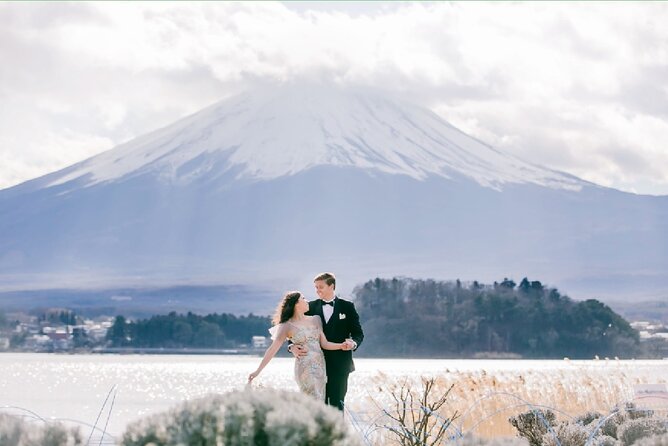
Fuji days move at your pace. This private Mt. Fuji outing is built around round-trip hotel pickup and a private car, so you can plan your stops without herding with strangers. You’ll visit several classic Fuji-area sights, with enough time to actually walk, snack, and hunt for the best view.
I especially like the way this tour keeps things calm and flexible. You’re not just getting dropped at a single spot—you get a loop that covers the lakeside, temple scenery, and the photogenic postcard areas like Oshino Hakkai and the Chureito Pagoda.
One consideration: Mt. Fuji visibility depends heavily on weather. If the mountain is hidden, you’ll still have a full day of sights, but the big “Fuji is out” moment can turn into a cloudy photo day.
In This Review
- Key points worth getting excited about
- How the private car + English guide shapes your day
- Stop 1: Oshino Hakkai for clear spring water and easy wandering
- Stop 2: Oishi Park for Fuji views, flowers, and soft-serve breaks
- Stop 3: Kitaguchi Hongu Fuji Sengen Jinja Shrine, a traditional gateway feel
- Stop 4: Mt. Fuji 5th Station only if the weather cooperates
- Stop 5: Lake Kawaguchiko for calm water and practical food options
- Stop 6: Chureito Pagoda for the classic Fuji postcard view
- Stop 7 (optional): Saiko Iyashi no Sato Nemba for a slower traditional break
- Timing, weather, and why flexibility is part of the value
- Price and value: what $445 buys for up to 4
- Who this Mt. Fuji private tour is best for
- Should you book this private Mt. Fuji day trip?
- FAQ
- What’s included in the price?
- How many people is the tour for?
- How long is the tour?
- Do you get hotel pickup in Tokyo?
- Which stops are included?
- Is Mt. Fuji 5th Station admission included?
- Is lunch included?
- How much is the optional Saiko Iyashi no Sato Nemba?
- What happens if weather is poor?
Key points worth getting excited about
- Door-to-door hotel pickup in Tokyo, with round-trip transfers handled for you
- Private car comfort where you’re only passengers in the vehicle
- A smart multi-stop route covering Oshino Hakkai, Lake Kawaguchi, and Chureito Pagoda
- Time to stroll and reset at every main stop (about an hour each)
- Optional stops like Saiko Iyashi no Sato Nemba if you want a slower, village-style break
- 5th Station is conditional on weather, and you’ll pay its admission separately
Before you commit, see how this one stacks up against a few Tokyo favourites:
- Mt Fuji and Hakone 1-Day Bus Tour Return by Bullet Train★ 5.0 · 26,383 reviews
- 1-Day Tokyo Bus Tour★ 5.0 · 14,250 reviews
- Tokyo: teamLab Planets TOKYO Digital Art Museum Entry Ticket★ 4.6 · 9,779 reviews
How the private car + English guide shapes your day
The best part of a private Fuji tour is not just the view. It’s control. You’re picked up from your hotel, then you spend the day in a car that’s yours for the day—so you don’t lose energy to waiting, crowd bottlenecks, or people slowing down the line.
The driver brings English help, and that matters in the Fuji area because little timing choices can change your experience. You’ll have multiple stops that are photo-heavy, and you’ll want to know where to stand, when to walk, and what to look for while you’re there. Many drivers have been praised for being punctual and for explaining what you’re seeing as you go.
One more practical detail: your driver may ask to shift timing a bit earlier due to bad traffic or weather. That’s not a small thing in Japan. Roads and viewing conditions can change fast around Mt. Fuji.
Stop 1: Oshino Hakkai for clear spring water and easy wandering
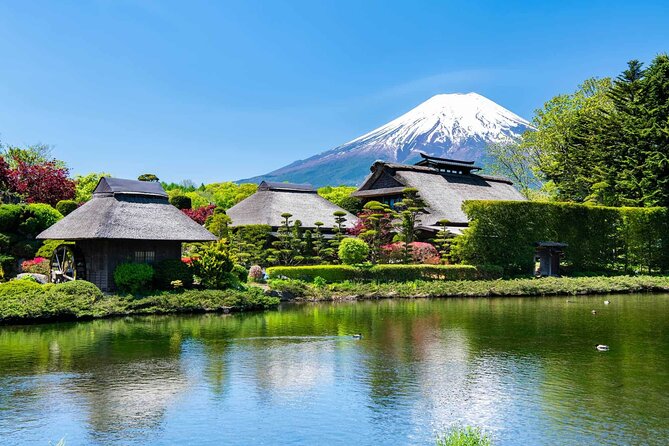
Oshino Hakkai is one of the most atmospheric spots near Fuji, and it works well at the start of the day. You’ll find a small village area known for its crystal-clear spring water, fed by snowmelt from Mt. Fuji and underground flow.
What you’ll likely enjoy here is the vibe. This isn’t a “rush-and-go” stop. You get about one hour, which is enough time to stroll, read the scene, and take photos without feeling late for the next destination. It’s also a nice place to reset if the weather is doing something moody, since the water and village atmosphere still feel worth seeing even when the mountain is hidden.
A drawback to keep in mind: it can be busy, especially during peak travel seasons. Still, one hour of walking usually keeps things manageable.
Stop 2: Oishi Park for Fuji views, flowers, and soft-serve breaks
Next up is Oishi Park on the shores of Lake Kawaguchi. This stop is built for the classic lakeside Fuji photo setup—open space, good sightlines, and gardens that add color.
Expect about an hour here, with time to:
- walk at a relaxed pace,
- look for viewpoints where Fuji lines up with the shoreline,
- and grab refreshments.
A small but real value add: you’ll get an easy snack break. Soft-serve ice cream shows up as a highlight here, and it’s exactly the kind of thing that keeps a long day from turning into a “just transportation” day.
Stop 3: Kitaguchi Hongu Fuji Sengen Jinja Shrine, a traditional gateway feel
This is the stop that adds meaning to the landscape. Kitaguchi Hongu Fuji Sengen Jinja Shrine sits at the northern foot of Mt. Fuji and serves as a main entrance linked to the Yoshida Trail.
You get about one hour, which is a good amount of time for a shrine visit without turning it into a museum lecture. What I like about including a shrine stop on a Fuji day is that you see the mountain in a cultural context—not just as a scenery backdrop. You’re stepping into the way locals interpret Fuji through tradition.
Potential drawback: if you’re only chasing photos and you’re not into walking around shrines, you may want to treat this as a “short and thoughtful” stop. Still, it’s a good break from purely lakeside views.





Stop 4: Mt. Fuji 5th Station only if the weather cooperates
This is the big one, but it’s not guaranteed. You’ll go to Mt. Fuji 5th Station only if weather permits. When it is open and visible, it’s the closest you can get to the “I’m really at Mt. Fuji” feeling without hiking to the summit.
You’ll have about one hour at the station. Admission is not included, and it’s listed as 2,800 yen per group. That’s important for your planning because it’s one of the few paid items during the day.
Also, your driver can’t control cloud cover. If you arrive and Fuji is wrapped up, you’ll still use the hour well by focusing on the station area, but the summit-grade views may not show. On days like this, I find it helps to think of 5th Station as an experience in itself—your goal shifts from “peak photos” to “Fuji at altitude.”
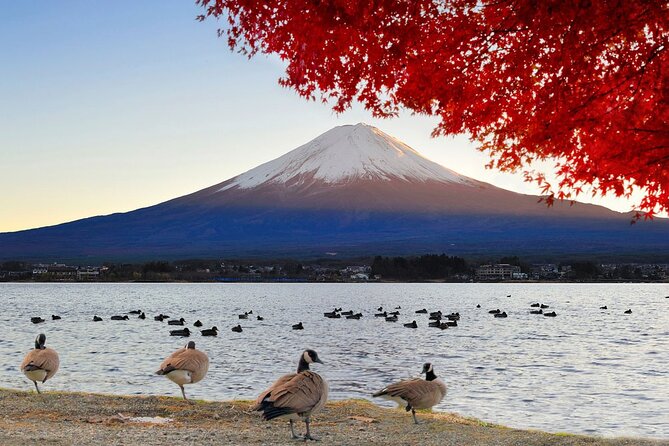
Stop 5: Lake Kawaguchiko for calm water and practical food options
Then you head back to the lake with Lake Kawaguchiko, another core Fuji-area stop. The lake setting gives you scenic variety: you’ve had village water at Oshino Hakkai, now you’ll shift to a broader lakeside landscape.
Expect about one hour with time for:
- strolling around the shoreline,
- taking photos,
- and checking out nearby eateries.
This stop is especially helpful because it gives you a realistic chance to get food that fits your energy level. The day includes multiple free-admission locations, and lunch isn’t included, so you’ll want to plan your eating around the time windows. Lake Kawaguchiko is the kind of area where you can usually find something you can work with fast.
Stop 6: Chureito Pagoda for the classic Fuji postcard view
If you want the iconic image—Fuji with a pagoda in the frame—this is your stop. Chureito Pagoda, located within Arakura Sengen Shrine area, is known for its five-storied silhouette and the way it lines up with Mt. Fuji when visibility is good.
You’ll get about one hour, but you should budget energy for the steps. The walk up is part of the experience. It’s not extreme, but it’s noticeable, especially if you’re balancing weather and crowds.
One practical tip: this is where timing matters. If your driver can make a smart arrival decision, you’ll often get better light and fewer people in your photos. Many drivers have been praised for pointing out where to stand and when to shoot, and this is exactly the kind of stop where that help pays off.
Stop 7 (optional): Saiko Iyashi no Sato Nemba for a slower traditional break
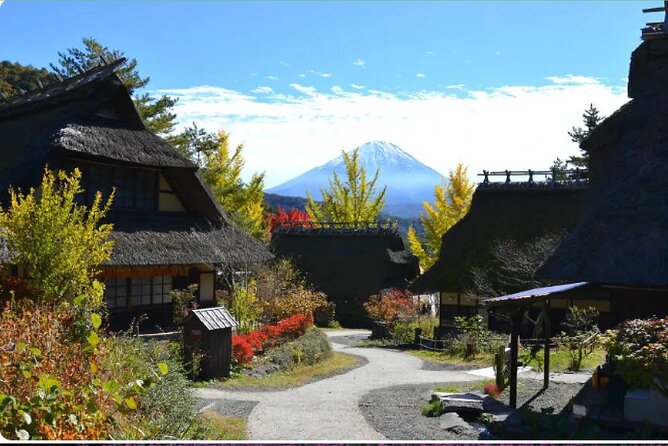
If you want to trade a photo-heavy stop for something quieter, the optional Saiko Iyashi no Sato Nemba is a good choice. It’s a restored traditional village near Lake Saiko, with thatched-roof houses and a more hands-on “old ways” feel.
Admission isn’t included, and it’s listed as 500 yen per adult. You’ll still get about one hour, which is enough time to wander without feeling trapped indoors.
This optional stop is also a smart move on days when Mt. Fuji is partly hidden. Even when the mountain is shy, the village atmosphere can still feel rewarding.
Timing, weather, and why flexibility is part of the value
This experience is tied to weather. It’s explicitly described as requiring good weather, and your driver may adjust the schedule earlier when traffic and conditions look risky. That’s a real part of the Fuji game. Clouds can roll in. Rain can cut visibility. Road congestion can stretch your ride time.
Here’s how I’d use that knowledge:
- If Fuji is clear early, you’ll likely get the best shot at the key photo moments.
- If Fuji is cloudy later, don’t treat that as a failure. You’ll still have multiple scenic stops and a full day of walking and viewpoints.
- Keep your expectations realistic: you’re buying a day out in Fuji country, not a guarantee of a perfect panorama.
In the real world, guides often adjust the day to match the conditions and the pace you want. That’s one reason the private format matters. You can choose faster or slower walking, and you aren’t stuck with a one-size-fits-all group pace.
Price and value: what $445 buys for up to 4
At $445 per group (up to 4 people), the math isn’t just about “admission.” You’re paying for a private, door-to-door day with transportation, tolls, parking fees, and fuel surcharge included.
So your value breakdown looks like this:
- Private transportation + highway tolls + parking fees are included
- Most stop admissions are free, with a couple notable paid add-ons (5th Station and optional village)
- Lunch isn’t included, so you’ll plan that separately
- The day runs about 9 to 10 hours, which helps justify the full-day vehicle cost
If you’re traveling as a pair, it can feel pricey until you compare it with the hassle factor of getting yourself around by train + buses + transfers. If you’re traveling with a small group, it becomes easier to feel like you’re buying convenience plus calm time at each stop.
Also, the driver/English help is a big part of that value. Being able to ask questions, get guidance on photo spots, and understand what you’re looking at helps you enjoy the day instead of just “passing through.”
Who this Mt. Fuji private tour is best for
This is a strong fit if:
- you want maximum comfort with hotel pickup and a private car,
- you’re aiming for the classic Fuji sights without spending your brain on transit,
- you want time to walk and take photos at each stop,
- and you prefer a day with fewer crowds than a bus-style tour.
It may be less ideal if:
- you’re going only for 5th Station and you’re upset by weather-based changes (since it’s “if weather permits”),
- you have very limited mobility, because you’ll face step counts at spots like Chureito Pagoda,
- or you want a super food-focused day, since lunch is on your own.
One guideline included for planning: it’s not recommended for travelers over 95 years.
Should you book this private Mt. Fuji day trip?
My take: book it if you value a smooth day and you want your Fuji time to feel organized. The route hits multiple highlights, the stop timing gives you breathing room, and the private car setup helps you move with less stress.
Skip it only if your priority is a single, guaranteed “summit view” moment. Since Mt. Fuji 5th Station is weather-dependent and visibility can change fast, this tour is best for people who want a great Fuji-area day even when the sky plays tricks.
If you book, bring patience for the mountain’s mood. And bring comfy shoes. Those pagoda steps and lakeside walks add up—then you’ll appreciate the views that much more.
FAQ
What’s included in the price?
Private transportation, parking fees, highway tolls, and fuel surcharge are included. Most stop admissions are free, but Mt. Fuji 5th Station and the optional Saiko Iyashi no Sato Nemba have separate fees.
How many people is the tour for?
It’s priced per group for up to 4 people. This is a private tour, so only your group participates.
How long is the tour?
The duration is about 9 to 10 hours.
Do you get hotel pickup in Tokyo?
Yes, hotel pickup is offered, with round-trip transfers.
Which stops are included?
Key stops include Oshino Hakkai, Oishi Park, Kitaguchi Hongu Fuji Sengen Jinja Shrine, Mt. Fuji 5th Station (if weather permits), Lake Kawaguchiko, and Chureito Pagoda. Saiko Iyashi no Sato Nemba is optional.
Is Mt. Fuji 5th Station admission included?
No. Mt. Fuji 5th Station admission is listed as 2,800 yen per group.
Is lunch included?
No. Lunch and drinks are not included.
How much is the optional Saiko Iyashi no Sato Nemba?
Admission is listed as 500 yen per adult, and it’s not included in the base price.
What happens if weather is poor?
The experience requires good weather. If it’s canceled due to poor weather, you’ll be offered a different date or a full refund. Your driver may also request time changes earlier due to traffic or weather conditions.
More Tour Reviews in Tokyo



Fresh reviews from around Tokyo






Tokyo, compared.
 ★ 5.0Mt Fuji and Hakone 1-Day Bus Tour Return by Bullet TrainFrom $16326,383 reviews
 ★ 5.01-Day Tokyo Bus TourFrom $12914,250 reviews
 ★ 4.6teamLab Planets TOKYO Digital Art Museum Entry TicketFrom $259,779 reviews
 ★ 4.0Mt Fuji & Hakone Cruise, Drum Show Bullet Train 1 Day from TokyoFrom $1497,413 reviews
 ★ 5.0Shinjuku Food Tour (13 Dishes at 4 Local Eateries)From $866,603 reviews
 ★ 4.4Tokyo Mt Fuji 5th St & Hakone Cruise Bus Tour w/Bullet TrainFrom $1545,024 reviews
 ★ 5.0Flagship 2-Hours Official Street Go-Kart Tour – Tokyo Bay ShopFrom $644,974 reviews
 ★ 4.5From Tokyo: Mount Fuji Full-Day Sightseeing TripFrom $684,970 reviews