
Reviewed · NIKKO DAY TRIPS
Magnificent Nikko World Heritage and Breathtaking Scenic Beauty in one day
Nikko in one day is a fast, beautiful challenge. This trip is interesting because it stacks the big-name UNESCO and nature hits into a single 12-hour outing, starting early and ending back in Tokyo. I love the Tokyo hotel pick-up and drop-off, and I also like how the day is run as a private tour with guide support so you are not just riding along with strangers.
One key consideration: this tour leans heavily on public transport (train and bus), with the guide helping you make it work. It can still feel smooth, but if you were hoping for a dedicated private vehicle for the whole day, read that carefully before you book.
If you want a well-paced hit list—bridge, shrine, waterfall viewpoints, then the falls themselves—this format is built for you. Just budget for the extra admission fees and plan for a full day on the move.
In This Review
- Key highlights to know before you go
- Why a one-day Nikko hit works (even when it’s packed)
- Price and logistics: what your money actually covers
- The morning run from Tokyo: starting at 7:30 am
- Stop 1: Shinkyo Bridge and the Daiya River backdrop
- Stop 2: Nikko Tosho-gu and the famous three sayings
- Stop 3: Akechidaira Observation Area and the ropeway ride
- Stop 4: Kegon Falls, the elevator, and the 1-hour finale
- What makes this feel private, not just guided
- Is this tour a good fit for you?
- Should you book this one-day Nikko UNESCO tour?
- FAQ
- What time does the tour start?
- How long is the tour?
- Is this tour private?
- Are admission tickets included?
- Do I pay extra if I have a JR Pass?
- How do I get the tickets?
Key highlights to know before you go
- Tokyo hotel pick-up and drop-off makes the day start and end with less hassle
- Private, customizable pacing means it is only your group, guided the whole way
- Four major Nikko stops in one day: Shinkyo Bridge, Toshogu, Akechidaira, and Kegon Falls
- Ropeway to the Akechidaira observatory for big views over Kegon and Lake Chuzenjiko
- Admission tickets are extra for the biggest sights and the Kegon Falls elevator
- Public transport is the main ride (train and bus), not a private charter
Why a one-day Nikko hit works (even when it’s packed)
Nikko can feel like a place you either rush through or spend days in. This tour chooses the smart middle path: it aims at the top visual moments and cultural landmarks, then moves on before the day gets too heavy. With a 7:30 am start and about 12 hours total, you are getting an early start that helps you avoid the slow slide into late-morning crowding.
What makes this itinerary click is the mix of types of places. You start with a classic scenic photo spot at Shinkyo Bridge, then switch gears into the intense detail of Nikko Tosho-gu, then go back outside for the Chuzenji area views and finally the waterfall finale. It is basically Nikko’s greatest hits in one continuous storyline.
Price and logistics: what your money actually covers
The price is $325.18 per person for a long day with a private, guided plan. When I look at value for trips like this, I focus on what removes friction. Here, that is the English-speaking professional guide, the private tour setup, and hotel pick-up and drop-off in Tokyo. Those three things can easily save you time, confusion, and waiting around.
But you should budget for add-ons. Admission tickets are listed as not included for:
- Shinkyo Bridge (listed fee: ¥7,400 per person)
- Toshogu Shrine (listed fee: ¥1,300 per person)
- Kegon Falls elevator (listed fee: ¥550 per person)
Also, public transport costs matter if you are using a JR Pass. The tour notes an additional ¥2,000 per person for public transportation for JR Pass holders (so you are not fully covered just by having the pass).
Then there is the transport style itself. The tour uses train and bus, with the guide offering help (and public transport expenses for the guide are included). One practical takeaway: pack with the mindset of a full transit day. This is not a sightseeing cruise where you step out once and glide between stops.
Finally, there is a small detail that affects planning: the included list mentions the guide’s lunch expense, but it does not spell out lunch for you. If you eat on your own, build in that reality without expecting it to be included.
The morning run from Tokyo: starting at 7:30 am
A 7:30 am start is early by any Tokyo standard, and it is there for a reason: you want daylight for the views and enough time at each stop. The tour includes hotel pick-up, so you are not trying to figure out transit directions while you are still waking up. That is the kind of thing you feel grateful for by stop two.
The tour is also designed around being near public transportation, and that matters because you are moving using local systems. You will likely be doing train and bus connections rather than driving directly between every photo spot.
You will receive a mobile ticket, which is handy. It reduces the rummaging-around-for-paper-ticket problem, especially on a day where you might be walking, riding, and transferring multiple times.
Stop 1: Shinkyo Bridge and the Daiya River backdrop
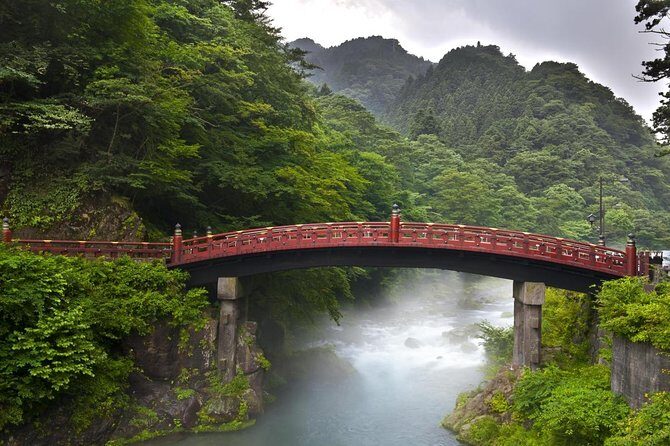
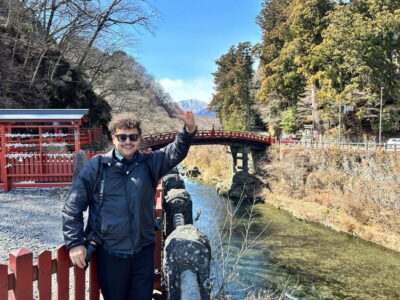
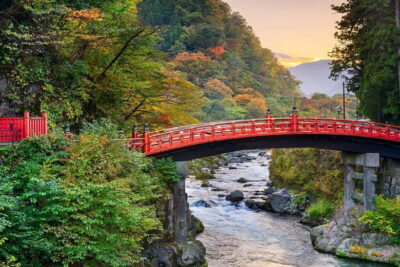
Your first stop is Shinkyo Bridge, a vermilion-colored bridge that curves gracefully over the Daiya River with mountain greens in the background. You get about 30 minutes, and that timing is about right for this kind of spot: enough to see it from the best angles, take photos, and walk through without rushing.
The admission ticket for Shinkyo Bridge is not included, so treat this as a paid entry moment early in the day. If you are budget-conscious, decide quickly what matters most for you: quick photos from classic viewpoints, or a slower look at the bridge details and river setting.
Practical tip: keep your camera strap short or hands-free because this is still a walk-and-pause style stop. Also, arrive ready to be outside a bit—Nikko scenery is the main event here, not indoor exhibits.
What I like about starting here: it sets the tone. You ease into Nikko with a scenic landmark before switching into the heavier cultural atmosphere of Toshogu.
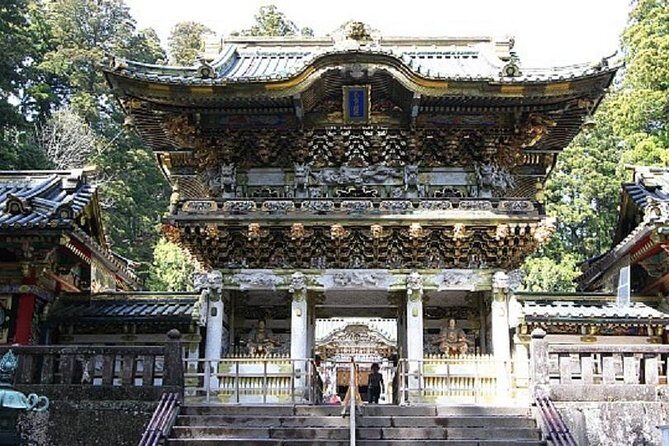
Stop 2: Nikko Tosho-gu and the famous three sayings
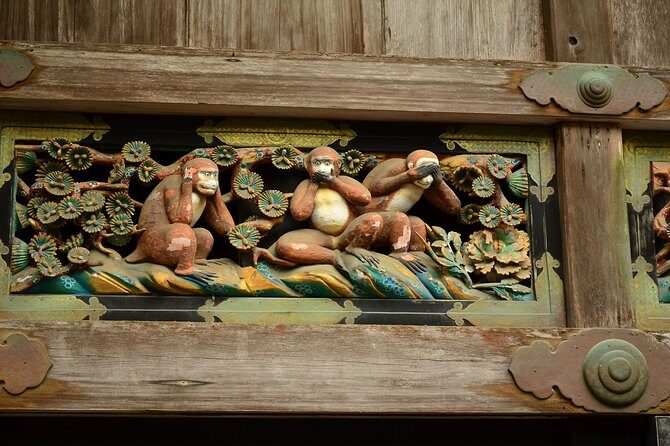
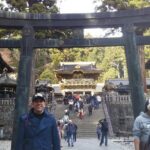
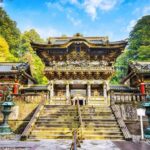
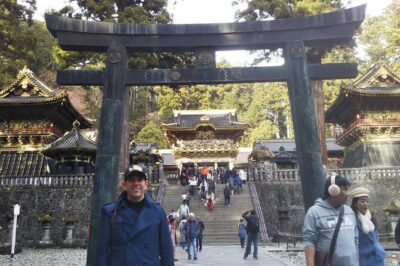
Next comes Nikko Tosho-gu. The stop centers on the iconic theme of see no evil, speak no evil, hear no evil, which you can understand immediately even before you fully read everything on-site. You get about 1 hour, which is usually enough for a focused visit if you are not trying to study every single component.
The Toshogu shrine admission fee is not included (listed at ¥1,300 per person). So if your goal is to keep your day simple, you might mentally park these costs and just move on.
This is also where having a guide can matter. In complex heritage places, a guide helps you decide where to look first. Even without going super deep, you benefit from knowing what the place is saying and why certain details get attention.
A fair warning: one hour goes fast when you stop for photos, browse, and walk at a relaxed pace. If you love taking in carvings and architectural details, you will probably wish you had more time. If you prefer a highlight tour with breathing space, this timing tends to feel right.
Stop 3: Akechidaira Observation Area and the ropeway ride
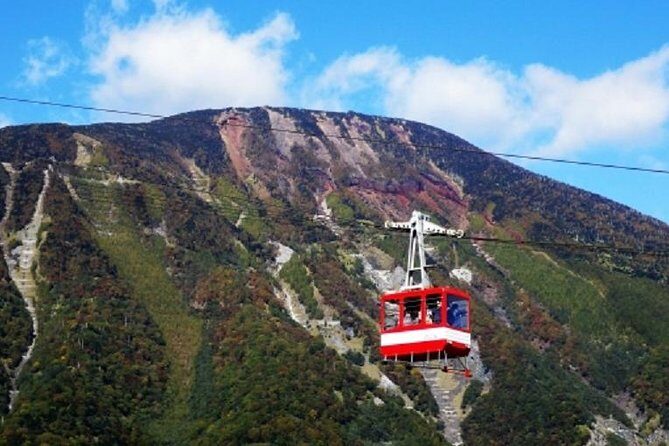
After Tosho-gu, you head to the Akechidaira Observation Area by ropeway. This is one of the most efficient ways to get high for views because the ropeway does the legwork for you. You get about 1 hour here, and the payoff is wide.
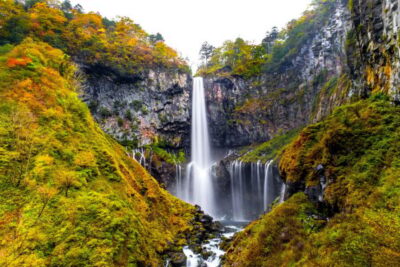
From the observatory, you look out over Kegon Waterfall and Lake Chuzenjiko. That pairing is what makes this stop feel more than just a transit point. It turns the waterfall from a distant target into a visible feature in the full landscape picture—so when you finally reach the falls, you already understand where you are looking.
Admission is not included for this stop, so budget for any required ticket on-site. The tour also lists an admission fee only for the Kegon Falls elevator, so you should still expect that some part of getting to the best viewpoint can cost extra depending on what is required that day.
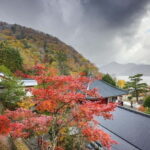
Practical advice: check the weather when you can, and be ready for light fog. On mountain-area days, the views can change quickly. If it is clear, you get dramatic wide scenery. If it is hazy, you still get an atmospheric sense of scale.
Stop 4: Kegon Falls, the elevator, and the 1-hour finale
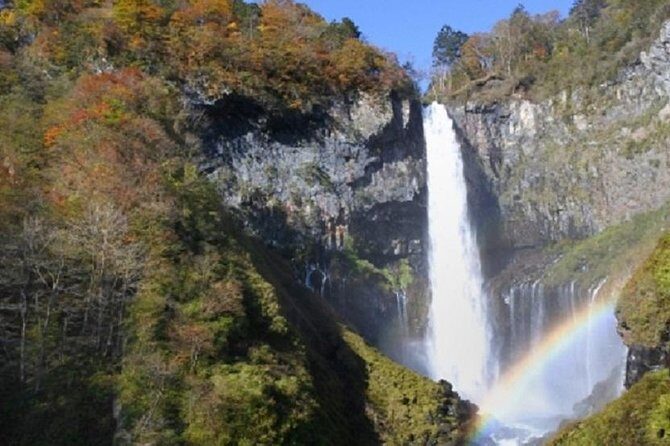
The last stop is Kegon Falls. The tour frames it as among Japan’s three most beautiful falls, and the timing and order are built to let you end on the strongest nature moment. You get about 1 hour.
One extra cost here: the Kegon Falls elevator has a listed fee of ¥550 per person, and it is not included. If you are trying to keep your day organized, treat the elevator as part of your plan, not an optional bonus. It changes how easy it is to get to the best viewpoints.
What to expect: this is a magnification stop. The first time you see Kegon, you understand why people build days around it. The falls are not subtle, and the sound and mist can be real. Wear shoes you are comfortable standing in and walking around on.
Also, remember you are already halfway through a long day by this point. If your energy is low, do not force a marathon around the area. Get the main viewpoints, take your photos, then enjoy the moment without trying to win a walking contest.
What makes this feel private, not just guided
Even with public transport, the tour is set up as a private experience. That matters because your guide can adjust the pace based on your group, handle timing between stops, and keep your day from turning into chaos. You are not doing random meetups; you are working off a planned route with guide support.
The tour also includes personal attention, which is the real benefit of a private guide on an active day. You can ask questions when something feels confusing, and you can focus on what you actually want to see instead of following a fixed script that fits no one.
There is also a practical included detail that helps: your guide’s public transportation expense is covered, so you are not stuck with awkward questions about who pays what for the guide’s movement.
One more note on expectations: because it is private and customizable, you can often shape how much time you want at each stop. The listed stop durations are a guide, not a prison. Just keep the 12-hour structure in mind, because changing one stop can affect the whole chain.
Is this tour a good fit for you?
This works best if you:
- Want a guided day to Nikko without trying to stitch together transit and ticketing by yourself
- Like a packed highlight itinerary with set stops rather than open-ended wandering
- Prefer hotel pick-up and drop-off for Tokyo convenience
- Are comfortable with train and bus as the main transportation style
It may not be your best choice if you:
- Hate relying on public transport during sightseeing days
- Expected the tour price to include all transport comfort through a dedicated vehicle
- Want fully inclusive admissions and a zero-add-on budget
That public-transport reality is the main “read this twice” point. The guide can help you navigate it, but it still is not an all-car, all-easy day.
Should you book this one-day Nikko UNESCO tour?
Book it if you want the right mix of culture and scenery in a single day, starting with hotel convenience and ending with Kegon Falls as your payoff. The private structure and guide support are the backbone of the value, especially if you want to see Shinkyo Bridge, Nikko Tosho-gu, Akechidaira, and Kegon Falls without turning the day into a logistics puzzle.
Skip it (or at least compare) if you are the type who feels stressed by transfers and prefer a dedicated vehicle between stops. With admission fees and transit add-ons, you also need a realistic budget mindset.
If you can handle a full-day schedule and you are excited about doing Nikko’s highlights fast, this is a strong way to get out of Tokyo and into the mountains.
FAQ
What time does the tour start?
It starts at 7:30 am.
How long is the tour?
The duration is listed as 12 hours (approx.).
Is this tour private?
Yes. It is a private tour/activity, and only your group participates.
Are admission tickets included?
No. Admission fees are listed as not included for Shinkyo Bridge, Toshogu Shrine, and the Kegon Falls elevator.
Do I pay extra if I have a JR Pass?
Yes. The tour lists an additional ¥2,000 per person public transportation expense for JR Pass holders.
How do I get the tickets?
The tour uses a mobile ticket.
The Old Nikko, Toured Properly

More Tour Reviews in Nikko
North Again: More Nikko Trips
Nikko Day Trips, compared.
 ★ 4.6Nikko: Kegon Falls, Lake Chuzenji & Toshogu TempleFrom $891,577 reviews
 ★ 4.5Nikko Toshogu Shrine and Kegon Waterfall TourFrom $841,266 reviews
 ★ 5.0Nikko Full-Day Private Tour with Government-Licensed GuideFrom $155259 reviews
 ★ 4.9From Tokyo: Nikko World Heritage Site Private Full-Day TripFrom $483243 reviews
 ★ 4.3Nikko: Edo Wonderland Edomura Cultural Theme Park TicketFrom $35205 reviews
From Tokyo: Nikko World Heritage Sight Full Day Private TourFrom $362127 reviews
★ 4.3Nikko: Edo Wonderland Edomura Cultural Theme Park TicketFrom $35205 reviews
From Tokyo: Nikko World Heritage Sight Full Day Private TourFrom $362127 reviews
 ★ 4.9Nikko – Beautiful Full-Day Personal and Private TourFrom $364119 reviews
 ★ 5.0Chartered Private Tour – Tokyo to Nikko, Toshogu, Edo WonderlandFrom $1,286105 reviews
Browse the lists this tour appears in