
Reviewed · TOKYO
Learn to Make Home Style Tempura Udon and Gyoza
Food smells better when you made it.
This is a private cooking class with Emi in Tokyo where you don’t just taste Japanese comfort food. You learn how to make tempura udon and gyoza from scratch, including the noodle work, frying technique, and the gyoza folds.
I love that the class is taught in a true private setup, so Emi can tailor guidance to your questions as you go. I also love the payoff: you sit down and eat what you make, and you get an English recipe booklet to recreate it at home. One consideration: it’s not available for a single male to join on their own, and spring or autumn fills up fast, so you’ll want to book early.
In This Review
- Key highlights worth penciling in
- A private studio meal with Emi near Nerima Station
- From scratch udon noodles: kneading and dashi basics
- Crispy tempura technique and what to look for in the oil
- Gyoza folding with your chosen filling
- Barley tea breaks and a cooking class that keeps moving
- What you eat, what you take home, and why the booklet matters
- Price and timing: is $95.23 worth it?
- Who should book this Emi tempura udon and gyoza class?
- Getting there smoothly: mobile ticket, WhatsApp, and Nerima Station
- Should you book this tempura udon and gyoza class?
- FAQ
- Where does the class start?
- How long is the cooking class?
- What dishes will I learn to make?
- Can I choose my gyoza filling in advance?
- Can the class accommodate vegetarian or pescetarian diets?
- What’s included besides cooking instruction?
- Can I book if I’m traveling alone as a male?
Key highlights worth penciling in
- Private class with Emi: instruction is direct and focused on your group only.
- Hands-on udon work: you’ll knead dough and learn the rhythm of making noodles from scratch.
- Tempura frying technique: you’ll learn what to look for and how to get that crisp result.
- Gyoza folding with your chosen filling: options include minced pork, a pork-and-shrimp combo, or vegetables only.
- English recipe booklet to take home: a real souvenir you can cook from later.
- Barley tea during the class: simple hydration while you’re working with hot pans.
Before you commit, see how this one stacks up against a few Tokyo favourites:
- Mt Fuji and Hakone 1-Day Bus Tour Return by Bullet Train★ 5.0 · 26,383 reviews
- 1-Day Tokyo Bus Tour★ 5.0 · 14,250 reviews
- Tokyo: teamLab Planets TOKYO Digital Art Museum Entry Ticket★ 4.6 · 9,779 reviews
A private studio meal with Emi near Nerima Station
This class starts with an easy, local meeting spot: near Nerima Station, at 1-chōme-3-5 Nerima in Nerima City. From there, you head to a cozy studio setting where the tools and ingredients are already organized for you. The whole point is to keep things practical: less waiting around, more cooking time.
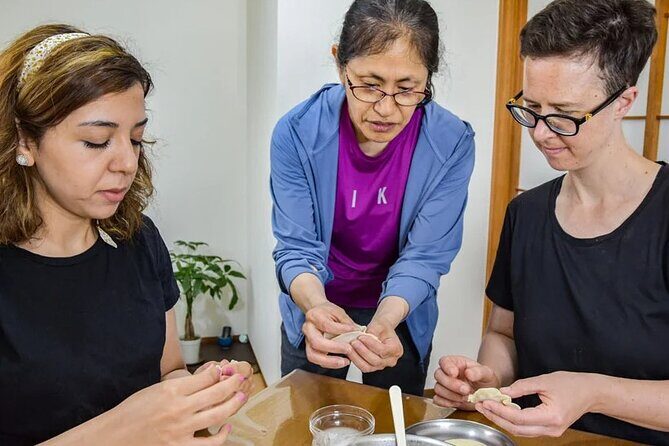
What makes this experience feel special is the way Emi teaches. In a private group, you’re not competing for attention or guessing how the class is supposed to move. Emi talks through steps and focuses on the small “what you’re looking for” moments that separate good results from merely edible ones. That’s especially helpful when you’re learning things like tempura frying and gyoza folds, where precision matters but you don’t need advanced chef training.
Also, the format isn’t just cooking in the air. You finish by sitting down together to eat your creations. That changes the mood from a demo to a real meal you’ll remember.
From scratch udon noodles: kneading and dashi basics
You’ll begin with udon, and that means hands-on work early. Kneading is where your confidence starts. Udon dough has a feel that’s hard to learn from reading alone, so being able to knead it yourself is the fastest route to understanding. You’re not just copying a recipe—you’re building muscle memory for dough texture.
Alongside the noodles, you’ll prepare dashi, the broth foundation that shows up again in comfort-food form. Dashi is one of those “don’t overcomplicate it” Japanese building blocks: when it’s right, it boosts everything else without tasting like a separate flavor. Making it yourself helps you understand why the broth is treated as the backbone of udon.
If you’re the type who likes knowing the reason behind a step, you’ll likely appreciate Emi’s guidance. The focus isn’t only on what to do, but also why you do it. That matters for udon because small changes in dough handling can affect how the noodles turn out.
Practical note: this class runs about 2 hours 30 minutes. That’s short enough to stay energetic, but long enough to do real prep, not just assemble finished items.
Crispy tempura technique and what to look for in the oil
Next comes the part many people picture first: tempura. You’ll learn how to fry it properly so it comes out crisp instead of soggy. Tempura is often described like it’s all about the batter, but the truth is the technique is a chain reaction. Oil temperature, batter thickness, and timing all interact.
In this class, Emi explains what you should be watching for as you cook. For example, the way vegetables are cut can affect how they cook and how the finished piece textures in the bite. That sort of guidance is useful because it turns tempura from mystery food into a set of controllable steps.
The best benefit here is that you’re not stuck with a single outcome. You get to practice the rhythm: coat, fry, adjust, and learn. Even if your first batch isn’t perfect, the method becomes clear, and that’s what you’ll use again when you cook at home.
Gyoza folding with your chosen filling
Then it’s gyoza time. The class asks you to choose your filling preference when you book:
- A) Minced pork
- B) Minced pork and shrimp
- C) Vegetables only
This matters more than it sounds. The flavor profile changes, but so does what the filling needs in terms of handling and how you aim for even distribution. If you pick vegetables only, for instance, you’ll be dealing with a different balance of moisture and texture than pork-based options, and that affects your final result.
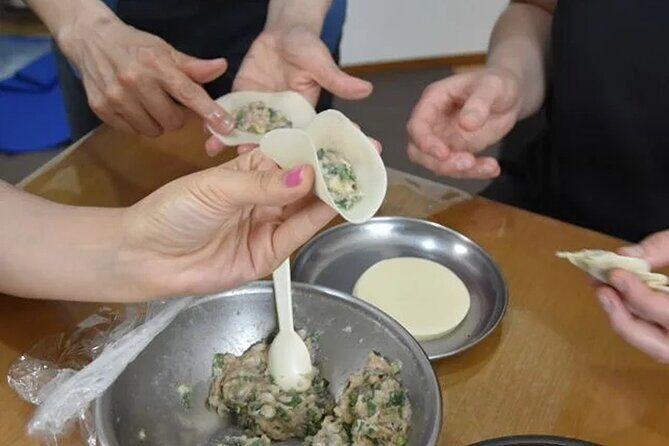
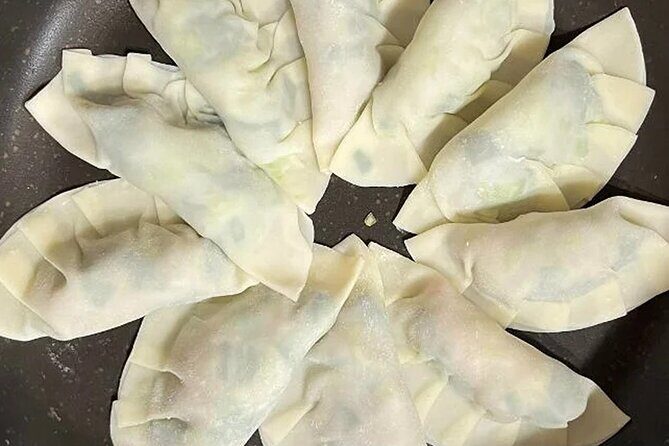
Folding gyoza is where you get real “look at your hands” learning. Emi shows you how to fold them so you get that characteristic shape while keeping the filling inside. Done well, they cook evenly and hold together in the pan.
If you’ve ever bought gyoza at a store and thought, I could probably do this, this is where that confidence comes from. You’ll make them with your own hands, then serve them as part of the meal you eat.





Barley tea breaks and a cooking class that keeps moving
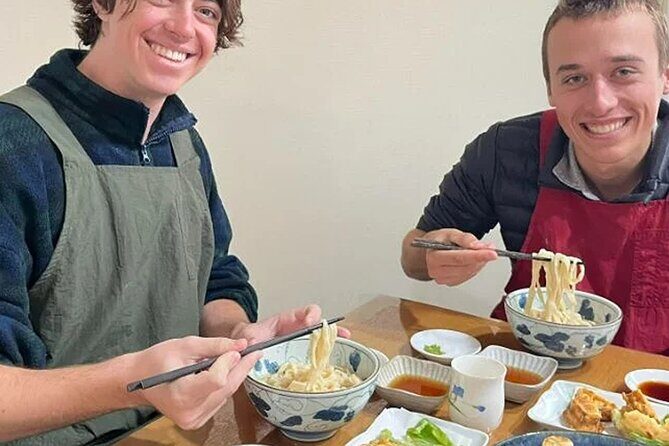
You’ll hydrate with cups of barley tea during the class. It’s a practical touch, especially when you’re working around hot pans and warm dough. It doesn’t feel like an afterthought either; it fits the rhythm of a hands-on cooking session.
The class pacing is also a big deal. In a good cooking class, you never feel lost. You’re guided step-by-step, with Emi explaining what to do and what to watch for. That’s particularly important because you’re moving through multiple dish types in one session: udon, dashi, tempura, and gyoza.
You also get to sit down afterward, which makes the whole experience less tiring than it sounds on paper. About midway through, you stop thinking about cooking and start thinking about the meal.
What you eat, what you take home, and why the booklet matters
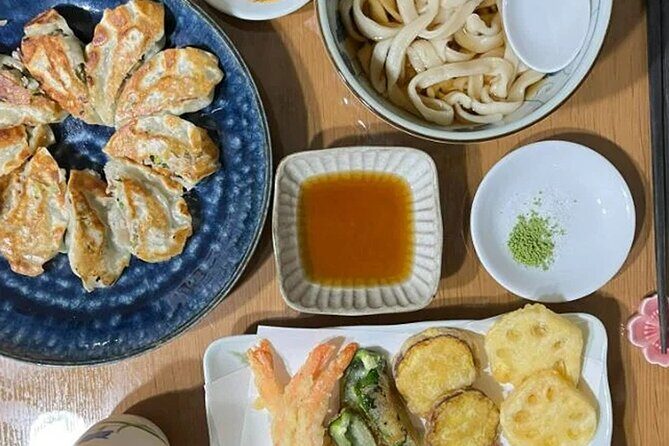
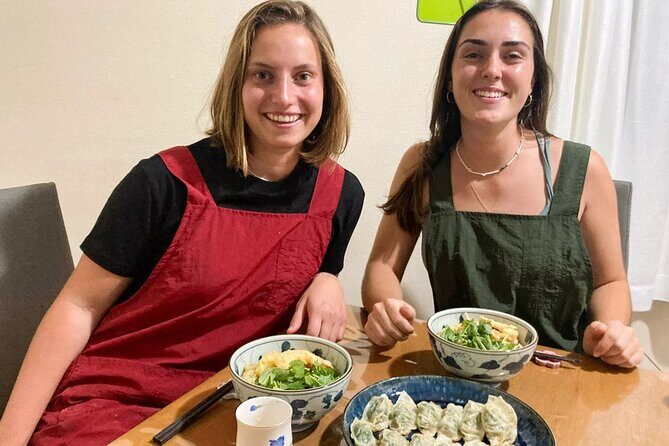
After everything is ready, you sit down and dine on your creations. This is one of the smartest formats for a cooking class. You don’t leave with a stack of theory. You eat the results while the techniques are still fresh in your mind.
Included in the meal are the udon with tempura and gyoza. That’s a very Japanese mix: chewy noodles, crisp fried pieces, and pan-fried dumplings. It also gives you a broad range of textures, so the meal feels complete rather than one-note.
Then comes the best “take-home value”: an English recipe booklet. Not a vague memory, not a loose printout. You get something you can actually use later, which means you’re not just paying for a fun evening—you’re paying to build a repeatable home-cooking skill.
If you’re traveling with someone who loves food, this is also a great way to share the experience. A family member can feel proud of making dinner, and you’ll have recipes to bring back to your own kitchen.
Price and timing: is $95.23 worth it?
At $95.23 per person, this isn’t a budget activity, but it also isn’t overpriced for what you’re getting. Here’s what’s included:
- ingredients and tools
- the meal (udon with tempura and gyoza)
- barley tea
- an English recipe booklet
You’re also getting a private class with Emi, not a shared group shuffle. In practice, private time is expensive in Tokyo, and you’re effectively buying instruction + ingredients + a full meal in one package. If you’ve ever tried to recreate Japanese cooking at home from scratch, you know how quickly costs add up once you include the right ingredients and the time to learn technique.
Timing is also reasonable. 2 hours 30 minutes is long enough to feel like you accomplished something, but short enough that it doesn’t dominate your whole day.
One practical consideration: transportation is not included. You’ll need to get yourself to the Nerima Station meeting area.
Who should book this Emi tempura udon and gyoza class?
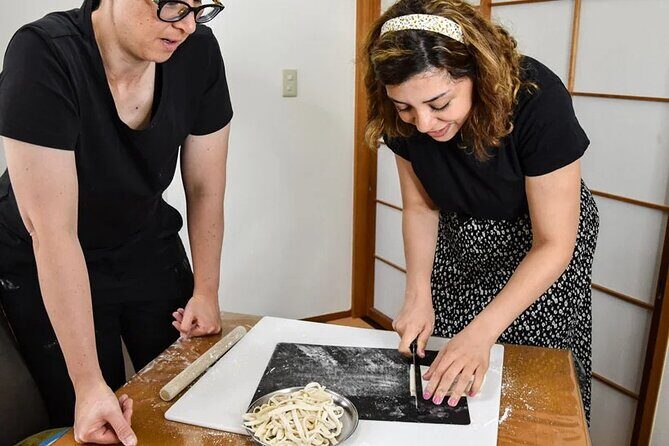
This class is a strong fit if you want more than a food tour. You’ll enjoy it if you like learning technique, especially:
- kneading and handling dough
- frying with control
- folding gyoza with a clean method
It’s also a good choice for families and food-minded travelers because you get a real meal at the end and something to practice later with the booklet.
A heads-up for planning: single male participants cannot join on their own. If that affects you, bring a partner or choose a different format that allows solo bookings.
Dietary needs are also handled with care. The class can accommodate Vegetarian and Pescetarian diets, as long as you inform the provider in advance of your restrictions. When you book, you’ll also need to choose your gyoza filling (pork, pork-and-shrimp, or vegetables only), so plan your preferences early.
Finally, book early if you can. During busy spring and autumn seasons, the studio tends to fill quickly. The experience also notes that for groups of three or more, booking 2–3 months in advance is highly recommended to ensure availability.
Getting there smoothly: mobile ticket, WhatsApp, and Nerima Station
Logistics are simple, but they do require a little prep. You’ll receive a mobile ticket, and the location is near public transportation. The start point is Nerima Station, with the specific address area listed as 1-chōme-3-5 Nerima, Nerima City.
One thing to plan for: for smoother communication with the host, you should provide a WhatsApp registered number when booking. That’s helpful if anything needs confirmation or coordination around meeting time.
Also note the class includes cups of barley tea. Japan’s legal drinking age is noted as 20~ in the experience details, so if your plans include any alcohol, don’t count on it here. (This class is built around cooking and tea, not nightlife.)
Should you book this tempura udon and gyoza class?
I’d book this if you want hands-on Japanese cooking in a private setting with clear guidance from Emi, and you want to eat what you make right after. The combination of udon, tempura, and gyoza is a smart spread of skills, and the English recipe booklet makes it more than a one-night activity.
Skip it (or at least rethink it) if you’re hoping for a casual tasting session where you barely touch the food. This is built around doing: kneading, frying, folding, and then enjoying the meal as a group.
Last, factor in practicalities. You’ll need to handle your own transport to the Nerima Station area. And if you’re a single male traveling alone, the experience won’t work for you as stated.
If you match the vibe—hands-on, focused, and recipe-friendly—this one is a very solid way to bring Tokyo cooking home.
FAQ
Where does the class start?
The class starts near Nerima Station, at 1-chōme-3-5 Nerima, Nerima City, Tokyo 176-0001, Japan.
How long is the cooking class?
It lasts about 2 hours 30 minutes.
What dishes will I learn to make?
You’ll learn to make home-style tempura udon and gyoza, and you’ll also prepare components like udon dough and dashi during the class.
Can I choose my gyoza filling in advance?
Yes. When booking, you specify your preference: A) minced pork, B) minced pork and shrimp, or C) vegetables only.
Can the class accommodate vegetarian or pescetarian diets?
Yes. Vegetarian and pescetarian dietary requirements can be accommodated if you inform the provider in advance.
What’s included besides cooking instruction?
You get all ingredients and tools, barley tea, the meal (udon with tempura and gyoza), and an English recipe booklet to take home.
Can I book if I’m traveling alone as a male?
No. The experience states that a single male participant cannot take part on their own.
More Tour Reviews in Tokyo



Fresh reviews from around Tokyo






Tokyo, compared.
 ★ 5.0Mt Fuji and Hakone 1-Day Bus Tour Return by Bullet TrainFrom $16326,383 reviews
 ★ 5.01-Day Tokyo Bus TourFrom $12914,250 reviews
 ★ 4.6teamLab Planets TOKYO Digital Art Museum Entry TicketFrom $259,779 reviews
 ★ 4.0Mt Fuji & Hakone Cruise, Drum Show Bullet Train 1 Day from TokyoFrom $1497,413 reviews
 ★ 5.0Shinjuku Food Tour (13 Dishes at 4 Local Eateries)From $866,603 reviews
 ★ 4.4Tokyo Mt Fuji 5th St & Hakone Cruise Bus Tour w/Bullet TrainFrom $1545,024 reviews
 ★ 5.0Flagship 2-Hours Official Street Go-Kart Tour – Tokyo Bay ShopFrom $644,974 reviews
 ★ 4.5From Tokyo: Mount Fuji Full-Day Sightseeing TripFrom $684,970 reviews